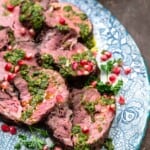
Slow-Roasted Beef Tenderloin
This beef tenderloin recipe uses a slow roast followed by a quick broiler finish for tender beef with a golden-brown crust. I like to serve it with bright, herby chermoula sauce and pomegranate seeds, both optional. Season and refrigerate the roast overnight if possible, and use a meat thermometer to guide the cooking.
Servings: 8 people
Equipment
- kitchen twine
- Oven-safe wire rack
- Large sheet pan
Ingredients
- 1 center-cut beef tenderloin, about 3 pounds, excess fat and silver skin trimmed
- Kosher salt
- Black pepper
- Extra virgin olive oil
Optional Serving Suggestions:
- Chermoula sauce
- Pomegranate seeds, for garnish
Instructions
- Season and tie the tenderloin. The night before cooking, if possible, sprinkle kosher salt and black pepper over all sides of the beef, about two five-finger pinches of each. Tie pieces of kitchen twine around the tenderloin at 1-inch intervals to help it maintain its shape.
- Refrigerate uncovered. Set an oven-safe wire rack over a large sheet pan. Place the tenderloin on the rack and refrigerate uncovered overnight. If you don’t have time for an overnight chill, refrigerate the seasoned roast for 30 minutes to 1 hour.
- Prepare the oven. On the day of cooking, position one oven rack in the middle and another in the upper third, about 6 inches from the broiler. Heat the oven to 225°F.
- Slow-roast the tenderloin. Place the beef, still tied and on the rack-lined sheet pan, on the middle oven rack. Roast until its internal temperature reaches 10°F below your desired final doneness, allowing for additional cooking under the broiler and during resting. For medium-rare, my preference for this roast, remove the beef from the 225°F oven when its internal temperature reaches 125°F; for rare, remove it at 115°F. Begin checking the temperature at the 2-hour mark. Roasting can take up to 3 hours, depending on the size of the tenderloin.
- Brown under the broiler. Remove the tenderloin from the oven and turn on the broiler. Brush all sides of the beef with a thin layer of olive oil. Return the pan to the oven on the upper rack. Use tongs to turn the tenderloin every few seconds until browned on all sides, about 2 minutes total.
- Rest. Remove the roast from the oven and let it rest for 15 to 20 minutes.
- Make the optional sauce. While the roast rests, prepare the chermoula sauce, if using. It takes about 5 minutes.
- Slice. After the beef has rested for at least 15 minutes, cut away and discard the twine. Slice the tenderloin crosswise into 1-inch-thick rounds, using the twine marks as a guide.
- Serve. Arrange the warm beef slices on a platter. Drizzle with chermoula sauce and garnish with pomegranate seeds, if using.
Video
Notes
- Choosing the beef: I prefer a center-cut tenderloin, also known as chateaubriand. Its uniform, cylindrical shape makes it easier to cook evenly and carve. Ask your butcher for a trimmed center-cut roast.
- Removing silver skin: If any remains, slide the tip of a sharp knife underneath the silvery membrane. Hold the membrane with one hand while cutting it away with the other, angling the blade slightly upward to preserve the meat. Trim excess fat, leaving a little for flavor.
- Temperature guide: The removal temperatures below apply to the 225°F roasting stage, before broiling. The final temperatures are the recipe’s intended targets after broiling and resting:
- Rare: Remove at 115°F; final temperature 125°F.
- Medium-rare: Remove at 125°F; final temperature 135°F.
- Medium: Remove at 135°F; final temperature 145°F.
- Medium-well: Remove at 145°F; final temperature 155°F.
- Food safety: These are culinary doneness targets. Federal guidance recommends cooking beef roasts to at least 145°F before removing them from the heat, followed by a rest of at least 3 minutes.
- Rest before slicing: Allow 15 to 20 minutes after broiling before carving the roast.
- Leftovers and storage: Refrigerate promptly in an airtight container for up to 4 days. Reheat in a 350°F oven or a skillet with a little olive oil. Federal guidance recommends reheating leftovers to an internal temperature of 165°F.
- Shop this recipe: Visit our shop for the extra virgin olive oil used in this recipe.
Nutrition
Calories: 466.1kcal | Protein: 30.9g | Fat: 37.1g | Saturated Fat: 15.2g | Polyunsaturated Fat: 1.5g | Monounsaturated Fat: 15.8g | Cholesterol: 119.1mg | Sodium: 228.7mg | Potassium: 517.1mg | Calcium: 12mg | Iron: 4mg
QR code
Scan this QR code with your phone's camera to view this recipe on your mobile device.
