


This beef tenderloin recipe pairs a slow-roasted, tender center with a golden-brown crust, plus optional Moroccan chermoula and pomegranate seeds for a festive finish.
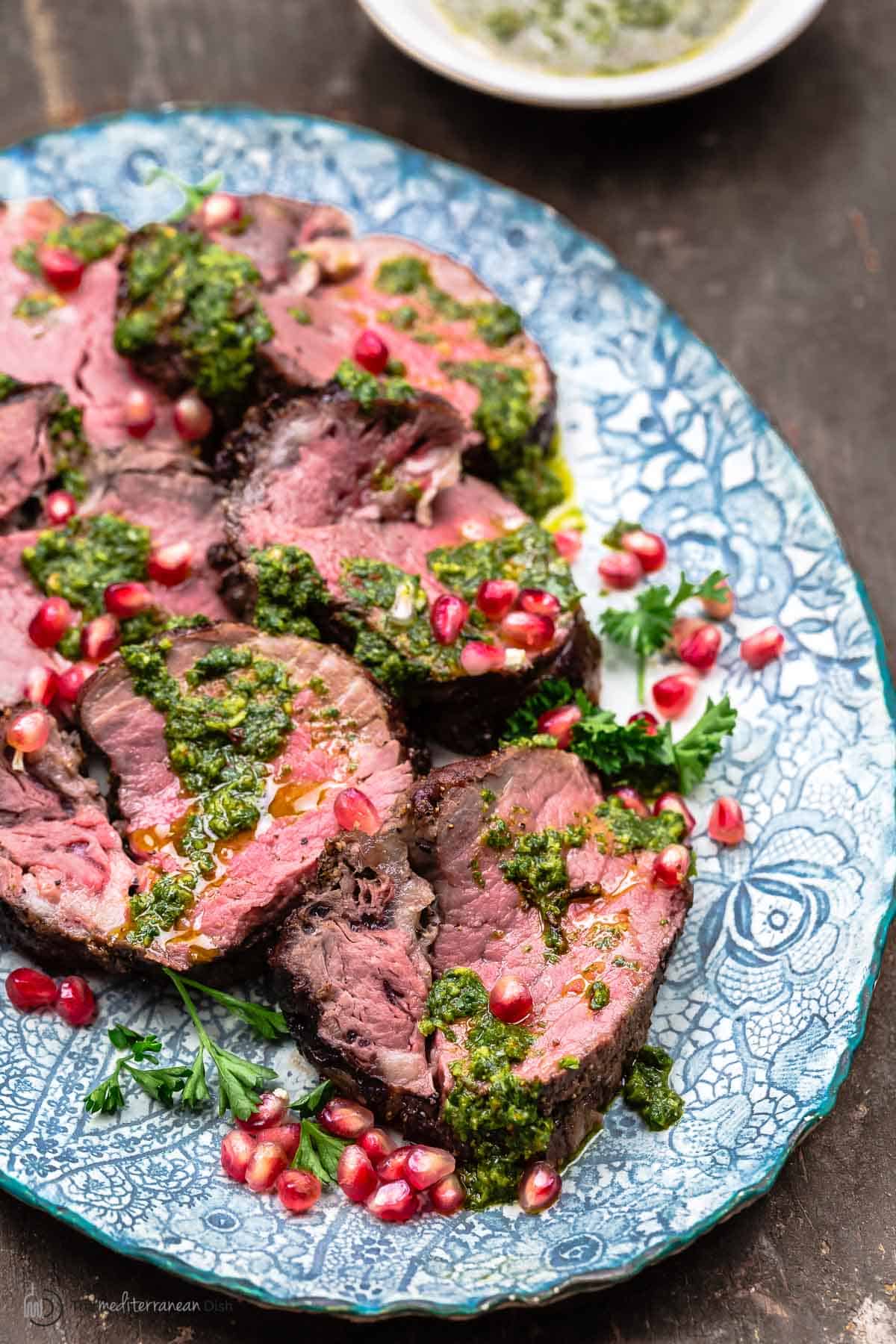
Slow-Roasted Beef Tenderloin with My Mediterranean Twist
For a special dinner, I love a beef tenderloin finished with chermoula, a Moroccan herb sauce with garlic, lemon, and spices. The beef roasts slowly at 225°F before a quick turn under the broiler gives it a golden-brown crust. It’s a dinner worth planning ahead for, with most of the cooking time spent in the oven.
Tenderloin has a delicate, buttery texture, so I keep the seasoning simple: kosher salt, black pepper, and a thin brush of olive oil before broiling. I prefer the center cut because its even shape makes it easier to cook evenly and carve into beautiful slices.
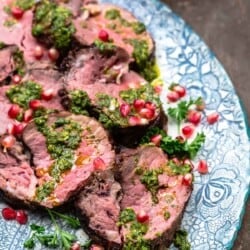
You can serve the roast just as it is, but I love to make my chermoula sauce while the meat rests. A spoonful brings bright, garlicky flavor to each slice, and a scattering of pomegranate seeds adds little bursts of tart sweetness. Those few extras make a lovely centerpiece for a holiday table.
If you can, season and tie the beef the night before, then leave it uncovered in the refrigerator. On the day of your dinner, allow 2 to 3 hours for roasting, about 2 minutes for broiling, and 15 to 20 minutes for resting before you slice.
What Cut of Beef Tenderloin Should You Buy?
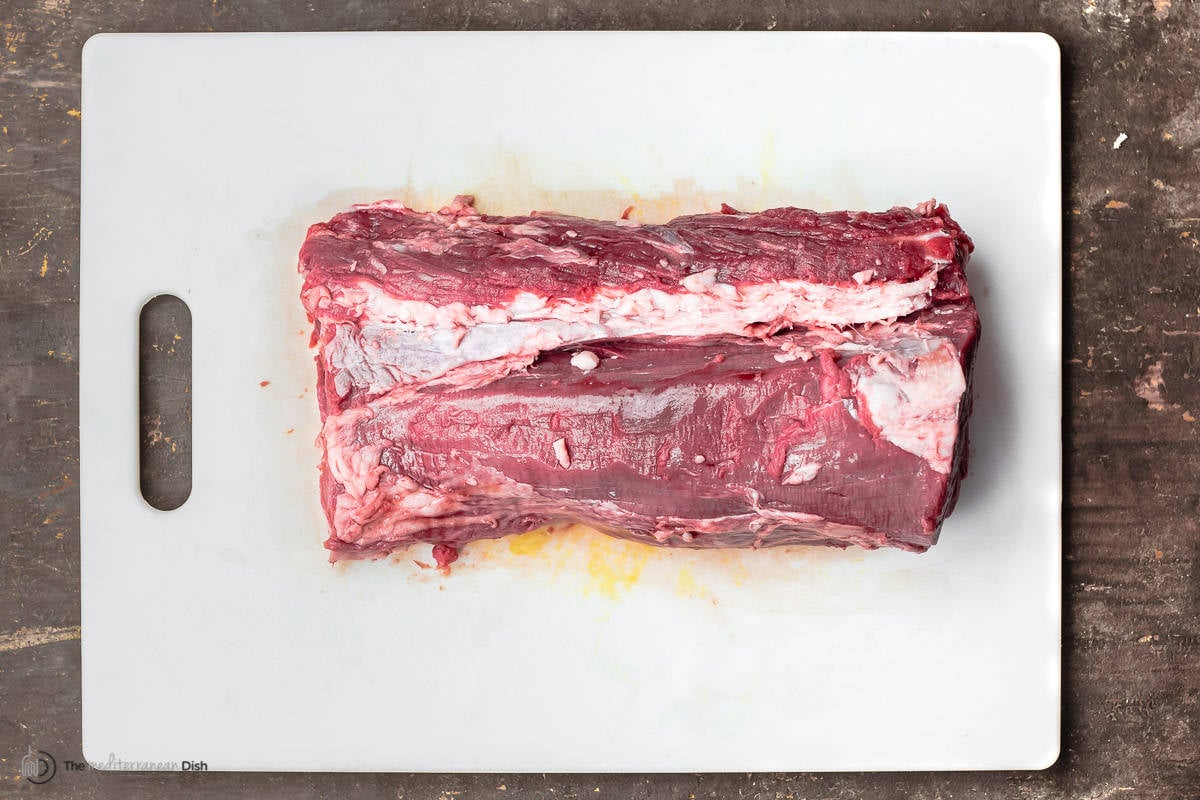
For this recipe, look for a center-cut beef tenderloin weighing about 3 pounds, with the excess fat and silver skin trimmed. The recipe serves 8 people.
The center cut, also known as chateaubriand, is the thick, evenly shaped middle section of the tenderloin. Filet mignon steaks come from the same tenderloin, but here we’re cooking the center section as one roast.
I love this cut because its uniform, cylindrical shape helps it cook evenly. It’s also easy to slice into rounds for serving. If you don’t want to trim a whole tenderloin yourself, ask your butcher for a trimmed center-cut roast.
Before seasoning, check for any remaining silver skin, the tough, silvery membrane on the surface of the meat. Remove it using the trimming instructions below. A little fat is fine; the silver skin is what you want to carefully cut away.
Beef Tenderloin Ingredients
The roast itself needs just four ingredients: beef tenderloin, kosher salt, black pepper, and extra virgin olive oil. Chermoula and pomegranate seeds are optional, but they bring fresh flavor and color to the platter.
For the Beef Tenderloin
- Beef tenderloin: Use one center-cut roast, about 3 pounds, with excess fat and silver skin trimmed. Its even shape suits this slow-roasting method.
- Kosher salt and black pepper: Season the beef on all sides. These simple seasonings let the tenderloin’s flavor come through, leaving room for the bright herb sauce if you’re serving it.
- Extra virgin olive oil: Brush a thin layer over the roast after slow roasting and just before broiling to help develop its golden crust. Use a good-quality extra virgin olive oil.
Optional Sauce and Garnish
- Chermoula sauce: This Moroccan sauce combines parsley, cilantro, garlic, lemon, olive oil, and spices for a fresh, punchy finish. My homemade version includes ground coriander, red pepper flakes, paprika, ground ginger, and optional saffron. You can also use a store-bought red or green chermoula.
- Pomegranate seeds: Scatter them over the sliced beef for color and bright bursts of flavor. If you’re starting with a whole fruit, my guide to how to cut a pomegranate walks you through removing the seeds.
How to Cook Beef Tenderloin
For this 3-pound center-cut beef tenderloin, allow 2 to 3 hours in a 225°F oven, followed by about 2 minutes under the broiler and 15 to 20 minutes of resting. That timing does not include the overnight chilling. Begin checking the internal temperature at 2 hours, and use a meat thermometer to determine when to move the roast under the broiler.
Season and Chill the Tenderloin
- Trim any remaining silver skin. Set the tenderloin on a cutting board. Slip the tip of a sharp knife underneath the silvery membrane, then hold the membrane with one hand while cutting it away with the other. Angle the blade slightly upward toward the silver skin, keeping the cut close to the membrane to preserve the meat.

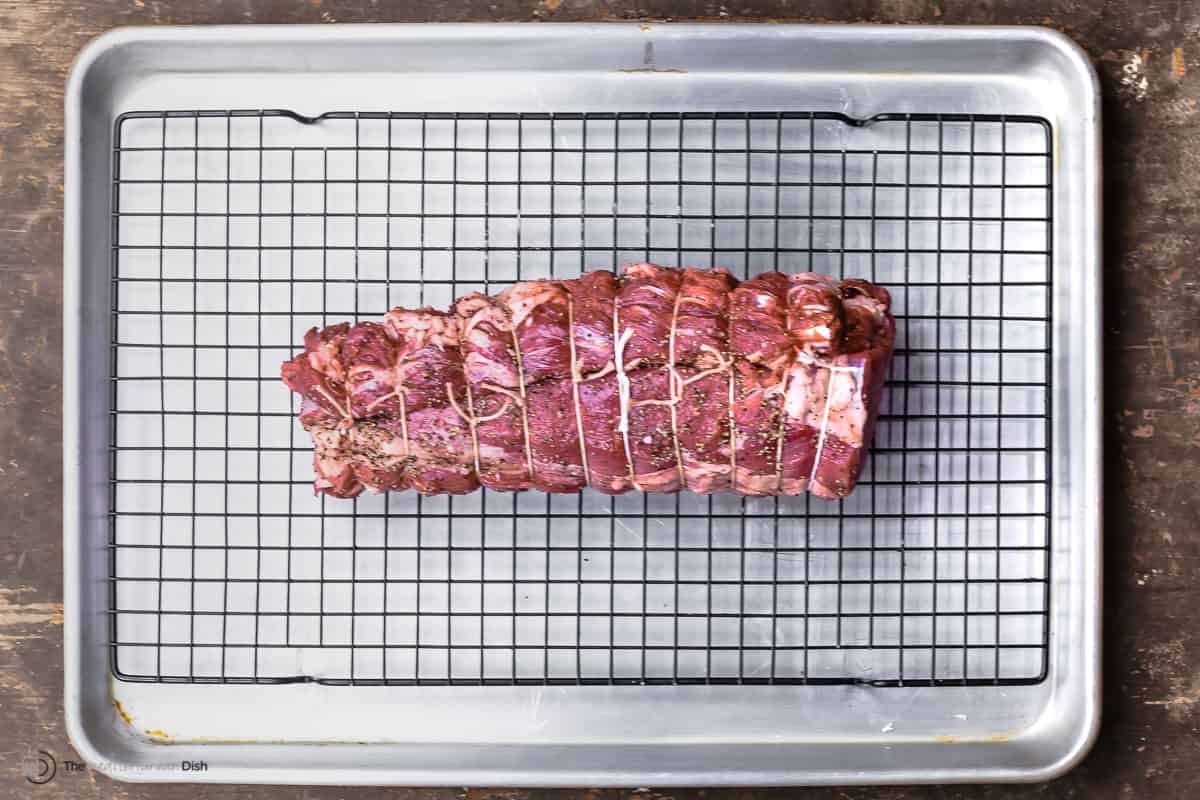
- Season and tie. Sprinkle kosher salt and black pepper over all sides of the beef, about two five-finger pinches of each. Tie pieces of kitchen twine around the tenderloin at 1-inch intervals to help it hold its shape.
- Refrigerate uncovered. Set an oven-safe wire rack over a large sheet pan and place the tenderloin on the rack. Refrigerate uncovered overnight. If you’re short on time, refrigerate the seasoned tenderloin uncovered for 30 minutes to 1 hour.
Slow-Roast and Broil
- Prepare the oven. Position one rack in the middle of the oven and another in the upper third, about 6 inches from the broiler. Heat the oven to 225°F.
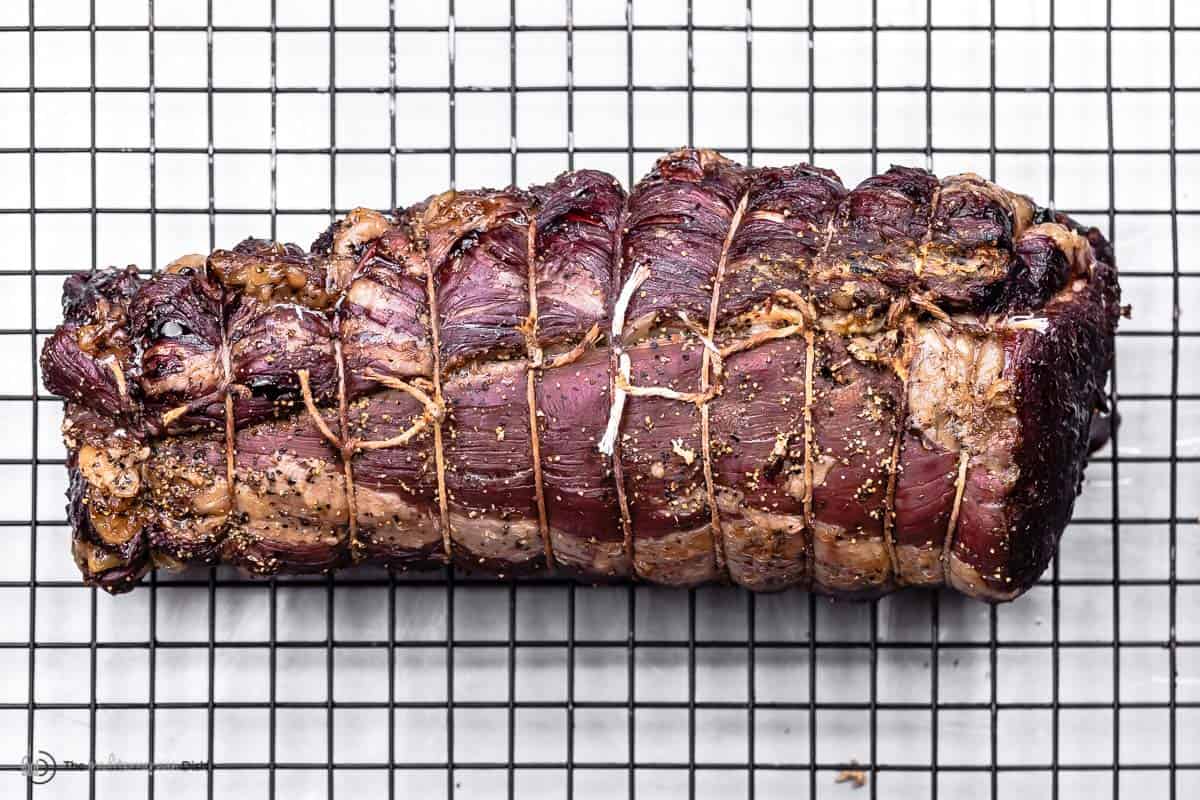
- Slow-roast the beef. Place the tenderloin, still tied and on the rack-lined sheet pan, on the middle oven rack. Begin checking its internal temperature at the 2-hour mark. Roasting can take up to 3 hours, depending on the size of the tenderloin. Remove the roast from the low oven when it reaches 10°F below your desired final temperature. For medium-rare, my preference for this roast, remove the beef from the 225°F oven when its internal temperature reaches 125°F. The beef will continue cooking under the broiler and as it rests.
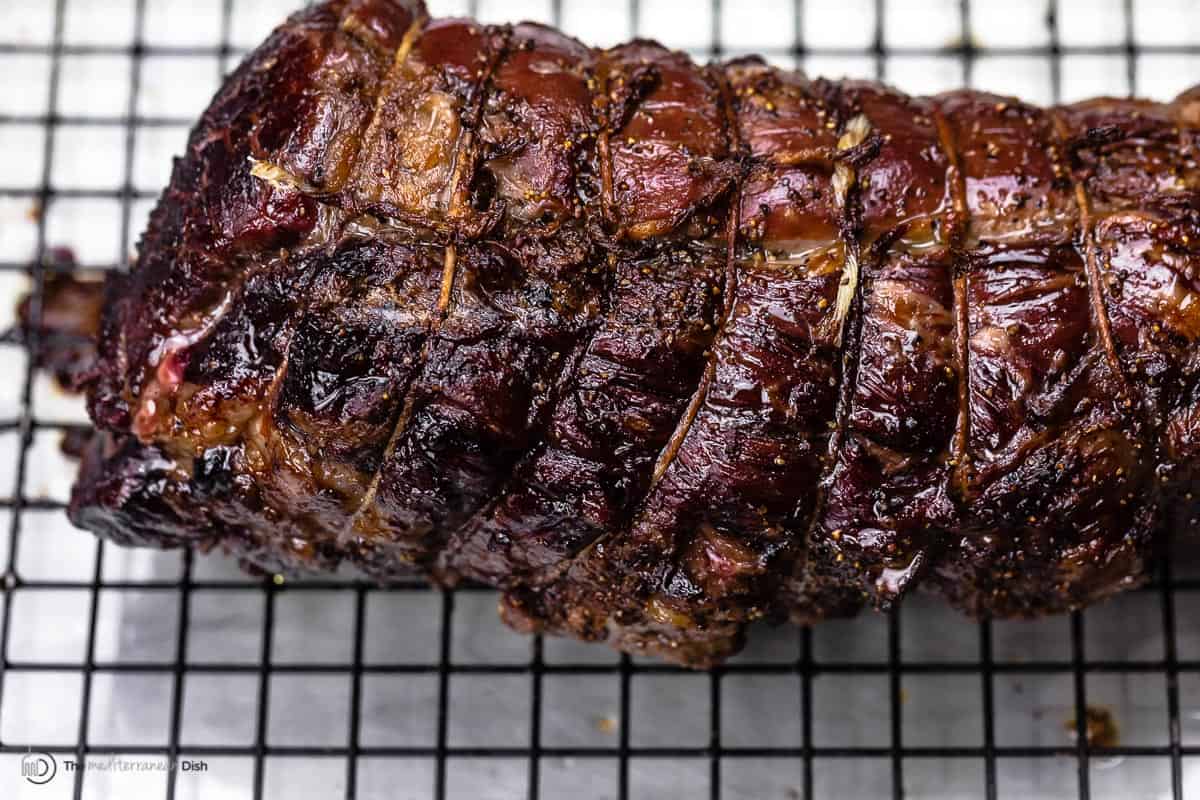
- Brown the outside. Turn on the broiler. Brush all sides of the tenderloin with a thin layer of extra virgin olive oil, then return the pan to the oven on the upper rack. Use tongs to turn the roast every few seconds until browned on all sides, about 2 minutes total.
- Rest the roast. Remove the beef from the oven and let it rest for 15 to 20 minutes before slicing.
Slice and Serve
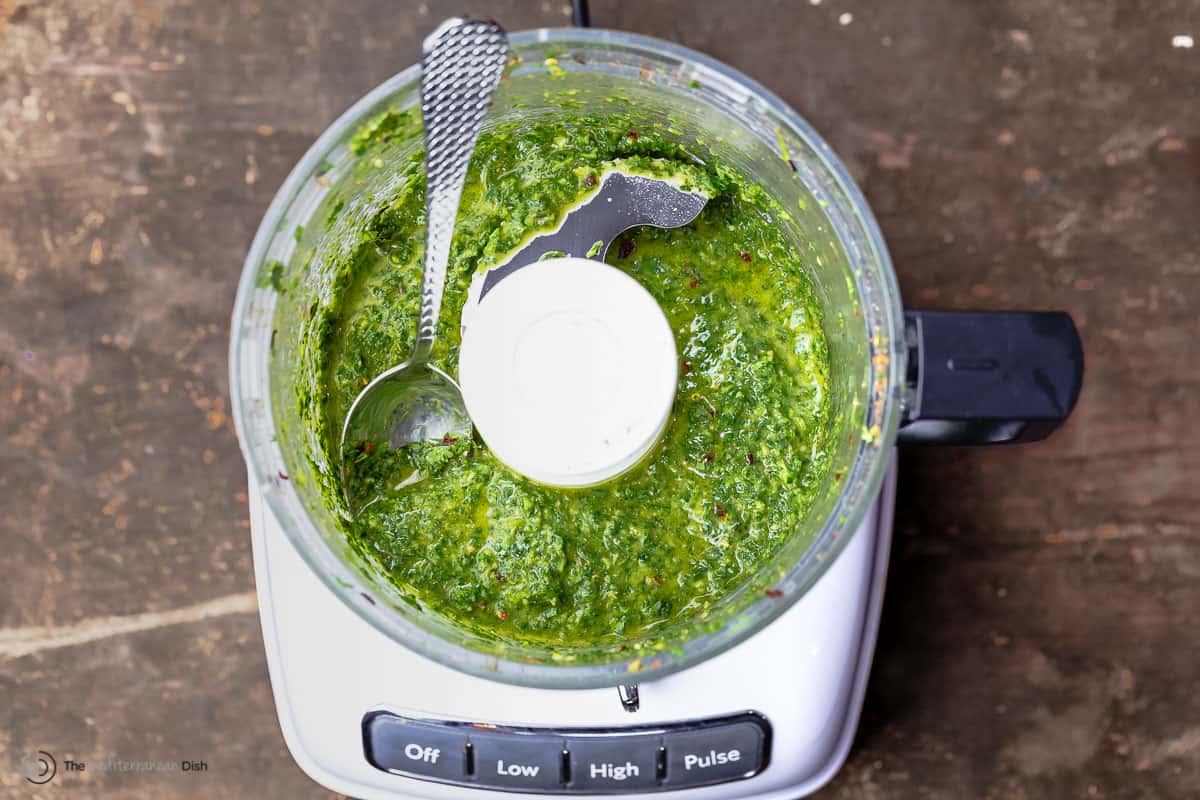
- Make the optional sauce. While the beef rests, prepare the chermoula sauce. It takes about 5 minutes.
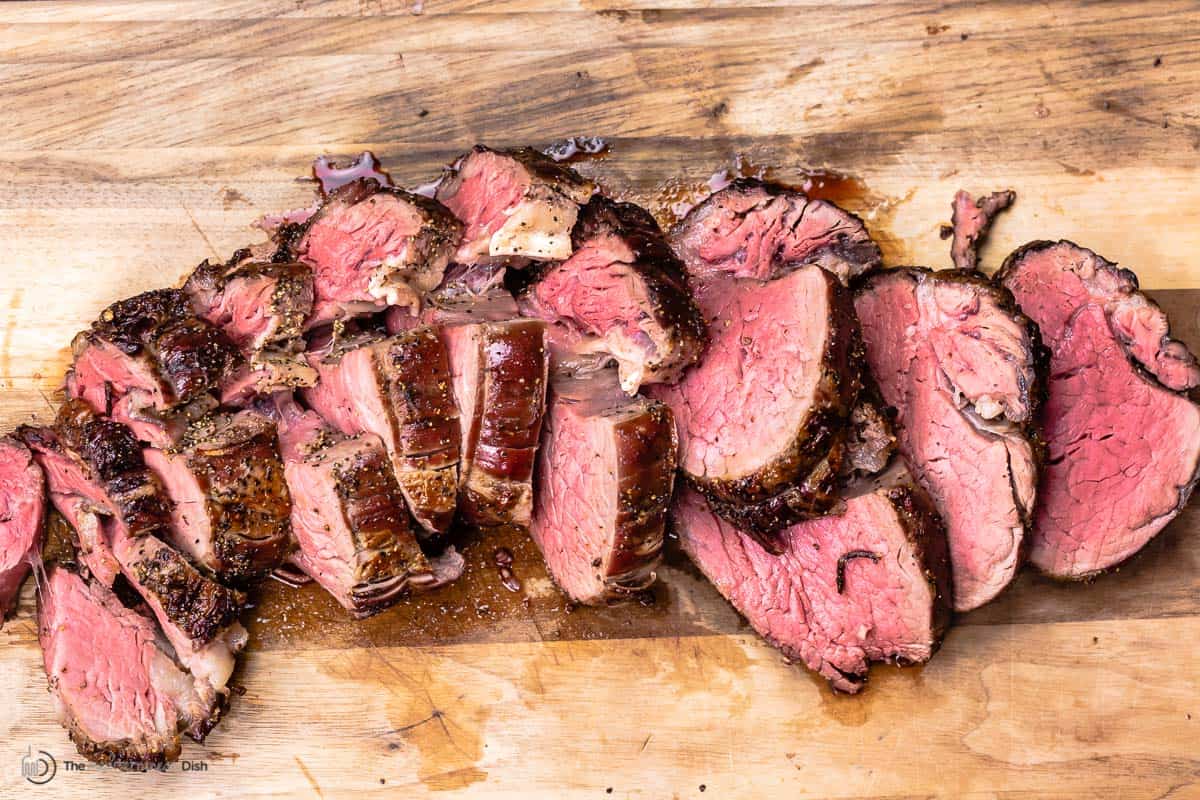
- Remove the twine and slice. After the roast has rested for at least 15 minutes, cut away and discard the twine. Slice the beef crosswise into 1-inch-thick rounds, using the marks left by the twine as a guide.
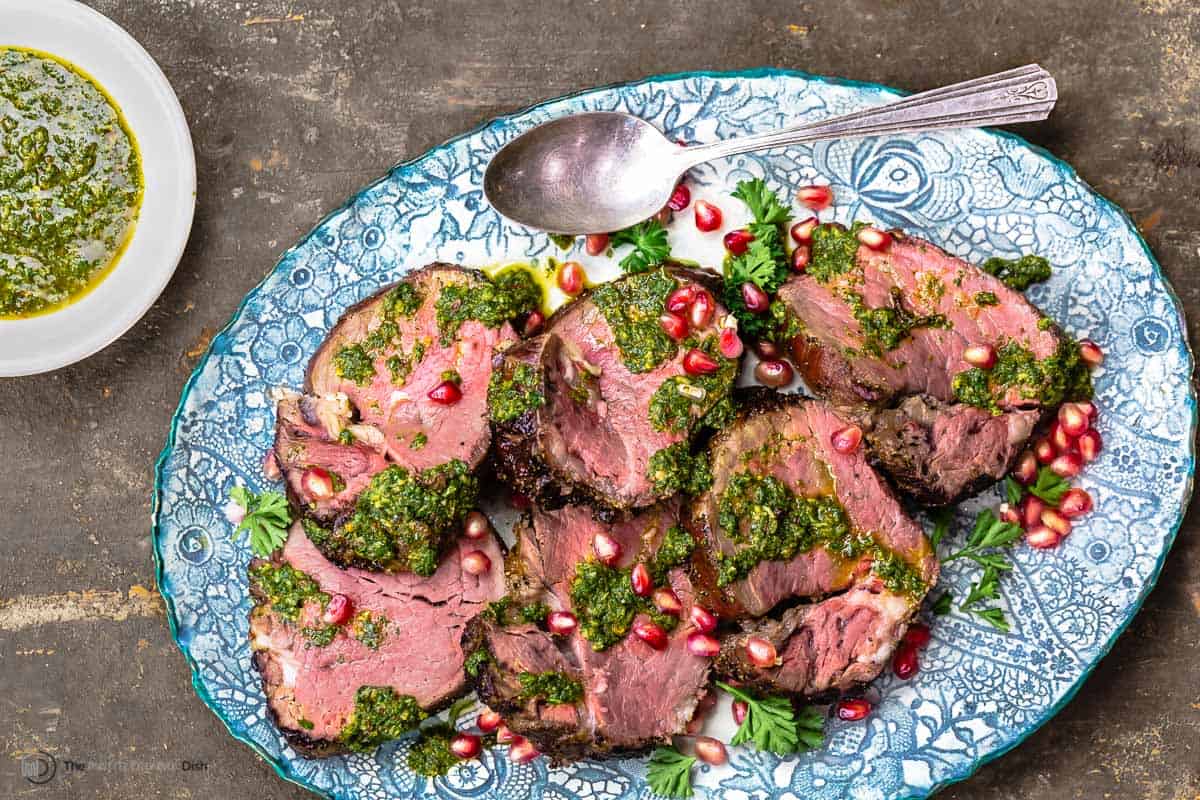
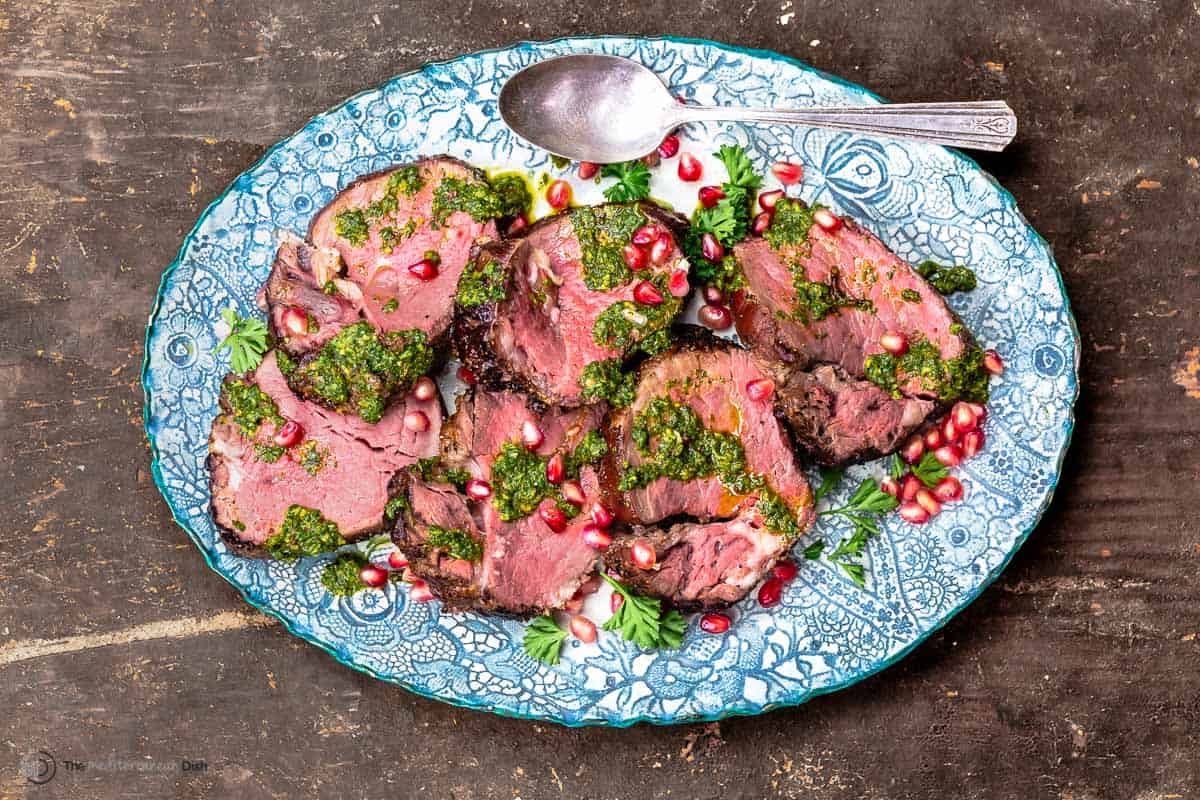
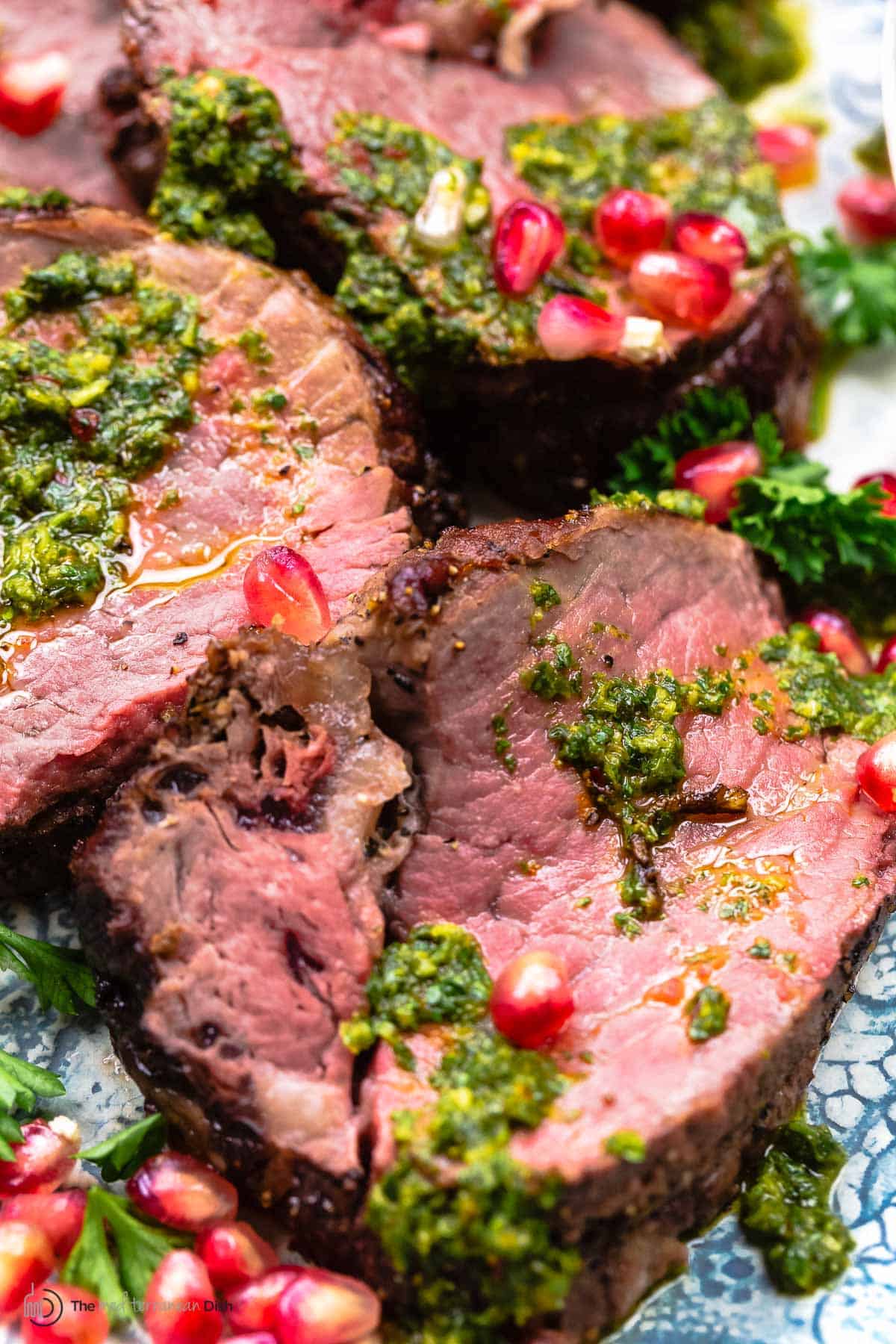
- Arrange and finish. Transfer the warm beef slices to a serving platter. Spoon a little chermoula over the top, if using, and scatter with pomegranate seeds.
Beef Tenderloin Temperature Guide
I recommend medium-rare for this beef tenderloin recipe. Use a meat thermometer rather than the clock alone, and remember that the temperature will rise during the broiler finish and resting period.
The first temperature below is when to remove the beef from the 225°F oven, before broiling. The second is the recipe’s intended final temperature after broiling and resting.
| Doneness | Remove from the low oven | Final temperature after resting |
|---|---|---|
| Rare | 115°F | 125°F |
| Medium-rare | 125°F | 135°F |
| Medium | 135°F | 145°F |
| Medium-well | 145°F | 155°F |
Tips for Making Beef Tenderloin
- Plan your portions before shopping. This recipe uses a trimmed 3-pound center-cut tenderloin for 8 people, or about 6 ounces of uncooked beef per person. Use the trimmed weight when planning your meal, and serve with the vegetable and potato sides below.
- Keep the roast tied through cooking. The twine helps the tenderloin maintain its shape during slow roasting and broiling. Leave it in place until after the resting period, then use the marks to guide your slices.
- Plan for both stages of cooking. The low oven cooks the interior; the broiler develops the crust. The temperature guide accounts for the additional cooking under the broiler and during the rest, so check the roast before moving it to the upper rack.
- Give the broiler your full attention. This step takes only about 2 minutes. Have your tongs ready and turn the tenderloin every few seconds so you can brown each side.
- Let the beef rest before carving. Allow the full 15 to 20 minutes rather than slicing straight from the oven. It’s just enough time to make the chermoula and bring your serving dishes to the table.
What to Serve with Beef Tenderloin
A platter of warm beef tenderloin with chermoula and pomegranate seeds needs only a few well-chosen sides. Roasted vegetables and potatoes are lovely alongside the tender beef, and the herb sauce brings the whole plate together.
- Vegetables and potatoes in one dish: These Italian oven-roasted vegetables include baby potatoes, mushrooms, zucchini, and tomatoes. Roast them before the tenderloin goes into the oven, then rewarm them while the beef rests.
- A crisp potato side: Crispy potato stacks bring a little steakhouse feeling to the table, with golden edges to contrast with the tender roast.
- A main dish for vegetarian guests: Roasted cauliflower steaks with harissa and chermoula share the roast’s bright herb sauce. Make them in advance and rewarm alongside the vegetables.
With the oven occupied for much of the afternoon, choose a dessert you can make the day before. Greek honey cake, mahalabia, a rose water milk pudding, or chocolate olive oil cake would make a lovely finish.
Make-Ahead and Storage
To prepare ahead: Season and tie the tenderloin the night before serving. Place it on an oven-safe wire rack set over a sheet pan and refrigerate uncovered overnight. This gets the preparation out of the way before your dinner, leaving the roasting, broiling, and carving for the day you serve it.
To store leftovers: Refrigerate leftover beef tenderloin in an airtight container for up to 4 days. Refrigerate promptly rather than leaving the roast out to cool completely.
To reheat: Warm leftover beef in a 350°F oven or in a skillet with a little extra virgin olive oil. Use a thermometer to check that it reaches 165°F.
For another meal, use leftover tenderloin in a grilled roast beef sandwich.
More Special Occasion Roasts
Meat and Poultry
Roast Rack of Lamb Recipe with Garlic and Herb Crust
Meat and Poultry
Roast Turkey Breast with Garlic and Herbs

Equipment
- kitchen twine
- Oven-safe wire rack
- Large sheet pan
Ingredients
- 1 center-cut beef tenderloin, about 3 pounds, excess fat and silver skin trimmed
- Kosher salt
- Black pepper
- Extra virgin olive oil
Optional Serving Suggestions:
- Chermoula sauce
- Pomegranate seeds, for garnish
Instructions
- Season and tie the tenderloin. The night before cooking, if possible, sprinkle kosher salt and black pepper over all sides of the beef, about two five-finger pinches of each. Tie pieces of kitchen twine around the tenderloin at 1-inch intervals to help it maintain its shape.
- Refrigerate uncovered. Set an oven-safe wire rack over a large sheet pan. Place the tenderloin on the rack and refrigerate uncovered overnight. If you don’t have time for an overnight chill, refrigerate the seasoned roast for 30 minutes to 1 hour.
- Prepare the oven. On the day of cooking, position one oven rack in the middle and another in the upper third, about 6 inches from the broiler. Heat the oven to 225°F.
- Slow-roast the tenderloin. Place the beef, still tied and on the rack-lined sheet pan, on the middle oven rack. Roast until its internal temperature reaches 10°F below your desired final doneness, allowing for additional cooking under the broiler and during resting. For medium-rare, my preference for this roast, remove the beef from the 225°F oven when its internal temperature reaches 125°F; for rare, remove it at 115°F. Begin checking the temperature at the 2-hour mark. Roasting can take up to 3 hours, depending on the size of the tenderloin.
- Brown under the broiler. Remove the tenderloin from the oven and turn on the broiler. Brush all sides of the beef with a thin layer of olive oil. Return the pan to the oven on the upper rack. Use tongs to turn the tenderloin every few seconds until browned on all sides, about 2 minutes total.
- Rest. Remove the roast from the oven and let it rest for 15 to 20 minutes.
- Make the optional sauce. While the roast rests, prepare the chermoula sauce, if using. It takes about 5 minutes.
- Slice. After the beef has rested for at least 15 minutes, cut away and discard the twine. Slice the tenderloin crosswise into 1-inch-thick rounds, using the twine marks as a guide.
- Serve. Arrange the warm beef slices on a platter. Drizzle with chermoula sauce and garnish with pomegranate seeds, if using.
Video
Notes
- Choosing the beef: I prefer a center-cut tenderloin, also known as chateaubriand. Its uniform, cylindrical shape makes it easier to cook evenly and carve. Ask your butcher for a trimmed center-cut roast.
- Removing silver skin: If any remains, slide the tip of a sharp knife underneath the silvery membrane. Hold the membrane with one hand while cutting it away with the other, angling the blade slightly upward to preserve the meat. Trim excess fat, leaving a little for flavor.
- Temperature guide: The removal temperatures below apply to the 225°F roasting stage, before broiling. The final temperatures are the recipe’s intended targets after broiling and resting:
- Rare: Remove at 115°F; final temperature 125°F.
- Medium-rare: Remove at 125°F; final temperature 135°F.
- Medium: Remove at 135°F; final temperature 145°F.
- Medium-well: Remove at 145°F; final temperature 155°F.
- Food safety: These are culinary doneness targets. Federal guidance recommends cooking beef roasts to at least 145°F before removing them from the heat, followed by a rest of at least 3 minutes.
- Rest before slicing: Allow 15 to 20 minutes after broiling before carving the roast.
- Leftovers and storage: Refrigerate promptly in an airtight container for up to 4 days. Reheat in a 350°F oven or a skillet with a little olive oil. Federal guidance recommends reheating leftovers to an internal temperature of 165°F.
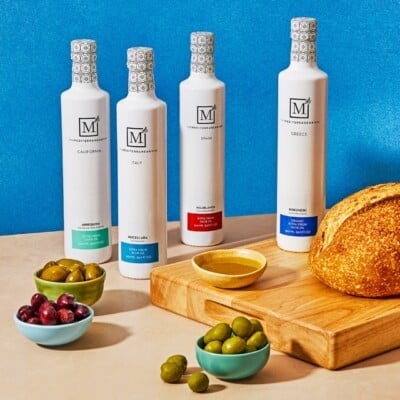
- Shop this recipe: Visit our shop for the extra virgin olive oil used in this recipe.
Nutrition
Bundle and Save!
Four of our best-selling signature olive oils, perfect for everyday use.

To clarify, this meat is being eaten either cold or room temp, is that correct? Maybe part of a casual buffet or even sandwiches?
Hi, Den. We actually recommend serving this one warm.
Hey Suzy – I have not made this yet and am considering it for xmas. Can I use (4) huge filet mignon steaks instead of the single cut of meat? Thanks!
Hi, Deborah. We haven’t tried that before ourselves, but I don’t see why not. Filet mignon is actually cut from beef tenderloin. You may just need to adjust the cooking time, depending on the size of your filets. Enjoy!
This was awesome! I followed the recipe to a T and the only thing I didn’t have were the pomegranate seeds. It turned out perfect!!! Will definitely do again! Thanks!!!