

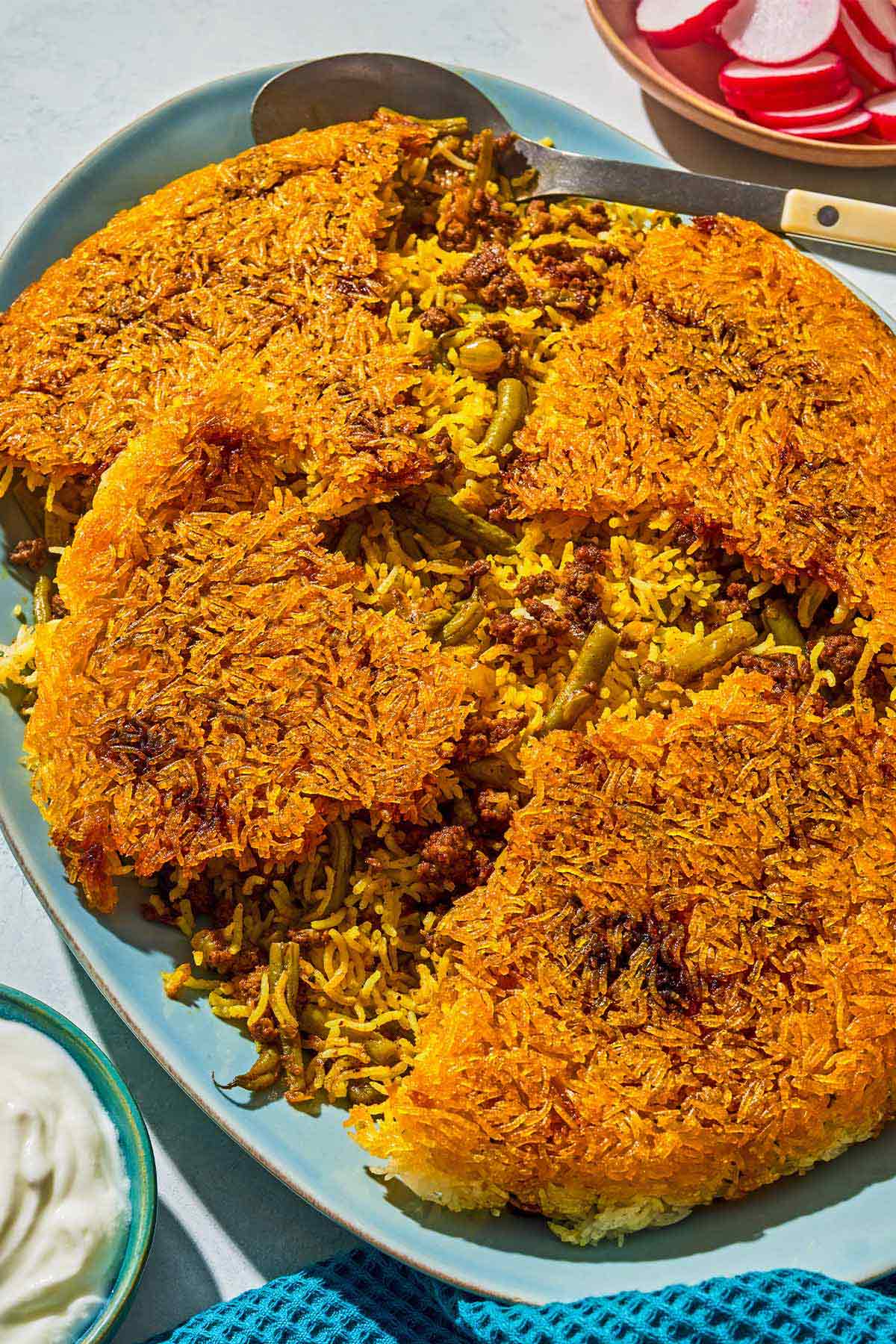
Loobia Polo is a beloved Persian dish of rice, tender green beans, and savory ground meat cooked in a tomato sauce with fragrant spices. With its rich flavors and the irresistible crispy tahdig at the bottom, this Loobia Polo recipe is a true celebration of Persian culinary tradition.
Why Loobia Polo is the Ultimate Family Dinner
- It’s a complete meal; no need for sides (though Iranians always serve yogurt and fresh herbs anyway).
- Once you layer everything in the pot it steams hands-off!
- The tahdig—that golden, crispy rice crust at the bottom of the pot—is a prize that everyone loves.
In my family, Loobia Polo is a true comfort food often eaten during weekend lunches; it is also a firm favorite at festive and larger family gatherings.
A staple in Iranian households, Loobia Polo translates to “Bean Rice” in Persian. It is made by cooking ground meat (beef or lamb) in a rich tomato sauce with tender green beans and aromatic spices (turmeric, cinnamon, and saffron). The sauce is then layered with parboiled basmati rice and gently steamed to create a flavorful and complete dish.
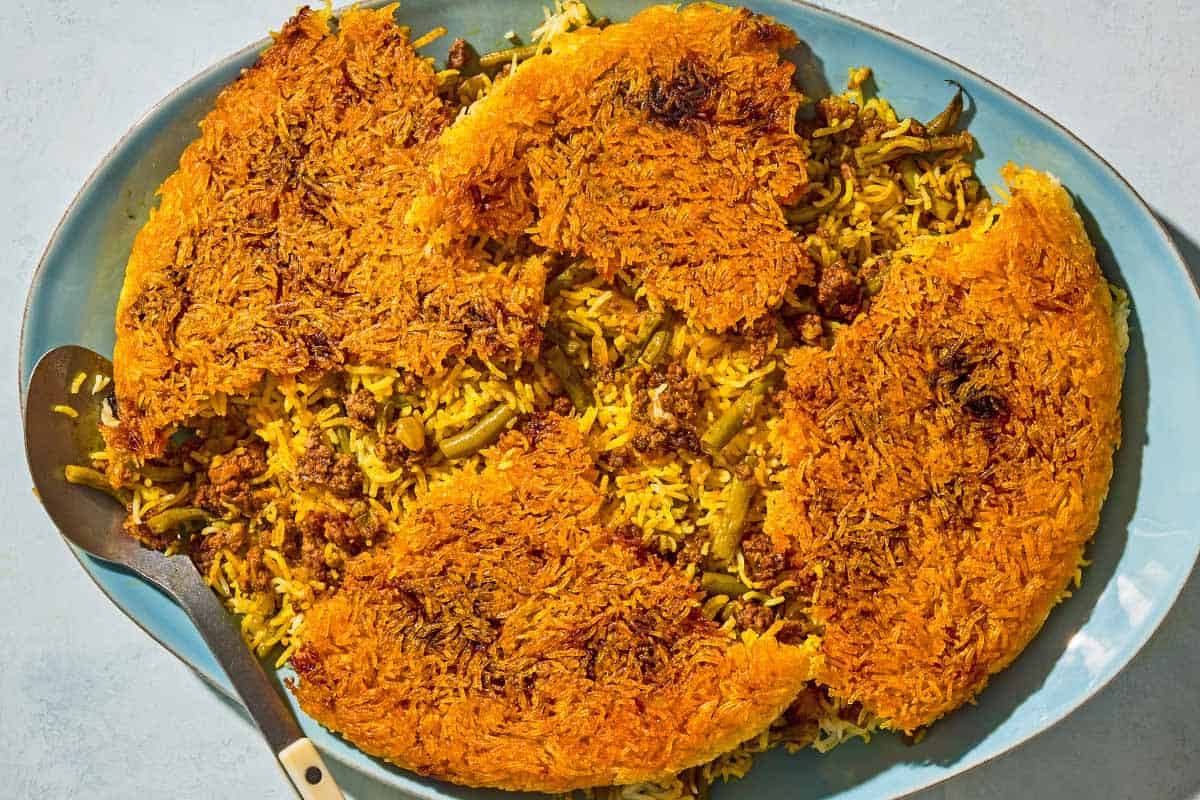
The jewel in the crown of Loobia Polo, as with all Persian rice dishes, is the tahdig—the crispy, golden crust that forms at the bottom of the pot during the steaming process.
Key Ingredients
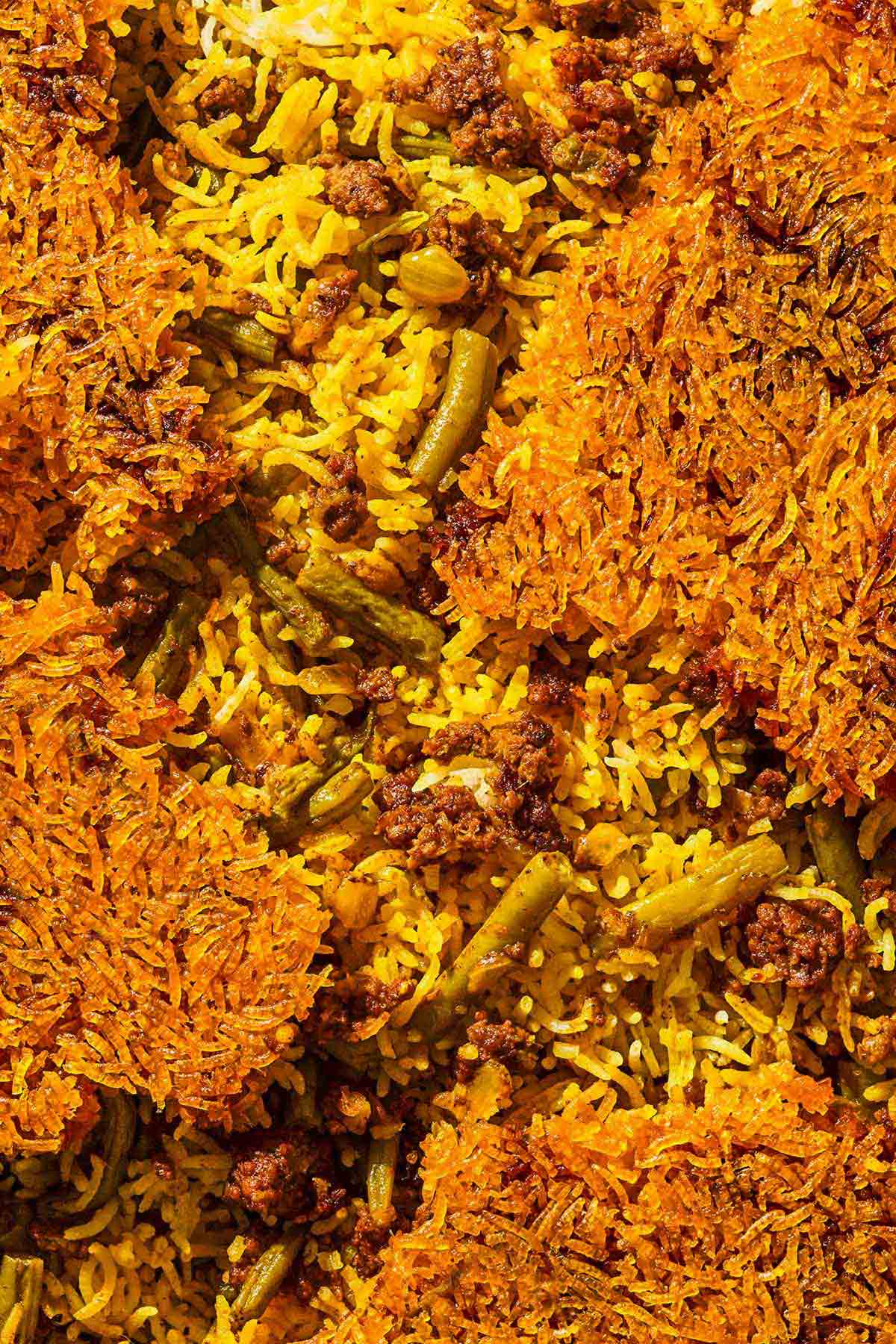
- Basmati Rice: This fragrant, long-grain rice is perfect and crucial for creating Persian rice dishes. Rinsing and parboiling it properly is key to achieving fluffy, separate grains.
- Ground Meat: This recipe is traditionally cooked with ground lamb, but good-quality beef is easier to find. Use ground turkey or chicken for a lighter version, or replace it with mushrooms for a vegetarian version.
- Green Beans: also known as French beans, are essential to this dish and are trimmed and cut into 1/2-inch pieces. They are then added to the ground beef and tomato sauce mixture. You can use either fresh or frozen. When using frozen, I like let them thaw first.
- Onion and Garlic: fresh aromatics used to add depth and aroma to the ground meat and green bean mixture.
- Tomato Paste adds richness and color to the sauce.
- Spices: Ground turmeric, ground cinnamon, and a cinnamon stick are classic Persian spices that add warmth and complexity. Saffron infuses the dish with a floral aroma and gives the tahdig its golden hue. to learn more about this spice, read our full guide to buying, preparing, and storing saffron. Try our Saffron grown high in Morocco’s Atlas Mountains
- Neutral oil: required to crisp the tahdig layer. In Persian households like mine, we generally use vegetable oil, but any neutral-flavored oil works.
How to Make Loobia Polo
Prep the Components
- Prep the Rice. Wash 3 cups basmati rice in cold water and strain. Repeat until the water runs clear to remove surface starch. Soak the rice in a bowl of cold water for at least 30 minutes. This step ensures fluffy, separate grains.
- Bloom the saffron. While the rice soaks, stir 1/8 teaspoon ground saffron threads into 1/4 cup water.
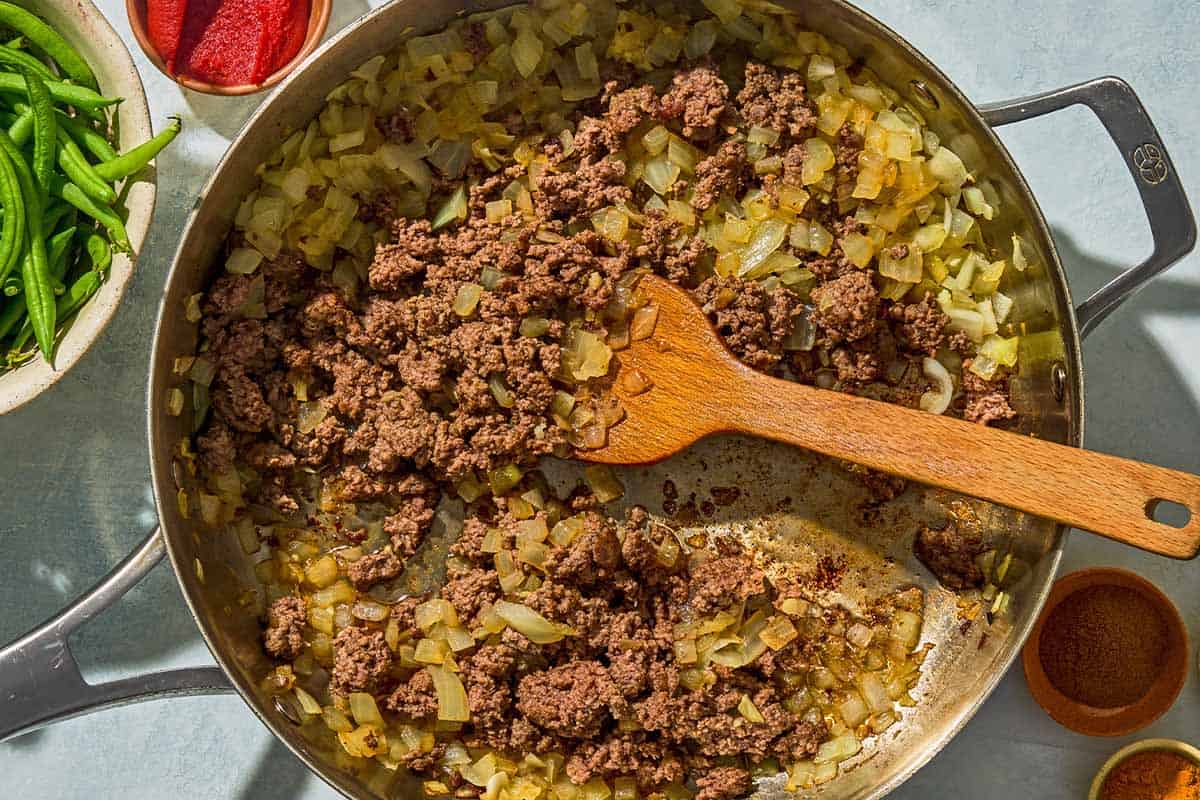
- Make the Sauce. Heat 2 tablespoons olive oil in a large skillet over medium-high heat. Add 1 large, finely-diced onion and sauté until golden, about 5 minutes. Stir in 2 grated or minced garlic cloves, then add 1 pound ground beef or lamb, breaking it up as it cooks.

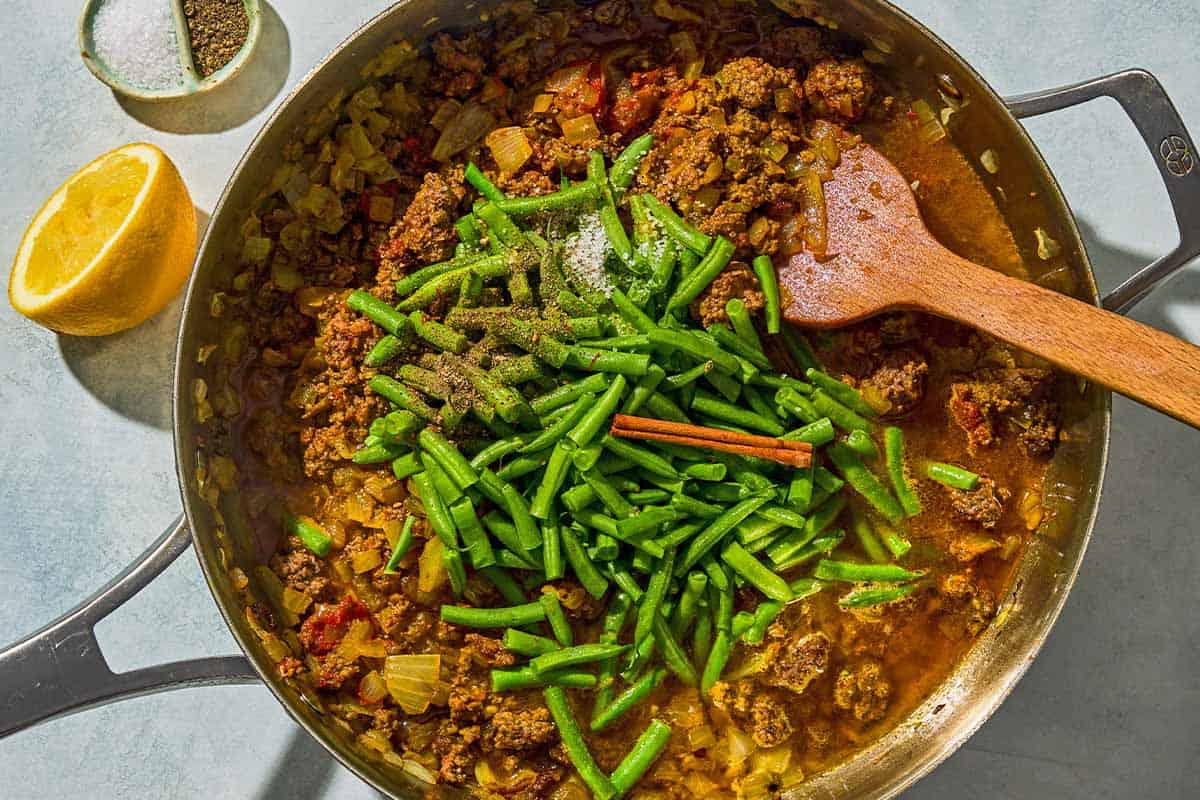
- Add the beans and season. Once browned, mix in 1 teaspoon ground turmeric and 1 teaspoon ground cinnamon. Stir in 1 tablespoon tomato paste. Follow with 1 pound green beans, trimmed and cut into 1/2 inch pieces; 1 medium cinnamon stick, and the remaining 1 1/2 cups of water. Season with 1 teaspoon salt, 1/2 teaspoon freshly ground black pepper, the juice of 1/2 lemon, and half of the bloomed saffron water.
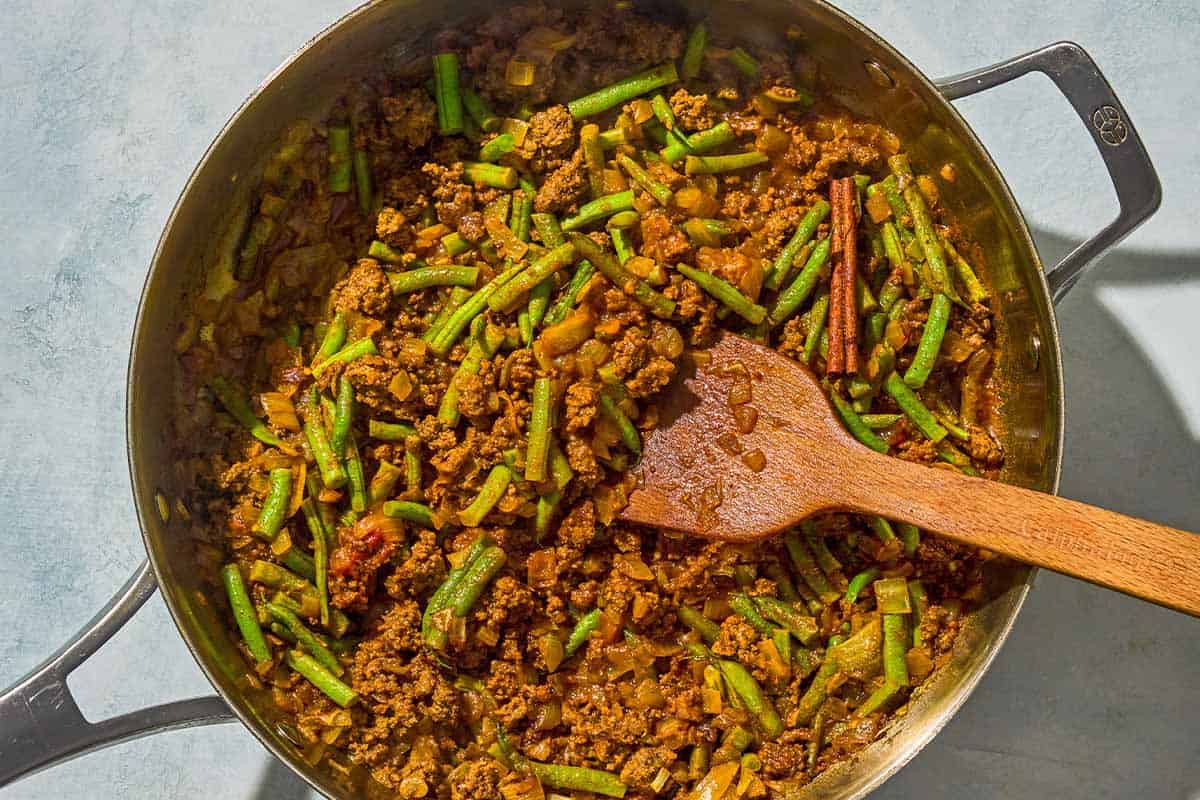
- Simmer the sauce. Reduce the heat and simmer, stirring regularly, until the water evaporates and you are left with a rich meat mixture with very little sauce, about 20 minutes. Turn the heat off. Taste and adjust seasoning.
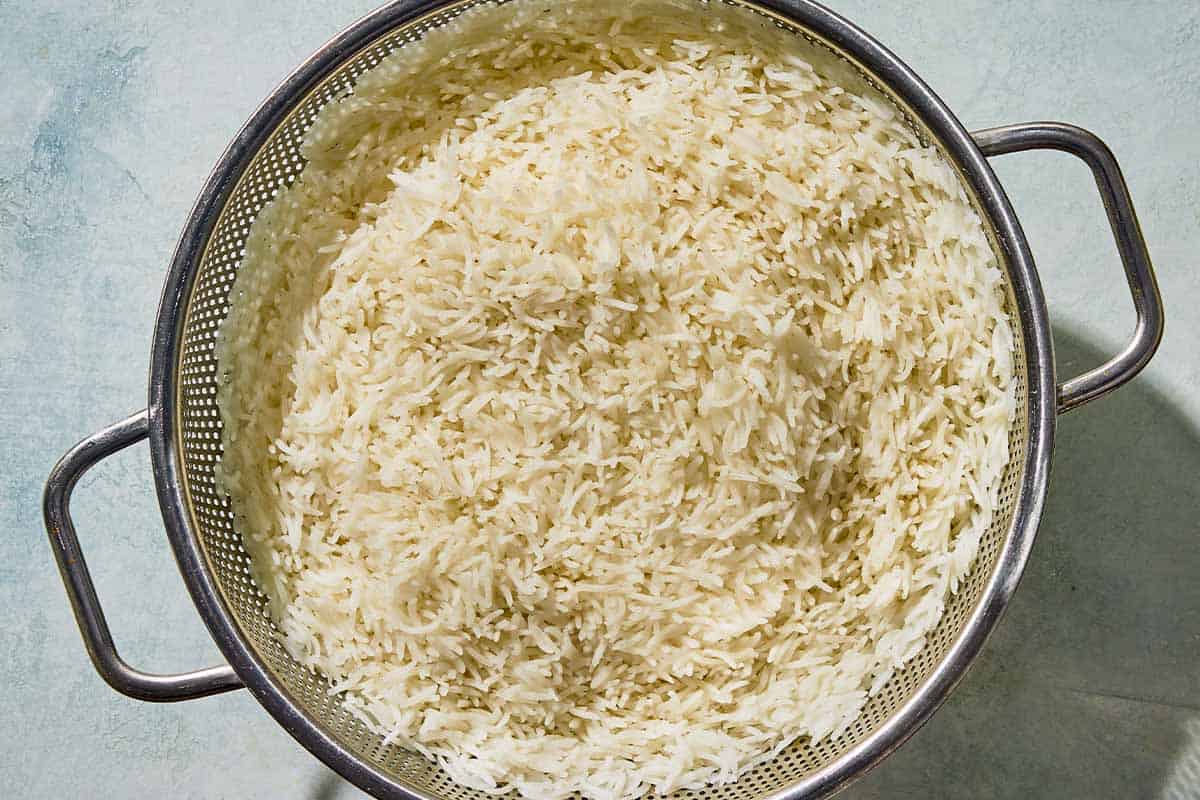
- Parboil the Rice. In a large non-stick pot, bring 8 cups of water and the remaining 1 tablespoon of salt to a boil. Strain the rice and add it to the pot. Cook until grains are slightly softened but still firm (al-dente), 5 to 7 minutes. Drain and set aside. Rinse out the pot.
Assemble
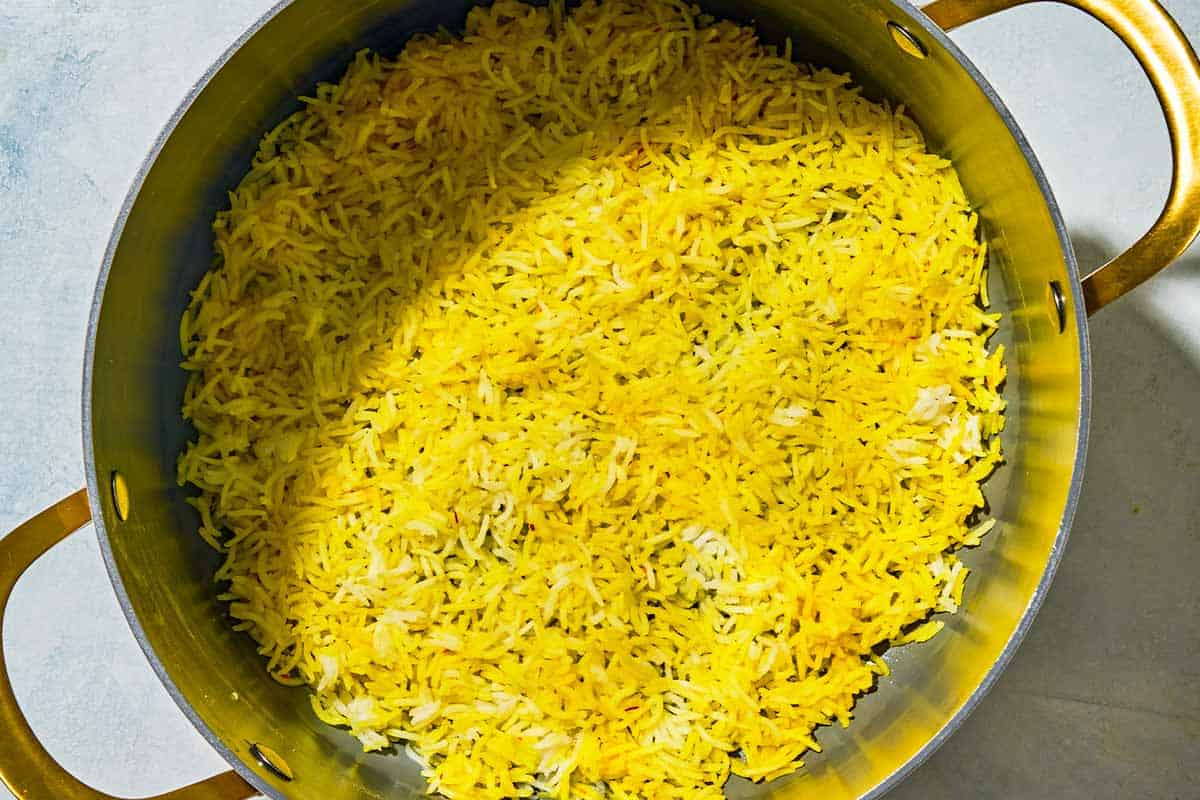
- Prepare the Tahdig Layer. In a bowl, mix 1 1/2 cups of the cooked rice with the remaining saffron water until golden. Pour 3 tablespoons neutral oil into the rinsed pot, but do not heat it yet. Spread saffron rice evenly across the bottom using the back of a spoon.
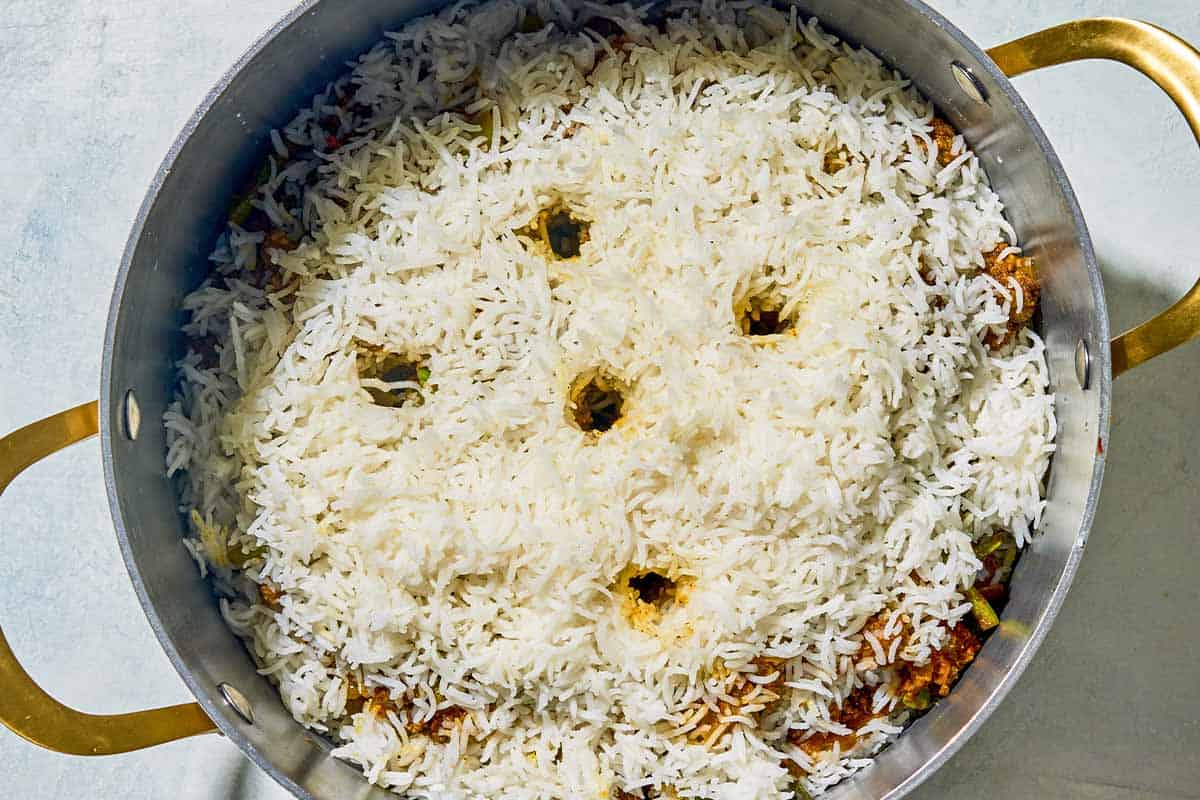
- Layer in the Loobia Polo: Alternate layers of rice and sauce mixture, building into a pyramid shape away from the pot sides. Make 5 holes in the rice down to the bottom of the pot with the back of a spoon for steam circulation.
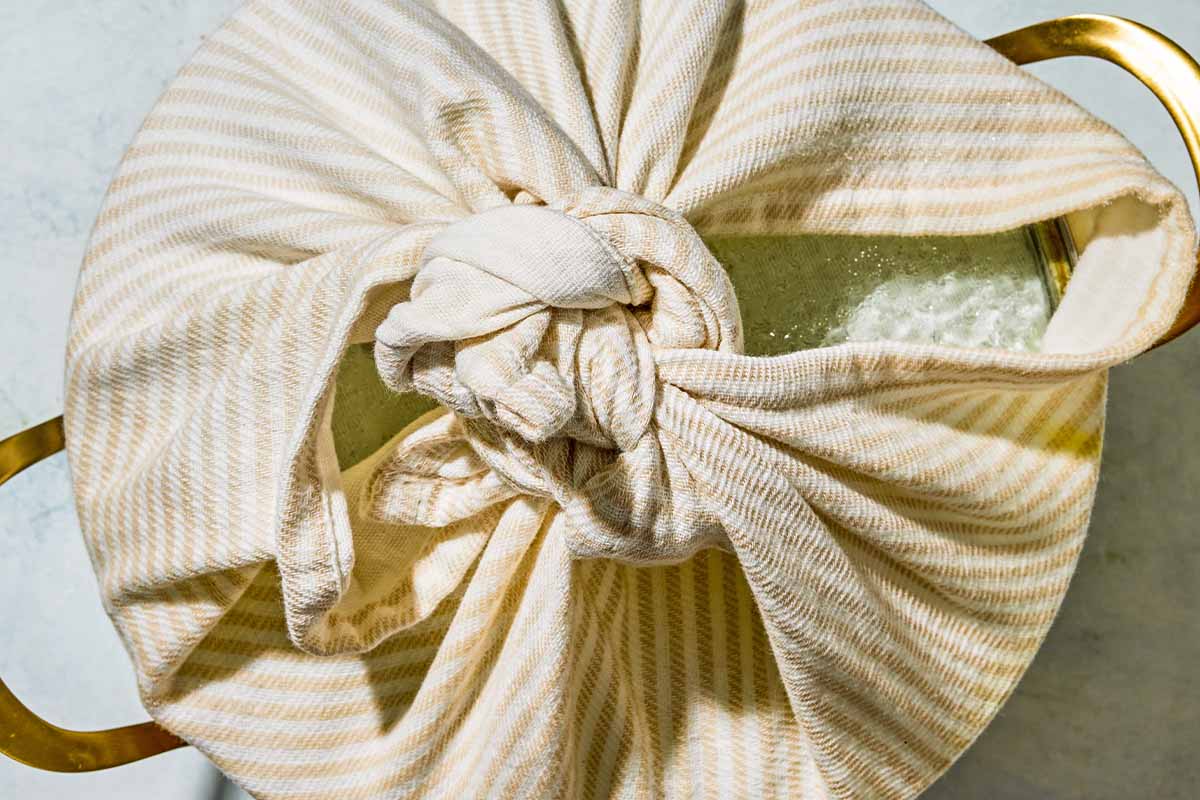
- Steam the Rice. Put a lid on the saucepan and turn the heat to high. Once steam starts to rise, reduce heat to low, this should take about 5 minutes. Keep a close eye on the pot to avoid burning the tahdig. Wrap a tea-towel around the lid, and place it back on the pot. Continue to cook for 1 hour, covered over low heat to allow the rice to steam.
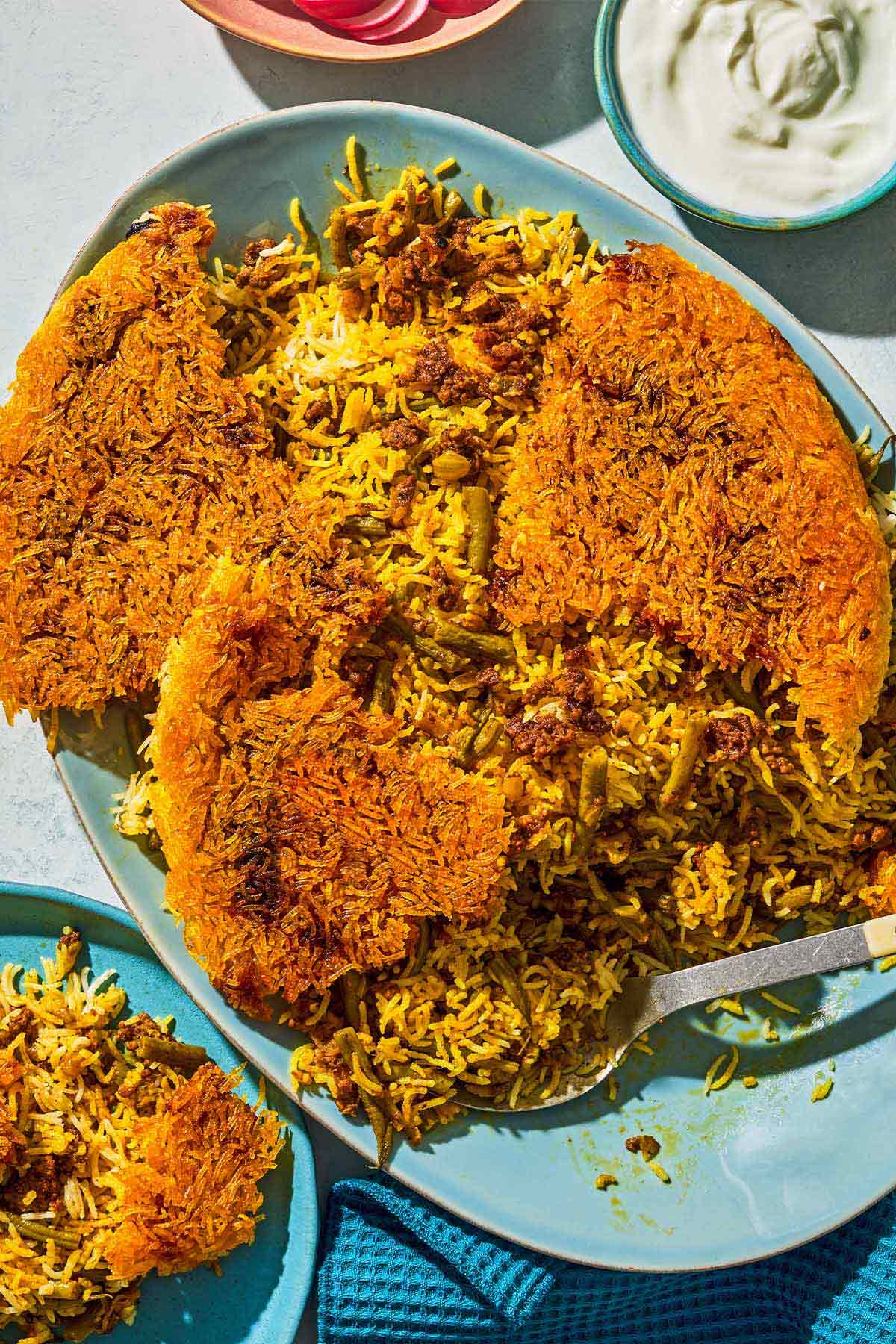
- Serve the Rice: Remove the lid, gently fluff the rice to mix, then spoon into a serving dish (remove the cinnamon stick). Use a spatula to get under the edges of the crispy tahdig layer, then carefully lift it out of the pot. Serve the crispy tahdig in a separate dish in one piece, or break up and place around the edge of the rice.
Perfect Pairings
While this is a complete meal as it includes protein, carbohydrates, and vegetables, Iranians will always accompany this dish with a yogurt-based and salad dish such as Mast O’Khiar (Persian yogurt and cucumber dip) and Salad Shirazi (Persian tomato, cucumber, and red onion salad).
In my family, as well as in other Iranian households, we love eating fresh herbs with our meals, including fresh mint, basil, tarragon, and cilantro.


Ingredients
- 3 cups basmati rice
- 1/8 teaspoon saffron threads, ground
- 1 3/4 cups water, divided, plus extra to cook rice
- 2 tablespoons extra virgin olive oil
- 1 large onion, finely diced
- 2 garlic cloves, grated or minced
- 1 pound ground beef or lamb
- 1 teaspoon ground turmeric
- 1 teaspoon ground cinnamon
- 1 tablespoon tomato paste
- 1 pound green beans, trimmed and cut into 1/2-inch pieces
- 1 medium cinnamon stick
- 4 teaspoons kosher salt divided
- 1/2 teaspoon freshly ground black pepper
- 1/2 lemon, juiced
- 3 tablespoon neutral oil
Instructions
- Prep the rice. Wash the rice in cold water and strain. Repeat until the water runs clear to remove surface starch. Soak the rice in a bowl of cold water for at least 30 minutes. This step ensures fluffy, separate grains.
- Bloom the saffron. While the rice soaks, stir the saffron into 1/4 cup water.
- Make the sauce. Heat olive oil in a large skillet over medium-high heat. Add diced onion and sauté until golden, about 5 minutes. Stir in the garlic, then add the ground meat, breaking it up as it cooks.
- Add the beans and season. Once browned, mix in the ground turmeric and cinnamon. Stir in the tomato paste. Follow with the green beans, cinnamon stick and remaining 1 1/2 cups of water. Season with 1 teaspoon salt, black pepper, the lemon juice, and half of the bloomed saffron water.
- Simmer the sauce. Reduce heat and simmer, stirring regularly, until the water evaporates and you are left with a rich meat mixture with very little sauce, about 20 minutes. Turn the heat off. Taste and adjust seasoning.
- Parboil the rice. In a large non-stick pot, bring 8 cups water and remaining 3 teaspoons salt to a boil. Strain the rice and add to the pot. Cook until grains are slightly softened but still firm (al-dente), 5 to 7 minutes. Drain and set aside. Rinse out the pot.
- Prepare the tahdig layer. In a bowl, mix 1 1/2 cups of the cooked rice with remaining saffron water until golden. Pour neutral oil into the rinsed pot, but do not heat yet. Spread saffron rice evenly across the bottom using the back of a spoon.
- Layer in the Loobia Polo: Alternate layers of rice and sauce mixture, building into a pyramid shape away from the pot sides. Make 5 holes in the rice down to the bottom of the pot with the back of a spoon for steam circulation.
- Steam the rice. Put a lid on the saucepan and turn heat to high. Once steam starts to rise, reduce heat to low, ideally you have a glass lid, but if not this should take about 5 minutes. Keep a close eye on the pot to avoid burning the tahdig. Wrap a tea-towel around the lid, and place it back on the pot. Continue to cook for 1 hour, covered over low heat to allow the rice to steam.
- Serve the rice: remove the lid, gently fluff the rice to mix, then spoon into a serving dish (remove the cinnamon stick). Use a spatula to get under the edges of the crispy tahdig layer, then carefully lift it out of the pot. Serve the crispy tahdig in a separate dish in one piece, or break up and place around the edge of the rice.
Notes
- Shop this recipe: Visit our shop to browse quality Mediterranean ingredients, including the olive oil, saffron, and spices used in this recipe.
- Variations: This recipe is traditionally cooked with ground lamb but good quality beef is easier to find. Use ground turkey or chicken for a lighter version, or replace with mushrooms for a vegetarian version.
- How to store: Always ensure leftovers have fully cooled before storing. Store leftovers in an airtight container for up to 4 days. To freese, portion into freezer-safe containers and freeze for up to 2 months.
- To reheat: Warm gently on the stovetop with a splash of water and cover, or microwave in intervals until heated through. For crispy tahdig, reheat in a skillet over medium heat.
Nutrition
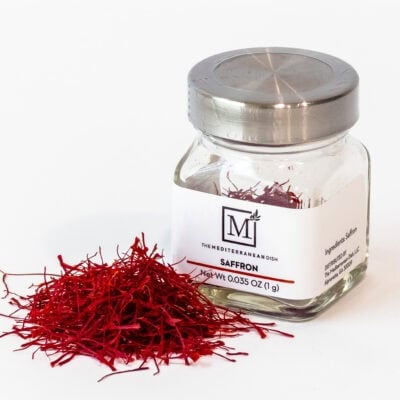
Try Our All Natural Saffron!
Exquisite Saffron from the high altitudes of Morocco’s Atlas Mountains