


In this Swiss chard recipe, the greens are braised in olive oil with onions, rice, and tomato. It’s a classic Turkish vegetable dish that’s even better the next day. Plus, it’s both vegan and gluten-free!
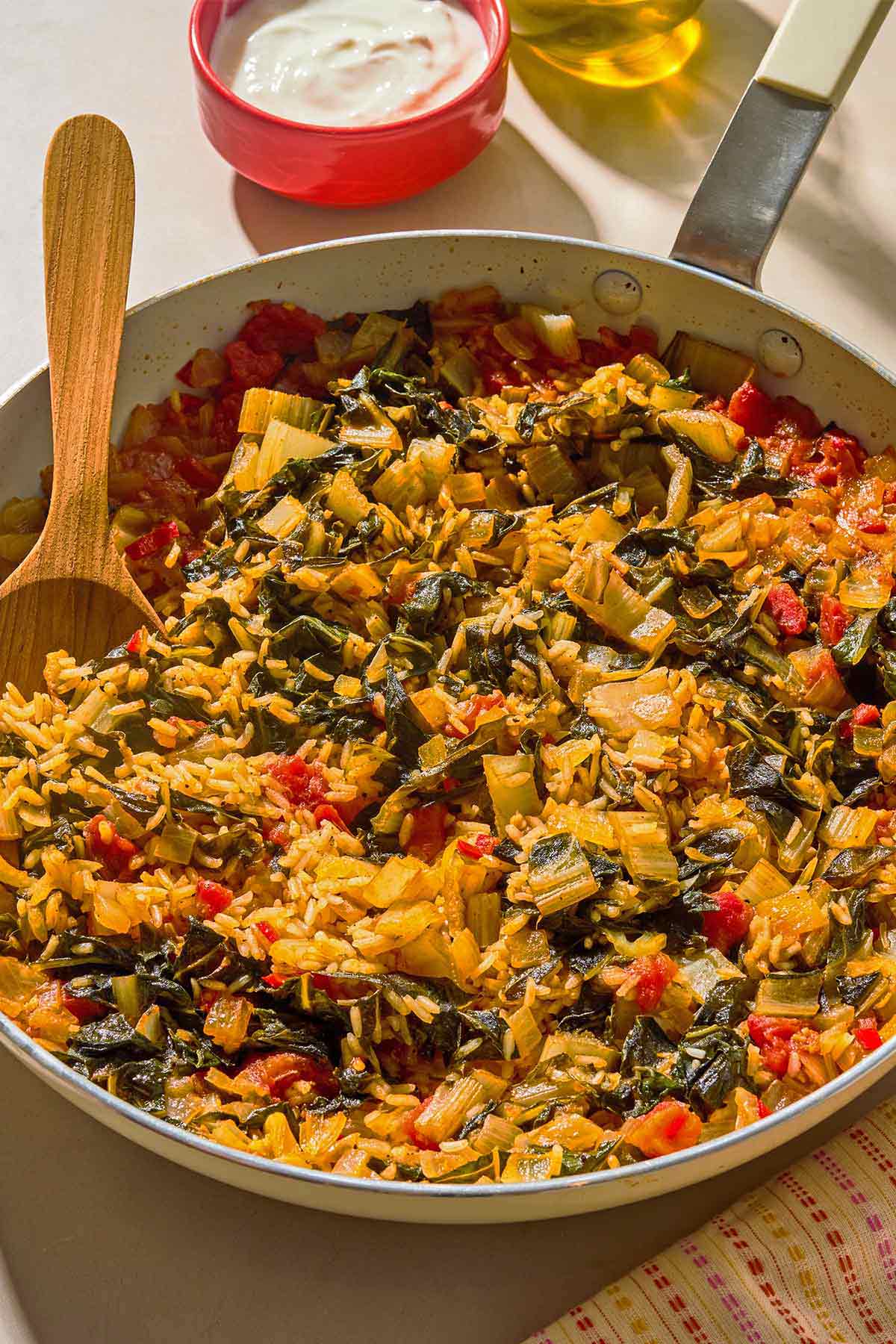
Healthy One-Pan Turkish Swiss Chard Recipe
Zeytinyağlı Pazi means “chard in olive oil,” a simple, elegant, yet easy Swiss chard recipe. Pazı (Swiss chard), is a cooking green beloved throughout northwest Türkiye (Turkey). I love its gently tart flavor in this dish and included it in my book, Sebze: Vegetarian Recipes from My Turkish Kitchen.
To make it, I cook down the chard—both stems and leaves—until silky and tender, with tomato, caramelized onions, and garlic. A little bit of rice in the dish makes it more substantial, and some fresh red chili pepper gives it a nice, but not overpowering, spicy kick.
I love this Swiss chard recipe as a nourishing weekday meal that you can prepare ahead of time– leftovers are delicious the next day too. It’s traditionally served cold or at room temperature alongside other mezze dishes, with crusty bread for scooping.
Why You’ll Love This Swiss Chard Recipe
- It’s a true one-pan wonder!
- Leftovers get even better. Cooks in Turkey often make this dish ahead of time and serve it cool or at room temperature as a mezze.
- It’s a complete meal that’s loaded with vegetables and balanced with silky olive oil and tender grains of rice.
Key Ingredients
- Extra virgin olive oil: The characteristic of this dish is that it is cooked in olive oil (zeytinyağı), which provides a rich, full-bodied flavor and is healthy.
- Onion becomes sweeter and more mellow as it cooks, a lovely match for the slightly bitter chard in this dish. Either red or yellow onion would be lovely.
- Red chili pepper adds a delicious but not overpowering spiciness and aroma to this lovely dish. Look for any red medium-hot pepper, such as Fresno. You can also substitute with 1/2 teaspoon of red pepper flakes.
- Garlic provides an aromatic foundation and pungency to the dish.
- Tomatoes: Diced canned tomatoes add body, thickness, and moisture to the dish, while double-concentrated tomato paste, a must-have ingredient in Turkish cuisine, adds rich, intense tomato flavor and color and helps thicken the texture.
- Swiss Chard: I love the earthy, slightly bitter taste of chard. When cooked, its initial raw bitterness mellows out quite a bit, and it becomes tender, with a hint of pepperiness too. You can use any color chard in this recipe.
- Rice: As it cooks, the rice absorbs liquid and releases starch that naturally thickens this dish and makes it more substantial, too. Short-grain baldo rice is a popular choice in Turkey, though arborio or long-grain varieties work well, too.
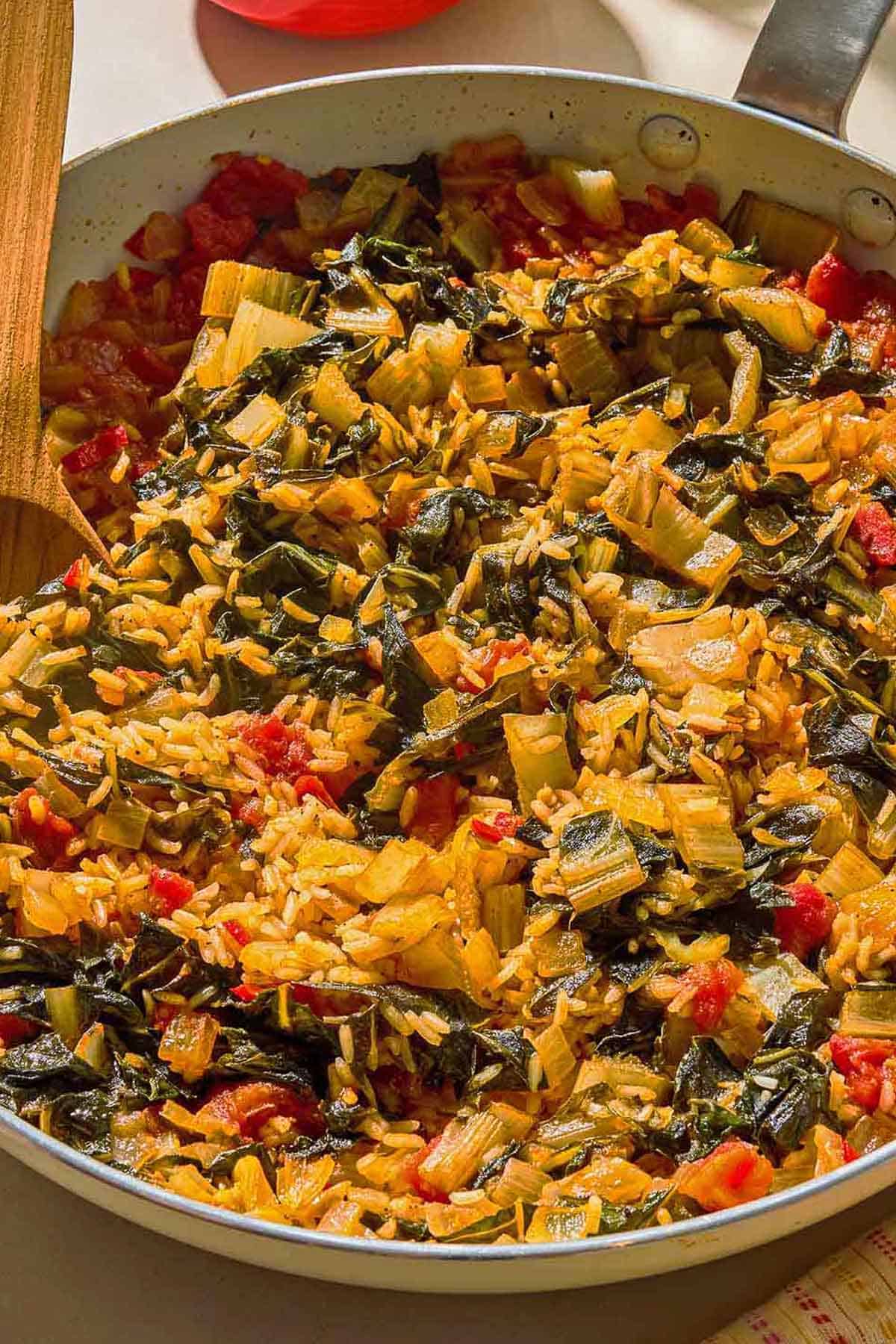
How to Cook Swiss Chard, Turkish Style
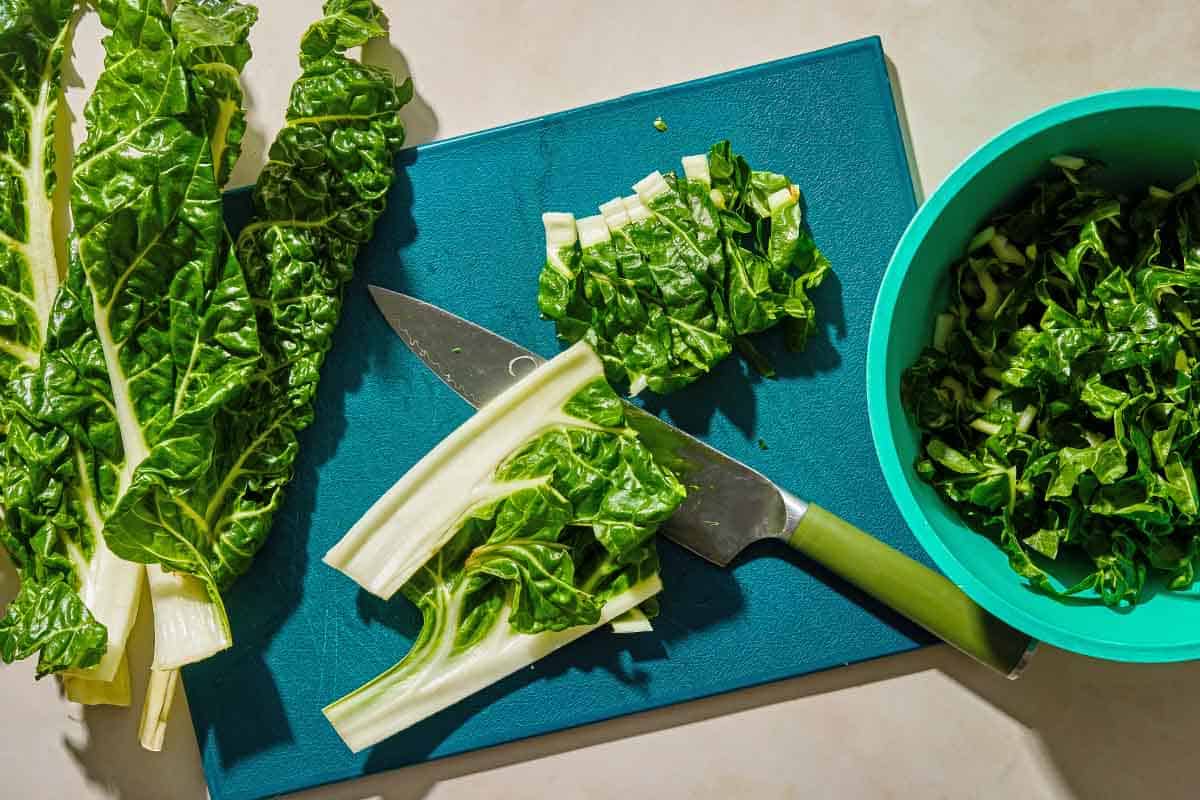
- Prep the Swiss chard. Wash 1 pound of Swiss chard, and halve the leaves through the stems lengthwise. Chop the leaves into 1/2-inch pieces. Set aside.

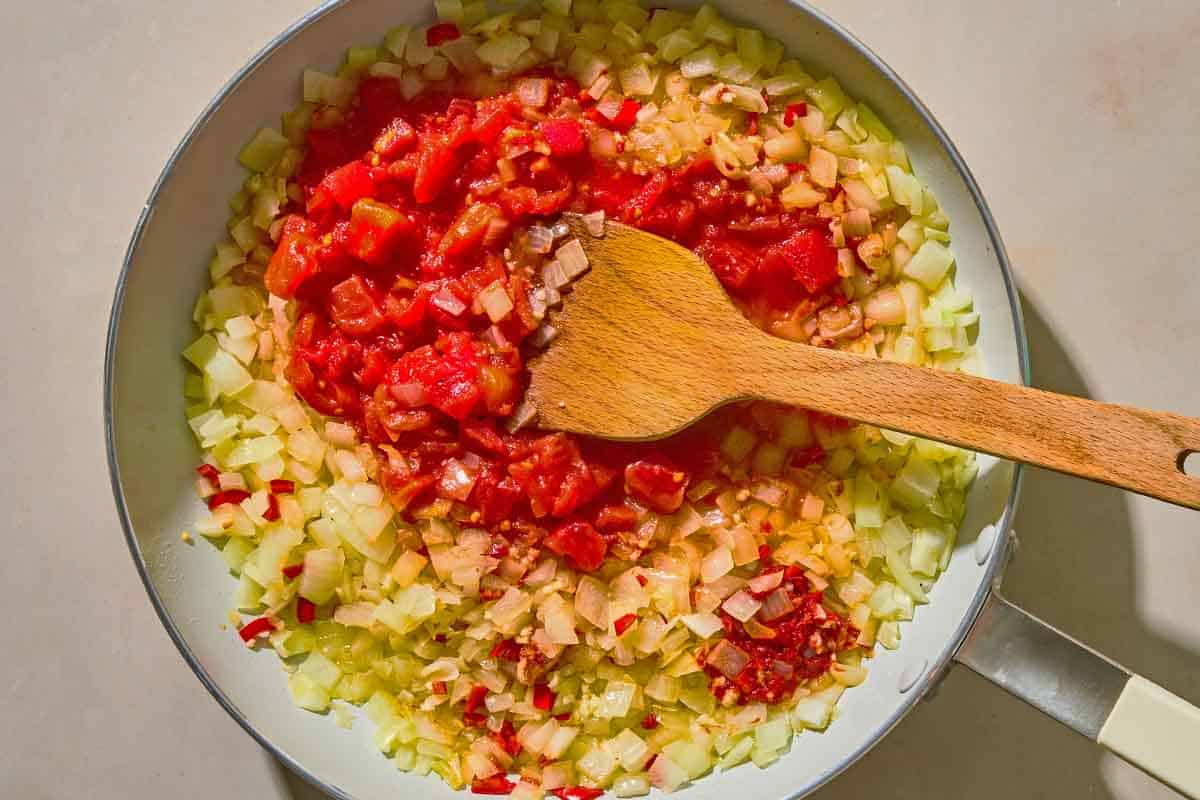
- Sauté the aromatics. Heat 2 tablespoons extra virgin olive oil in a large, wide saucepan over a medium–high heat, add 1 finely chopped medium onion and sauté for 3 to 4 minutes until starting to soften. Add 1 seeded and finely chopped red chili pepper (such as Fresno), 4 finely chopped garlic cloves, 1 tablespoon double-concentrated tomato paste, and 1 cup diced canned or fresh tomatoes to the pan. Stir to combine and cook for 2 minutes.
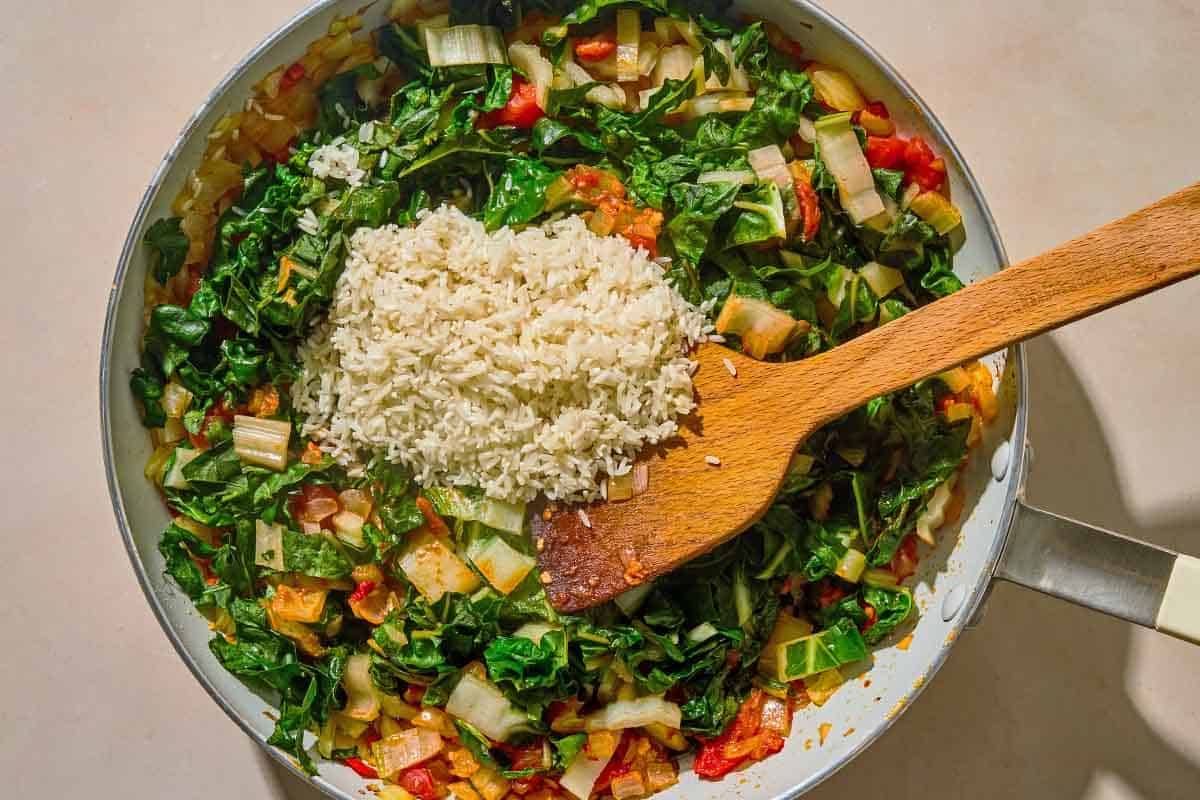
- Add the Swiss chard. Lower heat to medium and stir in the chopped chard, and gently combine until softened, 2 to 3 minutes. Add 1/2 cup rinsed rice and stir to combine well.
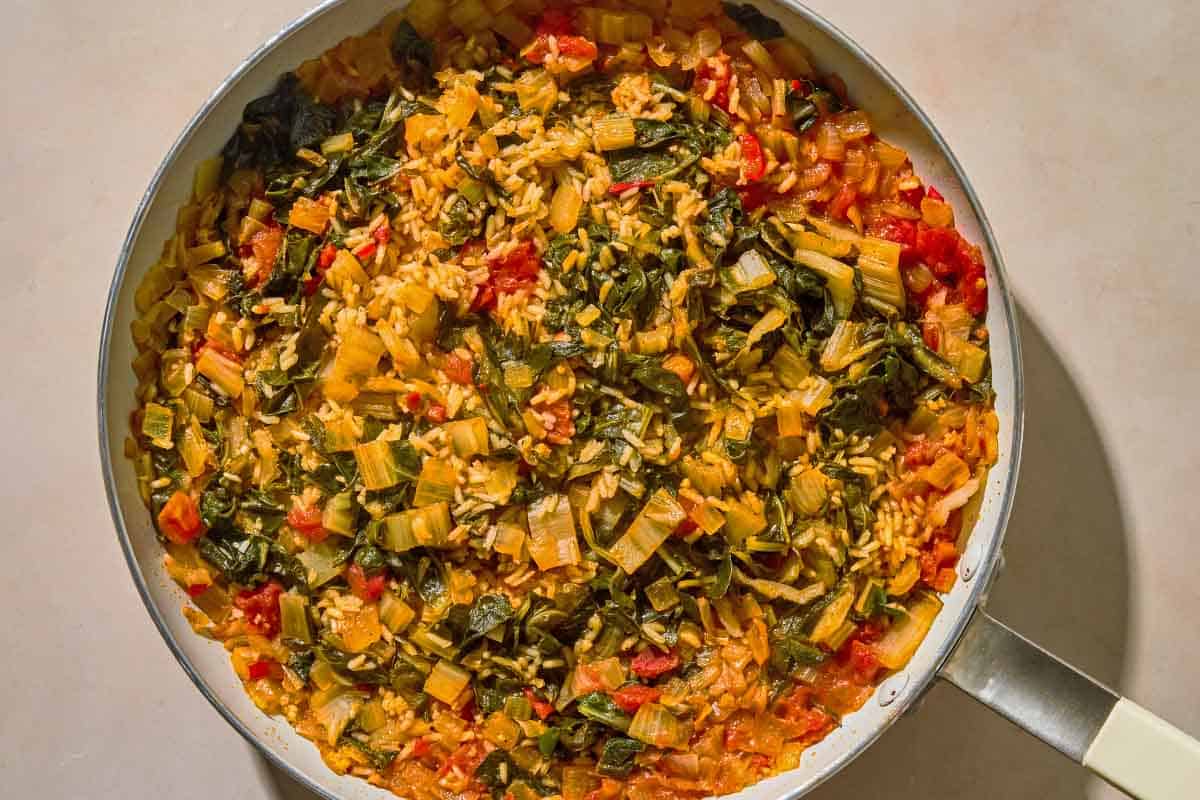
- Simmer and steam. Add 2 cups hot water, season with a good pinch (about 1/2 teaspoon each) salt and freshly-ground black pepper, give it a good stir, then cover and cook for 20–25 minutes over a medium-low heat until the rice and vegetables are cooked and tender.
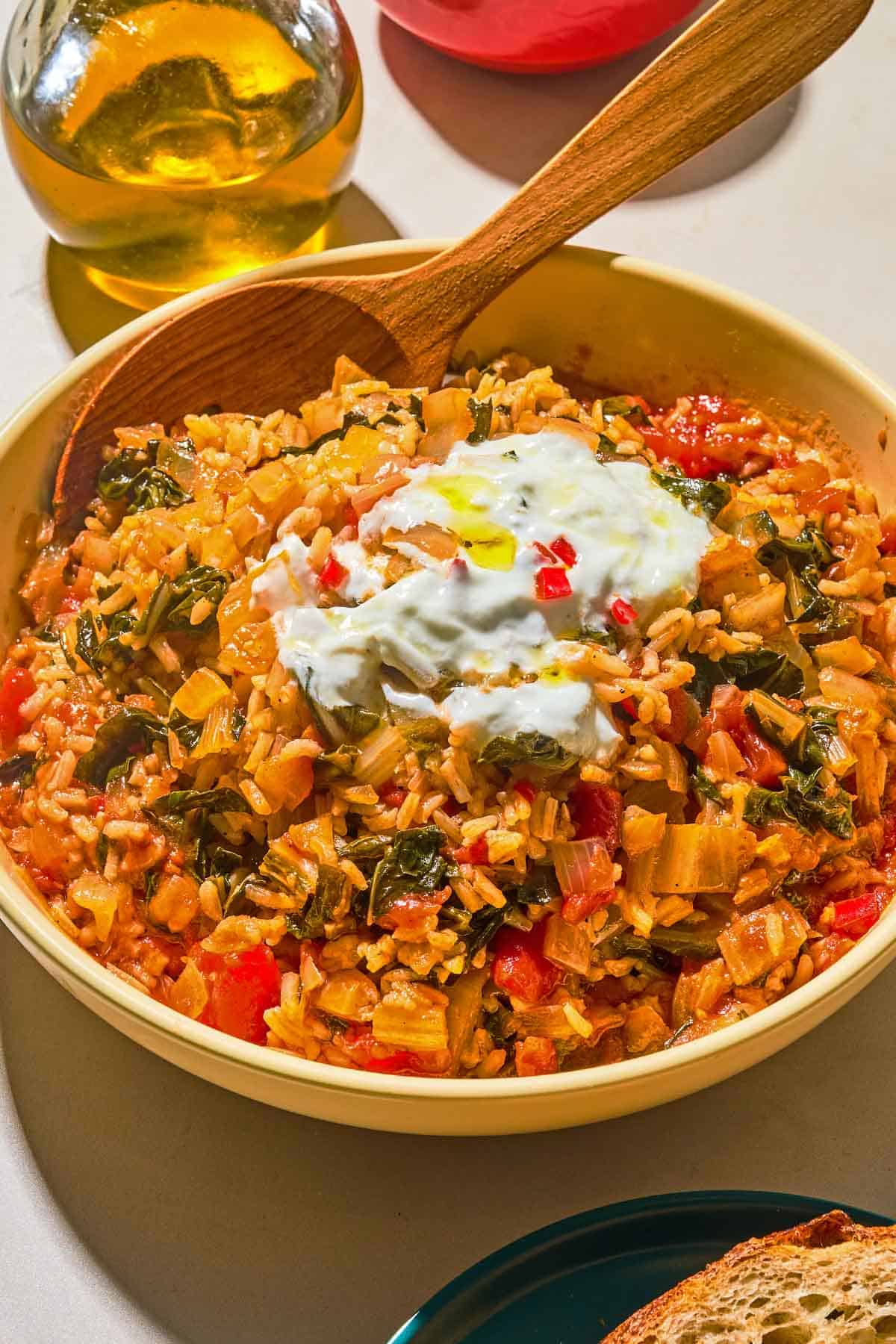
- Steam and serve. Turn the heat off and leave to rest for 10 minutes, covered. Serve the vegetables and cooking juices with a dollop of yogurt and a drizzle of extra virgin olive oil over top.

What is Zeytinyağlı?
Zeytinyağlı is a category of dishes in Turkish cuisine where we cook vegetables, sometimes along with grains, gently with olive oil.
We eat zeytinyağlı dishes at room temperature or chilled, especially in summertime. My family also loves this dish hot on cooler days, with a dollop of yogurt and a drizzle of extra virgin olive oil. Zeytinyağlı dishes are great to prepare ahead of time. In fact, leftovers taste even better the next day as the flavors develop.
Substitutions
- Use other greens: Spinach, kale, beet greens, or large leafy collard greens all work in place of chard. I sometimes like to add a few scallions and their greens, too.
- Use other grains: Substitute rice with coarse bulgur or quinoa. They will add wholesomeness and nutty flavor to the dish.
- Use fresh tomatoes: Instead of a can of chopped tomatoes, you can use fresh, ripe tomatoes when they’re in season. As they may not have the same intense tomato flavor as canned tomatoes, you may need to add another tablespoon of tomato paste.
What does Swiss Chard Taste Like?
If you’re new to cooking with Swiss chard, you’re in for a treat. This leafy green is nutritionally dense and one of the most versatile vegetables in the Mediterranean diet, with a lightly bitter flavor profile that sets it apart.
Swiss chard has a mild, earthy flavor. The leaves are heartier than spinach, but not as tough as kale. The stalks are crunchy. The leaves have a hint of bitterness, but when cooked, it mellows significantly, becoming silky and savory.
Types of Swiss Chard
While you might see several names at the grocery store or farmers’ market, they are mostly variations of the same plant and can be used interchangeably in this recipe.
- Rainbow Chard: A mix of plants with vibrant red, pink, yellow, and orange stems. It’s the most visually stunning variety. The colors are muted once cooked.
- Fordhook Giant: Known for its thick white stalks and crinkled green leaves.
- Rhubarb Chard: Features deep red stalks that look similar to rhubarb.
Perfect Pairings
When the weather is warm, we traditionally eat this dish cold or at room temperature as part of a mezze spread. On cold days, we enjoy it hot. Here are a few ideas for how to serve it.
- Bread on the side: Serve this swiss chard recipe with crusty olive bread to mop up the delicious juices, along with a drizzle of extra virgin olive oil. Flatbreads can be lovely here too.
- Dollop with yogurt: Plain yogurt is a major staple in Turkish cuisine that accompanies most savory meals. Its cooling, creamy, tangy taste is fantastic with savory dishes, and it is packed full of goodness and gut-friendly, too. I like using creamy whole milk Turkish or Greek yogurt, though you may opt to use a lower-fat or plant-based version, too.
- Add feta: Instead of yogurt, this dish is lovely topped with crumbled feta and a drizzle of extra virgin olive oil.
- Add a few eggs over: For a more substantial meal, you can crack a few eggs over the greens, cover, and cook—it is delicious!


Ingredients
- 2 tablespoons extra virgin olive oil, plus more to serve
- 1 medium onion, finely chopped
- 1 red chili pepper, deseeded and finely chopped (use more if you like it spicy)
- 4 garlic cloves, finely chopped
- 1 tablespoon double concentrated tomato paste
- 1 cup canned diced tomatoes
- 1 pound Swiss chard, cleaned, halved lengthways and roughly chopped into 1/2-inch pieces
- 1/2 cup rice, rinsed
- 2 cups hot water
- Sea salt
- Freshly ground black pepper
- Plain yogurt, to serve (optional)
Instructions
- Sauté the aromatics. Heat the olive oil in a large, wide saucepan over a medium–high heat, add the onion and sauté for 3 to 4 minutes until starting to soften. Add the chile, garlic, tomato paste, and diced tomatoes to the pan, combine well and cook for 2 minutes.
- Add the Swiss chard. Stir in the chopped chard and gently combine and wilt over a medium heat for 2–3 minutes. Add the rinsed rice and combine well.
- Braise. Add the hot water, season with a good pinch (about 1/2 teaspoon each) salt and pepper, give it a good stir, then cover and cook for 20–25 minutes over a medium-low heat until the rice and vegetables are cooked and tender.
- Finish and serve. Turn the heat off and leave to rest for 10 minutes, covered. Serve the vegetables and cooking juices with a dollop of yogurt and a drizzle of extra virgin olive oil over top.
Notes
- Shop this recipe: Visit our shop to browse quality Mediterranean ingredients, including the olive oil used in this recipe.
- Substitutions:
- Use other greens: Spinach, kale, beet greens, or large leafy collard greens all work in place of chard. I sometimes like to add a few scallions and their greens, too.
- Use other grains: Substitute rice with coarse bulgur or quinoa. They will add wholesomeness and nutty flavor to the dish.
- Use fresh tomatoes: Instead of a can of chopped tomatoes, you can use fresh, ripe tomatoes when they’re in season. As they may not have the same intense tomato flavor as in canned tomatoes, you may need to add another tablespoon of tomato paste.
Nutrition
Bundle and Save!
Four of our best-selling signature olive oils, perfect for everyday use.