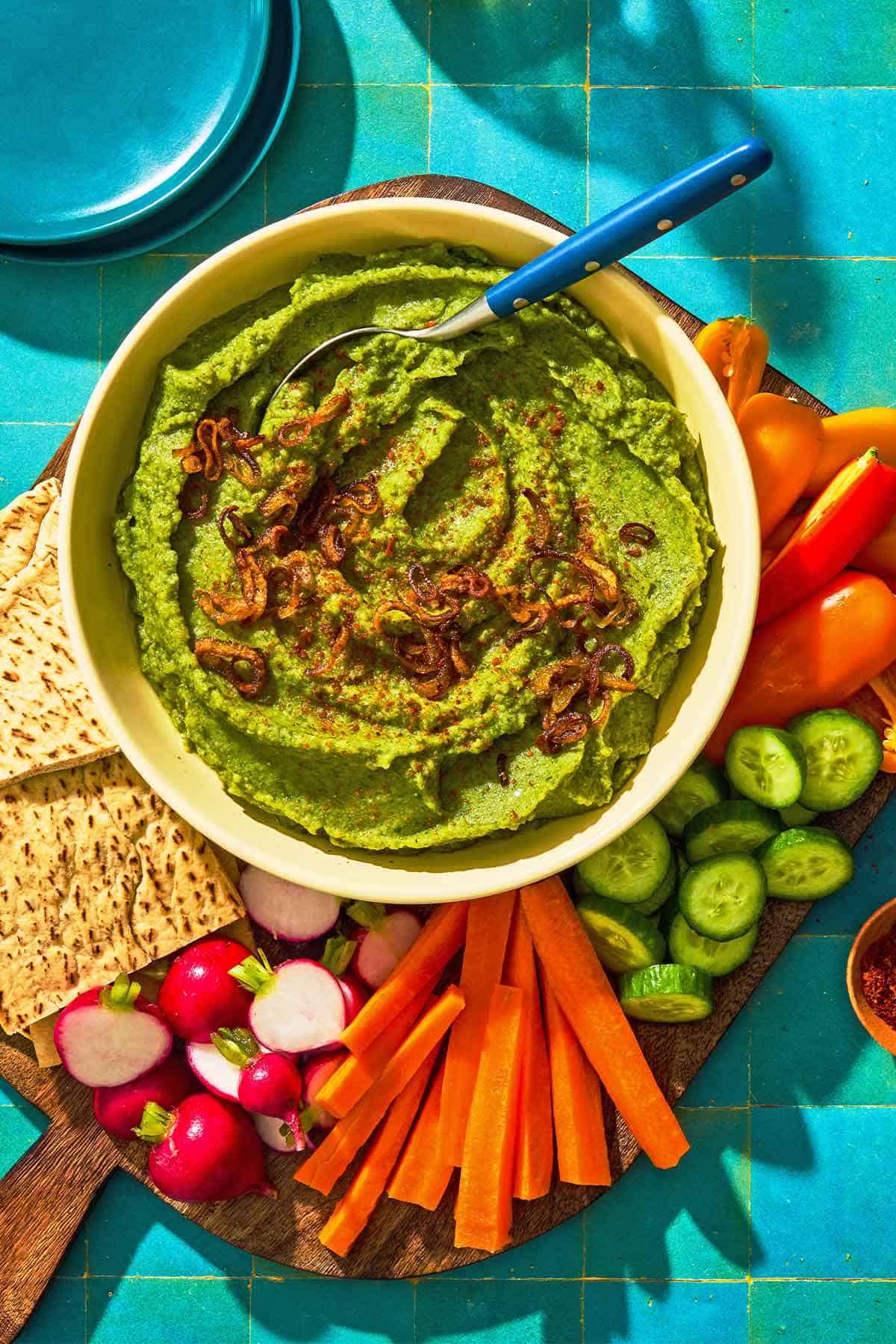
Bissara is an Egyptian fava bean dip that’s all about fresh green herbs. It’s beautifully herbaceous and spicy, and naturally vegan!
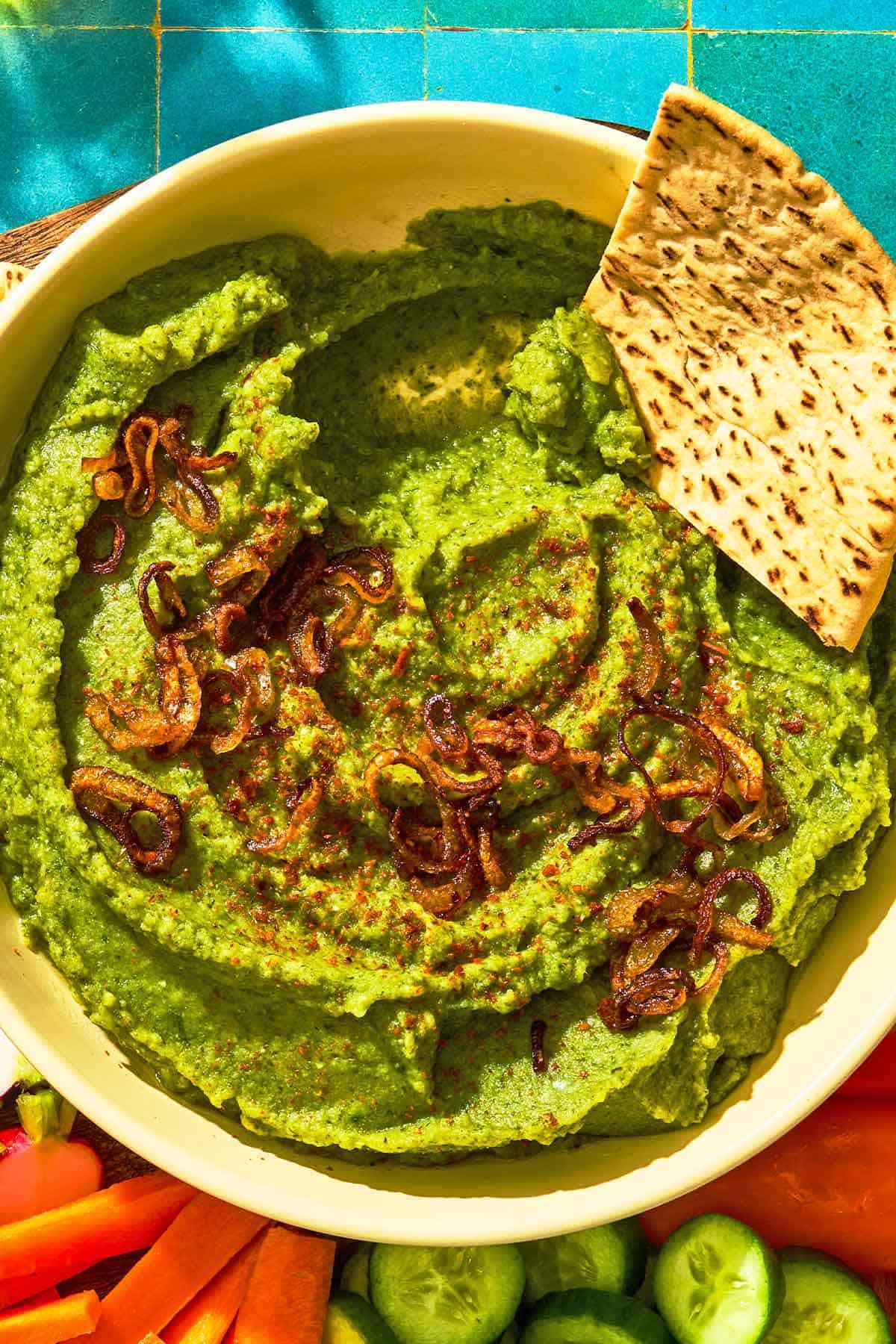
Photo Credits: Ali Redmond
Why Bisarra Will Be Your New Favorite Bean Dip
- Blended with heaps of herbs, this Egyptian bean dip has a creamy texture (but it’s vegan!), a deep green color, and a vibrant flavor.
- Eat it on its own as a meal or serve it as an appetizer or snack.
- Though fava beans are traditional, this recipe includes easier-to-find options, too.
Egyptian bissara, also spelled bessara, is a nutritious fava bean dip made with a whole lot of fresh herbs, giving it its signature green color. Every household has its own preference for how thick they like it, and which combination and ratio of herbs they enjoy the most. Even though it’s a dip, it’s often eaten as a light meal in its own right, with some pita bread.
Different versions of this dish exist across North Africa, but with slight variations, like the Moroccan version, which is more of a hot fava bean soup that is more spiced and doesn’t include herbs.
It’s velvety and creamy, while being completely vegan. That’s what makes it especially loved during Lent and Advent in Egypt because of the vegan fast that Coptic Egyptians (the community I grew up in) practice during that time. Traditionally, it’s also particularly enjoyed on Good Friday after a long day at mass. In truth, it’s so beloved that it’s eaten all year round, too!
Key Ingredients
- Dried split fava beans (also known as broad beans), soaked in water and then simmered until soft and tender, are the bissara base. Their neutral, slightly nutty flavor allows the fresh herbs to take center stage. You can cook them from dry without soaking, but I find soaking the dried beans overnight helps cut the cooking time significantly. See below for advice on substituting them!
- Garlic, onion, and shallot. Cooking the beans with garlic and onion adds flavor to the broth and brings their aromas to the dip. A topping of caramelized shallots adds a bit of visual and textural variation, and just a hint of sweetness.
- Fresh herbs. Fresh cilantro, parsley, and dill are, what I consider to be, the holy trinity of Middle Eastern herbs. They are used in large volumes to give a fresh, green flavor to the dip.
- Extra virgin olive oil adds a touch of richness to the bessara and helps to emulsify all the ingredients together into one uniform concoction after blending.
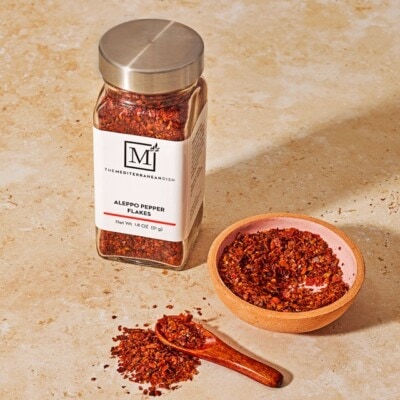
- Aleppo pepper brings a subtle heat to the dip and also looks pretty as a finishing sprinkle.
How to Make Fava Bean Dip
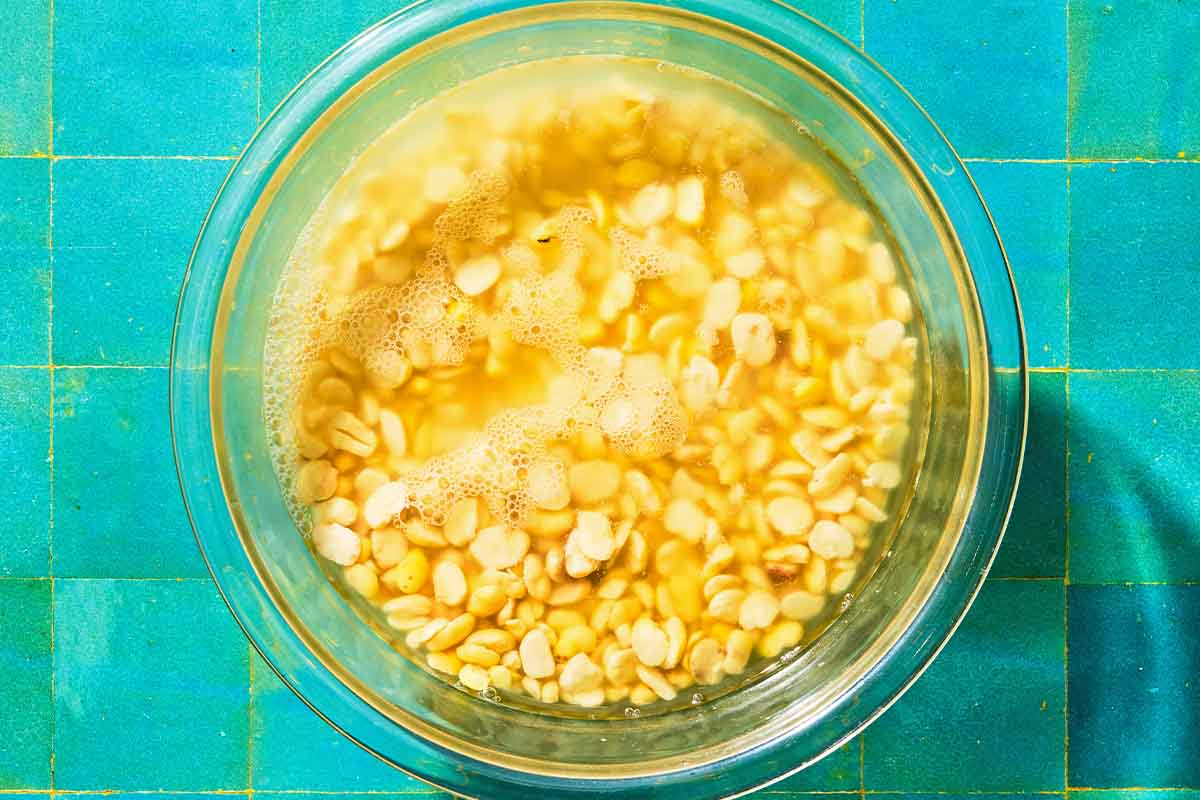
- Get ready. Soak 1 1/4 cups (8 ounces) dried split fava beans in water overnight. Before you start cooking them, discard the soaking water and give them a quick rinse.

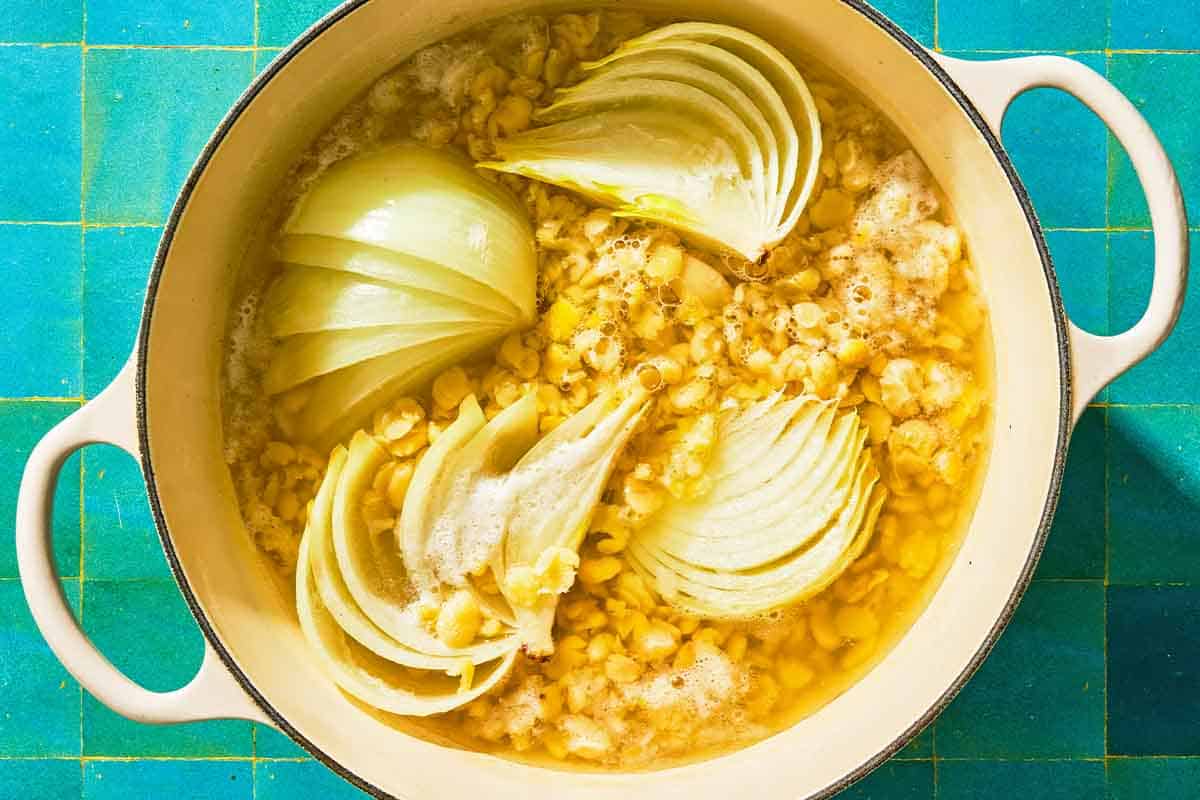
- Simmer the beans. In a medium pot, add the rinsed fava beans, 1 medium peeled and quartered onion, and 3 peeled garlic cloves along with 3 cups water. Add additional water to cover the beans, if necessary. Bring to a boil on high heat, and then turn down to low to medium heat to simmer for about 12 minutes. Test a bean at this point; it should be “al dente,” soft with a little bit of bite. If they’re not, keep simmering (and checking them) for a few more minutes until tender.
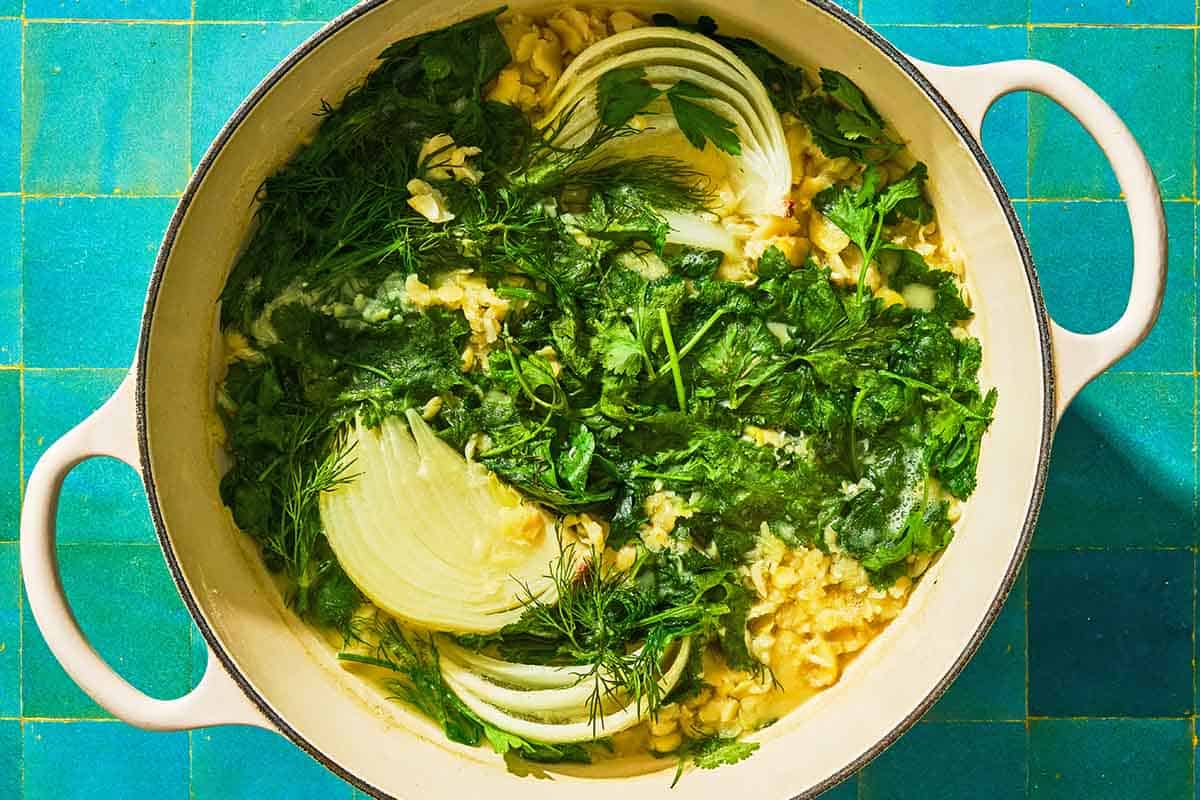
- Throw in the herbs. Add 1 packed cup (1 ounce) each fresh dill, parsley, and cilantro leaves and tender stems to the pot, stir, and let simmer for another 5 minutes.
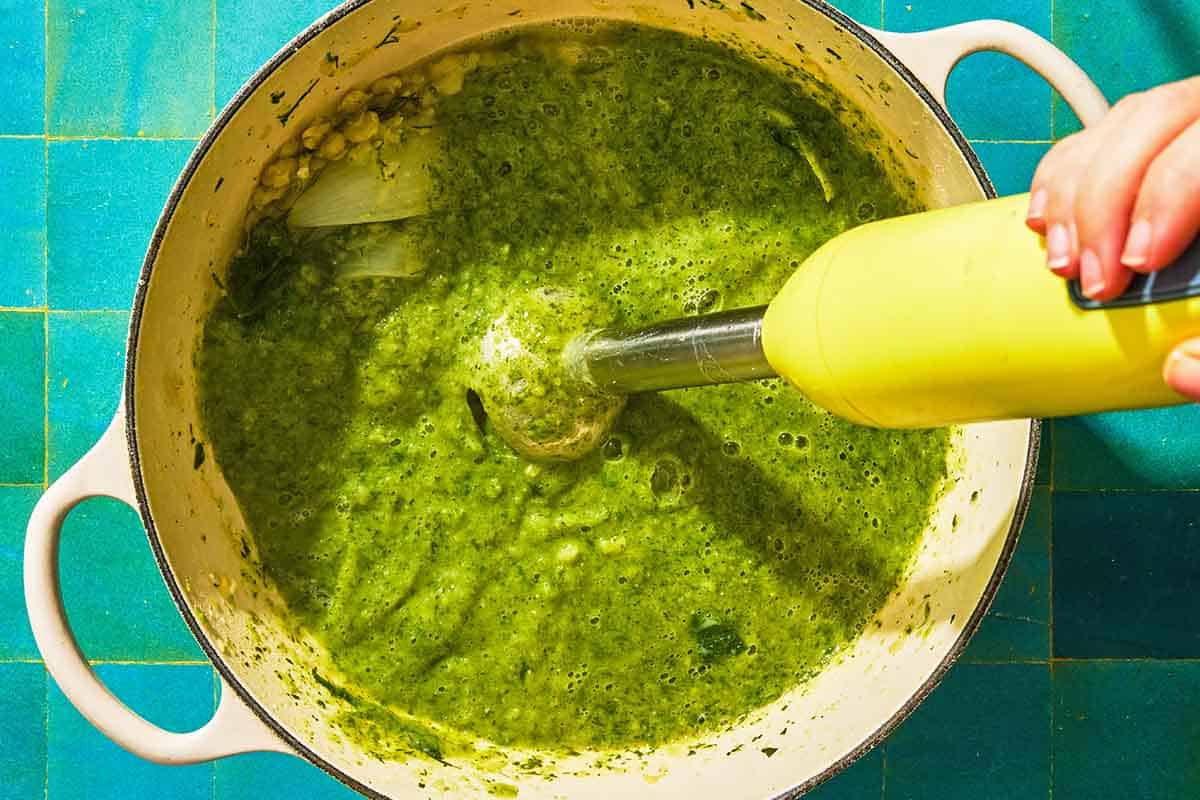
- Blend and season. Using an immersion blender, blend all the ingredients in the pot together until you have a thick, pureed mixture of uniform consistency. Add 1 teaspoon salt, 1/2 teaspoon freshly-ground black pepper, and 1 tablespoon extra virgin olive oil, and give it a taste. Adjust seasonings to your preference.
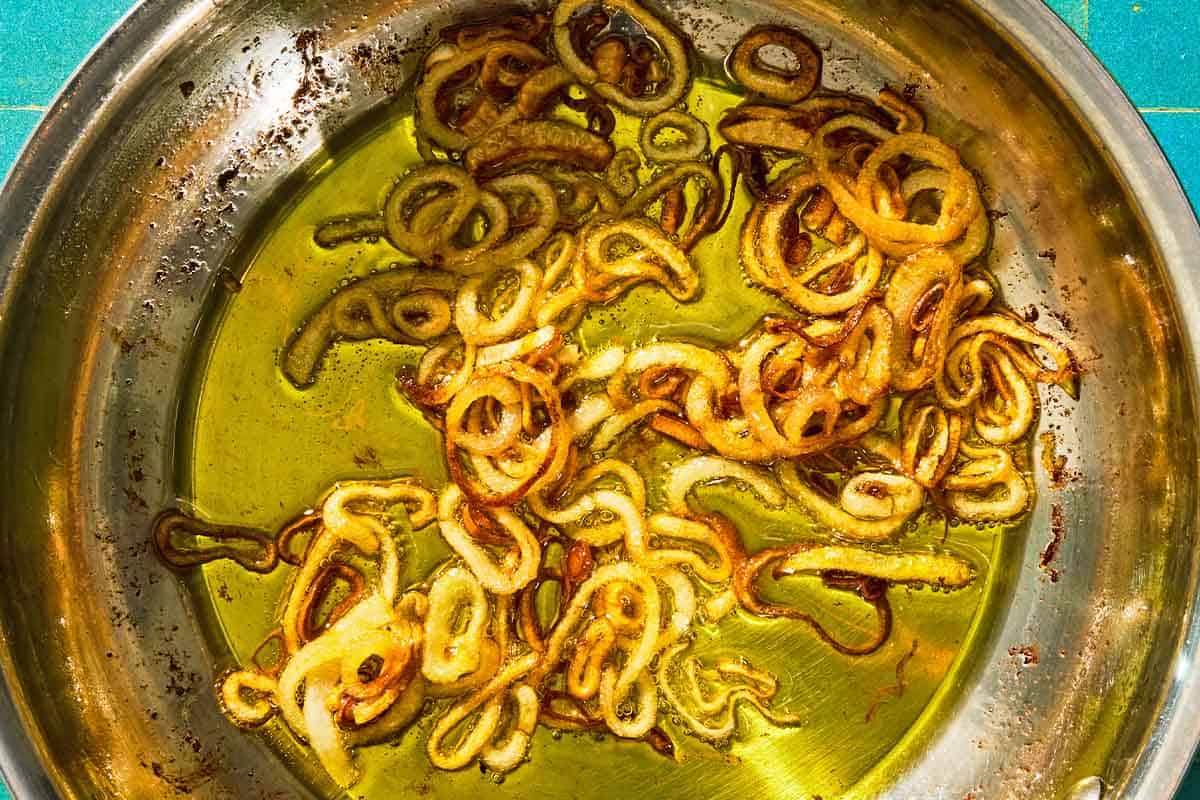
- Brown the shallot. Add the remaining 2 tablespoons of olive oil to a pan on medium heat. Slowly sauté 1 finely sliced shallot until browned and caramelized, about 5 minutes, stirring constantly to avoid burning.
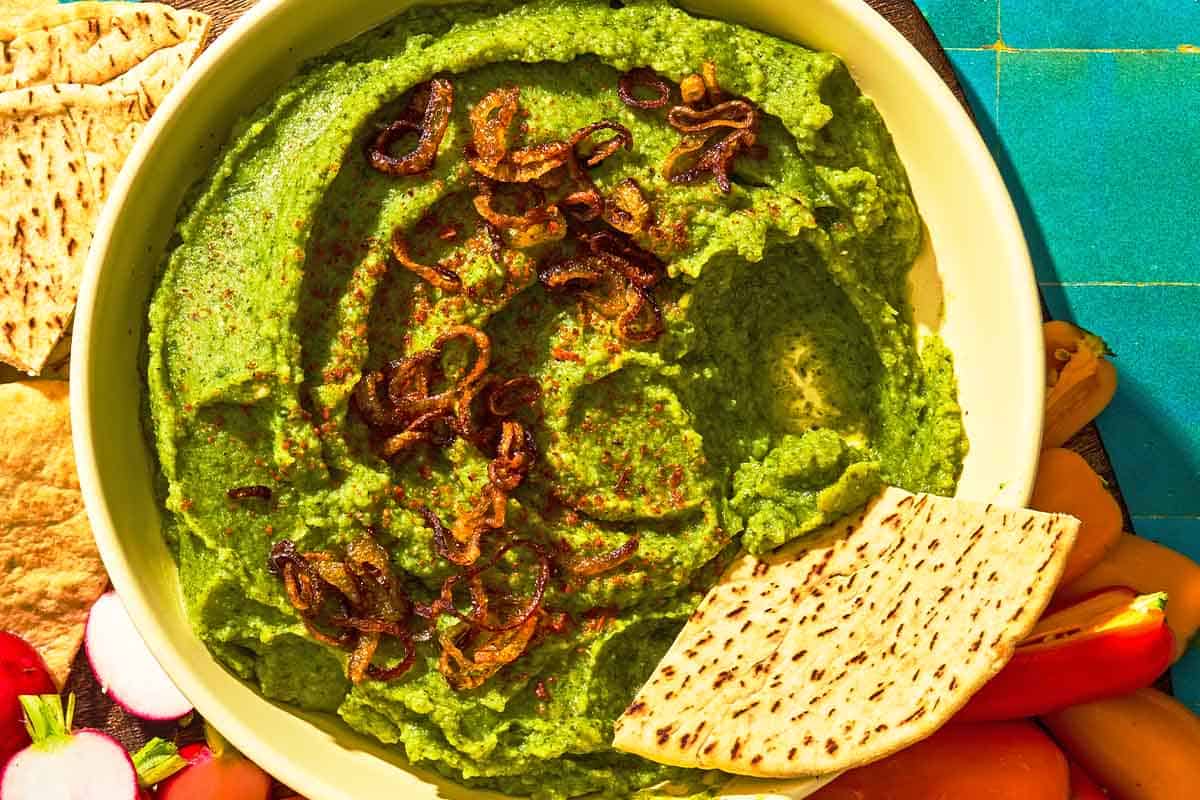
- Finish and serve. Finally, pour the dip into a serving dish. Sprinkle with Aleppo pepper. Add the browned shallots and serve warm, or leave to cool to your desired temperature.
Choose the Right Beans
- Use: Dried Skinless Split Fava (Broad) Beans: These are fava beans that have been removed from their pods, then removed from their outer shells, split, and dried. They typically have a yellow (not brown) color. Look for the words “double hulled” on the package.
- Don’t Use: Dried Whole Fava Beans: While you can make bissara from these, I don’t recommend it! They take about 2 days to soak, and then you’d have to remove the outer shells, which isn’t an easy feat. It would take too long, and I wouldn’t wish that on anyone! It’s easier to use an alternative.
Recipe Variations
This is a family recipe I grew up with, but with slight variations I’ve made in my own cooking. Quite a bit of the recipe can be customized based on your own personal preferences.
- Use a different bean: Dried fava beans are the original for this dish, but you can make this recipe using any dried white beans. I’ve tried it with both butter beans and white kidney beans, and they worked great. Cannellini beans or great northern beans would also be fine substitutes. I recommend using smallish white beans, as I’ve found them to be softer and creamier. They come out pretty close to split fava beans.
- Play with the ratio of herbs: Some people make bissara with much less dill than parsley and cilantro because it can be quite a dominating flavor. I like to keep an even ratio because I love the flavor of dill in it, but you don’t have to. In fact, if you wish to remove it completely, you can, but add more cilantro and parsley so you have a sufficient amount of herbs to hit the bissara level of herbaceousness.
- Caramelize onions instead of shallots: Onions also get nicely sweet and caramelized when sauteed, similar to shallots, so feel free to use what you have. You can also add a whole lot more as a topping if you love the flavor and texture, or don’t include at all if you can’t stand caramelized onions. It’s not a strict requirement for Bissara.
- Add spices. Many people add spices like ground cumin, ground coriander, or paprika to their bissara. I like to keep the flavor pretty mild for ease and so that the fresh herbs can really shine, while some love adding complexity with earthy spices. It’s totally up to you!
Perfect Pairings
Bissara can be served warm or cold, as a starter or a light meal, and it is usually eaten with some traditional Egyptian flatbreads.
- These easy homemade pita breads would work perfectly.
- Take it up a notch and use this homemade ciabatta garlic bread as the bread to dip with for extra indulgence
- Serve alongside some muhamarra (roasted red pepper dip) and pumpkin hummus for a colorful vegan dip platter.

Equipment
Ingredients
- 1 1/4 cups dried split fava beans or dried white beans (8 ounces)
- 1 medium onion, peeled and quartered
- 3 garlic cloves, peeled
- 3 cups water, plus more if needed
- 1 packed cup fresh dill fronds and tender stems (1 ounce)
- 1 packed cup fresh parsley leaves and tender stems (1 ounce)
- 1 packed cup fresh cilantro leaves and tender stems (1 ounce)
- 1 teaspoon fine salt
- 1/2 teaspoon freshly ground black pepper
- 3 tablespoons extra virgin olive oil, divided
- 1 shallot, finely sliced
- 1/2 teaspoon Aleppo pepper (optional)
Instructions
- Get ready. Soak dried split fava beans in water overnight. Before you start cooking them, discard the soaking water and give them a quick rinse.
- Simmer the beans. In a medium pot, add the rinsed fava beans, onion, and garlic along with water. Add additional water to cover the beans, if necessary. Bring to a boil on high heat, and then turn down to low to medium heat to simmer for about 12 minutes. Test a bean at this point, it should be “al dente” soft with a little bit of bite. If they’re not, keep simmering (and checking them) for a few more minutes until tender.
- Throw in the herbs. Add all of the fresh herbs into the pot, stir, and let simmer for another 5 minutes.
- Blend and season. Using an immersion blender, blend all the ingredients in the pot together until you have a thick, pureed mixture of uniform consistency. Add the salt, pepper, and 1 tablespoon of olive oil, and give it a taste. Adjust seasonings to your preference.
- Brown the shallot. Add remaining 2 tablespoons of olive oil to a pan on medium heat. Slowly sauté the shallot until browned and caramelized, about 5 minutes, stirring constantly to avoid burning.
- Finish and serve. Finally pour the dip into a serving dish. Sprinkle the chile flakes onto the surface. Add the browned shallots and serve warm, or leave to cool to your desired temperature.
Notes
- Shop this recipe: Visit our shop to browse quality Mediterranean ingredients, including the olive oil and Aleppo pepper used in this recipe.
- I recommend measuring the fresh herbs for this recipe by weight!
- Storage: Leftover bissara can be refrigerated, in an airtight container, for 3 or 4 days.
Nutrition
Our Favorite
Aleppo Pepper
Mildly spicy, tangy, and fruity, these chile flakes are a versatile way to enhance almost any dish with rich, complex flavor.