
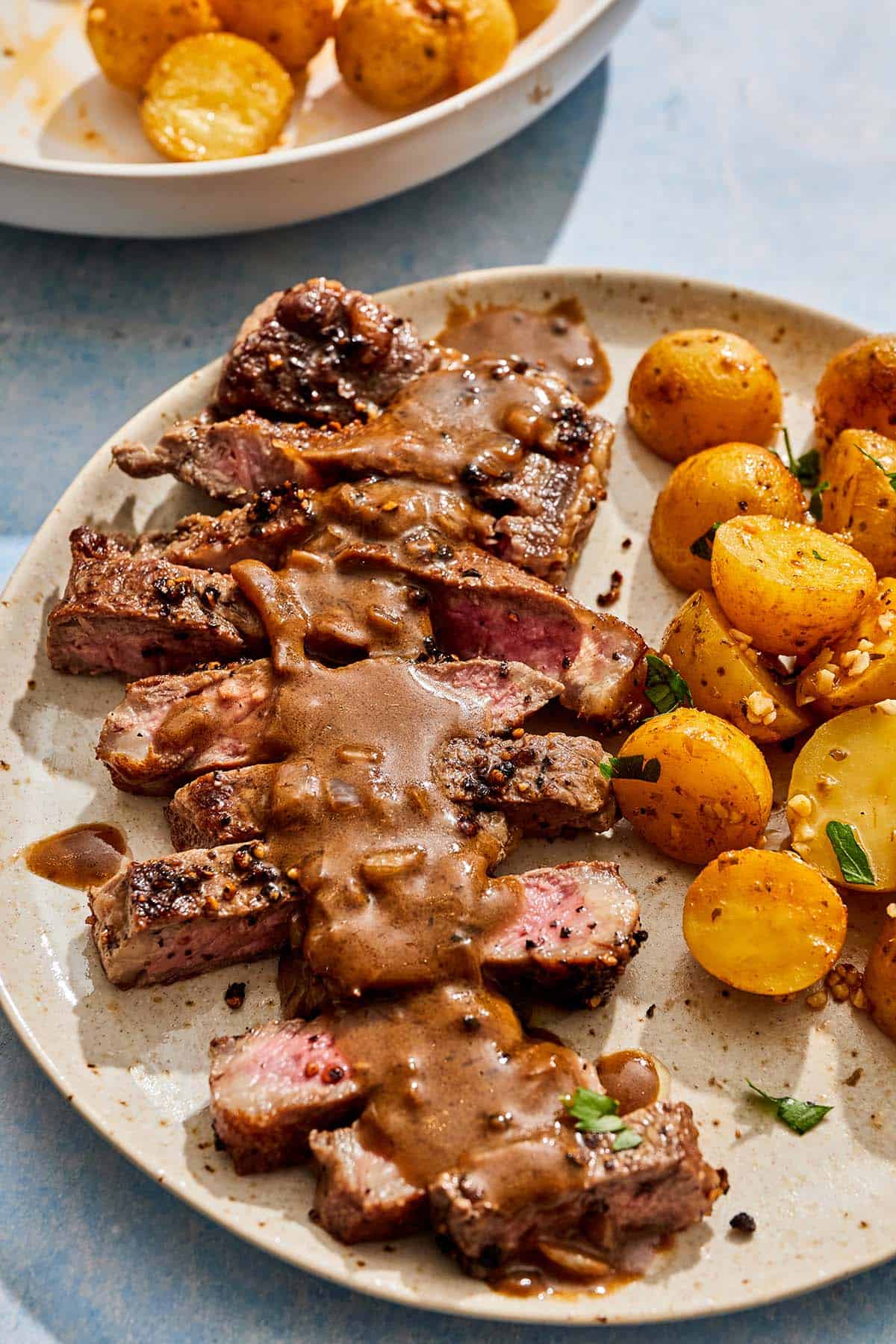
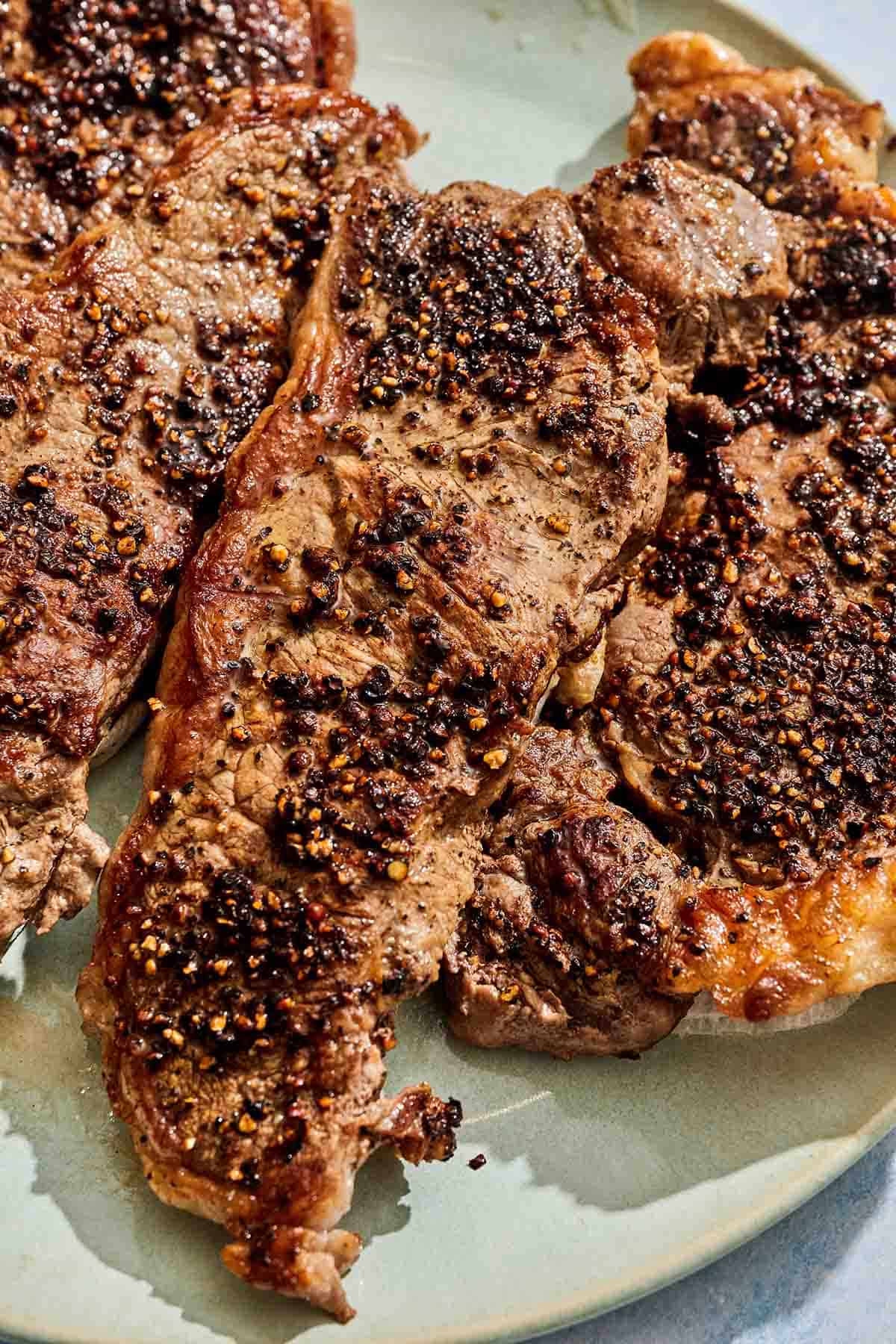
After years of living in France, I’ve perfected this French bistro-style steak au poivre with just the right amount of cracked black pepper! A restaurant-level one-pan meal ready in only 30 minutes.
Steak Au Poivre with the Perfect Amount of Pepper
Steak au poivre, which means steak with pepper, is a French bistro classic: a steak crusted in cracked black peppercorns and served with a creamy cognac pan sauce. It looks and tastes like a special-occasion restaurant dish, but it comes together at home in one pan, and in only 30 minutes.
In my years of living in France, I’ve eaten this dish more times than I can count. While it’s a relatively simple recipe, the pepper’s potency is where it can go wrong. Some versions were truly delectable, but others left me with a burning sensation for hours afterward because of the sheer amount of pepper used in the sauce.
After testing my own version of steak au poivre many times, I found it’s enough to add pepper only to one side of the steak. Some of the pepper will fall off into the pan sauce, and that’s plenty. I think this gives you the best of both worlds: one side with a crisp pepper crust, and one side with a really good sear. This method ensures you’ll still have ample peppery flavor without drowning in it.
The dish is said to have originated in the region of Normandy, where it gained popularity at late-night bistros because of a belief about the aphrodisiac qualities of black pepper. Whatever your reason for making this recipe, it’s one pepper lovers will ask for time and time again!
Key Ingredients
- Steaks: While many steak au poivre recipes call for filet mignon, ribeye steaks are my cut of choice. They have enough beefy flavor to carry the punchy sauce, without getting overpowered. You’ll taste the meat as much as you’ll taste the sauce. They are a fattier cut that I enjoy on special occasions. If you prefer a leaner cut that’s totally fine; any steak will work. Use the cut you prefer, and adjust the cooking time up or down depending on the thickness of the cut.
- Black peppercorns coat one side of the steak with a crust that adds both flavor and texture. Cracking them instead of grinding them finely will keep their spiciness in check.
- Extra virgin olive oil: Cooking this recipe with olive oil instead of butter helps keep this already rich sauce from being too heavy.
- Crème fraîche: Using crème fraîche as the base of the sauce, instead of heavy cream, gives it a delicious tanginess that mellows out the pepper beautifully. An added bonus is that it’s less likely to split than cream. If you can’t get crème fraîche, sour cream will work, too.
- Cognac: A dash of good-quality cognac deglazes the pan and gives the sauce a complex flavor that breaks through the creaminess. Cognac is a type of brandy made by double distilling white wine. It’s sharp and fruity, adding interest to the sauce. Any brandy will work, and white wine is more mellow but also effective. For a non-alcoholic substitute, use white wine vinegar instead.
- Beef stock helps thin the sauce. As it reduces, it delivers concentrated umami and salty flavor.
- Shallots: Caramelized shallots get the sauce started and add mild sweetness.
- Mustard: A tiny bit of Dijon mustard mixed into the sauce at the end of cooking gives it a subtle lift and even more tang.
How to Make Steak au Poivre
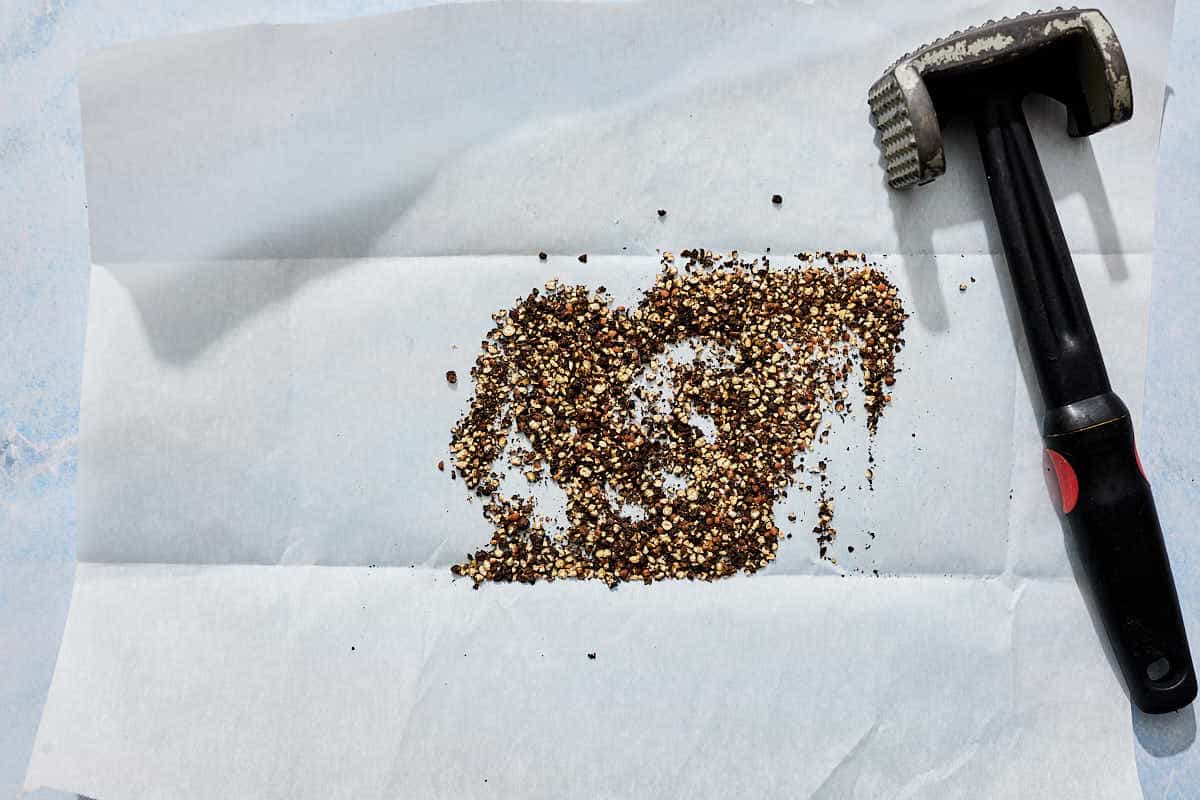
- Crack the peppercorns. Using a mortar and pestle, coarsely crack 2 tablespoons of black peppercorns. Alternatively, fold the whole peppercorns into a piece of parchment paper, and thump them with a kitchen mallet or bottle of wine.

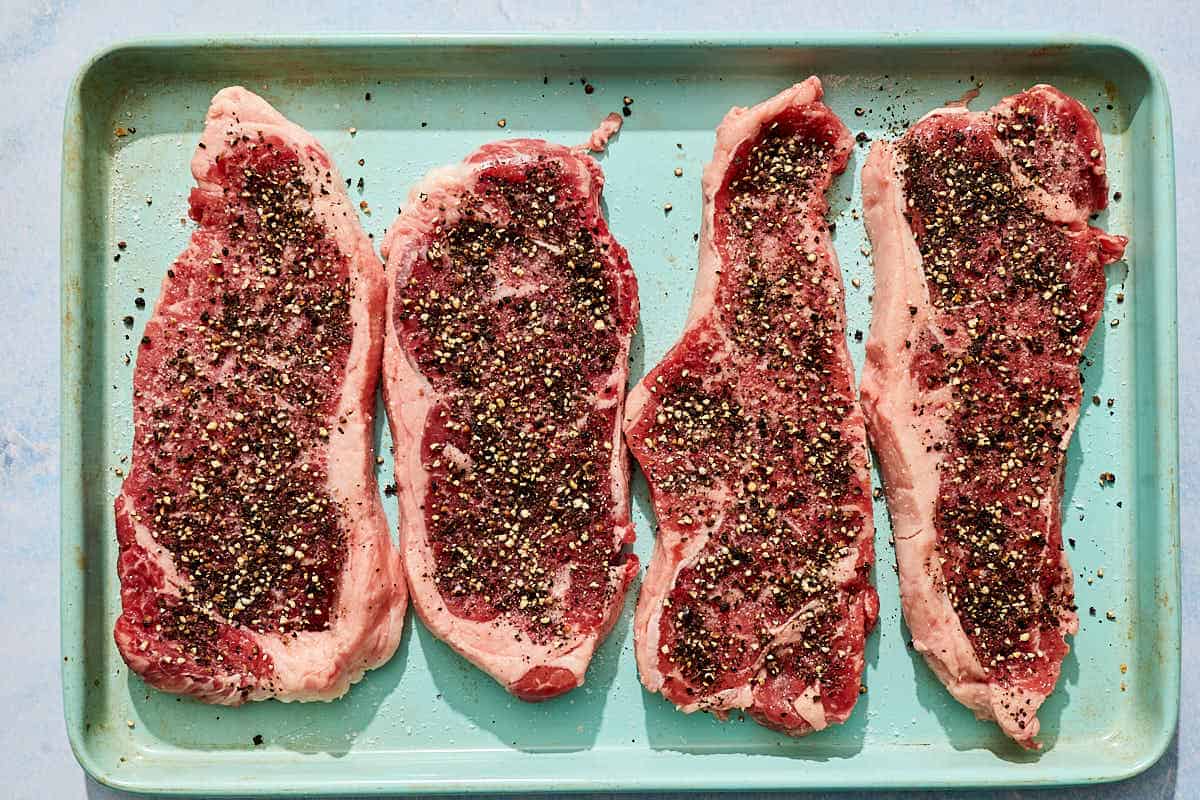
- Pepper the steaks. Take 4 8-ounce steaks out of the refrigerator and pat them dry with a paper towel. Season each side liberally with kosher salt. Then, evenly sprinkle cracked peppercorns on one side of each steak. Press with your palms to pack the peppercorns in so they stick.
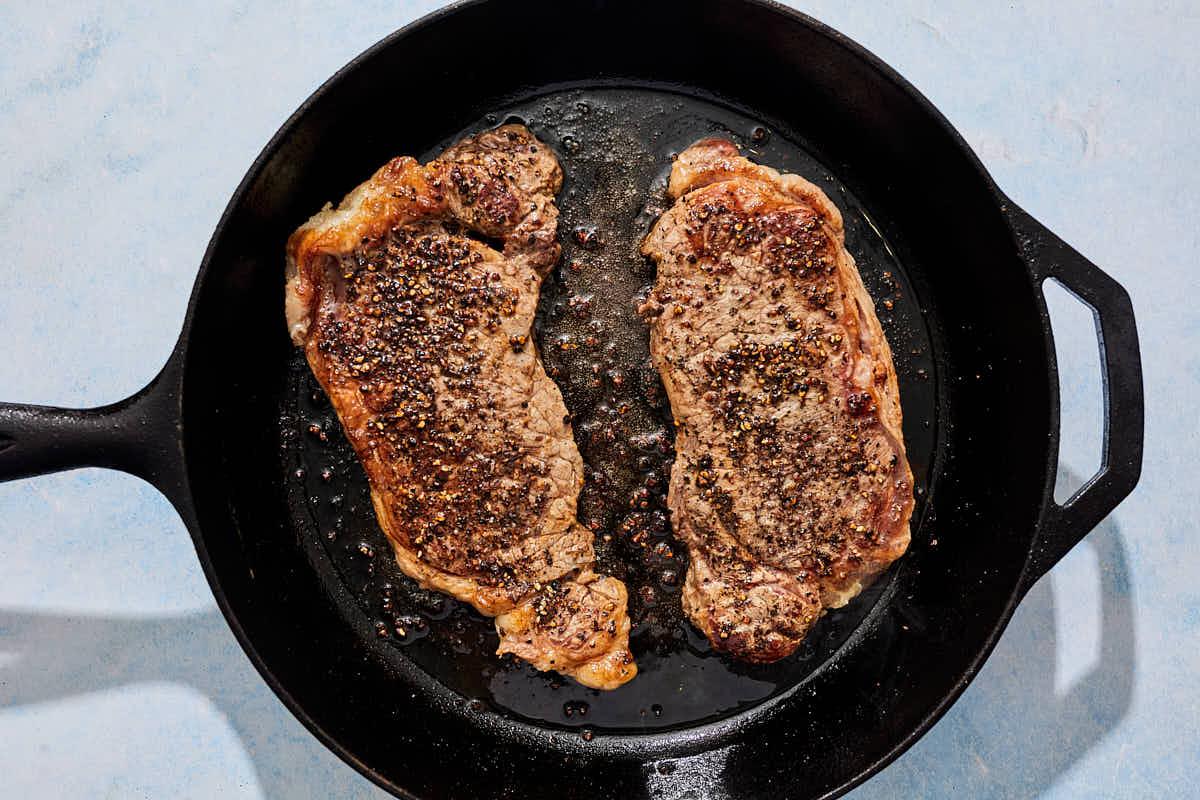
- Sear the steaks. In a heavy-bottomed skillet, heat 2 tablespoons olive oil over medium-high heat. Working in two batches to avoid crowding the pan, place the steaks peppercorn-side up. Sear the steaks for about 3 to 4 minutes per side. The length of cooking depends on your preference for the level of doneness, and the thickness of the steak. For rare, cook until the internal temperature reaches 120°F, for medium-rare aim for 130°F, medium 140°F, medium-well 150°F, and for well-done 160°F. The steaks will continue to cook and increase in temperature a few more degrees as they rest, so we recommend removing them from the pan at these temperatures. Set steaks aside on a plate and tent with foil.
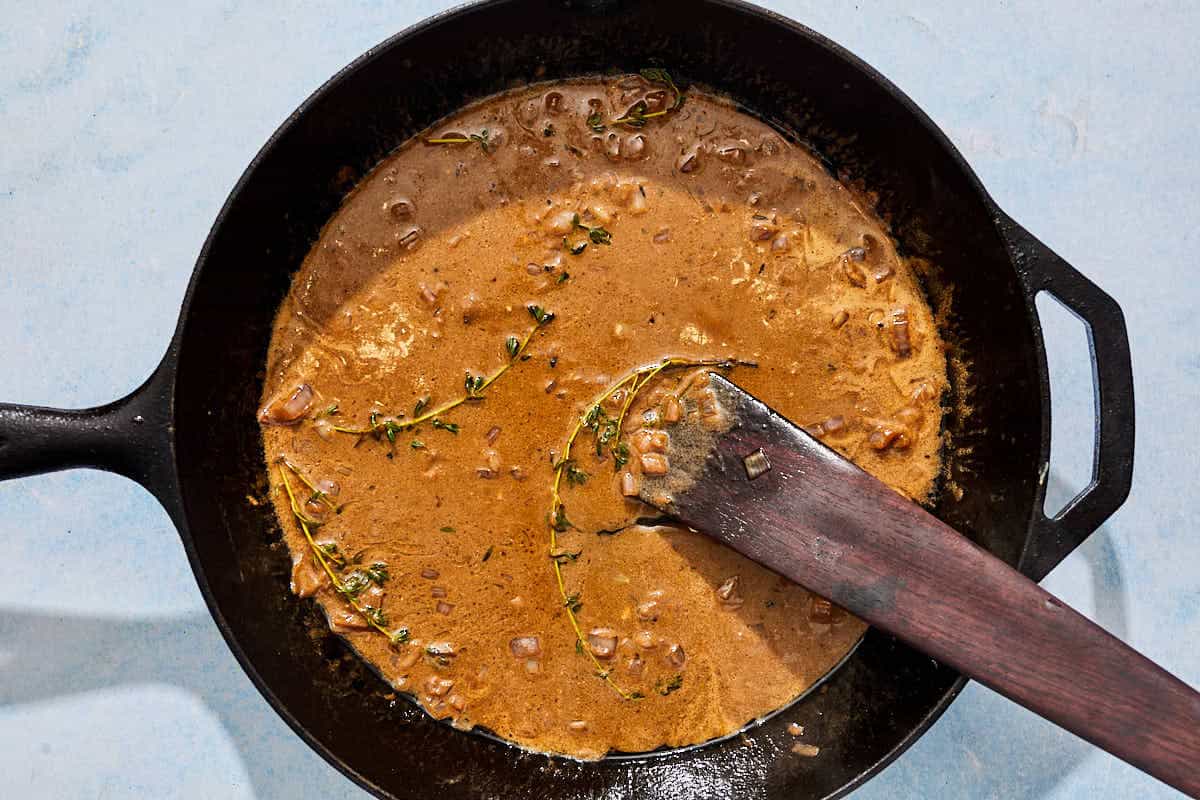
- Make the pan sauce. In the same skillet, add the remaining 2 tablespoons olive oil and turn the heat down to medium. Toss in 2 finely chopped shallots and sauté until translucent and lightly browned, about 2 minutes. Add 2 tablespoons cognac (or white wine, or white wine vinegar) to the pan, scraping up and stirring any bits of fond stuck to the bottom of the pan. Let the cognac come to a boil for about 1 minute (for the alcohol to evaporate), before adding in 1/2 cup beef stock, 1/2 cup crème fraîche, and 4 sprigs of thyme. Stir until everything is well incorporated, and leave to simmer for about 6 minutes or until the sauce reduces, thickens and coats the back of a spoon. Finally, stir in 1 teaspoon Dijon mustard. Taste and season with salt if needed.
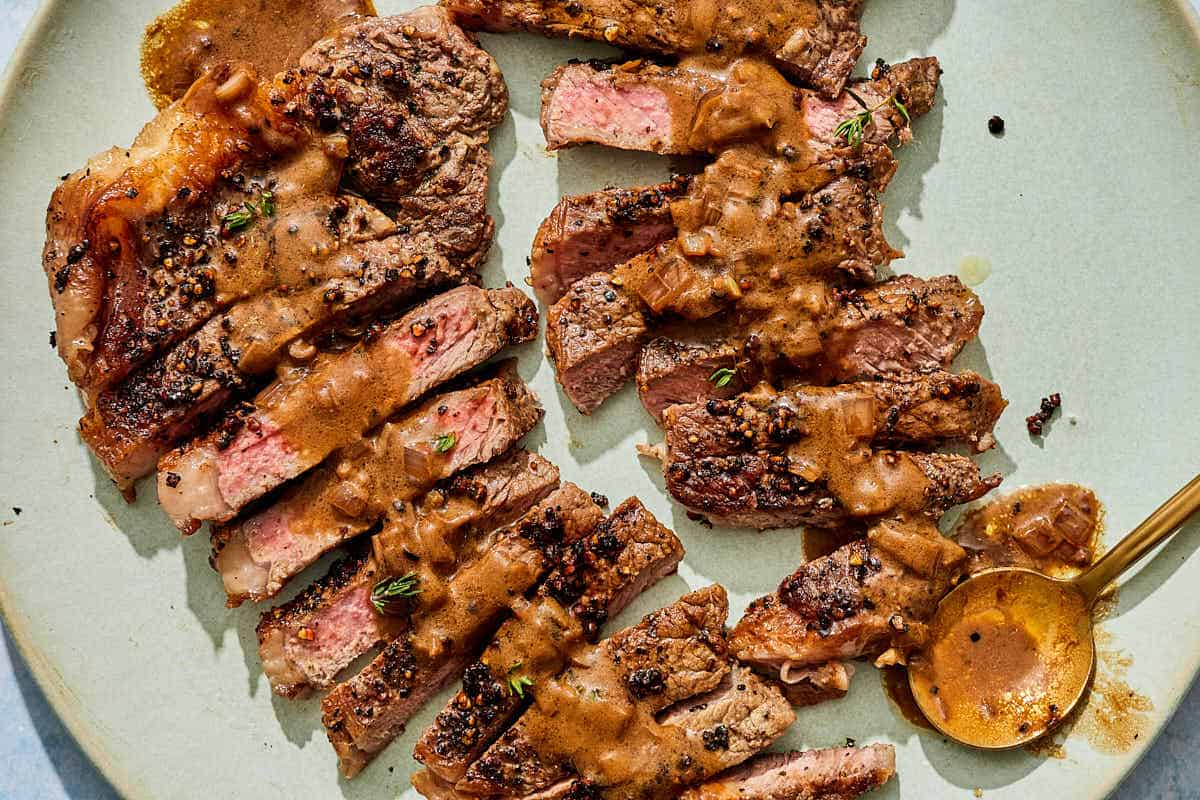
- Finish and serve. To serve, fish out the thyme sprigs and pour the sauce over your cooked steaks, or serve it in a dish on the side. If you like, you can slice the steaks, plate them, and then drizzle the sauce on top.
Make It Your Own
- Use different types of protein: Not only can you use different cuts of beef, but you can cut out the beef altogether and make a “fish au poivre” or a “chicken au poivre”. The sauce is too delicious to only have with beef, and it works just as well with lighter proteins.
- Riff on the sauce: The sauce can be extremely forgiving. Leave out the thyme, use dried thyme instead of fresh, or substitute parsley or chervil. Use chicken stock if you don’t have beef stock. If you don’t have cognac, you can use brandy, or even a little white wine works well too. If you don’t like Dijon mustard, use sweet mustard, or leave it out altogether.
- Play with pepper: All kinds of peppercorns work well, and in fact, a mix of red, white, and black peppercorns can be even more flavorful. Or try some Sichuan peppercorns for an even more interesting twist. You can also use green peppercorns, but as they’re typically sold brined, you’ll have to forgo the pepper crust on the steak and add them to the sauce instead.
Perfect Pairings
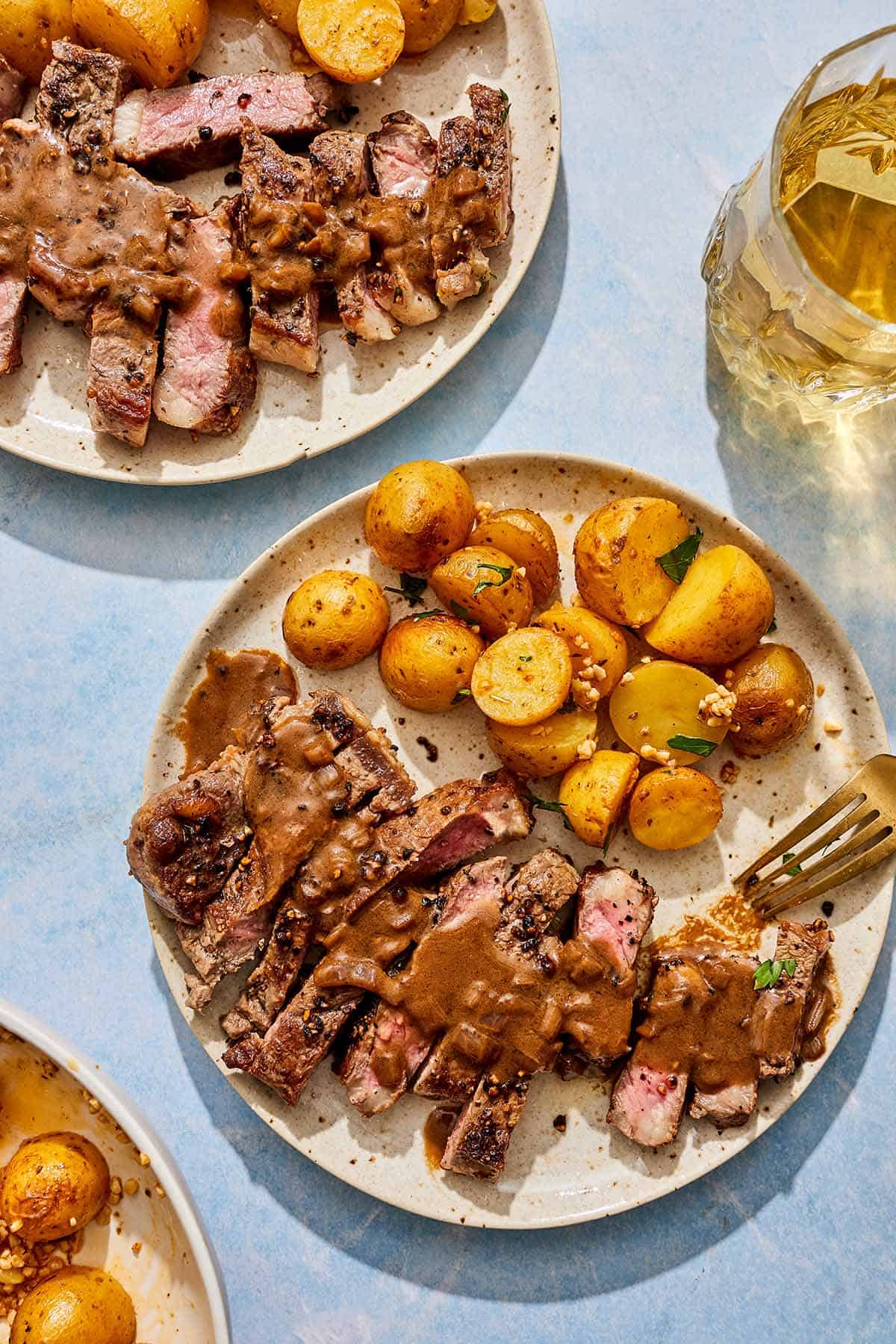
Steak au poivre is already the star of the meal with heaps of richness and flavor, so your sides can be pretty simple.
- A crisp green salad, like this butter lettuce salad with a tarragon vinaigrette, balances the richness of the steak.
- Go full Parisian and turn your steak au poivre into steak frites (au poivre) by adding a side of chickpea fries or crispy, baked polenta fries.
- Or, make a side that soaks up sauce, like this no-fail basmati rice.
Mediterranean Steak Recipes
Meat and Poultry
Steak Pizzaiola
Meat and Poultry
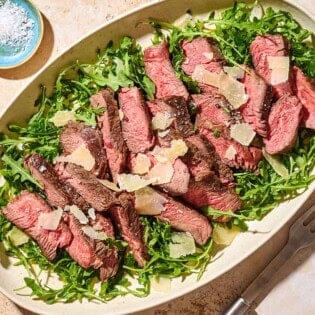
Tagliata di Manzo (Italian Steak with Arugula and Parmesan)
Meat and Poultry
Grilled Skirt Steak

Ingredients
- 2 tablespoons whole black peppercorns
- 4 steaks (about 8 ounces each)
- Kosher salt
- 4 tablespoons extra virgin olive oil, divided
- 2 small shallots, finely chopped
- 2 tablespoons cognac, brandy, white wine, or a splash of white wine vinegar
- 1/2 cup beef stock
- 1/2 cup crème fraîche or sour cream
- 1 teaspoon Dijon mustard
- 4 sprigs fresh thyme (optional)
Instructions
- Crush the peppercorns. Using a mortar and pestle, coarsely crack the black peppercorns. Alternatively, fold the whole peppercorns into a parchment paper packet, like an envelope, and bash them with a kitchen mallet. You want mostly broken peppercorns, with some whole pieces and some crumble. Using a peppermill (even on the coarse setting) is likely finer than what you’re after. Ideally, the pepper will have a more varied texture with bigger pieces.
- Pepper the steaks. Pat steaks dry with a paper towel. Season each side of the steak liberally with Kosher salt. Then, evenly sprinkle cracked peppercorns all across one side of each steak. Press with your palms to pack the peppercorns in so they stick.
- Sear the steaks. In a heavy-bottomed skillet, heat 2 tablespoons olive oil over medium-high heat. Working in two batches to avoid crowding the pan, place the steaks in the pan, peppercorn-side up, which maximizes the caramelized flavor and reduces the chance of burning the peppercorns. Sear steaks for about 3 to 4 minutes, undisturbed, per side, flipping with care so the peppercorn crust can stay intact.
- Cook until desired level of doneness: For rare, cook until the internal temperature reaches 120°F, for medium-rare aim for 130°F, medium 140°F, medium-well 150°F, and for well-done 160°F. Transfer the steaks to a plate, cover with foil, and set aside. The steaks will continue to cook and increase in temperature a few more degrees as they rest, so we recommend removing them from the pan at these temperatures.
- Make the pan sauce. In the same skillet, add the remaining 2 tablespoons of olive oil and turn the heat down to medium. Toss in the shallots and sauté until translucent and lightly browned, about 2 minutes. Add the cognac to the pan, scraping up all the bits of fond stuck on the bottom of the pan. Let the cognac come to a light boil for about 1 minute (for the alcohol to evaporate) before adding in the beef stock, creme fraiche, and sprigs of thyme.
- Reduce the sauce: Stir and simmer until the sauce reduces and thickens, About 5 or 6 minutes, or until the sauce coats the back of a wooden spoon. Finally, stir in the Dijon mustard. Taste and season with salt if needed.
- Finish and serve. To serve, fish out the thyme sprigs and pour the sauce over your cooked steaks, or serve the sauce on the side. If you like, you can slice the steaks, plate them, and then drizzle the sauce on top.
Notes
- This recipe makes 4 (8 oz steaks). The nutrition calculation is based on a 4-ounce serving per person.
- Shop this recipe: Visit our shop to browse quality Mediterranean ingredients, including the olive oil used in this recipe.
- Temperature Note: While the pan sauce comes together in less than 10 minutes, it’s possible that the steaks will have cooled down more than you’d like. If that’s the case, place the steaks back into the pan on low to medium heat, along with the sauce, to warm up for 1 minute before serving.
- How to Store and Reheat: Cooked steaks and sauce can be kept refrigerated in an airtight container for 3 days. Reheat both on the stovetop on low heat for the best results. I don’t recommend freezing the steaks, once cooked. If you have a surplus of sauce you can freeze it in an airtight container.
Nutrition
Bundle and Save!
Four of our best-selling signature olive oils, perfect for everyday use.