




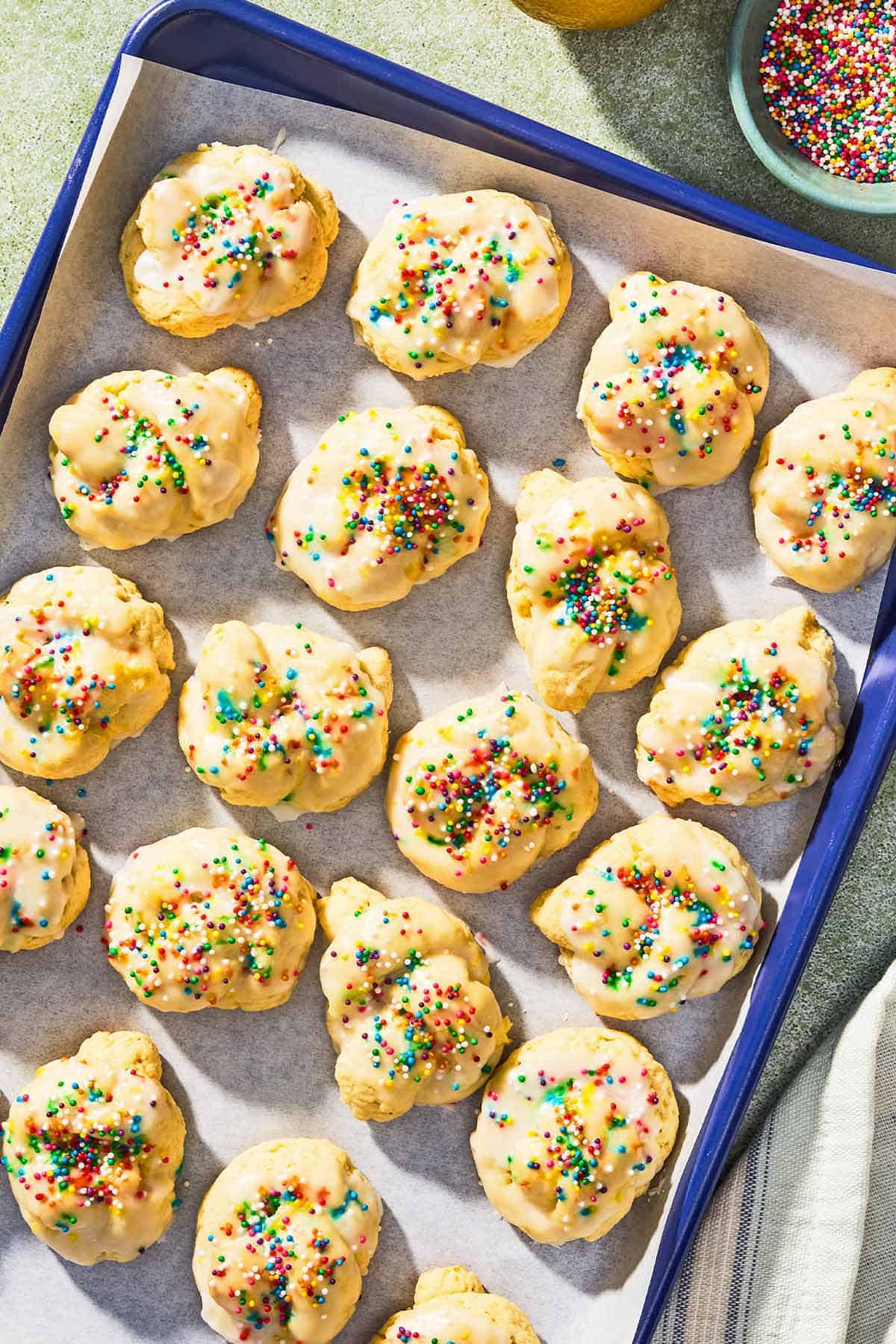
These tender Italian lemon cookies are a must-have for many Italians and Italian-Americans at Easter. Originating from southern Italy, and prevalent from Campania to Calabria, anginetti cookies are glazed in icing and make a sweet addition to any holiday cookie plate.

Try Anginetti! Italy’s Classic Lemon Cookies
These Italian lemon cookies are beloved in both Italy and the United States. They are traditionally served on Palm Sunday and throughout the Easter holiday, although they are also popular at Christmas.
I’ve always known them as anginetti, but they also go by uncinetti—the Italian word for crochet needles. According to lore, they are so named because once baked, they look like a knotted crochet stitch.
A hallmark of anginetti cookies is their light lemon glaze and a topping of colorful sprinkles, although I usually prefer them with just the glaze so you can see the pretty flecks of lemon zest, the sprinkles can feel festive. You will love how easy the dough is to roll out, and how pretty these glazed knots look on your holiday table!
Why You’ll Love Italian Lemon Cookies
- They’re delicate, but flavorful: Soft, pillowy cookies flavored with fresh lemon zest and a whisper of anise.
- They’re festive: Classic knotted shapes with a glossy lemon glaze and cheerful sprinkles make them perfect for Easter, Christmas, or any other celebration.
- You can make them ahead: Freeze baked cookies without icing them, then defrost and decorate!

Key Ingredients
Anginetti are easy to make, and other than a splash of liqueur, they require no special ingredients. While traditional recipes did call for lard, modern recipes, including my version here, substitute butter, which is readily available and gives the cookies a rich flavor and soft, tender texture. Here’s what you need to make them.
For the Cookie Dough:
- Unbleached all-purpose flour is my personal preference, but regular all-purpose flour will work as well.
- Baking powder and salt: The baking powder lightens the dough and helps the cookies rise as they bake. A pinch of salt balances their sweetness.
- Granulated sugar: A small amount is added to the dough to give it softness and sweeten it slightly. Most of these cookies’ sweetness comes from the lemon glaze added once they are baked.
- Lemon: The zest of a lemon—about 2 teaspoons—lifts the flavor and provides a cheerful zing to both the cookies and the icing.
- Egg: One large egg helps to bind the dough.
- Liqueur: A splash of sambuca or other anise-flavored liqueur adds a warm flavor that mellows as the cookies bake. See below for alcohol-free options.
- Milk: 2 tablespoons of whole milk helps to soften the dough, making it easy to roll out and shape.
For the Lemon Icing:
- Powdered sugar makes a smooth icing for glazing the cookies.
- Lemon zest and juice: 1 teaspoon each of zest and juice creates a smooth-flowing icing with a bright lemony flavor.
- Liqueur: Sambuca or another anise liqueur adds another layer of flavor to these distinctly Italian cookies.
- Boiling water: A couple of tablespoons makes icing that is not too thick but glazes the cookies and gives them an attractive sheen.
- Colored non-pareil sprinkles: This is optional, but a shake of colorful sprinkles on top of the cookies makes them extra festive. Use pastel colors for Easter and green and red for Christmas.
How to Make Italian Lemon Cookies
The dough comes together quickly in a food processor. It needs to chill for several hours before rolling, so plan ahead. I like to make it a day in advance and let it rest in the refrigerator overnight. Here is how to do it.
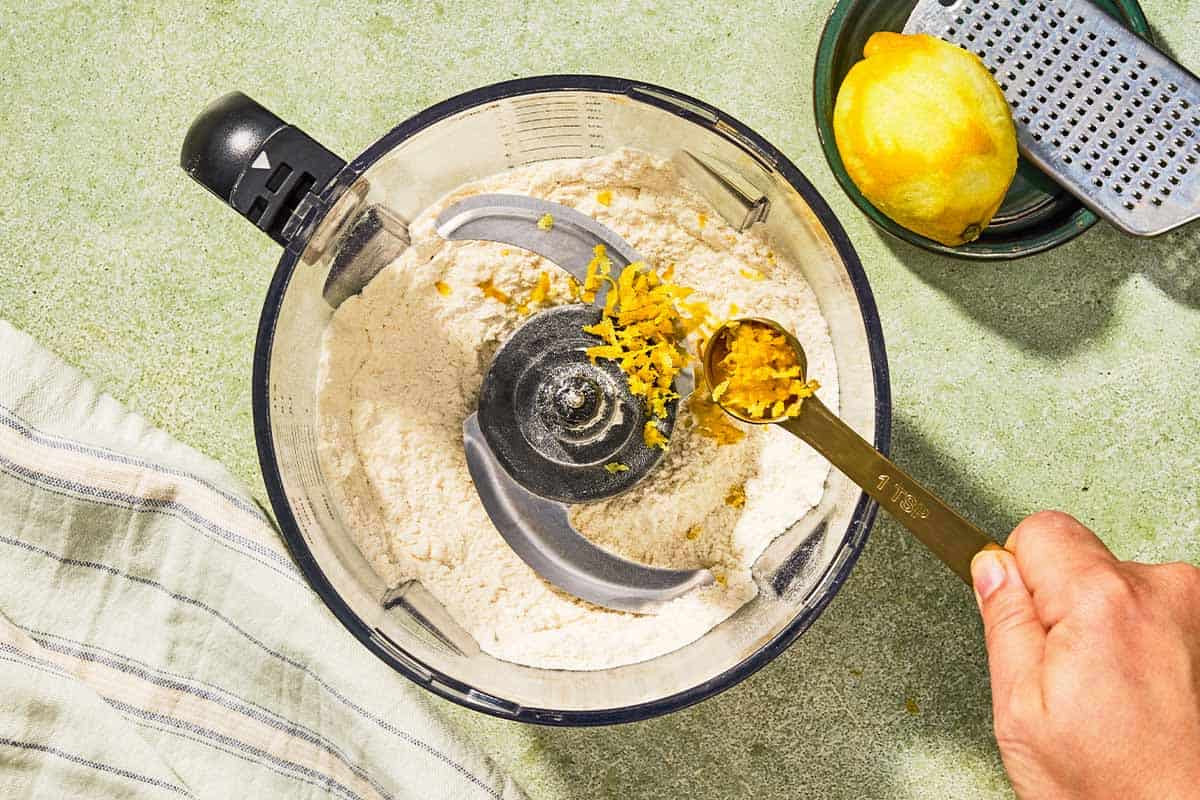
- Combine the dry ingredients. Place 2 cups (240g) unbleached all-purpose flour, 1/4 cup (50g) granulated sugar, 2 teaspoons baking powder, and 1/4 teaspoon fine salt in the work bowl of a food processor fitted with the metal blade and pulse until mixed. Pulse in 2 teaspoons finely-grated lemon zest.

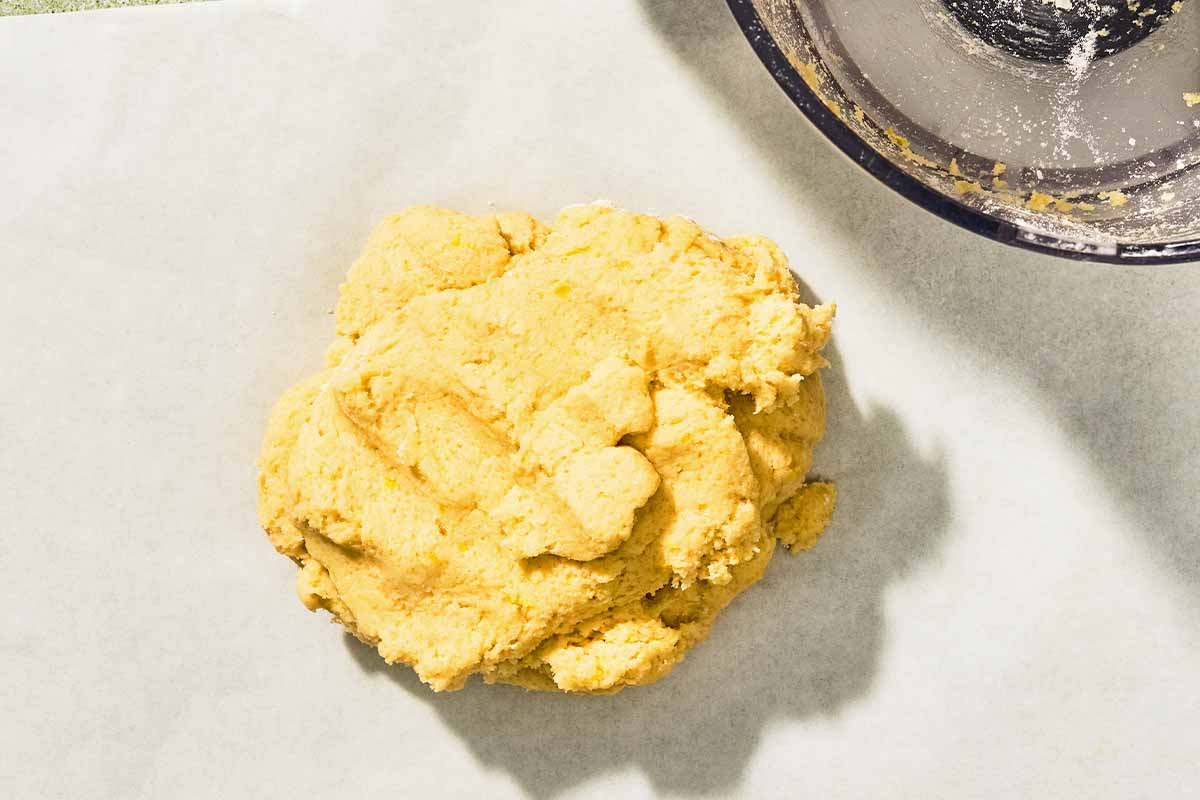
- Make and chill the dough. Add 4 tablespoons cold unsalted butter, cut into 1/2 inch cubes, to the food processor and pulse to break it up. Pour in 1 lightly beaten egg through the feed tube and pulse to work it in. Pour in 1/4 cup sambuca or limoncello (see below for an alcohol-free option) and 2 tablespoons whole milk, and pulse until the dough comes together. Wrap the dough and refrigerate until thoroughly chilled—at least 4 hours up to overnight.
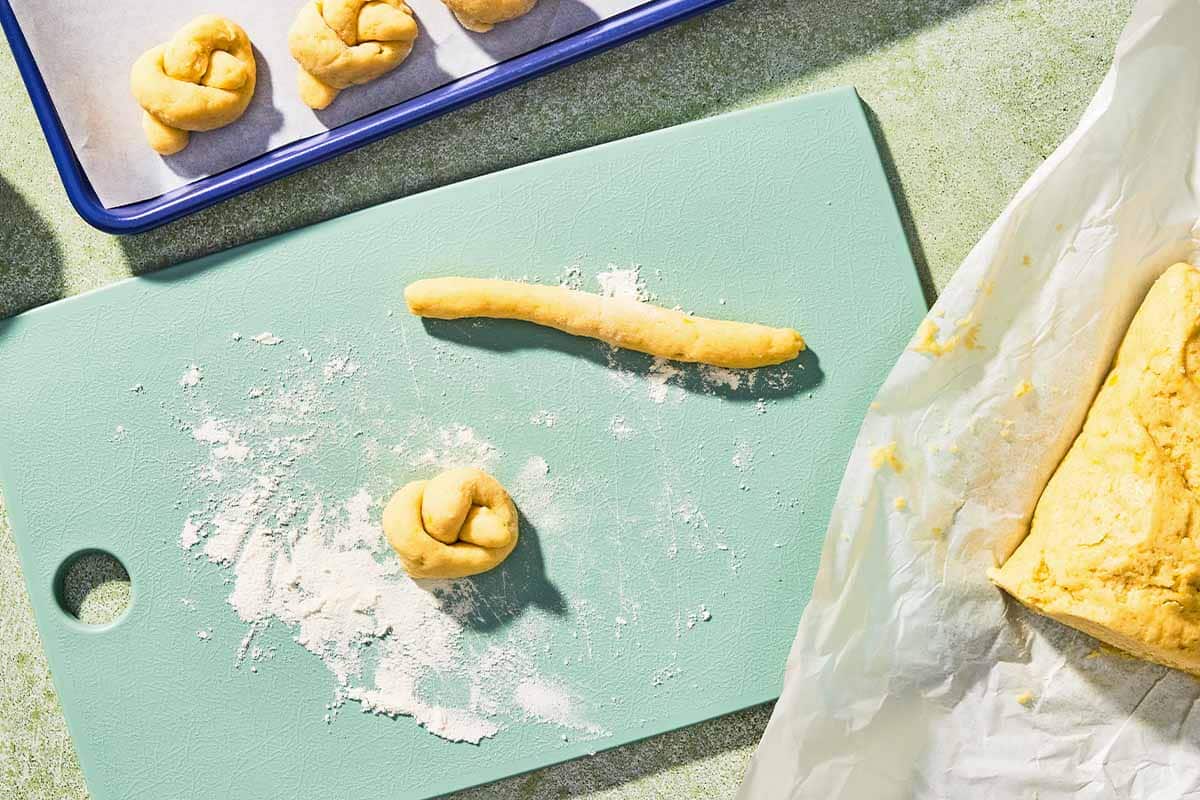
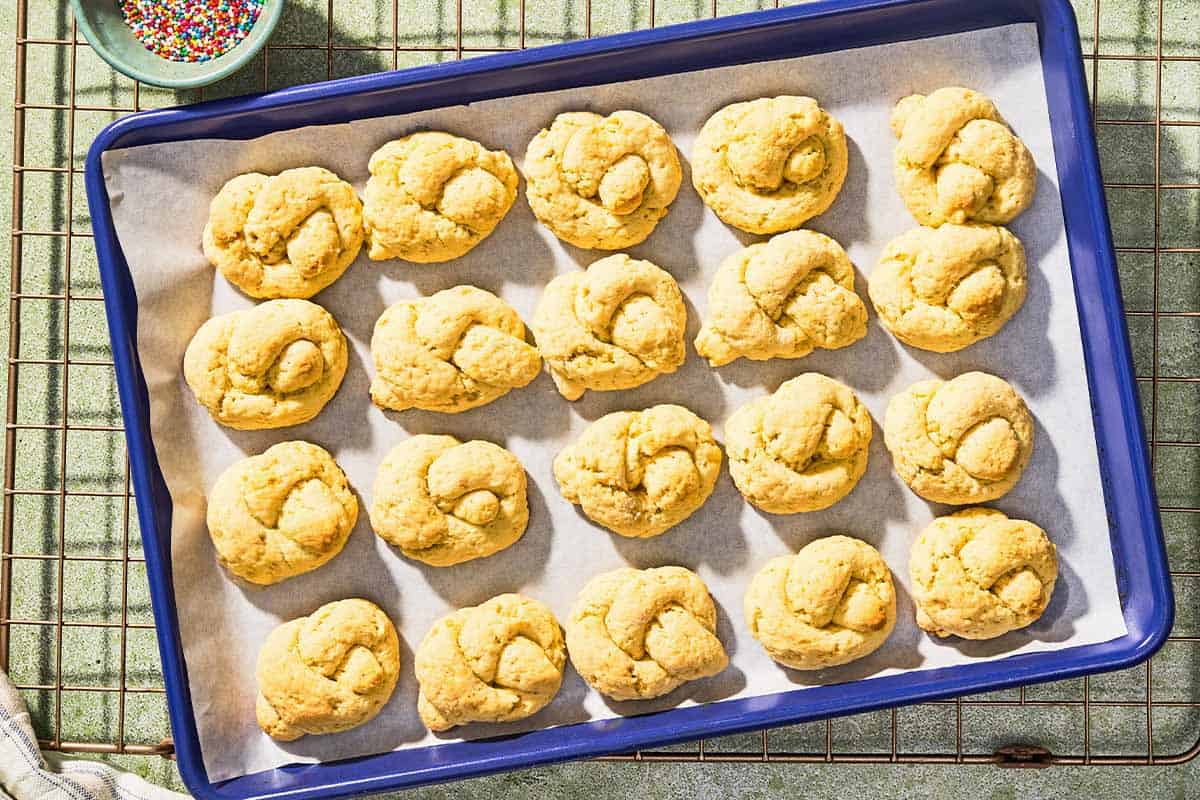
- Shape the cookies. Preheat the oven to 350°F and line a rimmed baking sheet with parchment paper. Cut the dough into 20 equal pieces—if you want to weigh them, each piece should weigh just under 1 ounce (25g). On a lightly floured surface, roll each piece into a 6-inch rope about the width of your pinkie finger. Tie the rope into a knot—the ends should just peek out. Set the knots onto the baking sheet, spaced 1 inch apart (I make 5 rows of 4 knots).
- Bake the cookies. Bake in the middle of the oven for about 20 minutes, until the cookies are lightly browned and set. Transfer the baking sheet to a wire rack to cool completely.
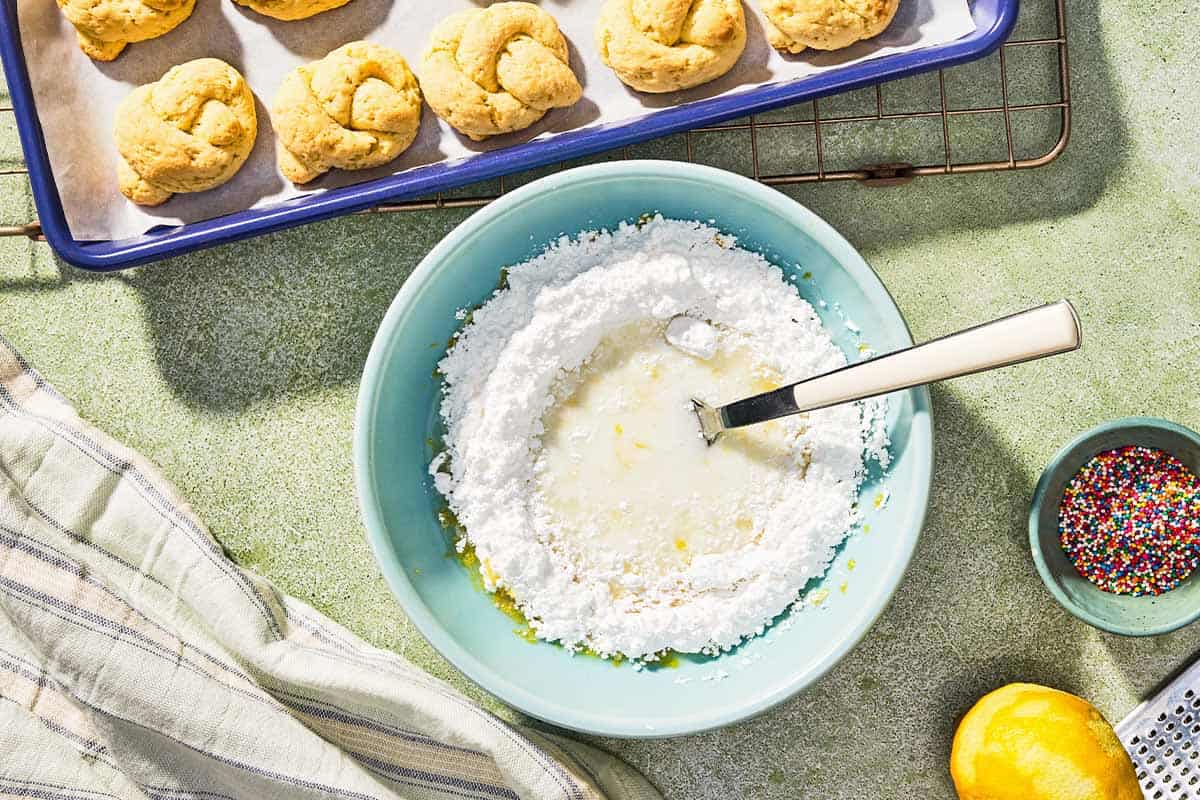
- Make the icing. Place 1 1/2 cups (180g) confectioners’ sugar in a medium bowl and add 1 teaspoon finely grated lemon zest, plus 1 teaspoon freshly-squeezed lemon juice. Whisk in 1 tablespoon sambuca or limoncello and just enough boiling water, about 2 tablespoons, to achieve a smooth, medium-thick icing.
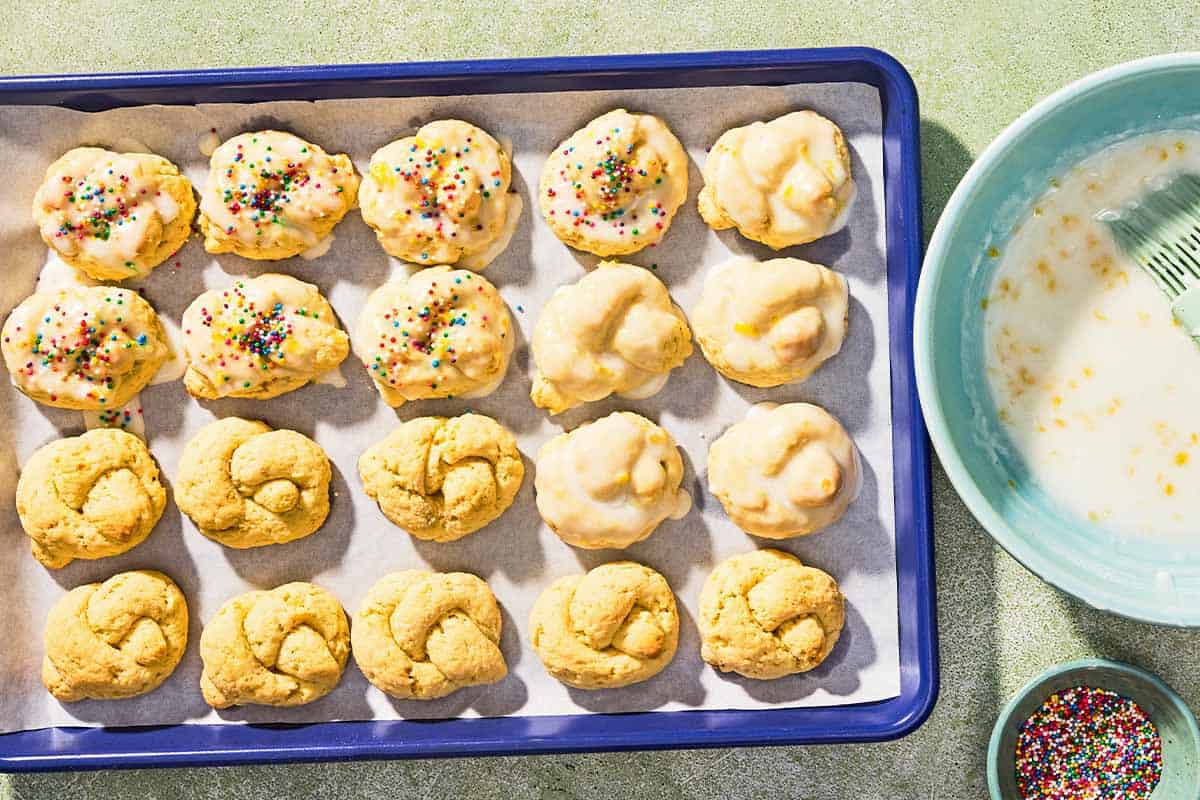
- Ice the cookies. Using a pastry brush, brush the icing all over the surface of the cookies. Sprinkle with colorful non-pareils, if you like. Let the anginetti sit at least 2 hours, until the icing has set completely.
Where are Anginetti Cookies From?
Like so many Italian cookies, anginetti cookies have an interesting history. I learned it while working on my book Italian Cookies, a collection of cookie recipes from all over Italy.
Shaped like small knots, tender to bite into and not overly sweet, anginetti cookies are said to date to the 18th Century. Some sources put their origin in the town of Angri, Campania, not far from Pompei; others say they hail from Calabria, the “toe” of Italy’s “boot.”
Swaps and Substitutions
This is an accommodating recipe, with lots of variations. Some doughs contain lard, others, like mine, butter; some bakers spike their dough with sambuca, others with limoncello. So feel free to switch things up according to your taste preferences or just for fun. Here are some variations to try:
- Use orange zest. I love the combination of anise and orange, so I often substitute orange zest and juice for lemon. The flecks of orange zest in the icing makes for a pretty presentation, too.
- Add vanilla. A splash of pure vanilla extract—a teaspoon or two—rounds out the flavor of the dough and mellows the citrus flavor.
- Use limoncello. Since these cookies originated near Sorrento—an area famous for its large, fragrant lemons—it makes sense to swap in limoncello for sambuca. This boosts the citrus flavor, perfect for you lemon lovers.
- Omit the liqueur. If you would rather not add liqueur to the anginetti dough, simply substitute 3 to 4 tablespoons of milk and a dash or two of anise or lemon extract.
Perfect Pairings
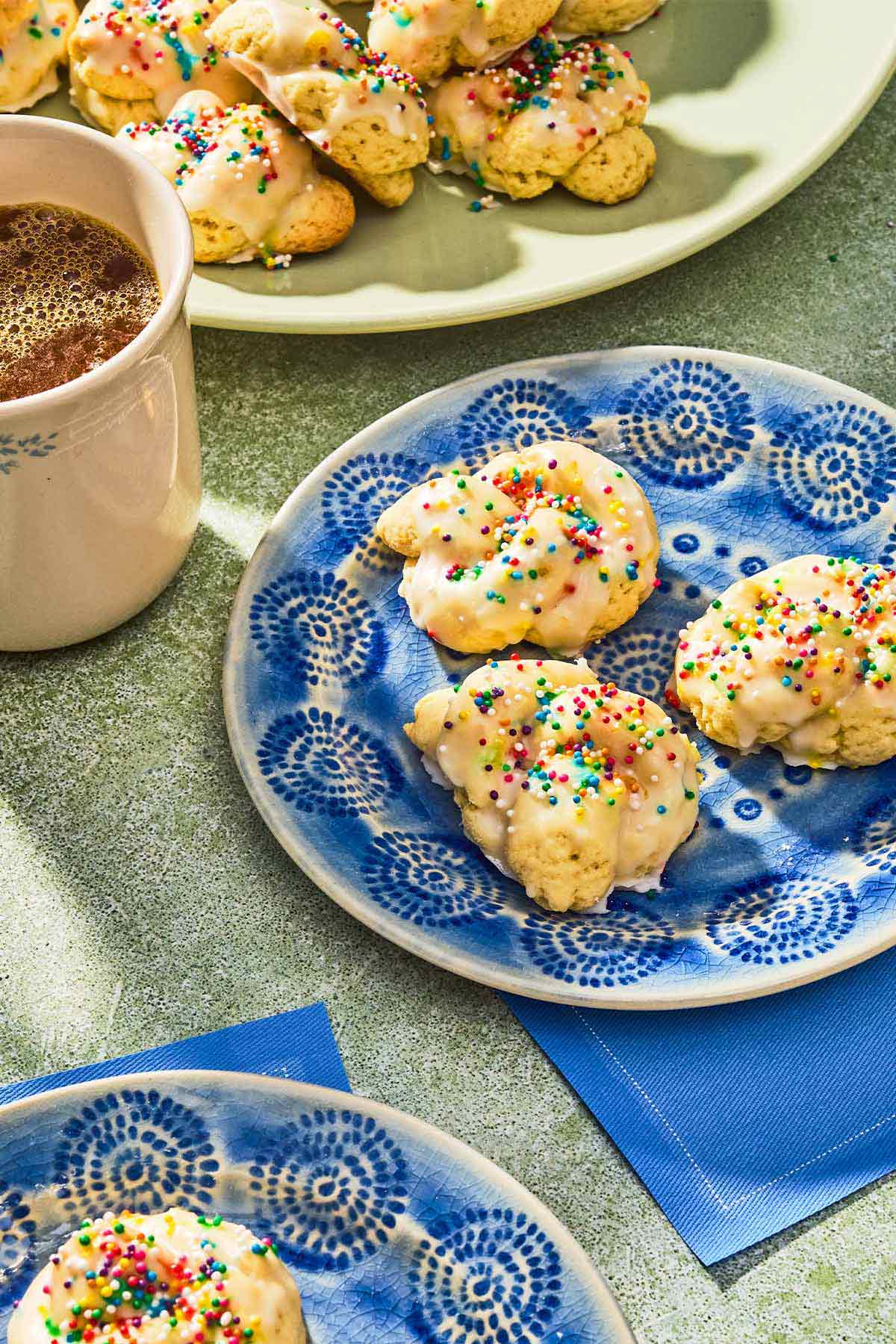
While anginetti are at home on any cookie platter, I often like to showcase them on their own, piling them onto a decorative plate. In the morning, I enjoy one or two with my cappuccino.
Try them with peach iced tea with mint and honey, or peach lemonade. And, of course, they’re delicious dipped in a small glass of limoncello.


Ingredients
For the Cookie Dough:
- 2 cups unbleached all-purpose flour (240g)
- 1/4 cup granulated sugar (50g)
- 2 teaspoons baking powder
- 1/4 teaspoon fine salt
- 2 teaspoons finely grated lemon zest
- 4 tablespoons cold unsalted butter, cut into 1/2 inch cubes
- 1 large egg, lightly beaten
- 1/4 cup sambuca or limoncello (see notes for an alcohol-free option)
- 2 tablespoons whole milk
For the Lemon Icing:
- 1 1/2 cups confectioners’ sugar (180g)
- 1 teaspoon finely grated lemon zest
- 1 teaspoon freshly squeezed lemon juice
- 1 tablespoon sambuca or limoncello (see notes for an alcohol-free option)
- 2 tablespoons boiling water
- Colored non-pareil sprinkles (optional)
Instructions
- Combine the dry ingredients. Place the flour, sugar, baking powder, and salt in the work bowl of a food processor fitted with the metal blade and pulse until mixed. Pulse in the lemon zest.
- Make and chill the dough. Add the butter to the food processor and pulse to break it up. Pour in the beaten egg through the feed tube and pulse to work it in. Pour in the anise liqueur and milk and pulse until the dough comes together. Wrap the dough and refrigerate until thoroughly chilled—at least 4 hours up to overnight.
- Shape the cookies. Preheat the oven to 350°F and line a rimmed baking sheet with parchment paper. Cut the dough into 20 equal pieces—if you want to weigh them, each piece should weigh just under 1 ounce (25g). On a lightly floured surface, roll each piece into a 6-inch rope about the width of your pinkie. Tie the rope into a knot—the ends should just peek out. Set the knots onto the baking sheet, spaced 1 inch apart (I make 5 rows of 4 knots).
- Bake the cookies. Bake in the middle of the oven for about 20 minutes, until the cookies are lightly browned and set. Transfer the baking sheet to a wire rack to cool completely.
- Make the icing. Place the confectioners’ sugar in a medium bowl and add the lemon zest and juice. Whisk in the liqueur and just enough boiling water to achieve a smooth, medium-thick icing.
- Ice the cookies. Using a pastry brush, brush the icing all over the surface of the cookies. Sprinkle with colorful non-pareils, if you like. Let the anginetti sit at least 2 hours, until the icing has set completely.
Notes
- Visit our shop to browse quality Mediterranean ingredients, including olive oils, honey, jams, and spices.
- Variations:
- Use orange zest. I love the combination of anise and orange, so I often substitute orange zest and juice for lemon. The flecks of orange zest in the icing makes for a pretty presentation, too.
- Add vanilla. A splash of pure vanilla extract—a teaspoon or two—rounds out the flavor of the dough and mellows the citrus flavor.
- Use limoncello. Since these cookies originated near Sorrento—an area famous for its large, fragrant lemons—it makes sense to swap in limoncello for sambuca. This boosts the citrus flavor, perfect for you lemon lovers.
- Omit the liqueur. If you would rather not add liqueur to the anginetti dough, simply substitute 3 to 4 tablespoons of milk and a dash or two of anise or lemon extract.
- How to Store Anginetti Cookies: Once iced, anginetti keep well for about a week stored in an air-tight metal container. They also freeze beautifully.
- How to Freeze Anginetti Cookies: Let the cookies cool completely and leave them un-iced. Arrange them in an airtight container, layer them between sheets of parchment, cover and freeze for up to 3 months. To serve them, remove them from the container and arrange them on a parchment-lined baking sheet to defrost. Once defrosted, make the icing and frost the cookies.
Nutrition
Get The Mediterranean Dish Cookbook
More than 120 recipes for bright and flavorful Mediterranean diet-inspired meals.


Wondering the serving size for the nutritional info listed.
Recipe looks quite yummy and I look forward to trying it.
Hi, Patricia! The nutritional info her is per cooking. Hope you enjoy the recipe!
Delicious