




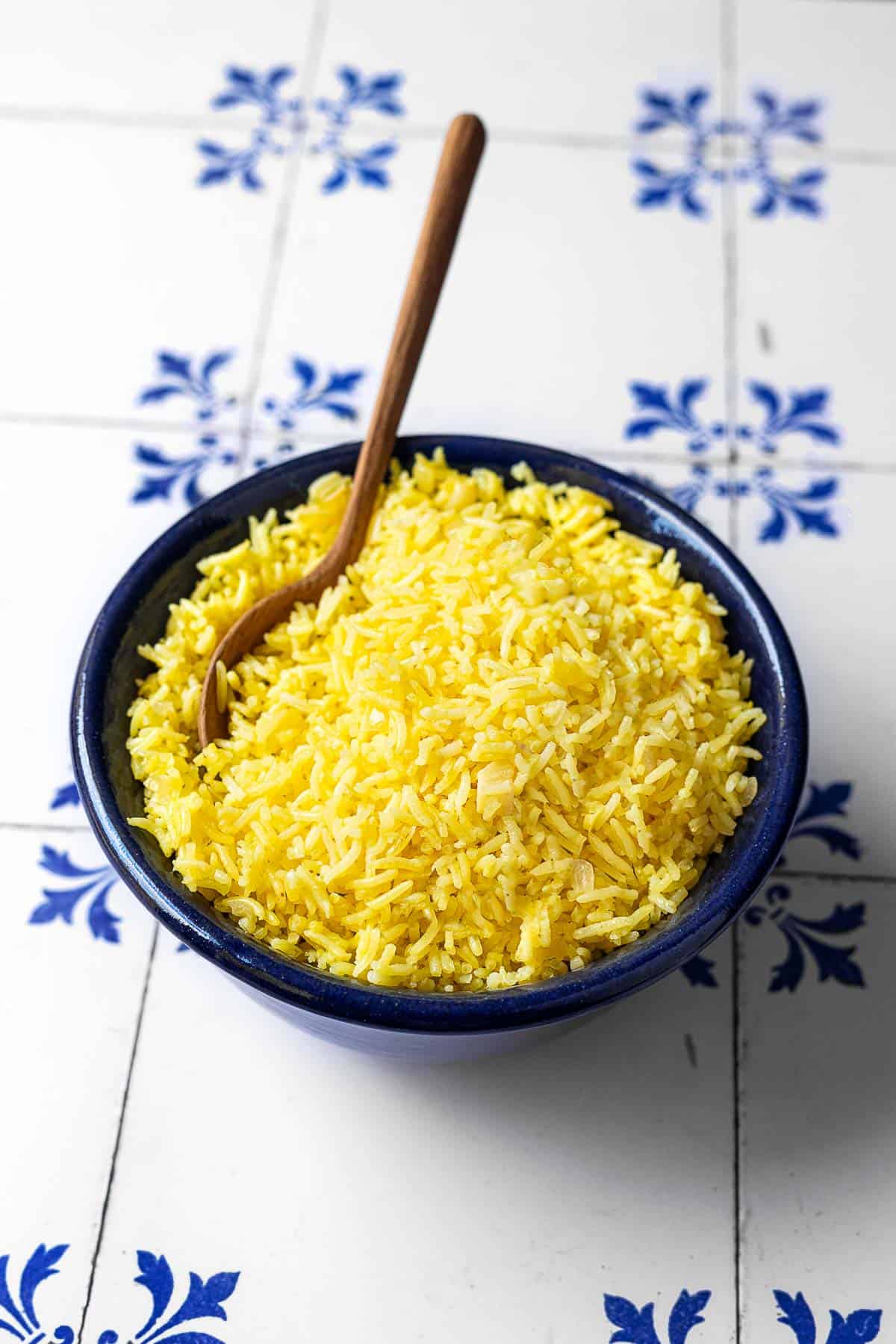
Fluffy saffron rice gets its golden color and delicate floral aroma from bloomed saffron, with savory onion, garlic, and a little lime zest to brighten each spoonful.
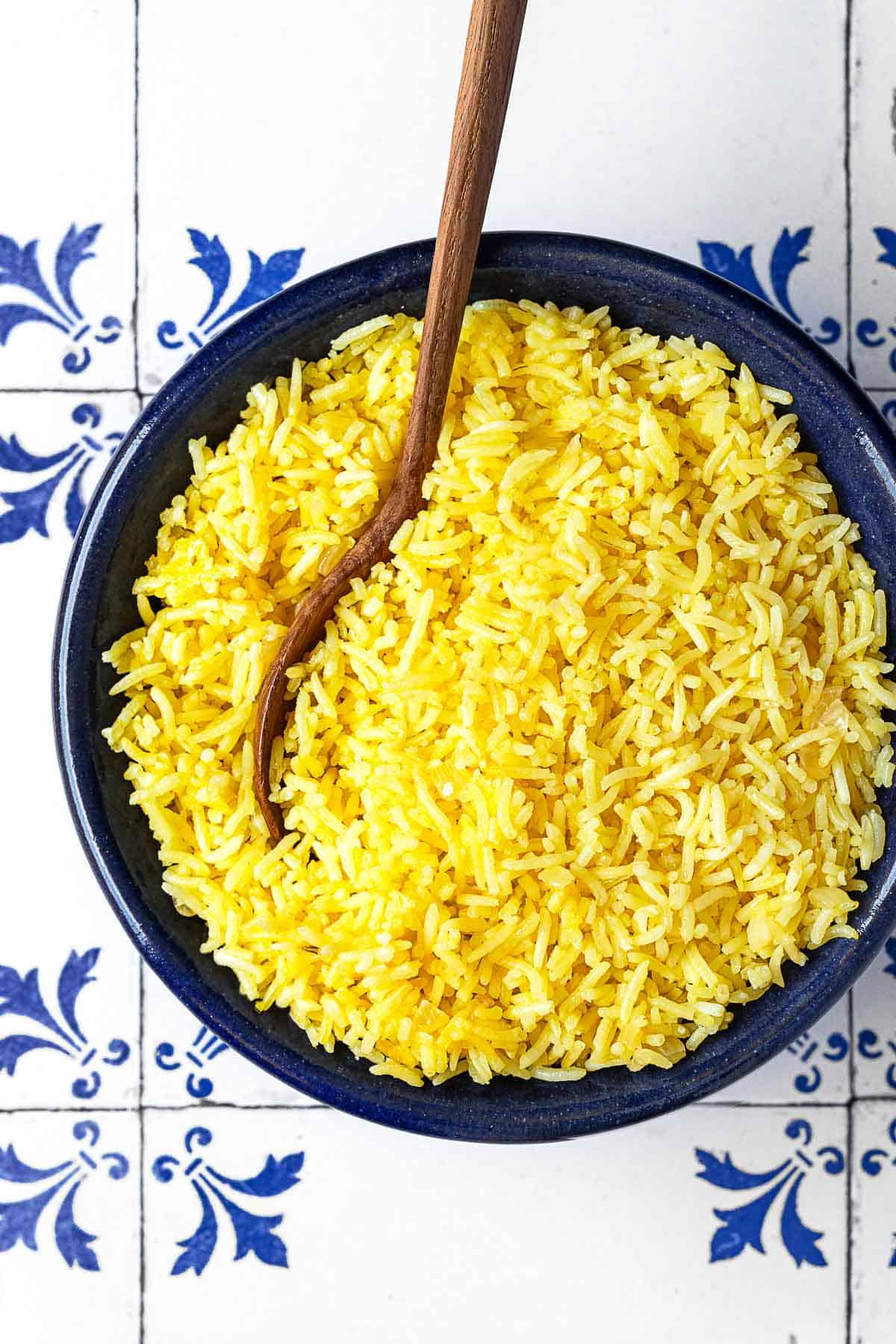
Golden Saffron Rice with Basmati and Lime
Saffron is a familiar finishing touch in Iranian rice dishes, and I often use it as a garnish. Here, I stir the bloomed saffron into the pot before simmering, so its golden color and earthy, floral flavor spread throughout the basmati.
The first step is to grind and bloom the saffron: simply mix the ground spice with a little water to draw out its flavor and color. Saffron is precious, and this small step helps you make the most of it.
I also add finely diced onion, garlic, a bay leaf, and lime zest. The onion softens into the rice, while the zest brings a citrus fragrance that complements the saffron. I prefer cooking the rice in broth for another layer of savory flavor, though water works well, too.
Plan on about 40 minutes from start to finish, including a 5-minute covered rest that lets the rice finish steaming before you fluff it.
I love saffron rice alongside fesenjan, a Persian pomegranate and walnut chicken stew, but almost anything you would serve with plain white rice goes well with these fragrant golden grains.
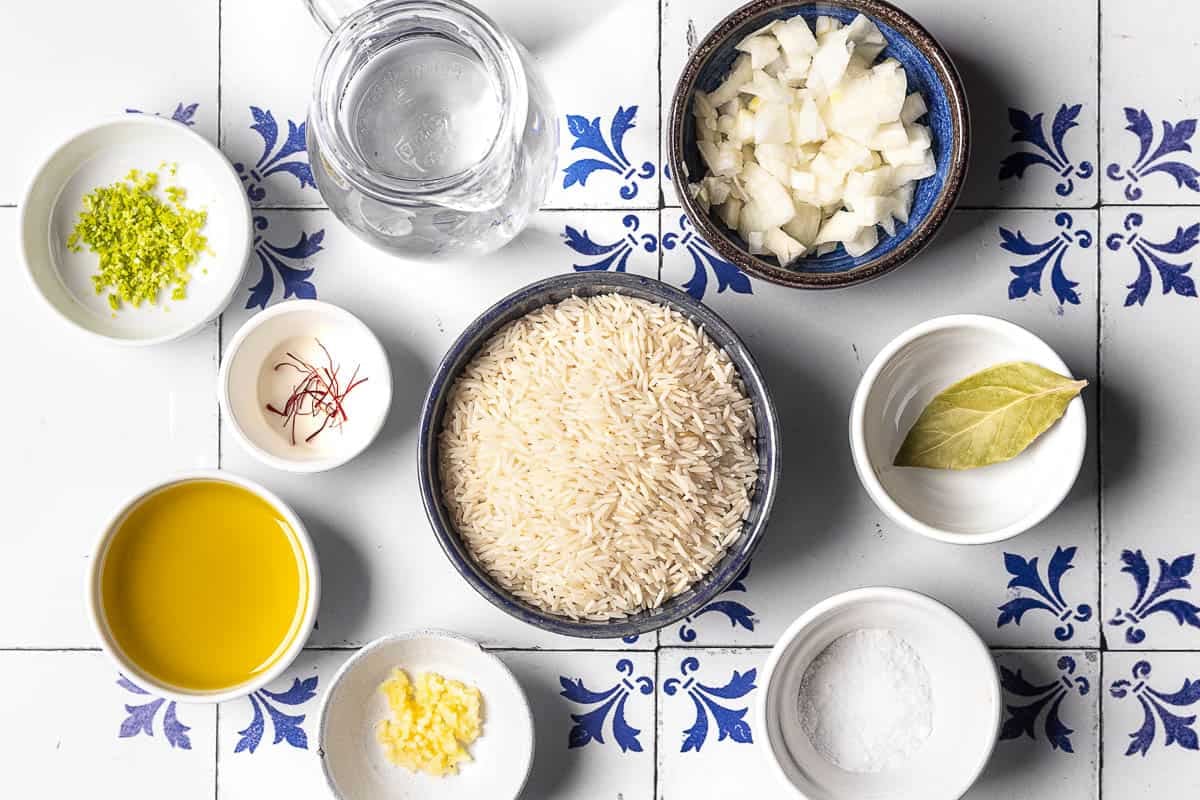
Ingredients for Saffron Rice
Basmati and saffron give this rice its character. A few aromatics add depth without overwhelming the delicate flavor of the spice.
- Basmati rice: Use white basmati rice, a fragrant long-grain variety that cooks into fluffy, separate grains. I use Tilda Pure Basmati, but any supermarket basmati is fine. Rinse it well before cooking to remove excess surface starch; our guide to cooking basmati rice has more detail on preparing it.
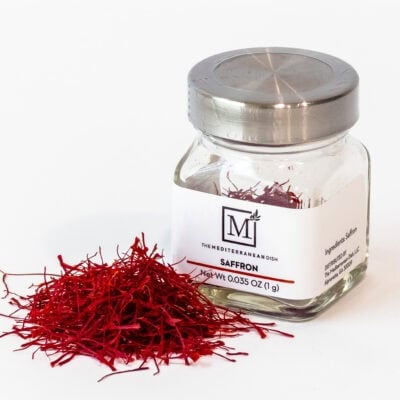
- Saffron: These fine red threads are the dried stigmas of the saffron crocus flower. A small amount gives the rice its golden color and subtle floral, earthy flavor. Grind the threads before blooming them in water, or use the measured amount of ground saffron listed below. You can find saffron threads in our shop and read more about choosing and using them in my saffron guide.
- Extra virgin olive oil: Use it to soften the onion and garlic, then coat the rice before adding the liquid. A flavorful oil, such as Koroneiki Greek extra virgin olive oil, also seasons the grains.
- Yellow or white onion: Finely dice one small onion so the pieces soften readily and blend into the rice.
- Garlic: One crushed or minced clove adds savory flavor. Add it after the onion has softened; it needs only about 30 seconds to release its aroma.
- Broth or water: Vegetable broth, chicken broth, and water all work. I prefer broth for its richer flavor. You’ll need 1½ cups, in addition to the 3 tablespoons of water used to bloom the saffron. Choose vegetable broth or water for a vegetarian dish.
- Bay leaf: One leaf adds a subtle peppery note as the rice simmers. Remove it before serving.
- Lime zest: Use only the green outer layer of the peel, leaving behind the bitter white pith. You need the zest, rather than the juice. Lemon zest also works if you don’t have a lime.
- Kosher salt: Season according to your cooking liquid. Water and low-sodium broth need a good pinch of salt; regular broth may already bring plenty of seasoning.
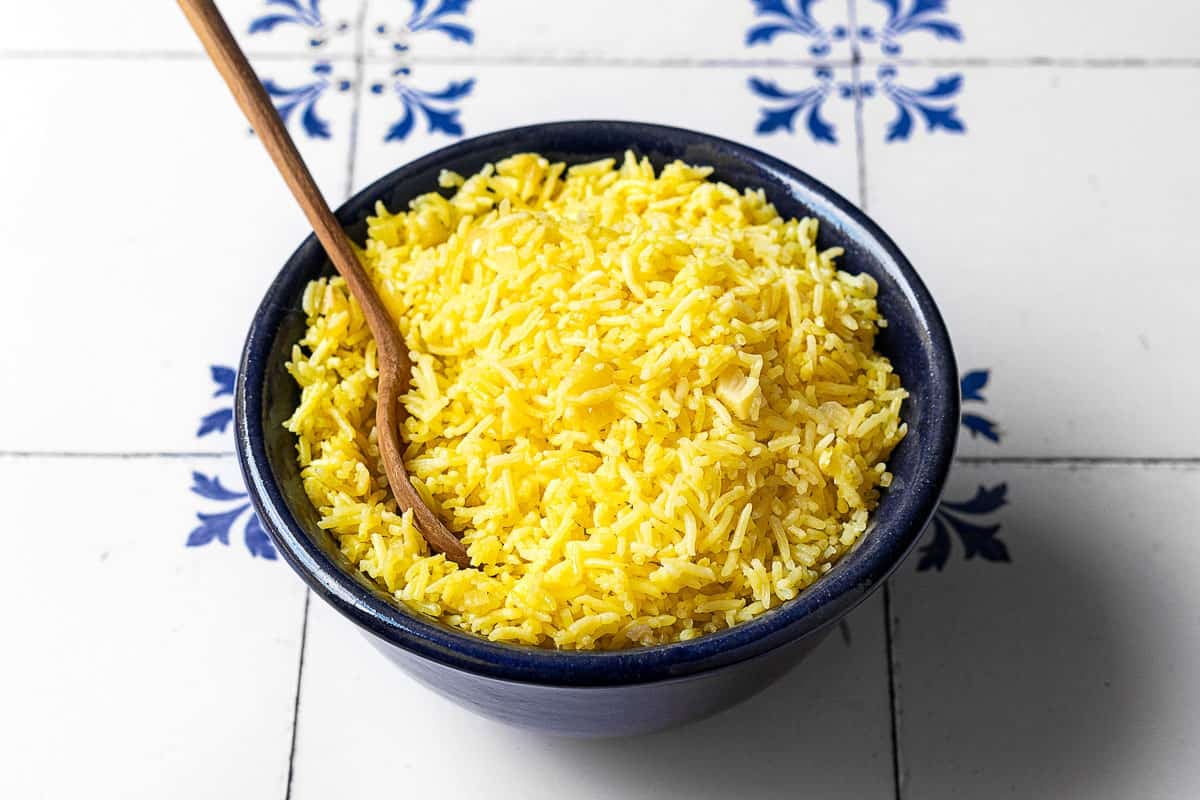
How to Cook Saffron Rice
Start by blooming the saffron, then let it sit while you rinse the rice and cook the aromatics. Have a medium saucepan with a fitted lid ready for simmering and the covered rest.
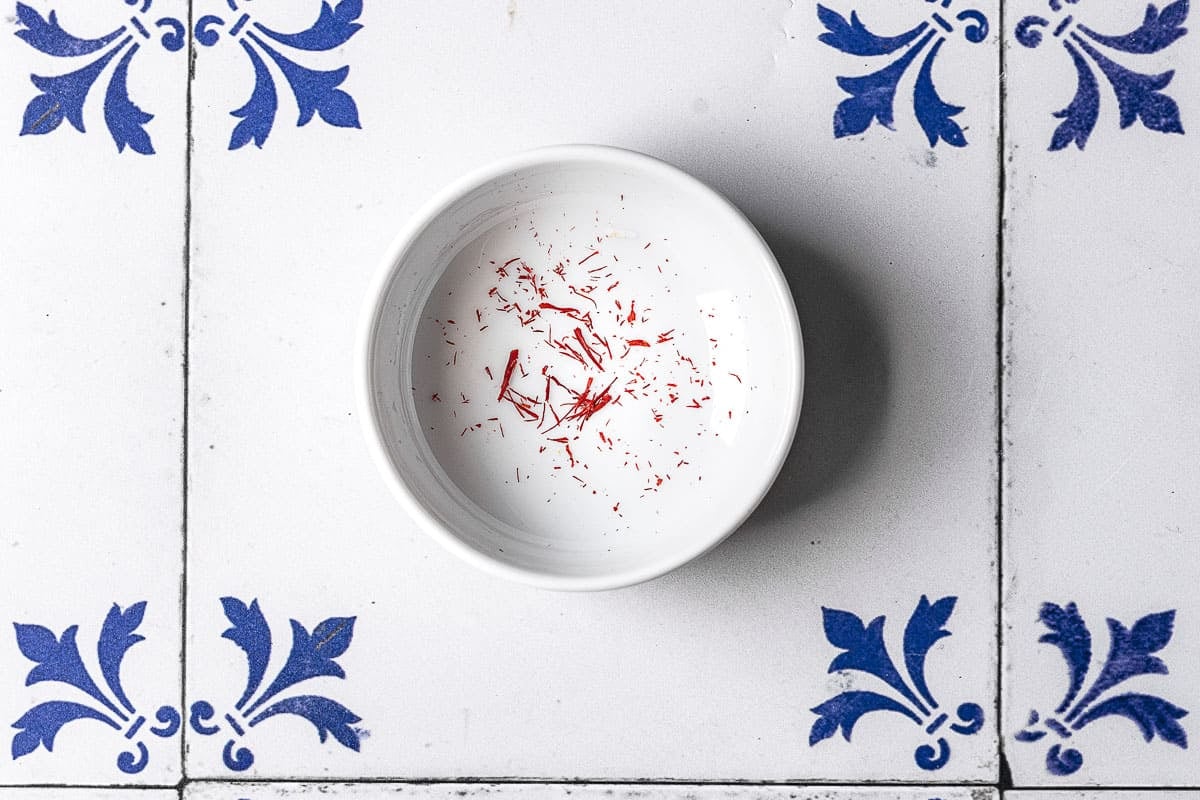
- Grind and bloom the saffron. Finely grind 10 saffron strands in a mortar and pestle or spice grinder, or use ⅛ teaspoon ground saffron. Combine the ground saffron with 3 tablespoons warm water in a small bowl. Set aside to bloom while you prepare the rice and aromatics.

- Rinse the rice. Place 1 cup white basmati rice in a fine-mesh strainer and rinse under cold water until the water runs clear. Drain before adding it to the saucepan.
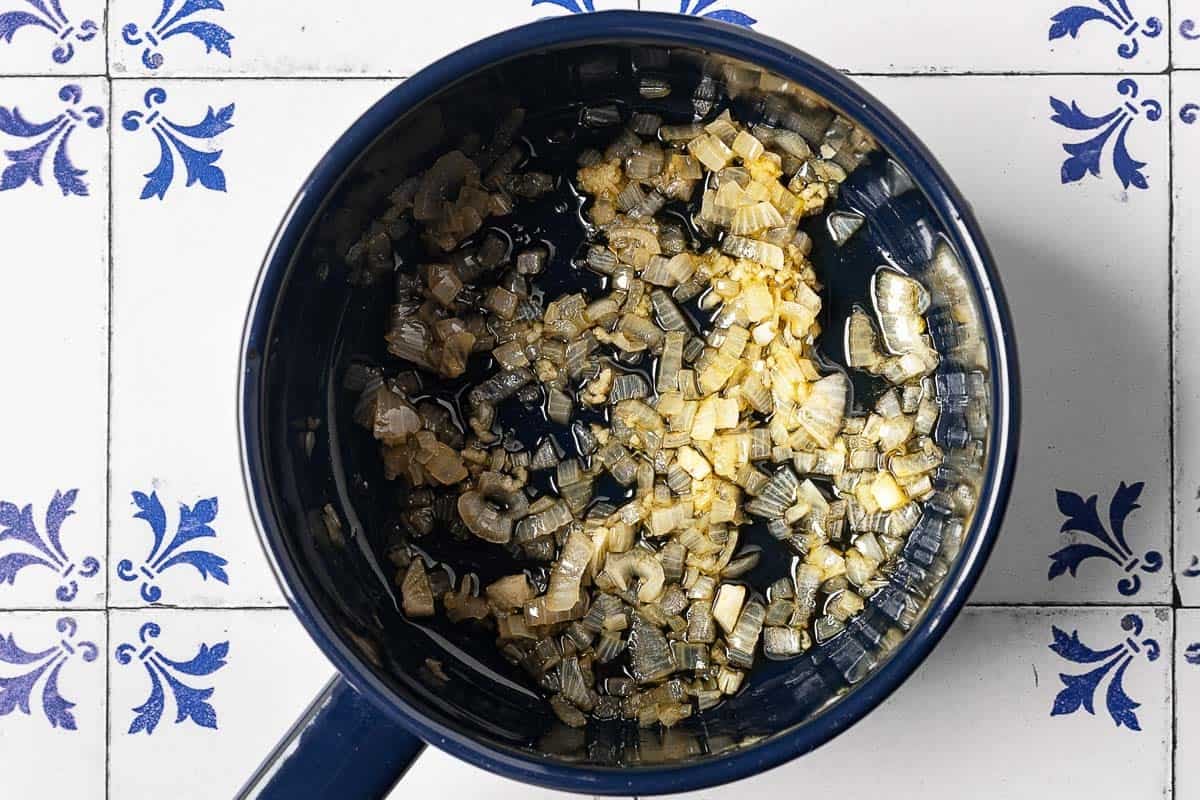
- Sauté the onion and garlic. Heat 2 tablespoons extra virgin olive oil in the saucepan over medium-high heat. When the oil shimmers, add 1 finely diced small yellow or white onion. Cook, stirring, until softened and translucent. Add 1 crushed or minced garlic clove and stir until fragrant, about 30 seconds.
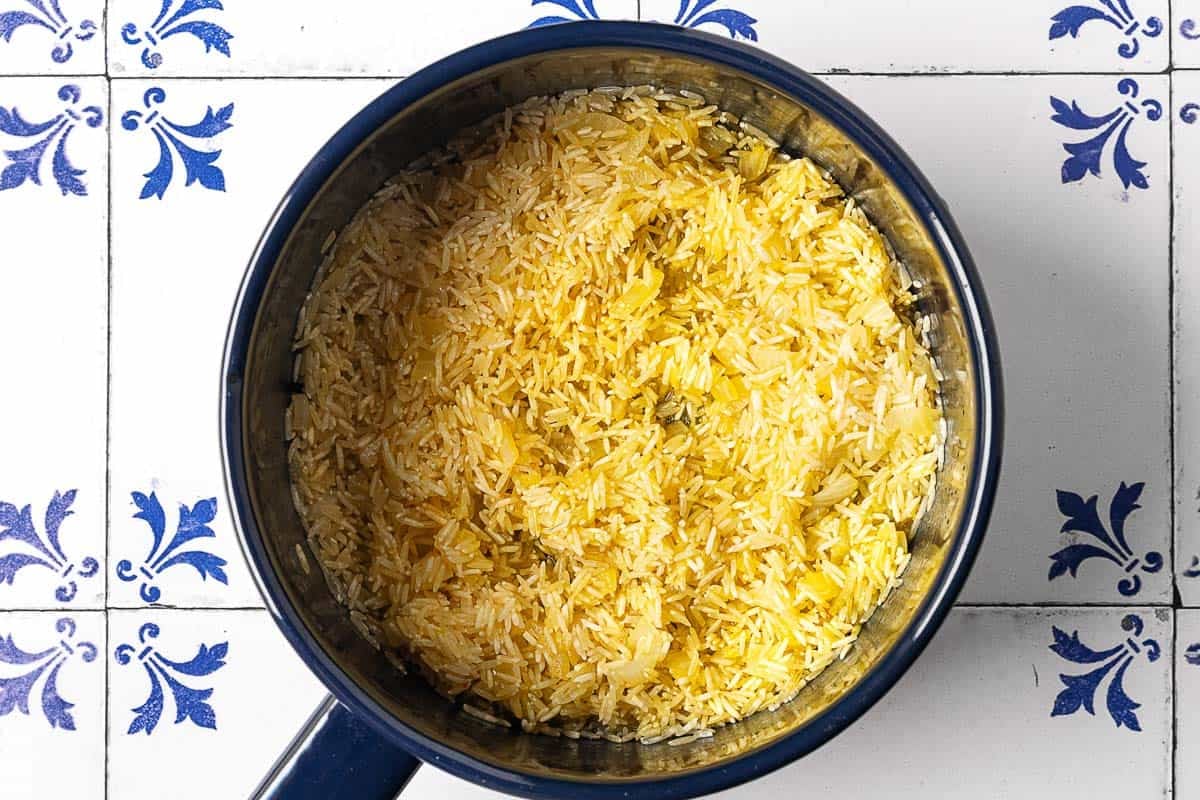
- Coat the rice and add the saffron. Add the drained rice to the saucepan and toss in the onion and garlic oil until well coated. Pour in all the bloomed saffron, including its liquid, and stir to distribute the color evenly.
- Add the broth and simmer. Pour in 1½ cups vegetable broth, chicken broth, or water. Add 1 bay leaf and the zest of 1 small lime. If using water or low-sodium broth, season with a good pinch of kosher salt. Stir and bring to a boil, then reduce the heat to low and cover. Cook until the rice has absorbed the liquid, about 15 to 20 minutes.
- Rest, fluff, and serve. Turn off the heat and leave the rice covered and undisturbed for 5 minutes. Remove the bay leaf, gently fluff the rice with a fork to separate the grains, and serve.
Tips for Fluffy Saffron Rice
A few details make a difference to the texture of the rice and help the saffron flavor each grain.
Grind the Saffron Before Blooming
Grind the saffron threads into a fine powder before mixing with water. This helps release their color and flavor more effectively than adding whole threads directly to the pot. Start this step first so the saffron can bloom while you rinse the rice and soften the onion.
When you add the saffron to the saucepan, pour in all of the liquid. Those 3 tablespoons of blooming water are separate from the 1½ cups of broth or water used for simmering.
Rinse Away the Surface Starch
Rinsing removes excess starch that can make the cooked grains clump together. Keep rinsing until the water runs clear, then drain the rice before adding it to the onion and garlic.
Without a fine-mesh strainer, place the rice in a bowl and cover with cold water. Gently swish it with your hand, then carefully pour off the cloudy water while keeping the rice in the bowl. Repeat with fresh water until it stays clear.
Use a Pot with a Fitted Lid
A nonstick saucepan helps prevent rice from catching on the bottom; a heavy-bottomed saucepan also works. Toss the drained rice thoroughly in the onion and olive oil so the grains are coated before adding the saffron liquid and broth.
Once the liquid comes to a boil, reduce the heat to low and cover. Keep the lid on during the final 5-minute rest, too—the trapped steam helps finish the rice before you separate the grains with a fork.
Measure the Liquid Carefully
For 1 cup of white basmati rice, use 1½ cups broth or water, plus the saffron’s blooming water. Too little liquid can leave the rice hard in the center, while too much can make it soft and mushy.
After 15 to 20 minutes of gentle simmering, the rice should have absorbed the liquid. Turn off the heat and leave it covered for 5 minutes before fluffing.
Simple Swaps
- Lemon for lime: Lemon zest brings a different citrus fragrance but works well with saffron. As with lime, grate only the colored outer peel and avoid the bitter white pith.
- Vegetable broth or water for chicken broth: Use either to keep the rice vegetarian and vegan. Water gives a lighter result, while broth adds savory depth. Adjust the salt to suit your cooking liquid.
Saffron gives the rice both its color and its distinctive flavor. Turmeric can turn rice yellow, but it won’t reproduce saffron’s floral aroma and earthy taste. My guide to saffron explains what to look for when buying the spice.
What to Serve with Saffron Rice
I love saffron rice with fesenjan, a Persian chicken stew with pomegranate and walnuts. Spoon the rich sauce over the rice so you get some of each in every bite.
For a grilled dinner, serve it alongside kofta kebabs. Their beef, lamb, fresh herbs, and warm spices pair beautifully with the fragrant basmati. Mediterranean salmon kabobs are another lovely option when you’re in the mood for fish.
For a vegetarian meal, use vegetable broth or water in the rice and serve it with Moroccan vegetable tagine. The chickpeas and vegetables make a satisfying main, with plenty of sauce to spoon over the golden grains.
Making Saffron Rice Ahead
You can cook saffron rice the day before serving. Refrigerate it promptly following the storage guidance below, then reheat it covered so it retains moisture.
How to Store and Reheat Saffron Rice
Refrigerate: Transfer leftover rice to shallow containers and refrigerate promptly, within 2 hours of cooking—or within 1 hour if the temperature is above 90°F. Don’t leave it on the counter to cool completely. Store covered in the refrigerator at 40°F or below and use within 3 to 4 days.
Freeze: For longer storage, freeze the rice in airtight containers for up to 1 month for best quality.
Reheat: Place the rice in a microwave-safe dish or saucepan, add a splash of water if it seems dry, and cover. Heat in the microwave or on the stovetop, stirring as needed, until steaming hot throughout and reaching 165°F. You can reheat it directly from frozen; allow extra time and check that the center is hot.
More Flavorful Rice Side Dishes


Ingredients
- 10 saffron strands, ground, or 1/8 teaspoon ground saffron
- 3 tablespoons warm water, for blooming the saffron
- 1 cup basmati rice
- 2 tablespoons extra virgin olive oil
- 1 small yellow or white onion, finely diced
- 1 garlic clove, crushed or minced
- 1 1/2 cups vegetable broth, chicken broth, or water
- 1 bay leaf
- 1 small lime, zested
- Kosher salt
Instructions
- Grind and bloom the saffron. If using saffron threads, grind them into a fine powder with a mortar and pestle or spice grinder. Mix ⅛ teaspoon ground saffron with the 3 tablespoons warm water in a small bowl. Set aside to bloom while you prepare the rice and aromatics.
- Rinse the rice. Place the rice in a fine-mesh strainer and rinse under cold water until the water runs clear. Drain.
- Sauté the aromatics. Heat the olive oil in a medium saucepan over medium-high heat. When the oil shimmers, add the onion and cook, stirring, until softened and translucent. Add the garlic and stir until fragrant, about 30 seconds.
- Coat the rice and add the saffron. Add the drained rice and toss until well coated in the onion and garlic oil. Pour in all the bloomed saffron and its liquid. Stir until evenly combined.
- Add the broth and simmer. Add the broth or water, bay leaf, and lime zest. If using water or low-sodium broth, season with a good pinch of kosher salt. Stir and bring to a boil, then reduce the heat to low and cover. Cook until the rice has absorbed the liquid, about 15 to 20 minutes.
- Finish and serve. Turn off the heat and leave the rice covered and undisturbed for 5 minutes. Remove the bay leaf, gently fluff the rice with a fork, and serve.
Video
Notes
- Measure both liquids: The 3 tablespoons of water for blooming the saffron are in addition to the 1½ cups of broth or water used to cook the rice.
- Rinse the rice: Removing excess surface starch helps the grains cook up fluffy and separate.
- Zest carefully: Grate only the green outer peel of the lime, avoiding the bitter white pith. Lemon zest can be used in place of lime zest.
- Vegetarian or vegan option: Use vegetable broth or water.
- Storage: Refrigerate promptly in shallow containers, within 2 hours of cooking, or 1 hour if the temperature is above 90°F. Store covered at 40°F or below for up to 3 to 4 days. Freeze in airtight containers for up to 1 month for best quality.
- Reheating: Reheat covered in the microwave or on the stovetop, adding a splash of water if dry and stirring as needed, until hot throughout and reaching 165°F. Frozen rice can be reheated directly from frozen; allow extra time.
- Shop this recipe: Find saffron, olive oils, and other Mediterranean ingredients in our shop.
Nutrition
Try Our All Natural Saffron!
Exquisite Saffron from the high altitudes of Morocco’s Atlas Mountains

Hi!
Is it okay to use brown rice for this recipe?
Hi, Jay. This can likely be made with brown basmati rice, but it’s not something we’ve tried with this recipe ourselves. If you give it a go, we’d love to hear your thoughts!
i am making this for 10 people. should i double or triple everything.
Hi, Kim. If you want to increase the amount of this recipe, we really do recommend making it in multiple single batches. Doubling, tripling, etc. a rice recipe to make one huge batch can get a little tricky and doesn’t always turn out.
No lime.
Can I sub lemon zest instead?
Serving this with Persian lamb shanks
Sure, Giles. That will work in a pinch. It may have a slightly different flavor profile, but should still be delish :).
A really pleasant tasting rice recipe even though I forgot to add the lime at the end. a great compliment to our meat and veggie kabobs but could go with anything. Will make it again for sure.
We love hearing that, Victoria. Thank you!
Hi this is probably a strange question but I am going to ask it anyway I love you site I use it all the time for the Mediterranean diet food my mother is supposed to be on but I am cooking Ethiopian food this time Teff and chicken srew lentils I wanted to add saffron rice but I think it’s Ethiopian but then I found it on your site and now I am not sure can you point me in the right direction
I love the recipe
Can I make this a day ahead and reheat somehow?
Sounds delicious and I will def try the blooming.
You can! For detailed instructions, see the “How to Store and Reheat Leftover Rice” section of the post.
This was an easy recipe and sooo delicious. I added more garlic just because because we really like garlic.
The seasonings were perfect, and we all loved it. Thank you for sharing.
Delightful! I was thrilled with the result and so happy to have learned to bloom saffron- it made all of the difference!
So glad you enjoyed it and discovered the magic of blooming saffron! It really is a game-changer!
SOOOO good!! I add a little more of all of the spices to make the flavors a little more pronounced. Also at Step 4 you can transfer this to a rice cooker and it comes out perfect every time!
Thanks for sharing that, Heather! Great to know!
This sounds fantastic. I’m going to try this,but I have a question. Can this be made with brown basmati rice? Does the brown rice need to be rinsed?
Also curious if adding a 1/2 tsp or so of turmeric would taste ok?
Hi, Dave. This can likely be made with brown basmati rice, but it’s not something we’ve tried with this recipe ourselves. If you give it a go, we’d love to hear your thoughts! Same with adding turmeric… having not tested it this way, it’s hard to say how it would affect the flavor profile.
Made this with marinated, grilled chicken and topped with your avocado crema….so flipping good!
Woohoo! Love it when our community says something is so flipping good! Cheers to more good things!
what a great recipe, this rice is addictive, i cant stop eating it. I will be making it regularly for sure, thank you
Outstanding! I made this in my instant pot and it was amazing! I’ll be making it regularly from now on!