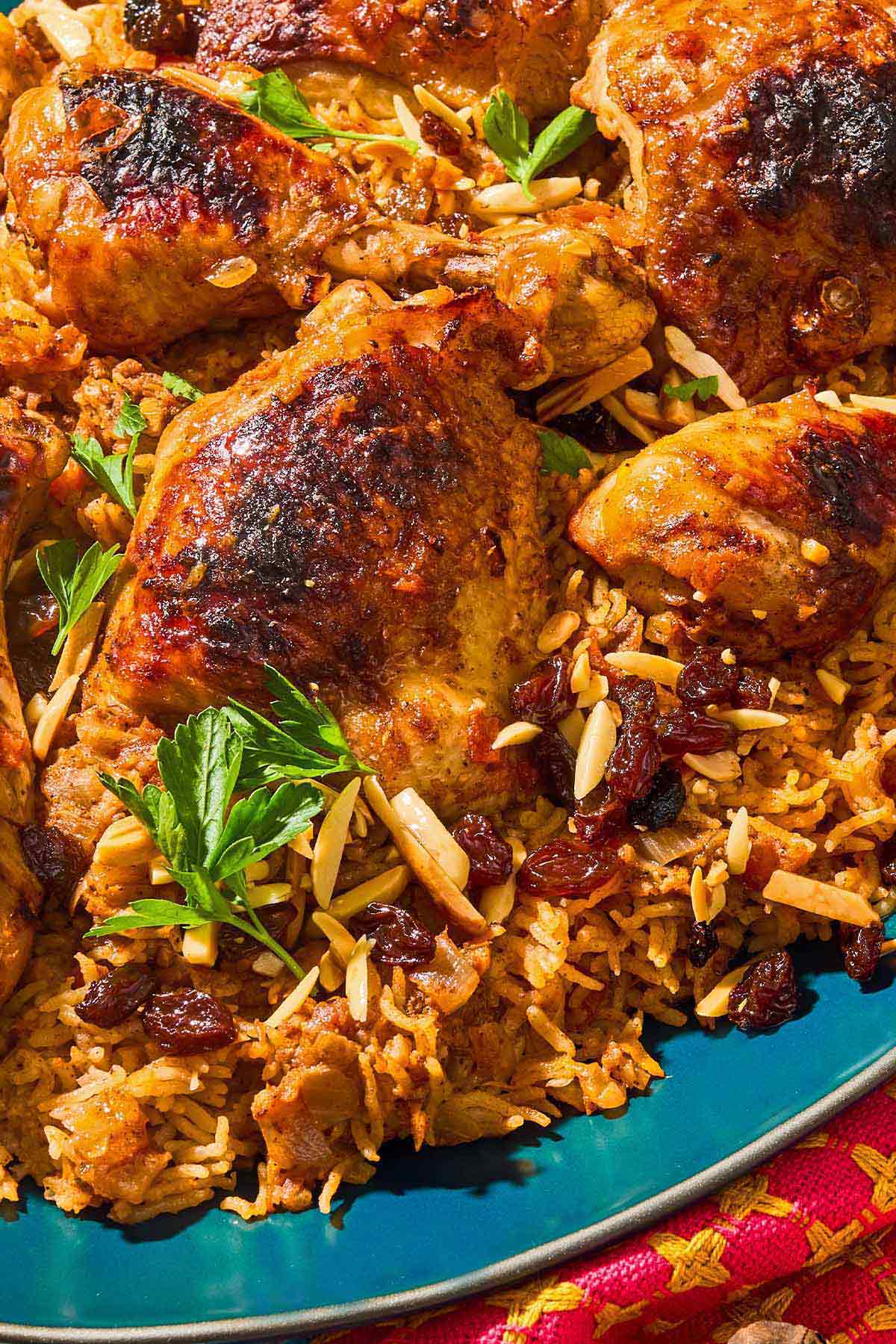
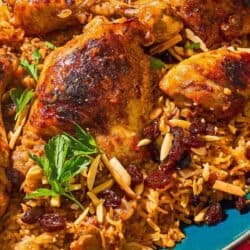
Kabsa, Saudi Arabia’s national dish, is an aromatic one-pot chicken and rice recipe. The fluffy, fragrant rice is cooked in a chicken and tomato-based broth with a rich blend of spices.
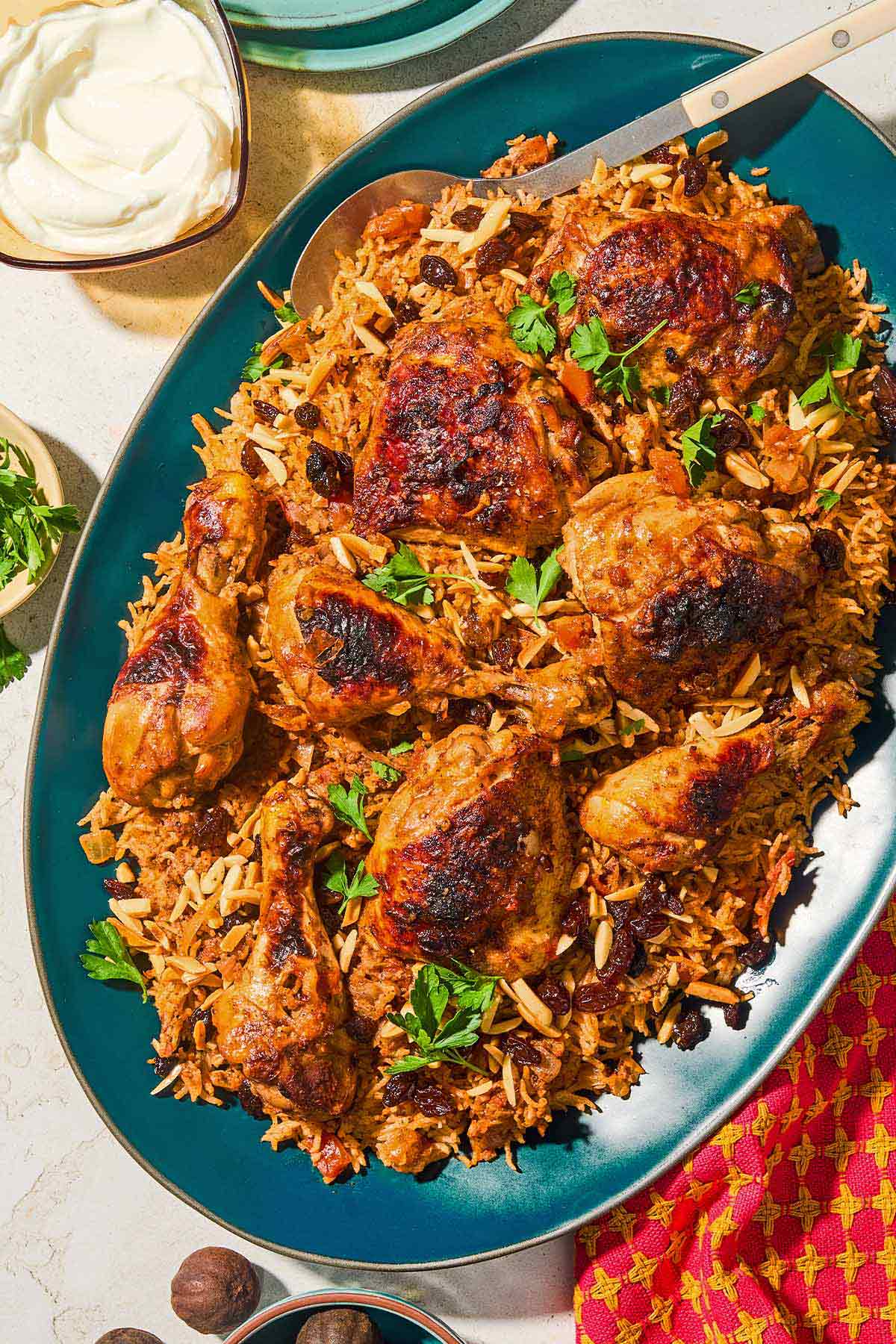
The Chicken and Rice Dish So Good I Regretted Not Saving Room for More
Asma, a Jordanian and Saudi friend of mine, introduced me to kabsa, many years ago. In true Middle Eastern generosity, her dinner table was spread with so many dishes, I almost didn’t notice it! With a plate mounded full of food, I sat down to feast on all the delicious flavors and textures. When I finally tried the kabsa, I wished I had space on my plate for more!
Asma explained to me that when it comes to making kabsa, the rice and chicken cook together in the same pot with a spiced broth. For rice to be the star of the table (especially that table) is no easy feat. It was fragrant and savory with a hint of sweetness and tang. Next to it was tender, juicy chicken full of flavor. I felt a little intimidated the first time I tried making it. You have to use the right amount of water so the rice won’t be either mushy or undercooked, and a blend of spices to be prominent without overpowering everything.
Thankfully, Asma broke down the steps for me in an approachable way, and that guidance informs this kabsa recipe, the version I now cook at home with confidence! I like to make it on special occasions, especially when I want to impress and feed a group. It’s one of my husband’s favorite meals, and I now make my own kabsa spice blend based on Asma’s recipe.
Ingredients for Kabsa
- Chicken: Bone-in thighs and drumsticks are the meat component of this chicken kabsa. Chicken adds the umami and richness to the broth that flavors the rice.
- Basmati rice: Soaked basmati rice cooks into the fluffy component that’s the star of the show. It’s the carrier of flavor as it soaks up the flavor of every element you add into the broth and becomes the centerpiece of the dish.
- Kabsa spice blend: A spice blend of ground cumin, coriander, cinnamon, paprika, cardamom, black pepper, nutmeg, and cloves perfumes the chicken and rice, giving the kabsa its signature warming and earthy fragrance. An almost even amount of each ground spice is not only easy to remember, but also allows a perfectly balanced result.
- Onion, garlic, and fresh ginger, a trio of aromatics, form the flavor base of the dish.
- Citrus: Orange zest and dried whole limes, called loomi, give kabsa a distinctive, tart aroma. It’s also used in Persian recipes like Ghormeh Sabzi. Read more about loomi in a moment.
- Tomato paste works as a one-ingredient powerhouse, giving this kabsa recipe depth, acidity, sweetness, color, and umami.
- Fresh veggies: Fresh tomatoes and carrots build substance in the broth and bring a subtle sweetness to the rice.
- Almonds and raisins: A finishing garnish, these final additions add texture and sweetness.
How to Make Kabsa
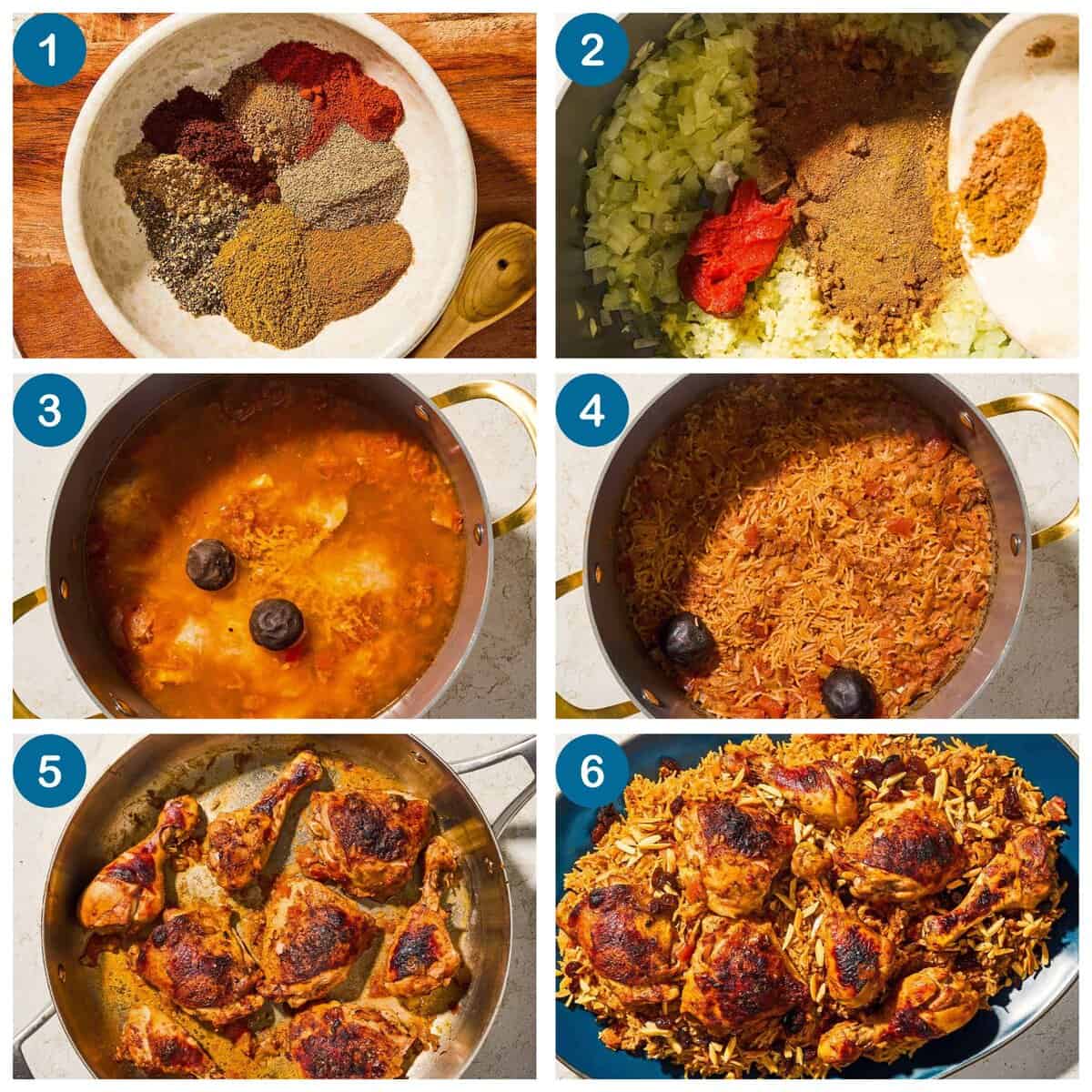
Prep the Rice and Spices
- Prep the rice. Wash 2 cups basmati rice until the water runs clear. About three washes minimum. Submerge the rice in water to soak for 45 minutes, then drain through a fine sieve.
- Make the Kabsa Spice Blend. In a small bowl combine paprika, black pepper, cardamom, cinnamon, cumin, coriander, nutmeg, and cloves. Stir well.
Sauté the Aromatics
- Sauté the aromatics. In a large pot, warm 2 tablespoons of extra virgin olive oil on medium heat. Add 1 finely-chopped large yellow onion and sauté until golden and slightly caramelized, about 5 minutes. Then add 4 minced garlic cloves, and 1 teaspoon minced or grated fresh ginger, 3 tablespoons tomato paste, and all of the Kabsa Spice Blend and sauté until fragrant, about 1 minute.
- Add the vegetables and chicken. Add 3 finely-chopped medium tomatoes and 2 grated carrots into the pot and cook down until jammy and paste-like, about 5 minutes. Then add in 4 bone-in, skin-on chicken thighs and 4 chicken drumsticks (about 1 pound each) and mix into the paste, making sure the chicken has been completely coated in it. At this point, preheat the oven on the broil setting.
Cook the Chicken and Rice
- Build the broth. To the pot add 3 cups water, 1 tablespoon kosher salt, the zest of 1 orange, and 2 whole loomi (black limes), each pierced with the tip of a sharp knife. Mix everything until well combined. The chicken should be almost completely submerged in water. Add a little extra, if necessary.
- Simmer the chicken. Still at medium heat, bring to a low boil, cover, and cook the chicken for about 30 minutes until there is no more pink when you cut into the thickest part. Remove the chicken pieces and place them in a broiler-safe dish in a single layer. Spoon or brush a little broth over each chicken piece as if lightly basting it. Season each with a sprinkle of salt.
- Cook the rice. To the broth add the soaked and drained rice and stir. Turn up the heat until the broth boils, then cover the pot and turn down the heat to a low heat setting. Leave the rice to cook, covered, for 20 minutes, until all the liquid is absorbed.
- Broil the chicken. In the meantime, brown the chicken skin side up, on the broil setting. Turn and move the chicken often so it browns evenly to a burnished sheen. It should take about 10 to 12 minutes, remove when you’ve achieved the browning on the chicken skin that you desire, and be careful not to leave it for too long so it doesn’t burn.
Assemble
- Toast the almonds and raisins. In a small frying pan, add the remaining 2 tablespoons of olive oil and turn the heat up to medium-low. Toss 1/2 cup slivered almonds in the oil for about 4 to 5 minutes, until they’ve turned a beige/light brown color. Then add in 1/2 cup raisins to the pan and mix everything together, allowing another 2 minutes for the raisins to warm with the almonds. The raisins should swell up slightly and be glossy. Remove from heat and set aside.
- Finish and serve. Spoon the rice out onto a large serving dish and fluff each spoonful with a fork as you go. Top the rice evenly with the almonds and raisins, followed by the chicken pieces. Add chopped parsley, if you like.
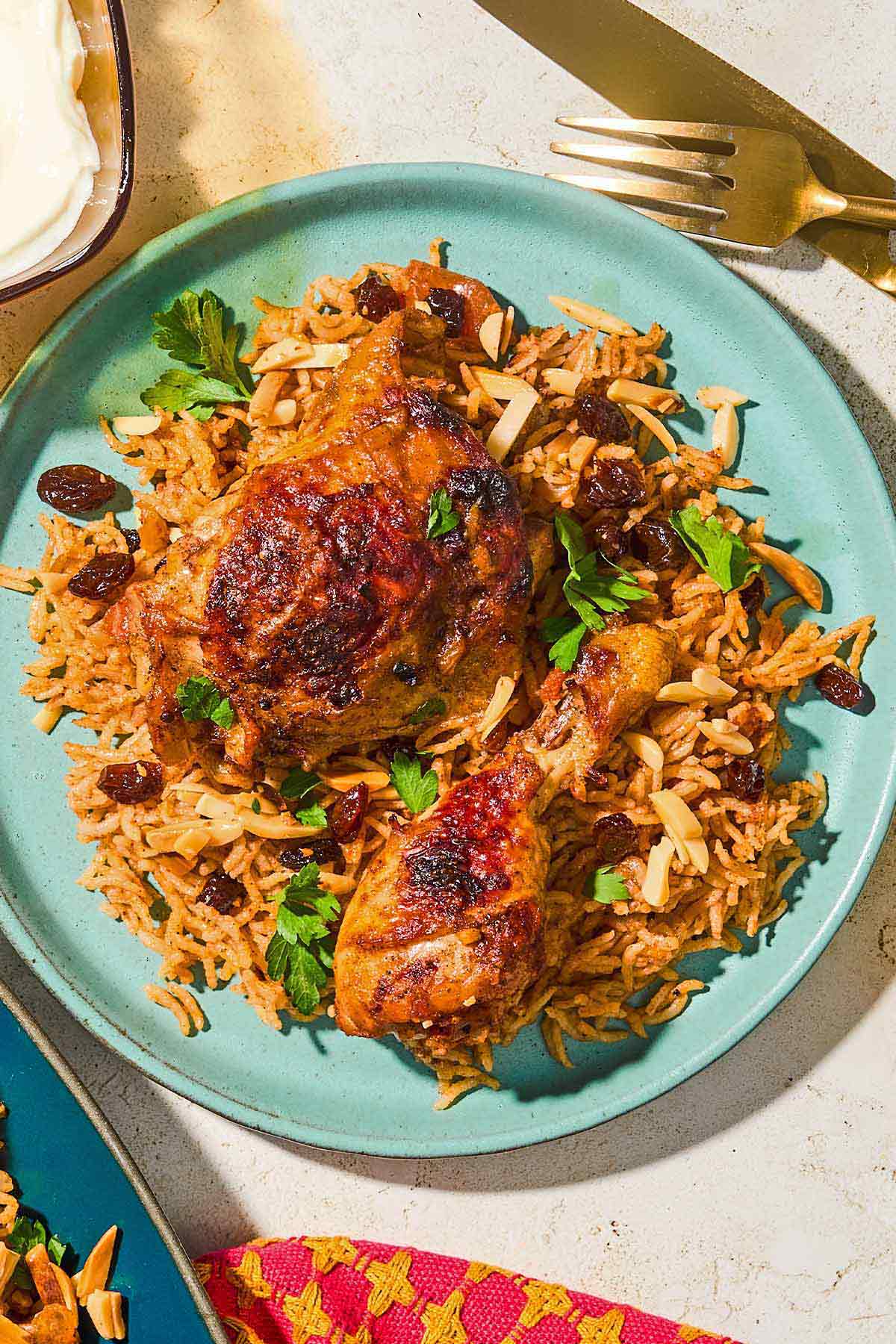
What is Kabsa?
Kabsa is a traditional Bedouin recipe born out of the need for cooking while traveling and living in desert conditions. This means one-pot cooking, perhaps over fire or an underground oven, with various types of meat (lamb, chicken, rabbit, or whatever was available), rice, and spices.
It’s not completely clear where kabsa originates. Some accounts cite Yemen as the birthplace. Today, it’s a firm staple of the cuisine of the Arabian Peninsula and into the Levant. Given that it was a food belonging to pastorally nomadic Arab tribes, it makes sense that the dish moved around the region and was influenced by ingredients from all over.
That’s why it is reminiscent of dishes like Indian biryani, Persian pilaf, and Afghani pulau. The first time I tried it, it reminded me of South African yellow rice, or Egyptian koshari. The fact that there are similar dishes in so many cultures is evidence that it’s such a tasty way to cook rice!
This recipe follows the style I’m most familiar with, the Saudi version. However, kabsa is made with regional variations and can even differ from household to household.
That means it’s pretty forgiving when it comes to the ingredients and the cooking method. Some people cook everything together in one go, others remove the chicken, then cook the rice, and some start by browning the chicken first, then adding everything else. My recipe follows what I think is the best balance between ease, flavor, and texture.
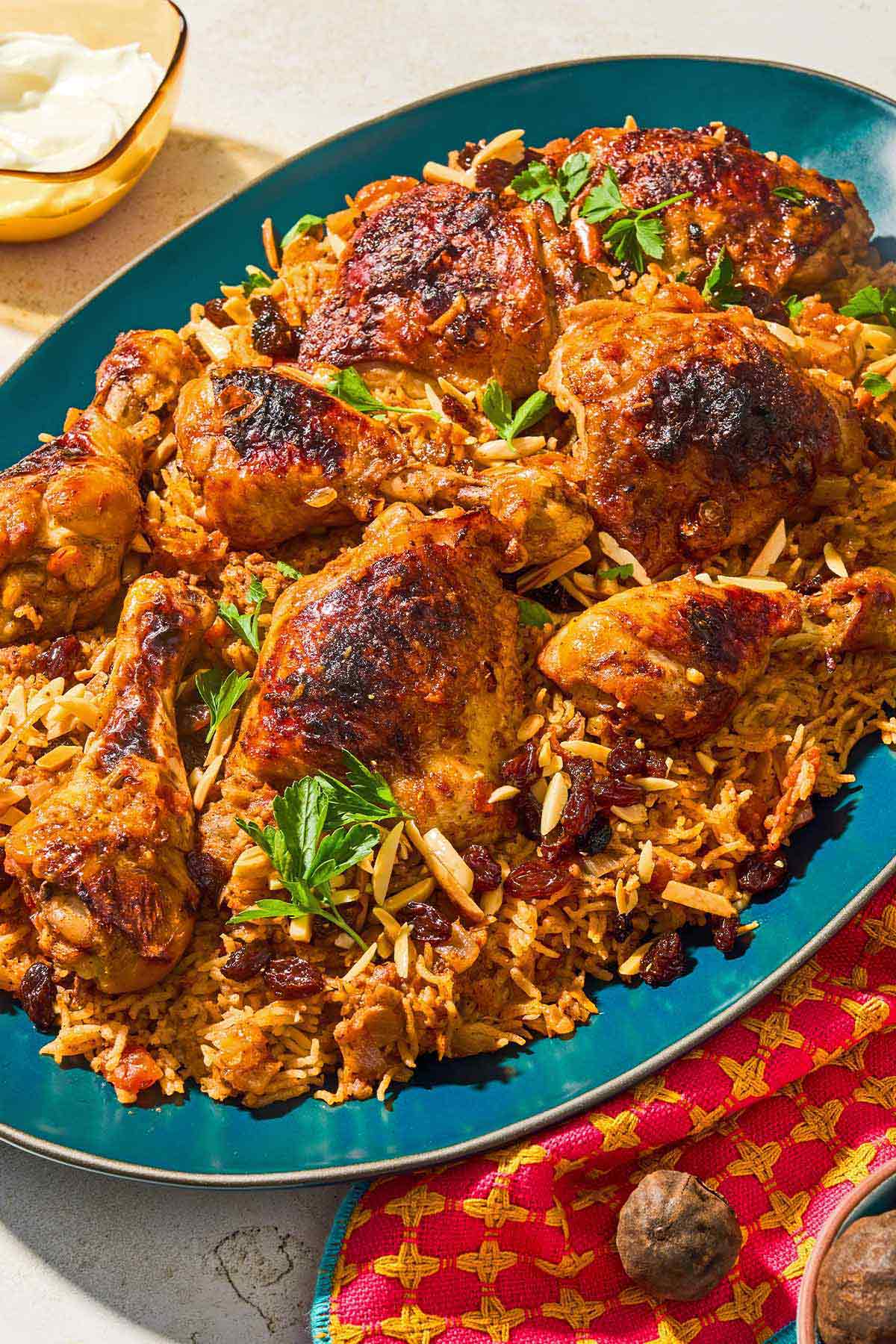
What is Loomi?
Loomi, or black limes (visible in the lower right corner of the above image), are a type of dried lime used most commonly in Persian cuisine. To make them, people boil whole limes in brine, then dry them in the sun. Because of this process, they develop a much more complex flavor with sour, tangy, bitter, smoky, and fermented notes.
- How are loomi used? People often add whole loomi to stews and rice, where they impart a distinctive citrus fragrance and depth of flavor. You’ll also find them ground into powder form and used as a ground spice (often in kabsa spice blends!) or even steeped as a tea.
- Where do you buy loomi? Loomi are easy to find at Middle Eastern and Iranian grocery stores.
- Is there a substitute for loomi? People often substitute loomi with fresh lime or lemon juice and zest. This works to add a fragrant sourness that’s similar, but I find these almost too sharp. I think they can throw the balance of the dish off. Still, it’s a relatively good option, but don’t add too much lime juice.
- My favorite loomi substitute: Personally, I’m a fan of using a mixture of 1 teaspoon tamarind paste and the zest of two limes. While tamarind is quite different, adding a little bit of it to the broth helps bring a balanced measure of sourness and smoky complexity that’s similar to the flavor of loomi.
What to Serve with Chicken Kabsa
Kabsa is usually served with a fresh chili, tomato, and garlic condiment called daqoos, or some yogurt.
- For another suitable condiment, try this spicy Yemeni cilantro sauce called zhoug, which will cut right through the richness.
- Give it a fiery kick with this homemade harissa
- Or, cool everything down with this creamy mint yogurt sauce

Suzy Approved!
“I loved learning to make this spectacular chicken kabsa recipe. It’s a great way to get the most out of your spice cabinet!”

Ingredients
- 2 cups basmati rice
- 3 tablespoons extra virgin olive oil, divided
- 1 large yellow onion, finely chopped (about 8 ounces)
- 4 garlic cloves, minced
- 1 teaspoon minced or grated fresh ginger
- 3 tablespoon tomato paste (about 2 1/2 ounces)
- 3 medium tomatoes, finely chopped (about 12 ounces)
- 2 medium carrots, grated
- 1 pound bone-in, skin-on chicken thighs (about 4)
- 1 pound chicken drumsticks (about 4)
- 3 cups water, plus more if needed
- Kosher salt
- Zest from 1 orange
- 2 whole loomi (black limes), pierced with the tip of a sharp knife (optional)
- 1/2 cup slivered almonds (1 1/2 ounces)
- 1/2 cup raisins (3 ounces)
Kabsa Spice Blend
- 1 teaspoon paprika
- 1 teaspoon freshly ground black pepper
- 1 teaspoon ground cardamom
- 1 teaspoon ground cinnamon
- 1 teaspoon ground cumin
- 1 teaspoon ground coriander
- 1/2 teaspoon ground nutmeg
- 1/2 teaspoon ground cloves
- Chopped parsley, to serve (optional)
Instructions
- Prep the rice. Wash the basmati rice until the water runs clear. About three washes minimum. Submerge the rice in water to soak for 45 minutes, then drain through a fine sieve.
- Make the Kabsa Spice Blend. In a small bowl combine paprika, black pepper, cardamom, cinnamon, cumin, coriander, nutmeg, and cloves. Stir well.
- Sauté the aromatics. In a large pot, warm 2 tablespoons of olive oil on medium heat. Add the onion and sauté until golden and slightly caramelized, about 5 minutes. Then add the garlic and ginger, the tomato paste, and all of the Kabsa Spice Blend and sauté until fragrant, about 1 minute.
- Add the vegetables and chicken. Add the tomatoes and carrots into the pot and cook down until jammy and paste-like, about 4 to 5 minutes. Then add in the chicken pieces and mix into the paste, making sure the chicken has been completely coated in it. At this point, preheat the oven on the broil/grill setting.
- Build the broth. To the pot add the water, 1 tablespoon kosher salt, orange zest, and the pierced loomi. Mix everything until well combined. The chicken should be almost completely submerged in water. Add a little extra, if necessary.
- Simmer the chicken. Still at medium heat, bring to a low boil, cover, and cook the chicken for about 30 minutes until[there is no more pink when you cut into the thickest part of a chicken piece. Remove the chicken pieces and place them in a broiler-safe dish or pan in a single layer. Spoon or a brush a little broth over each chicken piece as if you’re lightly basting it. Season each piece with a sprinkle of salt.
- Cook the rice. To the broth add the soaked and drained rice and stir. Turn up the heat until the broth boils, then cover the pot and turn down the heat to a low heat setting. Leave the rice to cook, covered, for 20 minutes, until all the liquid is absorbed.
- Broil the chicken. In the meantime, brown the chicken skin side up, on the broil setting. Turn and move the chicken often so it browns evenly to a burnished sheen. It should take about 10 to 12 minutes, remove when you’ve achieved the browning on the chicken skin that you desire, and be careful not to leave it for too long so it doesn’t burn.
- Toast the almonds and raisins. In a small frying pan, add the remaining tablespoon olive oil and turn the heat up to medium-low. Toss the slivered almonds in the oil for about 4 to 5 minutes, until they’ve turned a beige/light brown color. Then add in the raisins to the pan and mix everything together, allowing another 2 minutes for the raisins to warm with the almonds. The raisins should swell up slightly and be glossy. Remove from heat and set aside.
- Finish and serve. Spoon the rice out onto a large serving dish and fluff each spoonful with a fork as you go. Top the rice evenly with the almonds and raisins, followed by the chicken pieces. Sprinkle with a little chopped parsley, if you like.
Notes
- Shop this recipe: Visit our shop to browse quality Mediterranean ingredients, including the olive oil and spices used in this recipe.
- Loomi alternative: If you don’t have loomi I think the closest way to approximate the flavor in this recipe is by adding 1 teaspoon tamarind paste and the zest of 2 limes.
- Use a different combination of spices: The kabsa spice blend recipe is not set in stone and many blends differ. Use this recipe as a guide and don’t worry if you don’t have every single spice, just use the ones you have!
- Use different types of protein: Kabsa is often made with lamb or chicken, but it’s also sometimes made with fish, rabbit, beef, or even fish. Chickpeas also work well for a veggie option. Use the same principles of simmering the protein in the broth until cooked through (timing may vary), then remove. You also have the option of broiling if you want some browning on it.
- Storage: Leftover kabsa can be refrigerated, in an airtight container, for 3 or 4 days.
Nutrition
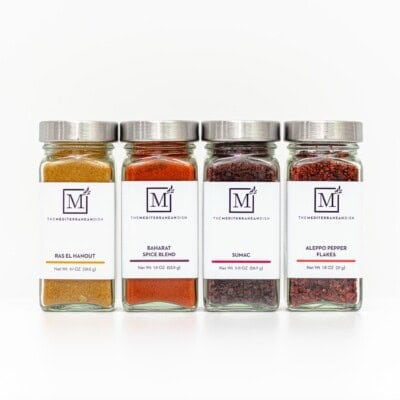
Build Your Own Spice Bundle
Stock your spice cabinet with the vibrant flavors of the Mediterranean. Buy 4 or more spices and save 5%. Buy 8 or more spices and save 8%!
FAQs
While all three are aromatic rice and meat dishes, kabsa is distinguished by its specific spice blend and Loomi (dried black lime). These limes give the dish a unique smoky tartness that you won’t find in either Biryani or the simpler savory profile of a standard rice pilaf.
Yes! Kabsa is often made with lamb or chicken, but it’s also sometimes made with rabbit, beef, or even fish. Chickpeas also work well for a vegetarian option. Use the same principles of simmering the protein in the broth until cooked through (timing will vary), then remove. You also have the option of broiling if you want some browning on it.
Though the origins of kabsa are not precisely traceable, Kabsa is the national dish of Saudi Arabia. The common understanding is that it originated in the Middle East, possibly in Yemen.
Kabsa is one of those dishes that every household makes differently. The essence of the dish is using what’s available, so you can do that too. The kabsa spice blend is not set in stone, and the blends differ by household. Use this recipe as a guide and don’t worry if you don’t have every single spice in the recipe, just use the ones you have!