



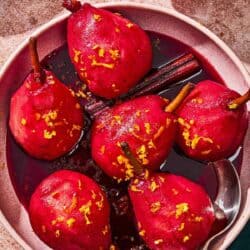
These red wine poached pears simmer with orange, honey, cinnamon, and cardamom until tender, with a fragrant syrup for serving.
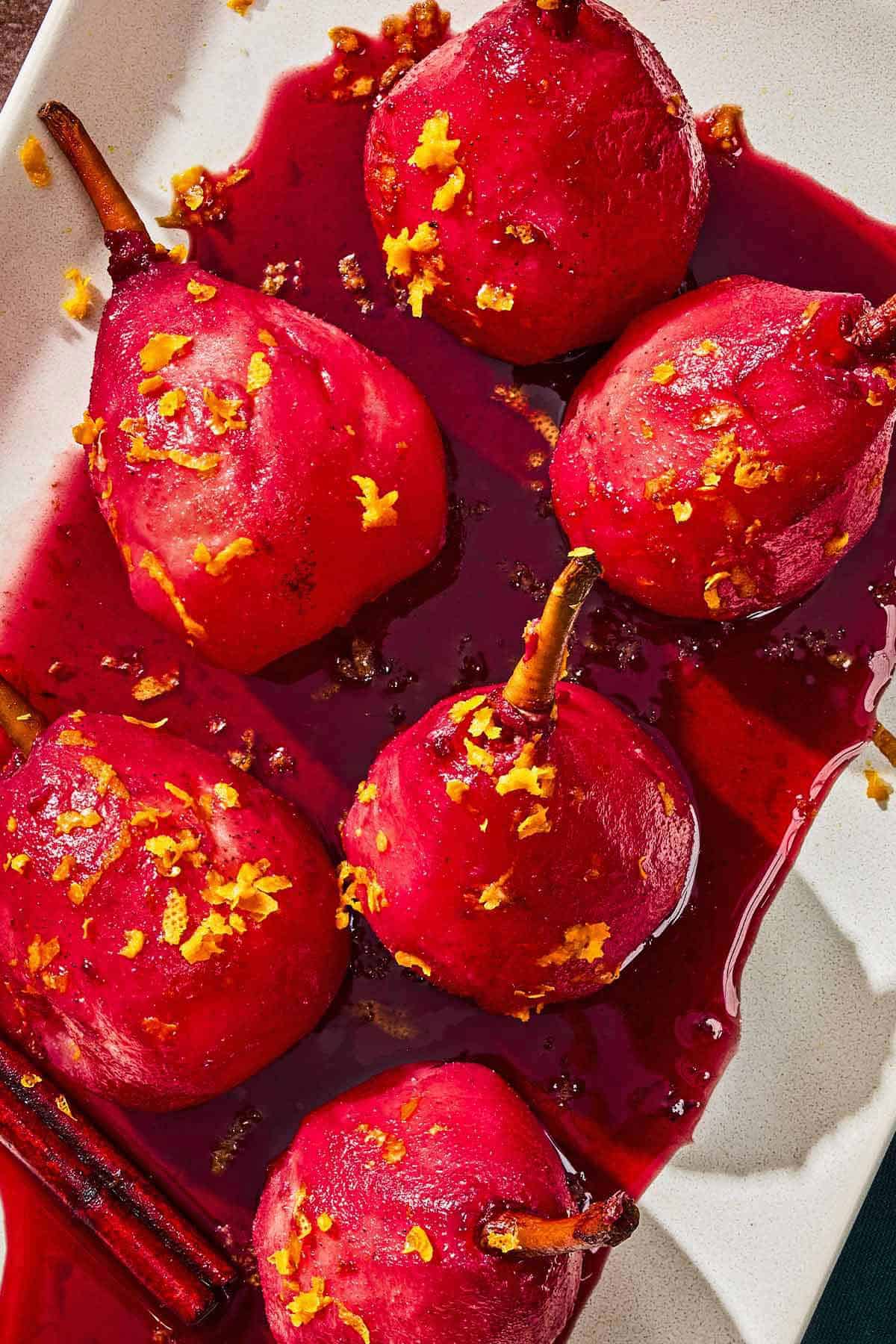
Red Wine Poached Pears for Easy Entertaining
Poached pears look like the sort of dessert that took hours, but this recipe is ready in about 45 minutes and asks very little of you. I love serving them around the holidays or when friends come for dinner. I can make them the night before, then bring out the ruby-colored pears once everyone is lingering around the table.
Each pear simmers whole in dry red wine, fresh orange juice, honey, cinnamon, and cardamom. As it cooks, the fruit turns tender and absorbs the warm citrus and spice. Reduce the poaching liquid to a runny syrup for drizzling, then add crème fraîche for tang, mascarpone or whipped cream for richness, or vanilla ice cream if you want something sweeter.
Like baked pears or cinnamon baked apples, this is a no-fuss fruit dessert. But you don’t even need to turn on your oven, and everything comes together in one pot. Serve the pears warm, chilled, or at room temperature. They taste even better the next day.
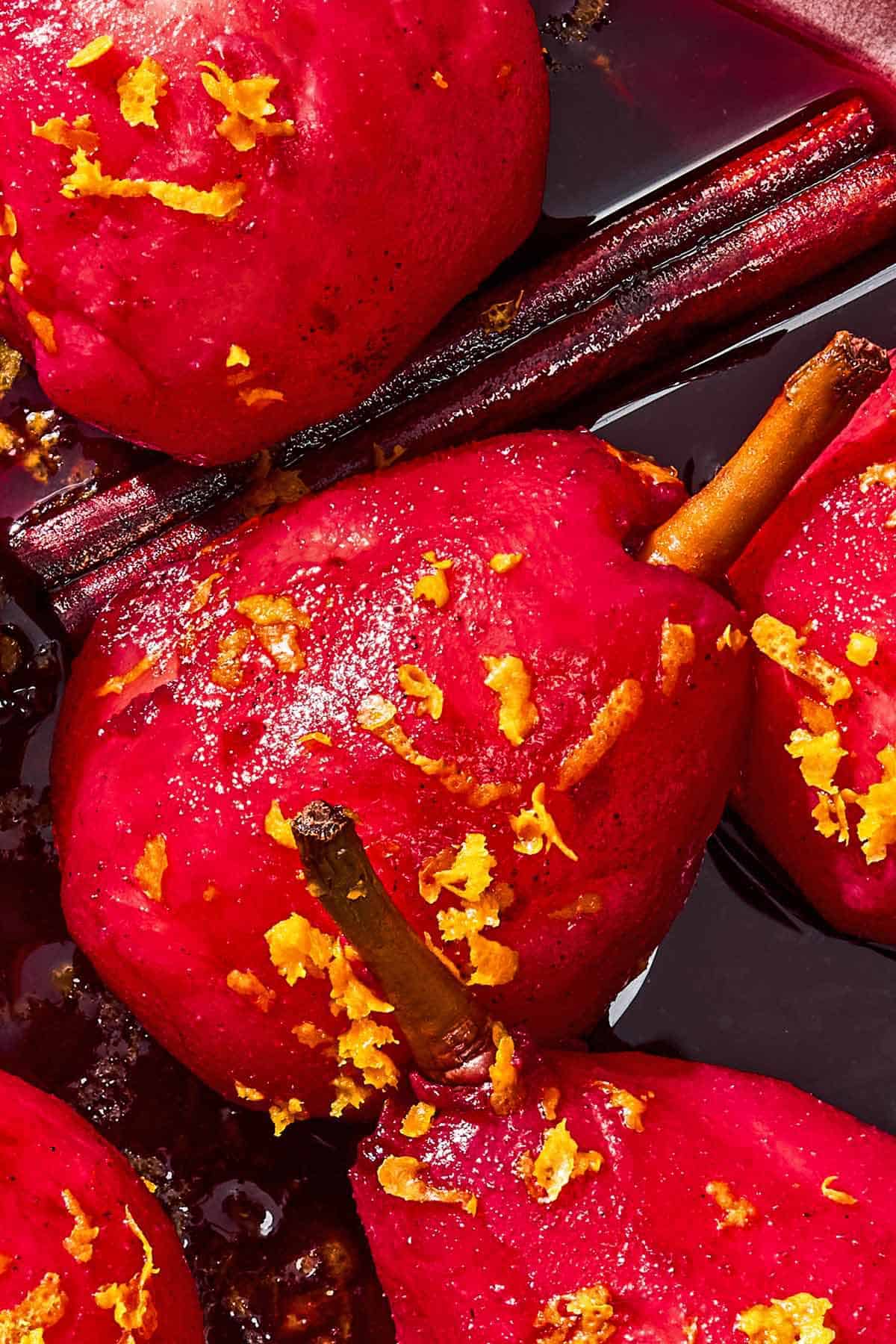
What Are Poached Pears?
Poaching is a gentle cooking method in which fruit simmers in liquid until tender but still firm enough to hold its shape. For these poached pears, that liquid is a mixture of red wine, orange juice, honey, sugar, and warm spices.
The pears slowly absorb the color and flavor of the wine as they cook. Once they are tender, remove them and simmer the remaining liquid until it becomes lightly syrupy. Spoon that concentrated sauce over the pears just before serving.
You can poach pears whole, halved, or quartered, depending on the presentation you want. This recipe keeps them whole for an elegant individual dessert.
The Best Pears for Poaching
Firm fruit is the key to poached pears that become tender without falling apart. Here’s what to look for:
- Bosc pears: One of my favorites for poaching. They hold their shape well and readily absorb the flavorful liquid.
- Anjou pears: Another reliable option that stays intact as it simmers.
- Firm, ripe fruit: Avoid very soft or overripe pears, which can become mushy in the poaching liquid.
- Small pears: Smaller pears fit more easily in the pot. Keep in mind that larger pears may take longer to become tender.
Choose six pears that are similar in size so they cook as evenly as possible.
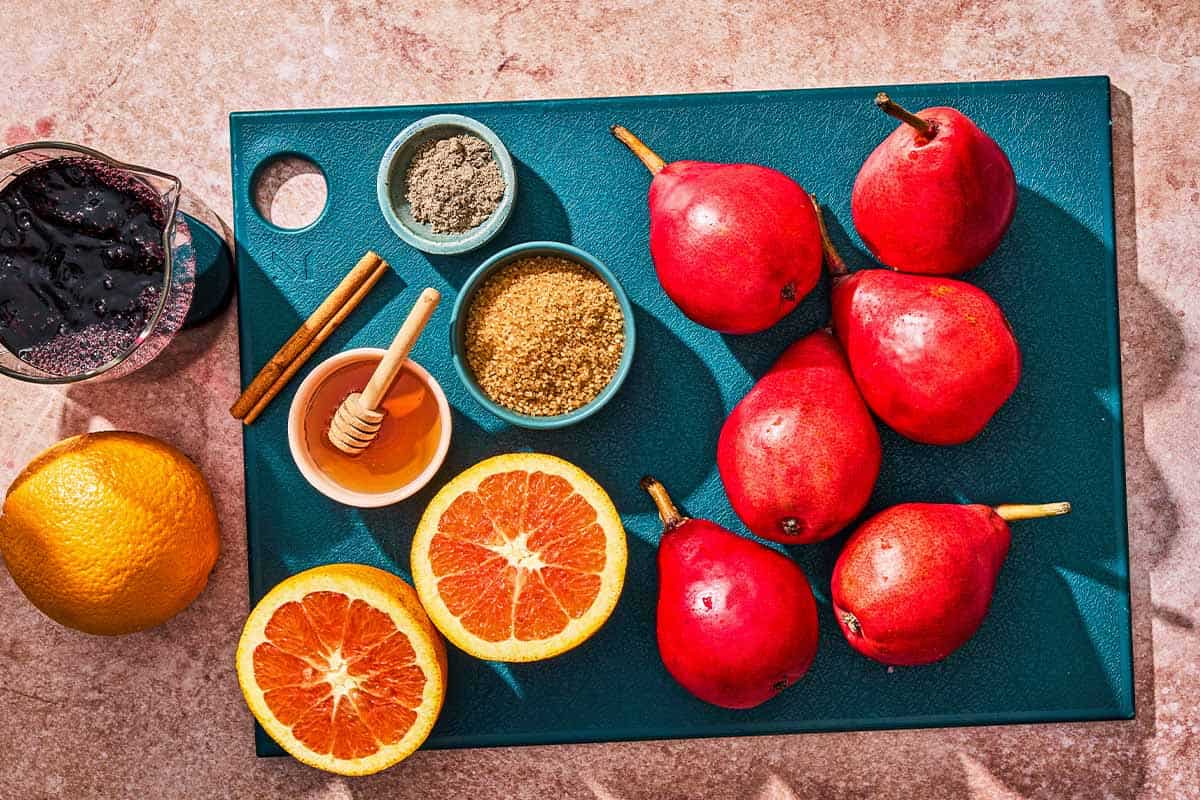
Ingredients for Red Wine Poached Pears
This recipe turns a short list of fruit, wine, and pantry staples into an impressive dessert. Here’s what each ingredient brings:
- Pears: You’ll need six small pears that are ripe but still firm. Bosc and Anjou pears are both good choices because they maintain their shape during poaching.
- Oranges: One orange provides fresh juice and zest, while the second is sliced into rounds. The juice adds natural sweetness and citrus flavor while helping keep the peeled pears from browning as you prepare the remaining ingredients.
- Dry red wine: I use Pinot Noir, but Shiraz or Merlot also works. The wine gives the pears their deep ruby color and forms the base of the fragrant poaching liquid.
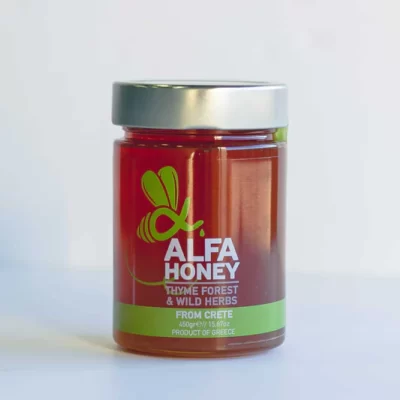
- Honey: Honey brings floral sweetness to the sauce. I particularly like using our aromatic Greek honey.
- Sugar: A small amount of raw or granulated sugar balances the wine and orange juice.
- Cinnamon stick: A whole cinnamon stick infuses the liquid with a warm, gently spiced flavor without leaving ground cinnamon throughout the sauce.
- Ground cardamom: Just a hint of ground cardamom adds its distinctive citrusy, floral warmth. A little goes a long way here.
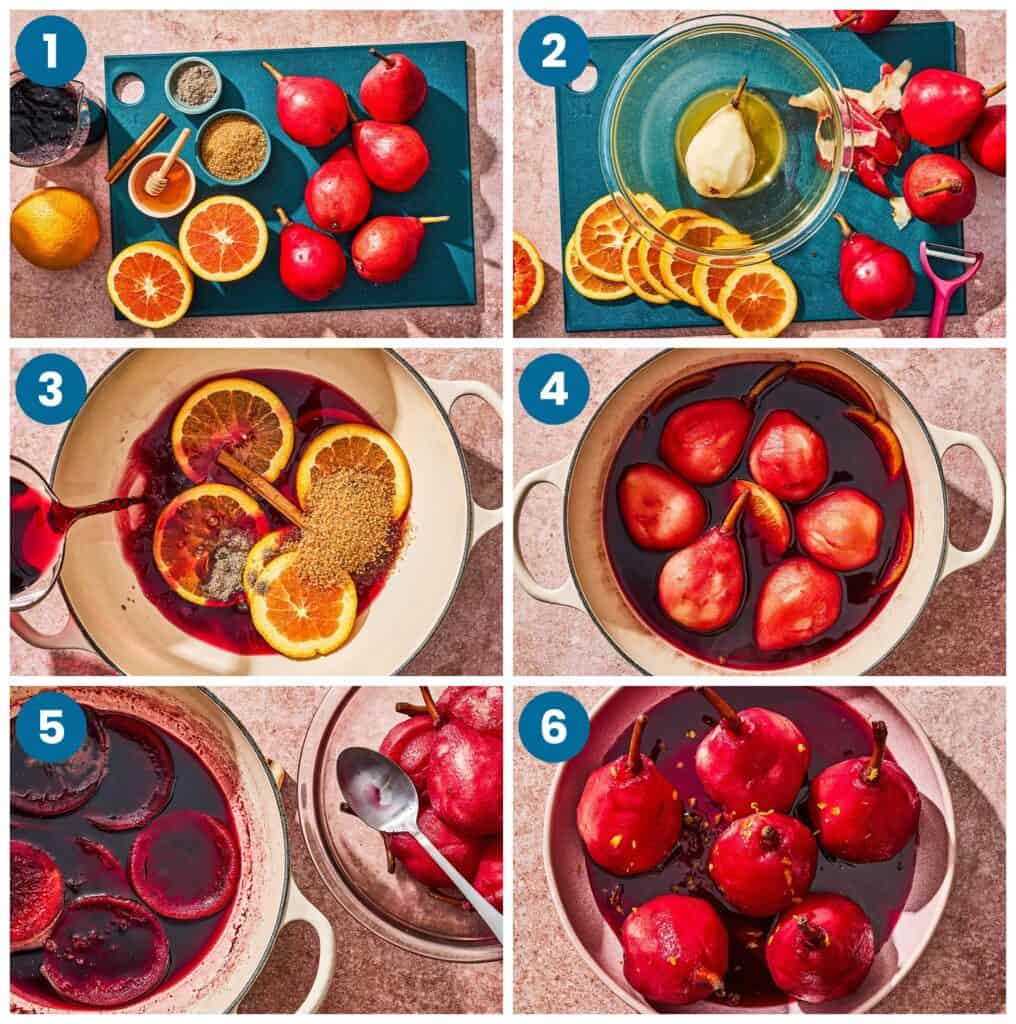
How to Make Poached Pears in Red Wine
Once the fruit is prepared, these poached pears require very little hands-on work. Here’s how to make them:
- Prepare the oranges. Zest and juice one orange. Pour the juice into a medium bowl and set the zest aside for serving. Slice the remaining orange into 1/4-inch rounds.
- Peel the pears. Peel six small pears with a vegetable peeler, leaving them whole. Add them to the bowl with the orange juice and gently toss to coat. This helps prevent the peeled fruit from browning while you prepare the poaching liquid.
- Make the poaching liquid. Choose a nonreactive pot, such as an enameled pot, that holds all six pears snugly. Nonreactive cookware will not react with the acidic wine and orange juice. Add the orange slices, 2 cups red wine, 1/4 cup honey, 3 tablespoons sugar, 1 cinnamon stick, and 1/4 teaspoon ground cardamom. Bring to a rolling boil over medium-high heat.
- Poach the pears. Lower the heat, then add the pears and orange juice. Cover and gently simmer for 20 to 30 minutes, carefully rotating the pears from time to time with a wooden spoon. They are ready when a skewer inserted into the thickest part meets no resistance.
- Reduce the poaching liquid. Transfer the pears to the reserved bowl. Simmer the remaining liquid for a few minutes, or until it thickens to the consistency of a runny syrup.
- Cool and serve. Return the pears to the pot and let them stand upright in the poaching liquid until cool enough to serve. Spoon some of the fragrant syrup over each pear and finish with the reserved orange zest.
Tips for Perfectly Poached Pears
- Start with firm pears. Soft or overripe pears can fall apart before they have absorbed enough of the wine and spices.
- Use pears of a similar size. This helps them become tender at roughly the same time. Smaller pears work particularly well for this recipe.
- Choose the right pot. The pears should fit snugly without being packed together. This helps the poaching liquid surround the fruit while still leaving enough room to rotate each pear.
- Keep the simmer gentle. Once you add the pears, lower the heat. A hard boil can cook the outside too quickly and make the fruit more likely to break apart.
- Rotate the pears occasionally. Because whole pears may not remain completely submerged, turning them helps them cook evenly and take on a more uniform ruby color.
- Check the thickest part. Insert a skewer into the widest part of a pear. It should slide in without resistance, but the pear should still hold its shape.
- Remove the pears before reducing the liquid. This allows the wine mixture to concentrate without continuing to cook the fruit.
Can I Make Poached Pears Without Wine?
Yes. The simplest substitute is a non-alcoholic red wine, which will give you a result closest to the original recipe. Most well-stocked grocery stores carry at least a few alcohol-free options.
You can also replace the wine with fruit juice. Combine 2 cups of a sweet juice, such as apple or grape juice, with 5 to 6 tablespoons of lemon juice to balance the sweetness. Alternatively, use a naturally tart juice such as cranberry juice.
How to Serve Poached Pears
You can serve red wine poached pears warm, at room temperature, or chilled. I often make them the night before and serve them cold, once they have had plenty of time to absorb the spiced poaching liquid.
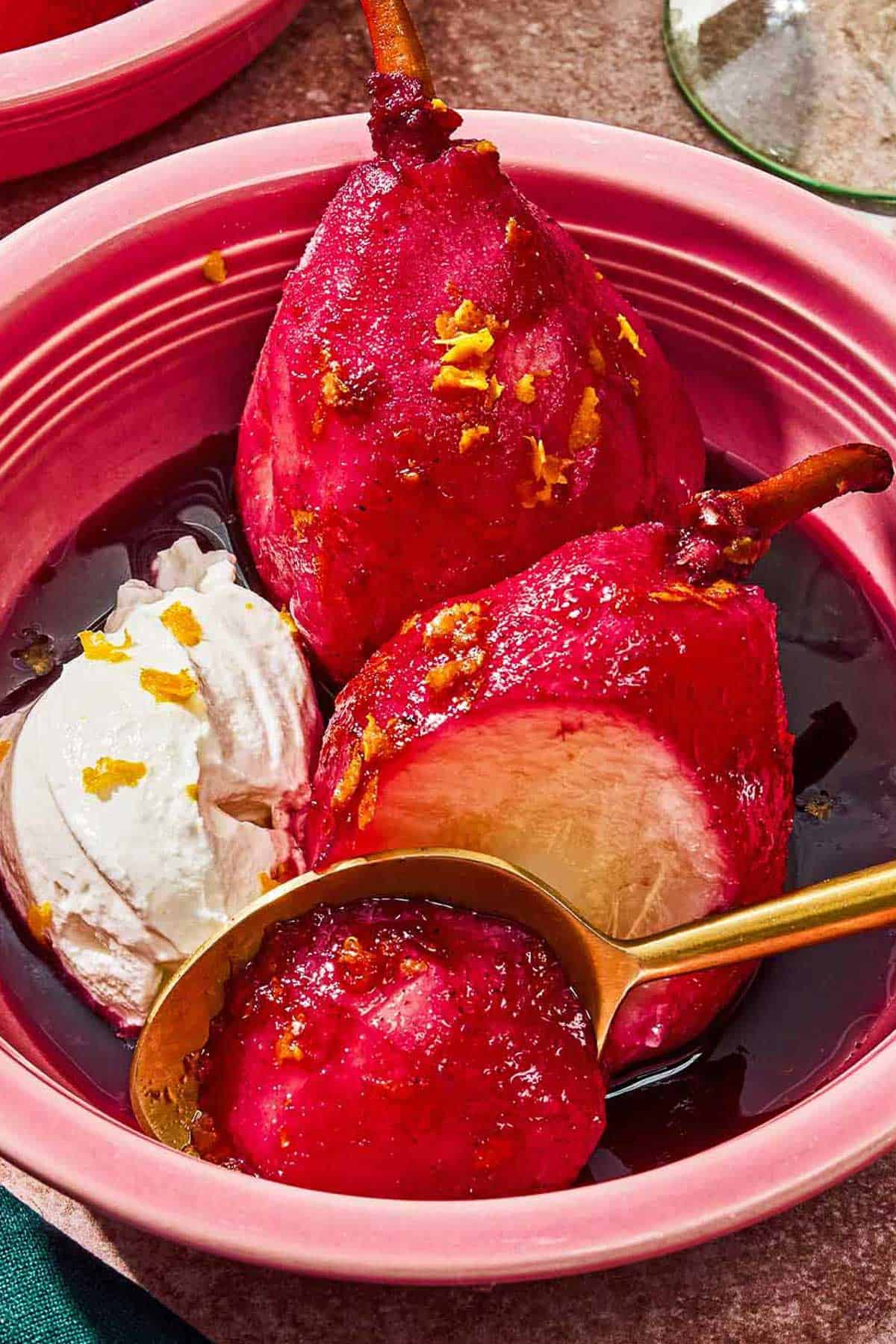
For a simple presentation, place one pear in a shallow bowl and spoon some of the ruby-colored syrup over the top. Add a little orange zest, and dessert is ready.
To dress them up, pool some of the syrup on each plate and set a pear in the center. Add vanilla ice cream if you prefer a sweeter dessert, crème fraîche for a tangy contrast, or mascarpone or whipped cream for something rich and creamy. Finish with a dusting of cinnamon or a curl of orange peel.
I especially like serving poached pears after roasted Cornish hens with warming spices because the flavors flow naturally from dinner to dessert. They also make a lovely finish after Chicken Marbella, where the sweet prunes provide a natural bridge to the wine-poached fruit.
Make Ahead and Storage
Red wine poached pears taste even better the next day, which makes them an ideal dessert for entertaining. Let the pears and poaching liquid cool, then refrigerate them in a large glass container with a tight-fitting lid for up to 5 days.
Leave enough room around the pears that they do not press against one another and become damaged. Store them with the poaching liquid so they can continue absorbing its flavor.
Serve them straight from the refrigerator, allow them to come to room temperature, or gently warm them with the poaching liquid on the stove.
More Elegant Fruit Desserts to Try
Desserts
French Pear Tart Recipe

Desserts
Plum Cake Recipe with Pistachios
Desserts
Easy Baked Apples (Two Ways)

Ingredients
- 2 large oranges, Navel or Cara Cara oranges preferred for sweetness
- 6 small pears, ripe but firm
- 2 cups red wine, such as Pinot Noir
- ¼ cup honey
- 3 tablespoons raw sugar or granulated sugar
- 1 cinnamon stick
- ¼ teaspoon ground cardamom
Instructions
- Prepare the oranges. Zest and juice one orange, pouring the juice into a medium bowl. Set the zest aside for serving. Slice the remaining orange into 1/4-inch rounds.
- Prepare the pears. Peel the pears with a vegetable peeler, leaving them whole. Add them to the bowl with the orange juice and toss gently to coat. This will help prevent the pears from browning too quickly.
- Prepare the poaching liquid. Choose a nonreactive pot that can hold all six pears snugly. Add the orange slices, red wine, honey, sugar, cinnamon stick, and cardamom.
- Poach the pears. Bring the liquid to a rolling boil over medium-high heat. Lower the heat, then add the pears and orange juice. Cover and gently simmer for 20 to 30 minutes, occasionally rotating the pears with a wooden spoon. The pears are ready when a skewer inserted into the thickest part meets no resistance.
- Reduce the liquid. Transfer the pears back to the reserved bowl. Simmer the remaining poaching liquid for a few minutes, or until it has thickened to the consistency of a runny syrup.
- Cool the pears. Return the pears to the pot and allow them to stand upright in the poaching liquid until cool enough to serve.
- Serve. Serve the poached pears warm or cold with some of the syrup drizzled over the top and the reserved orange zest for garnish. You can also refrigerate the pears in their poaching liquid overnight.
Video
Notes
- Shop this recipe: Visit The Mediterranean Dish Shop for aromatic Greek honey and ground cardamom.
- Choose firm pears: Use small, ripe but firm pears that will hold their shape during poaching. Bosc and Anjou pears are my preferred varieties for this recipe.
- Check for doneness: Insert a skewer into the thickest part of a pear. It should meet no resistance, but the pear should remain intact.
- Make ahead: The pears taste even better the next day after they have had time to absorb more flavor from the poaching liquid.
- Storage: Once cooled, refrigerate the pears with their poaching liquid in a tightly covered glass container for up to 5 days. Avoid packing them together too tightly.
- Serving: Drizzle each pear with the reduced poaching syrup. For added richness, serve with whipped cream, mascarpone, crème fraîche, or vanilla ice cream.
- Non-alcoholic option: Replace the red wine with 2 cups of non-alcoholic wine. Alternatively, use 2 cups of apple or grape juice mixed with 5 to 6 tablespoons of lemon juice, or substitute a tart juice such as cranberry juice.
Nutrition
Try Our Authentic Greek Honey!
This award-winning honey from the Fragiadakis family in Crete is sustainably harvested from the island’s bio-diverse mountains, where bees feast on wild aromatic herbs.

Elegant dessert
Easy to make
Delicious
This was not my favorite recipe. While the flavor of the sauce was tasty, it remained watery, never thickening. Perhaps using less wine would help. Also leaving thepears whole made it difficult to eat. My guests and I were left using a steak knife and fork to cut it and picking up the stem to eat the pears. I would suggest halving the pears and scooping out the seeds and stem.
Hello! I’m sorry to here this one was not a favorite for you. Thank you for sharing your feedback! That’s always helpful as we update recipes.
If i want to serve them in halves, would it be better to cut in half before or after poaching?
Hi, Amber. Either way will work just fine here, Amber. Enjoy!
Question: I’d like to serve these as a side dish rather than dessert. Would they work as well with reduced honey or sugar?
An excellent recipe that pleased our guests; many thanks!
I diverged slightly by also using a vanilla pod.
delicious
Fantastic recipe. I served the pears with mascarone (with some of the orange zest and a bit of rum).
Quick easy and healthy