



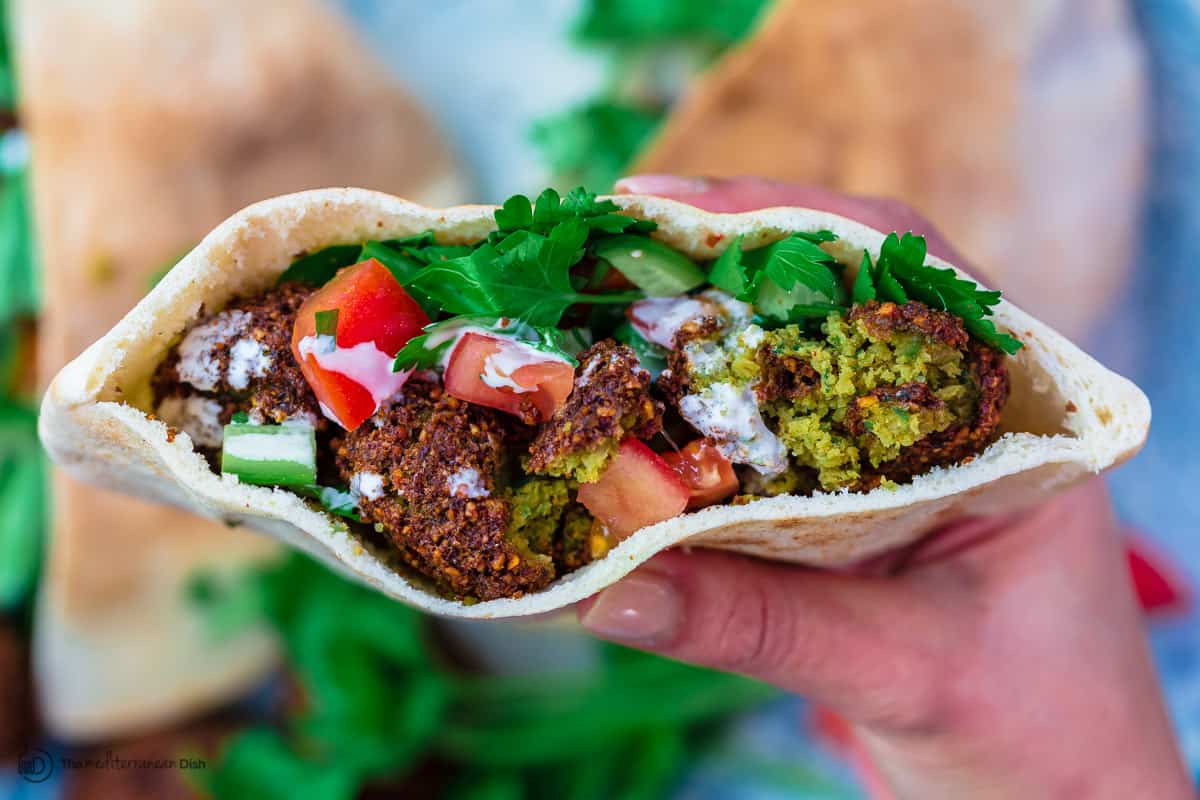
If your homemade falafel is a pile of oily crumbs at the bottom of your frying pan, you aren’t a bad cook; you’re just making some common mistakes that are costing you too much! As a native of the Mediterranean who grew up on the street stalls of Egypt and later perfected my “falafel game” in a high-volume Levantine restaurant, I have the fix. My 5 simple secrets will give you that perfect street-style crunchy falafel every time!
My Lifetime of Falafel Love
I document my falafel love story in my New York Times Bestselling Cookbook, but it is worth mentioning here as well: I don’t remember a life without falafel. My sweetest memories are of Mr. Bishay’s falafel (ta’ameya) joint in the heart of Port Said’s busy Souq El Hamidi. I used to stand on a chair just to watch the herb-packed dough churn in his ancient processor while the fryer guys handed me paper cones of hot, fluffy on the inside, crunchy on the outside falafel.
That “shatter-crunch” of the extra herby fritters stayed with me all the way to Michigan. There, my mother-in-law, Dina, helped me perfect how to make falafel as I worked in her busy Levantine restaurant. (She made big batches from scratch daily.)
In Egypt, falafel, which is also called ta’ameya, is made from fava beans, while the Levantine version, which most of us make at home, is made from chickpeas. But whether you are using fava beans or chickpeas to make these high-protein vegan fritters loaded with herbs and bold flavors of cumin, coriander, and cayenne, the science of the perfect crunch remains the same.
If you’re struggling with falafel that disintegrates the moment it hits the oil, it is time to learn why and how to fix it. I wrote this article to address the common mistakes people make when cooking falafel.
Plus, I will give you 5 simple secrets and a no-fail recipe for the perfect street-style crunch.
Secret #1: You are Using the Wrong Chickpeas
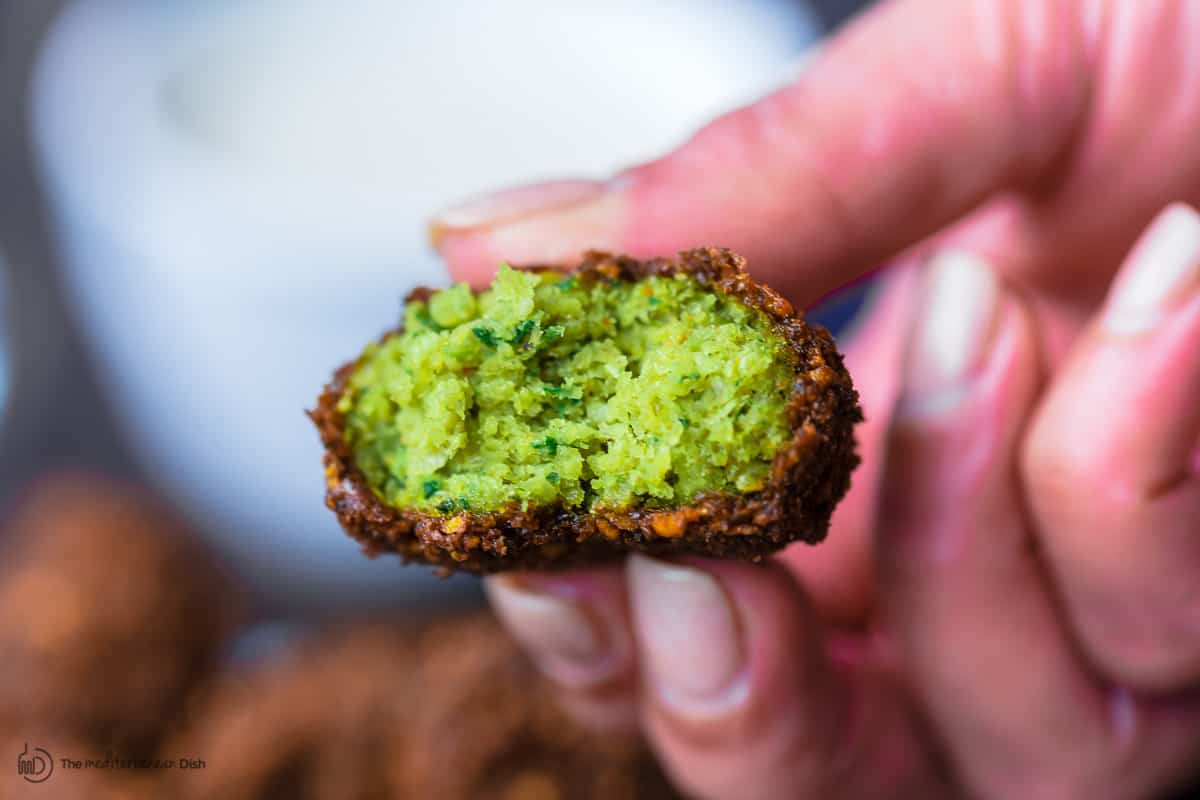
The primary reason your falafel disintegrates or falls apart in the pan is that you are using canned chickpeas! You need to start with dried chickpeas and allow a good 24 hours for soaking. Let me explain some more.
Canned chickpeas are convenient, but they are the ultimate “texture killer” when it comes to falafel. Canned chickpeas are pre-cooked and water-logged. They lack the raw starch needed to bind the dough.
Authentic falafel starts with dried chickpeas soaked in water for 24 hours (but never cooked ahead). As you pulse the soaked, raw beans with the herbs and spices to make the falafel dough from scratch, they release a natural, sticky starch that acts like internal velcro. This “velcro” holds the patty together as it hits the heat. When you use canned beans, that starch is already gone. Which means you are essentially trying to fry hummus—this is why your dinner is falling apart.
So, to get that signature street-style crunch, start with a 24-hour soak of dried chickpeas. The soak creates the self-binding, grainy texture that makes heavy binders completely unnecessary.
Secret #2: Chilling the Mixture is a Must
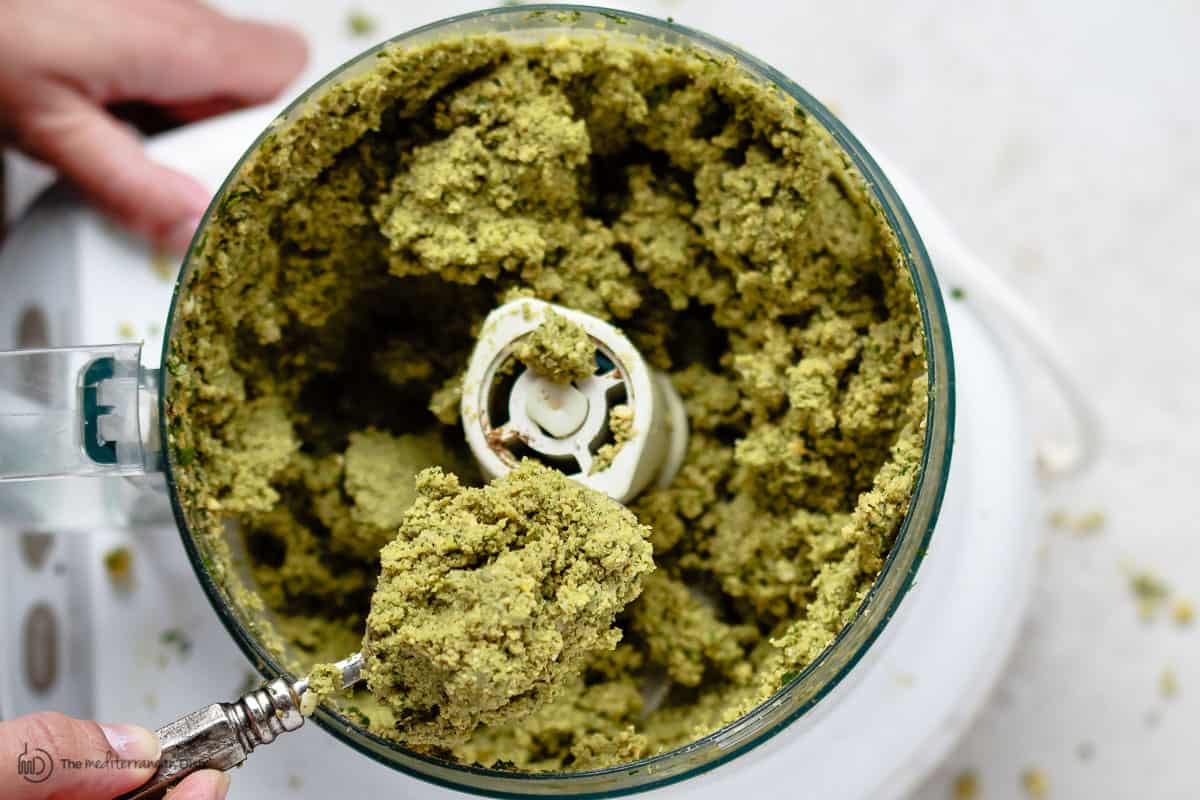
Even with the perfect starchy mixture, you cannot head straight for the stove. Another common mistake home cooks make is frying the falafel as soon as the mixture is made in the food processor. It will never hold up this way. You need to allow the falafel mixture or dough to rest.
Your falafel mixture needs at least one hour in the refrigerator to stabilize. Chilling the mixture allows the natural starches to “relax” and bond, allowing the moisture to be evenly absorbed. If the dough is too warm, the patties will be loose and fragile; once chilled, the mixture becomes firm and easy to shape. This hour of rest is the difference between a patty that shatters in the oil and one that holds its perfect street-style form.
Secret #3: Use Binders Only as a Safety Net
In professional Levantine kitchens, binders can be used as a “safety net” to ensure massive batches hold their shape—but only if the first two rules are met. Binders are stabilizers, not saviors; they cannot fix the mushy texture of canned chickpeas or unchilled falafel dough. If your foundation is correct, these two options provide professional insurance:
- Chickpea Flour (Besan): Since falafel is made from chickpeas, chickpea flour is the gold standard here. It wicks away surface moisture to prevent the “steam-venting” that causes patties to crack.
- A Single Egg: This creates a protein scaffold that reinforces the raw starch, keeping the interior light while the exterior crisps.
Remember: These binders support the raw starch; they don’t replace it.
Secret #4: Add Baking Powder for Airy, Fluffy Falafel
For that airy, “fluffy” street-style texture, try adding a little baking powder to the raw mixture only when you are ready to form the patties and fry them.
Many recipes skip this or add it too early. If you mix it in before the fridge rest, the leavening agent loses its power. By folding the baking powder in right before the dough hits the oil, you create an immediate reaction that prevents the falafel from becoming a dense, heavy puck. This internal “lift” keeps the center light while the exterior stays crispy.
Secret #5: Watch Your Oil Temperature
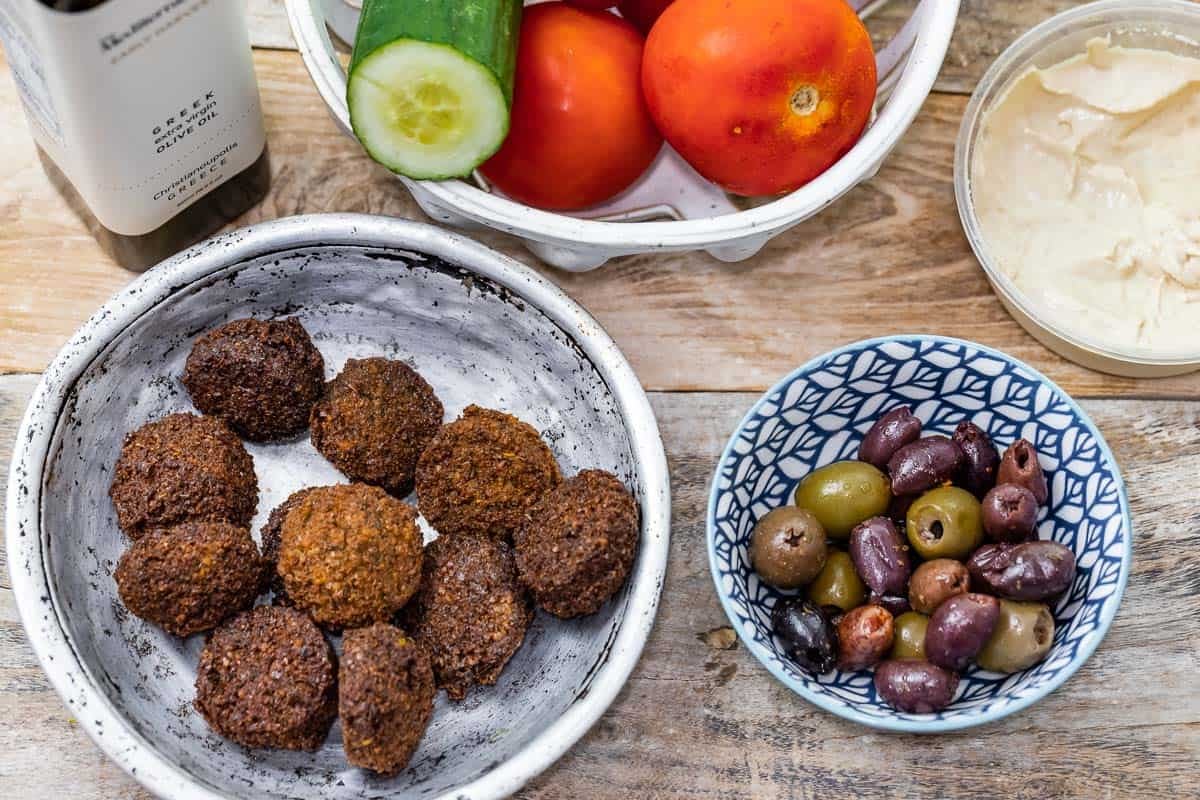
Even a perfect dough or mixture will fail if your oil isn’t calibrated. Temperature is the final gatekeeper: too cool, and your falafel becomes a grease-soaked sponge; too hot, and you get a charred shell with a raw center.
To achieve that legendary street-style finish, maintain a steady heat between 350°F and 375°F. This creates an immediate “flash-sear,” sealing the exterior so the internal moisture can steam the herbs without letting grease penetrate the core.
How to test this without a thermometer? If you don’t have a thermometer, drop a small piece of dough into the pot. It should dive briefly, then rise to the surface with a vigorous sizzle. If it stays at the bottom, the oil is too cold; if it browns instantly, the heat is too aggressive.
Ready to put these secrets into practice?
Now that you know all the tips and tricks to avoid common mistakes when making falafel, are you ready to make your best falafel yet? You can get my full ingredient list and traditional method, along with my family’s authentic falafel recipe.

The tips were excellent. Perhaps I didnt gray chickpeas ground fine enough to release starches.
This article suggests adding baking powder, but many of the falafel recipes on this site use baking soda. Could this be clarified please? Thank you.
Hi, Marilyn. Suzy’s falafel recipe actually uses both baking soda and baking powder. The baking soda is what is used to help soften the chickpeas as they soak. You’ll need the baking powder later in the recipe, when the falafel patties are formed. tThis is what gives falafel an airy, fluffy texture (many recipes skip this, causing the falafel to come out too dense.)
Cooking the falafel fresh was good but I froze some and they totally fell apart before I could even get them to the oil. Any suggestions? Thanks ps I love your recipes and website!
Hi, Tedra. This has never happened before on our end with frozen falafel, so I’m not sure what might have gone wrong here for you. Did you attempt the thaw the falafel first? If so, that could have been the culprit. Frozen falafel should be cooked directly from the freezer.
I love falafel, and am excited to try your recipe. My question is can they be baked rather than fried? If so, at what temperature and for how long?
Absolutely! You can click here for our baked falafel recipe. Enjoy!
I absolutely LOVE all your tips/tricks. But, I have to say: I DO use an egg, I DO skillet fry in shallow oil (what I wouldn’t give for a good air fryer recipe! lol), but I ABSOLUTELY have successfully used canned, drained, food processor-pulsed chickpeas/garbanzos… I freaking love falafel, don’t make it nearly enough for as simple as it is. But your recipe is ALWAYS a go-to, the spices, the level of seasoning is, quite frankly, perfect… BUT, I’ve both soaked garbanzos/chickpeas, and used drained canned, and had wonderful success!!! I suppose that’s the foundation of a perfect recipe, eh??? Bless you for taking the time to share all the tips/tricks!!! BUT: DON’T be afraid to give it a go, regardless: you’ll be pleasantly rewarded!!!
Thanks for sharing, Chrissie! Appreciate you insights!
Thank you for sharing your tips!! I will try to make these just in time for Lent.
Love your recipes but as a European I struggle with measurements in cups. Where complete accuracy is not needed I manage but with falafels (not made before) where consistency is key is 2 cups 360 grams or 400 grams….
I don’t like frying foods. Can you bake falafel?
Absolutely! You can check our our Baked Falafel recipe for all the details!