

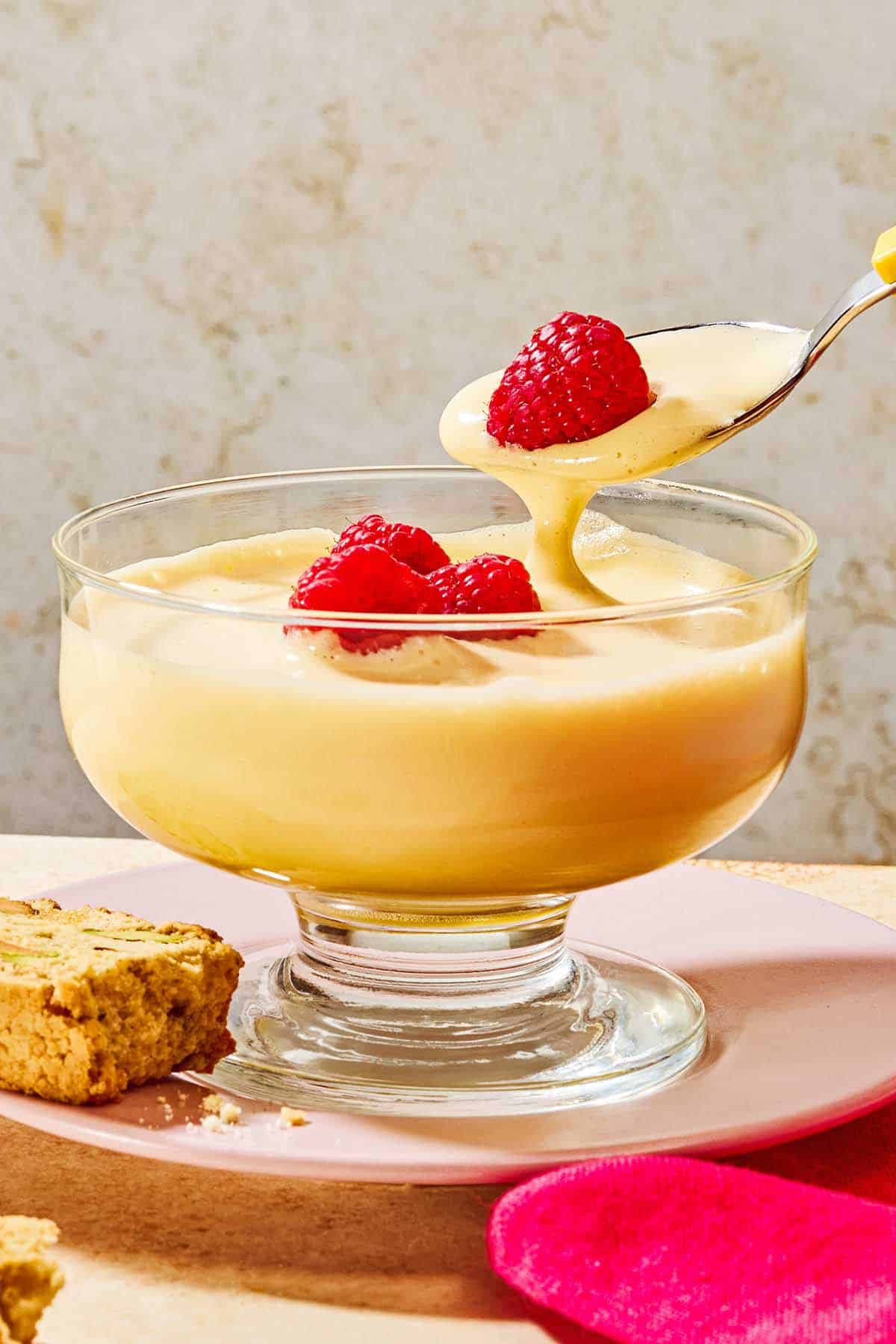
Zabaglione is a soft, wine-spiked custard from Italy’s Piedmont region. It requires little more than 3 ingredients and 15 minutes to make, but it feels luxurious and special.
Zabaglione: One of Italy’s Most Famous Sweets
Should you ever find yourself at a restaurant in Torino, or Barolo, or anywhere in Piedmont, take a moment to listen for sounds coming from the kitchen—specifically, the sonorous clatter of a wire whisk scraping against metal. That’s when you’ll know the chef is whipping up a batch of zabaglione for dessert.
This rich, whipped egg custard is one of Italy’s most famous spoon desserts. It is typically spiked with fortified wine such as Marsala or Vin Santo, and though it comes from the north, it is beloved all over Italy and beyond.
And rightly so; zabaglione is incredibly versatile. You can serve it warm over fresh or roasted fruit, accompanied by crunchy biscotti, or spooned over a simple olive oil cake or a seasonal fruit tart. Although zabaglione is traditionally served warm, soon after it’s been made, you can also serve it chilled. Either way, it’s a treat. Let’s dig in!
Key Ingredients
Zabaglione is composed of just three ingredients, so quality is paramount. Here’s what you’ll need to make it.
- Egg yolks: The yolks add richness and volume, giving this dessert its signature pale gold color and airy texture. Use fresh eggs from a trusted source.
- Sugar: You’ll need 1 tablespoon granulated sugar per egg yolk. The sugar helps to whip up the yolks and create the creamy texture.
- Wine: Marsala, a fortified wine from Sicily, is the most common choice for making zabaglione. Choose a good quality dry Marsala to keep the dessert from turning out too sweet, and read on for more info on choosing wine for zabaglione. If you would rather avoid alcohol, you can simply leave it out and flavor the zabaglione with vanilla bean seeds scraped from the pod or a splash of vanilla extract.
How to Make Zabaglione
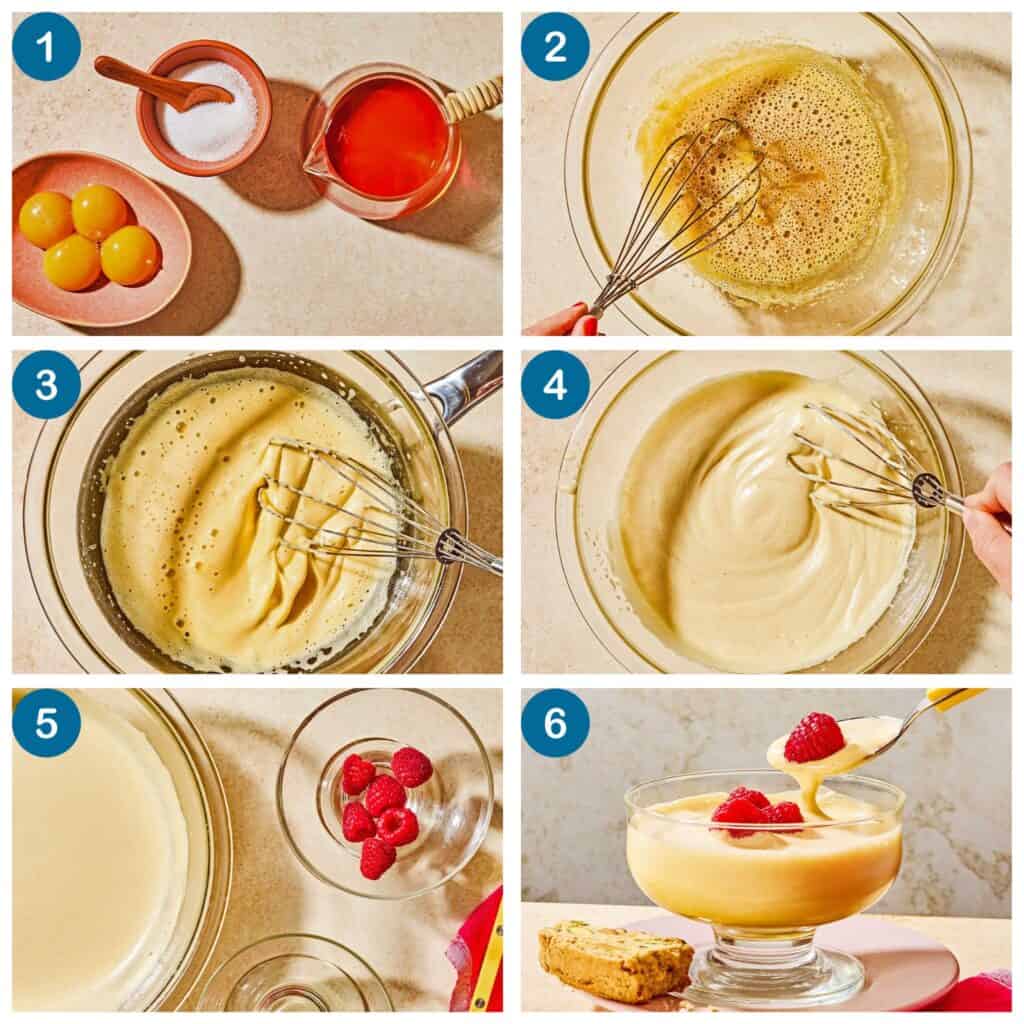
Zabaglione comes together in about 10 minutes. It’s easy to make, but it requires cooking the custard over a water bath. And you’ll need a little elbow grease in the form of vigorous whisking to whip it properly. Here’s how to do it.
- Get ready. Fill a medium saucepan about halfway with water and bring it to a boil over medium-high heat. Place 4 large egg yolks in a heat-proof glass bowl that will fit over the pan of boiling water without the bottom of the bowl touching the water. Whisk in 4 tablespoons granulated sugar until well incorporated. Then whisk in 1/4 cup to 1/3 cup Marsala, Vin Santo, or other wine or liqueur.
- Cook the custard. Lower the heat under the saucepan to bring the water to a gentle simmer. Set the bowl over the pan and begin whisking, using a rotating up and down motion to incorporate air as you go. Use a pot holder or kitchen towel to steady the bowl if necessary as you whisk. As the mixture heats up, it will begin to foam. After 3 to 4 minutes, the mixture will start to thicken into an airy custard. Keep whisking steadily as the custard thickens. Lift the bowl once or twice to make sure the water beneath it does not return to a boil. Overheating the custard could cause the eggs to scramble.
- Check the texture. When you can see the tracks of the whisk in the custard it’s time to check for doneness. Lift the whisk. If the ribbon of zabaglione mounds briefly—several seconds—as it falls back into the bowl, it is done. It should be pourable, but should also mound lightly on a spoon.
- Cool the zabaglione. Remove the bowl from the pan of simmering water and keep whisking the zabaglione until it has cooled to just warm. It will thicken a bit more as it cools.
- Serve or chill. Serve the zabaglione while still warm or at room temperature, draping it over fruit or cake, or piling it into small glasses to eat with a spoon. To chill, transfer the zabaglione to a bowl or container and lay a sheet of plastic wrap directly over the surface. Cover and refrigerate until cold. Be sure to serve within 24 hours, before the custard begins to deflate and lose its structure.
Best Wines for Zabaglione
Marsala is a fortified wine. This type of wine has a distilled spirit, typically grape brandy, added. The brandy stops the fermentation process and boosts the alcohol content of the wine. While Marsala is the most widely used wine for making zabaglione, there are many other contenders.
- Port or Sherry: These two fortified wines, one from Portugal, the other from Spain, make excellent substitutes for Marsala. Be sure to use good quality wines to flavor your zabaglione.
- Vin Santo: This sweet dessert wine from Tuscany is a popular choice for zabaglione.
- Cognac or Brandy: Stronger than fortified wine, brandy gives a definite kick to zabaglione.
- Liqueurs: Amaretto or other flavored liqueurs, such as hazelnut or anise, bring added flavor.
- Off-dry or sweet white wine: If you want to keep the alcohol content low, substitute a good white wine, such as Soave. Moscato from Asti or the Veneto is a lightly sparkling wine that goes well with the gentle flavors of zabaglione.
What You Need to Make Zabaglione
Zabaglione is easy to make, but it takes a bit of concentration and works best when you have the right equipment. Here’s what you’ll need.
- Heat-Proof Glass Mixing Bowl. A polsonetto is the traditional copper vessel with a long handle and smooth rounded bottom used for making zabaglione. Its design conducts heat evenly and whips the eggs to a voluminous dense foam. Most people, including me, don’t have one. I use a heat-proof glass mixing bowl, which does the job nicely, allowing the egg custard to grow in volume and cook properly. Avoid thin bowls, such as aluminum or stainless steel, which risk getting too hot and scrambling the eggs.
- Wire whisk. Any good, sturdy whisk works. I prefer to use a balloon whisk, designed to incorporate maximum amount of air into eggs and makes an airier custard. A flat whisk will give you a creamier, saucier zabaglione.
- Saucepan. The egg custard needs to cook over a pan of simmering water. Choose a pan that the bowl of zabaglione can fit over without touching the water in the pan.
Can You Make It Ahead of Time?
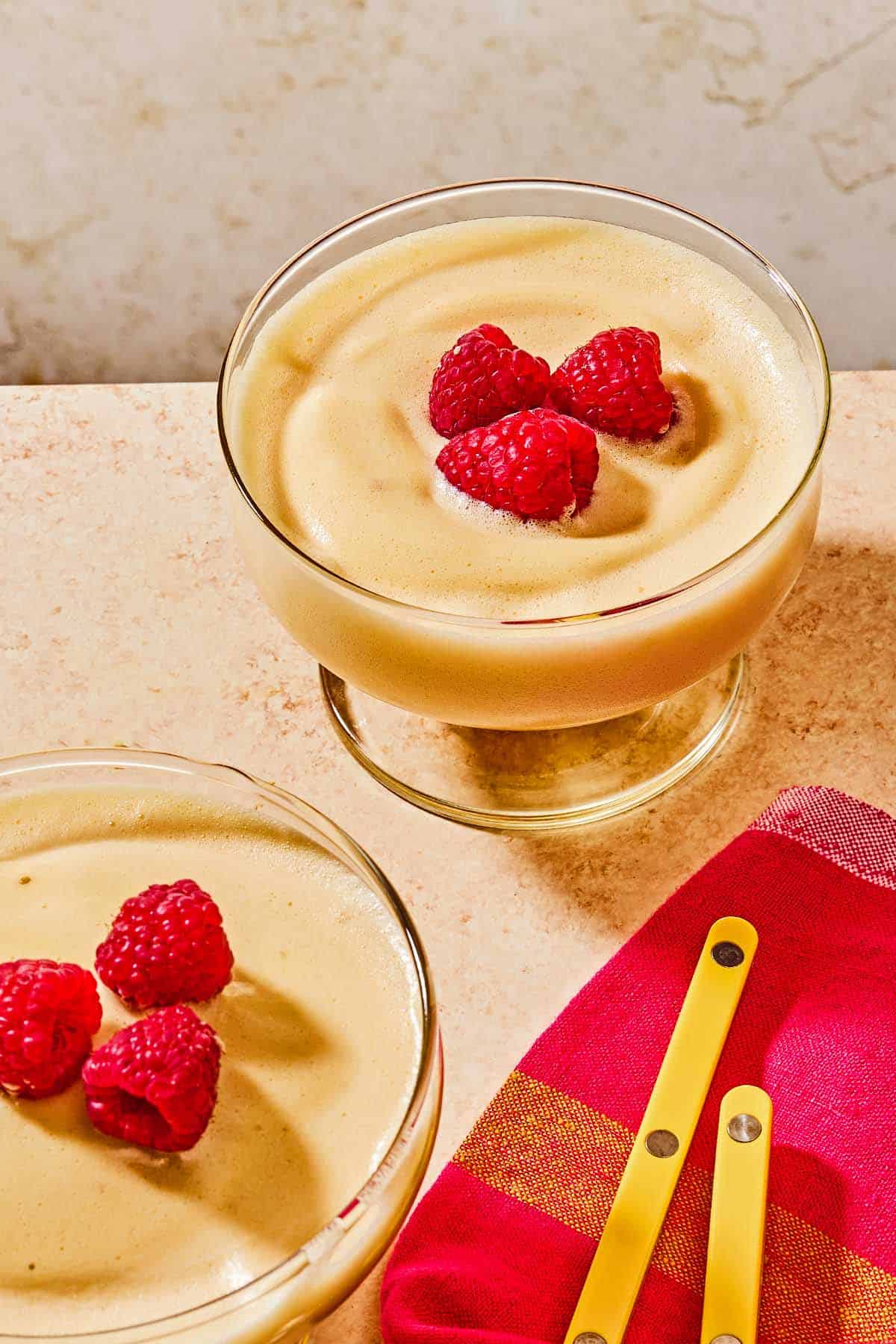
Zabaglione is best served soon after it is made. But that is not always convenient. I often refrigerate zabaglione once it has cooled, then serve it chilled.
Its ethereal texture won’t last indefinitely, so be sure to serve it within 24 hours of making it; otherwise it begins to lose its airy lightness and may even separate. To chill, spoon the zabaglione into a container and lay a sheet of plastic wrap right over the surface. Cover tightly and store in the refrigerator until serving time.
I sometimes fold a small amount of freshly whipped cream into chilled zabaglione to help it hold its shape. This lightens the flavor and texture of the custard, too.
How to Serve Zabaglione
One of zabaglione’s great appeals is that it plays well with others.
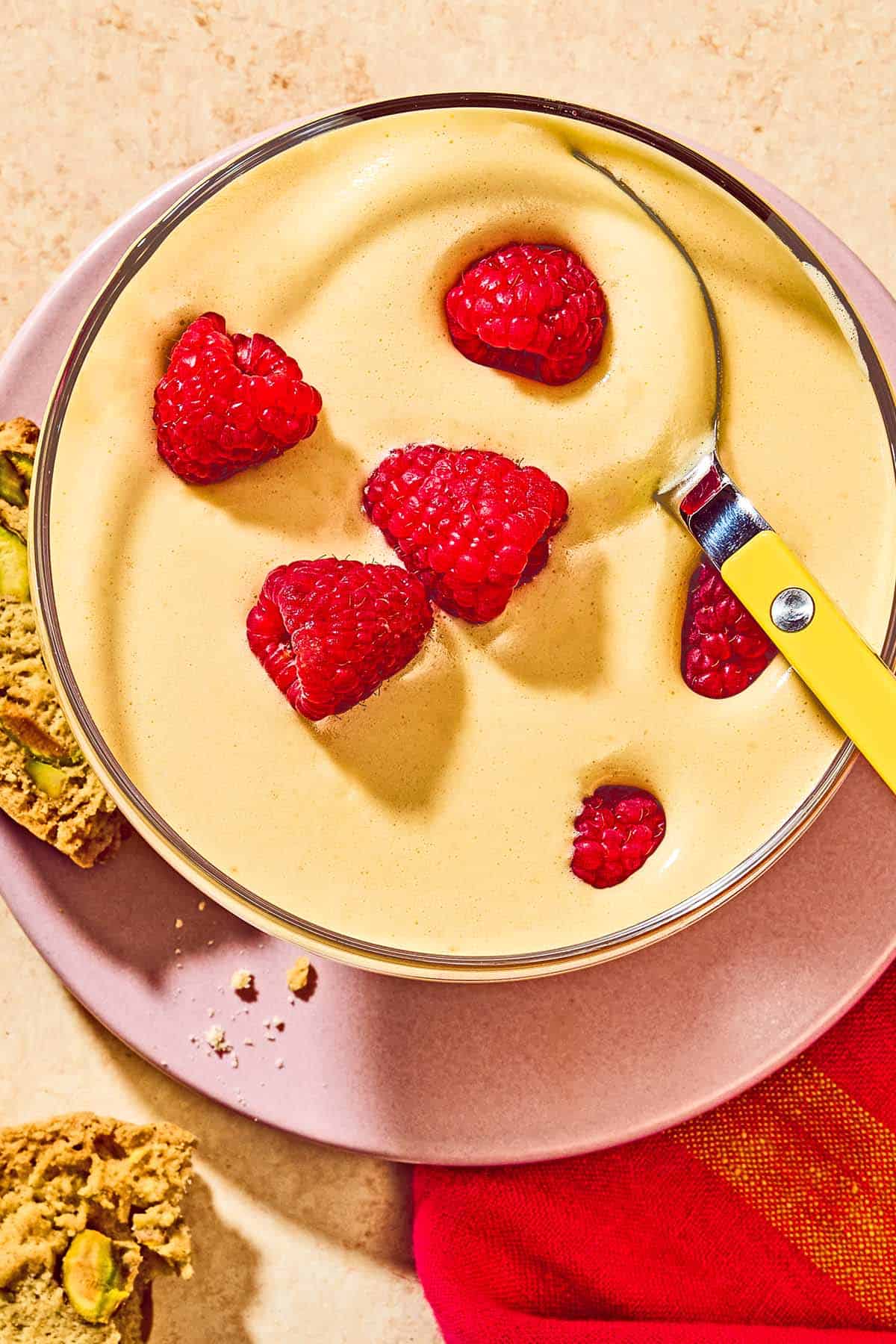
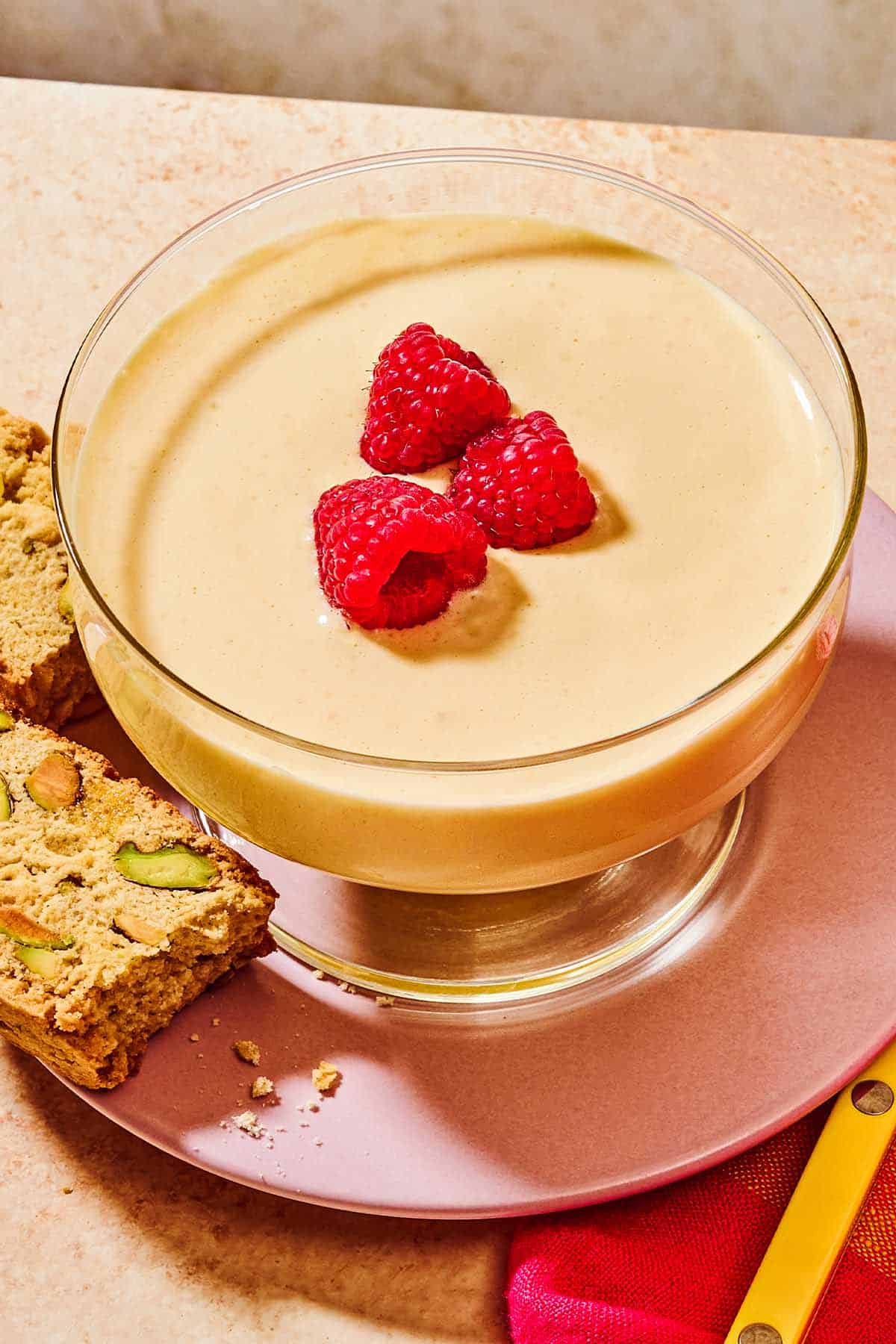
- I love to serve it in small glasses or espresso cups, with a cookie, such as these pistachio biscotti, on the side.
- Spoon it warm over fresh macerated or roasted fruit, vanilla ice cream, or a simple chocolate olive oil cake.
History of Zabaglione
According to various accounts, the name ‘zabaglione’—‘zabaione’ in Piemontese dialect—is said to derive from a 16th-century Franciscan friar named Giovanni de Bayon, who served it to his parishioners as a nutrition and energy booster. Another version of the story states that it was invented to honor Franciscan Saint Pasquale Baylón, patron saint of pastry chefs.
One of my trusted old Italian dessert books confirms it was created in the 16th century, but gives credit to a cook who served King Carlo Emanuele I, eleventh Duke of Savoy. Whatever its origins, this delicate dessert has stood the test of time. Its popularity continues unabated.
More Delicious Italian Desserts


Equipment
- Copper or heat-proof glass bowl with rounded bottom
- Saucepan for simmering water
Ingredients
- 4 large egg yolks
- 4 tablespoons granulated sugar
- 1/4 to 1/3 cup Marsala, Vin Santo, or other wine or liqueur
Instructions
- Get ready. Fill a medium saucepan about halfway with water and bring it to a boil over medium-high heat. Place the yolks in a heat-proof glass bowl that will fit over the pan of boiling water without the bottom of the bowl touching the water. Whisk in the granulated sugar until well incorporated. Then whisk in the Marsala.
- Cook the custard. Lower the heat under the saucepan to bring the water to a gentle simmer. Set the bowl over the pan and begin whisking, using a rotating up and down motion to incorporate air as you go. Use a pot holder or kitchen towel to steady the bowl if necessary as you whisk. As the mixture heats up, it will begin to foam. After 3 to 4 minutes, the mixture will start to thicken into an airy custard. Keep whisking steadily as the custard thickens. Lift the bowl once or twice to make sure the water beneath it does not return to a boil. Overheating the custard could cause the eggs to scramble.
- Check the texture. When you can see the tracks of the whisk in the custard it’s time to check for doneness. Lift up the whisk. If the ribbon of zabaglione mounds briefly—several seconds—as it falls back into the bowl, it is done. It should be pourable, but should also mound lightly on a spoon.
- Cool the zabaglione. Remove the bowl from the pan of simmering water and keep whisking the zabaglione until it has cooled to just warm. It will thicken a bit more as it cools.
- Serve or chill. Serve the zabaglione while still warm or at room temperature, draping it over fruit or cake, or piling it into small glasses to eat with a spoon. To chill, transfer the zabaglione to a bowl or container and lay a sheet of plastic wrap directly over the surface. Cover and refrigerate until cold. Be sure to serve within 24 hours, before the custard begins to deflate and lose its structure.
Notes
- Visit our shop to browse quality Mediterranean ingredients, including olive oils, honey, jams, and spices.
- To make it alcohol-free: You can simply leave out the Marsala and flavor the zabaglione with vanilla bean seeds scraped from the pod or a splash of vanilla extract.
- Other Wines for Zabaglione: Port, Sherry, Vin Santo, Cognac or Brandy, Liqueurs, or Sweet white wine.
Nutrition
Three Sweet Spreads from Sicily
Indulge with this artisanal trio of premium nut creams, handcrafted in small batches using locally grown ingredients and free from artificial additives.