

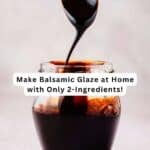
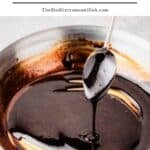
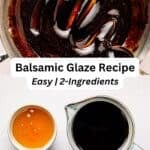
This easy balsamic glaze recipe transforms balsamic vinegar and optional honey into a glossy, sweet-tart reduction in about 15 minutes. Drizzle it over salads, roasted vegetables, meat, fresh fruit, or even vanilla ice cream.
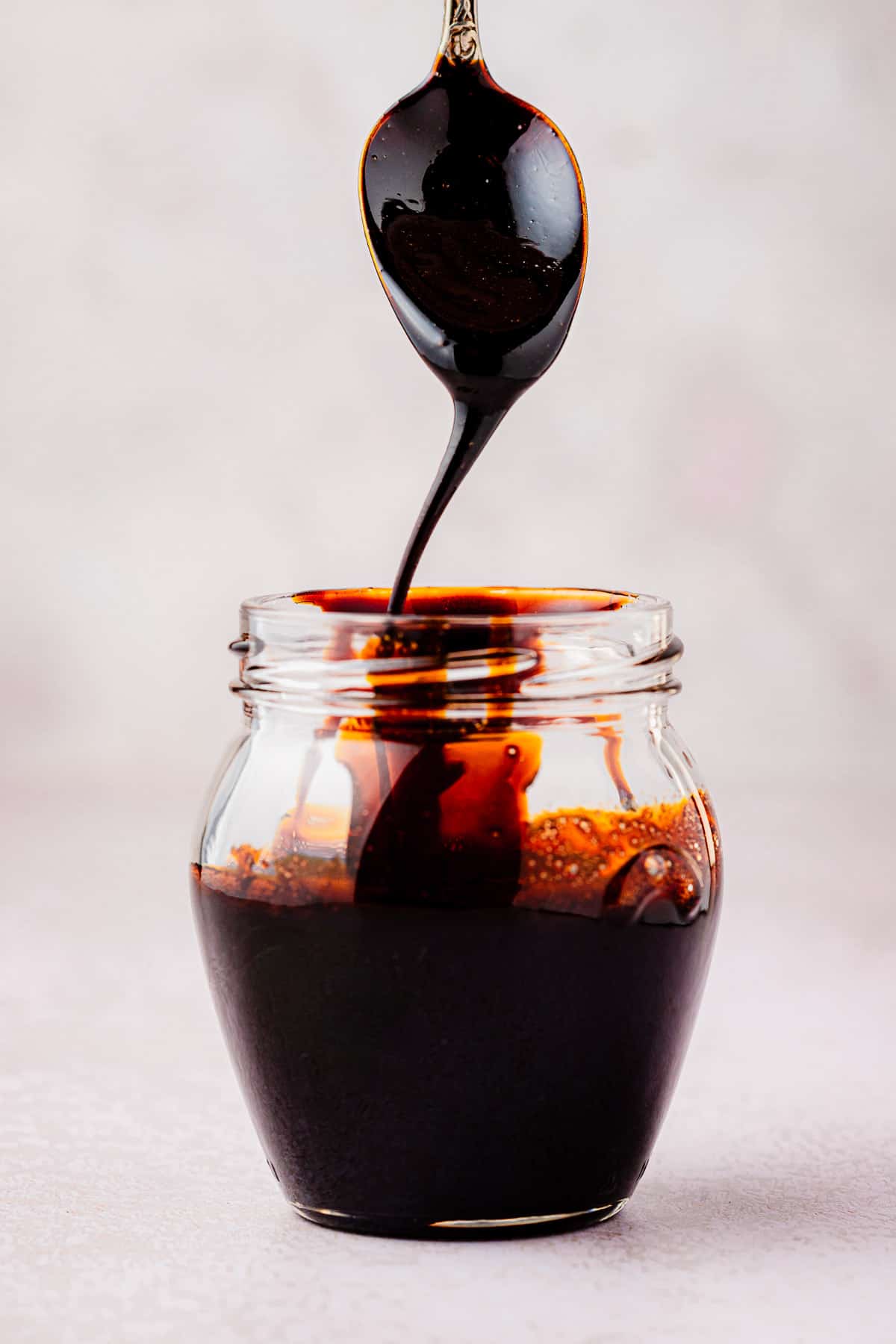
A Sweet-Tart Flavor-Maker in Just 15 Minutes
Balsamic glaze is not the same as balsamic vinegar straight from the bottle. It is balsamic vinegar gently simmered until its flavor concentrates and its texture becomes thick and syrupy. It’s also called a balsamic reduction, and the two terms are often used interchangeably. Some versions include a sweetener, while others rely only on the vinegar’s natural sweetness.
I like to taste the balsamic before it goes into the pan. If it’s thin and sharply acidic, honey gives the finished glaze more body and balance. If the vinegar is already thick and sweet, you can skip the honey or use less.
The result is the kind of no-fuss condiment that takes food from basic to bold with just a drizzle. It’s right at home with Italian favorites like Caprese salad, but it’s equally delicious over roasted vegetables, grilled meat, juicy strawberries, or a scoop of vanilla ice cream.
Because balsamic vinegars vary so widely, this recipe is designed to be adjusted to the bottle you’re using. The key is knowing what to look for when you taste the vinegar and when to pull the glaze from the heat.
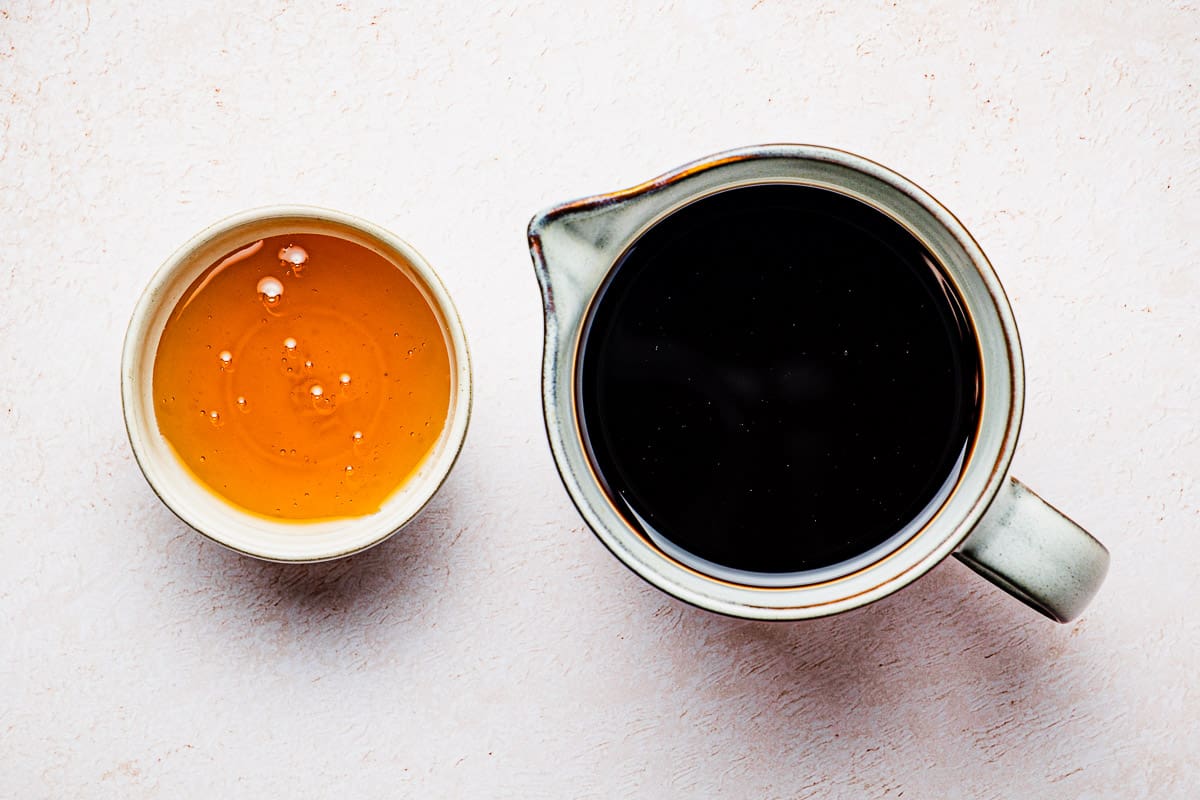
Balsamic Glaze Ingredients
You need just one essential ingredient to make balsamic glaze, though an optional sweetener can balance a particularly sharp vinegar.
- Balsamic vinegar: As the vinegar reduces, its tangy, fruity flavor becomes more concentrated. Choose a bottle with a good balance of sweetness and acidity; I share what to look for below.
- Honey (optional): Honey rounds out the vinegar’s sharper edges and gives the glaze a syrupy body. I like Greek thyme honey for its delicate sweetness and subtle savory notes. Sugar, brown sugar, maple syrup, or agave will also work, though each will give the glaze a slightly different flavor.
How to Choose Balsamic Vinegar for Glaze
You don’t need the most expensive bottle on the shelf to make a delicious balsamic reduction. What matters most is finding a vinegar with a good balance of sweetness and acidity.
Here’s what I look for:
- Grape must near the top of the ingredient list: Grape must is freshly crushed grape juice that includes the skins, seeds, and stems. A label may read “cooked grape must, grape wine vinegar.” Ideally, the must comes before the wine vinegar.
- A short ingredient list: Skip bottles with caramel coloring or a long list of unnecessary additives.
- A balanced sugar content: The “total sugars” line can help you anticipate how sweet the vinegar will taste. I consider about 12 grams per tablespoon a very sweet balsamic, which will likely need little or no honey.
- A slightly syrupy texture: If the bottle is clear, tilt it toward the light. A good candidate for glaze should cling slightly to the glass rather than running immediately like water.
Ultimately, tasting is the best guide.
How to Make Balsamic Glaze
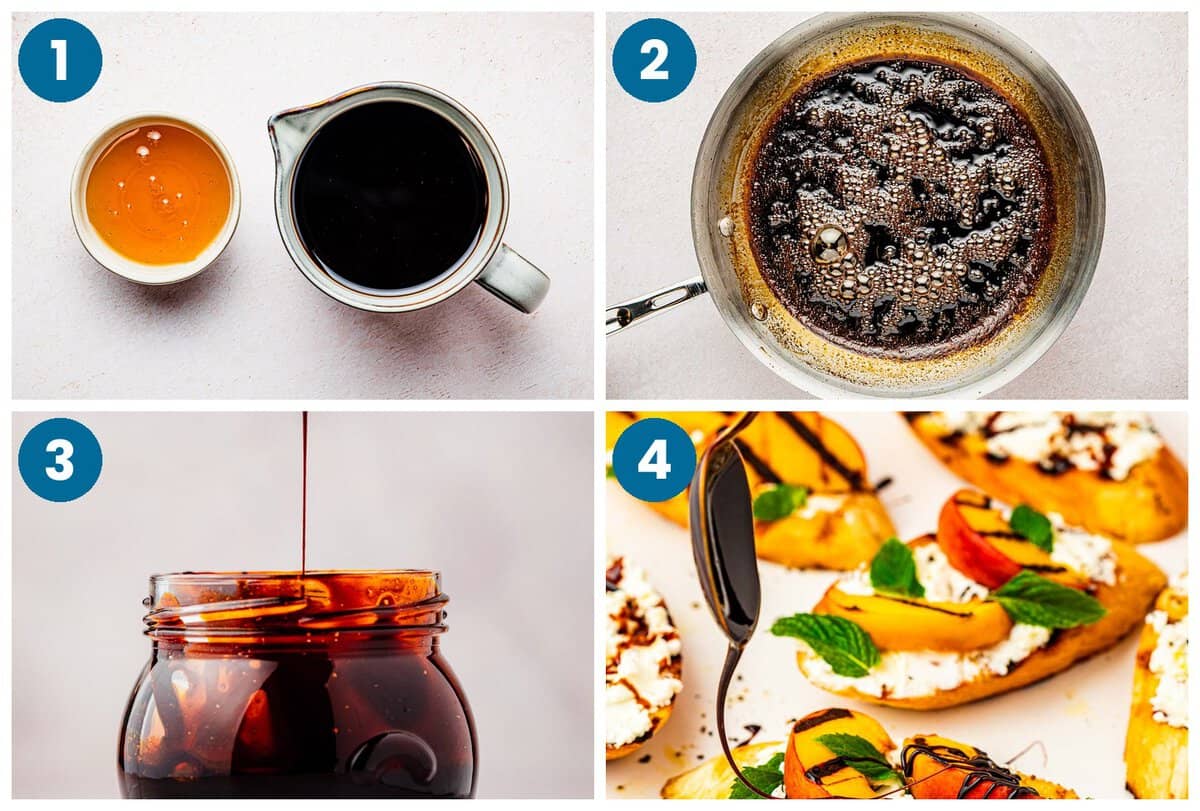
Taste the balsamic vinegar first and decide whether it needs honey. A thin, sharply acidic vinegar will benefit from the full amount, while a naturally thick and sweet vinegar may need less or none at all.
- Heat the balsamic. In a medium saucepan over medium heat, whisk together 1 cup balsamic vinegar and 1/4 cup honey, if using.
- Bring it to a boil. Watch the pan closely and whisk constantly to prevent scorching. As soon as the mixture boils, turn the heat to low to maintain a gentle simmer.
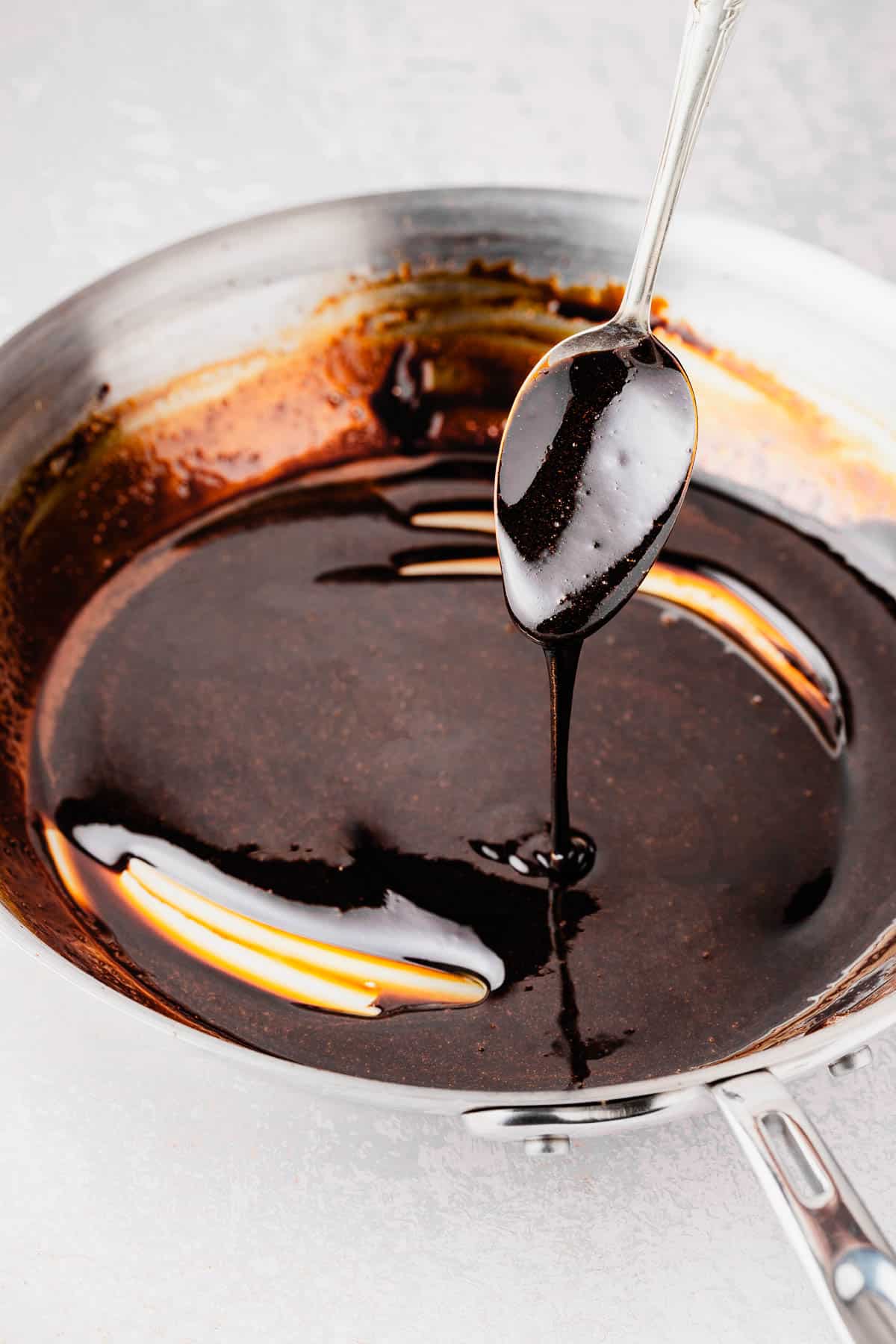
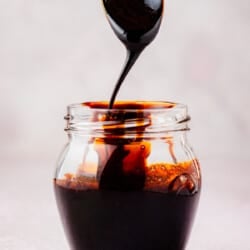
- Reduce the vinegar. Simmer, stirring occasionally, until the liquid has reduced by half and has the consistency of maple syrup, usually 15 to 20 minutes. Remove the pan from the heat and set the glaze aside to cool.
- Cool, then use or store. Let the glaze cool so it can thicken. Use as desired, or transfer it to a sealable jar or container. Cool completely before covering and refrigerating.
Tips for Perfectly Syrupy Balsamic Glaze
The most important thing is to remove the glaze from the heat before it looks completely finished. It will continue to thicken considerably as it cools.
- Look for a loose, syrupy consistency. The warm glaze should coat the back of a spoon and flow like maple syrup or warm honey. It should not be as thick as honey straight from the jar.
- Keep the heat low. Once the vinegar boils, maintain a gentle simmer so it reduces without scorching.
- Use volume as well as texture. The glaze is ready when it has reduced by approximately half and lightly coats your spoon.
- Thin an overly thick glaze with water. If it becomes too thick, whisk in a few drops of water just before serving.
- Turn on your vent or open a window. Simmering vinegar has a powerful aroma. A little ventilation will keep your kitchen—and your family—happier.
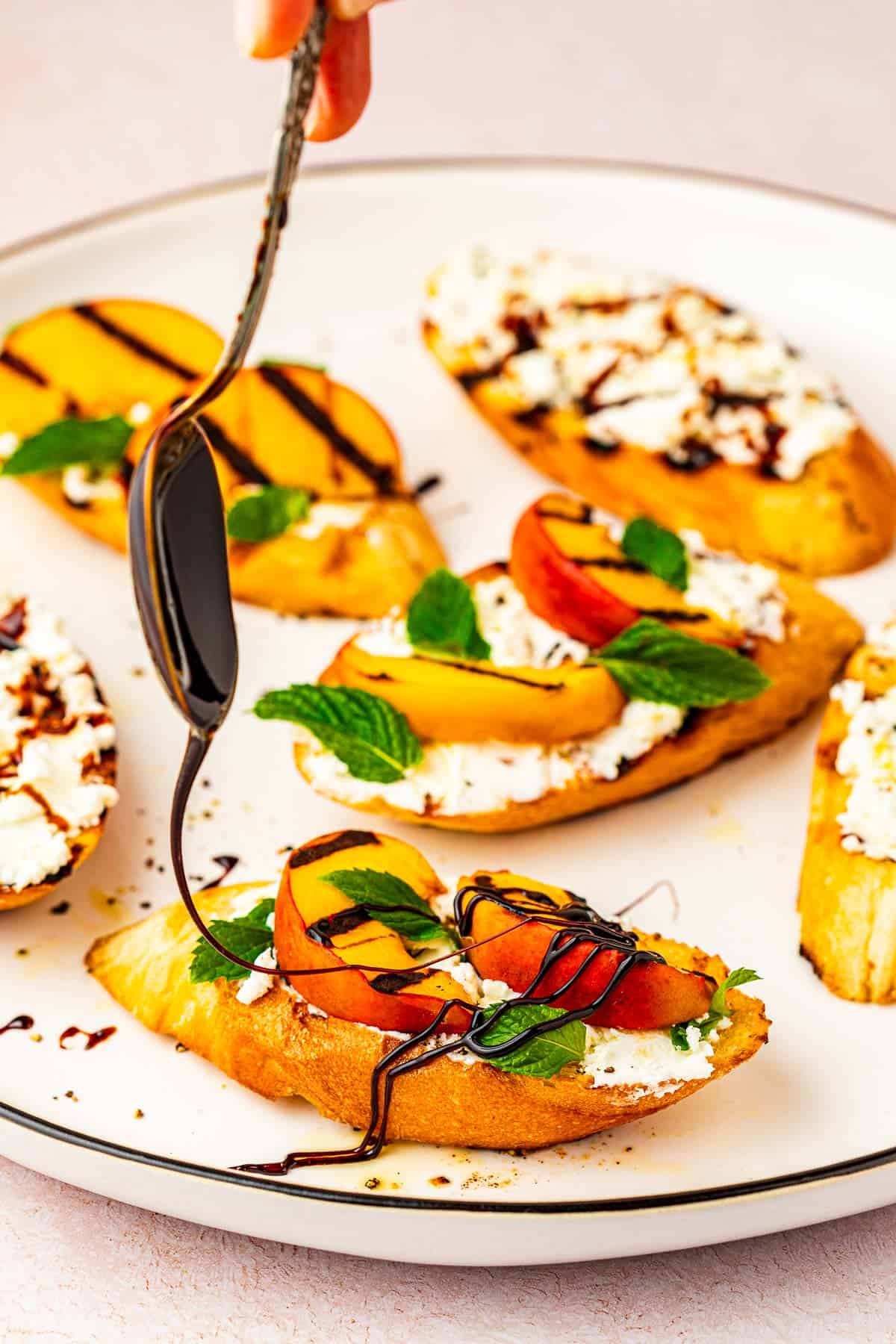
Ways to Use Balsamic Glaze
Balsamic glaze works with both sweet and savory foods, but it is particularly at home with Italian flavors. You only need a little to add concentrated sweet-tart flavor.
- Salads: Drizzle it over a classic Caprese salad or chicken Caprese salad.
- Vegetables: Use it to finish Italian oven-roasted vegetables or skillet zucchini.
- Meat and fish: A drizzle gives baked salmon a sweet and tangy finish. It also pairs well with grilled chicken or steak.
- Toast and cheese: Spread goat cheese over toasted crusty bread, then finish with balsamic glaze, Italian extra virgin olive oil, flaky salt, and cracked black pepper. In summer, add grilled peaches and torn basil or mint.
- Fruit and desserts: Try it with strawberries, peaches, or figs. It may sound surprising, but a little balsamic glaze is also delicious over vanilla ice cream, especially with a spoonful of berry compote. You can also drizzle it over this easy fig pastry.
Does Balsamic Glaze Need to Be Refrigerated?
Yes. Let the balsamic glaze cool completely, then transfer it to a sealable container or jar. Cover and refrigerate for up to two weeks.
The glaze will become thicker when chilled. If necessary, whisk in a few drops of water just before serving to loosen the consistency.
Drizzle Balsamic Glaze on These Recipes!
Appetizer and Mezze
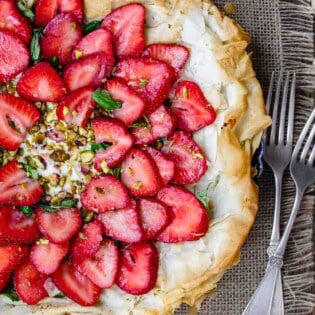
Strawberry Tart with Fillo Crust
Appetizer and Mezze
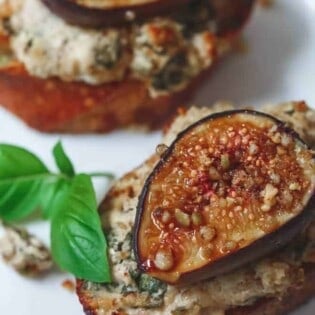
Fig Pistachio Goat Cheese Crostini

Ingredients
- 1 cup balsamic vinegar
- 1/4 cup honey, optional
Instructions
- Heat the balsamic. In a medium saucepan over medium heat, whisk together the balsamic vinegar and honey, if using.
- Bring to a boil. Watch the pan closely and whisk constantly to prevent scorching. As soon as the mixture boils, turn the heat to low.
- Simmer. Cook over low heat, stirring occasionally, until the liquid has reduced by half and has the consistency of maple syrup, usually 15 to 20 minutes. Remove from the heat and set aside to cool.
- Use or store. If you are not using the glaze right away, pour it into a sealable container or jar. Let it cool completely, then cover and refrigerate for up to two weeks.
Notes
- The glaze will continue to thicken as it cools. Remove it from the heat as soon as it coats the back of a spoon and has a loose, syrupy consistency.
- If the glaze becomes too thick, whisk in a few drops of water just before serving.
- Taste your balsamic vinegar before adding the honey. Use the full amount for a thin, sharply acidic vinegar. If the vinegar is already thick and sweet, reduce or omit the honey.
- Shop this recipe: Visit our shop for Balsamic Vinegar of Modena, Greek honey, extra virgin olive oils, and more Mediterranean pantry essentials.
Nutrition
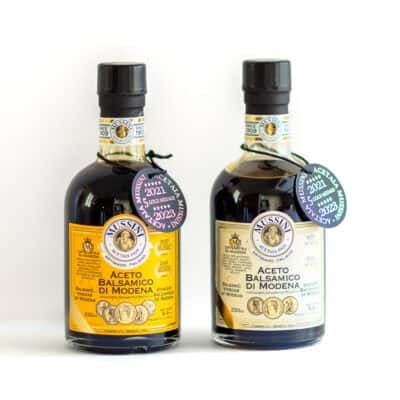
Award-Winning Balsamic Vinegars
Taste this pairing of high-quality balsamic vinegars with unique flavor profiles, featuring one ideal for daily dishes, and the other that shines as a finishing drizzle.

Came out perfect to drizzle over our melon y proscuitto y mozzarella tapas for Sangria day!
Sangria day sounds fun! So glad the glaze worked for you!
Amazing!!!!
Well I sincerely liked reading it This tip procured by you is very useful for proper planning
Just made this recipe to use for the Balsamic Chicken recipe tonight. I tastes wonderful! I did use honey. It was from my daughters bees.