
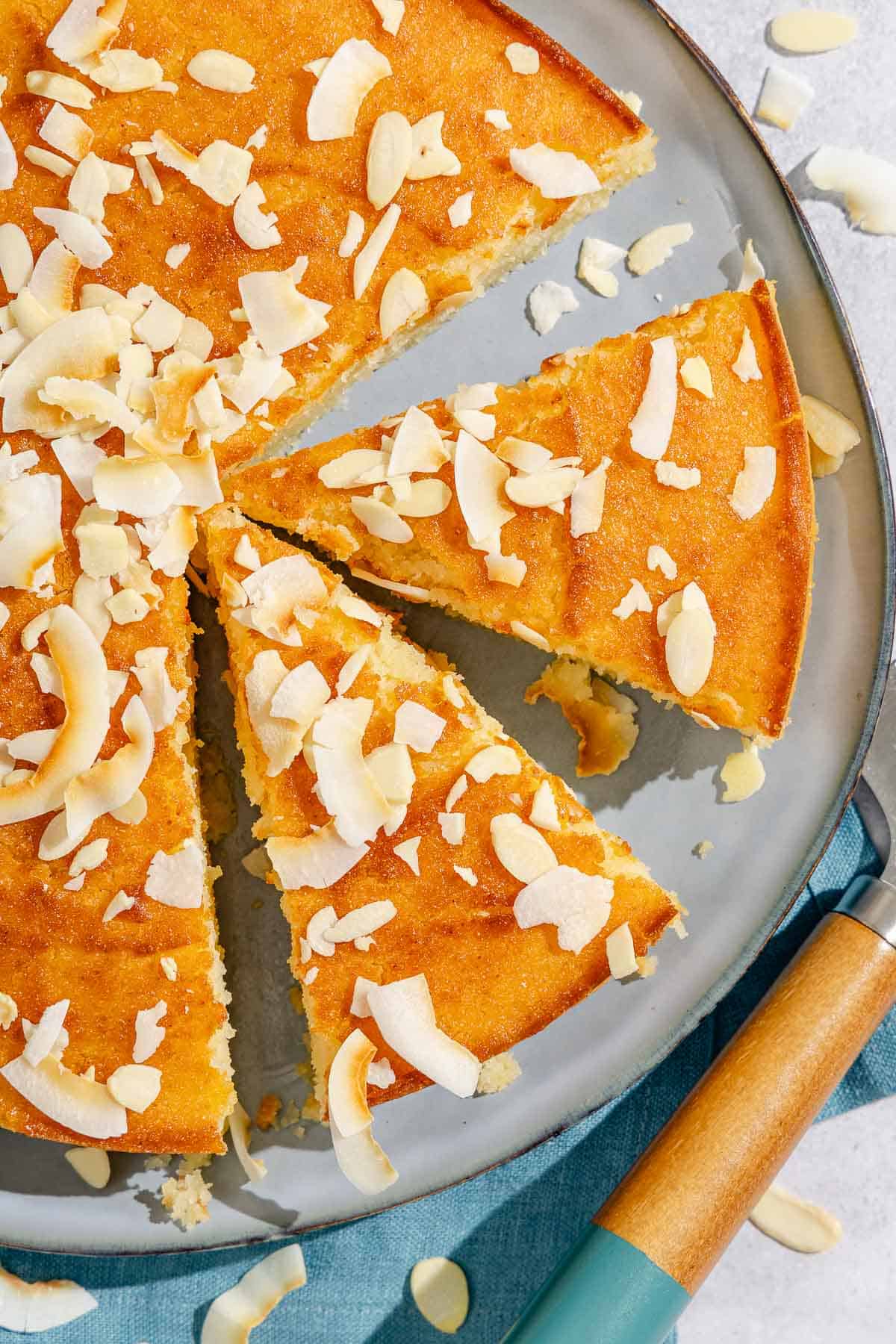
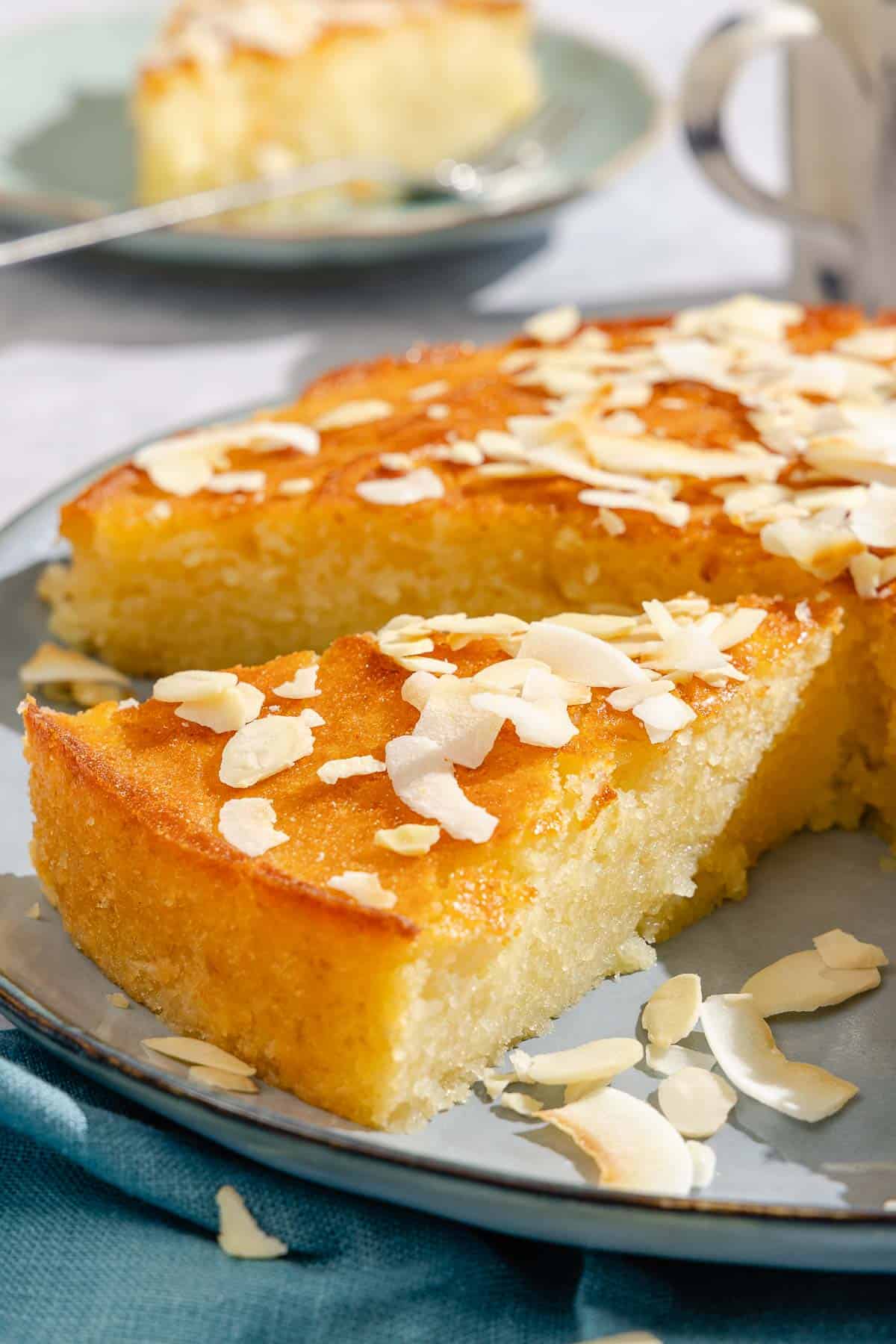
Basbousa is a rich and flavorful egg-free semolina cake drenched in a cinnamon syrup and topped with crunchy almonds and shredded coconut. My recipe, passed down from my aunt Maha, will teach you how to make Egyptian basbousa at home!
Basbousa may not be as internationally famous as baklava, but for me, it’s pure childhood nostalgia. Growing up in Egypt, basbousa was a staple dessert at just about every celebration.
Basbousa and its cousins, Greek Revani and Lebanese Namoura, is typically sliced into a fancy diamond pattern with a perfectly placed nut in the center of each slice. If you’ve been here a while you know I don’t mess with all of that, but more power to you if you’d like to slice it the traditional way!
A few things make my basbousa recipe special. I use a combination of coarse and fine semolina flour, which makes the crumb perfectly soft but also sturdy enough to soak in the cinnamon-scented syrup without getting soggy. Rather than tuck a perfectly placed almond on each slice, I just sprinkle the top with toasted coconut and sliced almonds.
Either way, this basbousa recipe is sweet but not overly so, deliciously sticky, happily messy, and very easy to make. Its meant to be shared with friends and family on special occasions and I can’t wait to share it with you!
Table of Contents
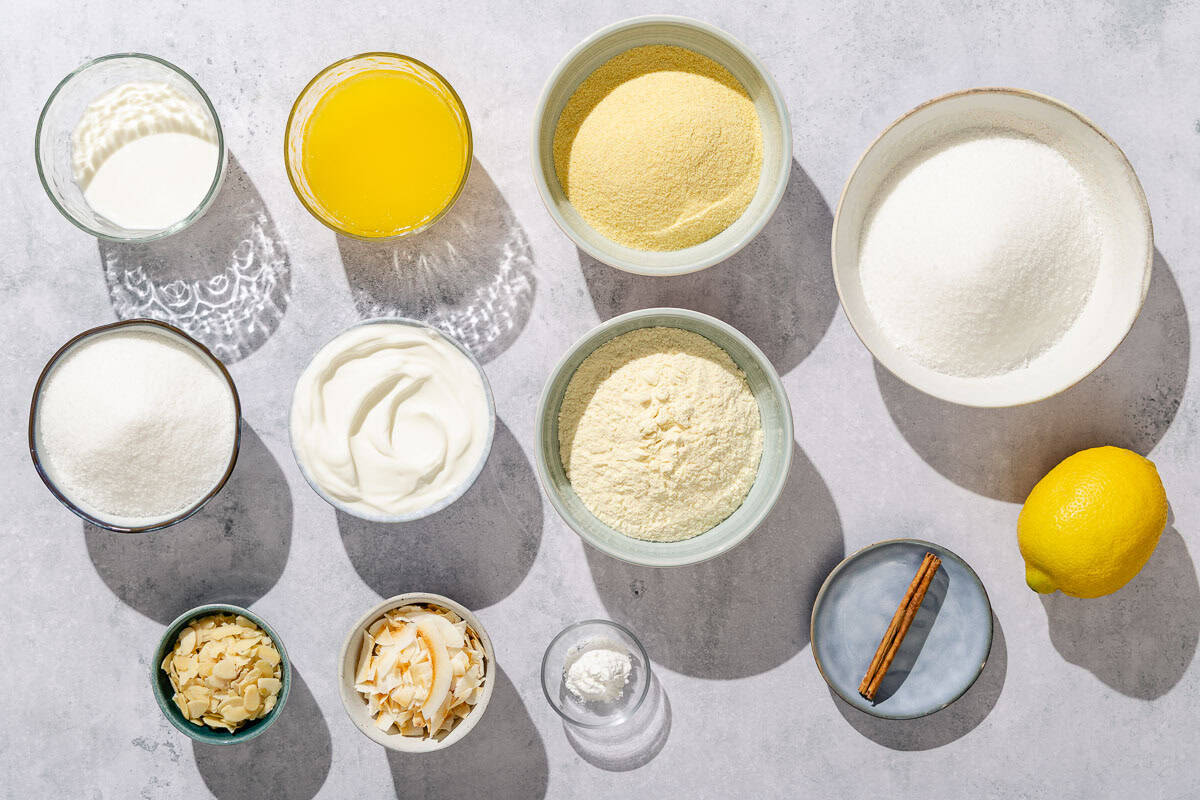
What is in Basbousa?
Unlike Western-style cakes, basbousa doesn’t rely on eggs. Yogurt, milk, and butter hydrate the Semolina, creating structure for the cake, which creates a deliciously rich cake that soaks up the cinnamon syrup like a dream without getting soggy.
- Granulated sugar: Sweetens the cake and the cinnamon simple syrup.
- Plain whole milk yogurt: Adds moisture and a tangy flavor to balance the sweetness.
- Semolina flour: I like to combine the softness of fine semolina and the satisfying texture of coarse, but you can use all coarse semolina. Use the rest of the bag to make Baghrir, tender semolina pancakes!
- Baking powder: Adds a bit of lift to the cake so it’s not overly dense.
- Milk: I like the lightness of 2% milk with this recipe, but whole milk also works.
- Butter adds richness and tenderizes the cake.
- Shredded coconut adds crunch and sweetness. Not all basbousa recipes include coconut–simply leave this off if you’re not a fan.
- Sliced almonds add another layer of texture and flavor. Feel free to substitute with other tender nuts, like crushed walnuts, pistachios, or pine nuts.
- Cinnamon stick adds a cozy, warming flavor and aroma to the syrup without overpowering.
- Lemon juice balances the sweetness of the simple syrup.
How to Make Basbousa
Though basbousa spends about 45 minutes in your oven, you’ll want to budget another hour of rest. This allows the cake to soak up all the delicious cinnamon simple syrup and become irresistibly sweet and tender. Here are the steps:
- Get ready: Preheat the oven to 350°F and grease a 9-inch round cake pan.
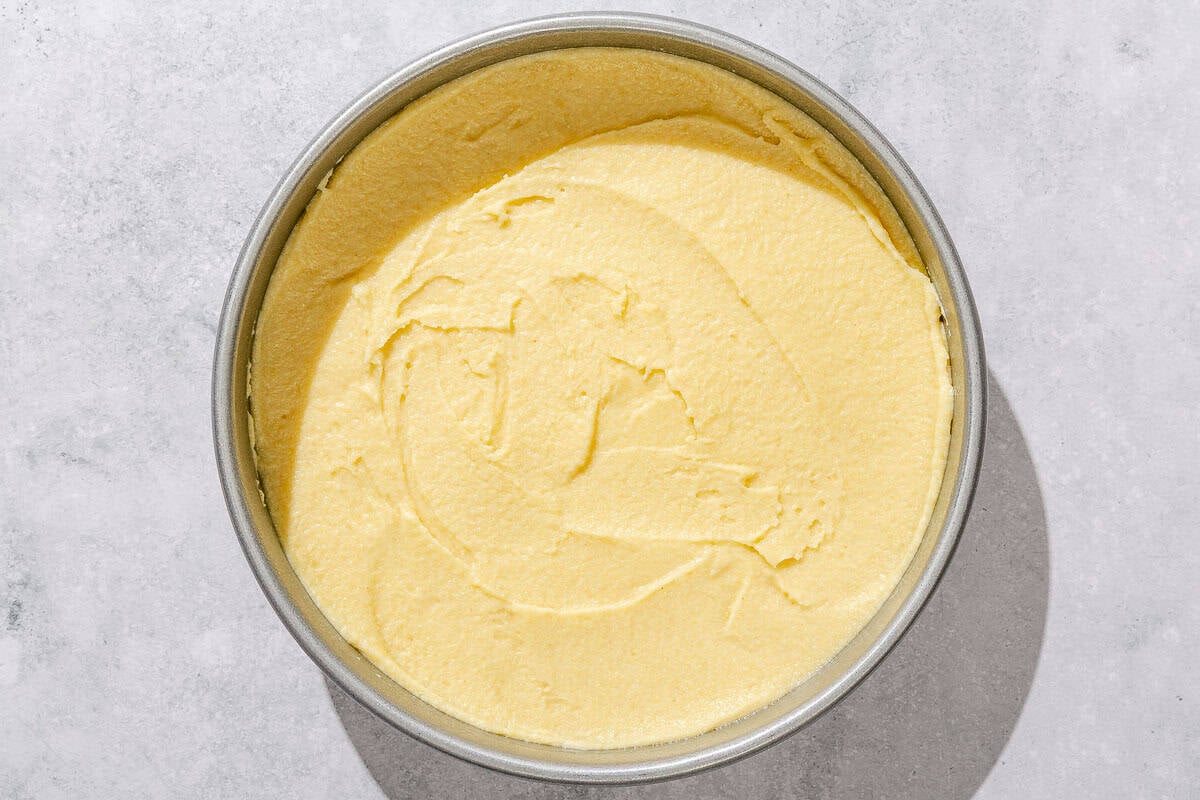
- Make the batter: In a large mixing bowl, use a rubber spatula to combine 1 cup sugar and 1 cup yogurt. Add 1 cup coarse semolina, 1 cup fine semolina, 1 teaspoon baking powder, and 1/3 cup 2% milk. Stir to combine. Finally, stir in 1/2 cup melted butter. Transfer the batter into the prepared cake pan and use a spatula to smooth the top.
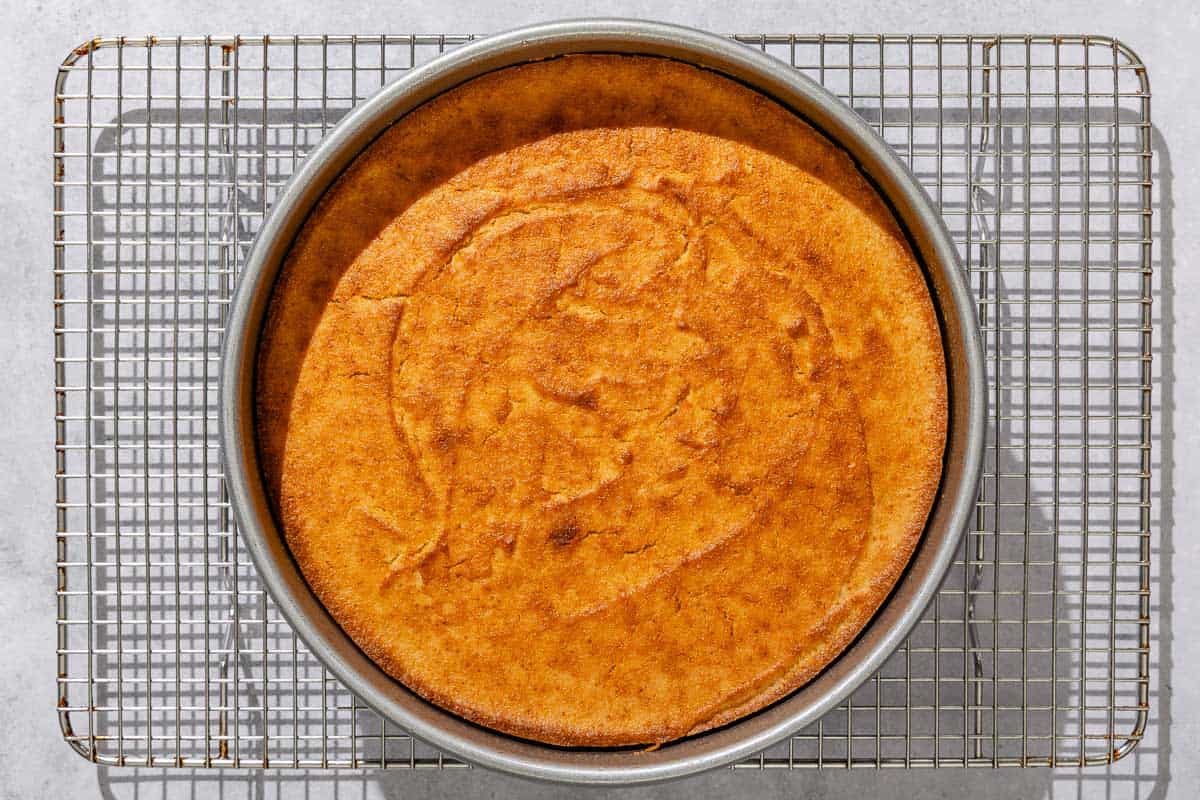
- Bake the cake: Transfer the cake pan to the heated oven. Bake for 40-45 minutes, or until the cake is golden brown. If you need to, you can put it under the broiler for 2 to 3 minutes. You want it to have a little color, but keep an eye on it so the cake doesn’t burn.
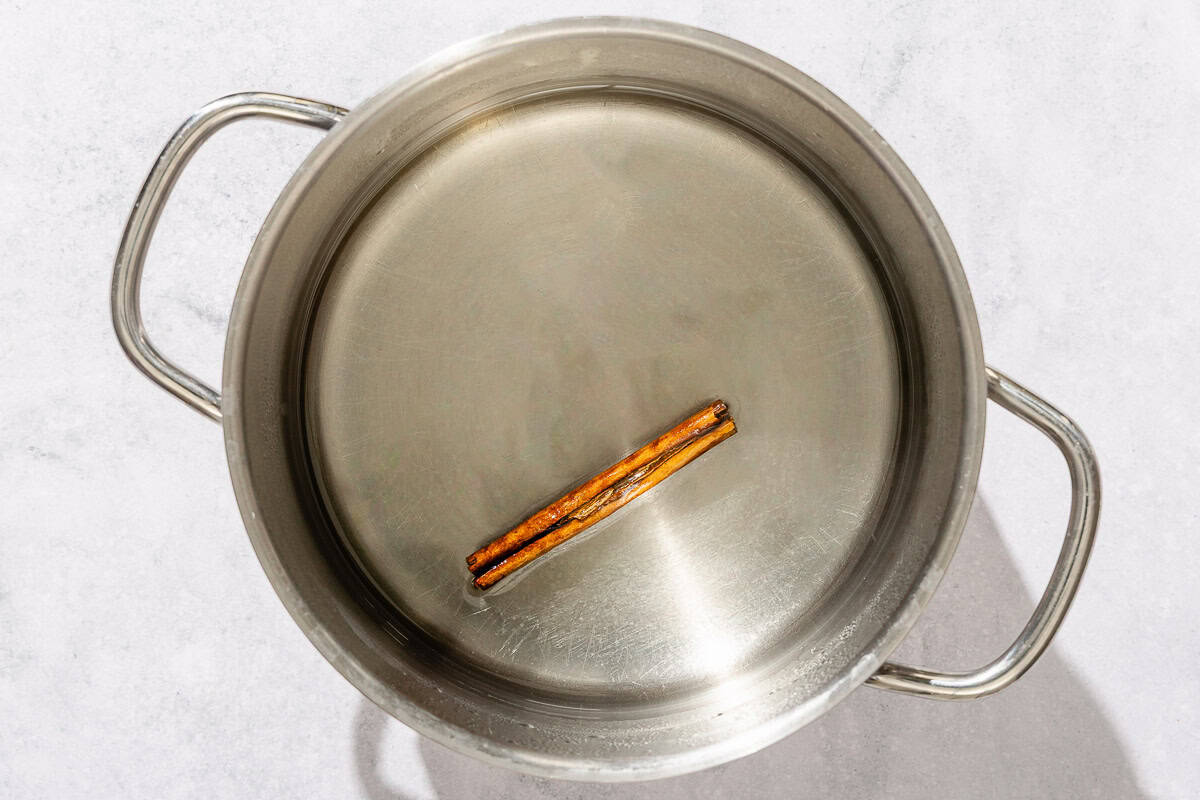
- Meanwhile, prepare the syrup: While the cake bakes, make the cinnamon simple syrup. Set a small saucepan over medium-high heat. Add 1 1/2 cups sugar, 1 3/4 cups water, and 1 cinnamon stick. Bring to a boil, stirring until sugar dissolves, about 3 to 5 minutes. Remove from heat and stir in 1/4 teaspoon lemon juice. Let cool completely, then remove the cinnamon stick.
- Soak the cake: As soon as the basbousa is removed from the oven, pour the cool syrup on the hot basbousa. The pan may fill up with the liquid, and the cake may even float for a second, but it’s OK. Just let it absorb into the cake. Let the cake cool completely, as the syrup must be fully absorbed into the cake. For best results, let it sit for 1 hour before serving.
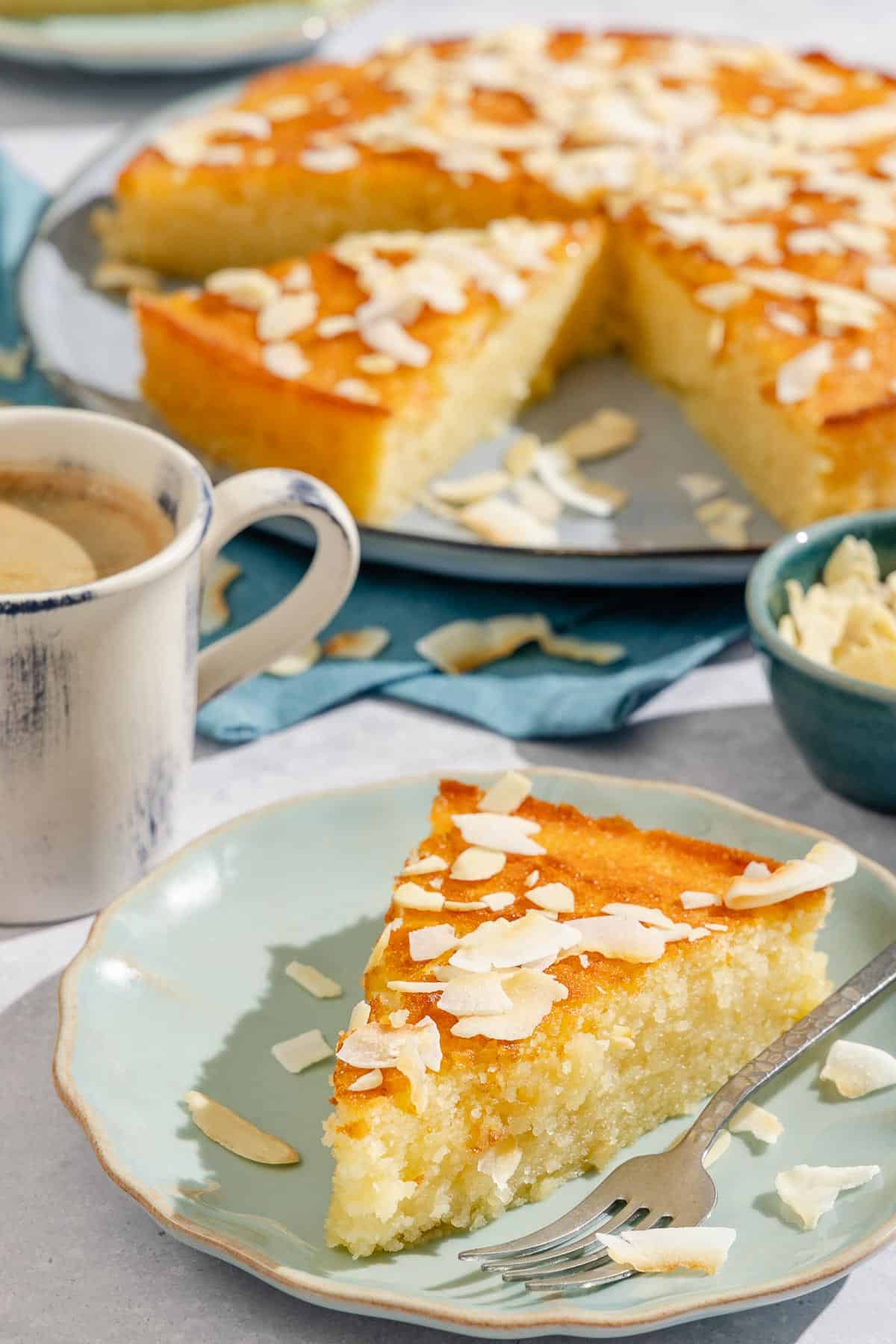
- Serve: To serve, you can either serve it from the baking pan or run a knife around the edges and invert the cake onto a plate. Top the cake with 1/4 cup each of flaked coconut and sliced almonds. Cut into 8 slices and enjoy!
What to Serve with Basbousa
Basbousa is meant to be shared with friends and family. Serve as an afternoon or after-dinner treat with Arabic Tea. For a caffeine-free option, serve with Greek mountain tea, or simply steep fresh mint leaves in hot water.
More Cake Recipes
Browse all Mediterranean recipes.
Visit Our Shop.

The Mediterranean Diet Starter Kit
The vibrant pantry essentials you need to start cooking the Mediterranean way.

Ingredients
For the Cake
- 1 cup (214g) granulated sugar
- 1 cup plain whole milk yogurt
- 1 cup (150g) fine semolina
- 1 cup (150g) coarse semolina
- 1 teaspoon baking powder
- 1/3 cup 2% milk
- 1/2 cup butter, melted
- 1/4 cup sweetened shredded coconut or coconut chips
- 1/4 cup sliced almonds
For the Cinnamon Simple Syrup
- 1 1/2 cups sugar
- 1 3/4 cups water
- 1 cinnamon stick
- 1/4 teaspoon lemon juice
Instructions
- Get ready: Preheat the oven to 350°F and grease a 9-inch round cake pan.
- Make the batter: In a large mixing bowl, use a rubber spatula to combine the sugar and yogurt. Add the semolina flours, baking powder, and milk. Stir to combine. Finally, stir in the melted butter.
- Bake the cake: Transfer the batter into the prepared cake pan. Use a spatula to smooth the batter and transfer the cake pan to the heated oven. Bake for 40-45 minutes, or until the cake is golden brown. If you need to you can put it under the broiler for 2 to 3 minutes. You want it to have a little color, but keep an eye on it so the cake doesn’t burn.
- Prepare the syrup: While the cake bakes, make the cinnamon simple syrup. Set a small saucepan over medium-high heat. Add the sugar, water, and cinnamon stick. Bring to a boil, stirring until sugar dissolves, about 3 to 5 minutes. Remove from heat and stir in the lemon juice. Let cool completely, then remove the cinnamon stick.
- Soak the cake: As soon as the basbousa is removed from the oven, pour the cool syrup on the hot basbousa. The pan may fill up with the liquid and the cake may even float for a second, but it’s OK. Just let it absorb into the cake. Let the cake cool completely, as the syrup must be fully absorbed into the cake. For best results, let it sit for 1 hour before serving.
- Serve: To serve, you can either serve it from the baking pan or run a knife around the edges and invert the cake onto a plate. Top the cake with the flaked coconut and sliced almonds. Cut into 8 slices and enjoy!
Notes
- Visit our shop to browse quality Mediterranean ingredients including olive oils, honey, jams, and spices.
- Alternative flour options: You can use 2 cups coarse semolina or 2 cups original Cream of Wheat enriched farina.
- For best results, let Basbousa sit for 1 hour before serving. This allows for the syrup to be absorbed into the cake.
Nutrition
*This post has recently been updated with new information for readers’ benefit.

Very nice and innovative
Thank you, Pooja! Glad to see you here.
So many recipes for this cake! I just saw one that has rose water flavoring the syrup as well as eggs and zest of lemon or orange! I have read that the name means 1000 kisses. Is that true? Is there a story behind that name?
Rochelle, thanks for stopping in! I don’t doubt that there are several version of Basbousa, but this is the only way I’ll make it. It’s my aunt’s recipe and it is one of those tried-n-true, never-fail recipes for me. Bousa does mean kiss, but I don’t know for sure if the dessert name means 1000 kisses. It’s a sweet thought, though 🙂
This looks delicious!!! I stumbled upon your page through pinterest and im so glad I did! I tried to make this yesterday. I tried to make this yesterday, it baked wonderfully, gorgeous color and all. I took it out of the oven and poured the syrup on it and my baking dish just popped! unfortunately it shattered into a gazillion pieces so i wasnt able to salvage any piece of the cake but try again i shall!
Amina, so sorry to hear your baking dish broke! I have never experienced that before!!! I wish you better luck next time; and do stop in again and let me know how you like it!
Hi, this recipe looks amazing.
I’m in the UK, and wondering if you use the American cup measurement, which is about 240ml??
Thanks for sharing
Thank you, Saliha! The measurements are American measurements. See this link to see how the measurements relate to British http://www.miketodd.net/encyc/cooking.htm
Hi Suzy,
My mom makes this cake but her recipe includes eggs. I’m quiet interested to see how this one will turn out once I try.
Thanks for sharing!
Thanks for stopping in! Let me know how you like my version of basbousa.
I will try your recipe. looks delectable. I lived in Alexandria, Egypt as an expatriate teacher and this is the one dessert that is just indelible to me. The taste, texture and aroma…it is all there.
Becha, so glad you found me! I love Alexandria, it’s one of my favorite places in Egypt. I will be eager to hear how you like my basbousa recipe, once you try it.
Hi Suzy,
Have you tried this with a Greek yogurt, or do you recommend sticking with a regular consistency yogurt?
I have tried it with plain Greek yogurt and it worked fine. But some people find it easier to work with the regular yogurt. I’ll be eager to hear how you like it!
adore a drenched cake!
Thank you, Dorothy! You and I both!
Drenched in syrup? I am ALL IN! Wonderful family heritage recipe!
What a beautiful cake! I love the cinnamon syrup!
Thank you, April! It’s a favorite around my house.
Suzy, i once made a basbousa cake for a themed dinner party i was hosting. I had never heard of it and researched it. Now I see your cake that looks amazing. Mine did not have anything on top of it like yours does and that adds a whole dimension to the cake. Thanks for sharing.
I don’t think I’ve ever had semolina cake and clearly I’m missing out as it looks gorgeous drenched in all that lovely syrup 🙂
Jen, thank you for stopping in! Give this a try sometime, i promise you will like it.
Wow, that is SO interesting Suzy. We have a VERY similar cake (minus the coconut) in Tunisia called Aricha (or Harissa). As you may remember, we love authentic and traditional recipes on our site. If you don’t mind, I will probably use your recipe (and give you credit of course) next time we travel to Egypt or Turkey (as it seems like it really originated from this country). Thank you for this beautiful trip!
Thank you, Mike! There are so many wonderful variations of this recipe from Tunisia to Lebanon and the Holy Land! Thanks for stopping by.
I’ve only had a semolina cake one time in my life and it was wonderful and syrupy and delicious. That’s what yours looks like too!
I am all for a moist and syrupy cake. This is one of my favorites for that reason, Maureen. Thanks for stopping in!
Simply stunning photos! This cake looks so moist and totally delicious. Those almonds on top are just gorgeous 🙂
Medha, great to see you here again! Yes, it is super moist. Thanks for the sweet note.
What a delicious semolina cake recipe! Sharing!
That cake looks so moist and inviting. I love this recipe.
Thank you, Rini! Yes, this is one of those that I make all the time. Never dissapoints!
Please tell me that how can we bake it in microwave..
Hi there. Thanks for your question! Unfortunately, I have not made this recipe in the microwave. It is best to use the oven for basbousa. Hope this helps.