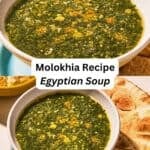
This Molokhia recipe is a comforting, green, garlic soup. It’s an Egyptian staple beloved by children and adults alike. Once you’ve got some jute mallow leaves, it takes only moments to make!
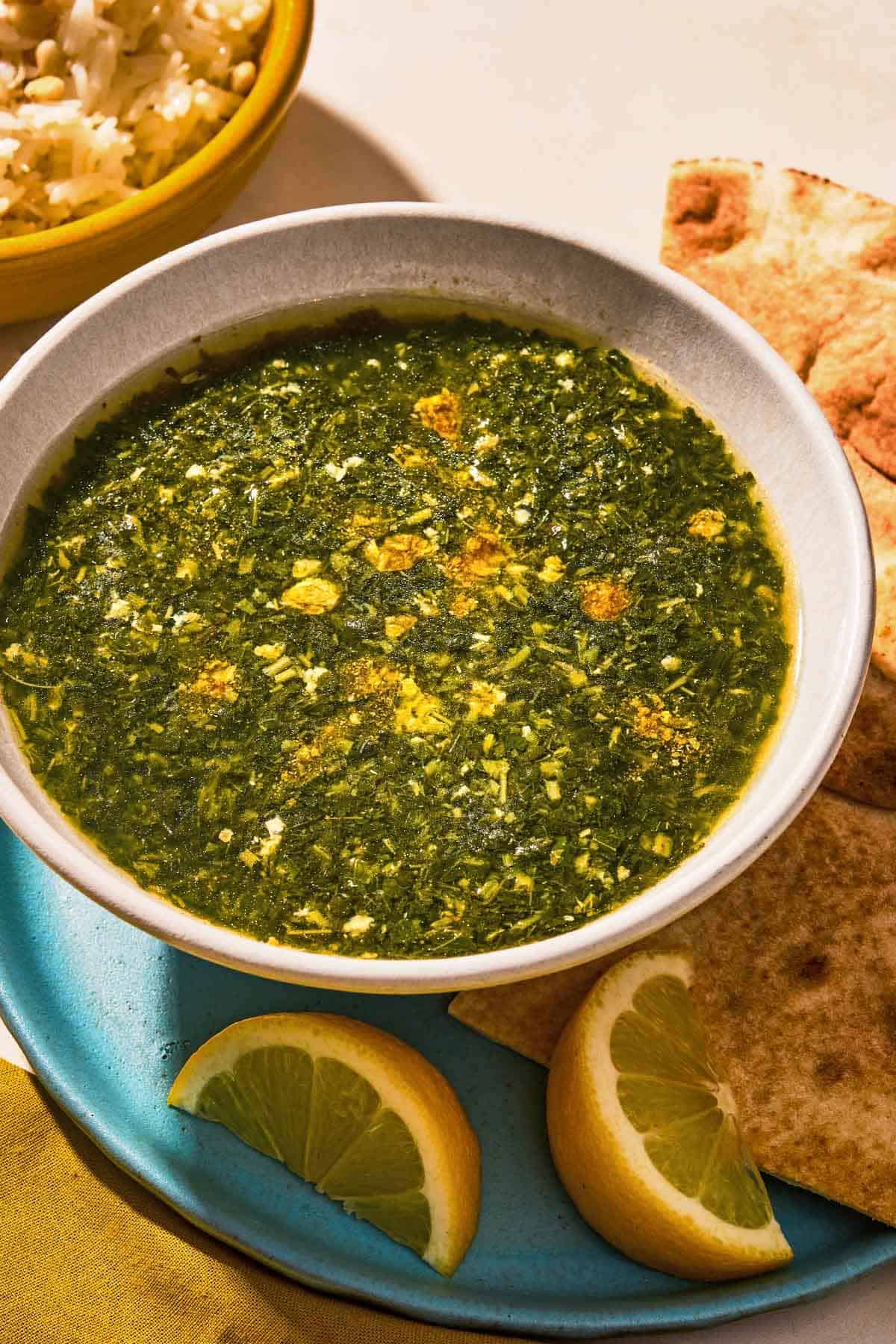
What Is Molokhia — and Why Do Egyptians Love It?
This molokhia recipe is the one I grew up eating, modified slightly to use frozen jute mallow leaves. Molokhia (also written mulukhiyah) is the quiet backbone of Egypt’s food culture. If only one dish were allowed to represent the cuisine, it might have to be molokhia. It is the taste and smell of being “home” or gathered around loved ones, and is the ever-present dish that completes a celebration feast.
Although not fancy, it is prized by the Egyptian people as well as others throughout the region. You can find Molokhia recipe variations throughout the Middle East and North Africa.
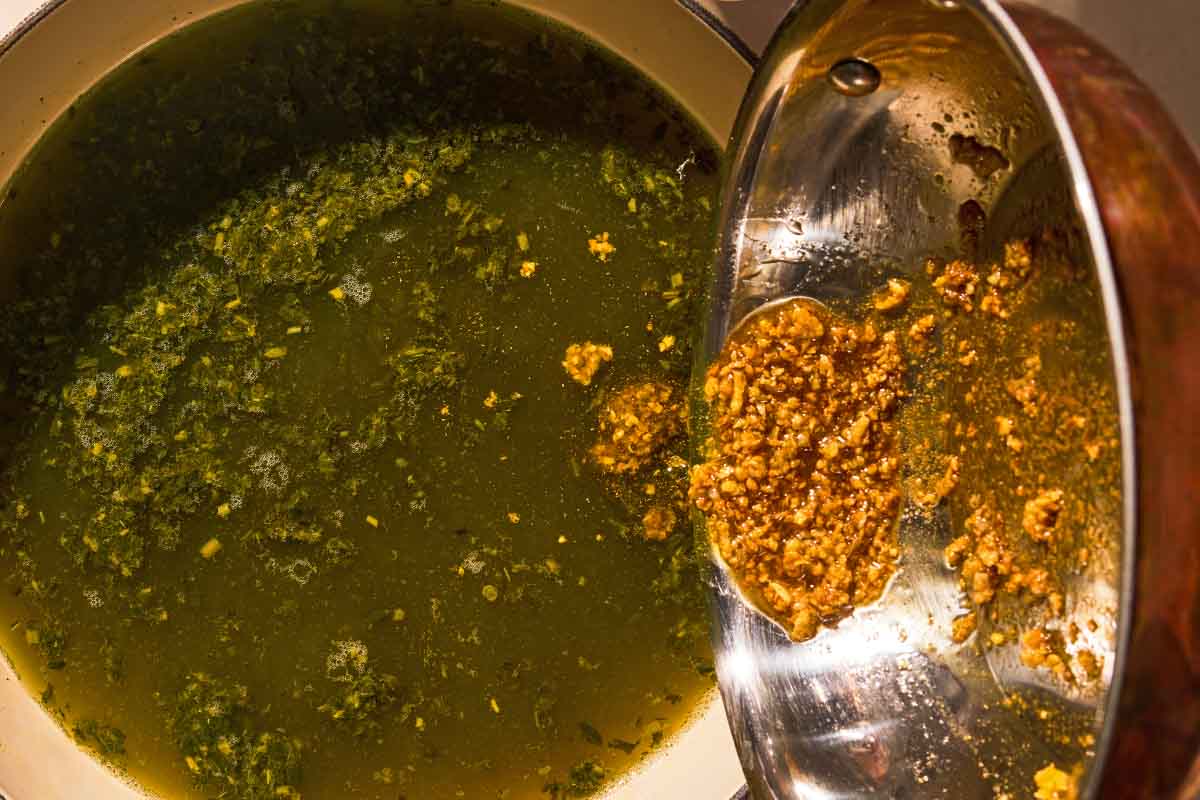
An important part of making molokhia taste right is the tasha. To make it, I cook minced garlic in hot ghee or oil and add ground coriander. Then I pour this sizzling mixture into the soup. The folklore is that the cook has to gasp and deeply inhale the aroma for the soup to succeed. This gasp is called a shah’a, and you have to do it just after pouring in the tasha into the soup and swirling it around. I’ve always chuckled at this part, but still won’t consider ever not doing it!
There are multiple tips that people swear by to stop the leaves from sinking to the bottom while cooking, but one way my mother taught me to avoid this was to make sure the soup never boils and is never covered. I’m not sure why this works, but it’s never failed me so far!
Why You’ll Love This Molokhia Recipe
- This is nourishing comfort food: a deeply savory, garlicky green soup loaded with health benefits.
- The aromatic tasha: a sizzling pour of golden garlic and coriander-infused oil transforms the simple soup, adding a layer of earthy, aromatic flavor that makes molokhia taste like nothing else in the world.
- It’s genuinely simple to make yet carries the full weight of a culinary tradition. For Egyptians, it tastes like home, no matter where we live!
What is Jute Mallow?
Molokhia is made from jute mallow leaves (Corchorus olitorius), a plant known for its considerable health benefits. It has a robust flavor; the closest thing I can liken it to is wild spinach, and it becomes gelatinous when cooked, similar to okra. It grows in the summer months in parts of North Africa and the Levant.
Jute mallow leaves are exceptionally healthy. They’re rich in vitamin C and vitamin A, two antioxidants that help the body fight infection and protect cells from oxidative damage. They’re also a meaningful source of calcium and magnesium, both important for bone health. Research has also found that jute leaves contain the highest levels of omega-3 fatty acids of any vegetable, making them a great plant-based source.
While many Egyptians (like me) who don’t live in Egypt can’t get fresh jute mallow leaves, the frozen packets are just as tasty, and worlds more convenient. In fact, many people in Egypt prefer to use frozen packets now, because the process of washing and manually mincing fresh leaves can be pretty labor-intensive.
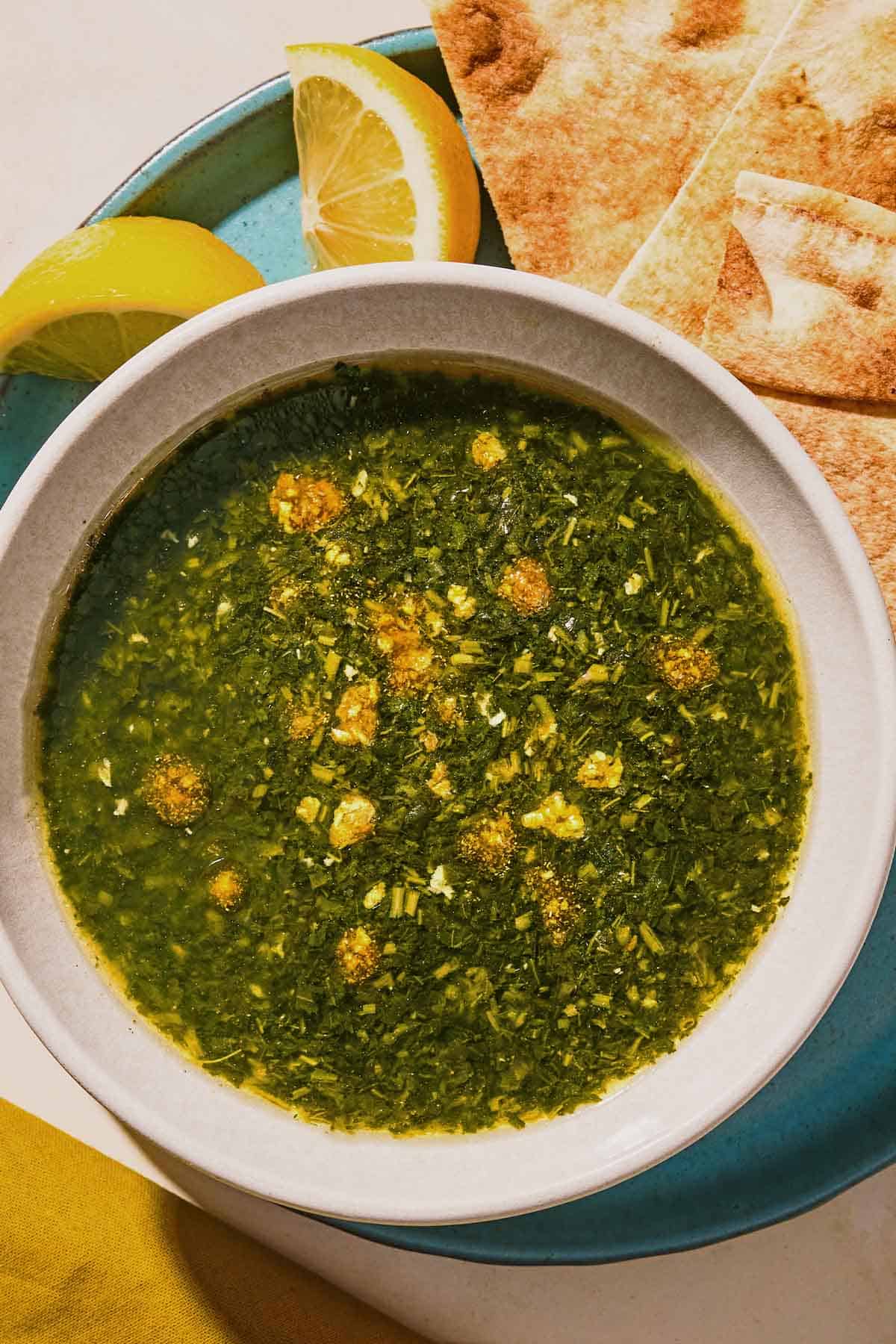
Key Ingredients
- Molokhia leaves: The star of the show. If you can get frozen molokhia (AKA jute mallow) leaves, you’re already halfway there. You can find packets of frozen molokhia leaves in any Middle Eastern grocery store, just make sure to pick the minced one. There really is no substitute for this vegetable. Minced spinach would not really not be the same because it wouldn’t give the same texture. If starting with fresh molokhia leaves, you’ll need about 3 to 4 cups of minced leaves for this recipe. Wash and dry them well, and mince them finely using a mezzaluna or food processor.
- Chicken stock is the soup base of the molokhia, and its flavor is just as important as everything else. A well-seasoned, flavorful stock can be the difference between a bland or excellent molokhia. You can use bouillon, a stock cube, store-bought stock or make your own stock from scratch.
- Garlic is extremely important in molokhia, and I’ve never had one without it. It’s the aroma you smell before the first sip. It’s sautéed separately in an infused oil called tasha and then added to the soup at the end.
- Extra virgin olive oil is the base of the all-important tasha that allows the garlic to fry and get nice and toasty. Ghee is traditional, but you can use olive oil, or even a combination of ghee and olive oil.
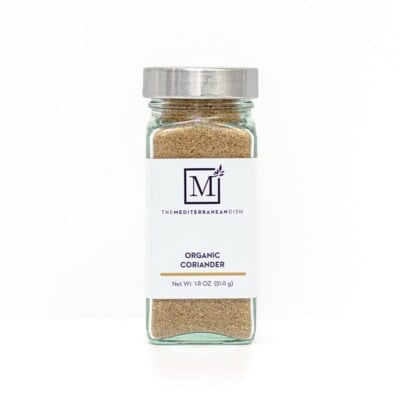
- Ground coriander hits your tongue immediately and pairs with the garlic, giving molokhia an earthy taste.
How to Make Molokhia
Making molokhia is pretty simple, and thanks to using frozen packets, not too labor intensive. The tricky part is to cook the leaves without boiling them, so they remain vibrant and green. The “tasha,” which can cook in seconds, is the main injection of flavor, so take care not to burn the garlic.
- Warm the stock. Bring 6 cups of chicken stock to a low boil in a large pot on high heat.
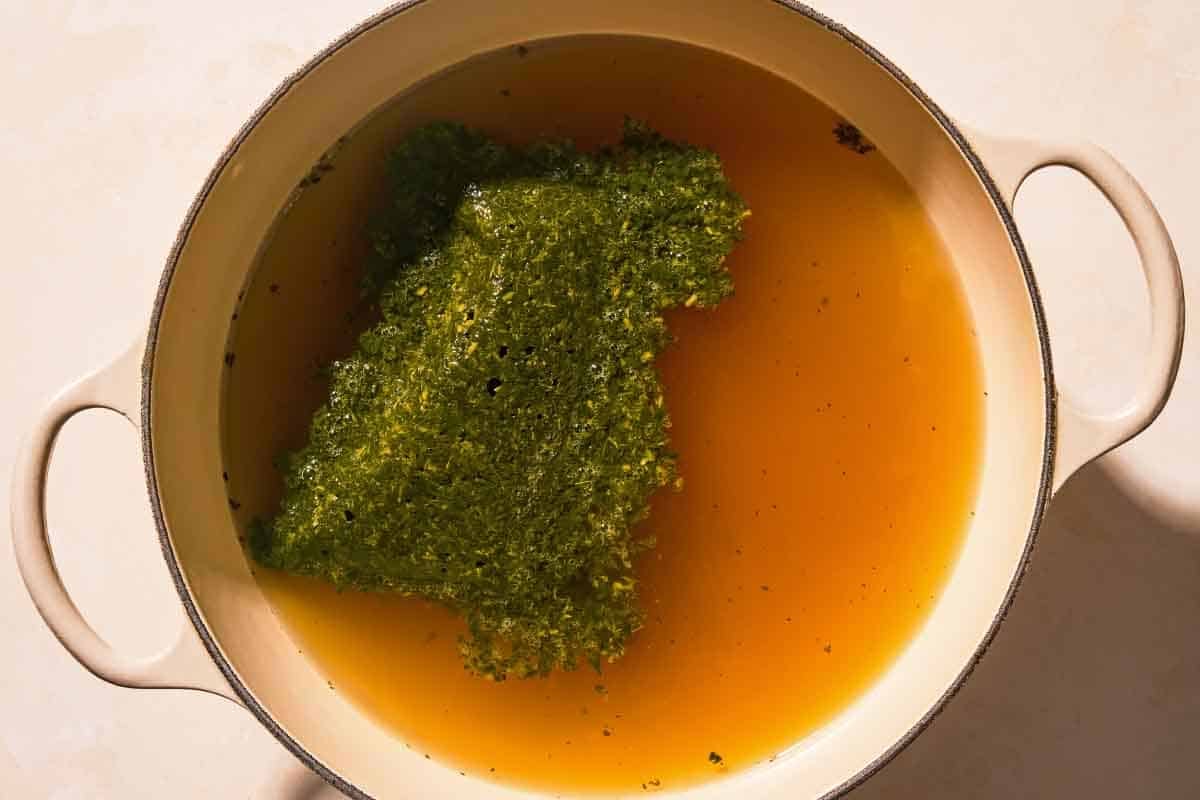
- Add the molokhia. Turn the heat off completely and then add in 1 (14-ounce) (400g) package of frozen minced molokhia leaves. Give everything an occasional stir as the greens slowly melt into the broth, about 15 minutes.

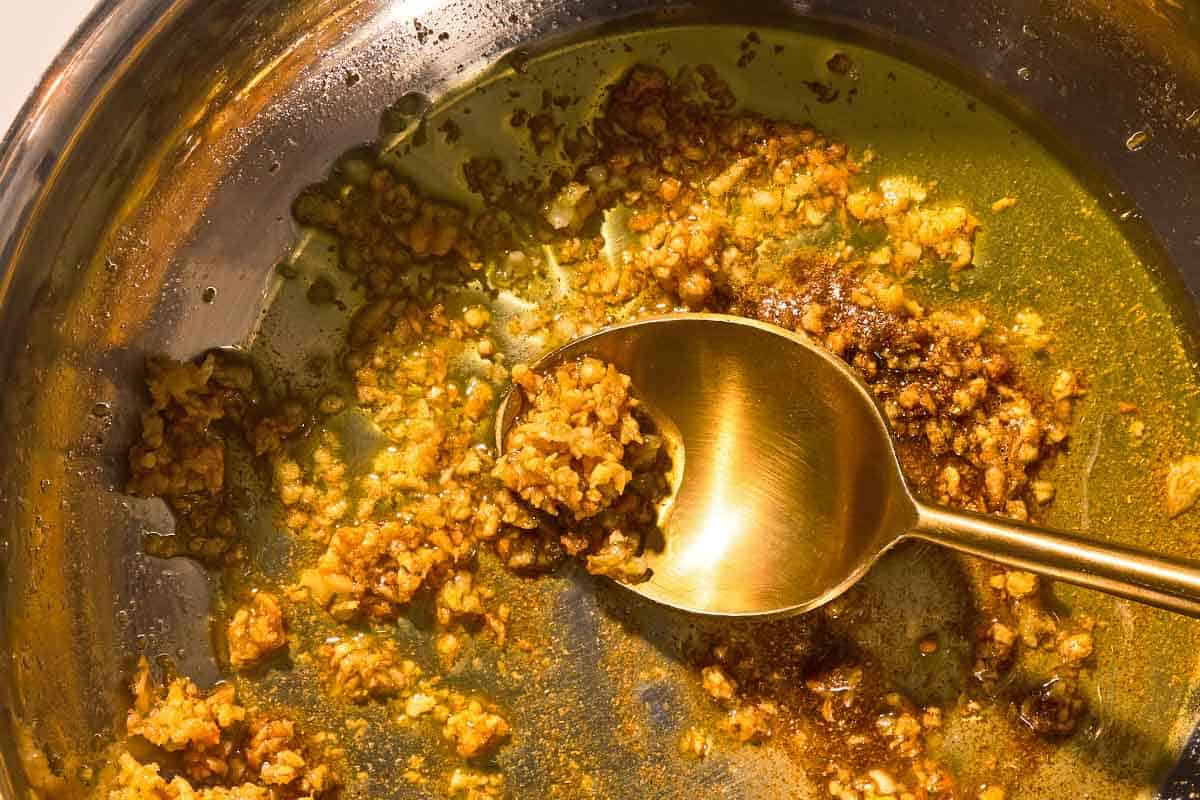
- Make the tasha. In a medium frying pan, combine 1 tablespoon extra virgin olive oil, ghee, butter, or a combination, and 5 large minced garlic cloves, and place on medium-high heat. Let the garlic sizzle, stirring occasionally, until fragrant, about 30 seconds. Keep stirring until the garlic turns golden, but before it browns. Remove from heat and add 1 teaspoon ground coriander to the pan and mix in until everything is well combined. Don’t look away from the pan at any point in this step as the garlic burns quickly.
- Add the tasha. Pour all of the tasha into the pot of molokhia. If any of the garlic mixture remains stuck in the pan, ladle a spoon of molokhia into it, give it a swirl, and then pour it back into the pot.
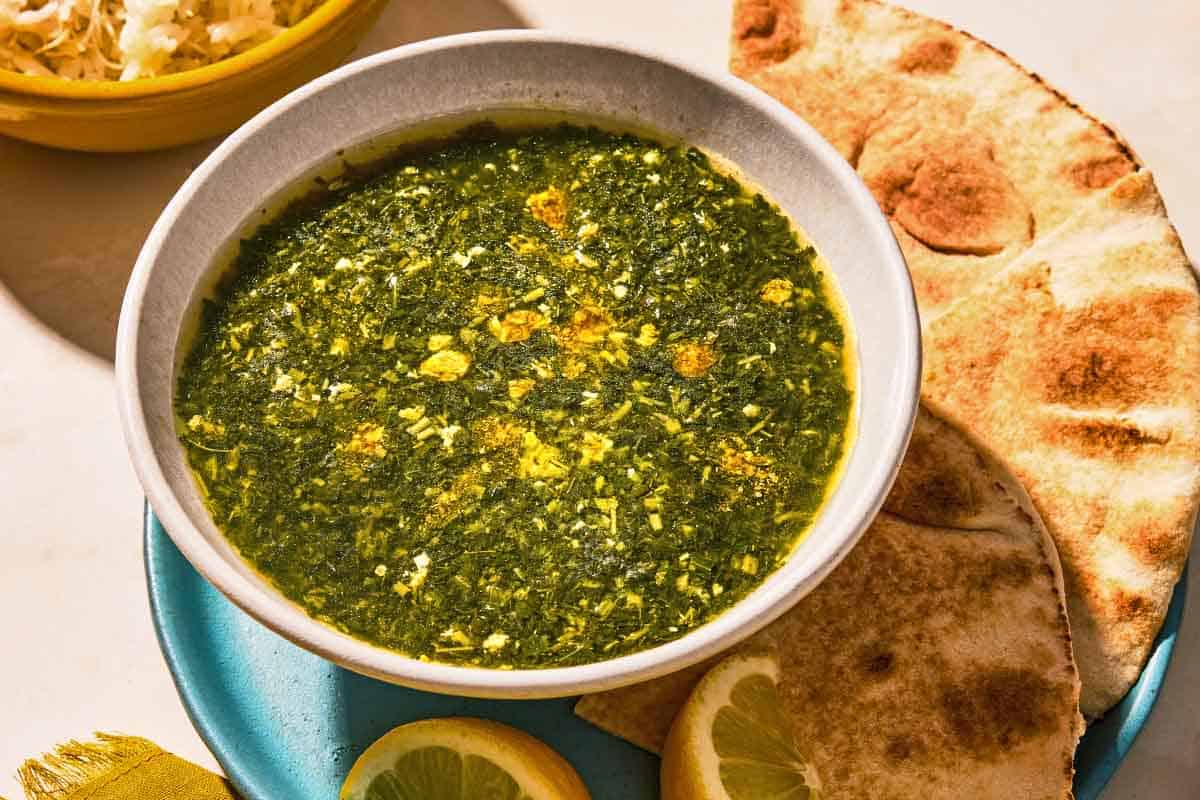
- Season, warm, and serve. Give everything a mix, and add in 1 teaspoon salt and a few grinds of black pepper. Taste and season again, if necessary. Turn the heat up to medium heat until the molokhia soup is hot, but not boiling, about 3 minutes. Serve immediately with vermicelli rice or flatbreads and lemon wedges, if you like.
Make it Your Own
This is a family recipe I grew up with, and although each family has a different technique for making it, the basics of molokhia usually stay the same. However, there are some variations you can try.
- Use a different base for the broth: Perhaps one of the most traditional ways of making molokhia involves making a rabbit stock, rather than chicken, so if you’re feeling up to the task, that will deliver a truly authentic version of this dish. You can also use beef stock, or start with vegetable broth for a vegan or vegetarian dish.
- Adjust the seasoning: It’s common for molokhia to have a dominant coriander and garlic flavor, but if you want to give it a slightly sweet element, you can include a teaspoon of sugar, or even a teaspoon of tomato paste.
- Adjust the thickness: I like my molokhia to be quite soupy, but others might prefer it thick. This requires either less stock or more molokhia. If the soup is too thin for you, add in another packet of greens, or make it a thinner soup consistency by adding more broth.
Perfect Pairings
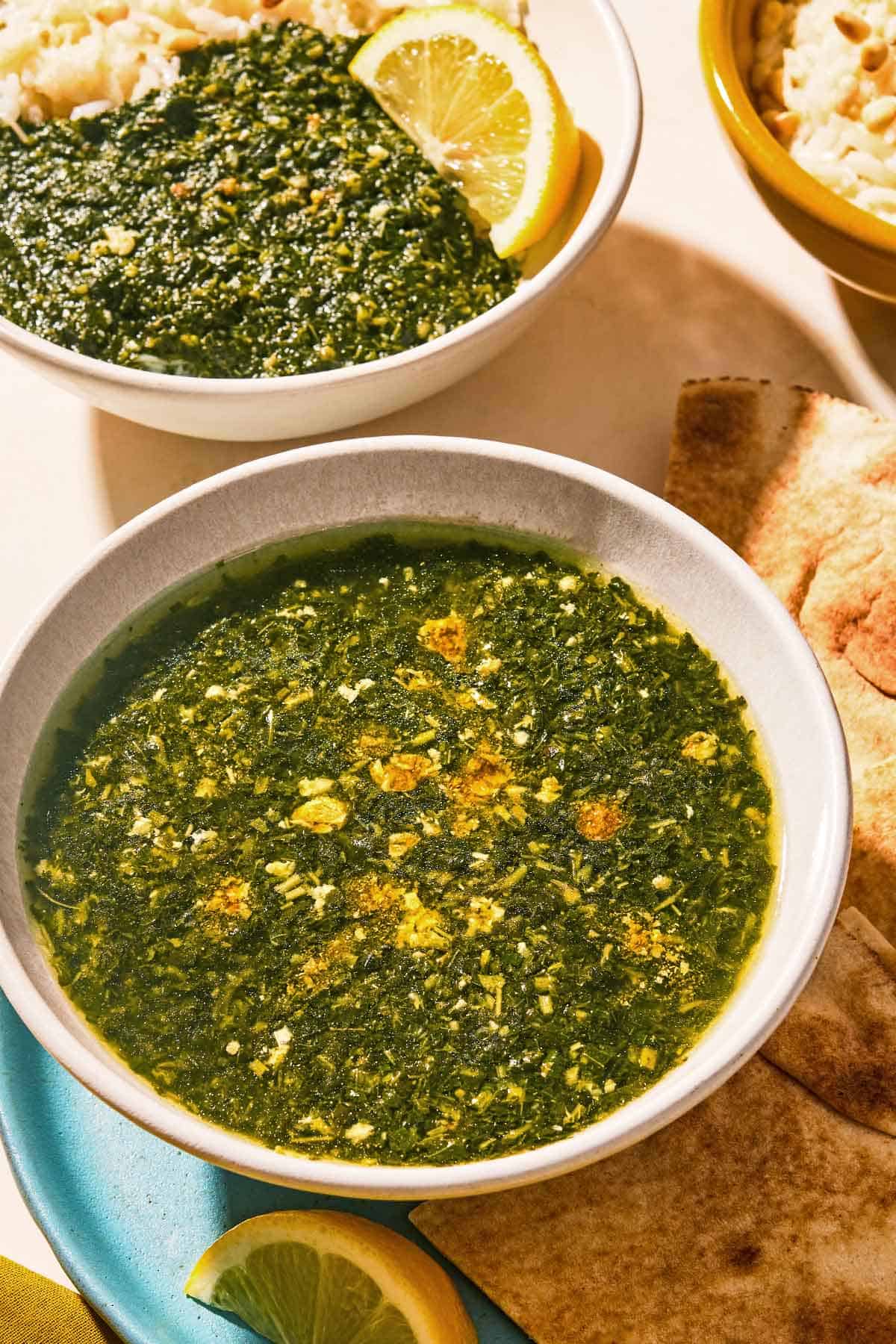
Egyptian molokhia is traditionally served with rice and pan-fried or roasted chicken pieces, or other lightly seasoned grilled meats like beef, rabbit, or duck. Alternatively, some people eat it with traditional flatbread.
- If you like the idea of dipping some bread into it, these easy homemade pita breads would be perfect.
- For the full Egyptian experience, make some of this traditional vermicelli rice to add to your soup bowl, or to pour the molokhia over.
- This easy oven roasted chicken would be a great choice for the protein to eat with the molokhia. Break some pieces of meat into the soup for an authentic experience.
- Some people add a white cheese like feta along with the rice and chicken into the soup.

Ingredients
- 6 cups chicken stock
- 1 14-ounce package frozen minced molokhia (400g)
- 1 tablespoon extra virgin olive oil, ghee, butter, or a combination
- 5 large garlic cloves, minced
- 1 teaspoon ground coriander
- 1 teaspoon fine salt plus more if needed
- Freshly ground black pepper, to taste
- Vermecelli Rice, to serve (optional)
- Lemon wedges, to serve (optional)
Instructions
- Warm the stock. Bring the chicken stock to a low boil in a large pot on high heat.
- Add the molokhia. Turn the heat off completely and then add in the whole package of molokhia leaves. Give everything an occasional stir as the greens slowly melt into the broth, about 15 minutes.
- Make the tasha. In a medium frying pan, combine the olive oil, ghee, or butter and minced garlic and place on medium-high heat. Let the garlic sizzle, stirring occasionally, until fragrant, about 30 seconds. Keep stirring until the garlic turns golden, but before it browns. Remove from heat and add the ground coriander to the pan and mix in until everything is well combined. Don’t look away from the pan at any point in this step as the garlic burns quickly.
- Add the tasha. Pour all of the tasha into the pot of molokhia. If any of the garlic mixture remains stuck in the pan, ladle a spoon of molokhia into it, give it a swirl and then pour it back into the pot.
- Season, warm, and serve. Give everything a mix, and add in salt and pepper. Taste and season again, if necessary. Turn the heat up to medium heat until the molokhia soup is hot, but not boiling, about 3 minutes. Serve immediately with vermicelli rice and lemon wedges, if you like.
Notes
- Shop this recipe: Visit our shop to browse quality Mediterranean ingredients, including the olive oil and spices used in this recipe.
- To Use Fresh Molokhia: If starting with fresh molokhia leaves, you’ll need about 3 to 4 cups of minced leaves for this recipe. Wash and dry them well and mince them finely using a mezzaluna or food processor.
- Storage: Leftover molokhia can be refrigerated, in an airtight container, for 3 or 4 days. Reheat on a stovetop and mix well as the contents will have separated
Nutrition
Try our Ground Coriander!
Warm, earthy, and citrusy spice with hints of sweetness and sage, perfect for adding depth and aromatic flavor to both sweet and savory dishes.