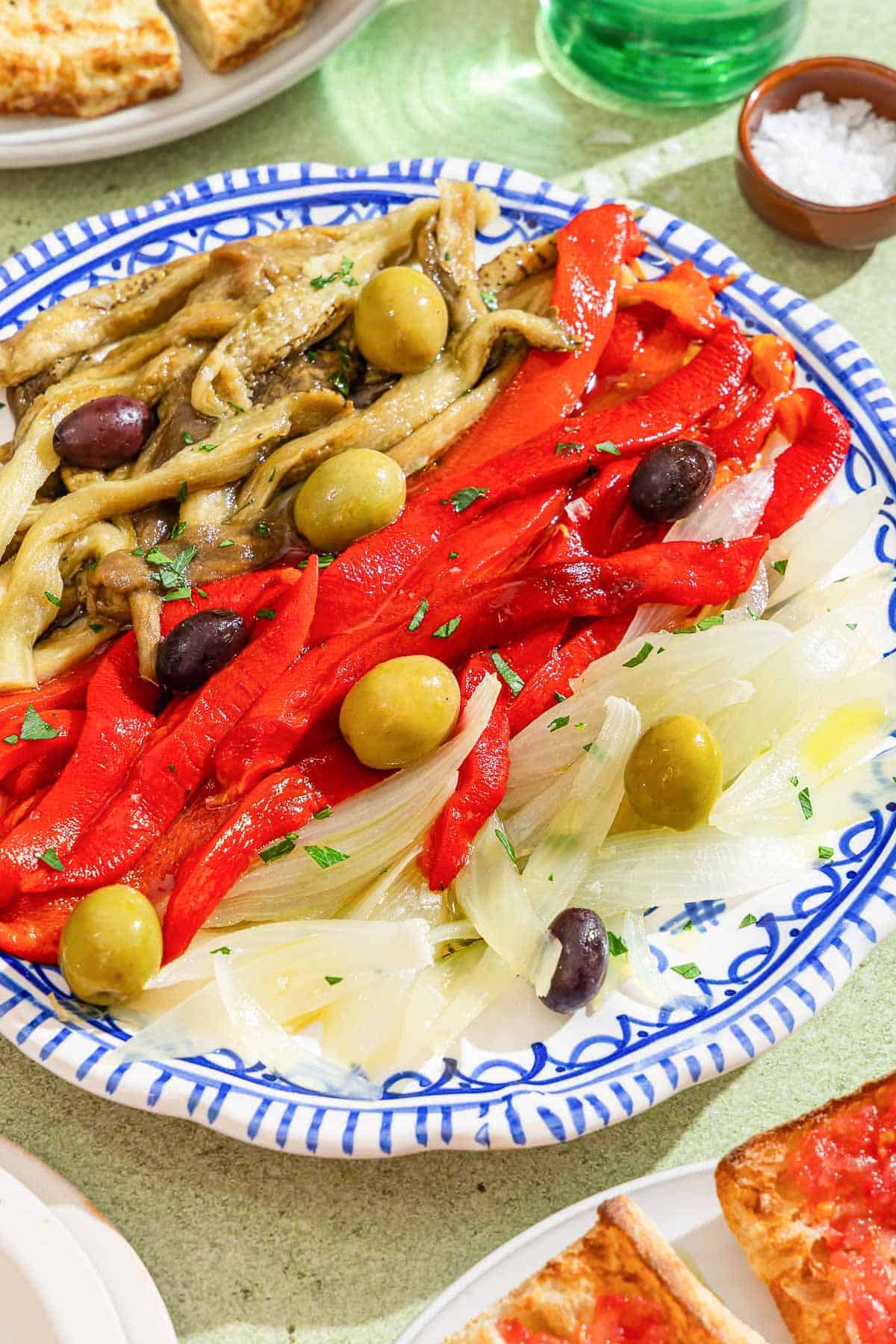
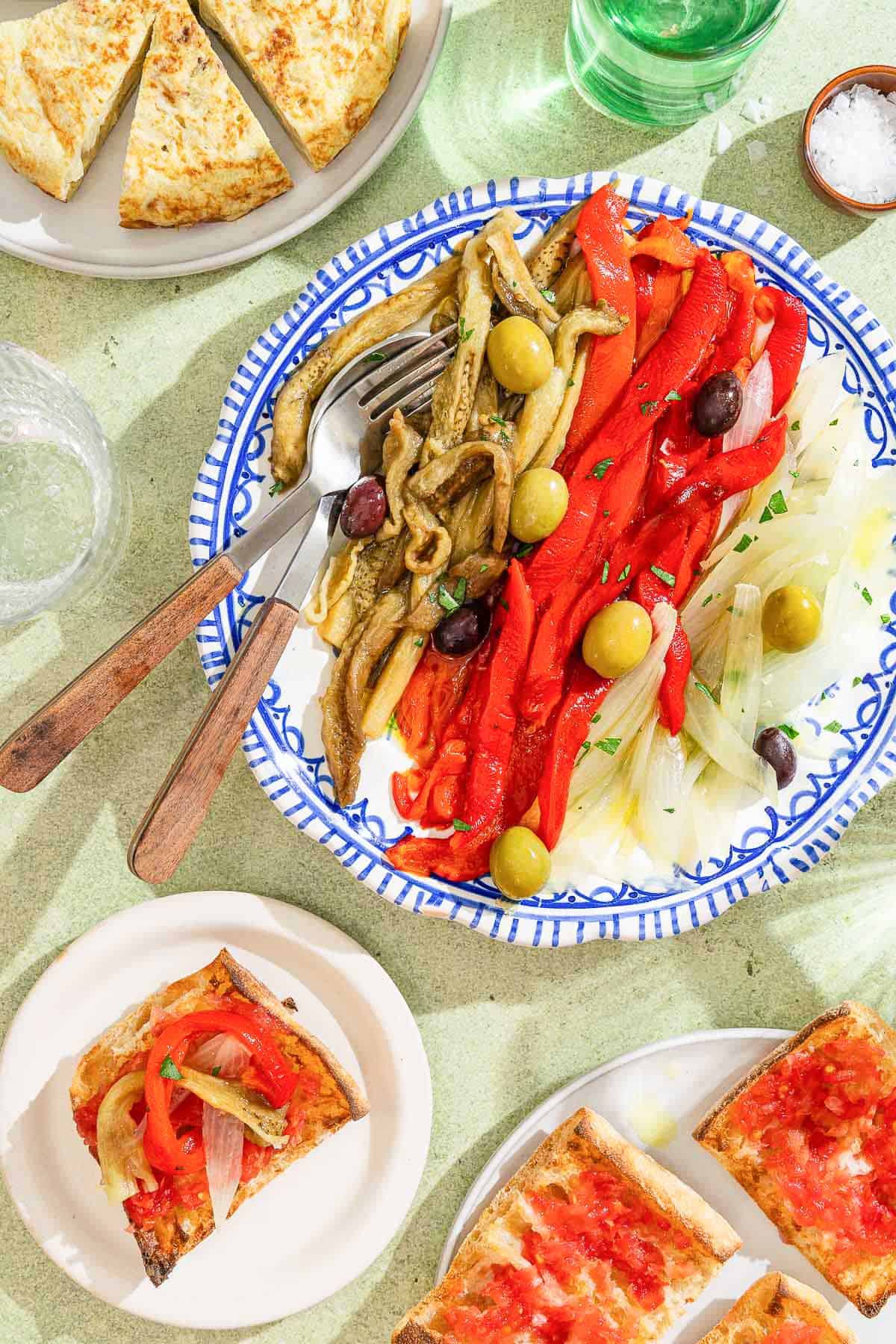
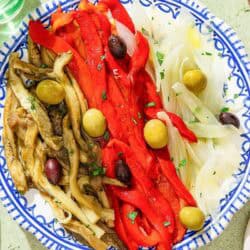
Escalivada is a smoky, sweet, and savory Catalonian dish of red peppers, eggplants, and onions, roasted whole, then sliced and dressed with olive oil. Serve with tapas, meat or seafood!
The Vegetables on Every Menu in Barcelona
After living in Spain for many years, one thing I’ve learned is: Catalans live to cook and eat, and they measure time by which vegetables are at their peak, from white asparagus in the spring to wild mushrooms in the fall. Small talk revolves as much around the weather as it does around what produce was recently spotted at the market.
Escalivada is a testament to the importance of vegetables in the local cuisine. In Barcelona and the rest of Catalonia, it would be a challenge to find a restaurant that doesn’t have a plate of smoky roasted red peppers, eggplant, and onions on the menu. It’s a staple at tapas bars or as a side for larger plates at restaurants, and it’s sold ready-made in the produce section of every grocery store.
The name comes from escalivar, which means “to cook in ashes.” Escalivada was historically cooked in the embers of a wood fire, though today, most people roast the vegetables in the oven to become meltingly tender and flavorful. It’s easy to make at home and a wonderful way to use the season’s best vegetables.
Escalivada Ingredients
- Eggplants: I prefer Italian eggplant, which is smaller, sweeter, and more tender than globe eggplant. Globe eggplant will work in a pinch, but it will have a slightly more bitter flavor. Use the smallest globe eggplants you can find.
- Red bell peppers are already sweet and fruity, but roasting them concentrates their flavor even more.
- Onions: Roasted onions lose all of their pungency and become deeply sweet and umami.
- Extra virgin olive oil: Use flavorful, high-quality extra virgin olive oil. Hojiblanca, with its peppery flavor, will bring out the best in the vegetables.
- Parsley adds a touch of herbaceous, green flavor to brighten the roasted flavor of the vegetables.
How to Make Escalivada
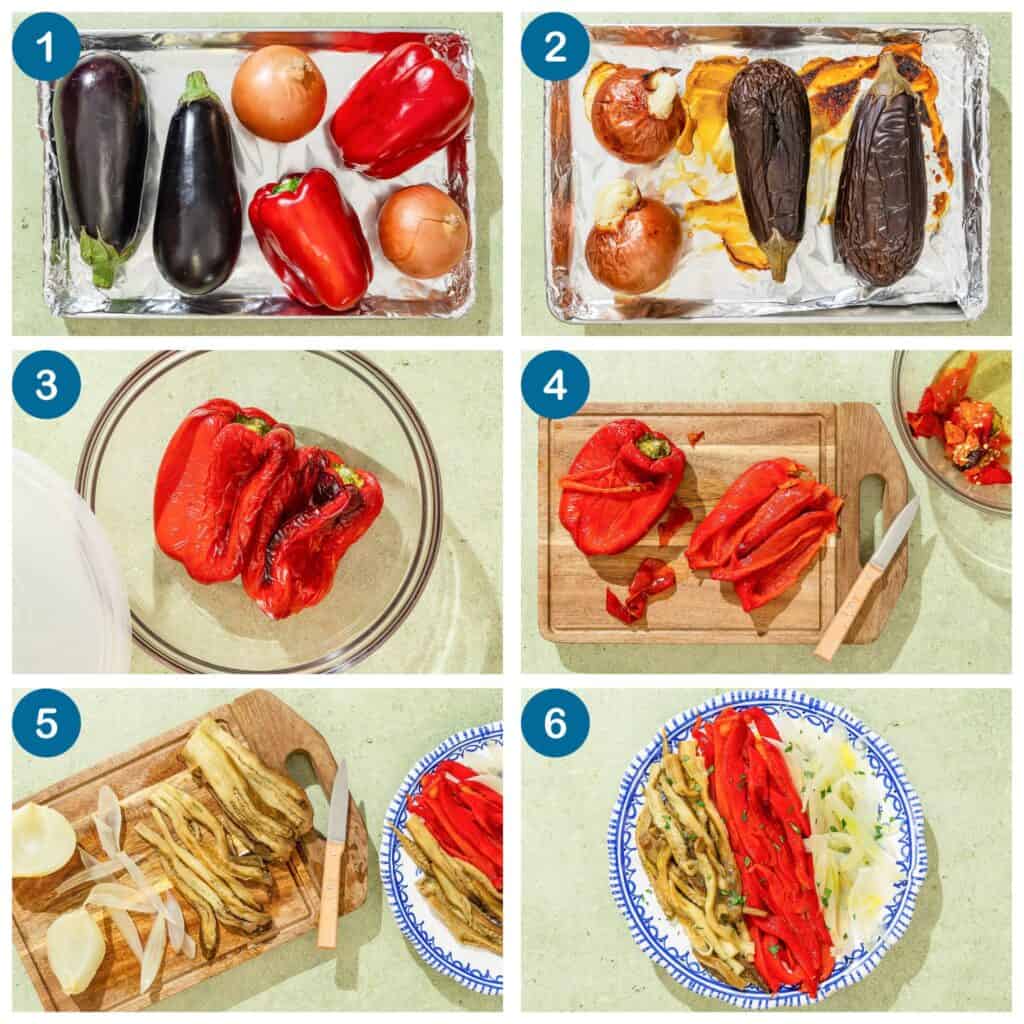
While there’s nothing difficult about preparing escalivada at home, you will want to budget some time between the roasting and cooling. I like to cook escalivada on the weekend and enjoy it throughout the week. Here’s how to make it:
- Get ready. Preheat the oven to 400°F. Line a rimmed baking sheet with foil. Pierce 2 medium eggplants all over with the tip of a paring knife or with a fork.
- Roast the vegetables. Arrange the eggplants, 2 whole red bell peppers, and 2 whole medium onions, still in their papery skins, on the lined baking sheet. Roast the vegetables. After 25 minutes, flip the red bell peppers. After 30 minutes, flip the eggplants. After 45 minutes, remove the peppers (leaving the eggplant and onions in the oven) and set them in a bowl. Cover with a plate until the peppers are cool enough to handle. Steaming in the bowl makes it easier to peel the skin later. Leave the eggplants and onions in the oven to roast for another 15 to 25 minutes, or until they are easily pierced with a knife, blistered, and quite soft, 1 hour to 1 hour and 15 minutes total. Remove the pan from the oven and allow the vegetables to rest until cool.
- Peel and slice the vegetables. Once the vegetables are cool enough to handle, use your fingers to remove the pepper skins, seeds, and stems, and discard. Remove the stems and peel from the eggplants, and peel the papery skin from the onions. Slice the vegetables into strips about 1/2-inch wide.
- Serve or store. To serve right away, arrange the sliced vegetables in sections on a serving plate. Drizzle with 2 tablespoons extra virgin olive oil, season with salt, and garnish with chopped fresh parsley, if you like. Serve at room temperature or cold. Alternatively, store the vegetables in an airtight container overnight for the flavors to deepen before serving.
Escalivada Variations
Depending on the region and the cook, escalivada can include more vegetables. Here are a few of my favorite variations:
- Add tomato: In the neighboring region of Aragón, they make firigolla, which is essentially escalivada with the addition of roasted tomatoes. Include 4 medium tomatoes along with the other vegetables, removing them from the oven when softened and beginning to caramelize, 20 to 25 minutes. When cool enough to handle, peel and slice into wedges.
- Add garlic: In southern Spain, they make ensalada asada, which is similar to escalivada, but with roasted tomatoes and garlic. Add as much unpeeled garlic as you like, a few cloves or even a whole head, along with the other vegetables. Peel the garlic when cool enough to handle.
- Add herbs: I always like a small scattering of fresh parsley, but other herbs also bring an aromatic freshness to escalivada. Try oregano, basil, thyme, marjoram, or tarragon.
Tips and Tricks
- Total roasting time will depend on the size of the vegetables. In my experience, the bell peppers need less time than the eggplants and onions.
- I prefer to remove the vegetables as they become tender, avoiding overly soft peppers. I included a timeline for flipping and removing the vegetables individually.
- Some cooks prefer the ease of roasting everything for the same amount of time, so if that’s also your preference, feel free to roast all the vegetables for 1 hour, or until the skins are blistered and the vegetables are soft.
- Escalivada is already flavorful the day it’s prepared, but when aged overnight, the flavors deepen. I like to prepare escalivada on Sunday, store it in the fridge overnight, then use it throughout the week.
How to Serve Escalivada
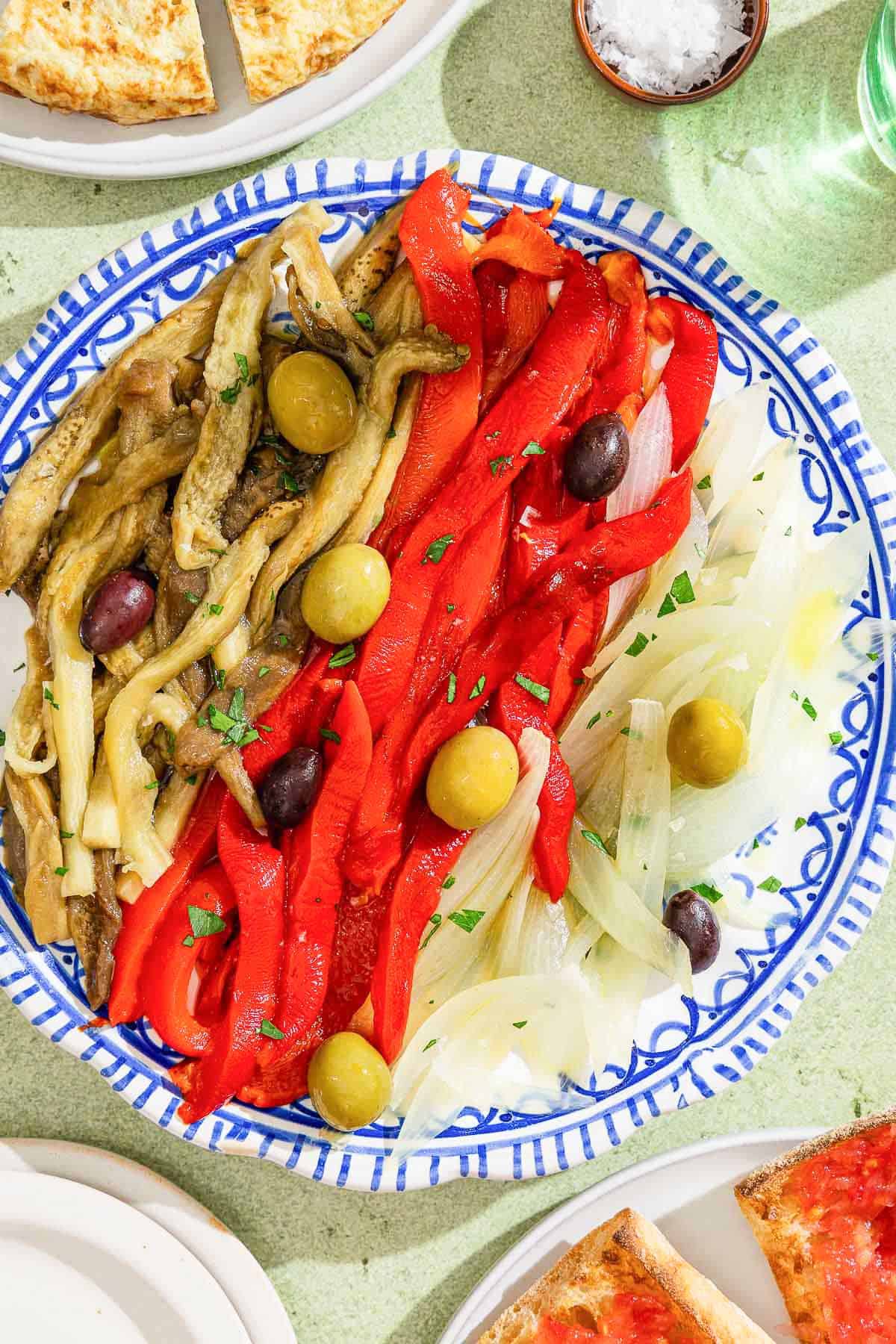
- Make a spread of tapas. Escalivada is typically served with other tapas. When eaten as a tapa, I like to serve it on top of pan con tomate or with a Spanish tortilla. I often have this combination for lunch or an easy dinner during the week.
- Serve it as a side for roasted or grilled meat, like roast chicken, grilled steak, or leg of lamb.
- Convert escalivada into a salad. For something simple and traditional, I’ll add olives, anchovies, or both, and maybe drizzle a bit of sherry or wine vinegar over the top. But it’s also nice topped with a handful of peppery arugula and some tangy goat cheese.
- Sub it into another recipe. I even use escalivada in this chicken pasta salad. I replace the tomatoes and roasted red peppers in the recipe with 1 to 2 cups of roughly chopped escalivada. I also like to substitute sherry vinegar for the red wine vinegar.
More Catalan and Spanish Recipes
Appetizer and Mezze
Albóndigas (Spanish Meatballs) in a Catalan-Style Saffron Sauce
Spanish
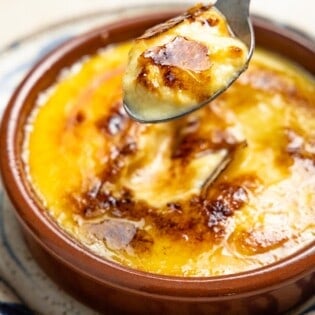
Crema Catalana

Recipe Roundups
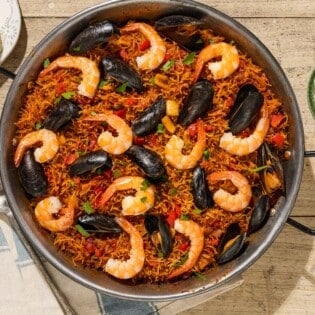
12 Irresistible Spanish Tapas Recipes Everyone Will Love

Ingredients
- 2 medium eggplants
- 2 red bell peppers
- 2 medium onions, unpeeled
- 2 tablespoons extra virgin olive oil
- kosher salt
- chopped parsley, for garnish (optional)
Instructions
- Get ready. Preheat the oven to 400°F. Line a rimmed baking sheet with foil. Pierce the eggplants all over with the tip of a paring knife or with a fork.
- Roast the vegetables. Arrange the vegetables on the lined baking sheet. Roast the vegetables After 25 minutes, flip the red bell peppers. After 30 minutes, flip the eggplants. After 45 minutes, remove the peppers (leaving the eggplant and onions in the oven) and set them in a bowl. Cover the bowl with a lid or a plate until the peppers are cool enough to handle; steaming makes removing the skin easier.
- Finish roasting the remaining vegetables. Leave the eggplants and onions in the oven to roast for another 15 to 25 minutes, or until they are easily pierced with a knife, blistered, and quite soft, 1 hour to 1 hour and 15 minutes total. Remove the pan from the oven and allow the vegetables to rest until cool.
- Peel and slice the vegetables. Once the vegetables are cool enough to handle, remove the pepper skins, seeds, and stems, and discard. Remove the stems and peel from the eggplants, and peel the papery skin from the onions. Slice the vegetables into strips about 1/2-inch wide.
- Serve or store.To serve right away, arrange the sliced vegetables in sections on a serving plate. Drizzle with olive oil, season with salt, and garnish with parsley (if using). Serve at room temperature or cold. Alternatively, store the vegetables in an airtight container overnight for the flavors to deepen before serving.
Notes
Nutrition
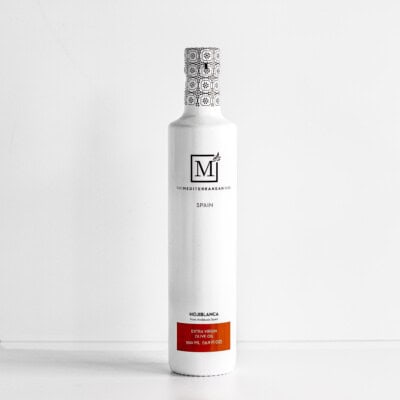
Try Our Peppery
Spanish Olive Oil
Hojiblanca olives—bold, grassy, and slightly peppery—yield oil perfect for drizzling over salads, grilled fish, and vegetables.