


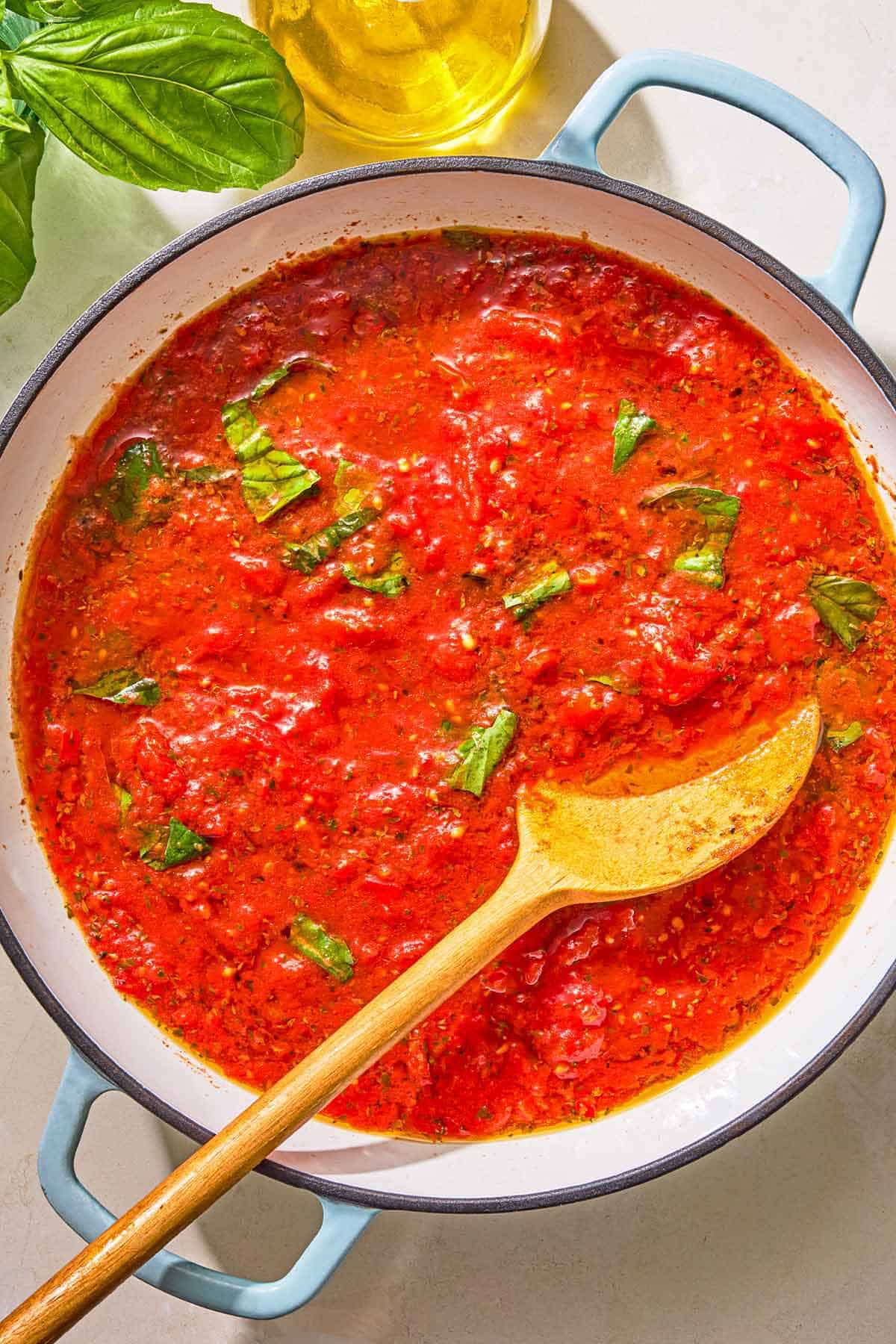
Marinara is a classic tomato sauce with all the best flavors of an Italian-American kitchen: fresh garlic, tomatoes, herbs, and good olive oil. It’s so easy to make from scratch, you’ll never need to use store-bought again.
Why You’ll Love This Marinara Sauce Recipe
- It’s fast and foolproof: This homemade marinara comes together in 30 minutes with just a handful of ingredients.
- Fresh, bright flavor every time: Using quality tomatoes and good olive oil gives you a velvety, restaurant-worthy sauce.
- It’s endlessly versatile: Toss it with pasta, simmer meatballs, use it on chicken Parmesan, or as your go-to pizza sauce.
Homemade marinara sauce is a staple in Italian and Italian-American kitchens, and once you’ve made it, you’ll see why. It’s made with simple ingredients, easy to put together, and ready in just 30 minutes. The result is fresh-tasting, velvety in texture, and perfect for saucing spaghetti, simmering meatballs, or topping pizza.
You can make marinara sauce with fresh or canned tomatoes. When tomatoes aren’t in season, I recommend canned, but keep reading for advice on using fresh ones! I always have several cans stacked in my pantry, so I know that a pot of marinara sauce is only a few steps away, no matter the season.
How to Make Marinara Sauce
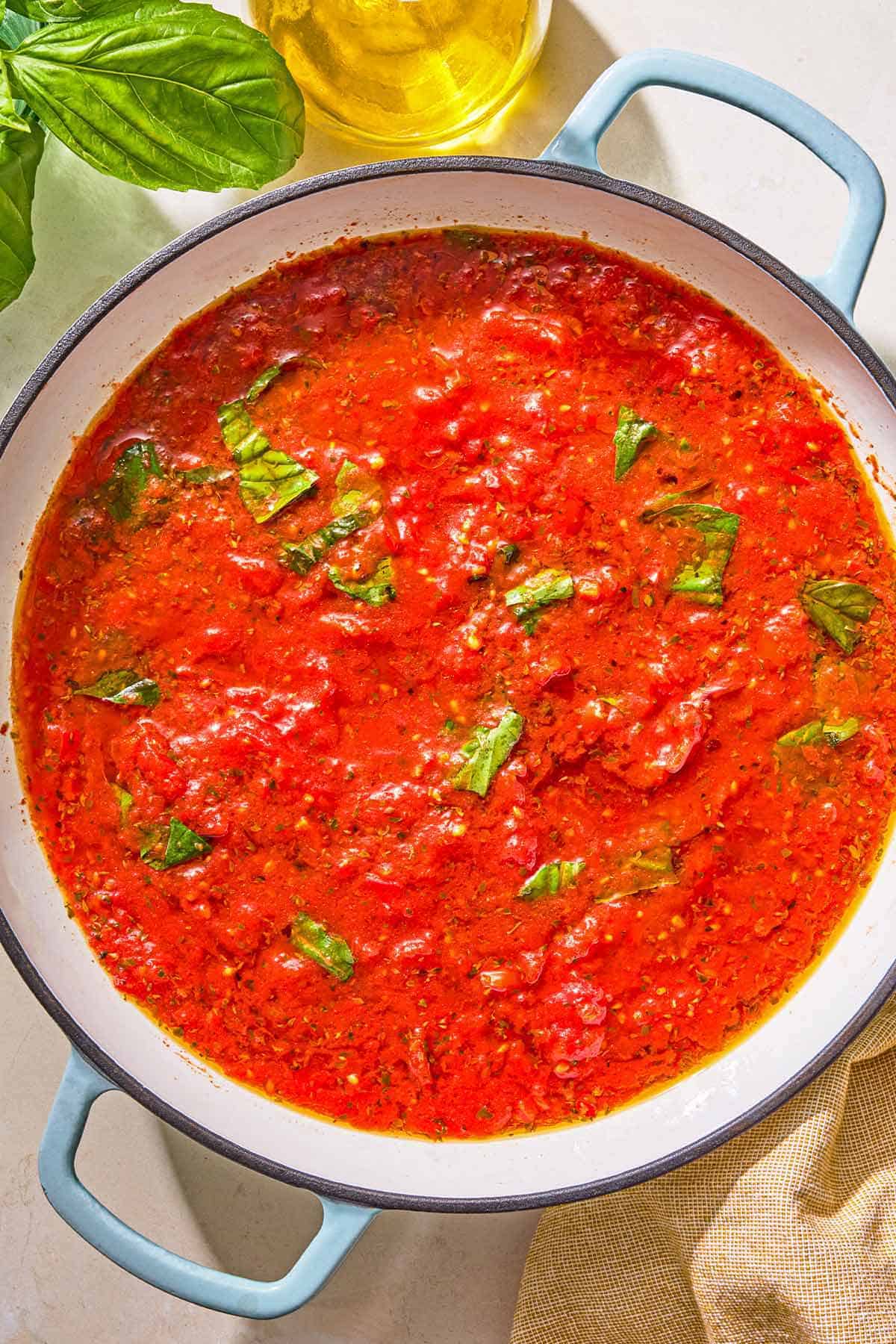
You can make homemade marinara sauce in four quick steps! It’s so easy that once you try it, you’ll never go back to supermarket sauce from a jar. The key is not to overcook (or undercook) the sauce. About 30 minutes of simmering is all it takes to develop a sauce with a rich flavor that still tastes fresh.
- Crush the tomatoes. Empty 1 (28-ounce) can whole peeled tomatoes and 1 (14-ounce) can whole peeled tomatoes into a large bowl. If you prefer sauce with some texture to it, simply crush the tomatoes in a bowl with a potato masher or your hands. For a smooth sauce, pass the tomatoes through a food mill and discard the solids. Pour a little water into the empty tomato cans and swirl it around to gather up any bits of tomato pulp or juice. Pour this into the bowl with the tomatoes. Set aside. You may also substitute diced or crushed tomatoes.

- Infuse the oil with the garlic and chili pepper. Set a wide saucepan over medium-low heat. Add 1/4 cup extra virgin olive oil and 2 lightly crushed garlic cloves. Cook for 2 minutes, until the garlic begins to sizzle. Press down on the cloves to release their flavor into the oil, but take care not to let them brown, or they will make the sauce bitter. Once the oil is infused, you can either remove the garlic or leave it in (I leave it in). Add either 1 small fresh chili pepper, such as Fresno, minced, or a generous pinch of crushed red pepper flakes. If using a fresh chili pepper, mince it finely and stir it into the oil, and cook for a minute or two to soften it.
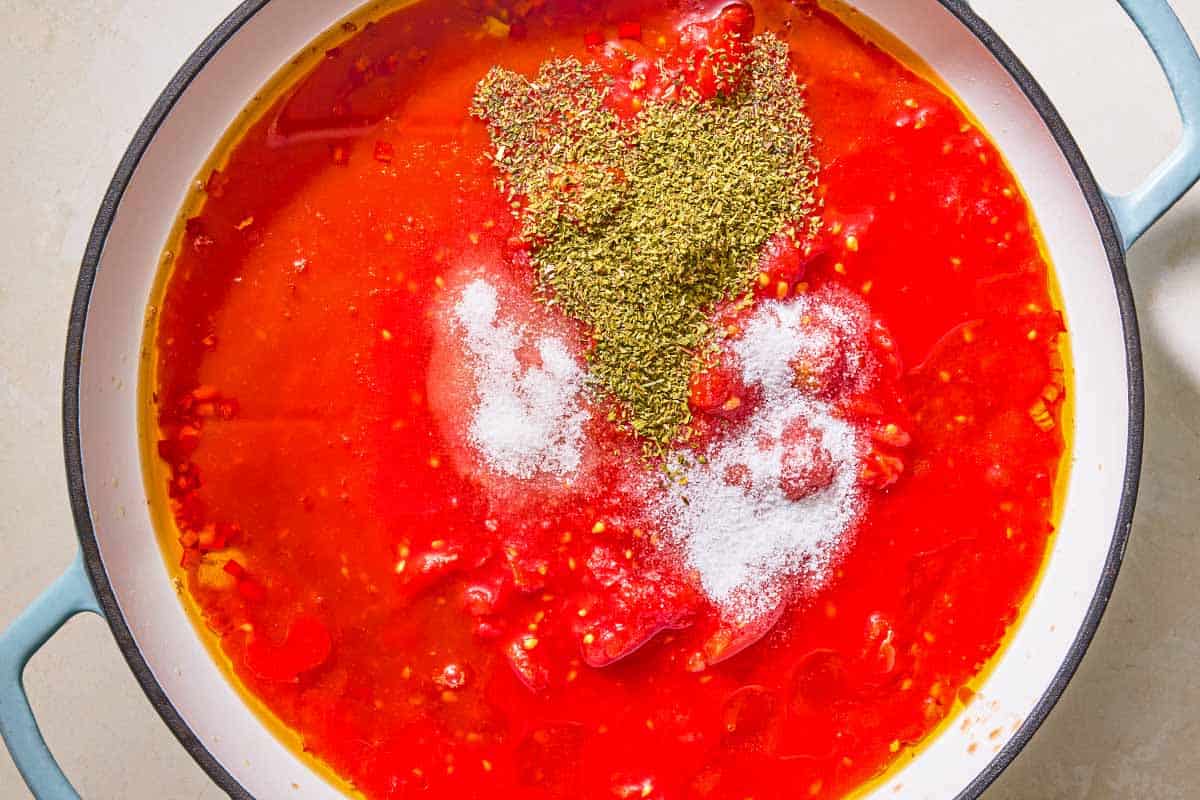
- Stir in the tomatoes and additional ingredients. Pour the tomatoes into the saucepan. Watch out for spatters as they hit the hot oil. Stir in 1 teaspoon oregano, along with about 1 teaspoon salt, and 1/2 teaspoon sugar.
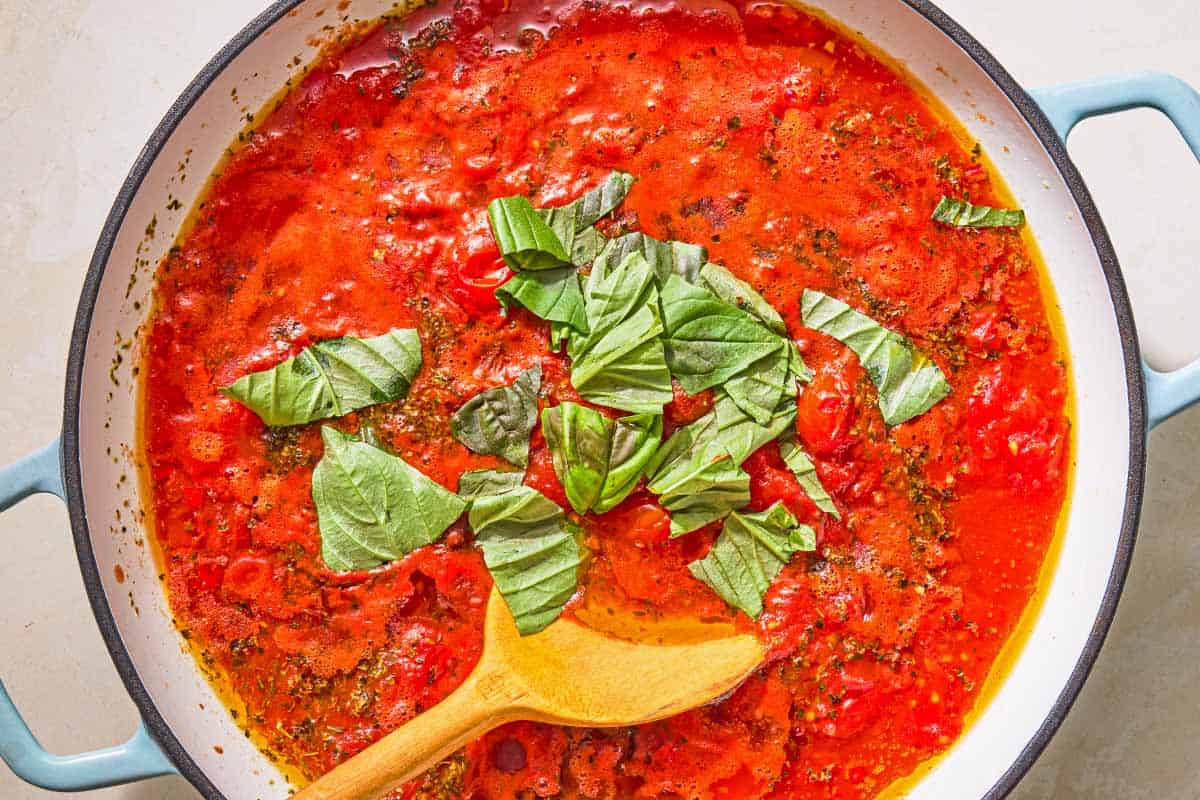
- Simmer and finish. Bring the sauce to a boil over medium-high heat, reduce the heat to medium-low, and let it simmer gently, uncovered, for 25 minutes, until thickened and fragrant. Taste and add a pinch more oregano or salt if needed, and simmer 5 minutes more. Remove the saucepan from the heat and stir in a small handful (about 5) of torn fresh basil leaves.


What is Marinara Sauce?
Did you know there’s a bit of confusion around the name “marinara sauce”? It may seem odd, but there is no such thing as “marinara sauce” in Italy! Classic tomato sauce is simply called “sugo di pomodoro.” The word “marinara” translates to “seafaring.”
In southern Italy, fish or seafood cooked with tomatoes is often referred to as being prepared “alla marinara,” or in the style of seafarers. At some point, especially among immigrant communities from southern Italy, the meaning of the word “marinara” came to refer to the sauce itself, with or without seafood.
Marinara sauce can be chunky or smooth—it’s really a matter of personal preference. For me, it depends on what I’m making or even my mood. If I’m craving a dish of spaghetti, I might go with a chunky version to add some texture. When simmering meatballs, I keep it smooth so that the meatballs can better absorb the sauce. Follow your instincts!
No matter its origins, a basic tomato sauce like marinara is an essential part of Italian and Italian-American cooks’ repertoires, including mine. It’s easy, satisfying, and once you’ve made it, you’ll swear off supermarket sauce forever.

Choosing Canned Tomatoes for Marinara Sauce
Unless great summer tomatoes are available, I prefer to make marinara sauce with canned tomatoes. It’s important to use a high-quality brand that tastes fresh and juicy. Good-quality canned tomatoes will yield a sauce with a bright, fresh flavor. There are so many brands and ways of packaging canned tomatoes that choosing can be daunting. Here are a few tips to keep in mind.
- Buy them whole. My preference is to buy whole tomatoes and crush or mill them by hand. Look for peeled tomatoes that are packed in juice or light purée, not a heavy paste. They should have a fresh, unadulterated flavor. Why whole and not diced or crushed? To me, whole tomatoes taste fresher, and they are juicier, which means a fresher-tasting sauce. However, if you prefer, you can substitute canned diced or crushed. Taste a few brands and find one you like.
- Look for a minimal ingredient list. I stay away from canned tomatoes packed in heavy purée or that have added ingredients such as sugar, diced peppers, or oregano. I like to add those flavors on my own.
- Choose San Marzano…or not. San Marzano tomatoes, a D.O.P product in the E.U, are prized for their intense, sweet flavor and excellent sauce-making qualities. But many producers elsewhere grow the same variety of tomato, and some, though not all, are just as good, or nearly as good, as those with the protected designation label. They’re also less expensive, so they make a great alternative. Whatever the label, I recommend tasting your canned tomatoes to make sure they have a fresh, unadulterated tomato flavor.
How to Make Marinara Sauce Using Fresh Tomatoes
If using fresh tomatoes, choose good, meaty tomatoes grown for sauce, such as plum or Roma tomatoes. Any other tomato is too watery for sauce. In summer, I sometimes make marinara sauce with fresh tomatoes from the farmers market. It requires some extra steps, but the flavor can’t be beat. Here’s how to do it:
- You’ll need 3 pounds of meaty sauce tomatoes, such as Roma or plum.
- With a sharp paring knife, cut a small, shallow “x” on the bottom of each tomato. This will make them easier to peel.
- Blanch the tomatoes in a pot of boiling water to loosen the skins. Then peel them and cut them into pieces.
- Continue with the recipe as directed. When the sauce is ready, pass it through a food mill to make it smooth and to get rid of any seeds or stray bits of peel. Or, if you prefer a chunkier sauce, leave as is.
Make it Your Own
One of marinara sauce’s attributes is how versatile and accommodating it is. Try one of these variations or come up with your own!
- Add anchovies: For a briny profile, stir in 2 to 4 anchovy fillets towards the end of cooking and let them melt into the sauce.
- Toss in a parm rind: For extra umami, add a parmesan rind to the sauce when you add the tomatoes. It will soften and release its rich flavor into the sauce. You can toss the Parmigiano rind when the sauce is done. But it’s really delicious. I scoop it out and enjoy it myself—a sort of cook’s bonus.
- Mix up the herbs: Add a bay leaf or a teaspoon of chopped rosemary to the sauce as it simmers to give it a woodsy, autumnal flavor. In summer, stir in a handful of fresh mint at the end of cooking.
What to Serve with Marinara Sauce
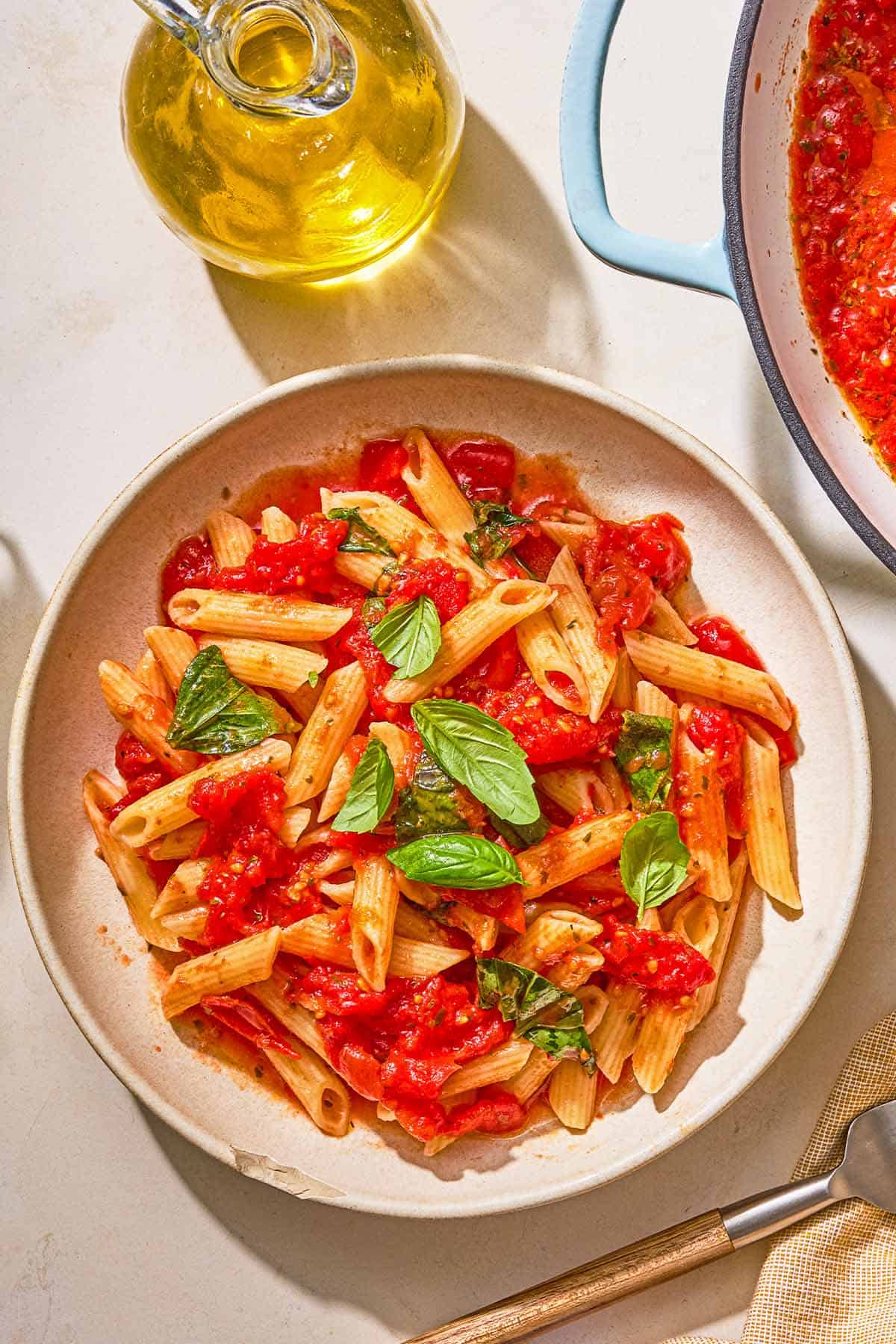
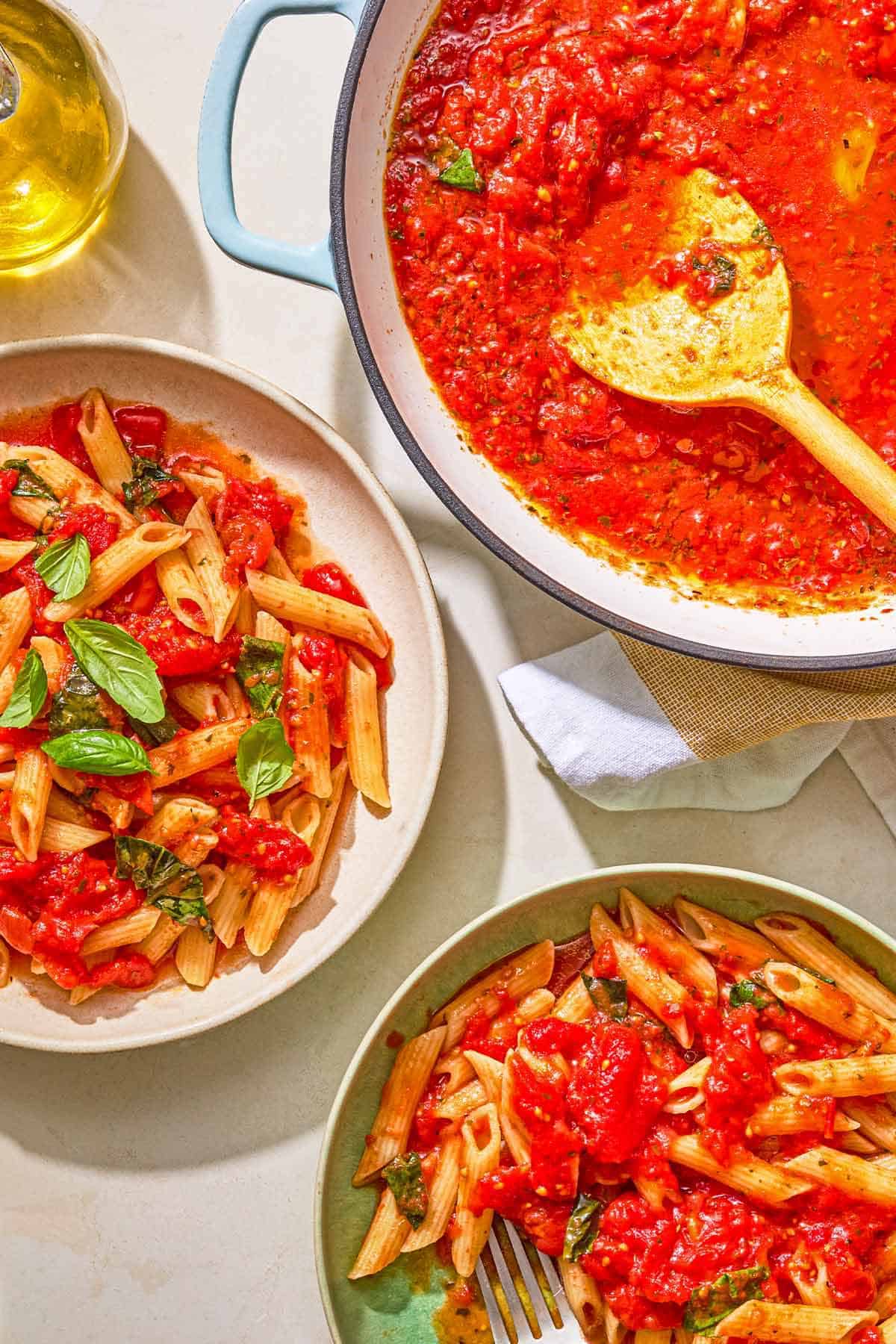
Yes, marinara is the dinner-saving sauce to have on hand when you need to whip up a quick batch of pasta al pomodoro. But it has lots of other uses!
- Stir a few spoonfuls into vegetable soups, stews, and braises to deepen their flavor. Use it to simmer meatballs or beef braciole.
- Layer it into eggplant parmesan, ladle it onto polenta, or stir it into risotto, along with a generous handful of Parmigiano cheese.
- It’s an essential accompaniment for arancini, fried risotto balls, and stars in a thick layer on sfincione, Sicilian-style pizza. For a delicious snack, spoon a little hot marinara sauce onto thick slices of Italian bread.
More Pasta Sauce Favorites
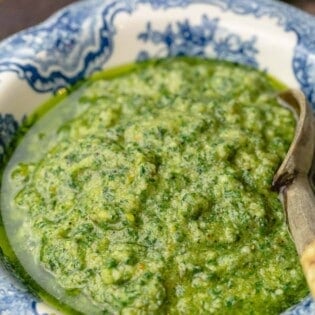
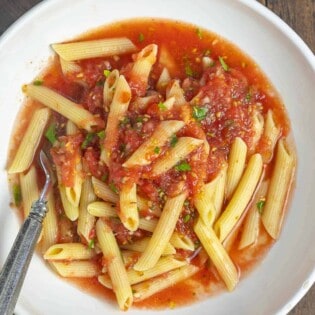
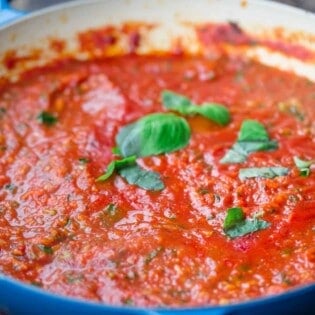
Browse all Mediterranean recipes.
Visit Our Shop.


Ingredients
- 1 (28-ounce) can whole peeled tomatoes (may substitute diced or crushed)
- 1 (14-ounce) can whole peeled tomatoes (may substitute diced or crushed)
- 4 tablespoons extra virgin olive oil
- 2 cloves garlic, lightly crushed
- 1 small fresh chili pepper such as fresno, minced; or a generous pinch of crushed red pepper flakes
- 1 teaspoon dried oregano, or more to taste
- 1 teaspoon fine salt, or to taste
- 1/2 teaspoon sugar
- 5 fresh basil leaves, torn or coarsely chopped
Instructions
- Prep the tomatoes. Crush the tomatoes in a bowl with a potato masher or your hands. Or, for a smooth sauce, pass the tomatoes through a food mill, discarding the solids. Pour a little water into the empty tomato cans and swirl it around to gather up any bits of tomato pulp or juice. Add this to the tomatoes and set aside.
- Sizzle the aromatics. Pour olive oil into a deep skillet or wide saucepan and add the garlic cloves. Cook on medium-low until the garlic is just beginning to sizzle, about 2 minutes. Press down on the cloves to release their flavor but don't let them brown or they will make the sauce bitter. Discard the garlic or leave it in—your choice. Stir the chili pepper into the infused oil. If using fresh minced chili pepper, let it cook for 1 to 2 minutes to soften slightly.
- Add the tomatoes. Pour the crushed or milled tomatoes into the saucepan. Watch out for spatters as they hit the hot oil. Stir in oregano, along with salt and sugar.
- Simmer and finish. Bring the sauce to a boil over medium-high heat. Lower the flame to medium-low and let the sauce simmer gently, uncovered, for 25 minutes, until it is thickened and oil has just begun to pool on the surface. Taste and add a pinch more oregano or salt if needed and simmer 5 minutes more. Remove the saucepan from the heat and stir the basil.
Notes
- Shop this recipe: Visit our shop to browse quality Mediterranean ingredients, including the olive oil and oregano used in this recipe.
- Storage: To store leftover marinara sauce, let it cool completely, then spoon it into an airtight container or a glass jar with a tight-fitting lid. Pop it in the refrigerator, where it will stay fresh for about 4 to 5 days. If you know you won’t use it that quickly, you can freeze it instead—just leave an inch at the top of the container for expansion and it’ll be good for at least a few months.
- To use fresh tomatoes:
- Start with 3 pounds blanched, peeled, and chopped fresh Roma or plum tomatoes; about 4 3/4 to 5 cups total.
- With a sharp paring knife, cut a small “x” on the bottom of each tomato. This will make them easier to peel.
- Blanch the tomatoes in a pot of boiling water to loosen the skins. Then peel them and cut them into pieces.
- Continue with the recipe as directed.
- When the sauce is ready, pass it through a food mill to make it smooth and to get rid of any seeds or stray bits of peel. Or, if you prefer a chunkier sauce, leave as is.
- The nutrition information below does not include pasta.
Nutrition
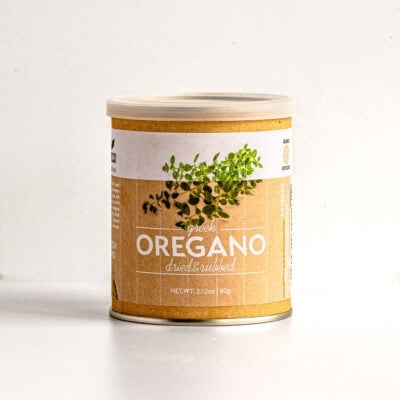
Try Our Greek Oregano!
This dried herb straight from Greece is lemony, fragrant, and perfect for everyday use.

I think there is a duplicated (and conflicting) line in the Ingredients for the tomatoes…
1 (28-ounce) can whole peeled tomatoes (may substitute diced or crushed)
1 (14-ounce) can whole peeled tomatoes (may substitute diced or crushed)
And thanks for the recipe!
Hi, Mark! Thanks for checking in we are a small team so having a community on the lookout is helpful, but the recipe is correct. We want you to use 42 ounces of tomatoes. We list ingredients by how most people would buy them at the store and tomatoes are typically sold in 28 ounce cans and 14 ounce cans. Hope you give there recipe a try. I might be biased but I think it’s amazing!
@Robert-Bonus point for the canning sugestion (but consider omitting dried herbs until you reheat; I’ve had dried herbs hyperconcentrate and overtake a dish!)! I typically add 1/2-1tsp of either beef or chicken bouillon powder (to turn the water I’ve swirled in the cans or qt of home-canned tomatoes into ‘stock’). Past that? How do you mess with perfection??
I would definitely like to learn to make the sauce.
Simple and delicious!
Hi, John! Thanks for taking time to let us know you enjoyed the recipe. Gotta love a marinara sauce that is easy to make!
This is a classic marinara sauce, especially when you add a few mashed anchovies to the sauce. Always having Cento 28 ounce cans of San Marzano on hand make it easy to put this recipe together. I also ALWAYS have fresh basil bush growing on the kitchen table. Our local grocery sells basil plants in 4 inch pots and I found if I set the pot into a Tupperware type plastic container and keep water in the bottom the plant flourishes. I have basil available daily.
Hi, Stu! Glad you like the Marinara sauce recipe. Thanks for sharing your tip about the basil. That was very kind of you.
True I alians don’t put chili peppers in any sauce! Or sugar.
Hi, Janis! A true Italian who lives in Italy wrote this recipe, so there is likely a little variation in how people do things. I hope you love your sauce chili free.
Add a medium onion sliced in half and a tablespoon of butter, and you have Marcella Hazan’s famous sauce, which would make it 5 stars. As is, I’d give it 4.5 but that being impossible, I have to go with 4 stars. I’ve been making this sauce, with or without the onion and butter, for over 50 years and have never found a reason to buy sauce in a jar or can. It is also possible to make just about endless variations of this sauce by adding whatever herbs and/or spices you have on hand. You know what? I reconsidered and this gets 5 stars anyway, while it can be modified, it cannot be topped! And if you are into canning, you can fill your pantry with jars of sauce for the cost of a couple of store bought ones.
Delicious and easy! I just made this and plan to use it on pasta, chicken, and pita pizzas. Versatile and very flavorful.