



Dinner can feel fancy and be ready in just 20 minutes with this simple, lightly-spiced, pomegranate molasses-glazed salmon and tender greens.
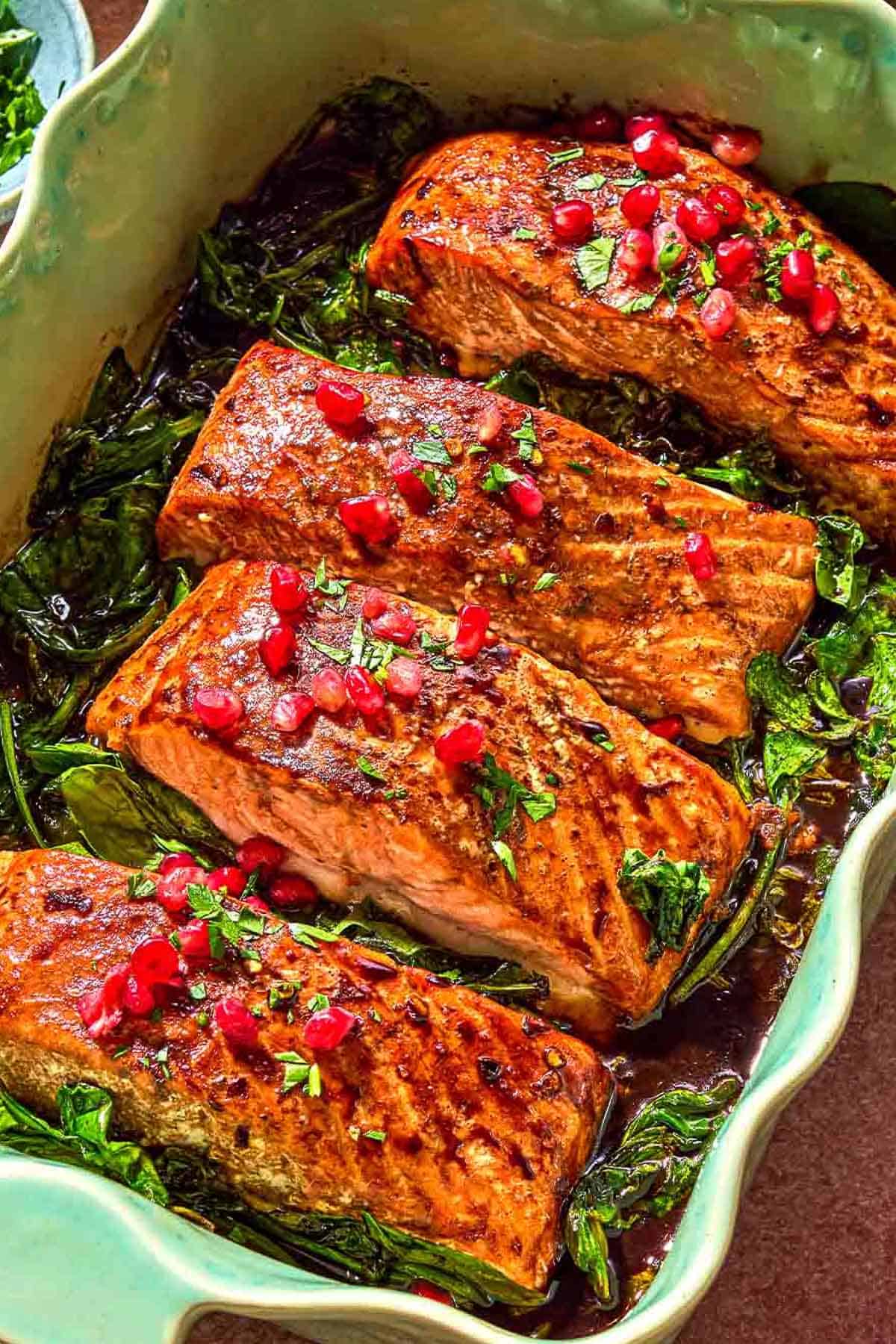
Why I Love This Glazed Salmon Recipe
- It’s fast! Everything goes into one dish and cooks at the same time.
- Lime, chili flakes, and a pinch of cinnamon make a tangy pomegranate molasses glaze that’s not too sweet.
- It’s easy: perfectly cooked salmon with a cheffy-looking caramelized glaze, on a zesty bed of greens.
This Middle Eastern version of “sweet and sour” is sure to become part of your weekly rotation. Having had and loved numerous East Asian-inspired glazed salmon dishes with a soy or Hoisin sauce glaze, I thought that pomegranate molasses would work just as well for a Middle Eastern twist.
The salmon develops a caramelized exterior through the browning of the sugar in the pomegranate molasses. The spinach softens in the juices coming off the salmon and the glaze, becoming a sort of side dish and sauce at the same time.
Key Ingredients
- Salmon: Skinless salmon fillets help make this recipe almost fool-proof. Using fillets allows you to maximize the surface area for good caramelization. No skin means no soggy bottom as they cook.
- Spinach: Baby spinach is the perfect choice of veggie for this dish, as it cooks just as quickly as the salmon does. The huge amount of spinach will wilt into a much smaller volume and soak up the glaze mixture, resulting in a tangy, flavor-packed bed of greens.
- Pomegranate molasses: This sweet and sour molasses is the flavor base. It’s a thick, viscous syrup made from cooked-down pomegranate juice. It’s deliciously tangy with a deep, fruity undertone. The sugar content allows the caramelization process to happen, creating the glaze.
- READ MORE: How to Make Pomegranate Molasses
- TRY IT: Pomegranate Molasses made in Lebanon
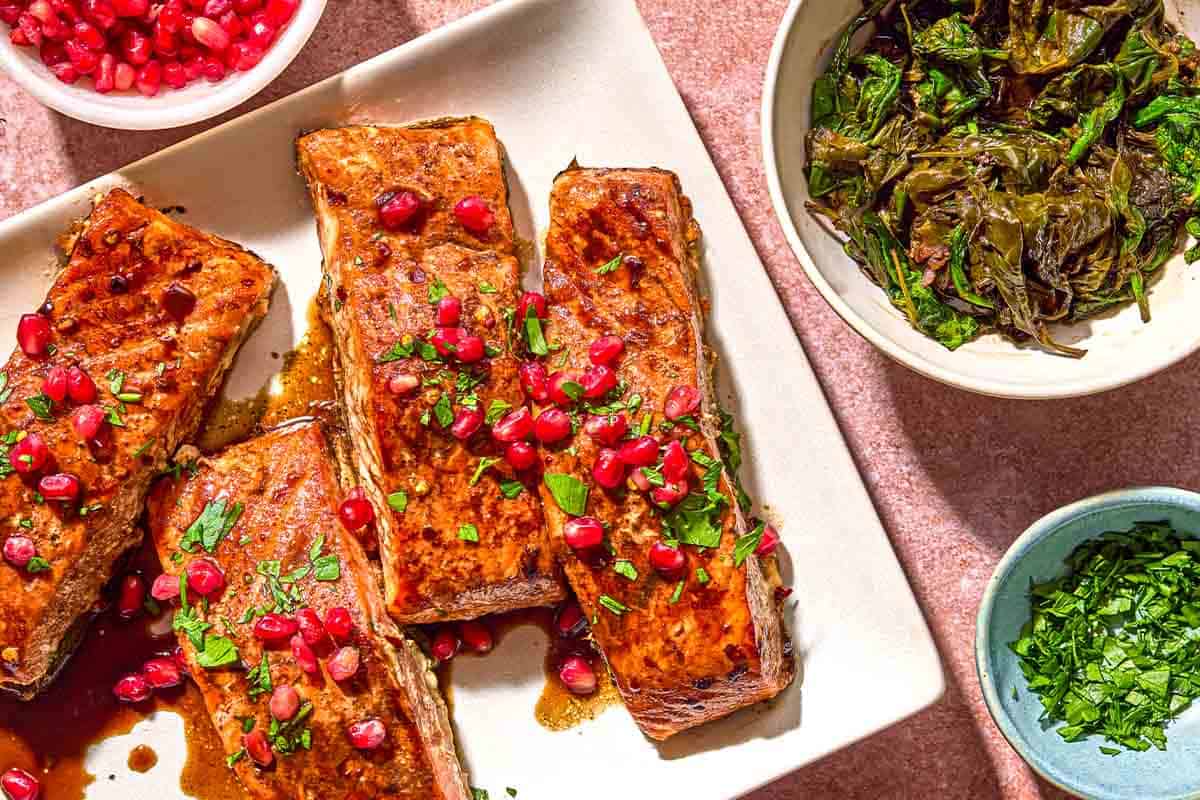
How to Make It
Using quick-cook ingredients like salmon and baby spinach helps you get a good caramelization on the glaze, without the sugar burning. Everything cooks together at the same time, no need to stagger components.
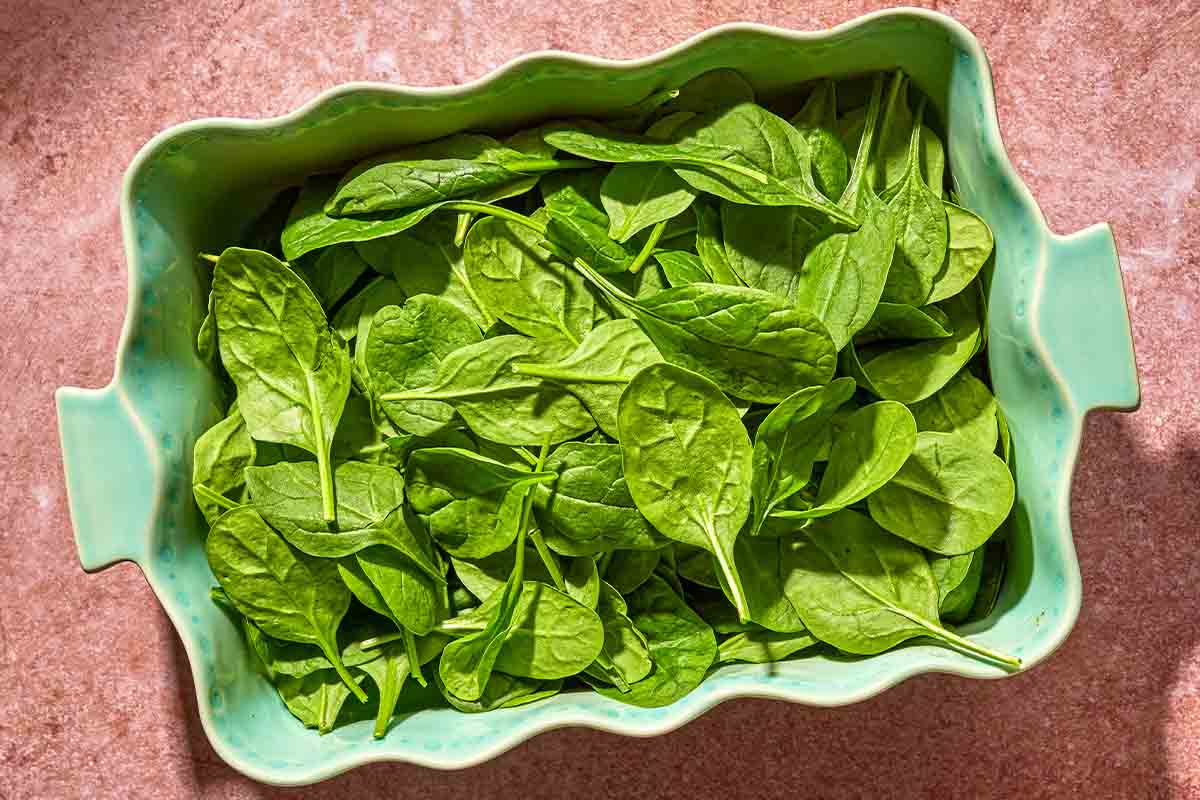
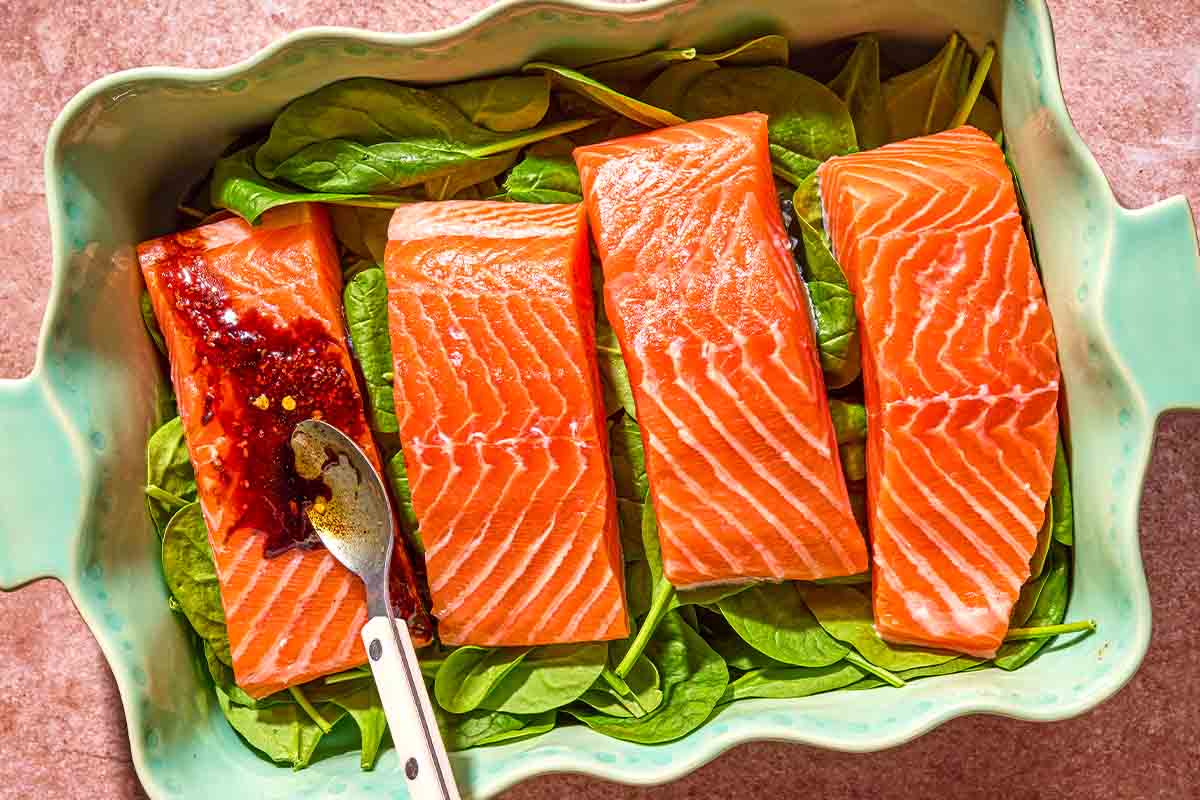
- Get ready. Preheat the oven to 400°F. Fill a 9×13-inch baking dish with the 1 (5-ounce) bag baby spinach, spreading the leaves in an even layer.

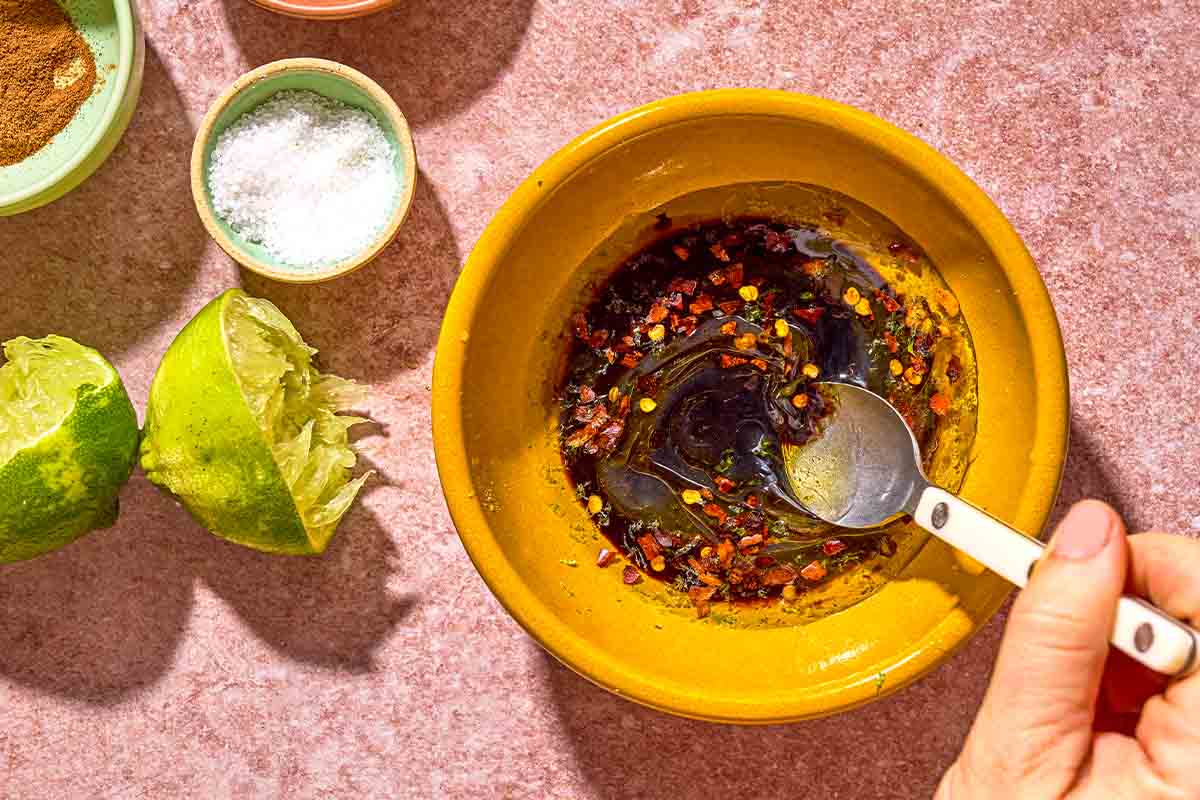
- Make the glaze. In a small bowl, add 2 tablespoons pomegranate molasses, 1 tablespoon olive oil, the zest and juice of 1 lime, 1/4 teaspoon cinnamon, 1/2 teaspoon red pepper flakes (optional), and 1/4 teaspoon salt. Mix well.
- Prep your spinach and salmon. Place 4 (4 to 5-ounce) skinless salmon fillets on the bed of spinach, evenly spaced out. With a spoon or a brush, spread the glaze all over the salmon, generously. If you have any glaze leftover, pour it over the spinach, around the salmon fillets.
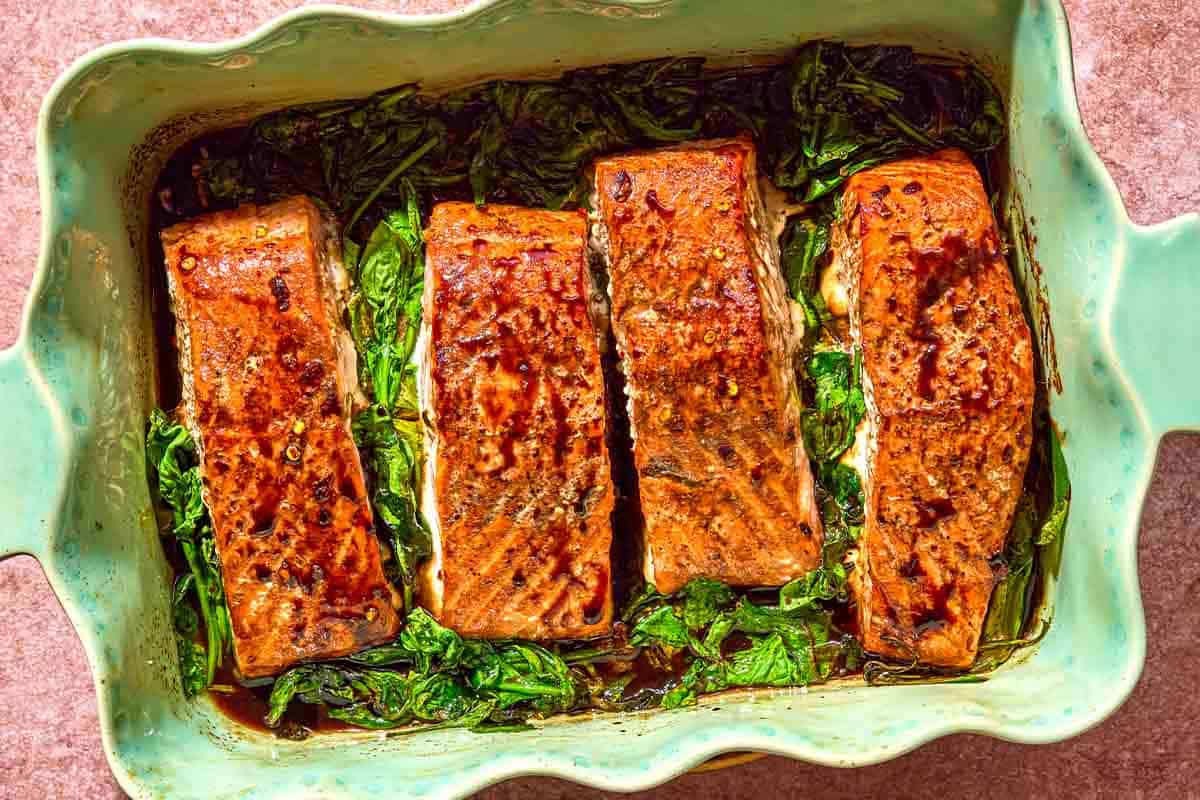
- Bake the salmon. Place your baking dish in the oven and bake for 15 minutes, or until the salmon is flaky, and cooked all the way through. The glaze will have darkened and caramelized. The spinach will have shrunk and cooked down into a saucy vegetable accompaniment for the salmon. Sprinkle with fresh pomegranate seeds and chopped fresh parsley, if you like, and serve immediately.
Make it Your Own
The glaze can be tweaked to your preference by leaving out, or adding more or less of an ingredient. It’s all about the taste you like, so keep tasting as you mix.
- Adjust the heat: Skip the red pepper flakes, add less, or add more if you really like things spicy.
- Play with different acids: I’ve chosen lime because I think it has a complementary aroma and fruitiness to the pomegranate’s flavor profile, but lemons would work as well. Even better, try some grapefruit to add bitterness to the glaze to truly cover all the potential tastes your tongue can experience. Oranges may make the recipe a little too sweet and unbalanced. Alternatively, you can skip the citrus fruits and add a tablespoon of vinegar for a similar sharp acidity.
- Adjust the sweetness: If pomegranate molasses is too tart for your liking, you can introduce a teaspoon or two of honey to the glaze. It also depends on the pomegranate molasses you have, as some brands tend to be sweeter than others. Taste the glaze as you go and see what you like best.
- Pick a different green. Use Swiss chard or kale for this recipe. However, they will need to cook down a little first before you add the salmon to the dish (10 minutes or so). If you do so, drizzle a little olive oil and a spoonful or two of glaze over the leaves so that they get a good flavor right from the beginning.
How to Serve this Salmon Recipe
The flavors of this dish are bold, so a simple starchy side would work great to soak up the juices and play a supporting role.
- These lemony roasted baby potatoes would make for the perfect side dish
- Serve on fluffy no-fail basmati rice, saffron rice or Lebanese rice with vermicelli.
- Freshen the whole meal up with tabouli salad on the side.

Ingredients
- 1 5-ounce bag baby spinach (142g)
- 4 skinless salmon fillets (about 4 ounces each)
- 2 tablespoons pomegranate molasses
- 1 tablespoon olive oil
- 1 lime, zested and juiced
- 1/8 teaspoon ground cinnamon
- 1/2 teaspoon crushed red pepper flakes (optional)
- 1/4 teaspoon fine salt
- Chopped fresh parsley, (optional) to serve
- Pomegranate seeds, (optional) to serve
Instructions
- Get ready. Preheat the oven to 400°F. Fill a large 9×13-inch baking dish with the baby spinach, and lay the leaves in an even layer. The spinach will seem to be too much, but remember, it will shrink as it cooks.
- Make the glaze. In a small bowl, add the pomegranate molasses, olive oil, lime zest and juice, cinnamon, red pepper flakes (optional), and salt. Mix well until uniform.
- Glaze the salmon. Place the salmon fillets on the bed of spinach, evenly spaced out. With a spoon or a brush, spread the glaze all over the salmon, generously. If you have any of the glaze leftover, pour it over the spinach, around the salmon fillets.
- Bake the salmon. Place your baking sheet/dish in the oven and bake for 15 minutes, or until the salmon is flaky, and cooked all the way through. The glaze will have darkened and caramelized. The spinach will have shrunk and cooked down into a saucy vegetable accompaniment for the salmon. Serve immediately.
Notes
- Shop this recipe: Visit our shop to browse quality Mediterranean ingredients, including the olive oil and pomegranate molasses used in this recipe.
- Storage: Leftover salmon and spinach can be refrigerated, in an airtight container, for 3 days.
Nutrition
Browse all Mediterranean recipes.
Visit Our Shop.
More Easy Salmon Recipes
Fish and Seafood
Baked Lemon Garlic Salmon

Fish and Seafood
Air Fryer Salmon Bites with Honey-Harissa Glaze
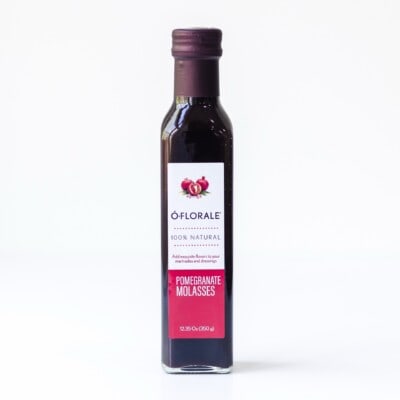
Try our Authentic Pomegranate Molasses
This 100% natural Pomegranate molasses from Lebanon provides an intense burst of sweet and tart flavor.

Pomegranite Mollasses is such wonderful ingredient! I love this recipe, Baby spinach is key, although the first time I made this I bought the spinach in a bunch and cut off the stems. So yummy!
Perfect recipe! Super simple, flavorful, and delicious. I would double the spinach as well as the glaze next time. I served with cous cous for a quick and easy meal.
Perfect recipe! Super simple, flavorful, and delicious. I would double the spinach as well as the glaze next time. I served with cous cous for a quick and easy meal.
SADLY, the spinach burnt with the 400F temp……so next time, I will just sauté the spinach just prior to serving. The glaze with the pomegranate arils & parsley was very nice. Thank heavens I made the wild rice & mushroom pilaf to go wit this that saved the meal🙃‼️
I made this last night and was blown away by how delicious it was! So easy and it came out looking just like your photo! Highly recommend topping with pomegranate seeds – great pop of flavor.