




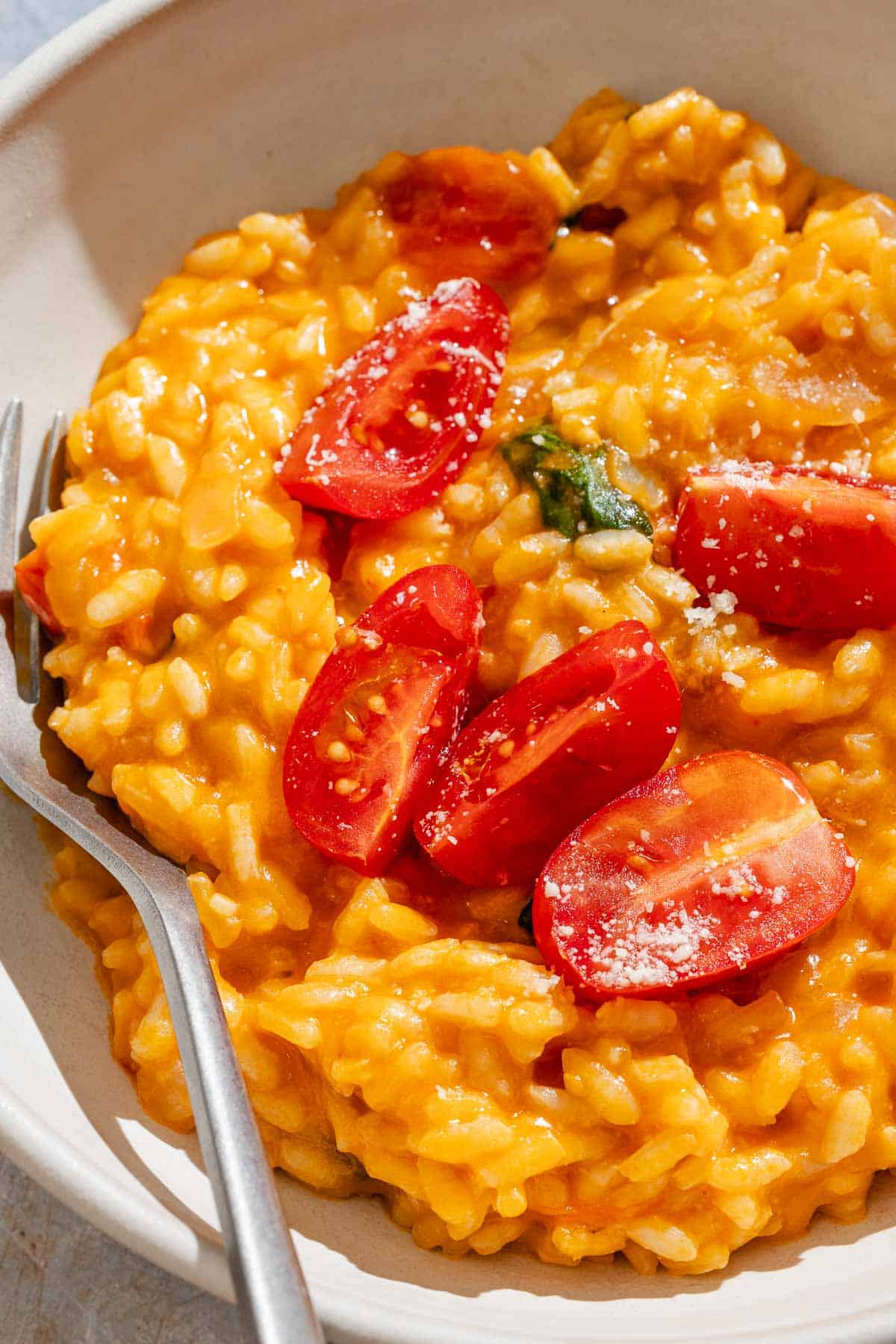
This easy tomato risotto made with arborio rice, fresh (or canned!) tomatoes, and basil captures the essence of summer no matter what time of year you make it.
The Tomato Risotto I Make Year-Round
In high school and college, when I truly dove headfirst into cooking, one of the first dishes I learned to make was risotto. As a college student, I appreciated risotto as a one-pan meal I could make with cheap ingredients, but it has since remained a permanent favorite in my repertoire. It’s creamy and comforting, and I find the regular stirring meditative.
Risotto al pomodoro, or tomato risotto flavored with fresh basil, has always been my favorite. The fresh tomatoes cook slowly, melting into the creamy rice, but I save some of them to toss on top just before serving to preserve their texture. In the height of summer, I swap out cherry tomatoes for the freshest, ripest tomatoes I can find. And when I don’t have cherry tomatoes, I reach for a can of diced tomatoes instead.
Once you learn to make a classic risotto, you have the base for flavorful variations throughout the year, incorporating seasonal ingredients, from earthy mushroom risotto in fall and winter to bright and vegetal asparagus risotto in the spring.

What Is in Tomato Risotto?
Risotto mostly requires pantry staples. I typically use cherry or grape tomatoes and fresh basil, but in-season, vine-ripe tomatoes make this risotto extra special. Here’s everything you’ll need:
- Stock: You can use vegetable broth or chicken stock. I regularly make homemade stock, which is more flavorful and lets me control the sodium content, and store it in the freezer.
- Extra virgin olive oil: Butter is a more traditional choice for risotto. I love how the fruity flavors of olive oil pair with tomatoes, so I use a mix of both butter and olive oil.
- Yellow onion: A small yellow onion, sweet and nutty once cooked, forms the aromatic base of the risotto.
- Tomato paste: A spoonful of tomato paste provides concentrated sweet-and-savory tomato flavor.
- Arborio or carnaroli rice: Use either of these starchy types of rice to make risotto. Arborio is easier to find in most grocery stores. Carnaroli is highly prized for risotto because of its higher starch content and firmer texture, but you may have to source it at a specialty store or online.
- Garlic: The nutty, savory flavor of sautéed garlic brings out the fruitiness of the tomatoes.
- Red pepper flakes: I like the gentle kick of spice a pinch of red pepper flakes adds to the risotto.
- Tomatoes: Cherry tomatoes are tasty year-round, so I use them here, but read on for more info on choosing tomatoes for this recipe. Half of the tomatoes cook with the rice, melting into the risotto, and concentrating their flavor. I save the other half to serve on top, maintaining their freshness.
- White wine: A splash of white wine adds fruity acidity to the risotto, cutting some of the richness.
- Parmesan cheese: Grated Parmigiano-Reggiano is my favorite for its rich, umami flavor. You could also use Grana Padano, Pecorino, or a mix.
- Butter: A pat of butter stirred into the risotto at the end of cooking enriches the risotto, enhancing the creaminess slowly coaxed from the rice.
- Fresh basil: To preserve basil’s aromatic flavor, I stir it into the risotto at the end of cooking, along with the Parmesan and butter.
How to Make Tomato Risotto
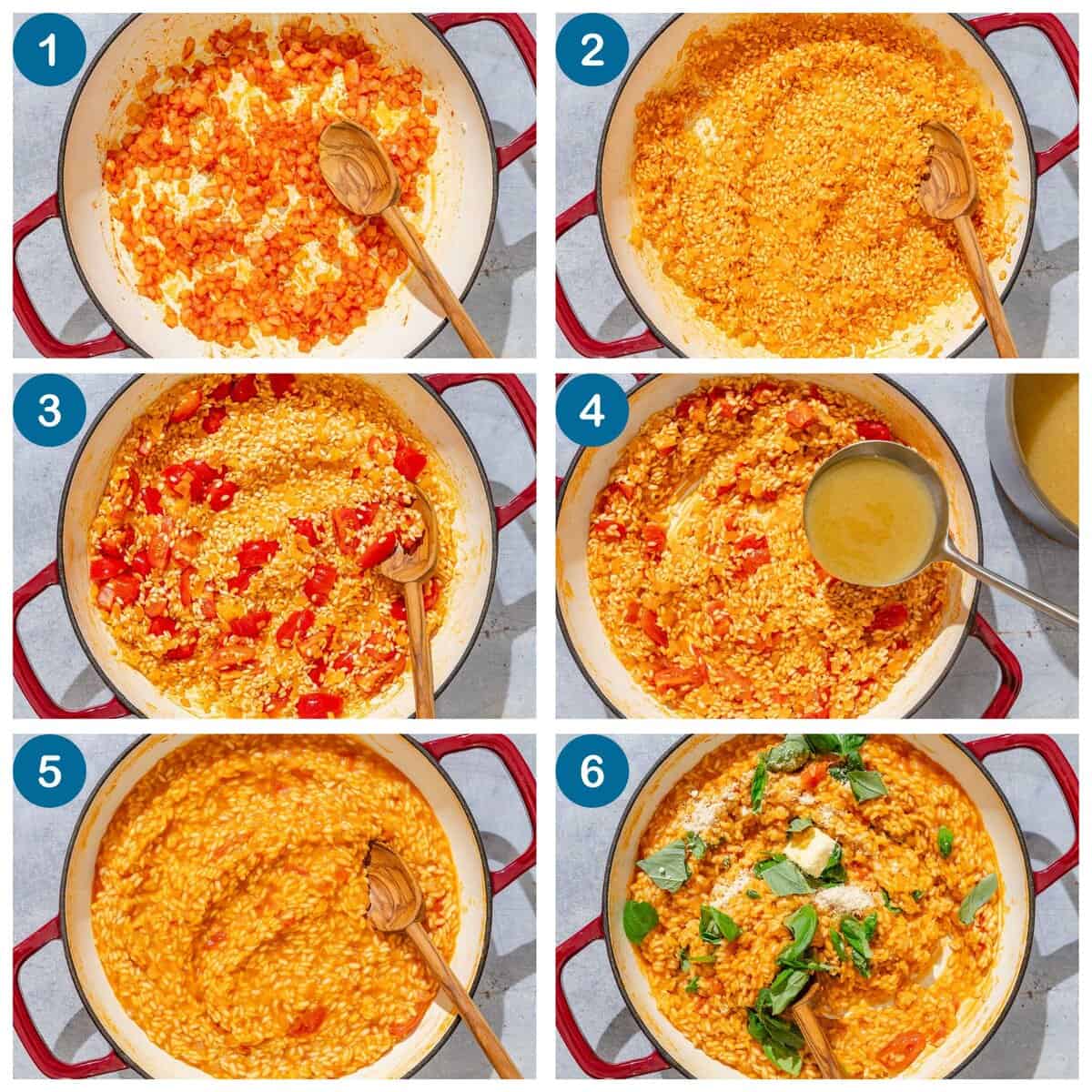
- Heat the broth. Add 6 cups of vegetable broth or chicken stock to a small saucepan and place over medium-low heat. Let it warm up while preparing the other ingredients. Don’t let it boil; keep it just below a simmer.
- Sauté the onion. Heat 2 tablespoons of extra virgin olive oil in a deep skillet or heavy-bottomed sauté pan over medium heat. Once the oil begins to shimmer, add a small diced yellow onion. Cook for 3 minutes, stirring occasionally with a wooden spoon, until the onions have softened slightly. Add 1 tablespoon tomato paste, and continue cooking until the onions are soft and translucent, about 3 minutes longer.
- Toast the rice. Add 1 1/2 cups (300g) arborio or carnaroli rice to the pan. Cook, stirring, until the rice looks translucent and it begins to crackle, 3 to 5 minutes. Add 2 minced garlic cloves and a pinch of red pepper flakes, and cook until fragrant, about 30 seconds.
- Deglaze the pan. Add half of the tomatoes and pour in the white wine. Cook, stirring constantly, until most of the liquid has been absorbed, about 5 minutes.
- Make the risotto. Add a ladleful (about 3/4 cup) of the hot broth, and keep stirring until it is completely absorbed. Add another ladleful of broth and continue cooking, stirring regularly, until all of the broth has been absorbed. Keep adding stock a ladleful at a time, stirring continuously, until the rice is creamy and al dente, and most of the stock has been used. After about 15 minutes of cooking the rice, begin tasting for doneness. Al dente rice should be tender but still firm in the center, without graininess. As soon as the rice is al dente, or about 25 minutes, take the pan off the heat.
- Finish and serve. Remove the pan from the heat. Stir in 1/2 cup (50g) grated Parmesan cheese, 1 tablespoon unsalted butter, 1 bunch (2 ounces) roughly torn basil leaves, and another splash of broth to loosen the mixture. The risotto should be creamy and flowy. Taste and adjust salt and pepper. Spoon the risotto into bowls and top with the remaining tomatoes. Garnish with more Parmesan cheese and a drizzle of extra virgin olive oil. Serve immediately.
What is Risotto and What Type of Rice is Best?
Risotto is a Northern Italian rice dish primarily from Lombardy, Piedmont, and Veneto. At its most basic, risotto is rice cooked in broth until al dente and creamy, but it’s usually finished with butter and grated Parmesan cheese.
You can easily find two of the rice varieties suitable for risotto outside Italy. Carnaroli is the crème de la crème of a creamy risotto. Compared to arborio, it’s higher in starch and harder to overcook. Arborio works almost as well, but it’s much easier to find, since most US grocery stores stock it.
Rice for risotto is high in starch and short- or medium-grain. As it cooks, it absorbs liquid and releases the starch, giving the rice a creamy texture. Butter and cheese aren’t the secret to creamy risotto; they just enhance the creaminess already developed from the starch released by the rice during cooking.
You can create countless variations of risotto throughout the year with shrimp, saffron, butternut squash, or, in this case, tomatoes.
The Best Tomatoes for Risotto
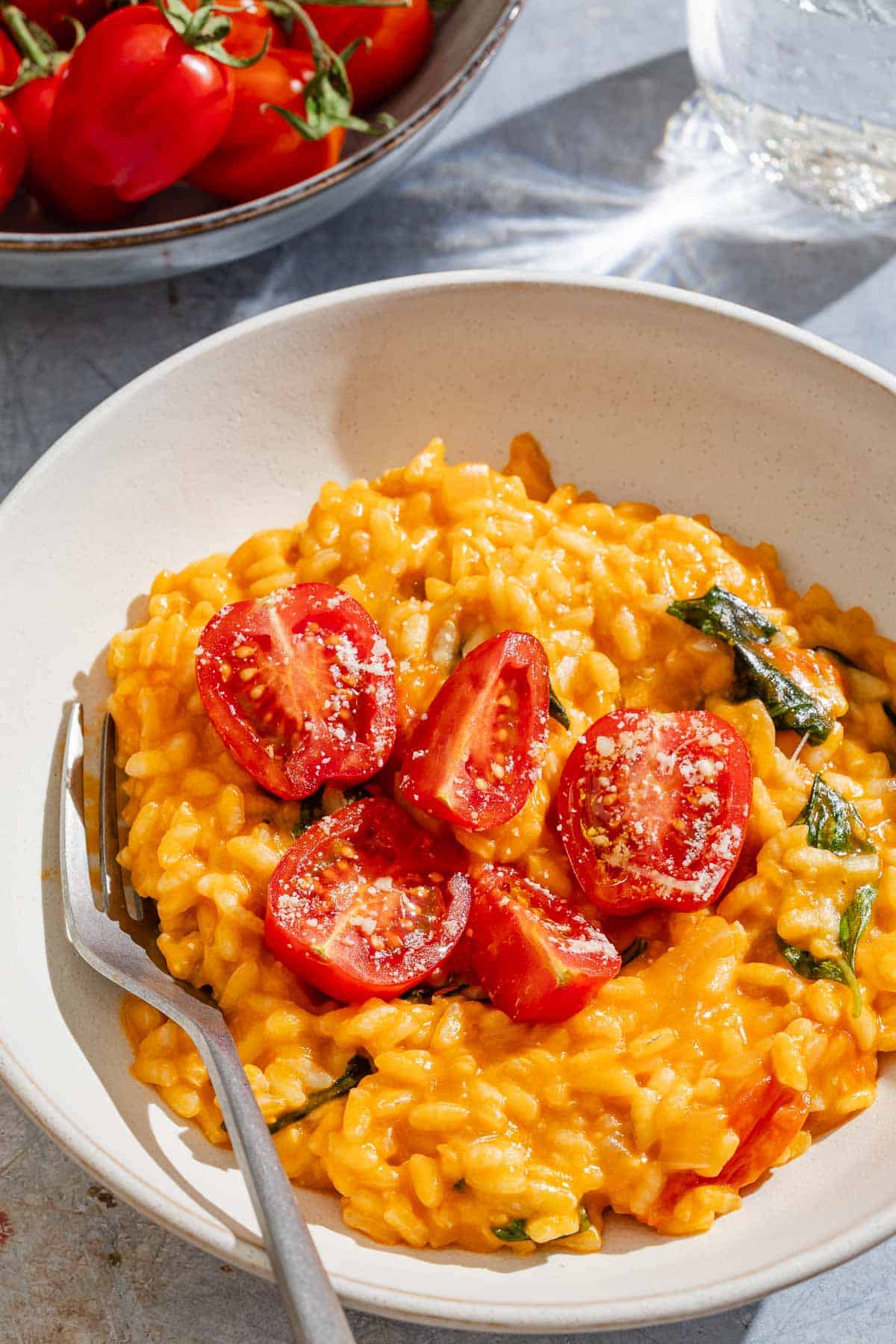
In summer, when your garden and the farmers’ markets abound with fresh, ripe tomatoes, there’s no wrong choice of tomato to mix into this risotto. Outside of peak season, you don’t have to give up tomatoes altogether, but some varieties are more flavorful than others.
- To use fresh tomatoes outside of summer, stick with smaller varieties, such as cherry, plum, or grape tomatoes, which are sweet and flavorful no matter the season.
- You can also make this with canned, diced tomatoes. In this case, use the entire 14-ounce can in step 4 below, instead of cooking half and saving the other half for the garnish. For a smokier flavor, try fire-roasted diced tomatoes.

Troubleshooting Risotto
- The rice is undercooked. If you’ve used all of the broth but the rice is still undercooked, the heat was likely too high. If the heat is too high, much of the liquid will evaporate before the rice grains can absorb it and gelatinize. Try lowering the heat and adjusting it as you cook to maintain a medium simmer.
- The rice is overcooked. It’s very easy to overcook the rice, resulting in a mushy risotto. After about 15 minutes of cooking the rice, begin tasting for doneness. Al dente rice should be tender but still firm in the center, without graininess. As soon as the rice is al dente, take the pan off the heat.
- The risotto is too thick. Risotto should be creamy and flowy, but not thin and watery. I usually have some broth left over after the rice is al dente. While mixing in the butter, Parmesan, and basil, gauge the risotto’s consistency. I usually add another splash of hot broth to loosen the risotto and keep it flowy. Keep in mind, the risotto will thicken as it cools.
What to Serve with Tomato Risotto
Risotto is traditionally served as a first course, but this tomato risotto is hearty enough to stand on its own. I like to serve a side that highlights even more summer produce, like this peach salad with arugula, basil, and goat cheese, or pair it with a crisp, tangy Caesar salad year-round.
For a larger meal or a summer dinner party, add on a second course. My favorite second course to pair with tomato risotto usually involves firing up the grill. It’s a quick-cooking method, and I can marinate the protein ahead of time. Try this lemony grilled chicken, a bold grilled skirt steak, or easy grilled salmon.
More Risotto Favorites
- Mushroom Risotto
- Asparagus Risotto
- Lemony Shrimp Risotto (Instant Pot or Stovetop)
- Butternut Squash Risotto
- Chicken Risotto with Spinach and Mushrooms

A Note from Suzy
“I love how Mark’s tomato risotto turns simple pantry staples into something creamy, comforting, and full of bright, summery flavor.”


Ingredients
- 6 cups vegetable broth or chicken stock
- 2 tablespoons extra virgin olive oil, plus extra for serving
- 1 small yellow onion, diced
- 1 tablespoon tomato paste
- 1 1/2 cups Arborio rice or Carnaroli rice(300g)
- 2 garlic cloves, minced
- Red pepper flakes, optional
- 1 pound cherry tomatoes or tomatoes, diced, divided (454g)
- 1/2 cup dry white wine (120ml)
- 1/2 cup grated Parmesan cheese, plus extra for serving(50g)
- 1 tablespoon unsalted butter
- 1 bunch fresh basil fresh basil leaves, roughly torn
Instructions
- Heat the broth. Add the broth or stock to a small saucepan and place over medium-low heat. Let it warm up while preparing the other ingredients. Don't let it boil; keep it just below a simmer.
- Sauté the onion. Heat the olive oil in a deep skillet or heavy-bottomed sauté pan over medium heat. Once the oil begins to shimmer, add the onion. Cook for 3 minutes, stirring occasionally with a wooden spoon, until the onions have softened slightly. Add the tomato paste, and continue cooking until the onions are soft and translucent, about 3 minutes longer.
- Toast the rice. Add the rice to the pan. Cook, stirring, until the rice looks translucent and it begins to crackle, 1 to 2 minutes. Add the garlic and red pepper flakes, and cook until fragrant, about 30 seconds.
- Deglaze the pan. Add half of the tomatoes and pour in the white wine. Cook, stirring constantly, until most of the liquid has been absorbed, about 5 minutes.
- Make the risotto. Add a ladleful (about 3/4 cup) of the hot broth, and keep stirring until it is completely absorbed. Add another ladleful of broth and continue cooking, stirring regularly, until all of the broth has been absorbed. Keep adding stock a ladleful at a time, stirring continuously, until the rice is creamy and al dente, and most of the stock has been used. After about 15 minutes of cooking the rice, begin tasting for doneness. Al dente rice should be tender but still firm in the center, without graininess. As soon as the rice is al dente, or about 25 minutes, take the pan off the heat.
- Finish and serve. Remove the pan from the heat. Stir in the Parmesan cheese, butter, basil leaves, and another splash of broth to loosen the mixture. The risotto should be creamy and flowy. Taste and adjust salt and pepper. Spoon the risotto into bowls and top with the remaining tomatoes. Garnish with more Parmesan cheese and a drizzle of extra virgin olive oil. Serve immediately.
Notes
- Shop this recipe: Visit our shop to browse quality Mediterranean ingredients, including the olive oil used in this recipe.
- To use canned tomatoes: In this case, use the entire 14-ounce can of diced tomatoes along with the wine instead of cooking half and saving the other half for the garnish. For a smokier flavor, try fire-roasted diced tomatoes
Nutrition
Arborio Rice
Unlock the secret to rich velvety dishes with premium Arborio Rice, a staple for traditional risottos, rice puddings and innovative dishes.
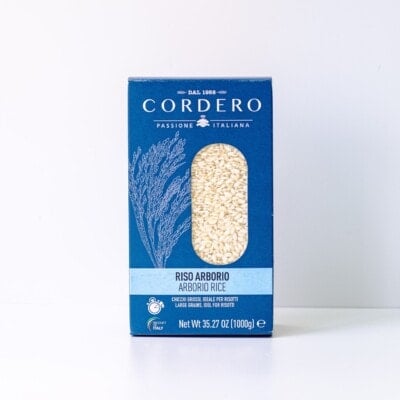
The best rice for tomato risotto is a short- or medium-grain variety like arborio or carnaroli. These types of rice are high in starch, which is what gives risotto its signature creamy texture as it cooks.
Yes, canned tomatoes work well, especially when fresh tomatoes aren’t in season. Use good-quality diced or whole canned tomatoes, and expect a jammier, more concentrated flavor compared to fresh.
The key to creamy risotto is adding warm broth gradually and stirring often, which helps release the rice’s natural starches and create that silky texture. As it sits, the grains of rice will continue to absorb moisture, so splash in more broth, stock, or water to loosen it, if need be.
Risotto is done when the grains of rice are tender, with a little firmness at the center. The overall texture will be creamy and slightly loose. It should gently spread on a plate like a puddle rather than standing up in a mound.

Done this recipe about 3 times now! Turns out very creamy
Yay! We love to hear that! Thanks, Rodrigo!
Great dish and a great depth of flavor
I have made more or less this recipe ‘umpteen’ times using good quality tinned tomatoes. Quantities of rice and stock depend on the brand of rice. You have to keep tasting until you have the texture you prefer. The rice brand I use needs a bit more than the less suggested in the recipe – I usually just use water. A small amount of sugar can help with many brands of tomatoes and tomato pastes
Those are great tips! You’re so right that rice brands can vary a bit and tasting as you go is a great way to nail the texture. Thanks for sharing what works for you!
I’ve had great success making risotto in the instant pot. Can you recommend a conversion of the recipe for instant pot?
Hi, Jenny! We haven’t tested this one in an Instant Pot, so it’s hard to advise. We do have Instant Pot instructions with our Lemony Shrimp Risotto recipe that you could use as a guide here, though!