



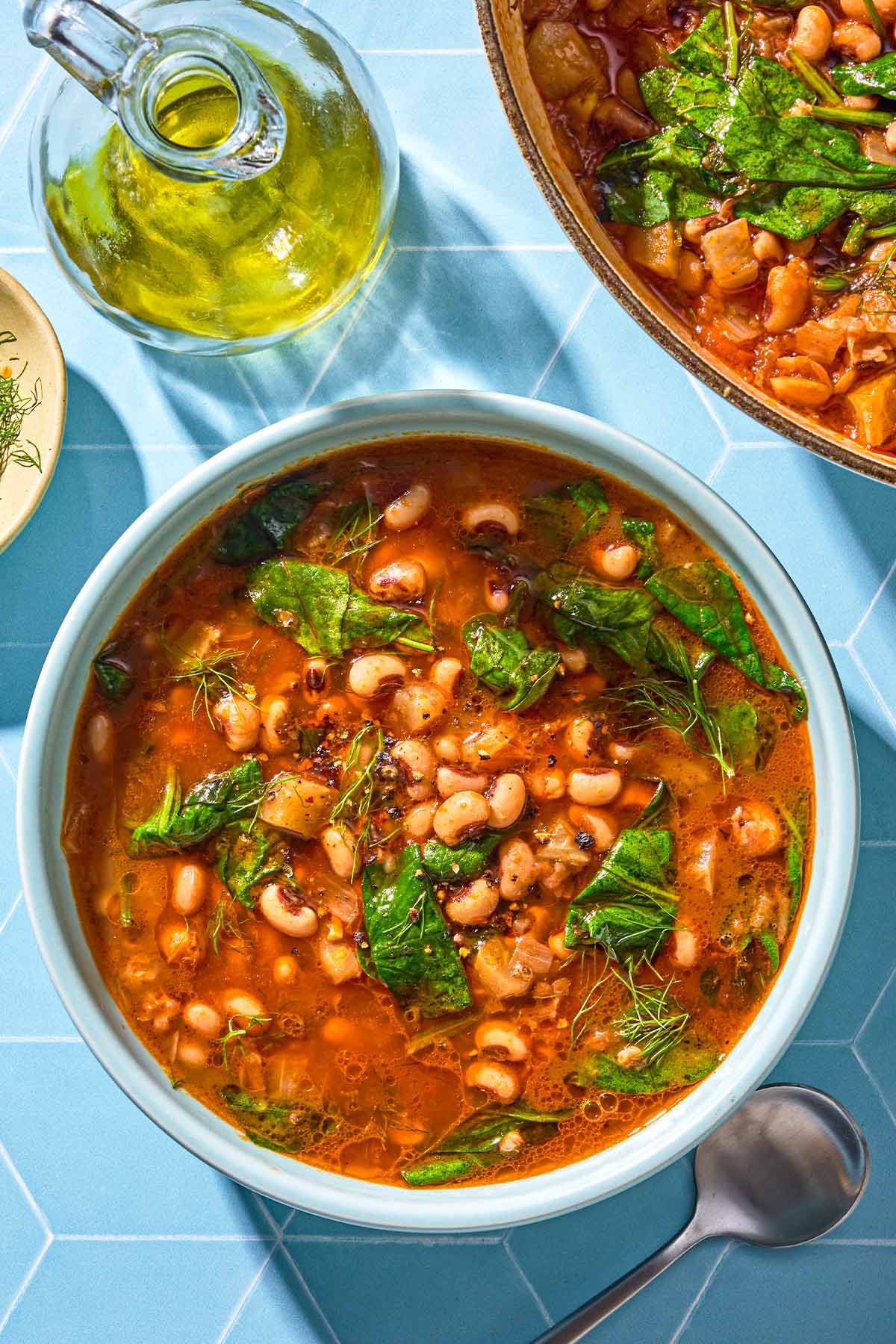
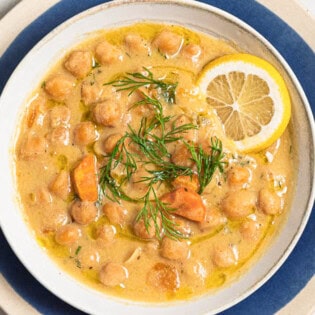
The mild flavor of black-eyed peas makes them the perfect canvas for tomatoes, fennel, and olive oil in this deeply nourishing Greek black-eyed pea soup.
Black Eyed Pea Soup Is My Ultimate Comfort Food
- It’s hearty and deeply nourishing. My recipe is built on dried peas and loads of vegetables, and velvety olive oil.
- It’s vegan and gluten-free!
- It’s make-ahead friendly: Like many soups and stews, this one is even better the next day as the flavors meld.
In this nourishing and aromatic dish, I simmer tender black-eyed peas with fennel, tomato, spinach, and olive oil. This soup is inspired by the traditional Greek dish, mavromatika, which is typically served on the island of Crete.
People often enjoy this beloved legume dish during the Lenten season, but in the United States, black-eyed peas are often eaten in the New Year to bring wealth and prosperity.
I’m not sure how lucky my recipe is, but it is loaded with good-for-you ingredients that highlight the subtle sweetness of fennel and the depth of slow-cooked tomato, along with lots of spinach. Sounds pretty lucky to me!
What Are Greek Mavromatiká?
In Greece, mavromatiká refers to black-eyed peas, a humble legume celebrated in home kitchens throughout the mainland and islands, especially in Crete and the Peloponnese. While they may not be as famous internationally as chickpeas or lentils, black-eyed peas are deeply woven into everyday Greek cuisine.
The most traditional preparation is a simple, comforting dish of simmered black-eyed peas cooked with onions, olive oil, lemon, and leafy greens such as vlita (amaranth greens). Some regions add a touch of tomato, while others keep the broth clear and lemony.
Classic mavromatiká is a ladero, a vegetable-forward dish gently cooked in olive oil until tender and deeply flavorful. It’s the kind of everyday Greek cooking built on modest ingredients and prepared with care.
Key Ingredients
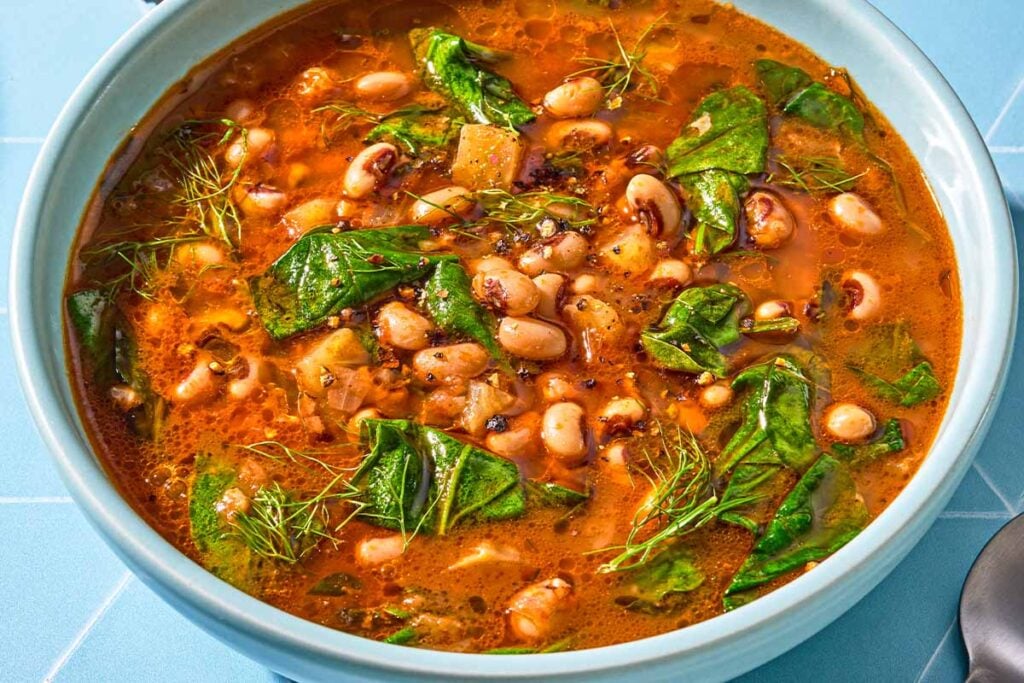
My version draws from the traditional structure of mavromatiká but adds a few Cretan-inspired touches that deepen the flavor and create a heartier, more aromatic soup.
- Black-Eyed Peas: At the heart of the dish, these small, tender legumes become wonderfully creamy as they simmer.
- Fennel: While not always included in the classic version, wild fennel grows abundantly in Crete. It adds a delicate sweetness and subtle herbal complexity to the dish. Since wild fennel isn’t available everywhere, this recipe calls for a fennel bulb and its fronds. As it cooks, the fennel bulb softens into the broth and, together with the fronds give the soup a distinctly Mediterranean aroma.
- Tomato: Traditional mavromatiká may include a little tomato, but this recipe leans into it more fully, allowing crushed tomatoes to create a rich, savory base that coats the peas beautifully.
- Spinach: Instead of wild greens or amaranth (vlita), spinach offers a widely accessible, vibrant green that wilts tenderly into the soup and boosts its nutritional profile.
- Greek Extra Virgin Olive Oil: Essential to Greek cooking, olive oil provides depth and richness as the base of the soup. It softens the aromatics, enhances the tomato, and creates the silky texture that defines traditional mavromatika.
How to Make Greek Black Eyed Pea Soup
The printable recipe is below, but here’s a quick step-by-step guide for a visual breakdown:
- Sort and soak the black-eyed peas. Pick through 1 pound dry black-eyed peas to remove any pebbles or shriveled peas, then rinse them well under cold water. Transfer to a bowl, cover with 3-inches of fresh water, and soak overnight. For a shortcut, avoid socaking and use 2 (14 oz) cans of black eyed peas.
- Sauté the aromatics. Set a large, Dutch oven over medium heat. Add 1/3 cup olive oil. Once the oil begins to shimmer, add 1 small, finely-chopped onion, and 1 finely choppe venll bulb. Reserve the fennel fronds. Cook, stirring occasionally, until softened and fragrant, 8 to 10 minutes. Add 1 minced garlic clove and cook for 1 minute more.
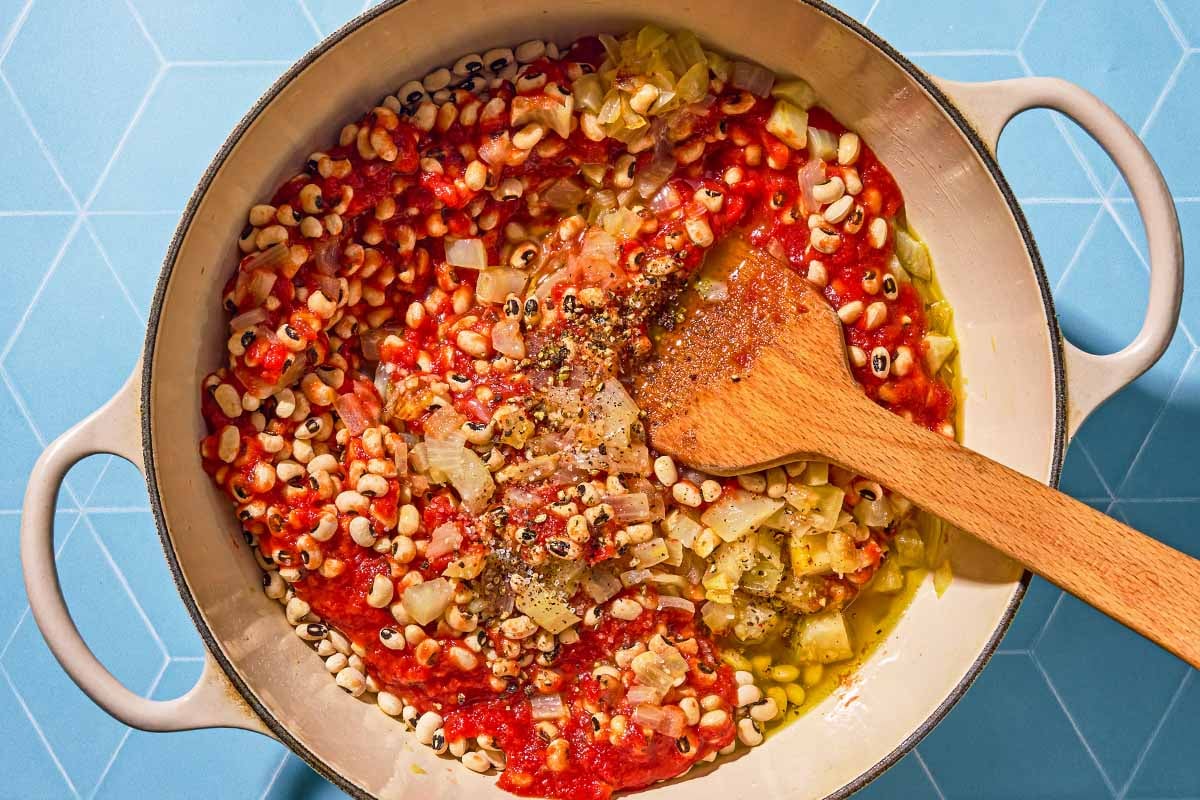
- Add the black-eyed peas and tomatoes. Drain the soaked black-eyed peas through a colander and add them to the pot with the aromatics. Pour in 1 (15-ounce) can crushed tomatoes and add 1 teaspoon salt and 1/2 teaspoon freshly-ground black pepper. Stir well.

- Simmer the peas. Add 2 cups of water. Bring to a boil, then reduce the heat to a simmer. Cover partially and cook, stirring occasionally, until the black-eyed peas are tender and the liquid has thickened, 45 to 60 minutes.
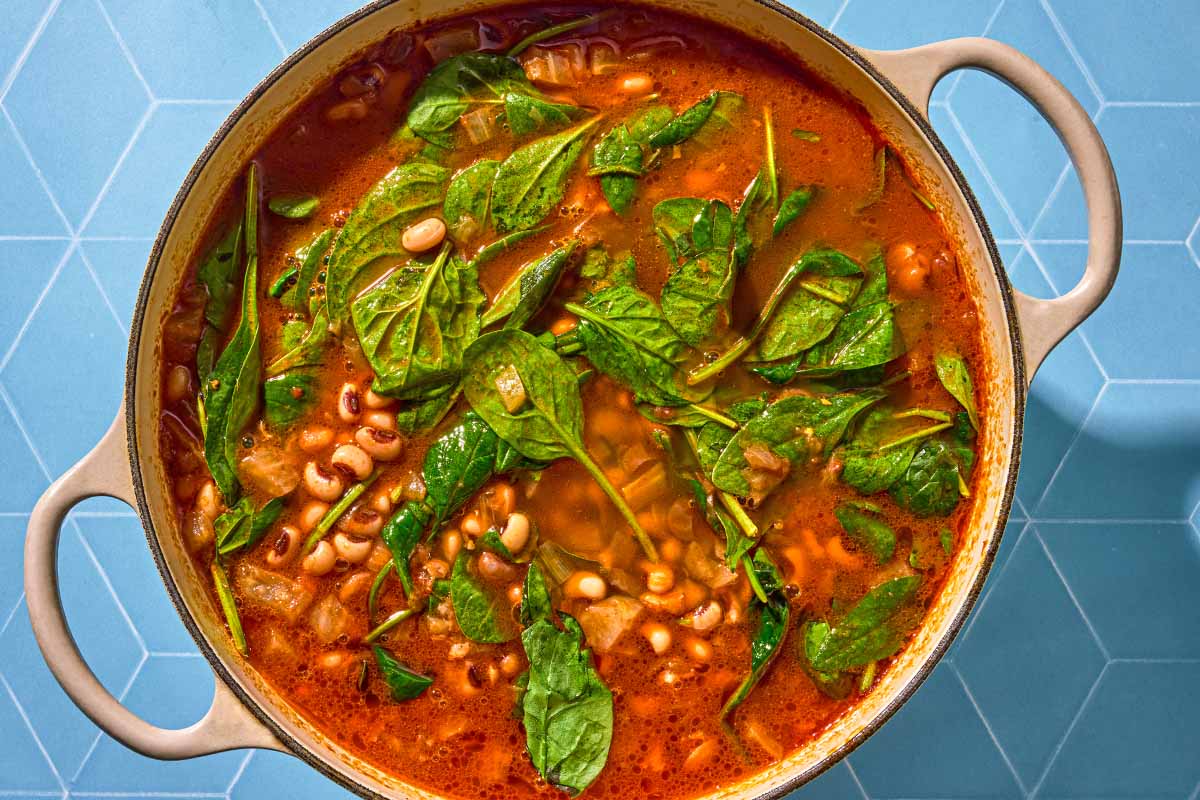
- Add the spinach. Once the black-eyed peas are soft, add 10 ounces spinach leaves, thick stems removed and roughly chopped (or baby spinach) to the pot; it will wilt quickly. Stir it into the soup and continue cooking until the spinach is tender and well incorporated, an additional 5 to 10 minutes.
- Finish and serve. Remove the pot from the heat. Stir in the chopped fennel fronds and the juice of 1/2 lemon. Taste and adjust the seasoning with more salt, pepper, or lemon as needed. Spoon into bowls and finish with a drizzle of olive oil.

Three Important Tips
- Sauté the Aromatics Slowly. Taking your time with the onion and fennel builds a deeper, sweeter base. Allow the fennel to soften fully, this coaxes out its delicate sweetness and infuses the entire dish with its signature aromatic flavor.
- Let the Black-Eyed Peas Simmer Gently. A slow, steady simmer is essential. Black-eyed peas become tender and creamy without falling apart when cooked at a gentle bubble. Resist the urge to rush the process; the flavor develops beautifully over time.
- Finish with Freshness. Don’t skip the final touches! Lemon juice and fresh herbs make a world of difference. They brighten the soup, balance the richness of the tomato and olive oil, and give the dish its unmistakable Mediterranean character.

Swaps and Substitutions
- Herbs: Fresh fennel fronds are the traditional choice, but parsley and dill also offer a bright, clean finish. For a different aromatic variation, try adding a touch of fresh or dried mint.
- Greens: If you don’t have spinach on hand, Swiss chard or baby kale work just as well. Just adjust the cooking time depending on how tender the greens are.
- Tomato Base: You can use diced tomatoes, crushed tomatoes, or even grated fresh tomatoes, depending on what you have on hand. Each will bring its own texture and depth.
- Spice: Add a pinch of Aleppo pepper, red chili flakes, or even smoked paprika for a subtle kick or hint of smoky warmth.
Perfect Pairings
- This comforting Greek recipe pairs beautifully with warm, crusty bread, especially a rustic village loaf or olive bread to soak up the flavorful broth.
- Serve it alongside a classic maroulosalata, along with a plate of olives and feta for a traditional Greek table.
- For a heartier meal, enjoy it with roasted vegetables, grilled fish, or a side of lemony Greek roasted potatoes.
- It’s also wonderful served with barley, bulgur, or Greek lemon rice for a more filling bowl.


Ingredients
- 1 pound dry black-eyed peas, (or 2 (14 ounce) cans of black eyed peas
- 1/3 cup extra virgin olive oil, plus more to serve
- 1 small onion, finely chopped
- 1 fennel bulb, finely chopped, fronds reserved and finely chopped
- 1 garlic clove, finely minced
- 1 (15-ounce) can crushed tomatoes
- 1 teaspoon salt, plus more to taste
- 1/2 teaspoon freshly ground black pepper, plus more to taste
- 10 ounces spinach leaves, thick stems removed and roughly chopped (or baby spinach)
- 1/2 lemon, juiced
Instructions
- Sort and soak the black-eyed peas. Pick through the black-eyed peas to remove any pebbles or shriveled peas, then rinse well under cold water. Transfer to a bowl, cover with plenty of fresh water, and soak overnight.
- Sauté the aromatics. Set a large Dutch oven over medium-heat. Add olive oil. When the oil shimmers, add the chopped onion and fennel and cook, stirring occasionally, until softened and fragrant, 8 to 10 minutes. Add the garlic and cook for 1 minute more.
- Add the black-eyed peas and tomatoes. Drain the soaked black-eyed peas through a colander and add them to the pot with the aromatics. Pour in the crushed tomatoes, and add the salt and pepper. Stir well.
- Simmer the peas. Add 2 cups of water, bring to a boil, then reduce the heat to a gentle simmer. Cover partially and cook, stirring occasionally, until the black-eyed peas are tender and the liquid has thickened, 45 to 60 minutes.
- Add the spinach. Once the black-eyed peas are soft, add the spinach to the pot, it will wilt quickly. Stir it into the stew and continue cooking until the spinach is tender and well incorporated, an additional 5 to 10 minutes.
- Finish and serve. Remove the pot from the heat. Stir in the chopped fennel fronds and lemon juice. Taste and adjust the seasoning with more salt, pepper, or lemon as needed. Spoon into bowls and finish with a drizzle of good olive oil.
Notes
Nutrition
Browse all Mediterranean recipes.
Visit Our Shop.
More Greek Bean and Pea Recipes



Bundle and Save!
Four of our best-selling signature olive oils, perfect for everyday use.


My men loved this recipe so much they said I could make it weekly! So good and savory.
Now that’s a great review :). Thanks, Ann!
Hello!!! This is so delicious!! I was wondering if next time I double the recipe could I freeze a portion of it? Thank you!!
Sure, Joleen! This one should freeze well. Enjoy!
Delicious…great flavor! I didn’t have fennel. So, I used celery stocks and their leaves.
Great idea! Thanks for sharing, Melissa!
I made this today and really liked it. I also used one 28 oz can of crushed tomatoes and equal part water, and it worked well. Very easy, tasty and different. Added some smoked paprika, aleppo and dried mint.
Thanks for sharing your adjustments with us, Ann. So glad you enjoyed this one.
Loved this recipe. I added leftover turkey and it was a huge hit!
Great idea, Andrew! Thanks for sharing!
Hi there! This looks incredible! If using canned black-eyed peas, do we drain and rinse them first?
Hi Jenny. Yes, you’ll want to drain and rinse them first. Hope you enjoy the soup!
Very good and easy to make, but only 2 cups of water? There’s no way that just 2 cups of water can cook 1 pound of black-eyed peas. Instead of a 15 oz can of crushed tomatoes, I used a 28 oz can (even more liquid), and I filled the empty can with water to add to the soup (approx 3 1/2 cups). Even with the added liquid, I could have added even more because the “broth” was almost non existent by the time the soup was finished. Sill good though! (Added smoked paprika, chili flakes, cobanero chili flakes, way more garlic than just 1 clove, and vegetable broth paste.)
Delicious! I was a bit more generous with the onion, fennel, and an extra clove of garlic and may be even more generous with the fennel next time. Also added a pinch of crushed red pepper. I loved this soup – if, like me, you think black eyed peas have a little funky taste, this is the soup for you! The flavors are gorgeous & balance out that funk.
Haha! Thanks for the great review, Amy!
If using canned black eyed peas do you need to cook it as long?
Hi, Nancy. If using canned peas, you wouldn’t need to cook the soup near as long. We also recommend adding the drained canned peas towards the end of cooking. Just long enough for them to be warmed through.
I took the suggestion to add pimenton and red pepper flakes. This is a delicious soup.
I look forward to trying this recipe. thank you for sharing. Happy New Year.
Be sure to stop back and let us know your thoughts!! We’d love to hear!