
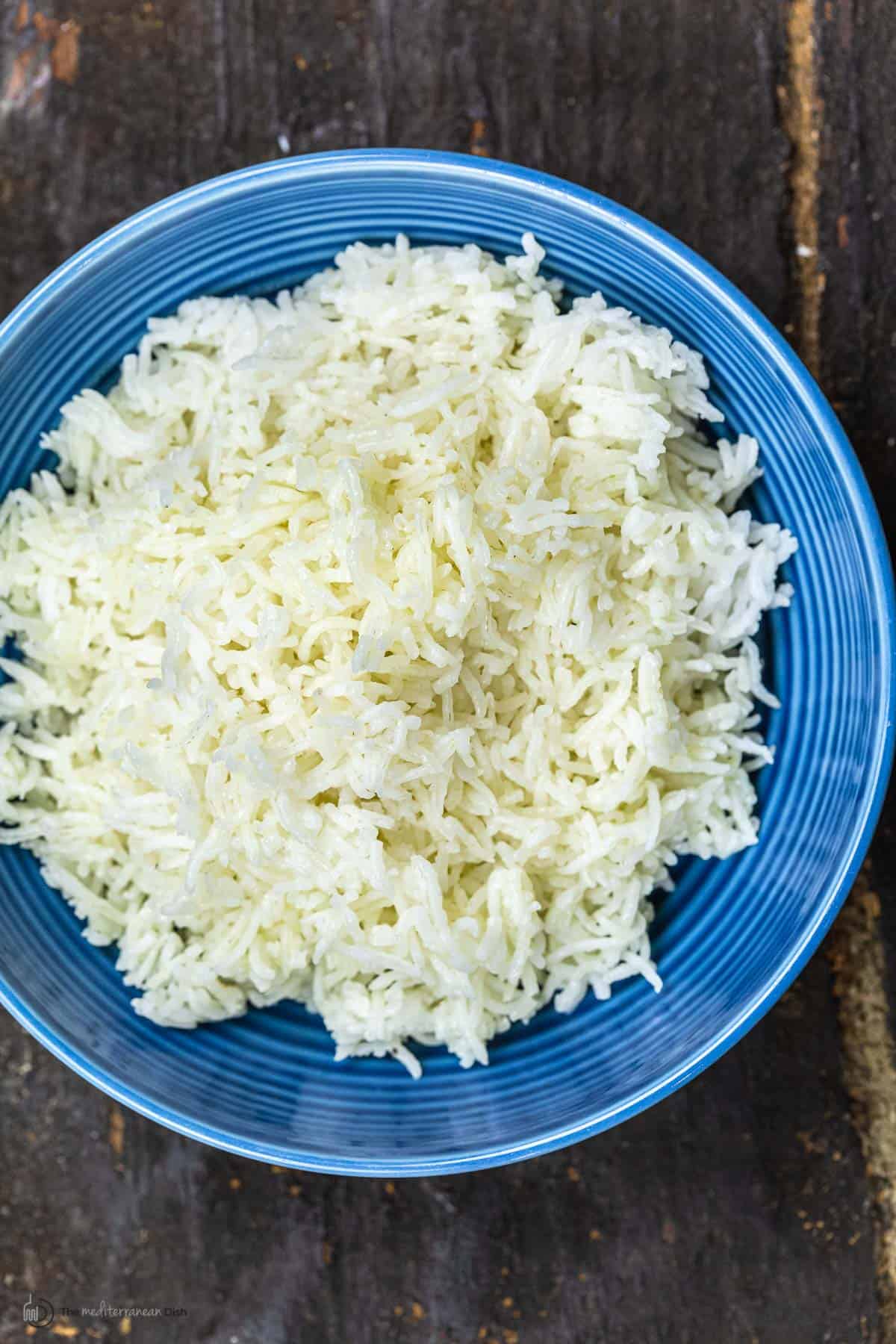
This simple basmati rice recipe makes tender, fragrant rice with fluffy, separate grains. Use the stovetop or rice cooker method for an easy, versatile side dish.
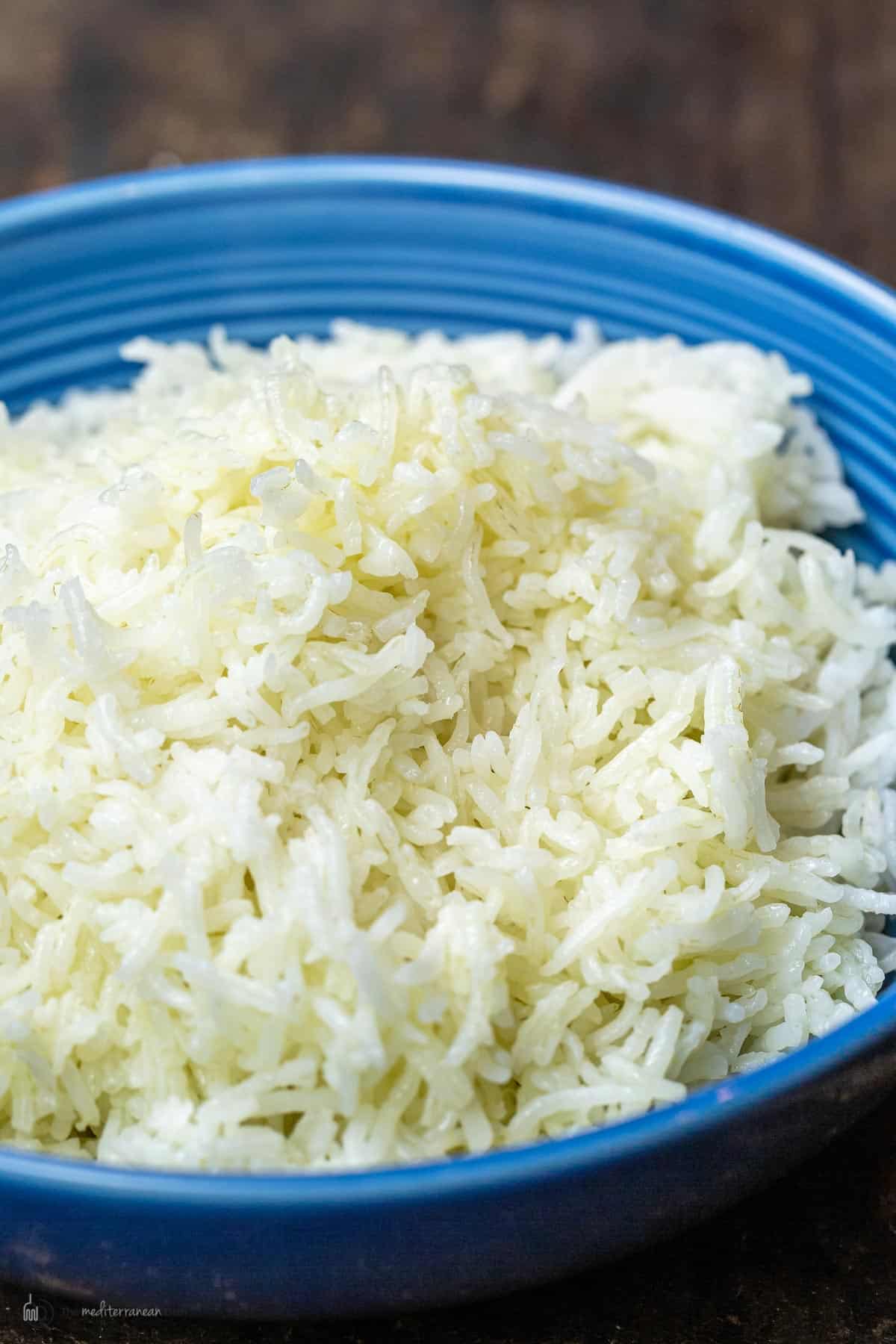
My Go-To Basmati Rice Recipe
Basmati rice is one of my go-to sides for saucy stews, curries, and easy weeknight dinners. I use a simple ratio of 1 cup rice to 1 1/2 cups water, plus a splash of extra virgin olive oil—my Mediterranean twist for bringing out the rice’s lightly nutty flavor.
Basmati is a fragrant long-grain white rice traditionally grown in India, Pakistan, and Nepal. It is a staple in South Asian cooking and is also popular throughout parts of the Middle East. When cooked properly, the grains stay light, tender, and fluffy rather than sticking together.
You do not need to soak the rice for this recipe, but you do need to rinse it well. Rinsing removes excess surface starch, toasting the grains in olive oil builds flavor, and a short rest after cooking allows the rice to finish steaming.
What Is the Right Basmati Rice-to-Water Ratio?
For this basmati rice recipe, use 1 cup of rice to 1 1/2 cups of water. This ratio is important: Adding significantly more or less water will change the rice’s final texture.
Use the same rice-to-water ratio for the stovetop and rice cooker methods. If you use a rice cooker, select its normal or regular rice setting and follow the manufacturer’s safety instructions.
Ingredients for This Basmati Rice Recipe
You need only rice, water, olive oil, and salt for this recipe. Cardamom and bay leaves are optional, but they add another layer of fragrance.
- Basmati rice: Use white basmati rice. I have cooked both Royal and Dunar brands successfully, but you may find other options at your grocery store.
- Extra virgin olive oil: Olive oil is not traditional, but it is one of my secrets to more flavorful basmati rice. Toasting the grains in a splash of good extra virgin olive oil brings out their natural nuttiness.
- Water: The rice absorbs the water as it cooks, so measuring it accurately is essential.
- Kosher salt: Season the rice before covering the pot so it is flavorful throughout.
- Cardamom pods and bay leaves: These optional flavor-makers give the rice a warm, aromatic quality. Remove them before fluffing and serving the rice.
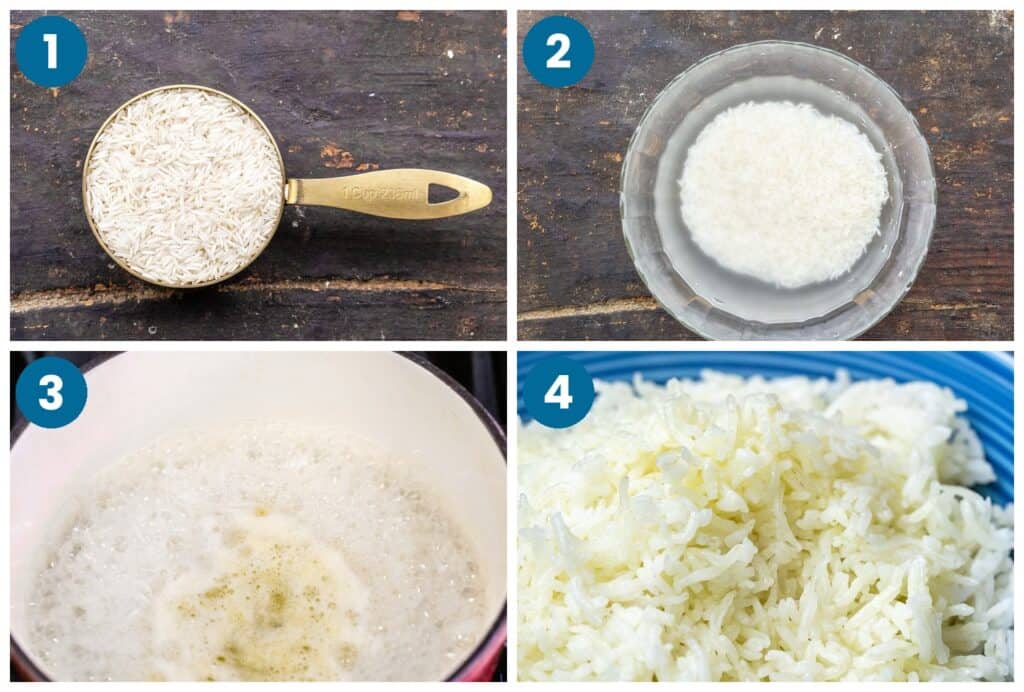
How to Cook Basmati Rice on the Stove
This stovetop method uses 1 cup of basmati rice and 1 1/2 cups of water. Keep the pot covered while the rice cooks so none of the steam escapes.
- Rinse the rice. Put the rice in a bowl and rinse it with cold water four or five times, draining the water after each rinse. Continue until the water runs clear. This is rinsing, not soaking—the rice does not need to sit in the water.
- Toast the rice. Heat the olive oil in a medium nonstick pot or saucepan over medium-high heat. Add the rinsed rice and toss until every grain is coated with the oil. Any moisture clinging to the rice will evaporate as you toast it. Season with a good pinch of kosher salt.
- Add the water and optional spices. Pour in the water. If you are using the cardamom pods or bay leaves, add them now.
- Cover and cook. Bring the water to a boil, then immediately reduce the heat to low and cover the pot. Cook without lifting the lid for 15 to 20 minutes, until the rice has absorbed the water.
- Let the rice rest. Turn off the heat, but leave the pot covered and undisturbed for 5 minutes. Remove the cardamom pods and bay leaves, then fluff the rice gently with a fork and serve.
How to Cook Basmati Rice in a Rice Cooker
For basmati rice in a rice cooker, use the same ratio of 1 cup rice to 1 1/2 cups water as the stovetop method.
- Rinse the rice. Rinse the basmati rice four or five times, or until the water runs clear. Drain it well.
- Combine the ingredients. Add the rice, water, olive oil, and kosher salt to the rice cooker. Add the cardamom pods and bay leaves, if using, and stir to combine.
- Cook the rice. Secure the lid and select the normal setting, sometimes labeled regular or sushi.
- Let it rest. When the cooking cycle finishes, leave the rice covered and undisturbed for a few more minutes. Remove the cardamom and bay leaves, then fluff and serve.
How to Make Basmati Rice Fluffy, Not Sticky
Sticky or gummy basmati rice usually comes down to two things: excess surface starch or too much water. These tips help prevent both.
- Rinse, but do not soak. Rinsing washes away excess surface starch that can make the rice sticky or gummy. This recipe does not require soaking.
- Measure the water accurately. Use 1 1/2 cups of water for every 1 cup of basmati rice. Even a small change can affect the texture.
- Use a nonstick pot. This helps prevent the rice from catching on the bottom as it absorbs the water.
- Toast the rice in olive oil. This step is not traditional, but I love the extra flavor and nuttiness it brings.
- Keep the lid closed. Lifting the lid releases the steam the rice needs to cook evenly.
- Do not skip the rest. I have found that 5 minutes of covered resting time makes a real difference. It allows the rice to finish steaming so the grains are tender and fluffy.
How Long Does Basmati Rice Take to Cook?
On the stovetop, basmati rice cooks covered for 15 to 20 minutes. Leave it covered for another 5 minutes after turning off the heat before you fluff and serve it.
Rice-cooker timing varies by machine. Use the normal or regular setting, then allow the cooked rice to rest for a few minutes before opening the lid.
What to Serve with Basmati Rice
This fragrant rice is mild enough to pair with almost anything, but it is especially good for catching every drop of a rich sauce. Serve it with cilantro lime chicken, Moroccan vegetable tagine, or saucy Moroccan fish.
For a simple grilled dinner, pair it with juicy lamb kabobs and a fresh salad. You can also use it as the base of a grain bowl with roasted vegetables, hummus, and a drizzle of tahini sauce.
How to Store and Reheat Basmati Rice
Transfer leftover rice to a shallow, airtight container and refrigerate it within 2 hours of cooking. Properly stored, it will keep in the refrigerator for 3 to 4 days.
To reheat basmati rice on the stovetop, add a small splash of water, cover the pot, and warm it over low heat. You can also reheat it in a covered microwave-safe dish. Heat leftover rice until it is steaming hot and reaches 165°F.
Can You Freeze Cooked Basmati Rice?
Yes. Portion the cooled rice into freezer-safe containers or bags and freeze it for up to 3 months. Freezing individual servings makes it easy to reheat only what you need.
You do not need to thaw the rice first. Add a splash of water, cover, and reheat it directly from frozen in the microwave until steaming hot.
Make Rice the Star of the Meal




Ingredients
- 1 cup basmati rice
- 1 to 2 tablespoons extra virgin olive oil
- 1 1/2 cups water
- Kosher salt
- 3 cardamom pods, lightly crushed, optional
- 2 dry bay leaves, optional
Instructions
Rinse the Rice
- Rinse the rice. Put the rice in a bowl and rinse it with cold water four or five times, or until the water runs clear. Drain.
Stovetop Method
- Toast the rice. Heat the olive oil in a medium pot or saucepan over medium-high heat. Once the oil begins to shimmer, add the rice and toss until well coated. Season with a good pinch of kosher salt.
- Add the water. Pour in the water. Add the cardamom pods and bay leaves, if using.
- Cover and cook. Bring the water to a boil. Reduce the heat to low, cover the pot, and cook without lifting the lid for 15 to 20 minutes, until the rice has absorbed the water.
- Let the rice rest. Turn off the heat and leave the rice covered and undisturbed for 5 minutes. Remove the cardamom pods and bay leaves, then fluff the rice with a fork and serve.
Rice Cooker Method
- Combine the ingredients. Add the rinsed rice, olive oil, water, and a good pinch of kosher salt to your rice cooker. Add the cardamom pods and bay leaves, if using, and stir to combine.
- Cook the rice. Secure the lid and select the normal setting, sometimes labeled regular or sushi. Follow your rice cooker’s operating and safety instructions.
- Let the rice rest. When the cooking cycle finishes, leave the rice covered and undisturbed for a few more minutes. Remove the cardamom pods and bay leaves, then fluff and serve.
Video
Notes
- Rice brands: I have used Royal and Dunar basmati rice successfully, but you may find other options at your grocery store.
- Rinse, but do not soak: Rinsing away the excess surface starch helps keep the cooked rice from becoming sticky or gummy. This recipe does not require soaking.
- Rice-to-water ratio: Use 1 1/2 cups of water for every 1 cup of basmati rice.
- Rice cooker: I do not own a rice cooker, but I borrowed one to try this method. Because machines vary, review your rice cooker’s instructions before you begin.
- Storage: Refrigerate leftover rice in an airtight container within 2 hours of cooking. It will keep for 3 to 4 days. Freeze for up to 3 months.
- Shop this recipe: Visit our shop for quality extra virgin olive oil.
Nutrition
Try Our Authentic Italian Olive Oil
Hand-picked and cold-extracted Extra Virgin Olive Oil from 100% Nocellara del Belice Sicilian olives.

I’m confused! In the intro u say there’s no need to soak the rice, but in the instructions you say it’s imperative that you soak the rice…which one is it? TIA
Hi, Paula! I’m Summer, and I work here at The Mediterranean Dish. The recipe intro says you don’t need to soak the rice, as we do with some kinds of rice dishes to cook quicker; however, we do recommend rinsing the starch off the rice. Hope that helps clarify things. Happy cooking.
I don’t have a non-stick stock pot, so I’ll use my stainless steel. Can I lift off the top time to time to stir so it doesn’t stick?
Hi, Holly. You can probably do a quick stir or two early on, but constant stirring isn’t ideal. Each time you lift the lid, you’re releasing steam and adding time to cooking, so resist the urge to stir repeatedly. If you’re worried about sticking, a quick peek is fine.
Was able to make perfect Basmati rice. Thank you so much.
This is so tasty and simple, keeper!
Superb!!!!! Also, using the olive oil rather than rice is a heart smart choice! Love this rice!!!!
Simply the best in my humble opinion.
Made this tonight and it came out perfectly! Just omitted the cardamom pods and bay leaf. Thanks for this recipe!😊👍
This was so easy and turned out perfect!
Thank you. I am learning the Water to rice ratio is important. Nice to quickly find your recipe.
Thank you so much my rice came out perfectly 👌
Absolutely LOVE this recipe! I use it every time I make basmati rice and it’s a family favorite!
I have never used cardamon pods. Can I use cardamon powder? And how much? Thanks
Hi, Vicky! Yes, you can. I would use just a pinch of ground cardamom, though. Because it is ground, it may affect the color of the rice. The cardamom is totally optional.
Can I use Cardamon powder instead of the pods. And if so, how much?
Thank you!
Sorry, I saw your response after I re-asked my question. Thank you for your answer
This is the method I use for long grain rice, minus the rinsing. How do you toast the rice if it is wet? I bought basmati for the first time last week, so I’m wanting it to turn out right. Thanks!
Hi, Elizabeth. And moisture will evaporate as you toast.