No-Fail Basmati Rice Recipe (Stovetop & Rice Cooker)

This post may contain affiliate links. Please read our disclosure policy.
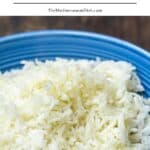
This simple basmati rice recipe makes tender, fragrant rice with fluffy, separate grains. Use the stovetop or rice cooker method for an easy, versatile side dish.
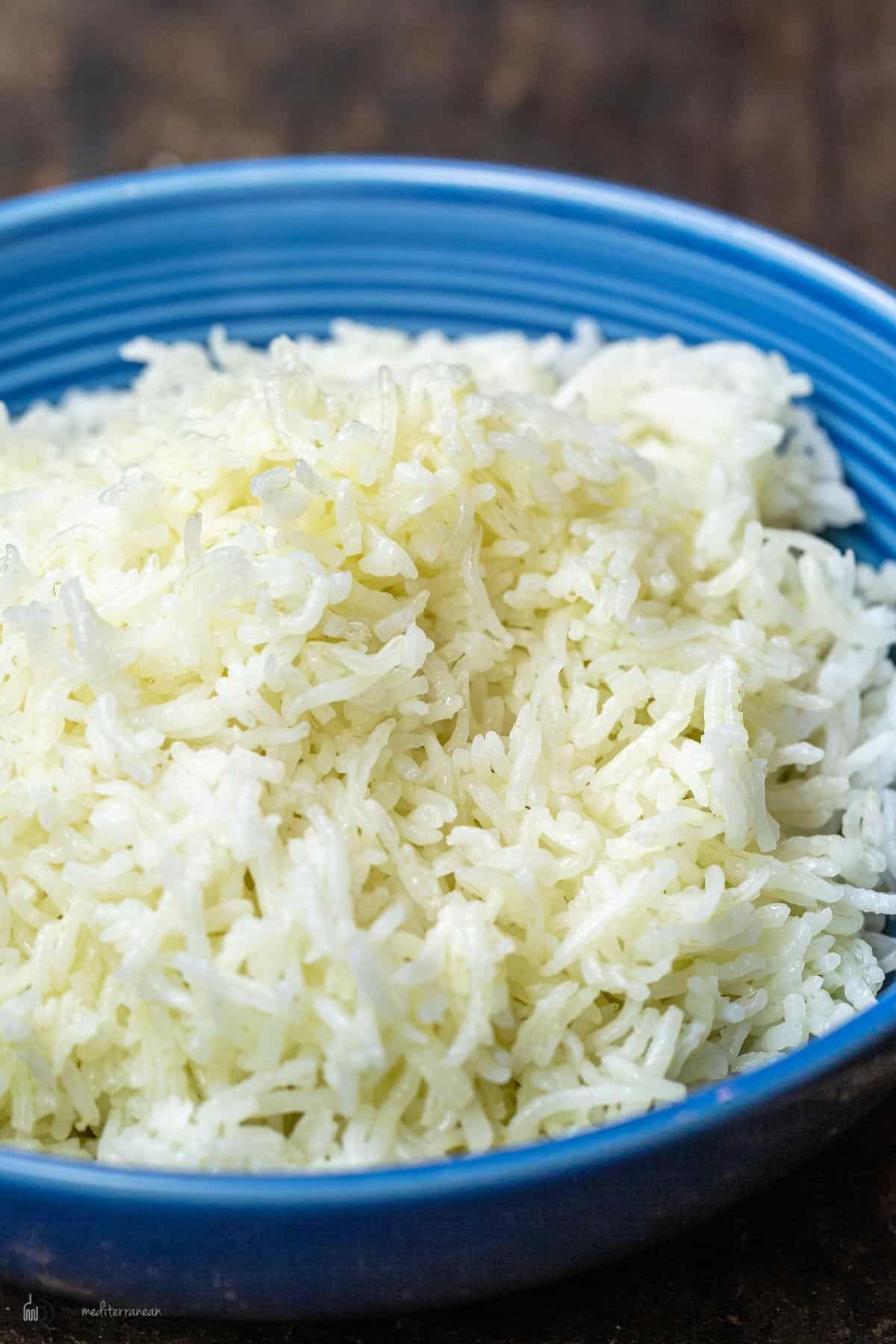
My Go-To Basmati Rice Recipe
Basmati rice is one of my go-to sides for saucy stews, curries, and easy weeknight dinners. I use a simple ratio of 1 cup rice to 1 1/2 cups water, plus a splash of extra virgin olive oil—my Mediterranean twist for bringing out the rice’s lightly nutty flavor.
Basmati is a fragrant long-grain white rice traditionally grown in India, Pakistan, and Nepal. It is a staple in South Asian cooking and is also popular throughout parts of the Middle East. When cooked properly, the grains stay light, tender, and fluffy rather than sticking together.
You do not need to soak the rice for this recipe, but you do need to rinse it well. Rinsing removes excess surface starch, toasting the grains in olive oil builds flavor, and a short rest after cooking allows the rice to finish steaming.
What Is the Right Basmati Rice-to-Water Ratio?
For this basmati rice recipe, use 1 cup of rice to 1 1/2 cups of water. This ratio is important: Adding significantly more or less water will change the rice’s final texture.
Use the same rice-to-water ratio for the stovetop and rice cooker methods. If you use a rice cooker, select its normal or regular rice setting and follow the manufacturer’s safety instructions.
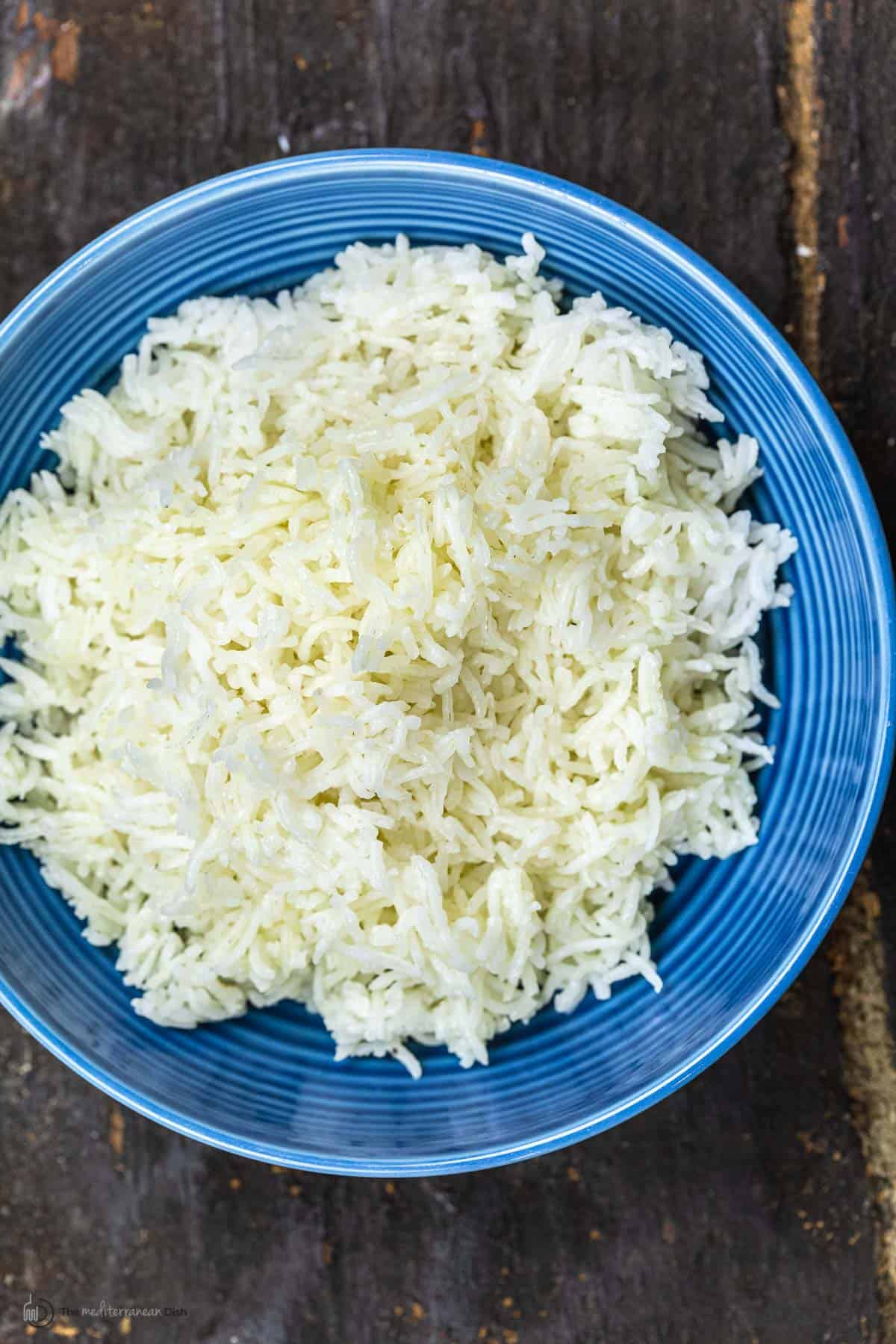
Ingredients for This Basmati Rice Recipe
You need only rice, water, olive oil, and salt for this recipe. Cardamom and bay leaves are optional, but they add another layer of fragrance.
- Basmati rice: Use white basmati rice. I have cooked both Royal and Dunar brands successfully, but you may find other options at your grocery store.
- Extra virgin olive oil: Olive oil is not traditional, but it is one of my secrets to more flavorful basmati rice. Toasting the grains in a splash of good extra virgin olive oil brings out their natural nuttiness.
- Water: The rice absorbs the water as it cooks, so measuring it accurately is essential.
- Kosher salt: Season the rice before covering the pot so it is flavorful throughout.
- Cardamom pods and bay leaves: These optional flavor-makers give the rice a warm, aromatic quality. Remove them before fluffing and serving the rice.
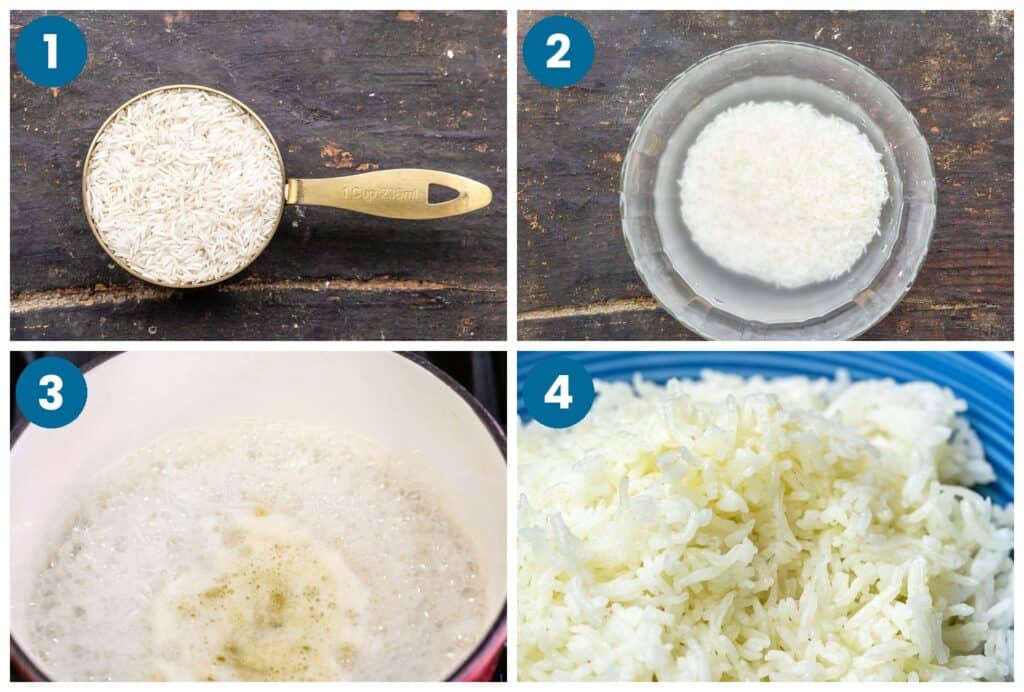
How to Cook Basmati Rice on the Stove
This stovetop method uses 1 cup of basmati rice and 1 1/2 cups of water. Keep the pot covered while the rice cooks so none of the steam escapes.
- Rinse the rice. Put the rice in a bowl and rinse it with cold water four or five times, draining the water after each rinse. Continue until the water runs clear. This is rinsing, not soaking—the rice does not need to sit in the water.
- Toast the rice. Heat the olive oil in a medium nonstick pot or saucepan over medium-high heat. Add the rinsed rice and toss until every grain is coated with the oil. Any moisture clinging to the rice will evaporate as you toast it. Season with a good pinch of kosher salt.
- Add the water and optional spices. Pour in the water. If you are using the cardamom pods or bay leaves, add them now.
- Cover and cook. Bring the water to a boil, then immediately reduce the heat to low and cover the pot. Cook without lifting the lid for 15 to 20 minutes, until the rice has absorbed the water.
- Let the rice rest. Turn off the heat, but leave the pot covered and undisturbed for 5 minutes. Remove the cardamom pods and bay leaves, then fluff the rice gently with a fork and serve.
How to Cook Basmati Rice in a Rice Cooker
For basmati rice in a rice cooker, use the same ratio of 1 cup rice to 1 1/2 cups water as the stovetop method.
- Rinse the rice. Rinse the basmati rice four or five times, or until the water runs clear. Drain it well.
- Combine the ingredients. Add the rice, water, olive oil, and kosher salt to the rice cooker. Add the cardamom pods and bay leaves, if using, and stir to combine.
- Cook the rice. Secure the lid and select the normal setting, sometimes labeled regular or sushi.
- Let it rest. When the cooking cycle finishes, leave the rice covered and undisturbed for a few more minutes. Remove the cardamom and bay leaves, then fluff and serve.
How to Make Basmati Rice Fluffy, Not Sticky
Sticky or gummy basmati rice usually comes down to two things: excess surface starch or too much water. These tips help prevent both.
- Rinse, but do not soak. Rinsing washes away excess surface starch that can make the rice sticky or gummy. This recipe does not require soaking.
- Measure the water accurately. Use 1 1/2 cups of water for every 1 cup of basmati rice. Even a small change can affect the texture.
- Use a nonstick pot. This helps prevent the rice from catching on the bottom as it absorbs the water.
- Toast the rice in olive oil. This step is not traditional, but I love the extra flavor and nuttiness it brings.
- Keep the lid closed. Lifting the lid releases the steam the rice needs to cook evenly.
- Do not skip the rest. I have found that 5 minutes of covered resting time makes a real difference. It allows the rice to finish steaming so the grains are tender and fluffy.
How Long Does Basmati Rice Take to Cook?
On the stovetop, basmati rice cooks covered for 15 to 20 minutes. Leave it covered for another 5 minutes after turning off the heat before you fluff and serve it.
Rice-cooker timing varies by machine. Use the normal or regular setting, then allow the cooked rice to rest for a few minutes before opening the lid.
What to Serve with Basmati Rice
This fragrant rice is mild enough to pair with almost anything, but it is especially good for catching every drop of a rich sauce. Serve it with cilantro lime chicken, Moroccan vegetable tagine, or saucy Moroccan fish.
For a simple grilled dinner, pair it with juicy lamb kabobs and a fresh salad. You can also use it as the base of a grain bowl with roasted vegetables, hummus, and a drizzle of tahini sauce.
How to Store and Reheat Basmati Rice
Transfer leftover rice to a shallow, airtight container and refrigerate it within 2 hours of cooking. Properly stored, it will keep in the refrigerator for 3 to 4 days.
To reheat basmati rice on the stovetop, add a small splash of water, cover the pot, and warm it over low heat. You can also reheat it in a covered microwave-safe dish. Heat leftover rice until it is steaming hot and reaches 165°F.
Can You Freeze Cooked Basmati Rice?
Yes. Portion the cooled rice into freezer-safe containers or bags and freeze it for up to 3 months. Freezing individual servings makes it easy to reheat only what you need.
You do not need to thaw the rice first. Add a splash of water, cover, and reheat it directly from frozen in the microwave until steaming hot.
Make Rice the Star of the Meal


Basmati Rice Recipe (Two Ways)

Ingredients
- 1 cup basmati rice
- 1 to 2 tablespoons extra virgin olive oil
- 1 1/2 cups water
- Kosher salt
- 3 cardamom pods, lightly crushed, optional
- 2 dry bay leaves, optional
Instructions
Rinse the Rice
- Rinse the rice. Put the rice in a bowl and rinse it with cold water four or five times, or until the water runs clear. Drain.
Stovetop Method
- Toast the rice. Heat the olive oil in a medium pot or saucepan over medium-high heat. Once the oil begins to shimmer, add the rice and toss until well coated. Season with a good pinch of kosher salt.
- Add the water. Pour in the water. Add the cardamom pods and bay leaves, if using.
- Cover and cook. Bring the water to a boil. Reduce the heat to low, cover the pot, and cook without lifting the lid for 15 to 20 minutes, until the rice has absorbed the water.
- Let the rice rest. Turn off the heat and leave the rice covered and undisturbed for 5 minutes. Remove the cardamom pods and bay leaves, then fluff the rice with a fork and serve.
Rice Cooker Method
- Combine the ingredients. Add the rinsed rice, olive oil, water, and a good pinch of kosher salt to your rice cooker. Add the cardamom pods and bay leaves, if using, and stir to combine.
- Cook the rice. Secure the lid and select the normal setting, sometimes labeled regular or sushi. Follow your rice cooker’s operating and safety instructions.
- Let the rice rest. When the cooking cycle finishes, leave the rice covered and undisturbed for a few more minutes. Remove the cardamom pods and bay leaves, then fluff and serve.
Recipe Notes
- Rice brands: I have used Royal and Dunar basmati rice successfully, but you may find other options at your grocery store.
- Rinse, but do not soak: Rinsing away the excess surface starch helps keep the cooked rice from becoming sticky or gummy. This recipe does not require soaking.
- Rice-to-water ratio: Use 1 1/2 cups of water for every 1 cup of basmati rice.
- Rice cooker: I do not own a rice cooker, but I borrowed one to try this method. Because machines vary, review your rice cooker’s instructions before you begin.
- Storage: Refrigerate leftover rice in an airtight container within 2 hours of cooking. It will keep for 3 to 4 days. Freeze for up to 3 months.
- Shop this recipe: Visit our shop for quality extra virgin olive oil.
Nutrition
Nutrition information is automatically calculated, so should only be used as an approximation.
Shop Suzy’s curated selection of Mediterranean olive oils, spices, and more.
Try Our Authentic Italian Olive Oil
Hand-picked and cold-extracted Extra Virgin Olive Oil from 100% Nocellara del Belice Sicilian olives.











Your instructions for cooking rice were the best I’ve encountered so far. The resulting rice was fluffy and tasty, without a bit of sogginess or stickiness. So easy too! One tip I might have for novices (like me) is to cook the rice in a pot with a glass lid. I don’t know why but for me it gives me comfort to see no water on the side of the pot when I tip it to one side gently, making sure that all water has been absorbed properly. Thank you for the great instructions!
Some basmati rices, especially 1121 which is common with DaWaat, Lal Qilla, Falak, and a few others, need a higher ratio of water to rice. After rinsing, even a short soak of 5 or 10 minutes will produce a much longer grain. I usually use a Pakistani 1121, rinsed then soaked for 15 minutes. I bring a heavy clad or aluminum base stainless pan (never sticks) and bring 2 cups of water to the boil for every cup of rice, I add slightly more salt at 3/4 teaspoon per cup of rice (accommodating for the greater water content) and then add small knob of butter or ghee. Olive oil imparts its own taste to the rice, if the oil is good quality. For me, that subtracts from the flavour of a good basmati. I add the rice to the boiling water and cover (what is known as dum in South Asia) and cook on low heat for 15 minutes and let rest at no heat for a further 5. Then I remove the lid and let stand until no longer steaming. With that open lid resting, fluffing with a fork does less damage to the grain. While still steaming, the grains can break or get mushy when fluffing. For flavour, I soak a few strands of good Persian or Kashmiri saffron in a teaspoon of boiling water and add when fluffing, stirring only enough to bring the saffron to about a third of the dish. You are now ready for a pulao, the top layer of a biryani, or a stand alone with a masala of your choice. It makes a fantastic mandi. I am partial Pakistani rice, which I find more aromatic, especially Falak. Thanks for allowing me to share. I tried your method with traditional basmati (non 1121) and it works very well. I subtracted the one star because the olive oil imparted a flavour that subtracted from the rice. I used Royal.
First time my basmati rice turned out PERFECT!!
Thank you
You say to toast the rice over medium heat then add the water and bring to a boil. When you do that the pot is so hot from toasting the rice that the water smokes the whole room once you add it. And it’s already boiling immediately as the pot was already at medium high heat to toast the rice. I think toasting the rice in a separate pot would make more sense no? Then add the rice ti a separate pot that you add water to and bring to a boil
I made it with regular store long grain white rice and it turned out great! I’m trying with butter next time.
The herb you used as a garnish at the end of the video, was that Coriander? My eyesight is going so I was not sure.
Hi, Rannith. Suzy garnished with Italian parsley here, but coriander (cilantro) would also be delicious.
Also after I have cooked it for 15 minutes and let it stand for 10……one thing I’m noticing is that it is clumping on the bottom of the pan…..why would it be doing this?
Nicest rice I’ve probably ever made – no clumping👌
Wooo-whooo! So glad it worked well for you!
Hello. Does it matter what temperature of thr water you put in for the rice? Do you put boiled or tap water?
Hi, Nat. You’ll want to just use water straight from the tap here. No need to boil first.
I have never cooked basmati rice before your recipe sounds perfect, but I am wondering…
You say not to uncover the rice for 15 to 20 minutes and then to let it set an additional five minutes. But if we do not look at the rice, how are we to know if we should cook it for 15 minutes, or 20 minutes?
Hi, Karen. You can take a peek after 15 minutes. If it still needs more time for all of the water to absorb, let cook for another 5 minutes before resting.
I live at high altitude, and have found that a rice cooker works best for cooking rice. However, I’m unsure if I should follow your measurements, 1 cup rice + 1 1/2 cups water. Usually I use 3/4 cup rice + 9 oz water. I would really appreciate some clarification on this. Thank you.
Hi, Caroline. If you’ve have success using 3/4 cup rice and 9 oz. water with your rice cooker, then go ahead and stick with that. Appliances do vary, so while the rice-to-water ratio worked in the rice cooker we used when testing the recipe, adjustments may need to be made depending on your particular rice cooker brand.
yep! Perfect! Did it with onion and bay leaf and was delicious!
Wow, can not believe how perfect my rice turned out!!!!! Best EVER, and wrote out your recipe however forgot to write down the timing. Took me forever to find your site again, persistence paid off, I found YOU. Think this will make my stepson jealous!! Thank you so much. Any further suggestions on Jasmine rice? Happy Easter!
Yay! Love to hear this! We don’t have anything for jasmine rice at the moment, unfortunately. Suzy most often works with basmati.
Hi Suzy! Excited to make this tonight with the Greek Green Bean Salad and the Soutzoukakia!
What color of cardamom pods do you use for this recipe? I think this time I’ll try green but I have black as well! I’m going off of size here; my black pods are HUGE! 😀
Thanks!
Hello! Suzy used green cardamom pods here. Hope you enjoy the recipe!
This is arguably the best rice recipe I have ever used. It is my new go to 🙂
I added 3 tablespoons of butter to the water, and a few sprigs of parsley and cilantro before covering. Can’t wait to try it with the cardamom and Bayleaf next time!
I just made this rice. Finally after years and years of it being sticky and throwing it out, this is delicious 🙂
Yay!
Hi, tried this method today, it didn’t burn/stick on the bottom but there was either too much water or it only needed 10-15mins instead of 15-20mins (plus the extra mins resting time) or both – I always wash & soak my rice too. It was nice and fragrant: I forgot the bay leaf, but I added cinnamon, 6 cloves and half a star anise, my wife loved it, but the rice was overcooked for my liking. Deffo will try it again though, I obviously need to tweak the recipe and experiment, the brand of rice is a big variable, they’re all different