

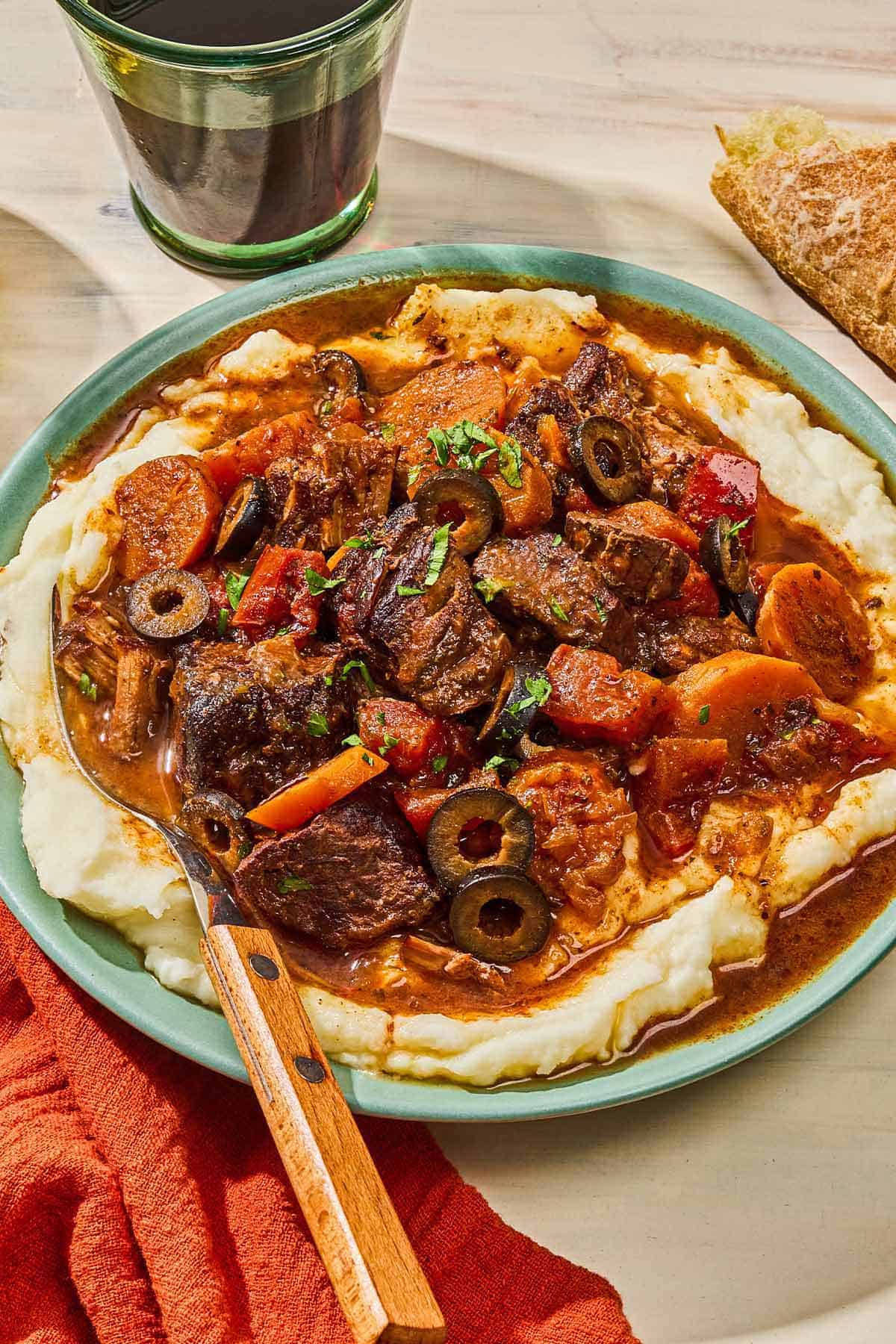
Daube Provençale is the South of France’s version of a beef stew, braised until meltingly tender. Olives and orange zest make the sauce absolutely sing!
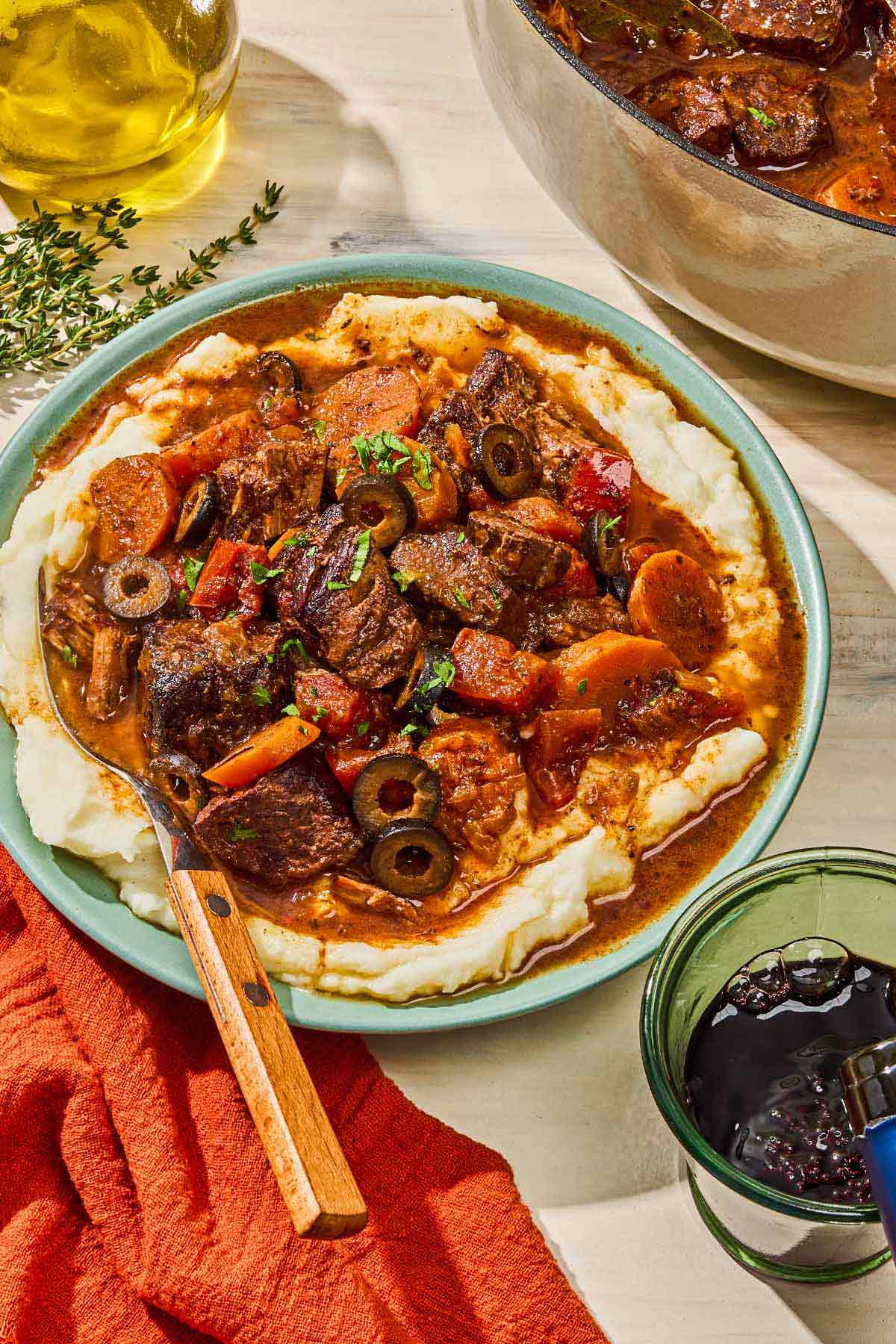
The South of France’s Answer to Beef Bourguignon
I instantly fell in love with daube Provençale, often just called daube, when I moved to Marseille years ago. It’s a distinctive beef stew that’s hearty, without being heavy. I find it perfect for fall evenings or a long leisurely Sunday lunch. It’s hard to explain, but it has some of Provence’s perennial sunshine in it. Perhaps it’s the inclusion of olives that makes it feel sunny to me, or that it warms you up inside. Plus, it’s a meal that is generous in its yield, so it’s meant to be shared.
Daube was one of the first recipes I learned to make in Marseille, and that was a journey in itself. People all over Provence, and especially in Marseille, are generally friendly “yappers.” In my experience, they happily chat away to anyone, even when they know you don’t speak French fluently.
No matter who I asked how to make daube—whether the butcher, the olive seller, or my landlady—they all generously shared suggestions. Through these conversations, I not only improved my French, but I also came to understand that no two daubes are identical. I realized to make a truly authentic daube, I needed to infuse my own character in it too! Here’s my version of this iconic French dish.
What is Daube Provençale?
Daube Provençale is a beef stew inspired by the classic boeuf Bourguignon, from Burgundy, but made with a Provençale temperament. The version from Provence doesn’t contain the potatoes, butter, bacon, lardons, pancetta, or stock typically found in the Burgundian version.
Instead, Mediterranean ingredients—olive oil, tomatoes, citrus, olives, Herbes de Provence, and sometimes even anchovies—make it a little saltier, zingier, and fruitier than boeuf Bourguignon. It also tends to be a little lighter, although no less cozy.
Daube actually gets its name from the traditional cooking vessel for slow cooked meals, called a daubiere. It’s kind of like the tagine of the South of France!
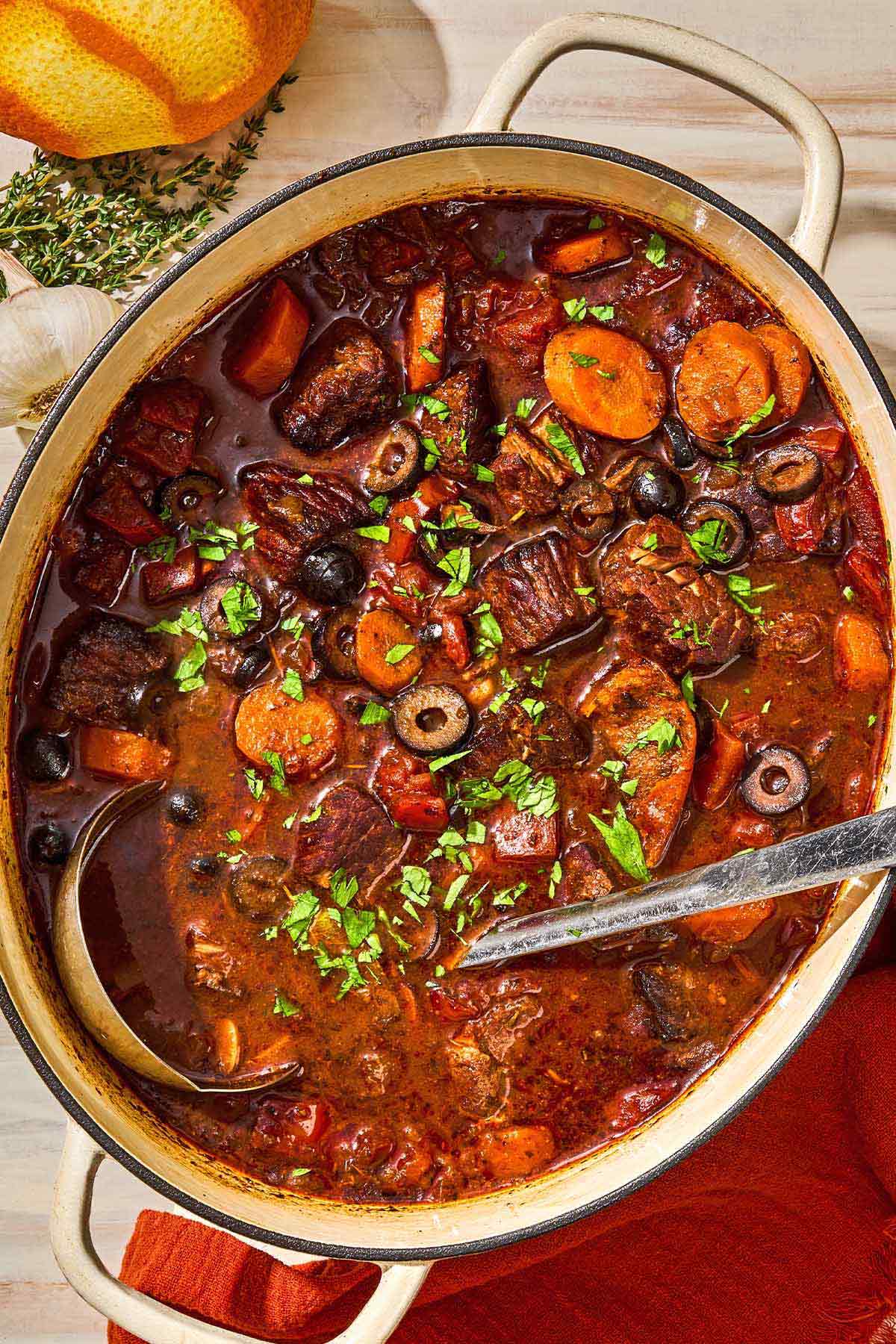
Key Ingredients
- Beef chuck: Deboned and cubed beef chuck is the meat component of this daube. This rich cut cooks until soft and tender.
- Red wine acts as the broth that everything is simmered in. It helps to break down the gelatin and tenderize the meat, while adding depth and complexity of flavor that balances the richness of the beef. To keep it very authentic, track down some wine from Provence or Côtes du Rhône, which are the types of wines commonly used for daube. Otherwise, any full-bodied red wine like Cabernet Sauvignon or Syrah or Shiraz would work. You can even substitute white wine if that’s what you’ve got!
- Extra virgin olive oil: The use of olive oil is what separates the cuisine of Provence from the rest of France. Whereas butter would usually be added to stews in other parts of France, olive oil is the fat of choice here. It’s used for browning both the meat and the aromatics, giving a lightness to the stew. The zingy fruitiness of the oil is also reinforced with the addition of whole olives.
- Aromatics: Onion, garlic, cloves, star anise, orange zest, and bay leaves are the flavor and perfume the broth that cook down into a rib-sticking meat sauce.
- Herbes de Provence: Adding the herb blend named for the region this stew comes from is only fitting. A dry blend of thyme, marjoram, oregano, tarragon, and sometimes lavender, this blend adds heady fragrance that complements the meatiness of the beef.
- Tomatoes and carrots give substance to the broth and bring a subtle sweetness to the otherwise umami-heavy stew.
- Tomato paste ties together all the different flavor elements and helps bolster the tomato base of the sauce.
- Black olives are emblematic of Provençal cuisine, and bring a hit of salty acidity that offers relief in between bites of rich stew. Small Niçoise olives are typical, but my personal preference is kalamata olives because they’re a bit more fleshy and salty. Whatever type you use, choose a pitted option to make the stew easier to eat.
How to Make Daube Provençale
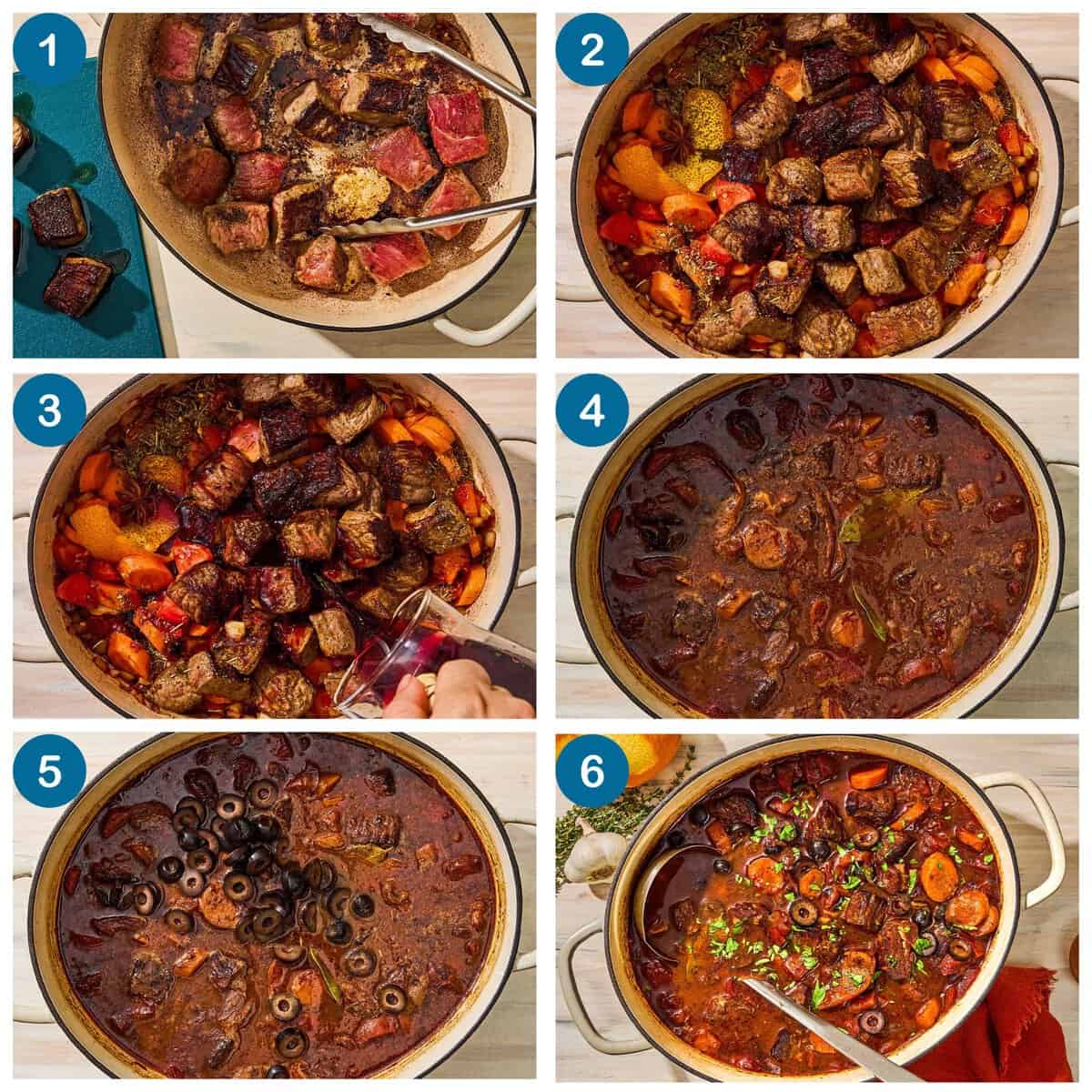
- Brown the beef in batches. In a Dutch oven or heavy-bottomed pot, heat 2 tablespoons olive oil over high heat. In batches, add 2 pounds boneless beef chuck in a single layer, seasoning liberally with Kosher salt and black pepper. Turn the meat until lightly browned on all sides, about 30 seconds to 1 minute per side. Transfer the browned pieces to a plate and set aside.
- Sauté the aromatics and veggies. Add the remaining 2 tablespoons olive oil into the pot and lower the heat to medium-high heat. Add 1 chopped yellow onion and sauté until slightly caramelized and translucent, about 4 minutes. Stir in 3 sliced garlic cloves, 3 sliced medium carrots, 2 chopped medium tomatoes, 1 tablespoon tomato paste, 2 wide strips of orange zest, 4 whole cloves, 1 whole star anise, and 2 teaspoons Herbes de Provence. Allow this mixture to caramelize for about 2 minutes, then return the meat and its accumulated juices to the pot and stir to coat with the aromatics.
- Deglaze the pan. Pour 2 cups red wine and 1 cup water into the pot, scraping the bottom with a wooden spoon to release any fond. The meat should be almost fully submerged with just a few small bits poking out of the water (you may add a little more water if needed). Let it come to a boil for 3 minutes to allow some of the alcohol to evaporate.
- Simmer. Add 2 teaspoons salt to the pot, along with 2 bay leaves and give everything a stir. Turn the heat down to low or medium-low, a slow simmer, and cover the pot. Cook until the meat is tender and the sauce is thickened. This takes about 4 hours 30 minutes. In the last hour, you can crack the lid of the pot slightly to allow some slow evaporation to aid in the sauce reduction. In the final 15 minutes, stir in 1/2 cup pitted black olives.
- Finish and serve. The meat is ready when it’s nice and tender, easily breaking apart when you push it with a wooden spoon. Serve the daube warm over pasta, rice, steamed potatoes, or scoop it up with crusty bread.
Make it Your Own
Daube is one of those stews that every household makes differently and no two daubes are the same. You can use the building blocks of this stew to make it your own using what you have on hand.
- Use different types of protein: The essence of daube is to take an inexpensive cut of meat that’s a little tough, and slow cook it until it’s meltingly soft. Beef chuck is great, but you can also use beef shank, cheeks, neck, short ribs, or even brisket. You can even move away from beef altogether and use any hearty cut of meat you’d like. Some families like to make daube with duck, goose, rabbit, or venison, so any of those meats will work wonderfully too.
- Pack more veggies in: I’ve eaten daube with any number of fall and winter vegetables in it, including leeks, potatoes, chard, turnips, Brussels sprouts, and mushrooms. Whatever you add in, consider the cooking time for that particular vegetable. Tender vegetables will cook faster; add them near the end of the total cooking time. That is, unless you don’t mind them basically melting into the sauce, which is also delicious.
- Play with aromatics: All kinds of aromatics work well in daube. Use fennel to pump up the anise taste, or opt for a couple of shallots instead of onion for a subtle sweetness. If you want to be even more French about it and get a little cheffy, you can also make a bouquet garni of fresh herbs by wrapping up some sprigs of thyme, marjoram, oregano, and/or tarragon with some twine and add it while the stew simmers. Fish it out of the pot before eating.
- Make it without alcohol: Red wine is a classic ingredient in daube, but if you’d prefer to make it without alcohol you can substitute the wine with beef or chicken stock. Add a splash—a tablespoon or so—of red wine vinegar or balsamic vinegar to replace the wine’s acidity.
Perfect Pairings
Daube was the first meal I was brave enough to cook for my French friends, and they raved about it, something that’s not easy (near impossible) to achieve, mind you! Now, it’s my party trick whenever I want to feed a few loved ones, especially on a cloudy day when we need some sunshine.
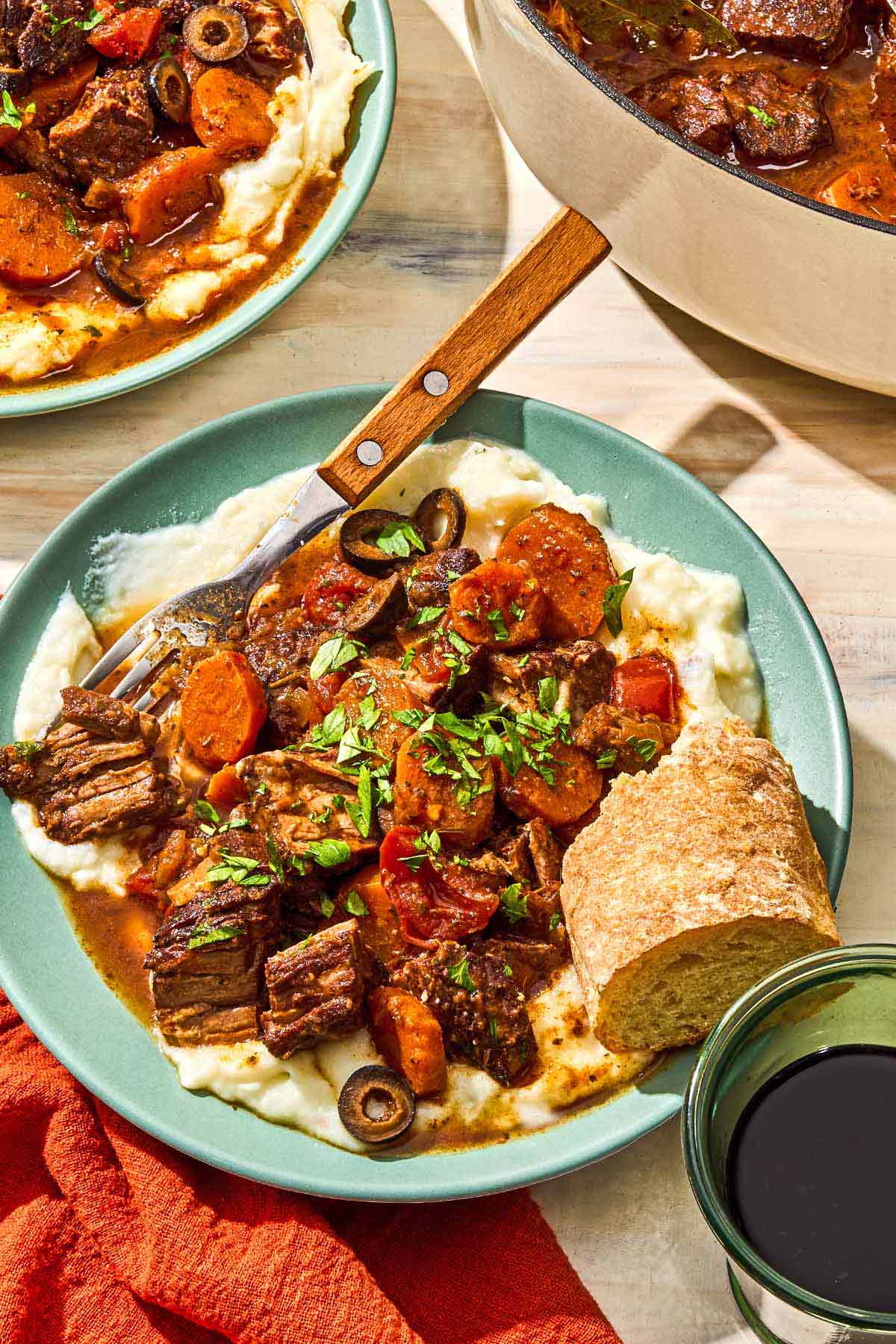
- Add a carb: I usually serve daube with pasta, fluffy white rice, crusty bread—like this fougasse—or some steamed or mashed potatoes. This creamy polenta would also be great for soaking up all the saucy stew.
- Make a South of France spread: To serve a truly Provençale meal, make some Panisse or Pissaladière as a starter or side dish.
- Give it some green: For a refreshing break from the richness of the meal, try this orange salad with endive and radicchio. The citrus and green olives tie in with the daube beautifully.
Make it Ahead
The leftovers of a daube are always a treat as, like many stews, they taste even better the next day. Make it a day ahead, cool it thoroughly, and then reheat it to experience the best of it. Some of the fat will solidify on top of the stew once chilled. You can leave it in or remove some or all of it before reheating it, if you like. Keep refrigerated in an airtight container for up to 3 days, or freeze it for up to 3 months. Reheat on the stovetop until it bubbles for the best results.
More Slow-Simmered Beef Stews
- Stifado (Greek Beef Stew)
- Sage-Wine Braised Beef Short Ribs and Potatoes
- Ghormeh Sabzi (Persian Beef Stew with Herbs and Dried Lime)
- Middle Eastern Beef Stew Recipe with Green Beans

Ingredients
- 4 tablespoons extra virgin olive oil, divided
- 2 pounds boneless beef chuck, cubed
- Kosher salt
- Freshly ground black pepper
- 1 large yellow onion, finely chopped
- 3 garlic cloves, thinly sliced
- 3 medium carrots, sliced
- 2 medium tomatoes, coarsely chopped
- 1 tablespoon tomato paste
- 2 wide strips orange zest (peeled with a vegetable peeler)
- 4 whole cloves
- 1 whole star anise
- 2 teaspoons Herbes de Provence
- 2 cups red wine
- 1 cup water, plus more if needed
- 2 bay leaves
- 1/2 cup pitted black olives (about 3 1/2 ounces)
Instructions
- Brown the beef in batches. In a Dutch oven or heavy-bottomed pot, heat 2 tablespoons olive oil over high heat. Add the meat in a single layer (you will need to do this in batches so as not to overcrowd the pot), seasoning liberally with Kosher salt and black pepper. Turn the meat until lightly browned on all sides, about 30 seconds to 1 minute per side. Transfer the browned pieces to a plate and set aside.
- Sauté the aromatics and veggies. Add the remaining 2 tablespoons olive oil to the pot and lower the heat to medium-high heat. Add the onion and sauté until slightly caramelized and translucent, about 4 minutes. Stir in the garlic, carrots, tomatoes, tomato paste, orange zest, cloves, star anise, and Herbes de Provence. Allow this mixture to caramelize for about 2 minutes, then return the meat and its accumulated juices to the pot and stir to coat with the aromatics.
- Deglaze the pan. Pour the red wine and water into the pot, scraping the bottom with a wooden spoon to release any fond. The meat should be fully submerged with allowance for small bits to be poking out of the water (you may add a little more water if needed). Let it come to a boil for 3 minutes to allow some of the alcohol to evaporate.
- Simmer. Add 2 teaspoons salt to the pot, along with the bay leaves, and give everything a stir. Turn the heat down to low or medium-low—you want a slow simmer—and cover the pot. Cook until the meat is tender and the sauce is slightly thickened. This takes about 4 hours 30 minutes. Halfway through cooking, open the lid, give it a stir, and check to make sure there is still enough water, adding more if necessary. In the last hour, you can crack the lid of the pot slightly to allow some slow evaporation to aid in the sauce reduction.
- Finish and serve. In the final 15 minutes, stir in the black olives. The meat is ready when it’s nice and tender, easily breaking apart when you push it with a wooden spoon. Serve the daube over pasta, rice, steamed potatoes, or, scoop it up with crusty bread.
Notes
- Shop this recipe: Visit our shop to browse quality Mediterranean ingredients, including the olive oil and olives used in this recipe.
- Make it Ahead: The leftovers of a daube are always a treat as, like many stews, they taste even better the next day. Make it a day ahead, cool it thoroughly, and then reheat it to experience the best of it. Some of the fat will solidify on top of the stew once chilled. You can leave it in or remove some or all of it before reheating it, if you like. It can be kept refrigerated in an airtight container for 3 days, or frozen for up to 3 months. Reheat on the stovetop until it bubbles for the best results.
Nutrition
Bundle and Save!
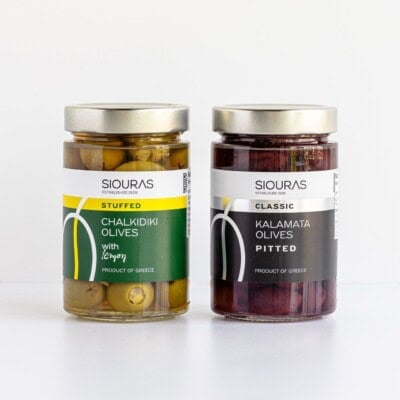
Bring the authentic flavors of Greece to your table with Greek Kalamata Olives and Green Chalkidiki Olives Stuffed with Lemon.