Beef Tagine, the Way I Learned It in Morocco


This post may contain affiliate links. Please read our disclosure policy.

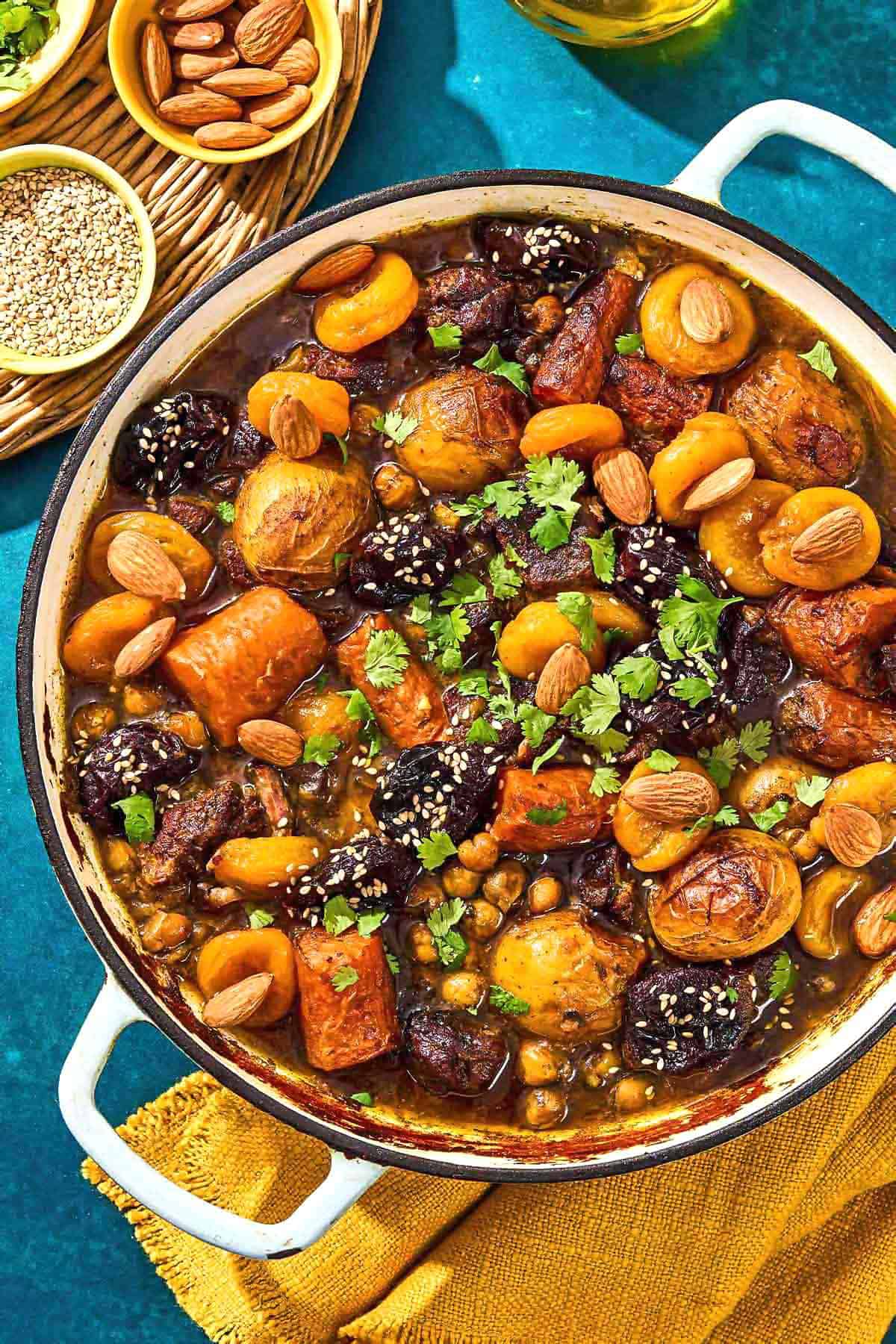
I learned this beef tagine from the auntie I stayed with while working in Morocco, who made it to welcome guests. Tender beef chuck, carrots, potatoes, and chickpeas braise in a Dutch oven with warm spices, finished with sweet dried fruit. You don’t need a ceramic tagine to make it!
A Moroccan Auntie’s Beef Tagine, Made Simple
A ceramic or clay tagine is the emblem of Moroccan cuisine. With its recognizable cone-shaped lid, this pot is used to cook all kinds of flavorful stews.
The meal you make in a tagine is also called a tagine, but thankfully, you can make plenty of tagine recipes without using the namesake cooking vessel. For this beef tagine, succulent morsels of chuck slow cook in a Dutch oven, along with some carrots, potatoes, chickpeas, and a blend of warming spices.
Having worked in Morocco in my young adulthood, I picked up a thing or two from the skilled cook of an auntie I stayed with. Buttery baghrir pancakes on a Sunday morning, immaculate Friday couscous, and even weeknight dinners—I truly can’t remember one subpar meal.
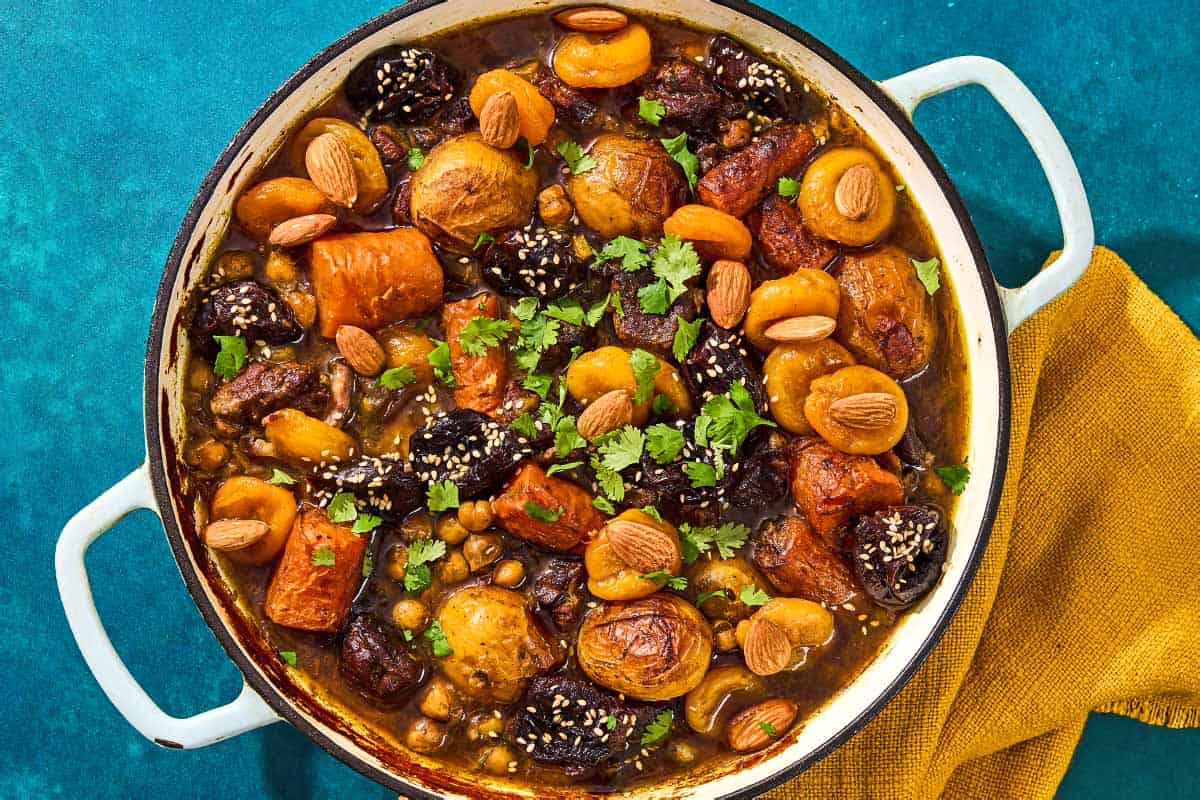
I particularly loved the tagine of beef or lamb she served on special occasions. Soft dried apricots and prunes decorated the tender meat like shiny jewels, and their sweet flavor balanced the richness of the meat beautifully.
This recipe is my adaptation of that tagine. It takes time to cook, but it’s hands-off and all the while, the flavors infuse together, making your home smell amazing.

Key Ingredients
- Extra virgin olive oil: Even when using a richer meat to make a tagine of beef, I find that the flavor is the best when I brown the beef and sauté the vegetables first in olive oil.
- Beef chuck: Deboned and cubed beef chuck is the meat component of this tagine. This gelatinous cut is slow-cooked, absorbing all the spices, until tender.
- Spice blend: Warming spices—cinnamon, coriander, ginger, cumin, turmeric, and saffron— are the flavor backbone of this tagine. Ras el hanout, a popular North African spice blend, reinforces the earthiness of the other spices, and adds a little bit more complexity.
- Aromatics: Caramelized onion and garlic are the sweet base of the braising liquid.
- Hardy vegetables: Baby potatoes and carrotswithstand the tagine’s long-cooking time without disintegrating into mush by the end of it.
- Chickpeas, either jarred or canned, soak up all the rich spiced flavor of the braising liquid.
- Dried fruits: A combination of dried apricots and prunes simmered in some of the tagine’s braising liquid to create a sweet-savory fruit compote. I serve this on top of the tagine. You can serve the compote separately, on the side, so people can add the sweet element to suit their tastes.
How to Make Beef Tagine
- Get ready. Arrange the wire racks in your oven to accommodate a Dutch oven (with a lid on) in the center. Preheat the oven to 350°F. Add saffron threads to a tablespoon or two of warm water and set aside.
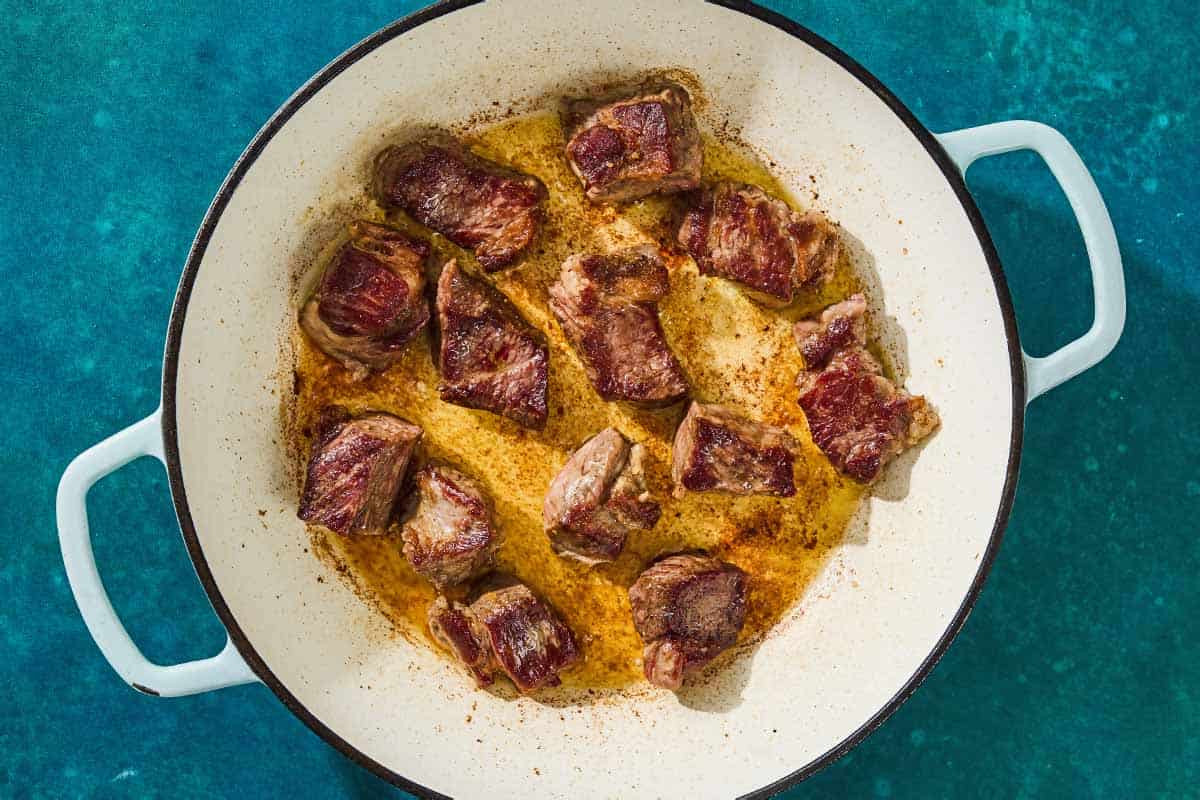
- Brown the beef. In a Dutch oven, heat 2 tablespoons of olive oil over high heat. Add 2 pounds beef chuck cubes in a single layer (you will likely need to do this in batches so as not to overcrowd the pot), seasoning liberally with Kosher salt and black pepper. Turn the meat until lightly browned on all sides, about 1 minute per side. Transfer the browned pieces to a plate as they are done and set aside.

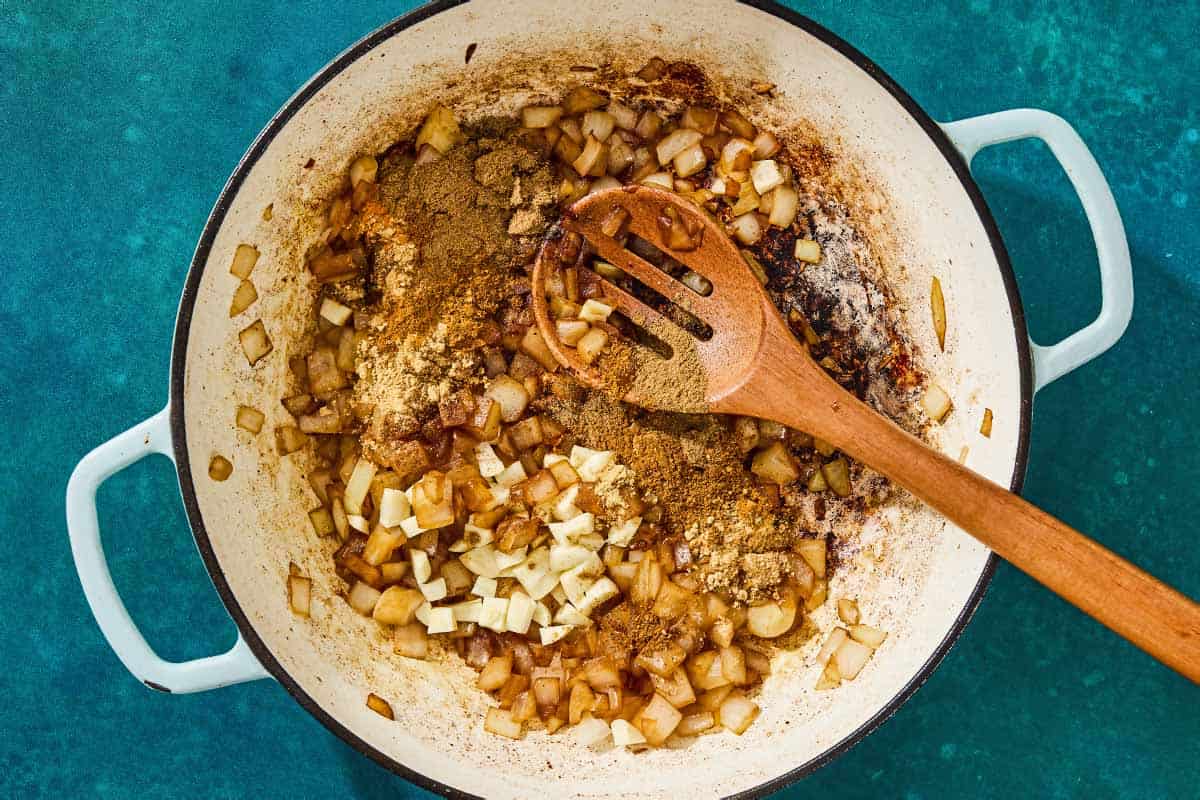
- Sauté the aromatics. Add the remaining 1 tablespoon of olive oil into the pot and lower the heat to medium-high heat. Add 1 chopped onion and sauté until slightly browned and translucent, about 4 minutes. Stir in 3 chopped garlic cloves, 1/2 teaspoon ground turmeric, and 1 teaspoon each of ground cumin, ground coriander, ground cinnamon, ground ginger, and ras el hanout. Sauté for about one minute, then return the meat and its accumulated juices to the pot and stir to coat with the sautéed ingredients.
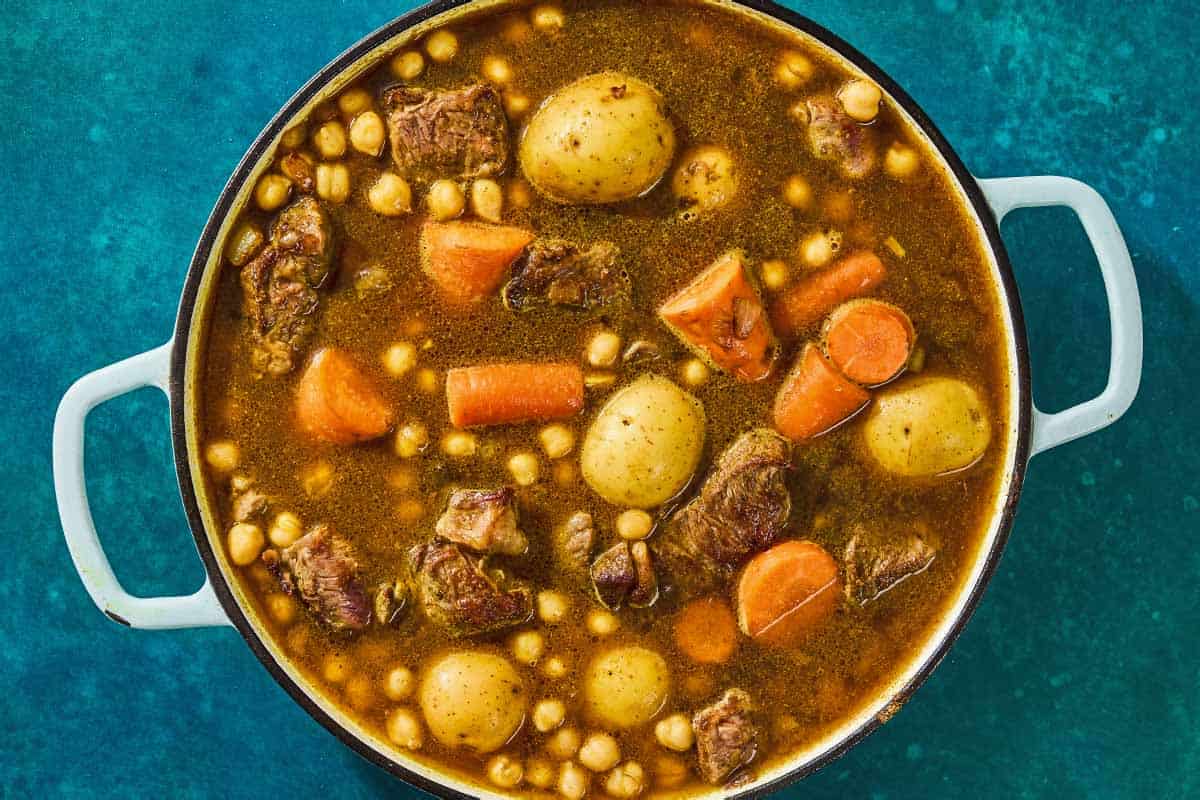
- Build the braising liquid. Add in 4 medium carrots (chopped into chunks), 1 pound whole baby potatoes, 1 14-ounce can drained and rinsed chickpeas, and 4 cups water into the pot, scraping the bottom with a wooden spoon to release any bits of fond. Add the saffron and its water, 2 teaspoons salt, and stir to combine everything. The meat and vegetables should be fully submerged with only small bits poking out of the water. Add a little more, if necessary.
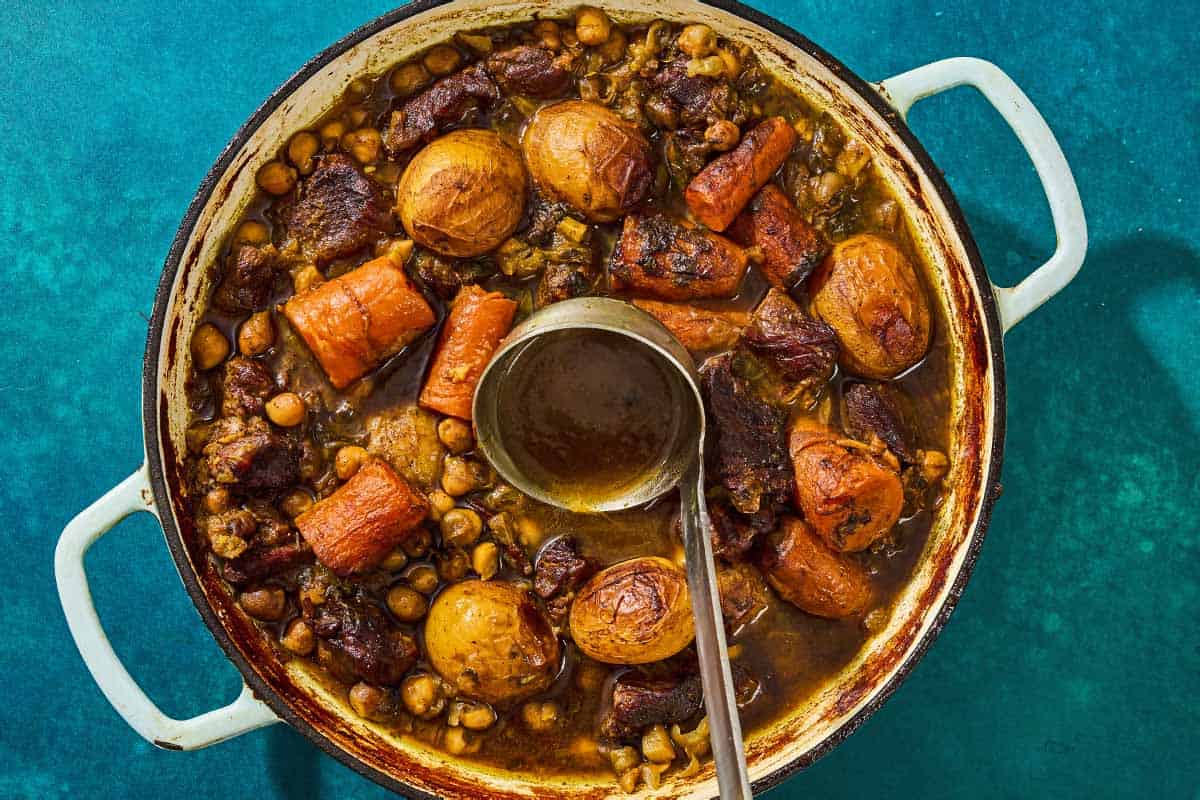
- Slow cook the tagine. Place the lid on the Dutch oven and place it in the oven. Cook until the meat is tender and the sauce has slightly thickened, about 4 hours. Halfway through cooking, open the lid, give it a stir, and spoon out about 1/2 cup of the braising liquid to use in the fruit compote.
- Make the dried fruit compote. In a saucepan mix 1 cup dried (pitted) prunes, 1 cup dried apricots, the reserved braising liquid, 1 cup water, and 2 tablespoons of honey. Turn the heat to medium heat and let simmer, uncovered for about 30 minutes, or until the fruit has softened and the liquid has thickened slightly. Set aside.
- Decorate and serve. Remove the pot from the oven. The meat is ready when it’s nice and tender, easily breaking apart when you push it with a spoon. To serve, drizzle some of the fruit compote liquid over the top of the finished tagine, and lay out the prunes and apricots evenly on the surface. Measure 1 tablespoon sesame seeds and 1 tablespoon whole roasted almonds. For decoration, sprinkle sesame seeds over each prune and place a whole roasted almond over each apricot. Scatter any remaining almonds and sesame seeds all around the tagine. Top with fresh cilantro leaves and serve.

Perfect Pairings
I serve this tagine with fluffy couscous, white rice, or some fresh bread. This easy homemade pita bread would work brilliantly for soaking up all the sauce. Here are a few more ideas for sides:
- For a fresh side dish that matches up to the flavors of the tagine, try this herbaceous Mediterranean farro salad with arugula, walnuts, and feta.
- Double up on flavor (and veggies) by serving it with this herbed couscous with cauliflower.
- Add some zaalouk dip to the mix and you have yourself a Moroccan-inspired feast.
More Mediterranean Beef Braises

Beef Tagine (Dutch Oven)

Equipment
Ingredients
- 3 tablespoons extra virgin olive oil, divided
- 2 pounds boneless beef chuck, cubed
- Kosher salt
- Freshly ground black pepper
- 1 large yellow onion, finely chopped
- 3 garlic cloves, coarsely chopped
- 1/2 teaspoon ground turmeric
- 1 teaspoon ground cumin
- 1 teaspoon ground coriander
- 1 teaspoon ground cinnamon
- 1 teaspoon ground ginger
- 1 teaspoon ras el hanout
- 4 medium carrots (about 10 ounces), cut in thumb-sized chunks
- 1 pound whole baby potatoes
- 1 14-ounce can chickpeas, drained and rinsed
- 4 cups water, plus more if needed
- 1/4 teaspoon saffron threads
- Fresh cilantro leaves
Prune-Apricot Compote
- 1 cup dried, pitted prunes (about 5 ounces)
- 1 cup dried apricots (about 5 ounces)
- 1 cup water
- 2 tablespoons honey
- 1 teaspoon toasted sesame seeds (optional)
- Whole roasted almonds (optional)
Instructions
- Get ready. Arrange the wire racks in your oven to accommodate a Dutch oven (with a lid on) in the center. Preheat the oven to 350°F. Add saffron threads to a tablespoon or two of warm water and set aside.
- Brown the beef. In a large Dutch oven, heat 2 tablespoons of olive oil over high heat. Once it shimmers, add the meat in a single layer (you will likely need to do this in batches so as not to overcrowd the pot), and season it liberally with Kosher salt and black pepper. Turn the meat until lightly browned on all sides, about 1 minute per side. Transfer the browned pieces to a plate as they are done and set aside.
- Sauté the aromatics. Add the remaining 1 tablespoon olive oil into the pot and lower the heat to medium-high heat. Add the onion and sauté until slightly browned and translucent, about 4 minutes. Stir in the garlic, turmeric, cumin, coriander, cinnamon, ginger and ras el hanout. Sauté for about a minute, then return the meat and its accumulated juices to the pot and stir to coat with the aromatics and spices.
- Build the braising liquid. Add in the carrots, potatoes, chickpeas and the water into the pot, scraping the bottom with a wooden spoon to release the fond. Add the saffron with its water, 2 teaspoons of salt, and stir to combine everything. The meat and vegetables should be fully submerged with only small bits poking out of the water. Add a little more, if necessary.
- Slow cook the tagine. Put the lid on and place the pot in the oven. Cook until the meat is tender and the sauce has slightly thickened, about 4 hours. Halfway through cooking, open the lid, give it a stir, and spoon out about 1/2 cup of the braising liquid to use in the fruit compote topping.
- Make the fruit compote. In a saucepan mix the pitted prunes, apricots, reserved braising liquid, water, and honey. Turn the heat up to medium heat and let simmer, uncovered for about 30 minutes, or until the fruit has softened and the liquid has thickened slightly. Set aside.
- Finish and serve. Remove the pot from the oven. The meat is ready when it’s nice and tender, easily breaking apart when you push it with a spoon. To serve, drizzle some of the fruit compote liquid over the top of the finished tagine, and lay out the prunes and apricots evenly on the surface. For decoration, sprinkle sesame seeds over each prune and place a whole roasted almond over each apricot. Scatter any remaining sesame seeds all around the tagine. Top with fresh cilantro leaves and serve.
Recipe Notes
- Shop this recipe: Visit our shop to browse quality Mediterranean ingredients, including the olive oil and spices used in this recipe.
- How to store beef tagine: This tagine gets even better the next day, so it’s a good idea to make it ahead and refrigerate overnight. Keep the fruit compote separate until it’s time to serve. It can be kept refrigerated in an airtight container for 3 days, or frozen for up to 3 months.
- How to reheat beef tagine: Reheat it in the oven, covered, at 350°F for about 30 minutes. I recommend adding a little water before you reheat it because the chickpeas tend to absorb some of the sauce.
Nutrition
Nutrition information is automatically calculated, so should only be used as an approximation.
Shop Suzy’s curated selection of Mediterranean olive oils, spices, and more.
Build Your Own Spice Bundle
Stock your spice cabinet with the vibrant flavors of the Mediterranean. Buy 4 or more spices and save 5%. Buy 8 or more spices and save 8%!