There are countless recipes for pasta al forno—baked pasta—across Italy. But this version, with layers of pasta, meaty ragù, béchamel, and cheese, is the ultimate.
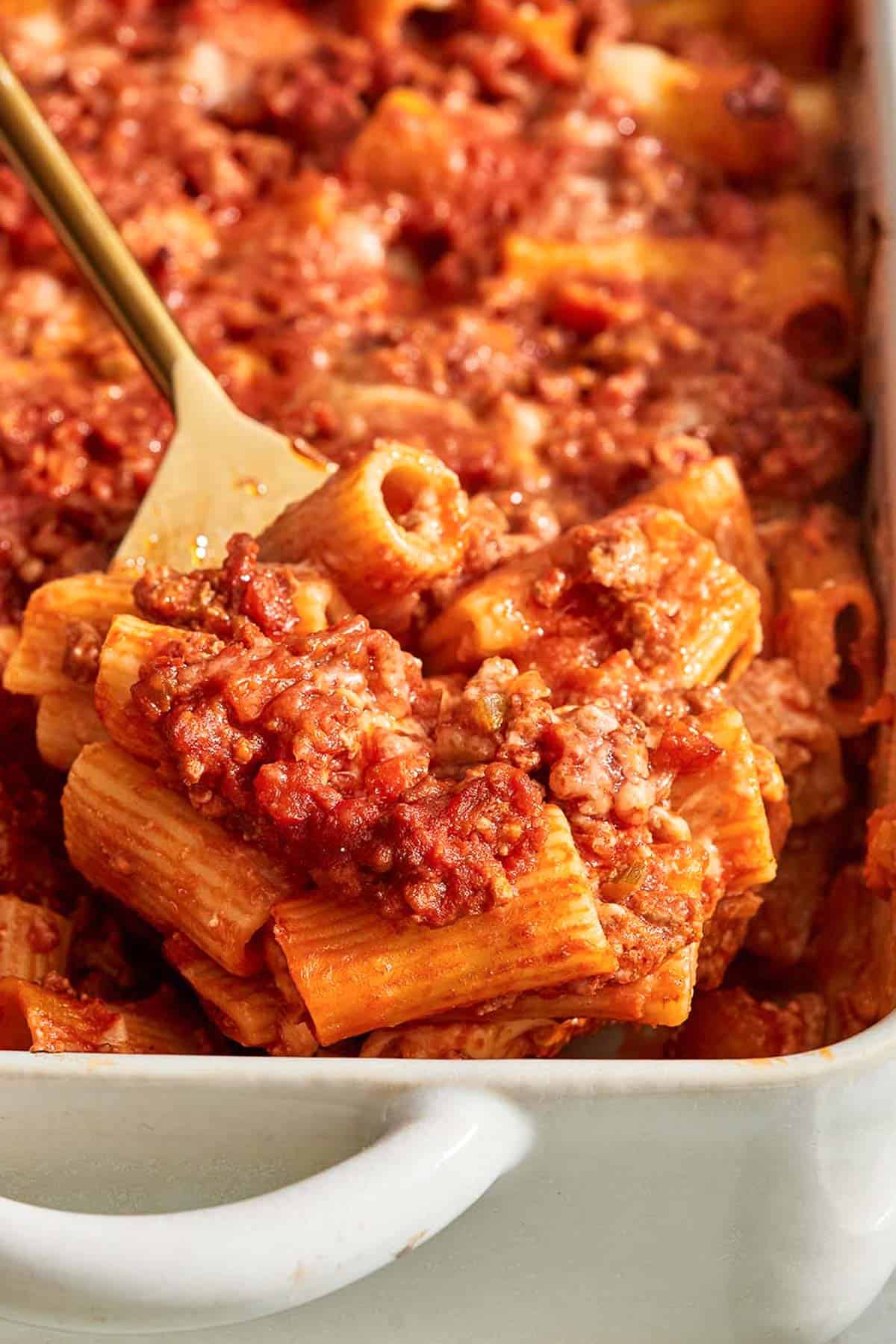
Baked Pasta is A Classic Italian Comfort Food
Pasta al forno was one of my favorite Sunday dinners growing up. When the weather turned cold, my mom would pull out a big terracotta baking dish and start the process. She’d first make a batch of rich meat ragù, followed by creamy béchamel sauce. She folded the sauces into partly cooked rigatoni and layered it all in a baking dish with oozy cheese and freshly grated Parmesan. Once baked, the pasta became browned and crunchy on top, but remained creamy throughout. It’s still one of my favorite dishes to enjoy in fall and winter, with the family gathered around the table for Sunday lunch or dinner.
Although a proper baked pasta requires a little work on the front end—you have to make the ragù and béchamel sauces—it can usually be prepared and assembled well in advance and refrigerated or frozen, so I think of it as a great make-ahead dish.
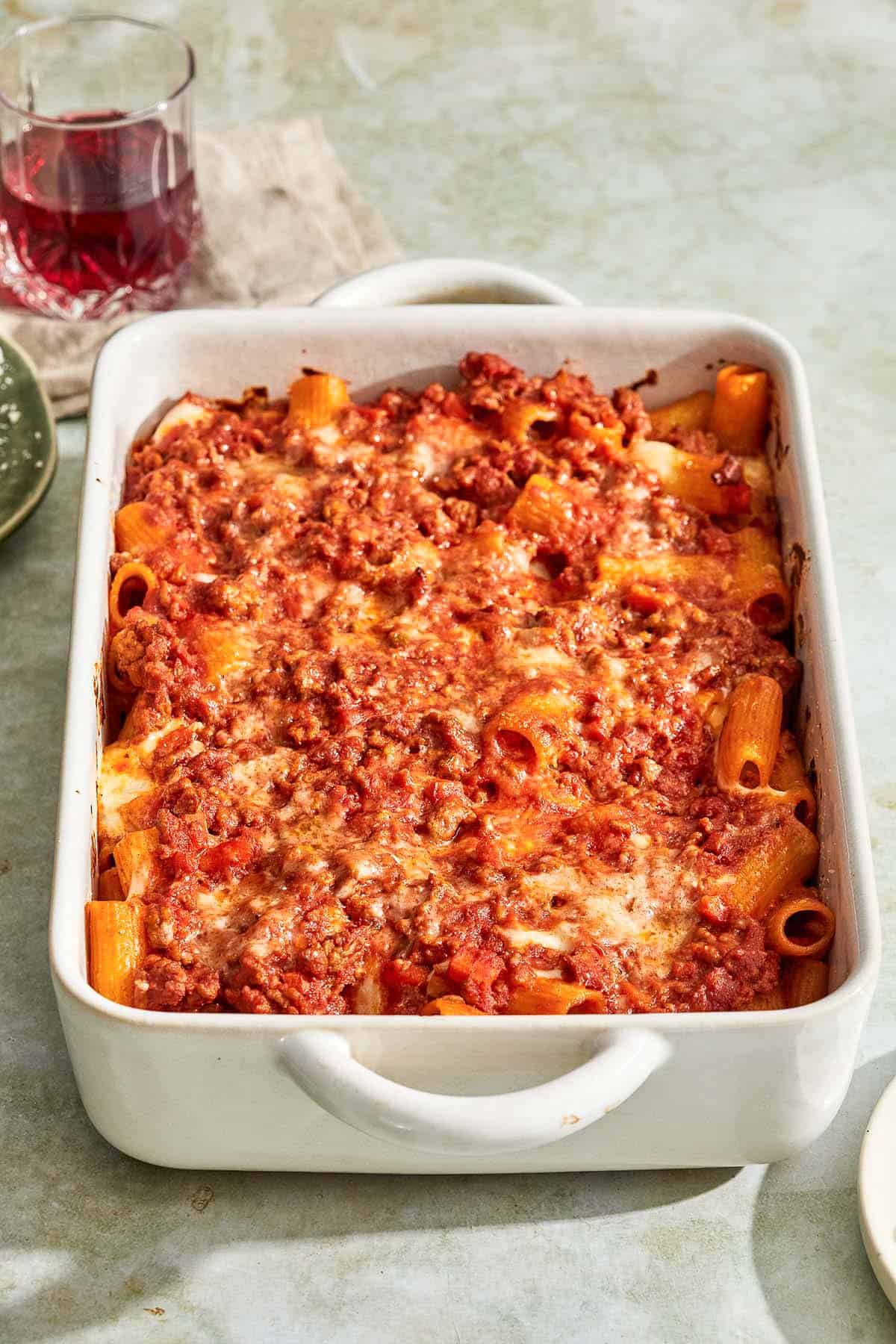
What is Pasta al Forno?
Pasta al forno, or baked pasta, is a generic term that refers to any dish comprising pasta mixed with other ingredients and baked in the oven. Both baked ziti and lasagne alla Bolognese are forms of pasta al forno.
My version with meat ragù and béchamel is considered a classic preparation. It combines elements from both southern and northern Italy. The tomato-based meat ragù is typical of the southern Italian cooking you find in Campania, the region that includes Naples, while béchamel is more associated with the cuisine of the north, especially Emilia-Romagna. As for the pasta, short, tubular pasta shapes such as rigatoni, penne, and mezze maniche are considered best, as they catch and hold sauce well. Plus, their protruding edges brown and turn appealingly crunchy in the oven. However, there are many variations, enjoyed by families all over Italy. Try this classic recipe, then personalize it to suit your family’s tastes.
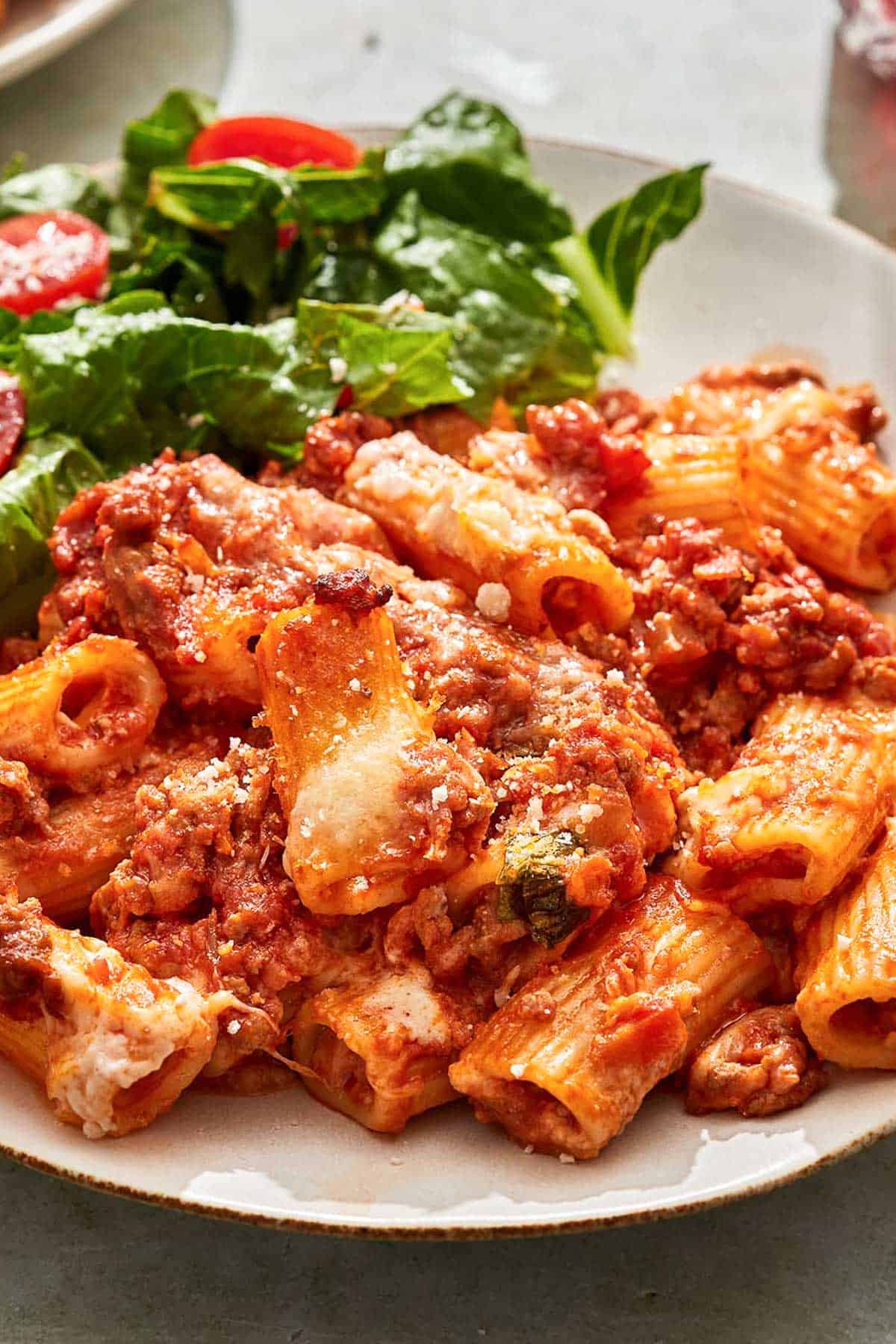
Key Ingredients
There are no fancy or hard-to-find ingredients in this recipe. And because it’s so accommodating, you can make easy substitutions as you like.
For the Ragù
- Aromatics: Carrot, onion, and celery are the holy trinity of Italian aromatics that form the base of many sauces, soups, and stews. Finely minced, they add essential flavors to Italian ragù. I also add a couple of bay leaves to my ragù for additional savoriness.
- Extra virgin olive oil is the flavorful base for sautéing the aromatics.
- Ground meat: I use a combination of beef and pork, with a little sausage thrown in for extra seasoning.
- Wine: I prefer white wine to moisten the meat as it cooks, but either red or white works well.
- Tomato passata or purée: I prefer smooth passata over chunky diced tomatoes or broken-up whole tomatoes for my ragù. Choose a brand that you think tastes fresh; not overly seasoned, heavy, or pasty in texture.
For the Béchamel
- Extra virgin olive oil and butter: I use a combination of olive oil and butter to make my béchamel, which yields a sauce that is creamy, but not too rich. This is an instance where I prefer a smooth olive oil with a buttery flavor. This Nocellara olive oil from Sicily is a greta choice.
- All-purpose flour helps the béchamel thicken to a smooth, velvety consistency.
- Milk gives the sauce its creaminess. You can use either whole milk or 2 percent. Be sure to heat the milk before you stir it in. It doesn’t need to boil, but it should be hot.
- Spices: Just like my mom, I love to spice up my béchamel sauce with a pinch each of salt, white pepper, and nutmeg.
To Put it Together
- Pasta: I love this dish made with rigatoni, penne, or ziti. Any good short, sturdy pasta shape will do.
- Basil: Fresh basil leaves, torn and stirred into the pasta mixture before baking, provide a bright herbal kick.
- Melty cheese: It’s not pasta al forno without some good stretchy cheese. My favorite is a combination of mozzarella and smoked mozzarella. The latter gives the finished dish a subtle but alluring smoky quality. Be sure to use firm low-moisture mozzarella, not the creamy balls of fresh cheese packaged in brine. It melts better than the soft, ultra-fresh stuff.
- Parmesan cheese: Sharp, buttery, umami-rich Parmigiano-Reggiano cheese provides the crowning touch for this savory baked pasta. I fold some into the pasta mixture and sprinkle the rest on top right before baking.
How to Make Pasta al Forno
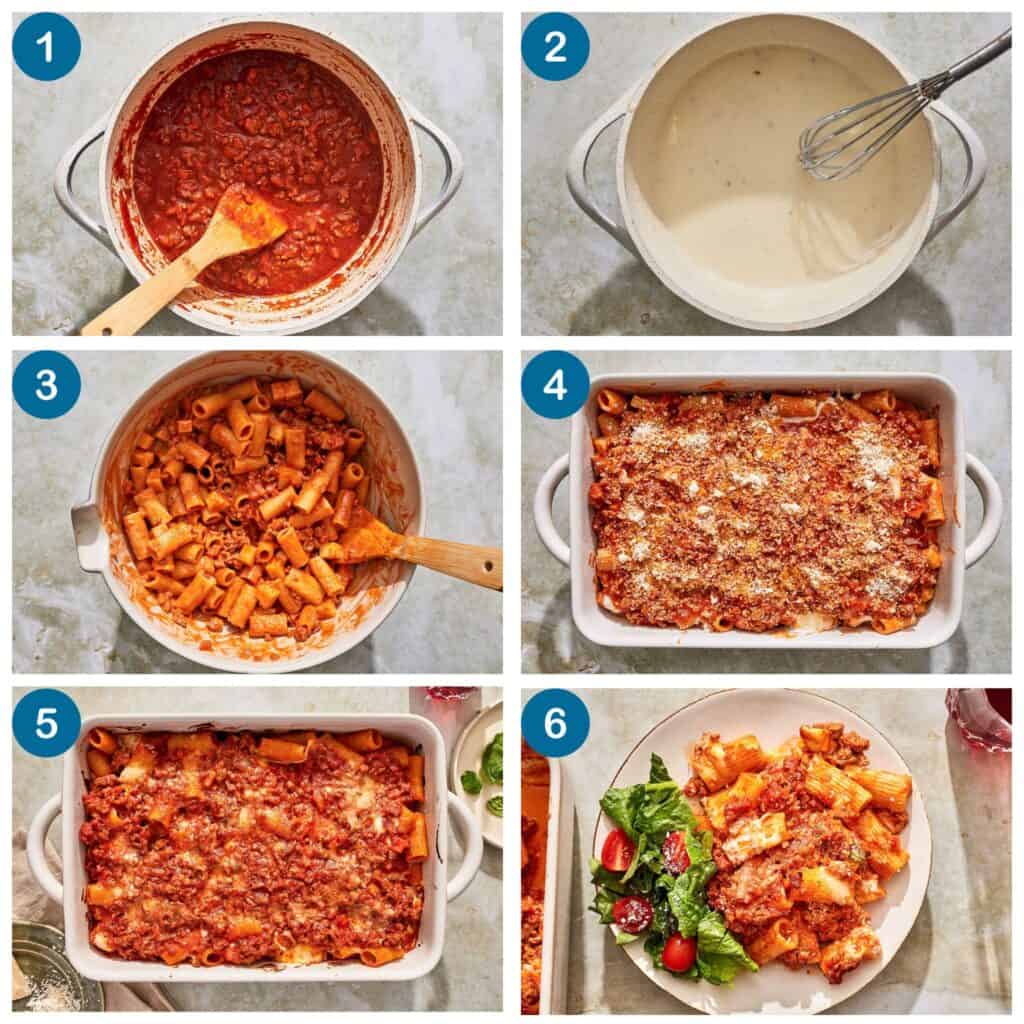
While it takes several steps to make this delicious, hearty baked dish, you can make both the ragù and the béchamel in advance. Here’s how to take on each step.
Make the Ragu and Bechamel
- Make the ragù. Pour 2 tablespoons extra virgin olive oil into a large, wide saucepan or Dutch oven. Add 1 finely-chopped carrot, 1 large finely-chopped celery rib, and 1 small finely-chopped yellow onion. Set the pan over medium-low heat and cook until the vegetables soften, about 8 minutes. Add 1 1/2 pounds ground meat (beef, pork, and pork sausage) and stir to break them up and mix them in with the vegetables. Add in 2 bay leaves. Increase the heat to medium. Sauté the meat until deeply browned, at least 20 minutes and preferably 30 to 45 minutes, for the best flavor. Add a generous pinch each of salt and freshly ground pepper. Add 1/2 cup white or red wine, stirring it into the ground meat mixture and letting it cook for about a minute, until most of it has been absorbed into the meat. Then pour in 1 (24-ounce) jar of tomato passata or purée and bring to a simmer. Reduce the heat to medium-low and simmer gently, partly covered, until the sauce is thickened (it should be spoonable but not at all soupy), 30 to 45 minutes. Remove the bay leaves, cover the pan, and set it aside.
- Make the béchamel. Warm up 2 cups of milk in the microwave or a small saucepan and set aside. Add 2 tablespoons extra virgin olive oil and 1 tablespoon butter to a medium saucepan and warm over medium heat until the butter is melted. Whisk in 3 tablespoons all-purpose flour and cook for 2 minutes, stirring vigorously. Gradually whisk in the warmed milk. Cook for 10 minutes over medium heat, stirring constantly, until the béchamel is nicely thickened. It should be smooth and not too thick, definitely not gloppy. Turn off the heat and season to taste with salt, ground white pepper, and a pinch of nutmeg. Cover the pan until ready to use.
Cook the Pasta and Combine
- Parboil the pasta. Bring a large pot of water to a boil and season it with 1 tablespoon of salt. Cook 1 pound short pasta (such as rigatoni, penne, or ziti) according to package instructions, but remove it from the heat when it is still undercooked—about 3 minutes before al dente doneness. Drain the pasta and place it in a large bowl.
- Combine. Spoon half the ragù and half the béchamel over the pasta and gently fold them in. Fold in 4 ounces each of cubed low-moisture mozzarella cheese and cubed smoked mozzarella cheese, a small handful of fresh basil leaves torn into pieces, and about 1/2 cup grated Parmesan cheese. Taste and season with salt or pepper if needed. Spoon in more ragù if the mixture seems dry.
- Bake. Heat the oven to 375° F. Coat a 9×13-inch baking dish with a little olive oil. Spoon in the pasta mixture, spreading it out in the dish. Spoon any remaining ragù and béchamel on top. Sprinkle the surface with the remaining 1/2 cup Parmesan cheese. Cover with foil and bake in the center of the oven for 15 minutes. Uncover and bake for 15 to 20 minutes longer, or until you can hear it bubbling and the top is nicely browned and crisp around the edges. Let stand for 5 minutes to set slightly before serving.
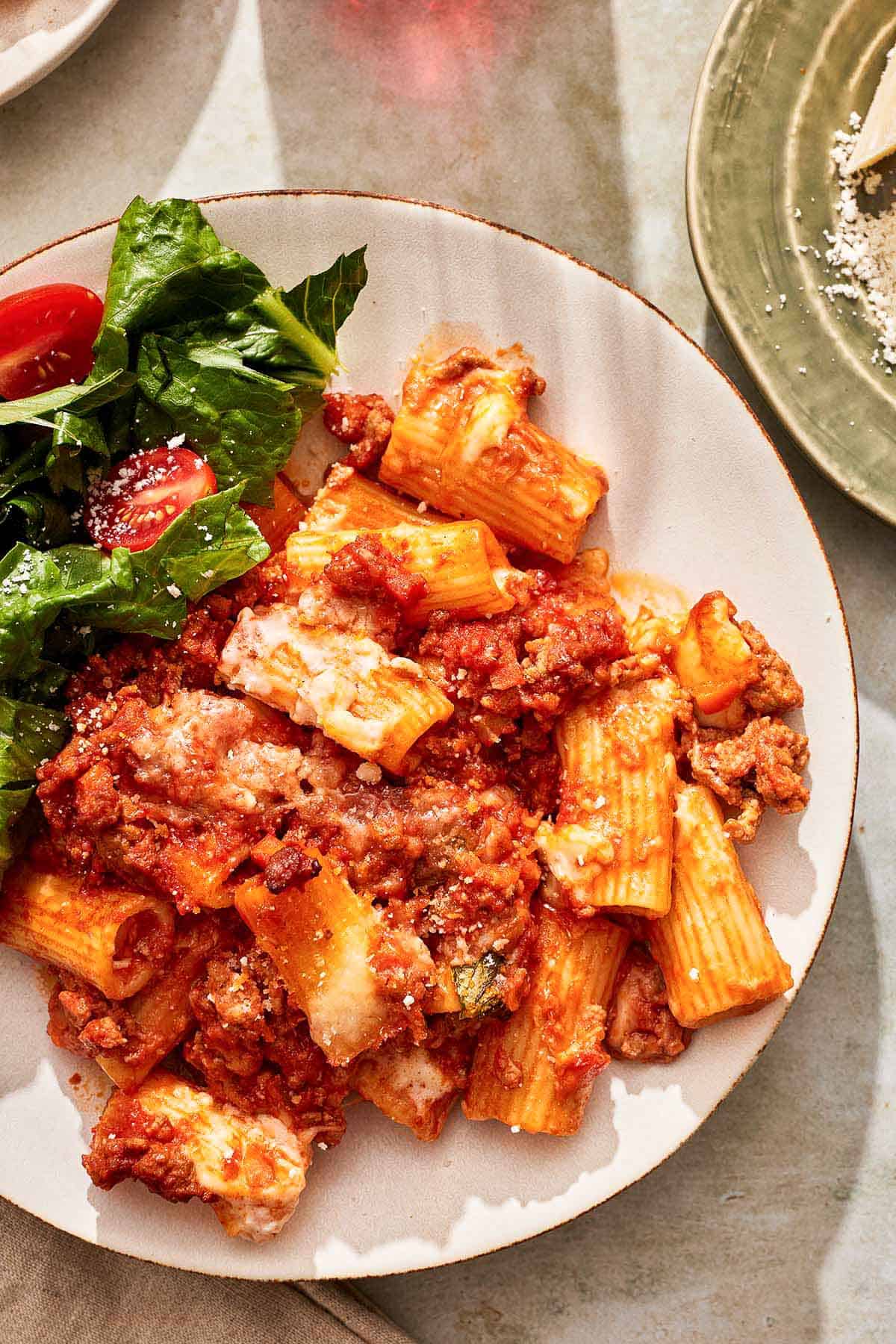
Make it Your Own
Pasta al Forno is the type of dish that lends itself to adaptation. I sometimes omit the béchamel in favor of more gooey cheese. I often make a vegetarian version with eggplant and marinara sauce in place of the meat ragù. Sometimes I leave out tomatoes altogether and make a “white” version with cheese and zucchini. I love all versions equally, though! Every cook has their own variations. Here are a few of mine:
- Omit the béchamel sauce. Just toss the par-cooked pasta with the ragù and cheeses, sprinkle with Parmesan, and bake.
- Substitute eggplant. In summer, I leave out the meat and mix cubes of fried eggplant into simple marinara sauce, along with mozzarella and smoked mozzarella.
- Add zucchini. One variation I like is omitting the meat from the ragù and tossing cooked zucchini coins with the par-cooked pasta, béchamel sauce, and a semisoft cheese such as Pecorino Toscano. For extra richness, fold in cooked crumbled sausage.
- Add cooked mushrooms. Use either ragù or simple tomato sauce and replace the ground meat with mushrooms sautéed in olive oil and herbs.
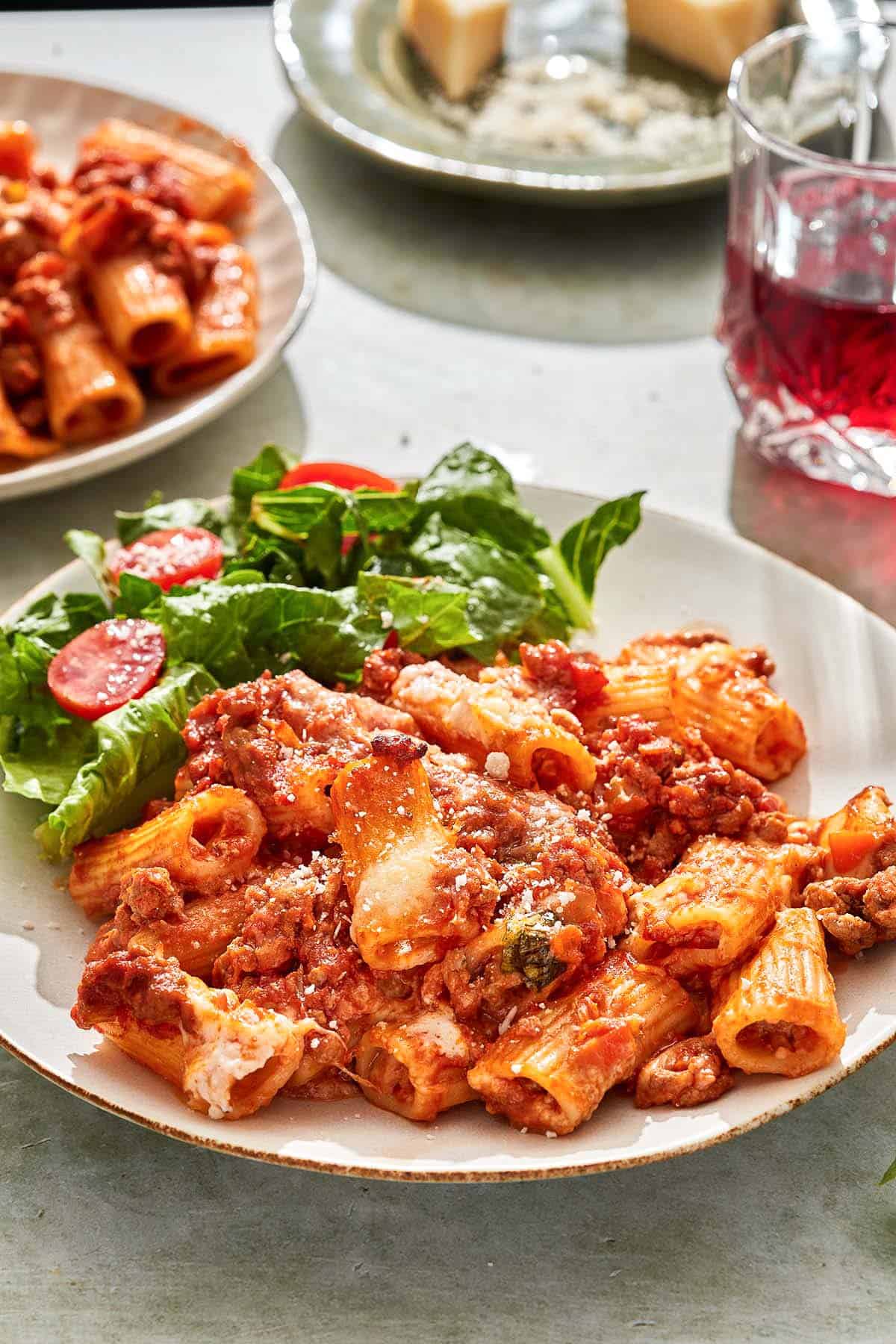
What to Pair with Pasta al Forno
Since this is such a hearty dish, I like to keep things light on the side. Try it with this easy Lemon Parmesan Lettuce Salad or, for a bit of crunch, this Fennel Salad with Parmesan and Toasted Walnuts.
Make It Ahead
One reason I love this dish is that much of the work can be done in advance. You can make the ragù ahead of time and refrigerate it for up to 3 days or freeze it for up to 3 months. In fact, like many sauces, the flavor improves if it is allowed to sit for a day or two. Defrost and reheat the ragù before mixing it with the pasta.
The béchamel can also be made a day or two in advance and refrigerated. Heat it just until warm before using. You may need to stir in a small quantity of milk to thin it out if it’s been refrigerated.
Finally, you can parboil the pasta and assemble the pasta al forno up to a day ahead of time and refrigerate it. Remove it from the refrigerator about 1 hour before baking.
More Baked Pasta Recipes
- Baked Ziti with Italian Sausage
- Vegetarian Baked Ziti
- Pastitsio (Greek Lasagna)
- Butternut Squash Lasagna with Walnuts and Sage

Ingredients
For the ragù:
- 2 tablespoons extra virgin olive oil
- 1 carrot, finely chopped
- 1 large celery rib, finely chopped
- 1 small yellow onion, finely chopped
- 1 1/2 pounds ground meat (a mixture of beef, pork, and pork sausage)
- 2 bay leaves
- Salt
- Freshly ground pepper
- 1/2 cup wine (either white or red)
- 1 24-ounce jar tomato passata or purée
For the béchamel sauce:
- 2 tablespoons extra virgin olive oil
- 1 tablespoon butter
- 3 tablespoons all-purpose flour
- 2 cups milk, warmed
- Salt
- Ground white pepper
- Ground nutmeg
For the pasta al forno:
- Extra virgin olive oil (to grease baking dish)
- 1 pound short pasta (rigatoni, penne, or ziti)
- Fresh basil
- 4 ounces low-moisture mozzarella cheese, cut into small cubes
- 4 ounces smoked mozzarella cheese, cut into small cubes (or substitute more plain mozzarella)
- 1 cup freshly grated Parmesan cheese
Instructions
- Make the ragù. Pour the olive oil into a large, wide saucepan or Dutch oven and add the carrot, celery, and onion, before heating the pan. Set the pan over medium-low heat and cook until the vegetables soften, about 8 minutes. Add the ground meat and sausage and stir to break it up and mix them in with the vegetables. Add in the bay leaves. Increase the heat to medium. Sauté the meat until deeply browned, at least 20 minutes and preferably 30 to 45 minutes, for the best flavor. Add a generous pinch each of salt and freshly ground pepper. Add the wine, stirring it into the ground meat mixture and letting it cook for about a minute, until most of it has been absorbed into the meat. Then pour in the tomato passata and bring to a simmer. Reduce the heat to medium-low and simmer gently, partly covered, until the sauce is thickened (it should be spoonable but not at all soupy), 30 to 45 minutes. Remove the bay leaves, cover the pan, and set it aside.
- Make the béchamel. Warm the olive oil and butter in a medium saucepan until the butter is melted. Whisk in the flour and cook for 2 minutes, stirring vigorously. Gradually whisk in the warmed milk. Cook for 10 minutes over medium heat, stirring constantly, until the béchamel is nicely thickened. It should be smooth and not too thick, definitely not gloppy. Turn off the heat and season to taste with salt, white pepper, and a pinch of nutmeg. Cover the pan until ready to use.
- Parboil the pasta. Bring a large pot of water to a boil and season it with 1 tablespoon of salt. Cook pasta according to package instructions, but remove it from the heat when it is still undercooked—about 3 minutes before al dente doneness. Drain the pasta and place it in a large bowl.
- Combine. Spoon half the ragù and half the béchamel over the pasta and gently fold them in. Fold in the mozzarella, torn basil leaves, and about half the grated Parmesan cheese. Taste and season with salt or pepper if needed. Spoon in more ragù if the mixture seems dry.
- Bake. Heat the oven to 375° F. Coat a 9×13-inch baking dish with a little olive oil. Spoon in the pasta mixture, spreading it out in the dish. Spoon any remaining ragù and béchamel on top. Sprinkle the surface with the rest of the Parmesan cheese. Cover with foil and bake in the center of the oven for 15 minutes. Uncover and bake for 15 to 20 minutes longer, or until you can hear it bubbling and the top is nicely browned and crisp around the edges. Let stand 5 minutes to set slightly before serving.
Notes
- Shop this recipe: Visit our shop to browse quality Mediterranean ingredients, including the olive oil and pasta used in this recipe.
- To Make it Ahead:
- One reason I love this dish is that much of the work can be done in advance. You can make the ragù ahead of time and refrigerate it for up to 3 days or freeze it for up to 3 months. In fact, like many sauces, the flavor improves if it is allowed to sit for a day or two. Defrost and reheat the ragù before mixing it with the pasta.
- The béchamel can also be made a day or two in advance and refrigerated. Heat it just until warm before using. You may need to stir in a small quantity of milk to thin it out if it’s been refrigerated.
- Finally you can parboil the pasta and assemble the pasta al forno up to a day ahead of time and refrigerate it. Remove it from the refrigerator about 1 hour before baking.
Nutrition
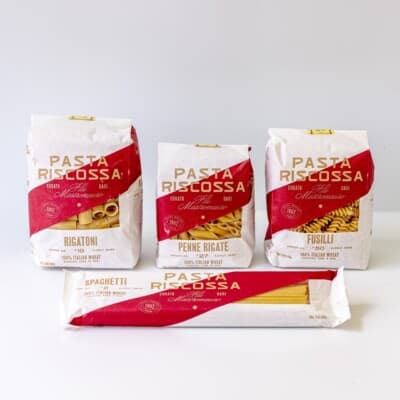
Premium Italian Pasta Bundle
Featuring four classic pasta shapes—Rigatoni, Penne Rigate, Fusilli, and Spaghetti—crafted with 100% Italian durum wheat semolina for the perfect bite every time.