One-Pan Chicken Florentine (No Cream!)


This post may contain affiliate links. Please read our disclosure policy.
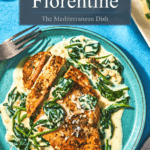
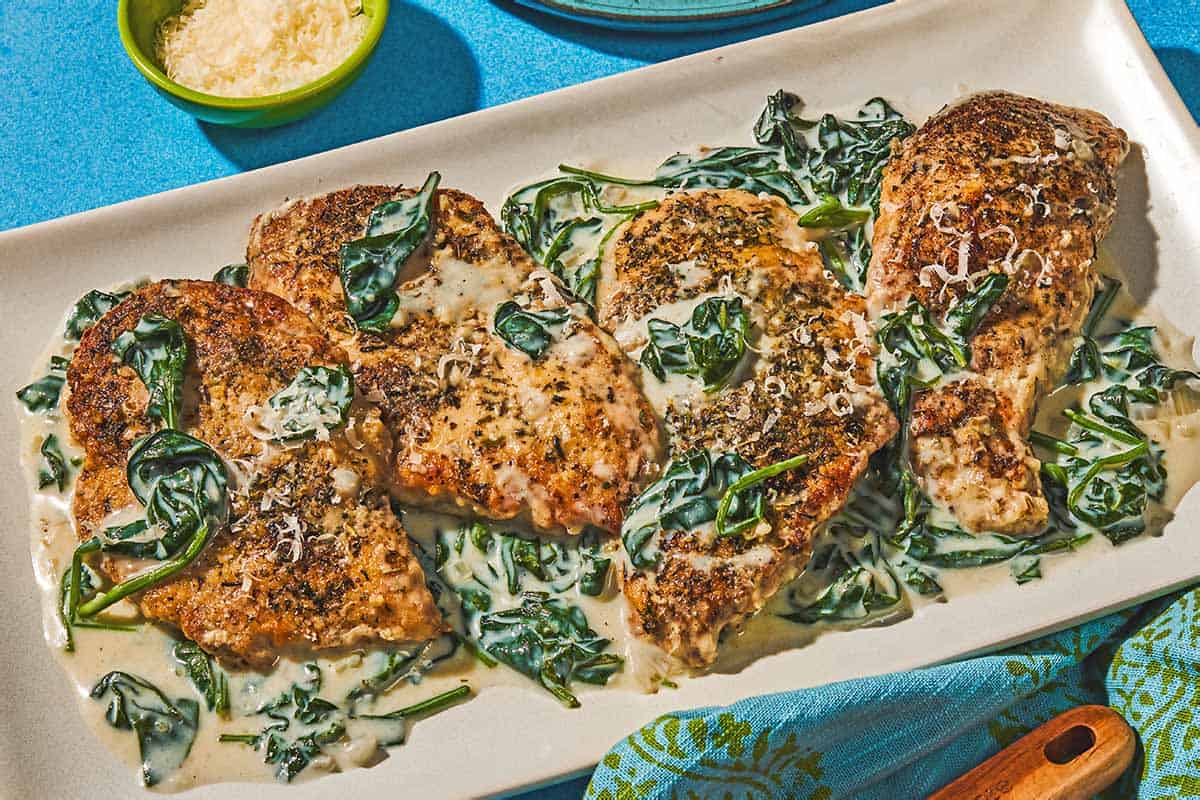
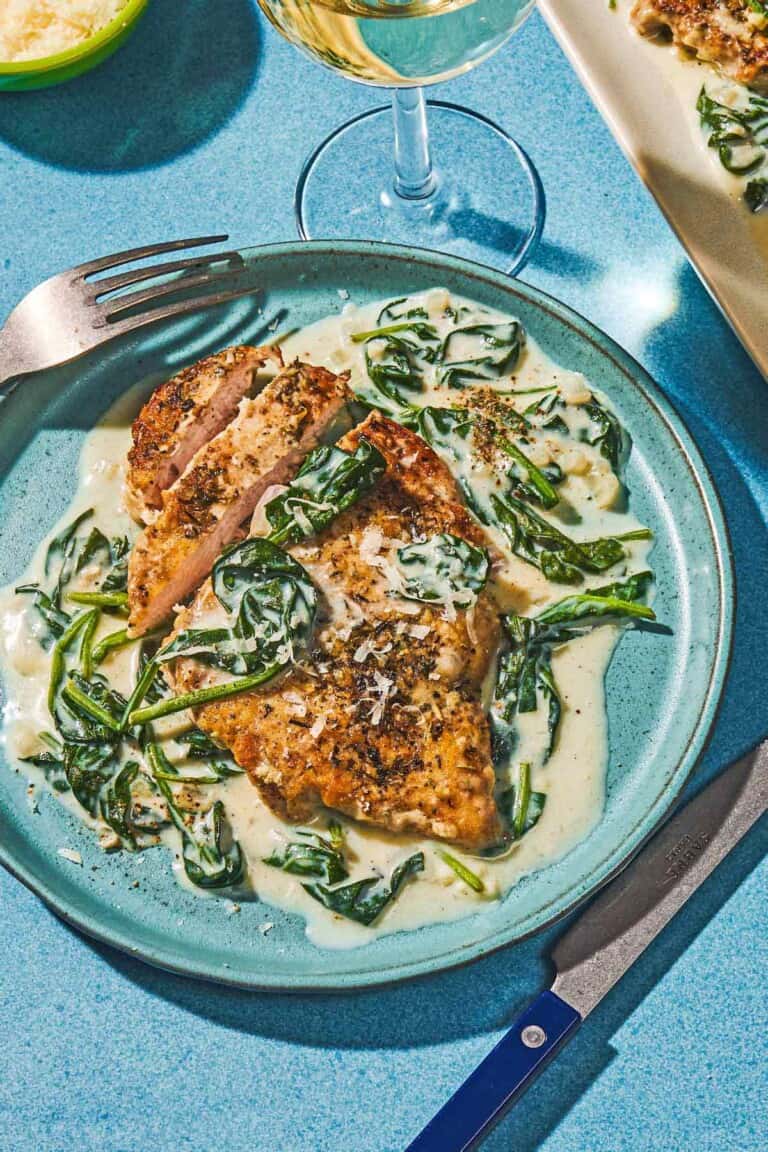
This Chicken Florentine has restaurant-style richness, but the sauce is a milk-based béchamel. A half-pound of baby spinach cooks fast; the whole dish requires only 35 minutes!
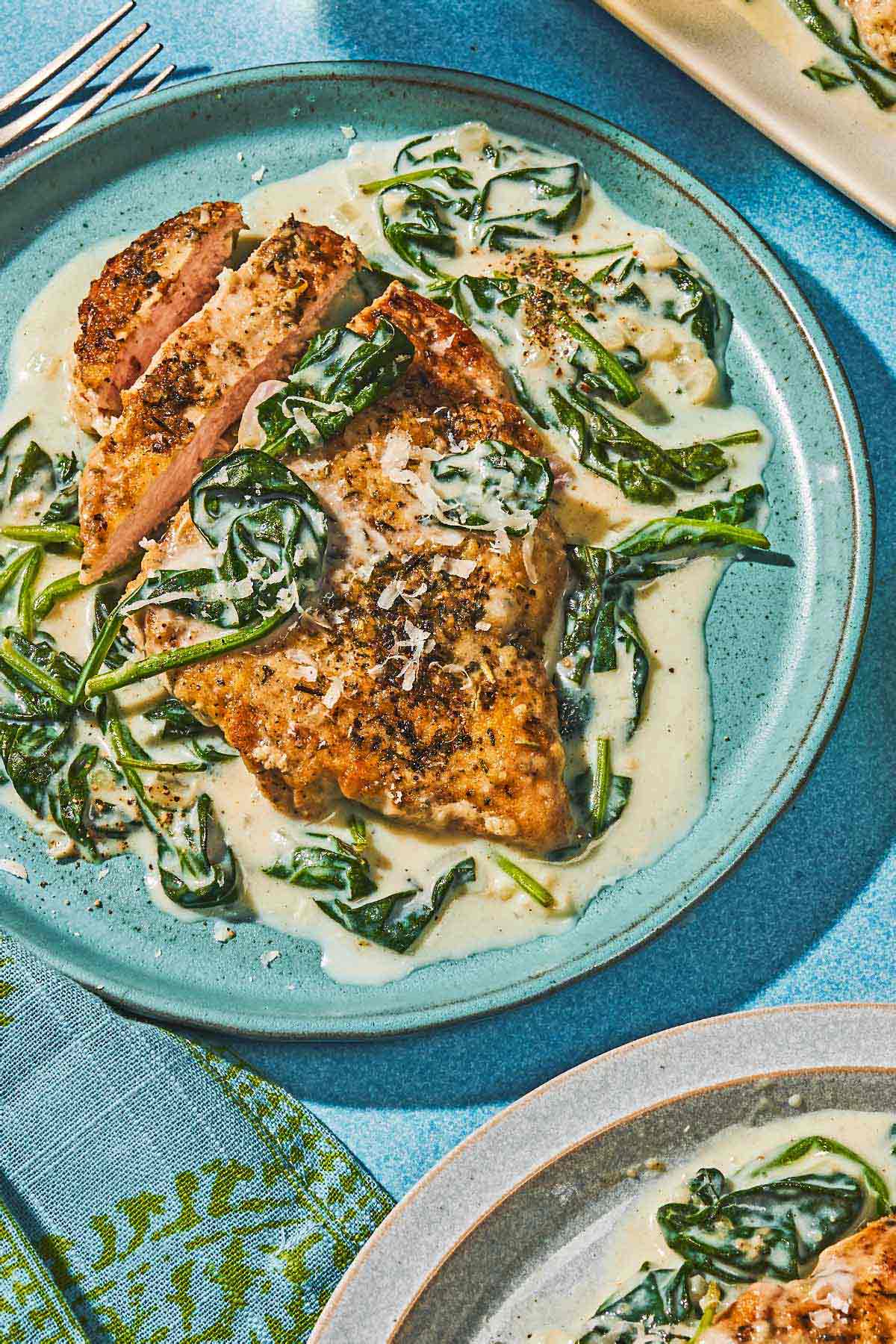
Restaurant Chicken Florentine Was Too Heavy, So I Rebuilt It
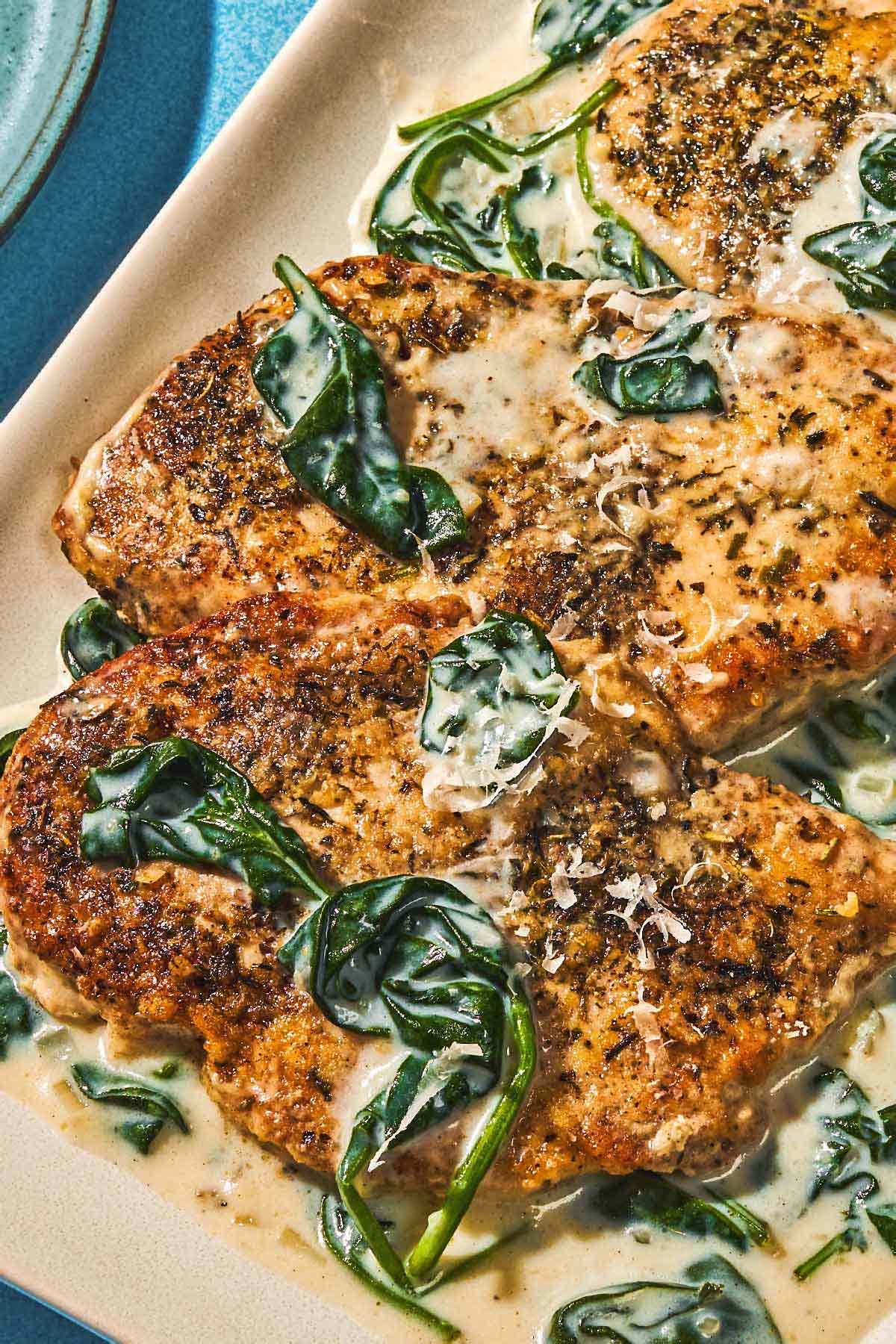
Baby spinach is a hero anytime I want to give any dish a dose of green, but in chicken Florentine, the leaves take center stage. They’re the star of creamy, white wine sauce scented with garlic and Parmesan and served over chicken cutlets. The greens have a mild flavor, but they add so much in terms of vitamins, minerals, and antioxidants.
In restaurants, chicken Florentine tends to be a rich dish, loaded with heavy cream, cheese, and butter. To make a version that is just as creamy, but lighter, I use milk to make a béchamel sauce with some Parmesan mixed in. To layer the dish with savory flavor, I mix some of the cheese with flour and use it to give chicken cutlets a golden crust, then save a few tablespoons of the dredge (a technique I first tried in this chicken Marsala recipe) to both thicken and season the sauce.
Some recipes out there start with sautéing the spinach and garlic first, and then building the sauce. While testing this recipe, I found that resulted in dark, drab leaves. Instead, I make the sauce first and add the greens in the very last moments of cooking to keep their color vibrant.
To keep clean-up as minimal as possible, I sear the chicken, simmer the sauce, and wilt the spinach all in the same pan so every bit of flavor ends up in the finished dish—with fewer dishes to wash!
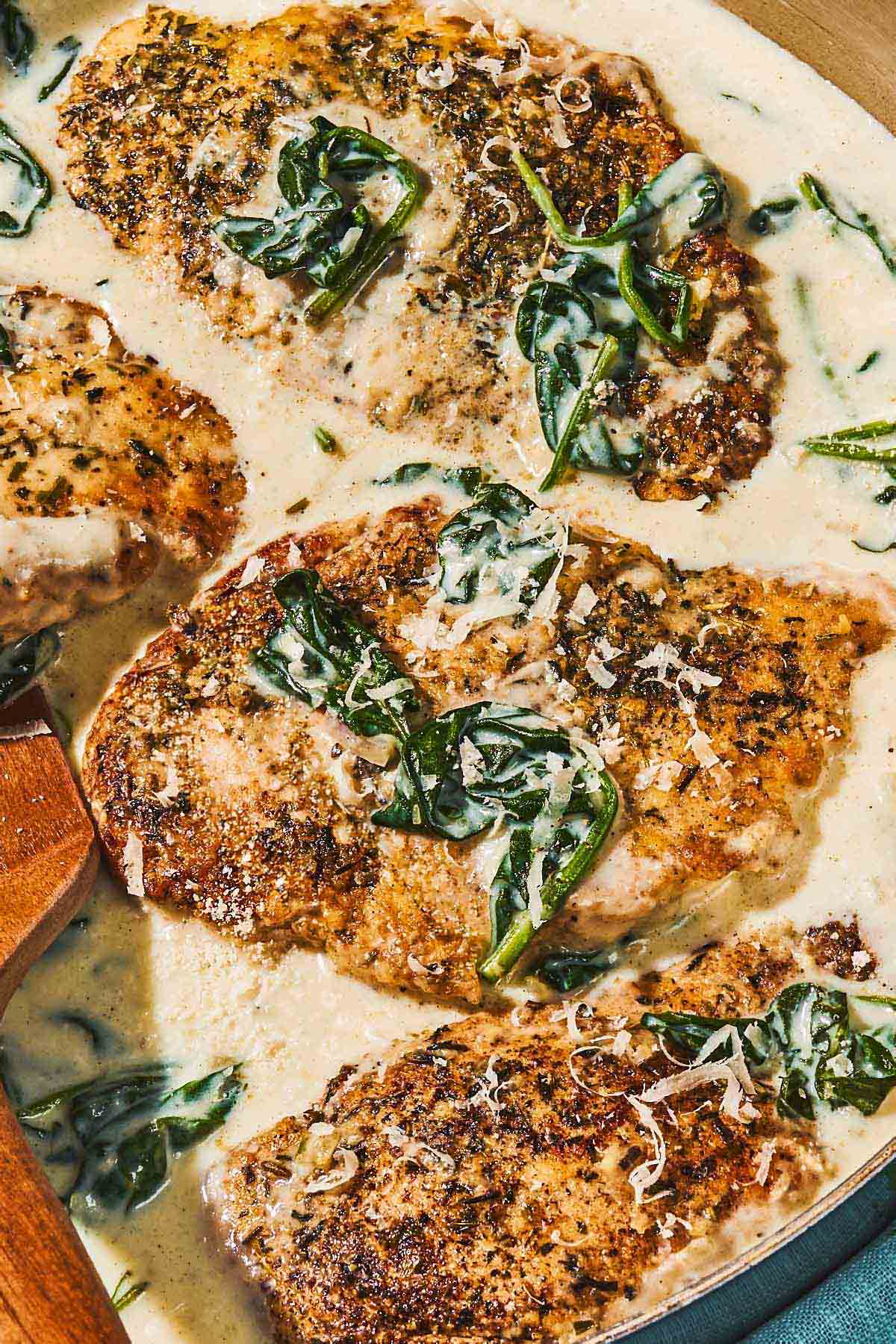
What Is Chicken Florentine?
Chicken Florentine comes not from Florence, at least not directly, but from classic French cooking. Any dish “à la Florentine” indicates spinach.
In her book Florentine: The True Cuisine of Florence, author Emiko Davies explains that chicken, eggs, and sole Florentine are all French dishes simply named after one Florentine person in particular: Catherine de’ Medici. The lore is that, when she married France’s Henry II in 1533 and moved to France, she brought her love of leafy greens with her. Now, her legacy is permanently associated with them.
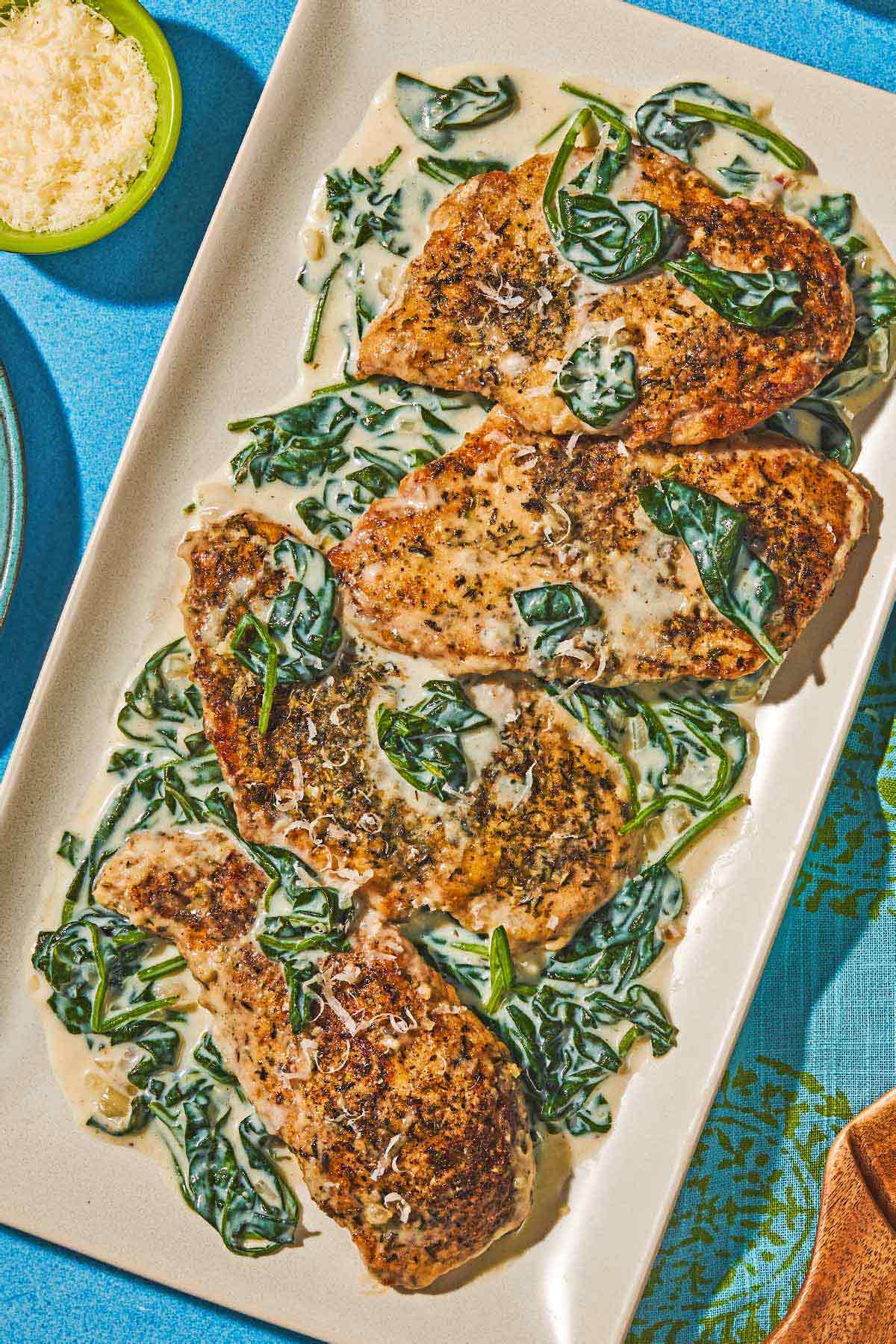
Key Ingredients
- Chicken: Cutlets of boneless, skinless breast cook quickly and evenly. In my opinion, the lean cut suits the creamy sauce nicely. See below for info on substitutions!
- Italian seasoning: A dry spice blend is an easy way to add some nuance to the chicken and gives a savory note to the creamy, milk-based sauce. Suzy’s homemade version has become my go-to.
- Flour and Parmesan: This pair does double duty. It gives the chicken a savory, golden coating that helps hang onto the sauce. A few spoonfuls of the leftover dredge mixture is all you need to thicken the sauce. A gluten-free all-purpose flour blend will work just fine in this application.
- Extra virgin olive oil and butter: I like using a combination of olive oil, for better heat stability, and a little butter for flavor while browning the chicken. Feel free to skip the butter and just use olive oil.
- Shallot and garlic: You can use either shallot or onion to add savory flavor to the sauce. Either way, I back it up with some garlic. Three cloves might sound like a lot, but it mellows in the milk-based sauce.
- White wine adds brightness and gives the creamy sauce nuance. Choose something you’d happily drink, like a Pinot Grigio or Sauvignon Blanc.
- Milk is the base of the béchamel. I tested this recipe with 2% milk.
- Chicken bouillon (optional): I like adding a small amount of either powdered chicken bouillon or refrigerated bouillon paste to boost the chicken flavor in the sauce. Feel free to skip it!
- Baby spinach: I first tested this recipe with a 5-ounce bag of baby spinach, but because it’s the star ingredient, I amped it up to a full 8-ounce bag instead. The silky green strands add subtle flavor to the sauce.
How to Make Chicken Florentine
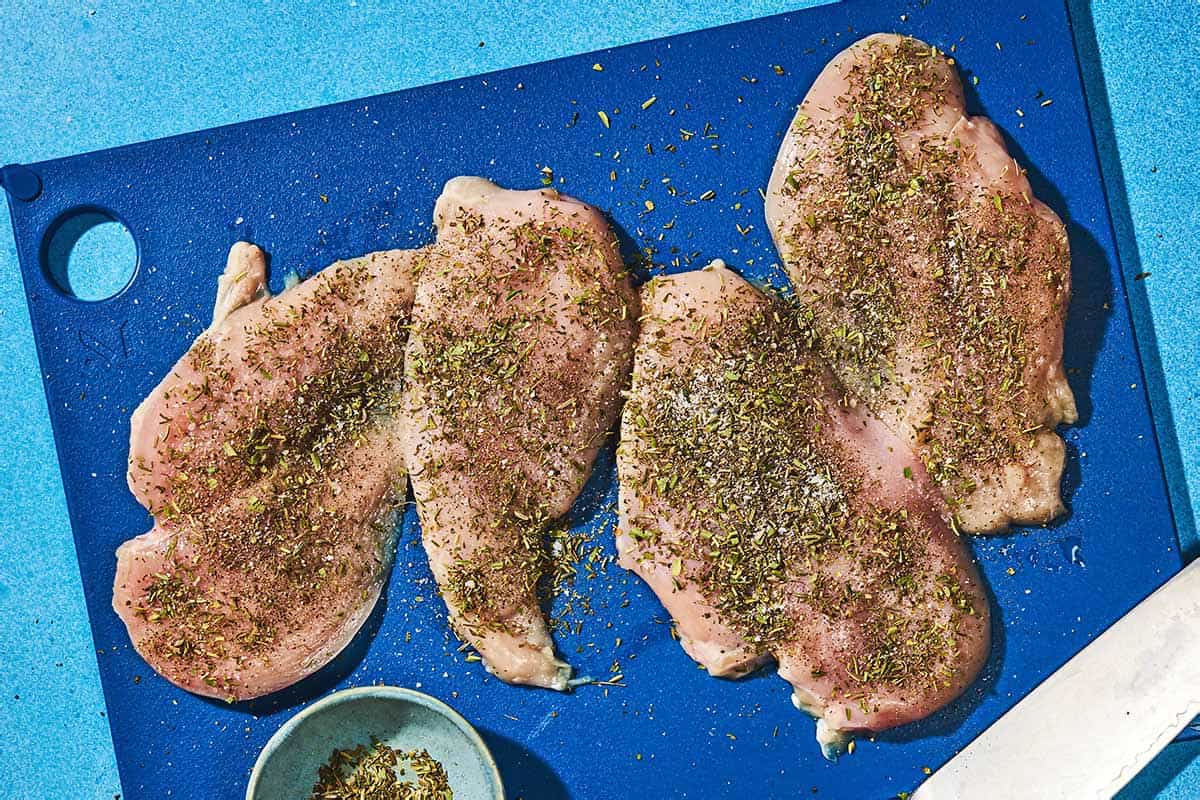
- Prep the chicken. Place 1 to 1 1/2 pounds boneless, skinless chicken breasts (2 large or 4 small) on a large cutting board. If using large chicken breasts, slice through each one horizontally with a sharp knife to yield two cutlets. Season the cutlets on both sides with 1/2 teaspoon salt, 1/2 teaspoon freshly ground black pepper, and 1 teaspoon Italian seasoning.

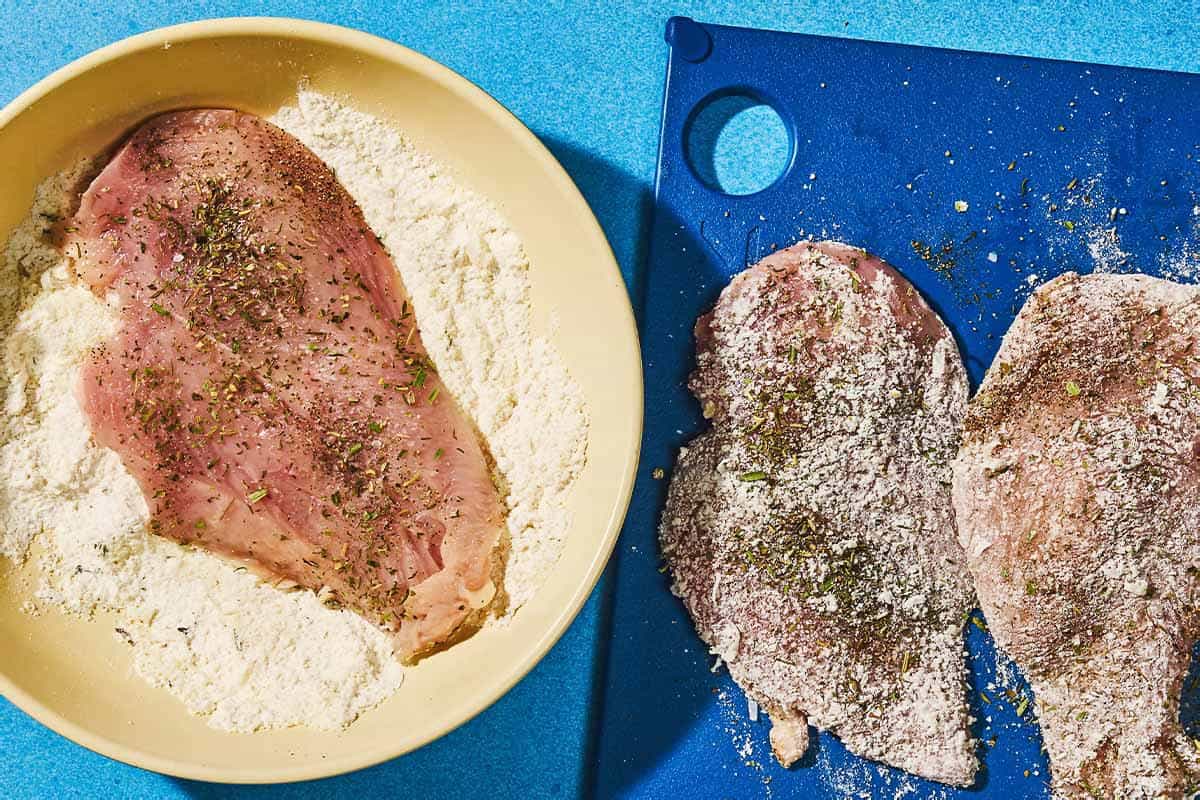
- Dredge the chicken. Mix together 1/3 cup all-purpose flour and 1/3 cup (1 ounce) finely grated Parmesan cheese in a shallow dish. Working with one cutlet at a time, dip it in the flour-cheese mixture, taking care to coat it on all sides. Shake off the excess, set aside, and repeat with remaining cutlets. Measure three tablespoons of the remaining flour mixture and discard the rest.
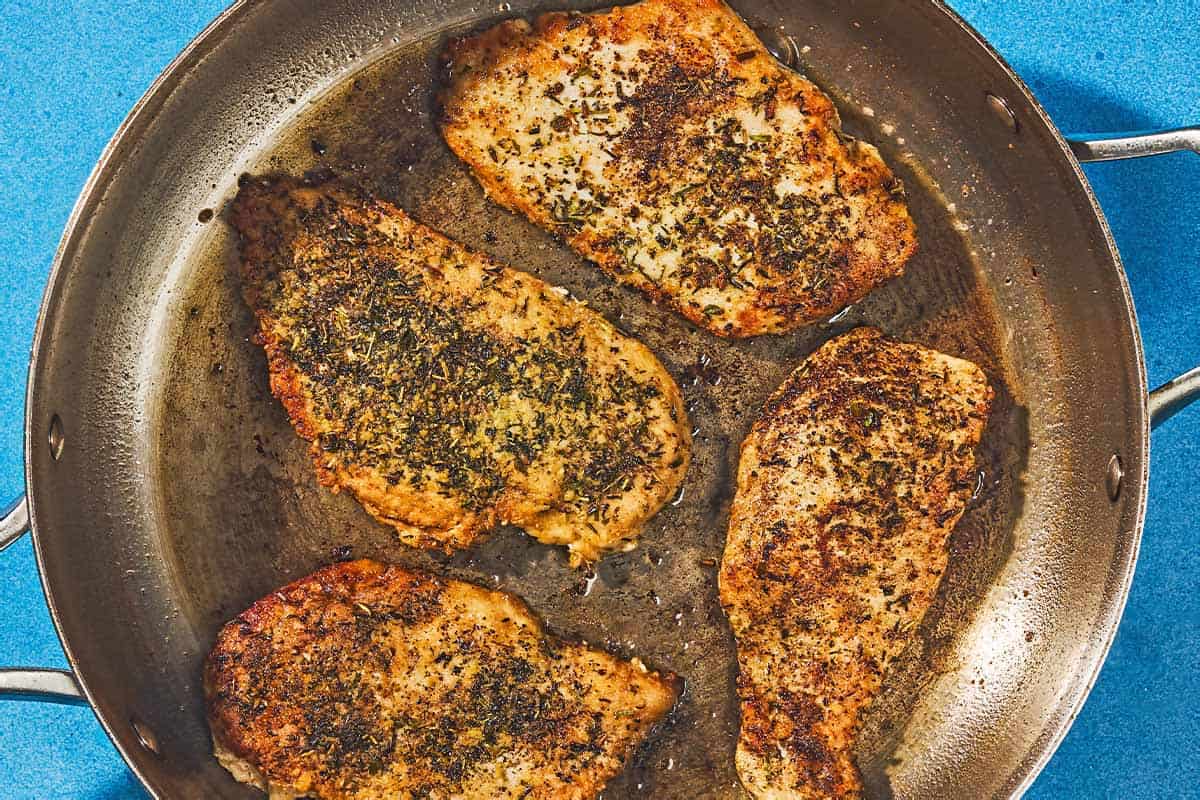
- Sear the chicken. Heat a large, heavy-bottomed sauté or frying pan over medium-high heat. Add 2 tablespoons extra virgin olive oil and 1 tablespoon butter. When the oil and butter are hot and beginning to brown, lay 2 or 3 cutlets into the pan—as many as will fit comfortably without crowding. Cook for 3 minutes, until browned on the bottom, then carefully turn them over with tongs and brown the other side, another 2 to 3 minutes. The cutlets should be golden. If they are browning too quickly, turn down the heat. Once browned, transfer the cutlets to a plate.
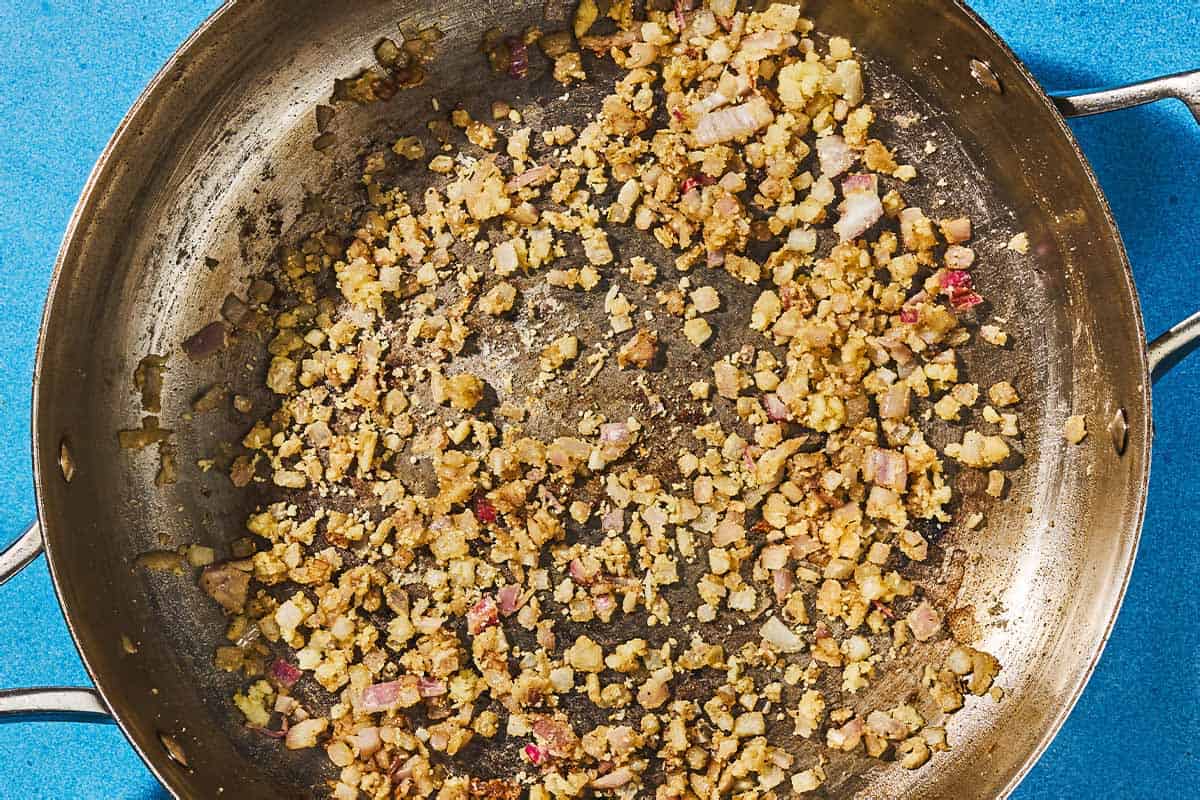
- Sauté the vegetables. Lower the heat to medium. Add 1 large minced shallot or 1 medium minced onion to the remaining olive oil in the pan and sauté until browned, about 3 minutes. Add 3 minced garlic cloves and sauté until fragrant, another minute. Add the reserved flour mixture and stir until it no longer appears dry and smells nutty and toasted, about a minute.
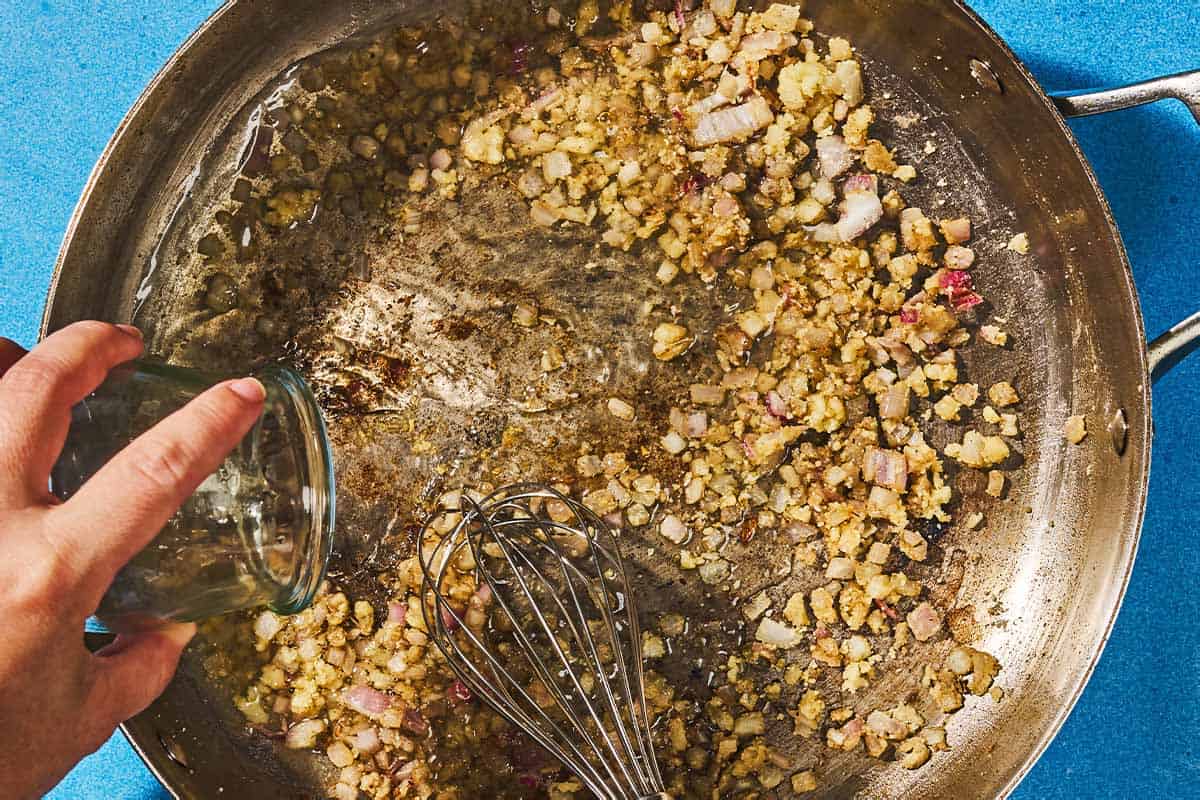
- Deglaze the pan. Add 1/2 cup dry white wine to the pan, stirring and scraping to release the fond. Continue to cook, stirring, until the wine has almost completely evaporated, 2 minutes. Meanwhile, whisk together 1 1/2 cups milk and 1/2 teaspoon chicken bouillon (either granules or paste).
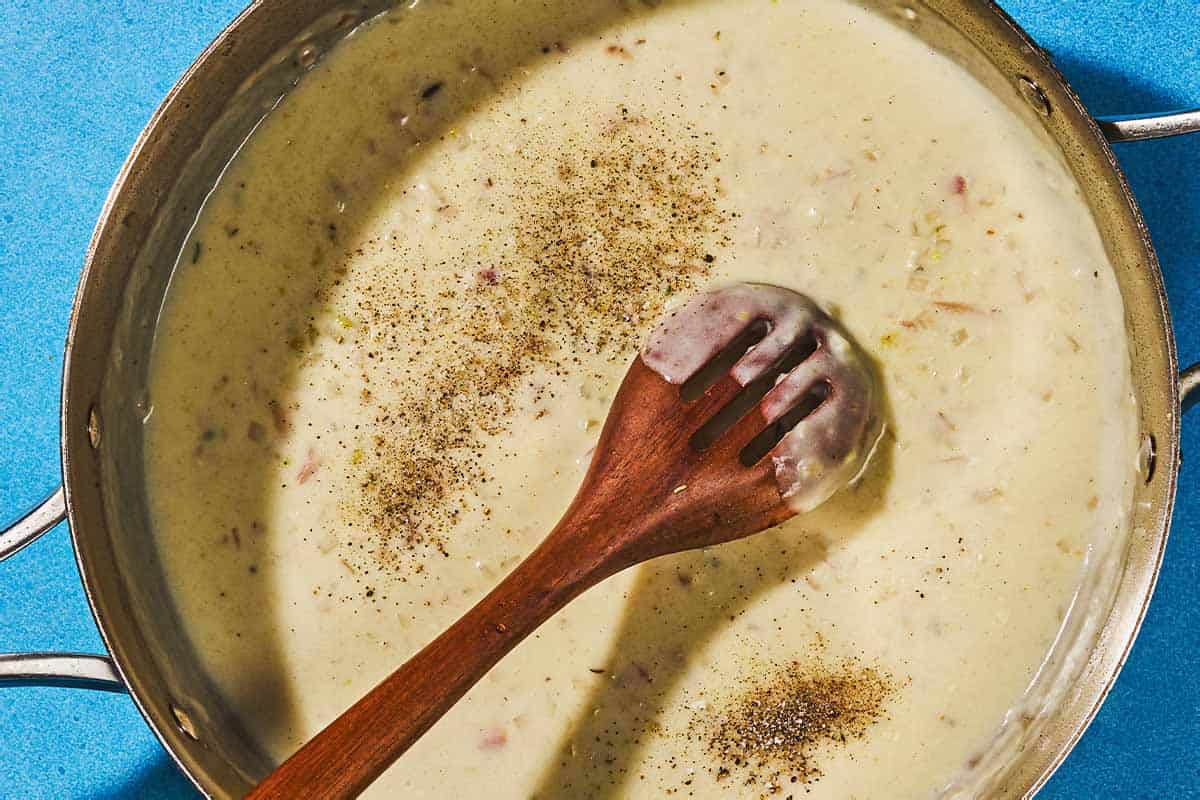
- Make the sauce. Lower heat to medium-low and pour the milk mixture into the pan, as well as any juices that have accumulated on the plate of chicken. Simmer, swirling pan occasionally, until thickened to the texture of heavy cream and mixture coats the back of a spoon, about 5 minutes. Taste sauce and adjust seasoning with additional salt and pepper.
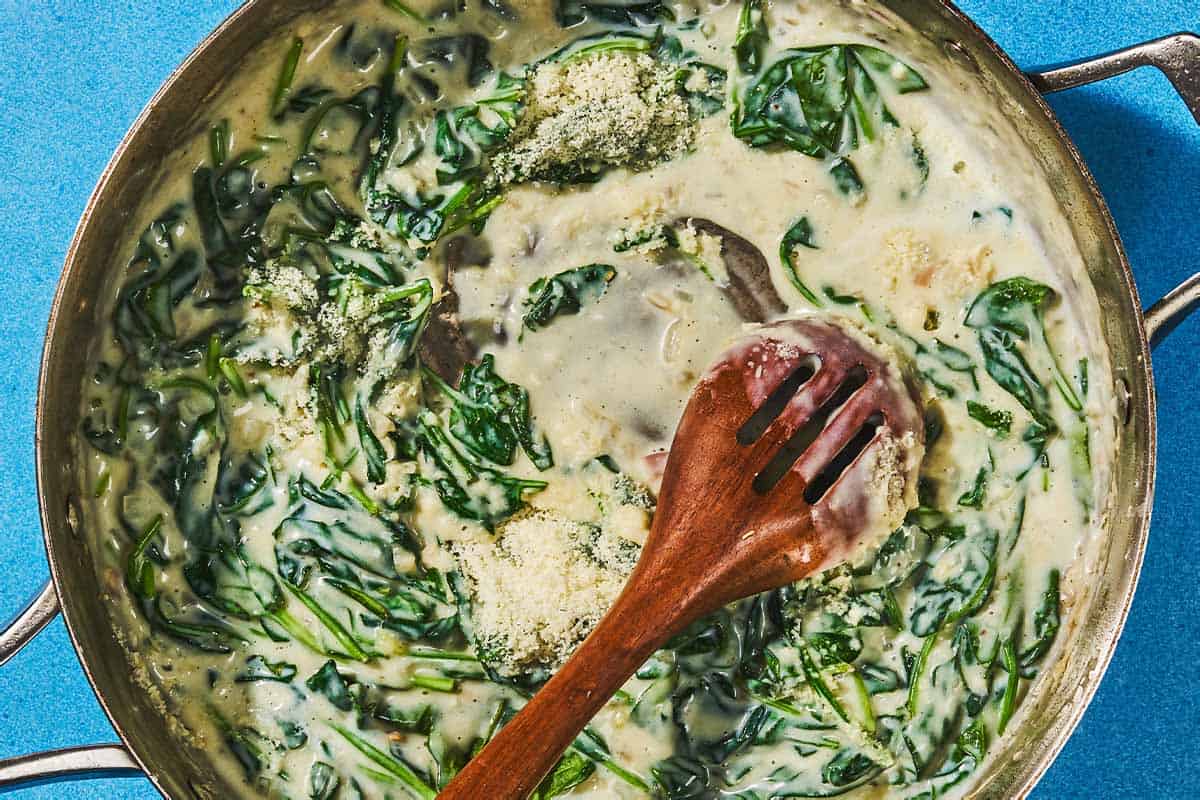
- Add the spinach. Add 1 (8 ounce) bag baby spinach and the remaining 2/3 cup (2 ounces) Parmesan to the pan and stir into the sauce. Cover and cook until the spinach is bright green and tender, about 1 minute.
- Finish and serve. Return the chicken to the pan and simmer for a minute or two, until cooked through and registering 165°F on an instant-read thermometer. Serve with sauce spooned over top of each cutlet. Sprinkle with more grated Parmesan, if you like.
Swaps and Substitutions
- Use a different cut of chicken: Boneless, skinless thighs will also work well here. Chicken tenders are another good option, but do take care not to overcook them.
- No wine? Use an equal amount of chicken broth plus a splash of either lemon juice or white wine vinegar to replace the acidity.
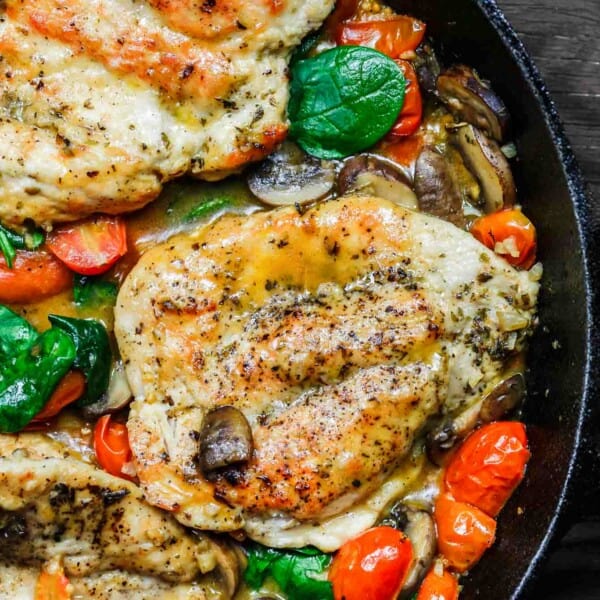
- Customize the sauce. Sauté some mushrooms along with the shallot or onion, or stir in a spoonful of sun-dried tomato pesto, a dab of harissa, or a pinch of red pepper flakes to give the sauce a rosy warmth.
- Use frozen spinach: Feel free to use a 10-ounce bag of frozen spinach in place of fresh. Thaw it first and squeeze out as much water as you can before adding it so it doesn’t make the sauce watery.
- Try other greens. Chopped kale or Swiss chard work well in place of the spinach. Give these hardy leaves a few extra minutes to soften.
What to Serve with Chicken Florentine
- Add a side: This saucy chicken florentine is wonderful with some bread and a simple vegetable side. I love it with this lemony roasted broccoli, tangy Italian green beans, and deliciously simple marinated tomatoes. In winter, marinated mushrooms would be equally good.
- A jammy tomato dish: While developing this recipe I served it more than once with eggplant Parmesan. I love the combination of roasted tomato flavor with the creamy spinach sauce and the juicy chicken.
- Add a carb: There’s enough sauce here that you can easily serve this chicken florentine over pasta or polenta, too. Even easier? Mop up the sauce with some bread.
- Salad on the side: If you do have a loaf of bread, all you really need to make this a meal is a salad. Try it with this simple roasted eggplant caprese or a springy salad with tarragon vinaigrette.
More Easy Chicken Breast Dinners

Chicken Florentine

Ingredients
- 1 to 1 1/2 pounds boneless, skinless chicken breasts (2 to 3 large or 4 to 6 small)
- 1/2 teaspoon salt
- 1/2 teaspoon freshly ground black pepper
- 1 teaspoon Italian seasoning
- 1/3 cup all-purpose flour
- 1 cup finely-grated Parmesan cheese, divided (3 ounces)
- 2 tablespoons extra virgin olive oil
- 1 tablespoon butter
- 2 to 3 garlic cloves, minced
- 1 large shallot, minced or 1 medium onion, minced
- 1/2 cup dry white wine
- 1 1/2 cups milk
- 1/2 teaspoon chicken bouillon, either granules or paste (optional)
- 1 8 ounce bag baby spinach
Instructions
- Prep the chicken. If using large chicken breasts, place one on a large cutting board and slice through it horizontally with a sharp knife to yield two cutlets. Cut the remaining breasts the same way.Season both sides of the cutlets with the salt, pepper, and Italian seasoning.
- Dredge the chicken. Season both sides of the cutlets with the salt, pepper, and Italian seasoning. Mix together the flour and 1/3 cup (1 ounce) finely grated Parmesan cheese in a shallow dish. Working with one cutlet at a time, dip it in the flour-cheese mixture, taking care to coat it on all sides. Shake off the excess, set aside, and repeat with remaining cutlets. Measure three tablespoons of the remaining flour mixture and discard the rest.
- Sear the chicken. Heat a large, heavy-bottomed sauté or frying pan over medium-high heat. Add the olive oil and the butter. When the oil and butter are hot and beginning to brown, lay 2 or 3 cutlets into the pan—as many as will fit comfortably without crowding. Cook for 3 minutes, until browned on the bottom, then carefully turn them over with tongs and brown the other side, another 2 to 3 minutes. The cutlets should be golden. If they are browning too quickly, turn down the heat. Once browned, transfer the cutlets to a plate.
- Sauté the vegetables. Lower the heat to medium. Add the shallot or onion to the remaining olive oil in the pan and sauté until browned, about 3 minutes. Add the garlic and sauté until fragrant, another minute. Add the reserved flour mixture and stir until it no longer appears dry and smells nutty and toasted, about a minute.
- Deglaze the pan. Add the wine to the pan, stirring and scraping to release the fond. Continue to cook, stirring, until the wine has almost completely evaporated, 2 minutes. Meanwhile, whisk together the milk and chicken bouillon.
- Make the sauce. Lower the heat to medium-low and pour the milk mixture into the pan, as well as any juices that have accumulated on the plate of chicken. Simmer, swirling pan occasionally, until thickened to the texture of heavy cream and mixture coats the back of a spoon, about 5 minutes. Taste sauce and adjust seasoning with additional salt and pepper.
- Add the spinach. Add the spinach and the remaining 2/3 cup (2 ounces) Parmesan to the pan and stir into the sauce. Cover and cook until the spinach is bright green and tender, about 1 minute.
- Finish and serve. Return the chicken to the pan and simmer for a minute or two, until cooked through and registering 165°F on an instant-read thermometer. Serve with sauce spooned over top of each cutlet. Sprinkle with fresh chopped parsley and more grated Parmesan, if you like.
Recipe Notes
- Shop this recipe: Visit our shop to browse quality Mediterranean ingredients, including the olive oil used in this recipe.
- To use frozen spinach: Feel free to use a 10-ounce bag of frozen spinach in place of fresh. Defrost it first and squeeze out as much water as you can before adding it so it doesn’t make the sauce watery.
- How to Store Chicken Florentine:
- Refrigerator: Store leftovers in an airtight container for up to 3 days. Warm gently in a skillet over low heat, adding a splash of water to loosen the sauce, if necessary.
- Freezing: Sometimes cream-based sauces suffer in the freezer, but I have frozen this recipe for at least 2 months and reheated it without issue!
Nutrition
Nutrition information is automatically calculated, so should only be used as an approximation.
Shop Suzy’s curated selection of Mediterranean olive oils, spices, and more.
Bundle and Save!
Four of our best-selling signature olive oils, perfect for everyday use.