



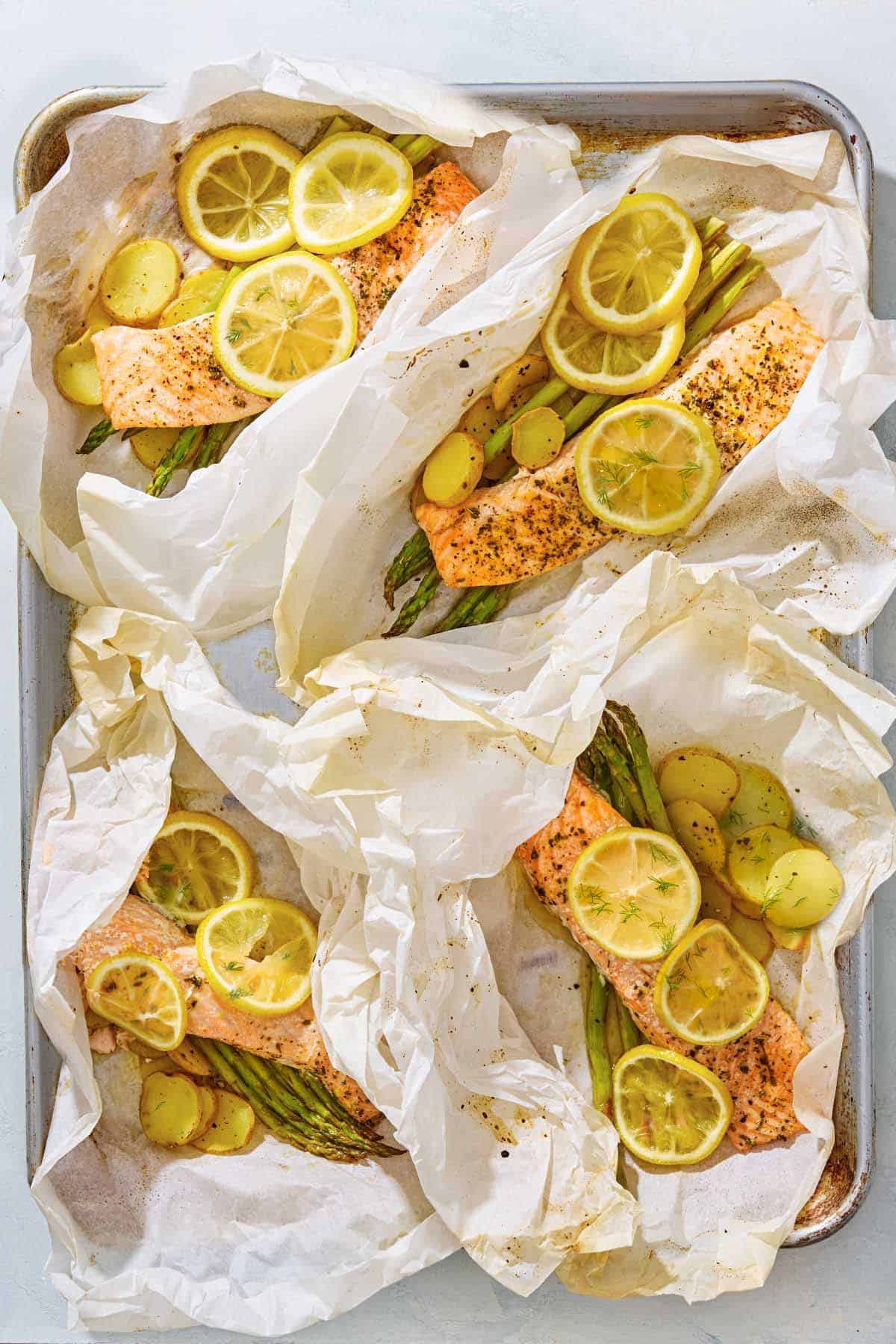
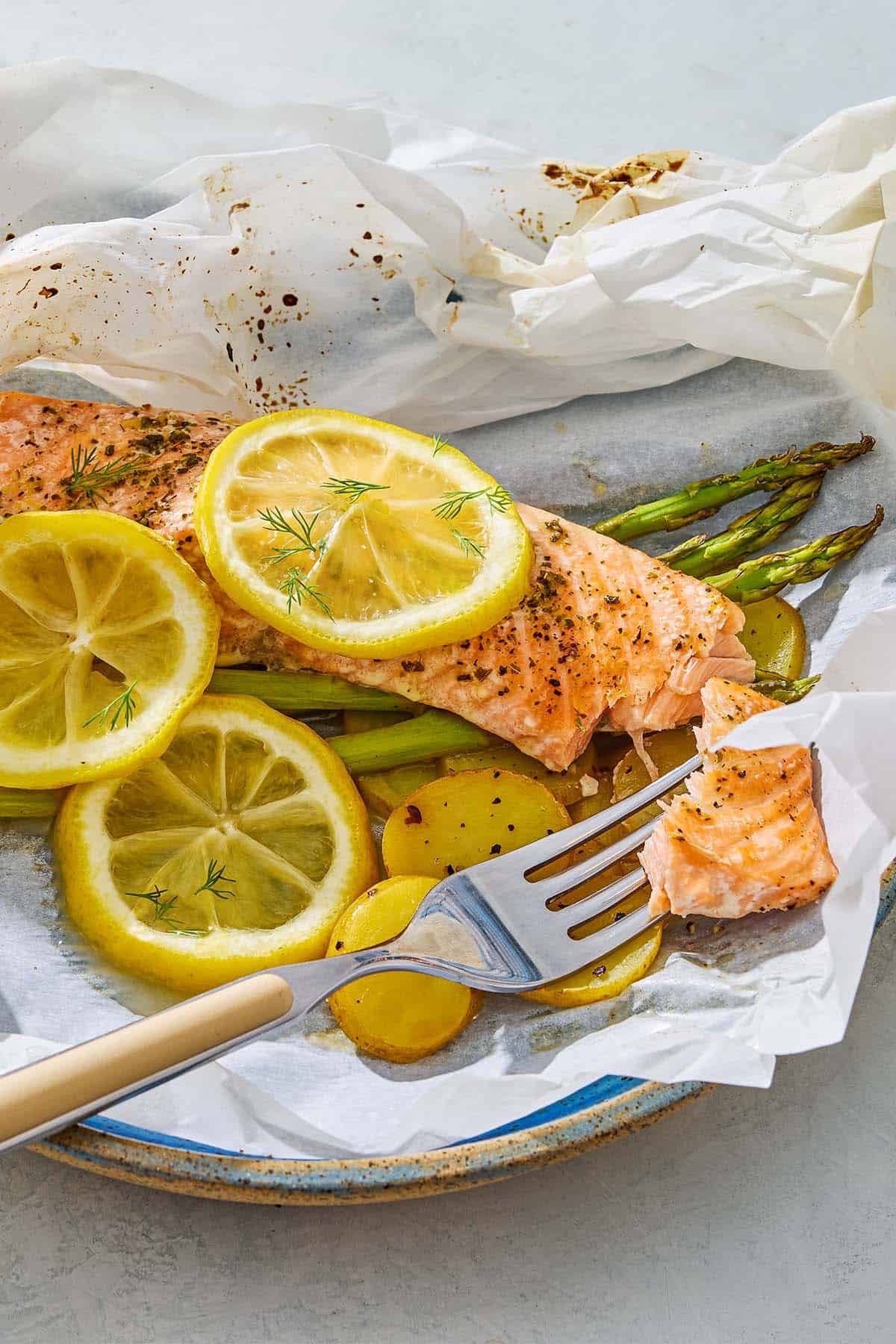
Salmon in parchment paper, or salmon en papillote, bakes with asparagus and baby potatoes in individual packets filled with the aromas of lemon, oregano, and fresh dill.
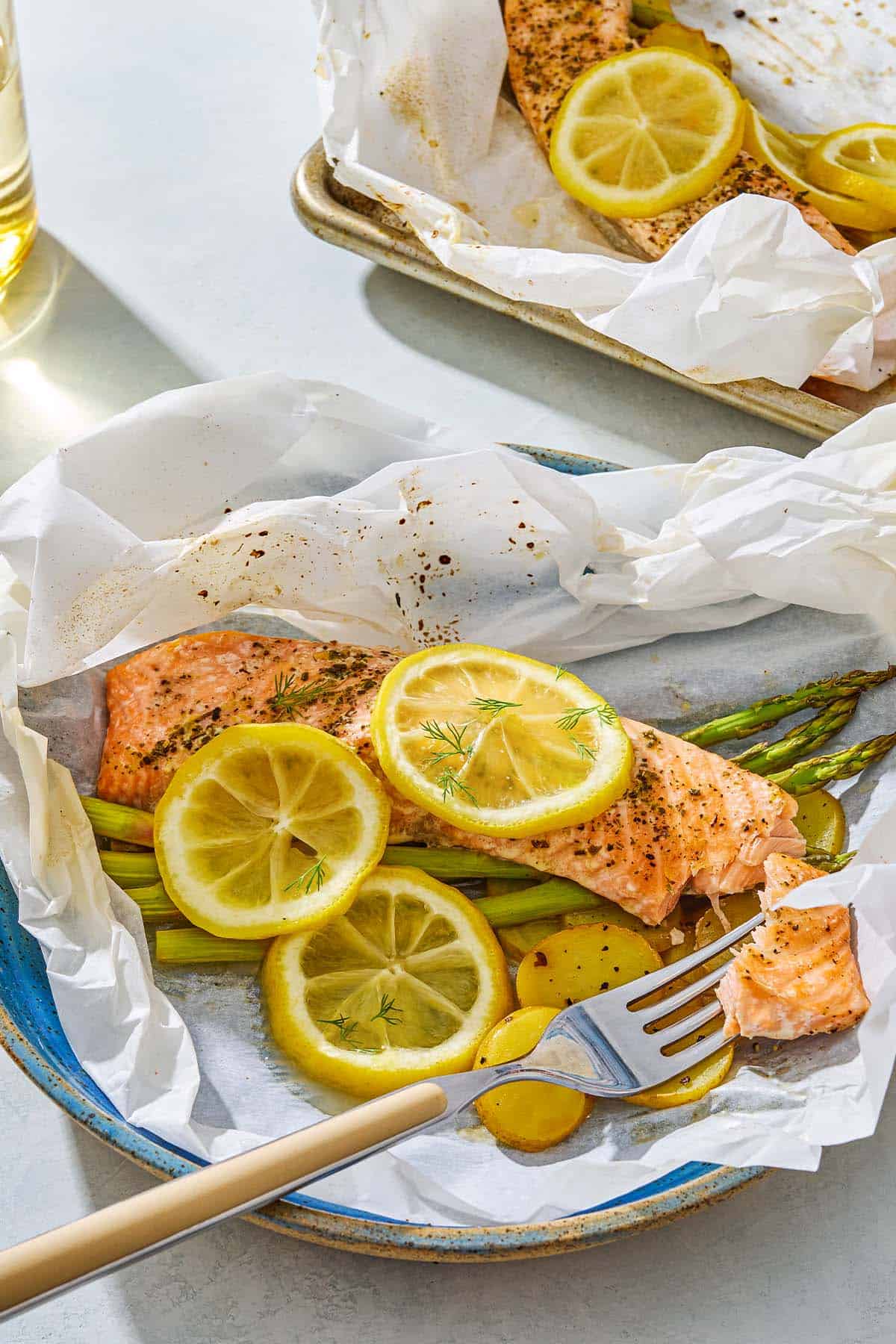
Greek-Style Salmon and Vegetables in Parchment
I like center-cut salmon fillets for parchment packets because their even thickness helps them cook evenly. Here, they sit over thinly sliced baby potatoes and asparagus, with lemon and oregano tucked inside. Dinner takes about 35 minutes, including a short rest before you open the packets.
The parchment traps steam as the salmon bakes, keeping the fish moist and collecting the flavorful juices. Finish with fresh dill and a drizzle of olive oil, then spoon those juices over the fish and vegetables.
Cooking en papillote means cooking in a paper parcel. It may look elaborate at the table, but the preparation is simple: layer the vegetables and fish, fold the parchment over, and crimp the edges closed. The oven does the rest, and the parchment keeps the flavorful juices ready to spoon over your dinner.
With the potatoes and asparagus tucked inside, there’s no need to cook a separate side for a busy weeknight. The same enclosed cooking approach works beautifully for chicken and vegetables in parchment, too.
Ingredients for Salmon in Parchment Paper
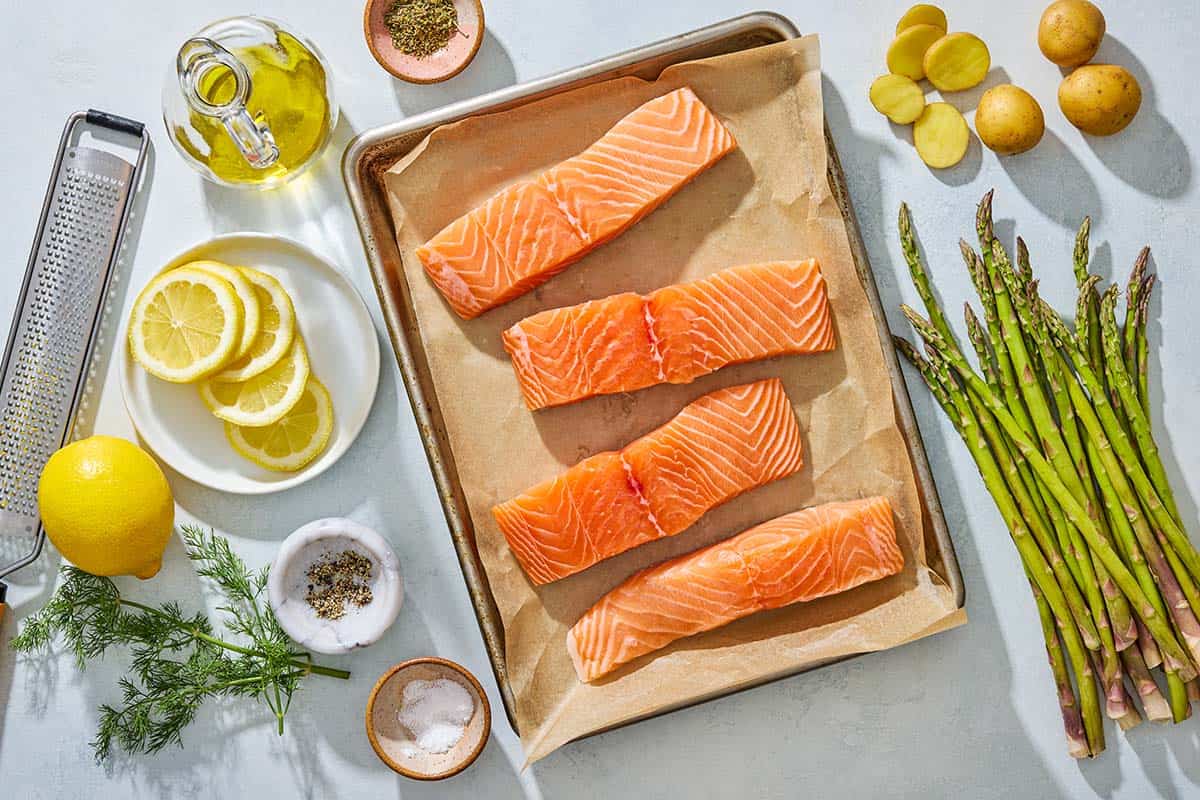
Lemon, dried oregano, and fresh dill give these salmon packets their Greek-style flavor. Pay particular attention to the thickness of the fish and vegetables so everything cooks together.
- Salmon: Use four 5-ounce skinless, center-cut fillets of similar thickness. Avoid pairing a thin tail piece with a thick center piece, as they won’t finish cooking at the same time.
- Baby potatoes: Small yellow or red potatoes work well. Leave the skins on and slice the potatoes very thinly, about ⅛ inch thick. Thicker slices may still be firm when the salmon is ready.
- Asparagus: Choose thin spears and trim away the tough ends. You’ll use five spears in each packet, arranged over the potatoes.
- Lemon: One medium lemon does two jobs. Zest it first to season the salmon, then slice that same lemon into thin rounds to lay over the fish.
- Dried oregano: Just ½ teaspoon adds a fragrant, savory note to the salmon. Greek oregano pairs particularly well with the lemon and olive oil.
- Extra virgin olive oil: The oil coats the salmon and carries the oregano and lemon zest over its surface. Choose an extra virgin olive oil you enjoy for both cooking and drizzling over the finished fish.
- Kosher salt and freshly ground black pepper: Season the salmon and the vegetables separately so the potatoes and asparagus aren’t overlooked.
- Fresh dill: Add the chopped dill after baking for a fresh, grassy finish that complements both the salmon and potatoes.
Choosing Salmon for Parchment Packets
Look for fillets with an even thickness throughout. Center-cut pieces are a good choice because they don’t taper as much as the tail end, making it easier to cook all four portions evenly.
I prefer skinless salmon here. Inside the parchment, the fish steams gently, so the skin stays soft rather than turning crisp. Ask your fishmonger to remove it, or carefully slice it away with a sharp knife. If you leave the skin on for baking, peel it off before serving.
How to Make Salmon in Parchment Paper
Have four 12 × 16-inch sheets of parchment paper and an ungreased rimmed baking sheet ready. Assemble one packet at a time, leaving enough paper around the filling to fold and seal the edges.
- Get ready. Preheat the oven to 425°F. Slice 4 small baby potatoes into ⅛-inch-thick rounds and trim 20 thin asparagus spears. Zest 1 medium lemon, then slice it into thin rounds.
- Season the salmon. Pat 4 skinless, center-cut salmon fillets, about 5 ounces each, dry with paper towels and place them in a medium bowl. Add ½ teaspoon dried oregano, the lemon zest, and a good pinch or two of kosher salt and freshly ground black pepper. Drizzle with ¼ cup extra virgin olive oil and gently turn the fillets to coat. Set aside while you arrange the vegetables.
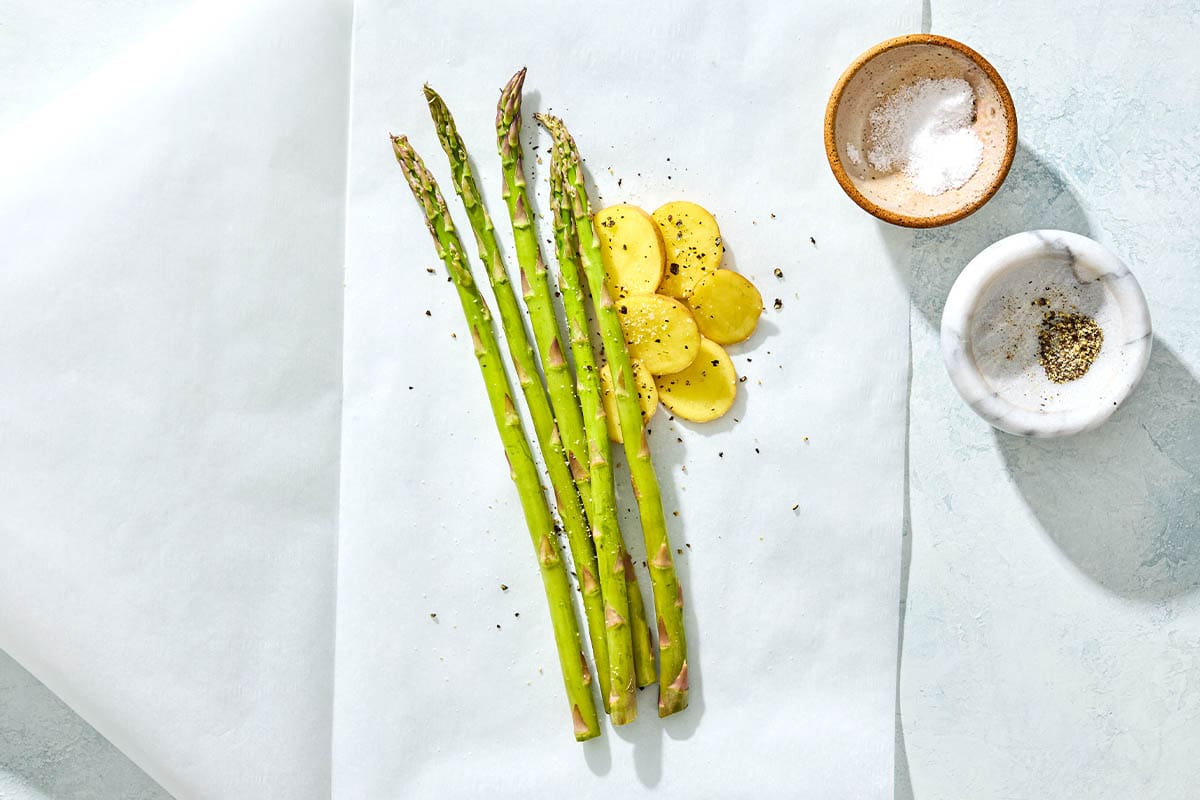
- Layer the vegetables. Place a sheet of parchment on a clean work surface with a long edge facing you. Fold it in half, bringing the short edges together, then open it again. Arrange one-quarter of the potato slices on one half of the paper, leaving the edges clear for folding. Top with 5 asparagus spears and season the vegetables with salt and pepper.

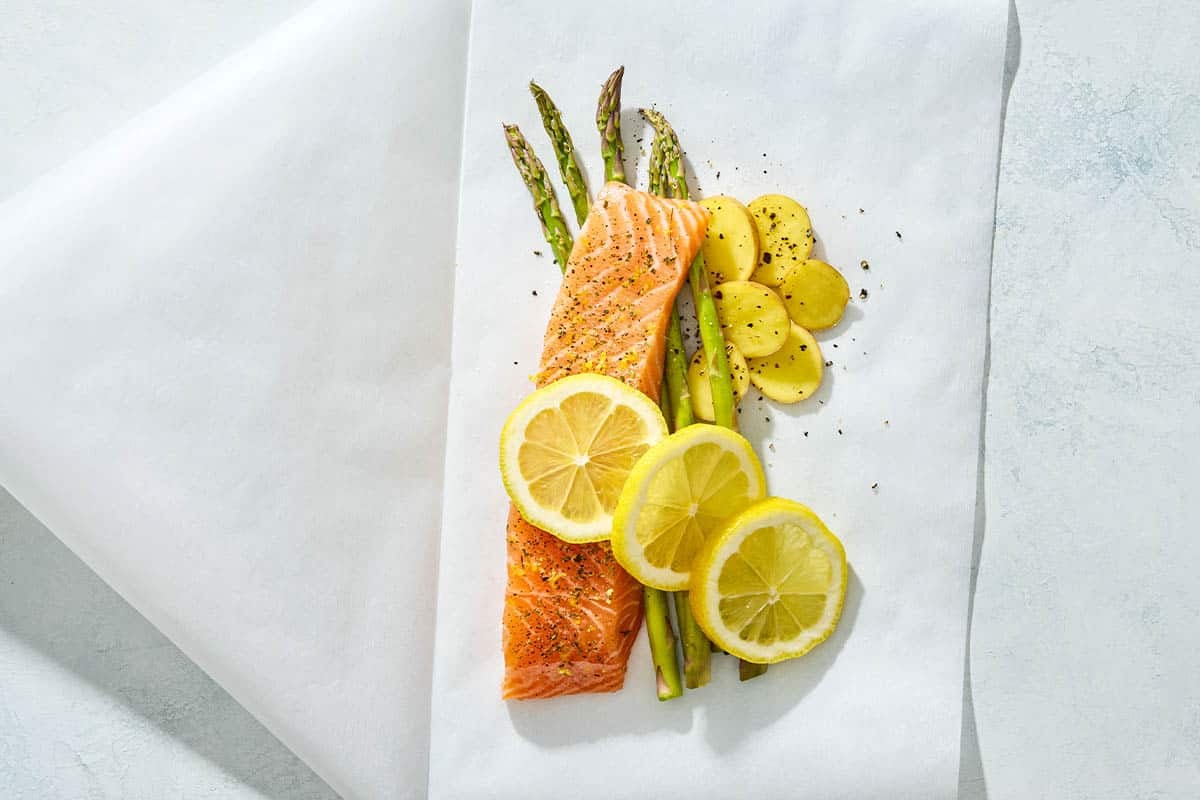
- Add the salmon. Place one seasoned salmon fillet over the vegetables and top with 3 thin lemon slices. Fold the empty half of the parchment over the filling.
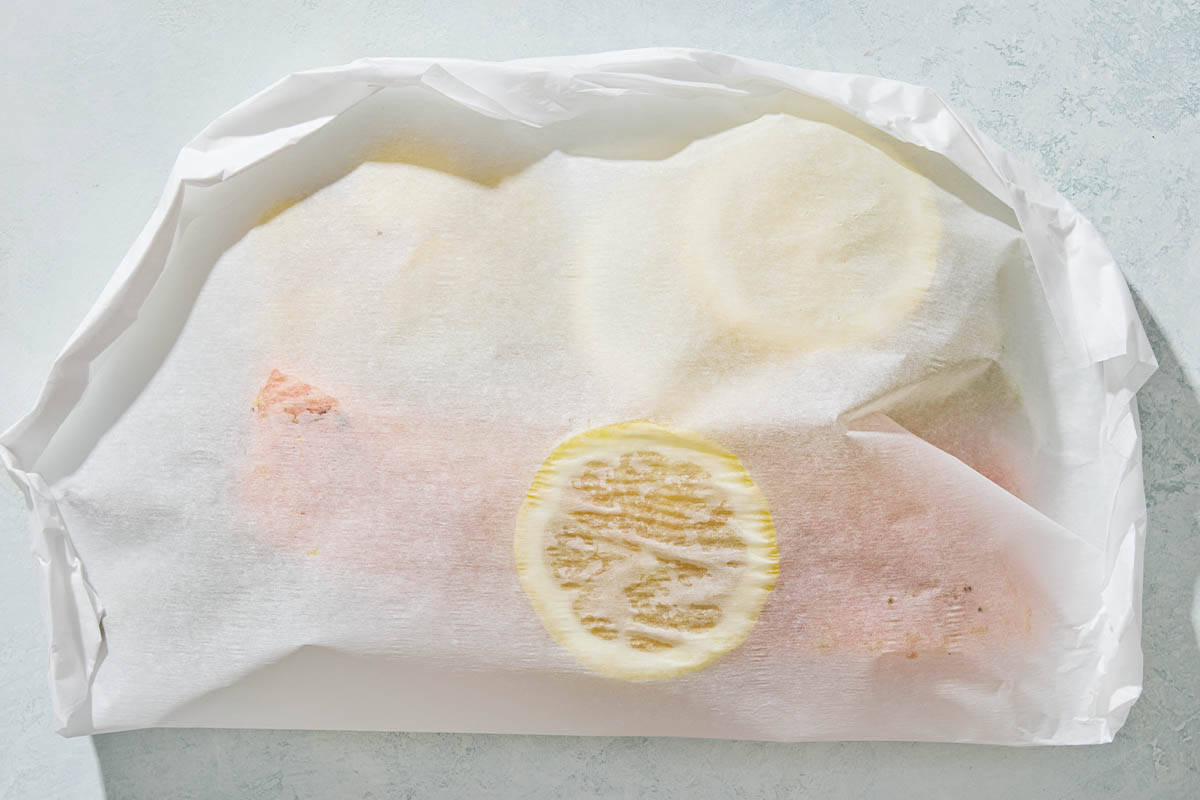
- Seal the packet. Starting at one end, fold the open edges together in small, overlapping pleats. Work your way around the packet, then tuck the last fold underneath to hold it closed. Crimp the edges firmly to trap the steam, but leave some space inside the pouch for it to expand. Repeat with the remaining parchment, vegetables, salmon, and lemon to make 4 packets.
- Bake. Carefully transfer the packets to the baking sheet and bake for about 15 minutes, depending on the thickness of the salmon. The fish should be opaque and separate easily into flakes. To check, carefully open a packet away from your face and insert an instant-read thermometer into the thickest part of the fish; it should register 145°F. If the salmon needs more time, fold the packet closed and return it to the oven until cooked through. Close any packet you opened before resting.
- Rest. Remove the baking sheet from the oven and let the packets rest for 4 to 5 minutes. Pierce the center of each unopened packet with a knife, then open slowly, keeping your hands and face clear of the escaping steam.
- Finish and serve. Use a spatula to transfer the salmon and vegetables to plates, spooning the juices from each packet over the fish. Finish with a drizzle of extra virgin olive oil and a sprinkle of chopped fresh dill. Serve at once.
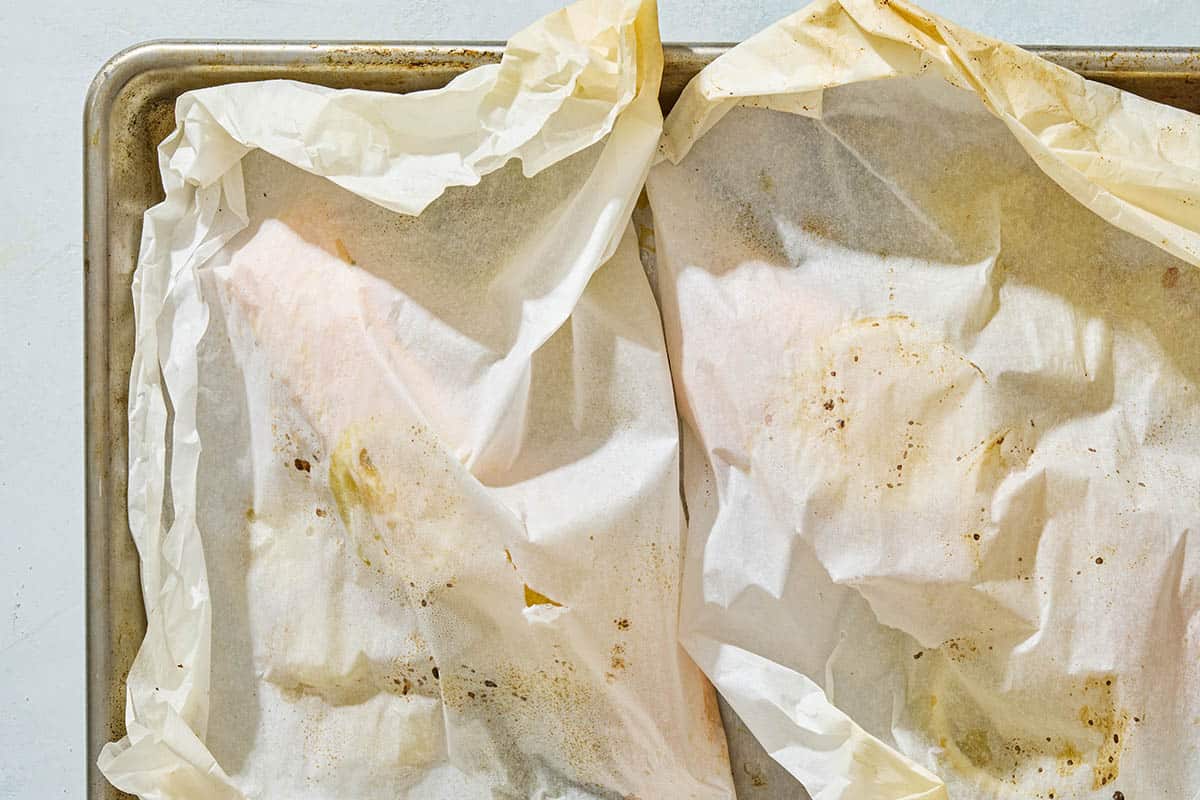
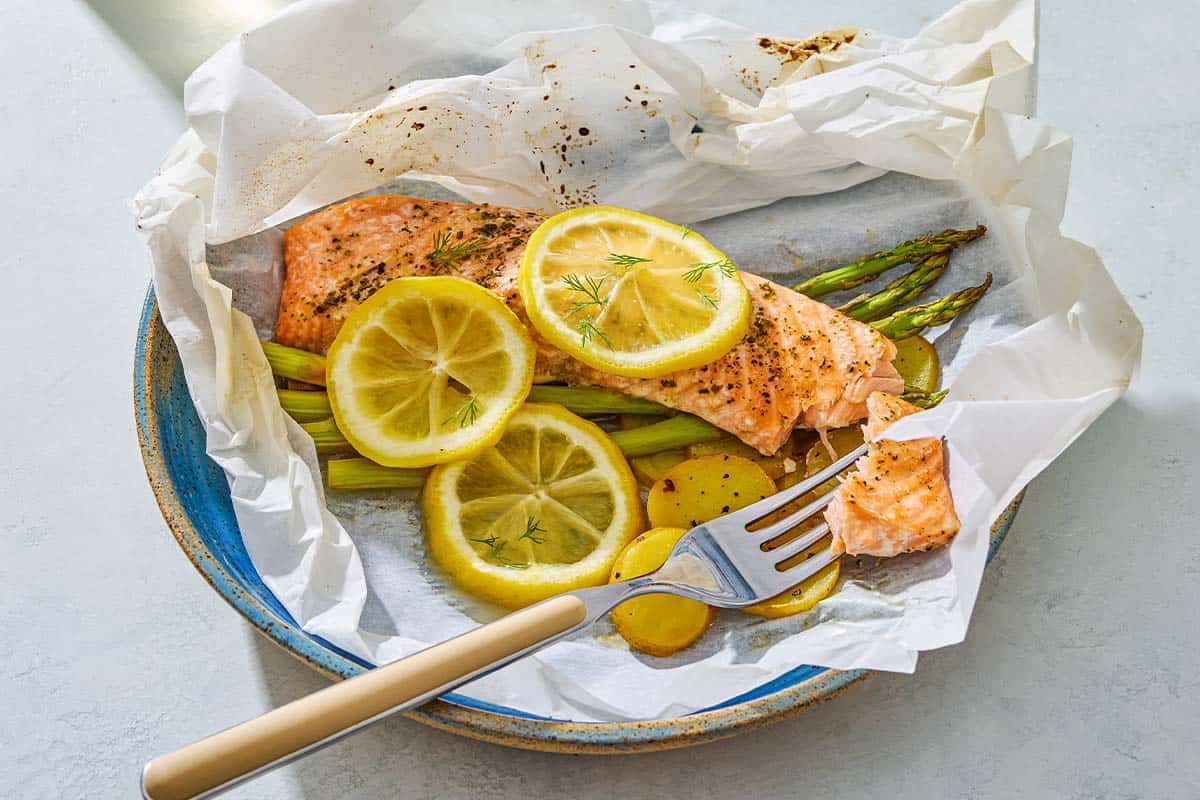
Tips for Folding and Cooking Salmon in Parchment
The folds do more than hold dinner together: they keep the steam and flavorful juices inside. A well-sealed packet should have firmly crimped edges with a little room above the salmon.
- Overlap the folds. Start at one end of the open parchment edges and make a small fold, pressing it firmly. Make the next fold partly over the first, then continue around the packet. Tuck the final fold underneath so the edge stays closed when you move it.
- Leave space around the filling. Keep the potatoes, asparagus, and salmon away from the edges you’ll be folding. Pulling the paper tightly against the fish makes it harder to seal and leaves little room for the pouch to expand.
- Watch for puffing, but check the fish itself. The parchment may puff as steam collects inside, then deflate after leaving the oven. A puffed packet shows that steam has collected inside, but the salmon may still need more time. Check the fish itself for doneness before resting the packets.
- Keep the potato slices thin and even. Aim for ⅛-inch slices throughout, rather than a mixture of thin rounds and thick wedges. The potatoes cook underneath the salmon, so a thicker piece can still be firm when the fish is ready.
- Rest before opening. Give the packets their full 4 to 5 minutes on the baking sheet, then open them slowly and away from your face. There may still be hot steam inside.
- Save the juices. When you transfer the salmon and vegetables to plates, spoon the liquid from the parchment over them. You can also serve each packet on a dinner plate and let everyone open their own, with a reminder to watch for steam.
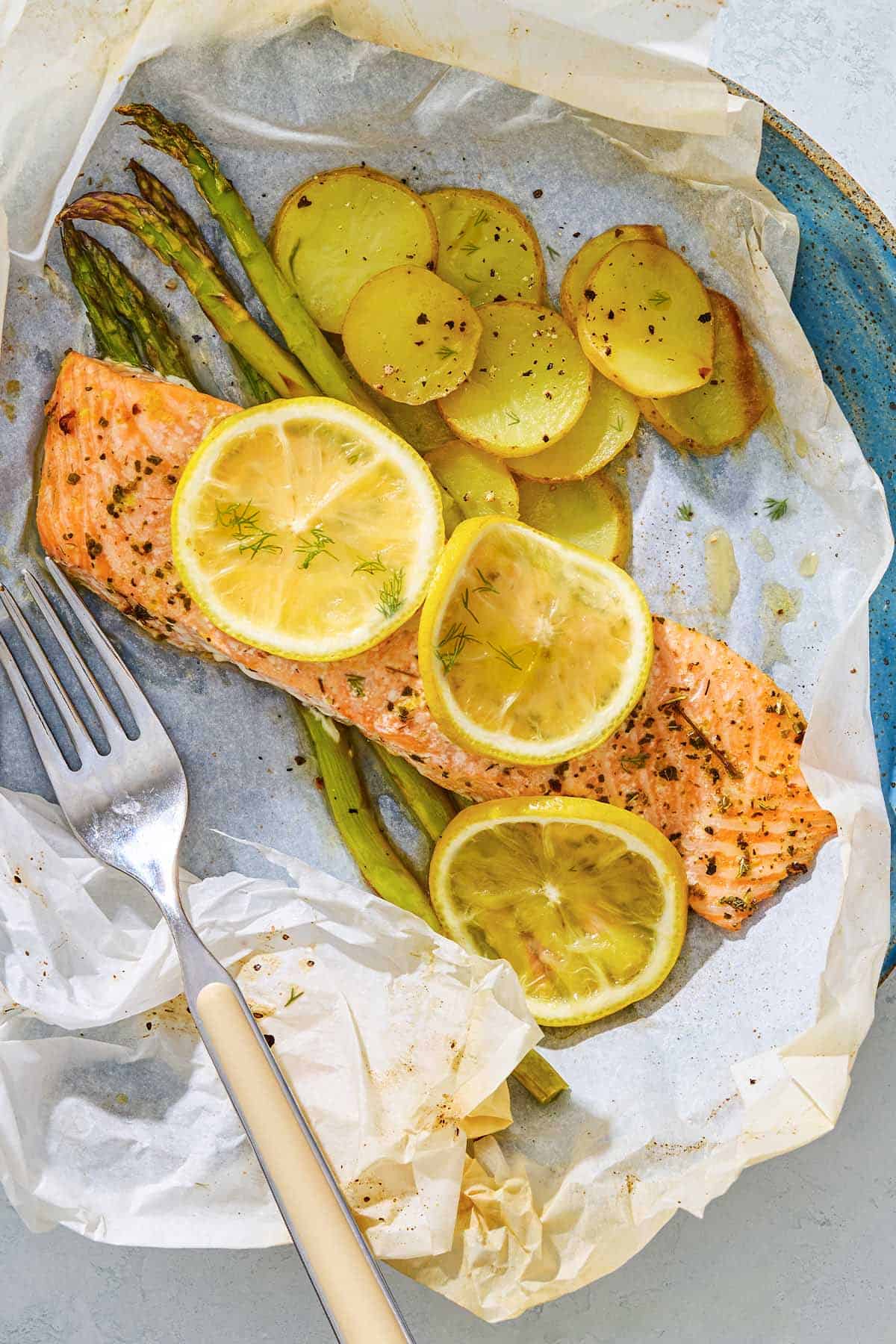
Simple Substitutions
You can vary the fish, vegetables, or finishing herbs while keeping the lemon and oregano seasoning.
- Instead of salmon: Use thick white fish fillets, such as cod. Choose pieces of similar thickness so they cook evenly, and check for doneness rather than assuming the timing will be identical.
- Instead of asparagus: Try sliced zucchini or shaved fennel. Fennel is a crisp bulb with a delicate anise flavor; shaving it thinly helps it cook alongside the fish.
- Instead of dill: Chives, parsley, basil, or cilantro offer a different fresh finish. Add them just before serving, as you would the dill.
- For the potatoes: Any small potato variety works. You can peel them if you prefer, but keep the slices about ⅛ inch thick.
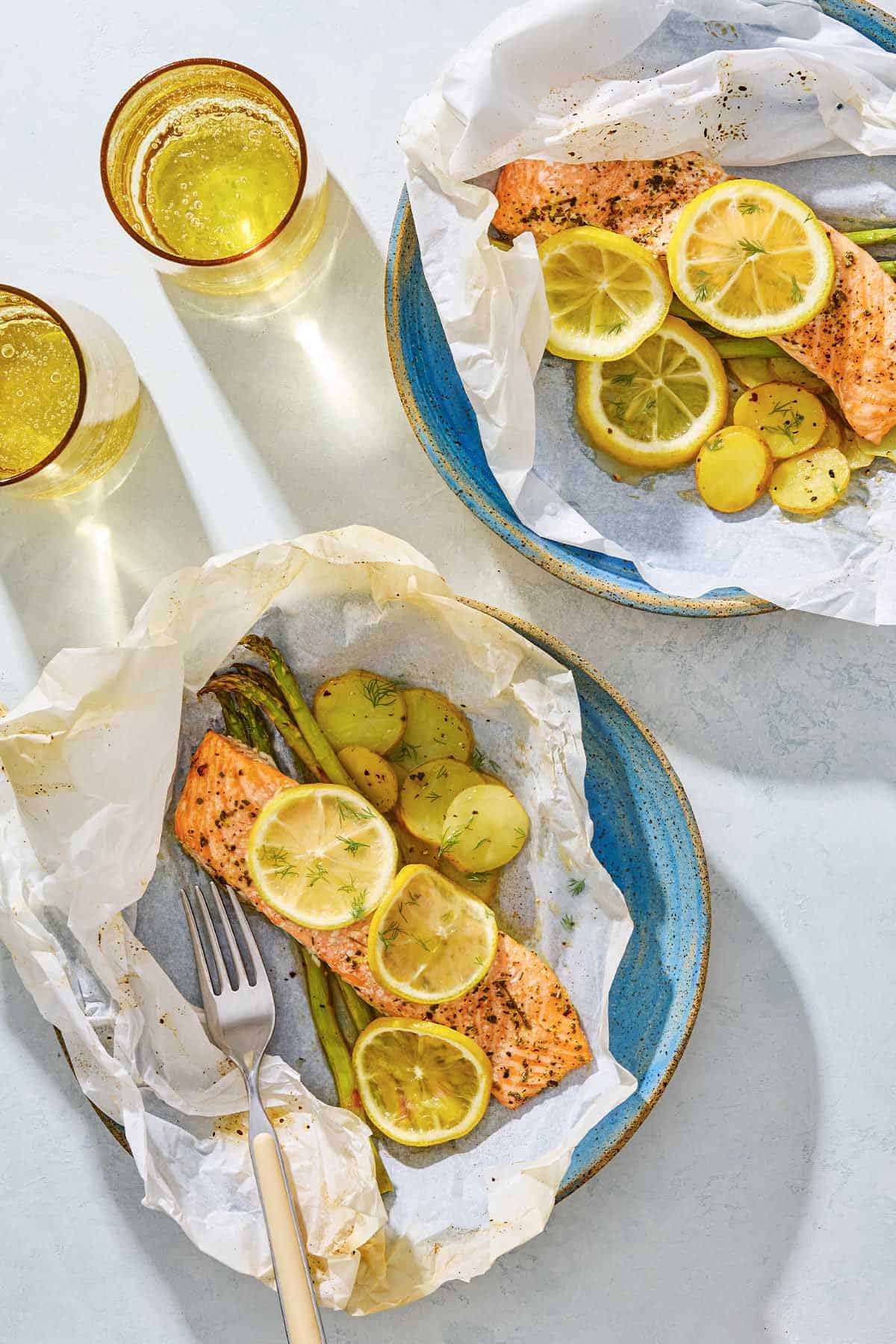
What to Serve with Salmon in Parchment Paper
With asparagus and potatoes in every packet, you already have a complete dinner. For something cool and crisp alongside, serve a traditional Greek salad. The cucumber, tomatoes, olives, and feta complement the lemon and oregano without adding another pan to the stove.
For a more substantial spread, add Greek lemon rice. Spoon a little of the salmon’s cooking juices over the rice when you serve.
Make Ahead and Storage
To assemble ahead: Prepare and seal the packets earlier in the day, then refrigerate them until you’re ready to bake. Keep the raw fish chilled at 40°F or below. Bake in the preheated oven and check for doneness; refrigerated packets may need additional time.
To store leftovers: Transfer the cooked salmon and vegetables to an airtight container and refrigerate within 2 hours of cooking, or within 1 hour if the temperature is above 90°F. There’s no need to wait until everything is completely cold. Keep refrigerated for up to 3 days.
More Salmon Recipes to Try

Fish and Seafood
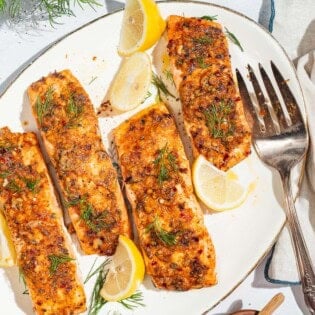
Baked Lemon Garlic Salmon
Fish and Seafood
Baked Dijon Salmon with Lemon and Garlic

Fish and Seafood
Broiled Salmon (Quick and Easy Recipe)

Fish and Seafood
Poached Salmon


Ingredients
- 4 (5-ounce) skinless center-cut salmon fillets
- 1/2 teaspoon dried oregano
- 1 medium lemon, zested, then sliced into thin rounds
- Kosher salt
- Freshly ground black pepper
- 1/4 cup extra virgin olive oil, plus more for serving
- 4 small baby potatoes with their skins, yellow or red, sliced into ⅛-inch-thick rounds
- 20 thin asparagus spears, trimmed
- Chopped fresh dill, for garnish
Instructions
- Get ready. Preheat the oven to 425°F. Have four 12 × 16-inch sheets of parchment paper and an ungreased rimmed baking sheet ready.
- Season the salmon. Pat the salmon fillets dry with paper towels and place them in a medium bowl. Add the oregano, lemon zest, and a good pinch or two of salt and pepper. Drizzle with the olive oil and gently turn the fillets to coat. Set aside.
- Assemble the packets. Place one sheet of parchment on a clean surface with a long edge facing you. Fold it in half, bringing the short edges together, then open it again. Arrange one-quarter of the potato slices on one half, leaving the edges clear for folding. Top with 5 asparagus spears and season the vegetables with salt and pepper. Add one salmon fillet and top with 3 thin lemon slices. Fold the empty half of the parchment over the filling.
- Seal the packets. Starting at one end, fold the open edges together in small, overlapping pleats. Continue around the packet, then tuck the final fold underneath to secure it. Seal the edges firmly, leaving room inside for steam to expand. Repeat with the remaining ingredients and parchment to make 4 packets.
- Bake. Carefully transfer the packets to the baking sheet. Bake for about 15 minutes, depending on the thickness of the salmon. The fish should be opaque and separate easily into flakes. To check, carefully open a packet away from your face and insert an instant-read thermometer into the thickest part of the fish; it should register 145°F. If the salmon needs more time, fold the packet closed and return it to the oven until cooked through. Close any opened packet before resting.
- Rest. Remove the baking sheet from the oven and let the packets rest for 4 to 5 minutes. Pierce the center of each unopened packet with a knife, then open slowly, keeping your hands and face clear of the escaping steam.
- Finish and serve. Use a spatula to transfer the salmon and vegetables to plates. Spoon the juices from the packets over the fish, drizzle with a little more olive oil, and sprinkle with chopped fresh dill. Serve at once.
Notes
- Choose evenly thick salmon: Center-cut fillets of similar thickness cook more evenly than a mixture of thick center pieces and thin tail pieces.
- Slice the potatoes thinly: Keep the slices about ⅛ inch thick and choose thin asparagus spears so the vegetables cook alongside the salmon.
- Make ahead: Assemble and seal the packets earlier in the day, then refrigerate at 40°F or below until ready to bake. Refrigerated packets may need additional baking time; check the fish for doneness.
- Storage: Transfer leftover salmon and vegetables to an airtight container and refrigerate within 2 hours of cooking, or within 1 hour if the temperature is above 90°F. Store in the refrigerator for up to 3 days.
- Shop this recipe: Visit our shop for the fragrant Greek oregano used to season the salmon and extra virgin olive oil for coating the fillets and finishing each plate
Nutrition
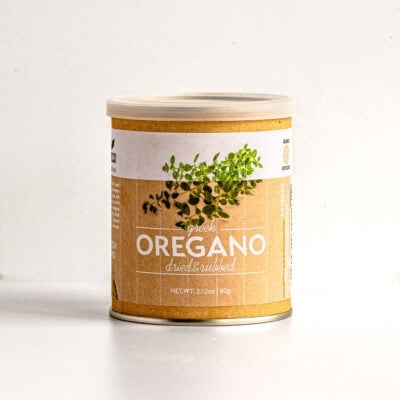
Try Our Greek Oregano!
This dried herb straight from Greece is lemony, fragrant, and perfect for everyday use.

love the recipe for calamari
Very delicious, as usual! 🙂
Thank you!
I’m going to try this tonight. I think you ay have forgotten to say when to pour the olive oil with the spices onto the salmon but I assume it is before you bake it.
Hi, Carol. You want to do that in step 2: Pat dry the salmon pieces and place them in a medium bowl. Season with the dried oregano, lemon zest, and a good pinch or two of salt and pepper. Drizzle with the olive oil and mix everything gently to combine. Set the bowl aside.
Wow, that was so good! Yum
This meal was amazing- even my kids have been begging for a repeat
Yay! That is a HUGE win in my book!!