


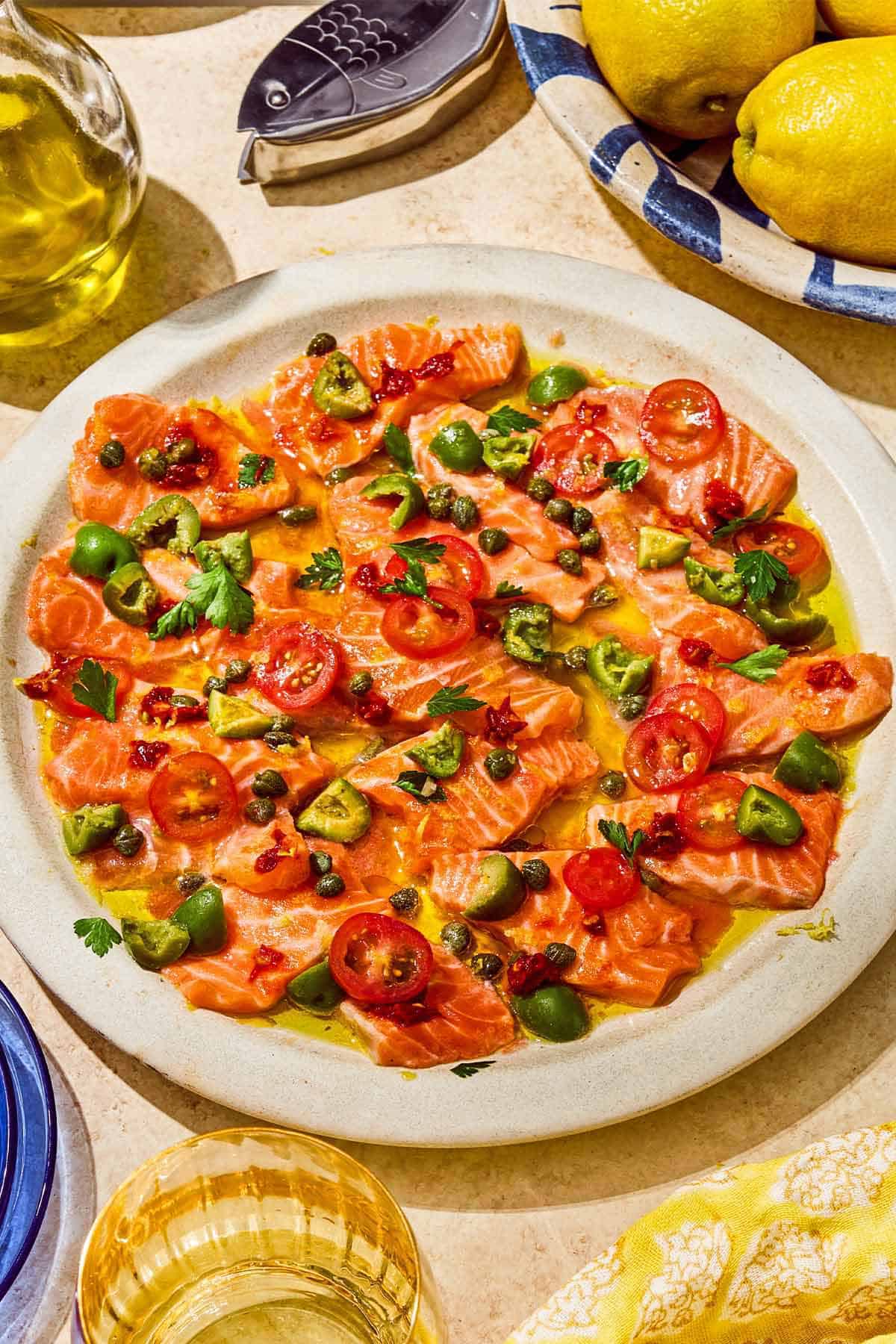
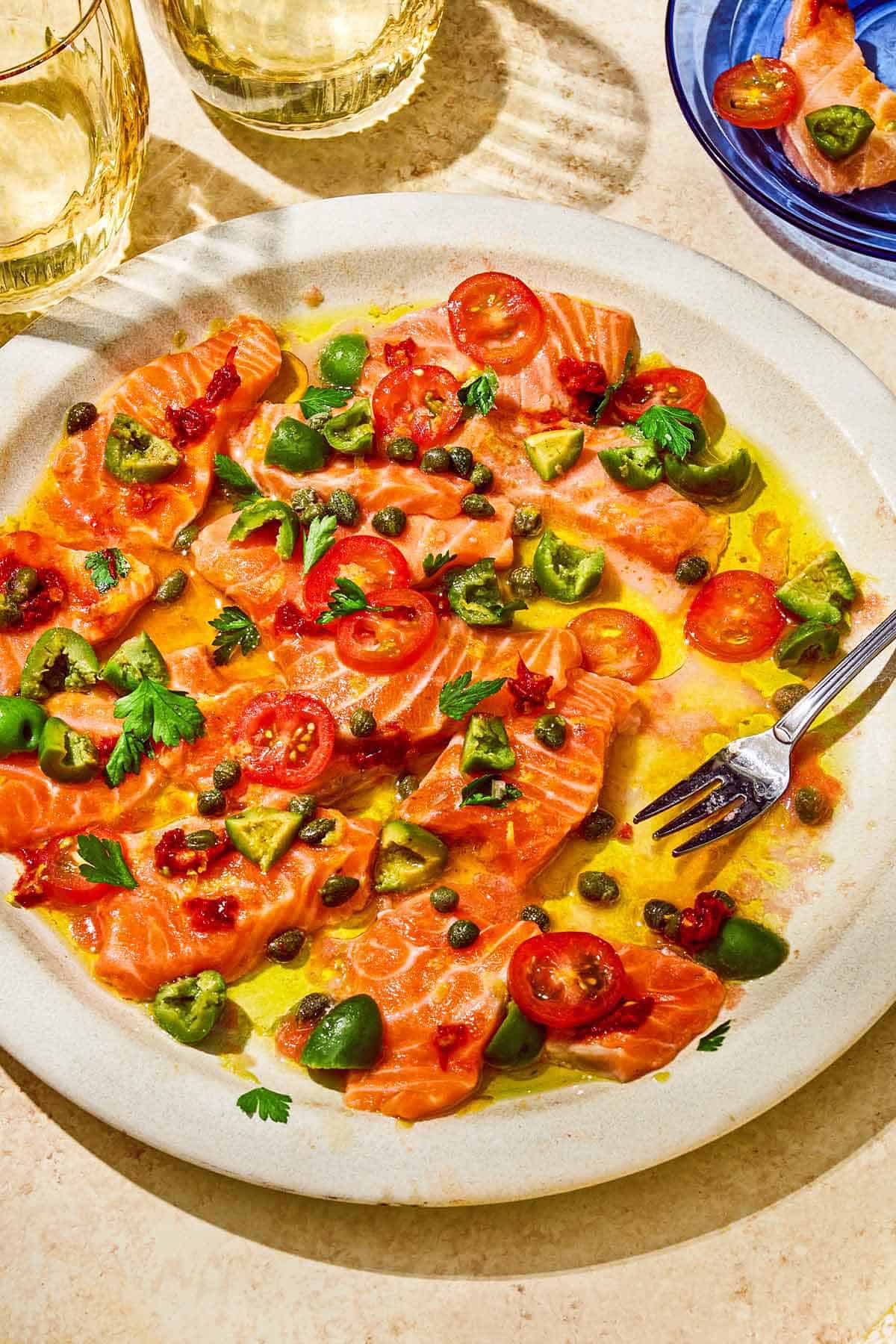
Salmon crudo pairs delicate raw salmon with the tangy flavors of a classic pasta puttanesca.
The Easiest Appetizer You’ll Ever Make
I was first introduced to crudo as a young line cook, and I’ve been chasing it ever since. I remember the chef reverently pulling his wickedly sharp fillet knife out of its box and demonstrating how to cleanly cut beautiful little bites of fish.
Crudo simply means “raw” in Italian and can refer to fish, beef or even fruits and vegetables! Think of a crudo as a vehicle to showcase the natural deliciousness of a piece of food in its freshest state.
For this salmon crudo, I was inspired by the flavors of a classic puttanesca. This punchy Italian pasta sauce is made with olives, capers and a hint of spice. The salmon in this recipe stands in for the anchovies in a traditional puttanesca, and I use a grated tomato in the dressing to highlight the umami of the fresh fish.
I garnish with fresh parsley and lemon zest to brighten the dish, and in a nod to the fancy crudo I used to assemble in restaurant kitchens, I finish the crudo with flaky salt and whisper-thin slices of tomato. Crudo is lightly dressed right before serving, allowing the raw fish to be the star of the show.
Key Ingredients
With a beautiful piece of fish, a sharp knife, and a few pantry staples, you can have a restaurant-quality appetizer on your table in just a few minutes. This recipe is endlessly adaptable, so feel free to use whatever you have on hand! Just make sure you’re tasting each component for a balance of salt, spice, acid and fat.
- Salmon has a rich texture and, served raw, it has a mild, creamy flavor. Salmon is widely available and relatively inexpensive, but consult with your fishmonger when buying any seafood you plan to eat without cooking! More on buying fish for crudo below.
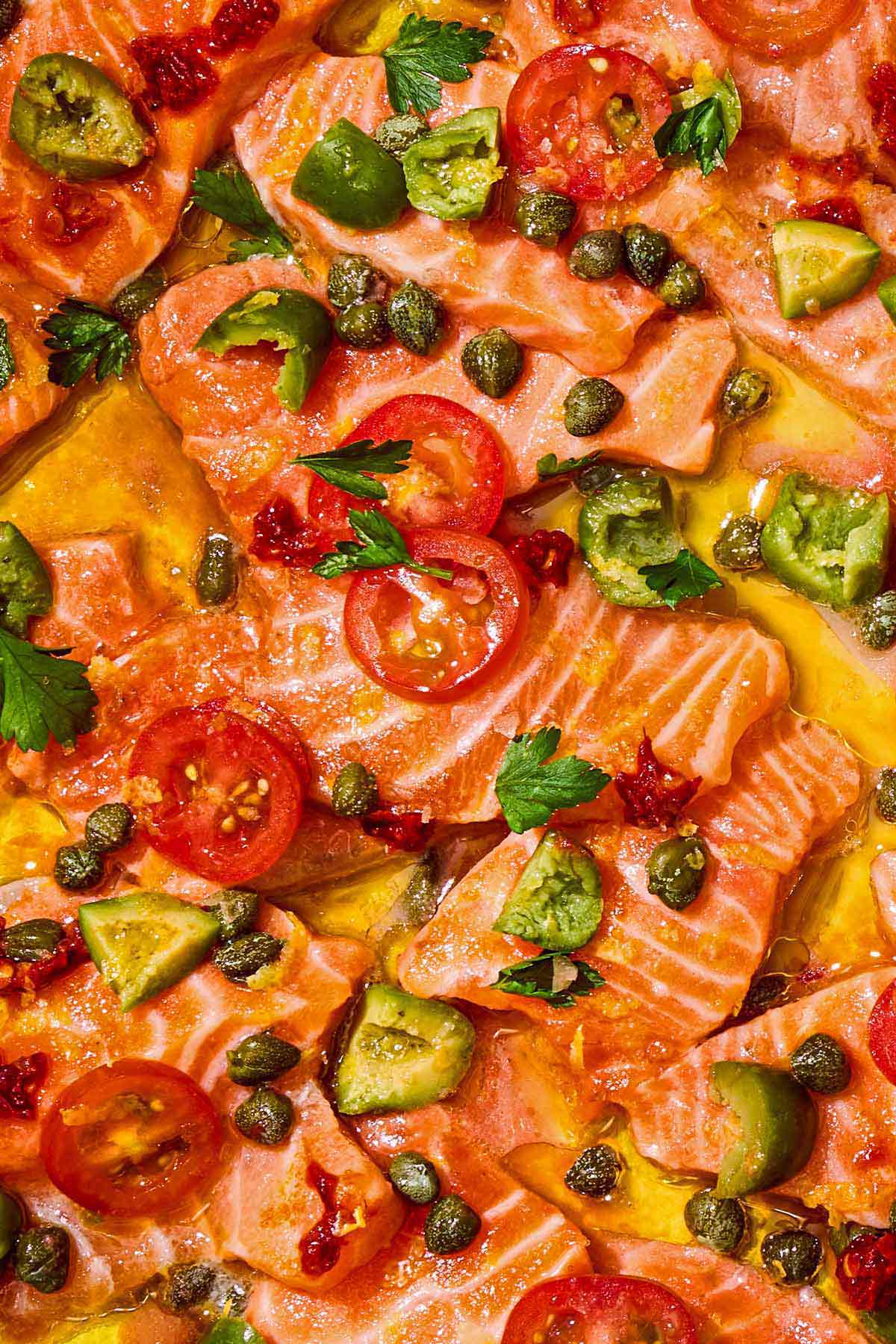
- Olives and capers: The Castelvetrano olives and capers in the garnish add a briny umami to the dish, accentuating the salmon with their punchy brightness.
- Calabrian chili paste: A fiery red chili grown mostly in Italy, Calabrian chilies have a bright, smoky heat. They are often sold pulsed into a paste and jarred, which is what I call for in this recipe. If you can only find them whole, simply rough-chop a couple to add to the garnish. As written, the recipe isn’t super spicy, and I think the chilis add a nice warming touch to the dish. Feel free to omit them if you are very sensitive to spice.
- Lemon: Adds a welcome freshness to the dish and tartness to boost the tangy flavor of the tomato and the richness of the fish.
- Parsley: The herbaceous green herb adds a pop of freshness, playing nicely against the umami of the tomatoes and salmon.
- Tomatoes: I use tomatoes two ways: grated and strained for the dressing, and thinly sliced for a garnish. The savory richness of the grated tomato works beautifully with the rich salmon. Not only do the thin slices atop the salmon look pretty, but they also add some welcome texture to the dish.
How to Make Salmon Crudo
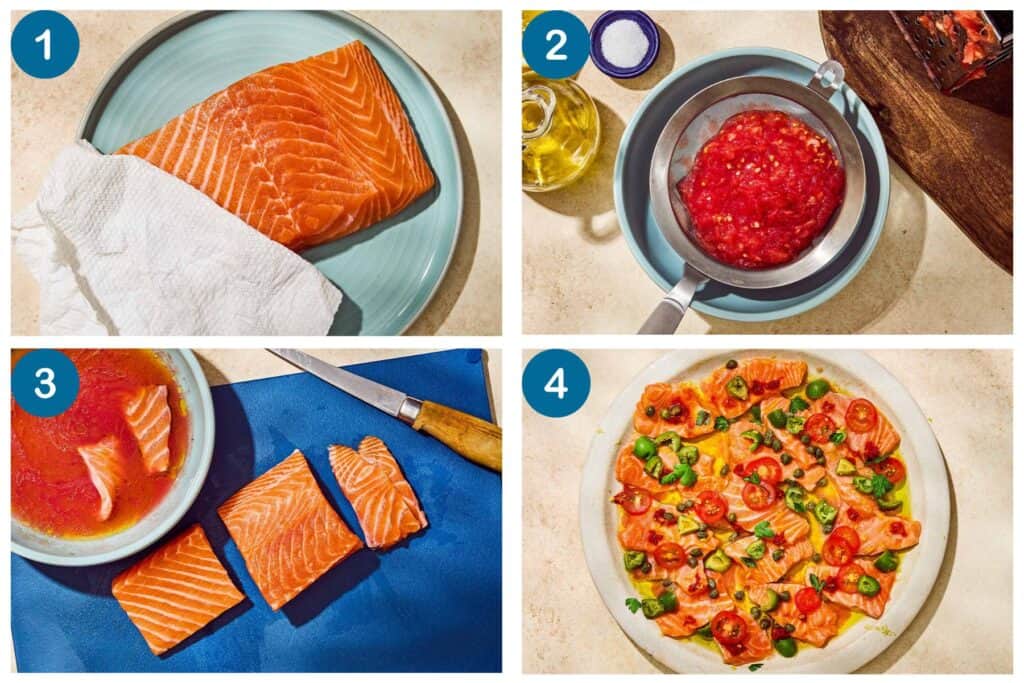
Think of crudo as a template to showcase the delicate flavors of raw salmon. A simple formula of raw protein + acid + oil + something fresh provides a balanced, cooling start to a meal. Follow these simple steps to wow your friends and family with this stunning appetizer:
- Get ready. Place 1 pound sushi-grade salmon, skin removed, on a large plate and pat dry with a paper towel. Loosely cover with plastic wrap to prevent it from drying out. Chill platter/serving plates and the salmon in the freezer while you assemble the dressing.
- Make the dressing. Slice off a small piece on the bottom of 1 large tomato (about 8 to 10 ounces). Using a box grater set over a shallow bowl, grate the tomato through the large holes of the grater. Strain the grated tomato through a fine-mesh strainer into a medium bowl. Whisk in 2 tablespoons extra virgin olive oil, 2 tablespoons lemon juice and 1/2 teaspoon kosher salt. Set aside while you prepare the salmon.
- Prep the salmon. Using a very sharp knife, trim the salmon fillet of any edges that aren’t as thick as the main fillet. Cut fillet in half lengthwise, using the natural seam as a guide. Cut each piece of salmon against the grain into 1/4-inch thick slices, running the knife under cold water if the slices start to stick. Place slices in the dressing bowl as you work. Gently toss sliced salmon in the dressing to make sure all slices are evenly coated.
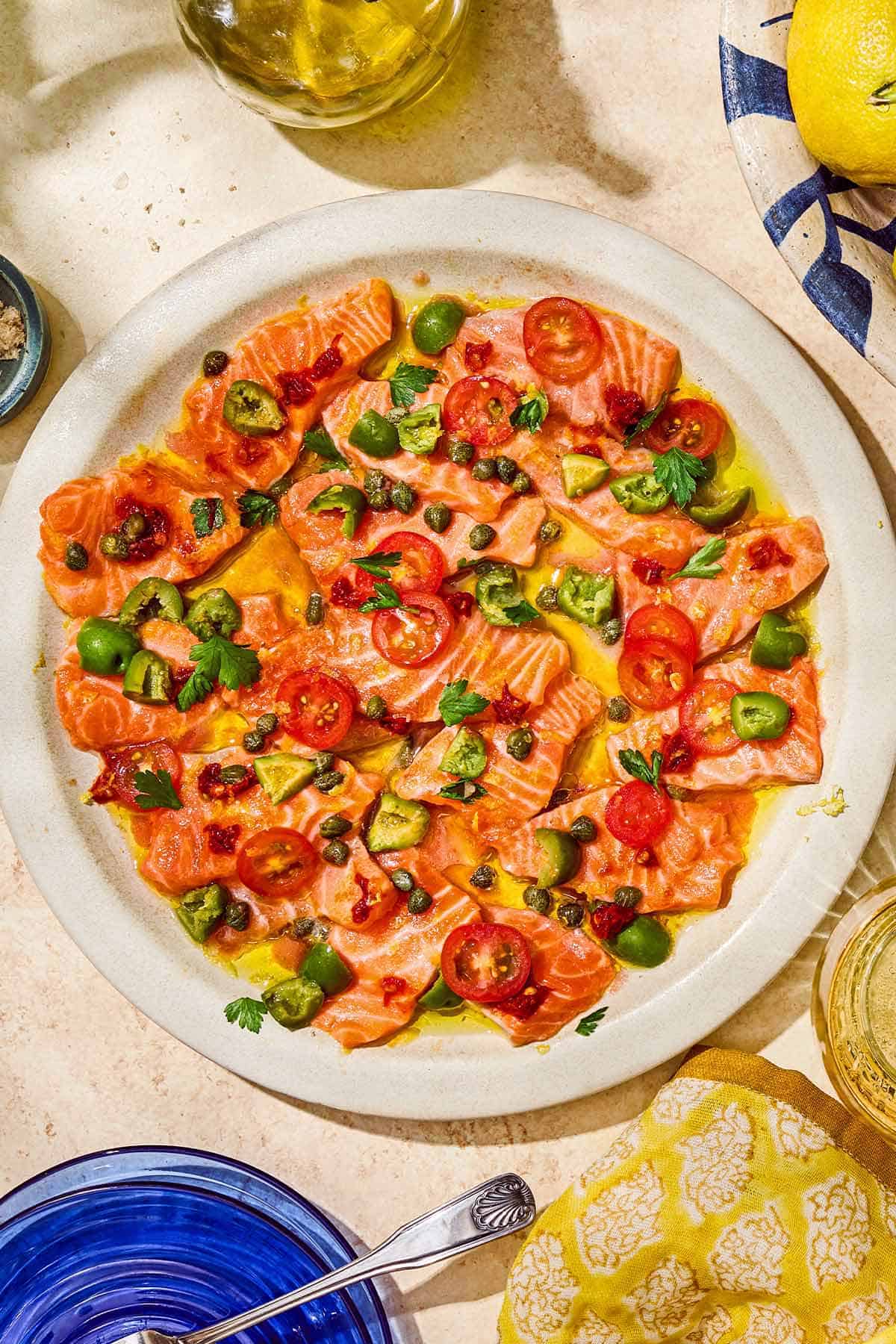
- Plate the crudo. Zest and juice 1 large lemon. Remove platter/serving plates from the freezer and fan 6 to 8 slices of salmon across each plate. Top them with the lemon zest, 1/4 cup pitted and quartered castelvetrano olives, 1 tablespoon drained capers, and 1 teaspoon Calabrian chili paste. Drizzle with extra virgin olive oil and garnish with a sprinkle of flaky salt, a scattering of parsley leaves and a few thin slices of grape tomato. Serve immediately.
How to Buy Fish for Crudo
This dish is consumed raw, so it’s important to use only the freshest fish. Purchase your salmon from a place that sells sushi-grade seafood, and talk to the person behind the counter before you buy!
Tell them that you’re making a crudo with the fish, and listen to what they have to say. If the salmon isn’t perfectly fresh that day, swap it out for another firm, fatty fish that is. Try black bass, arctic char, scallops, or hamachi. If you’re nervous about removing the skin from your fillets at home, ask your fishmonger if they’ll do it for you.
You don’t have to make your crudo the same day you buy your fish. It can rest for up to one day, properly stored, in your fridge. Bring a cooler with ice packs to the grocery store to transport your salmon, and once you’re home, pat the fish dry with paper towels. Wrap tightly in a plastic bag and store on a bed of ice in the fridge. Change out the ice as it melts.
How to Slice Fish for Crudo
Chill It
In this recipe, put both the fish and your serving plates in the freezer as you prepare the dressing and gremolata. Stashing the salmon in the freezer for a few minutes makes it much easier to slice, but don’t keep it in the freezer for more than 30 minutes. If you have to step away, just move the fish to the fridge until you’re ready to resume. I like to put my plates in the freezer to ensure that each portion arrives at the table perfectly chilled — it’s a nice touch!
Pick the Right Knife (and Sharpen It)
If you have a fillet knife, now is the time to use it; the long, thin blade gives you control of your cuts. The blade of a fillet knife is flexible, which helps it to slide through protein easily. But if you don’t own a fillet knife, a chef’s knife will absolutely do the trick! Just make sure that your knife is very sharp. A sharp knife is the key here; it will glide through the salmon cleanly and evenly.
Skin, then Slice the Fish
Removing the skin from the fish is the most difficult part of this process, but if you’re up for the challenge, this is a great skill to master! Just follow these steps:
- Place the salmon, skin-side down, on a cutting board. Using a fillet knife, cut down, through the tail end of the fish, stopping when you hit the skin.
- Rotate your blade so that it’s between the skin and the flesh of the fish, parallel with your cutting board. Hold the tail of the fish with your non-dominant hand and gently work the knife away from you, between the skin and the fillet, staying as close to the skin as possible.
- Make small little cuts, peeling the fillet away from the skin as you go. Take your time with this step, and don’t hesitate to reposition the fish on your cutting board for a better grip or view. Voilà, you just skinned a fish!
After the skin is removed, cut the fillet in half lengthwise, following the natural seam of the fish. Then carefully slice across the grain. We’re not aiming for paper-thin slices of salmon here; slice the fish about 1/4-inch thick. If the slices start to stick to your knife as you cut, rinse the blade briefly under cool water and resume.
Make It Your Own
A beautiful piece of fish is a blank canvas, so feel free to experiment with different flavor profiles here! Use this simple formula to assemble a crudo: raw seafood + acid + oil + something crunchy. Here are a couple of ways you could mix up this particular crudo:
- Amp Up the Umami: I chose mild, buttery Castelvetrano olives for our garnish so as not to overwhelm the delicate flavors of the raw fish, but if you’re craving something a little more punchy, oil-cured olives will do the trick. Oil-cured olives are pretty salty, so taste and adjust the flaky salt garnish as necessary.
- Herb Swap: Try scattering fresh basil, mint or dill across the crudo in place of the parsley.
- Spice Flex: Amp up the heat in the garnish by increasing the Calabrian chili paste amount to 2 teaspoons. Can’t find Calabrian chili paste? Substitute 1/2 teaspoon of red pepper flakes, or throw in a couple of dashes of your favorite hot sauce into the dressing. Don’t like spice? Feel free to omit the chilis entirely, or substitute 1 teaspoon chopped roasted red peppers for all of the flavor without the heat.
What to Serve with Salmon Crudo
- A crudo is an ideal light bite to start a summery meal. Serve it as an appetizer before a bowl of Pesto Gnocchi with Summer Veggies or Lemon Pasta.
- Having a fancy dinner? Serve the crudo as your first course and follow it with Easy Lemon Chicken Piccata or Juicy Grilled Lamb Kebabs.
- Pair crudo with a light beverage like an Aperol Spritz, and end your meal on a refreshing note with a Granita or, better yet, a Sgroppino.
More Salmon Recipes
Appetizer and Mezze
Smoked Salmon Appetizer Platter
Fish and Seafood
Salmon Burgers
Fish and Seafood
Broiled Salmon (Quick and Easy Recipe)

Ingredients
- 1 pound sushi-grade salmon, skin removed
- 1 large lemon, zested and juiced (for the dressing)
- 1/4 cup castelvetrano olives, pitted and quartered
- 1 tablespoon capers, drained of any brine
- 1 teaspoon calabrian chili paste
- 2 tablespoon extra virgin olive oil, for drizzling
- Flaky sea salt
- Fresh parsley leaves
- Grape or cherry tomatoes, sliced into thin rounds
Tomato-Lemon Dressing:
- 1 medium tomato (about 8 to 10 ounces)
- 2 tablespoons extra virgin olive oil, plus a little extra for drizzling
- 2 tablespoons lemon juice
- ½ teaspoon kosher salt
Instructions
- Get ready. Place the salmon on a large plate and pat dry with a paper towel. Loosely cover with plastic wrap to prevent it from drying out. Chill platter/serving plates and the salmon in the freezer while you assemble the dressing.
- Make the Tomato-Lemon Dressing. Slice off a small piece on the bottom of the beefsteak tomato. Using a box grater set over a shallow bowl, grate the tomato through the large holes of the grater. Strain the grated tomato through a fine mesh strainer into a medium bowl. Whisk in the olive oil, lemon juice and kosher salt. Set aside while you prepare the salmon.
- Prep the salmon. Using a very sharp knife, trim the salmon fillet of any edges that aren’t as thick as the main fillet. Cut fillet in half lengthwise, using the natural seam as a guide. Cut each half of salmon into slices 1/4-inch thick against the grain, running the knife under cold water if the slices start to stick. Place slices in the dressing bowl as you work. Gently toss sliced salmon in the dressing to make sure all slices are evenly coated.
- Plate the crudo. Remove platter/serving plates from the freezer and fan 6-8 slices of salmon across each plate. Top with lemon zest, olives, capers, and calabrian chili paste. Drizzle with extra virgin olive oil and garnish with a sprinkle of flaky salt, a scattering of parsley leaves and a few slices of grape tomato. Serve immediately.
Notes
- Shop this recipe: Visit our shop to browse quality Mediterranean ingredients, including the olive oil and spices used in this recipe.
- How to Buy Fish for Crudo – This dish is consumed raw, so it’s important to use only the freshest fish. Purchase your salmon from a place that sells sushi-grade seafood, and talk to the person behind the counter before you buy! Tell them that you’re making a crudo with the fish, and listen to what they have to say. If the salmon isn’t perfectly fresh that day, swap it out for another firm, fatty fish that is. Try black bass, arctic char, scallops, or hamachi. If you’re nervous about removing the skin from your fillets at home, ask your fishmonger if they’ll do it for you.
Nutrition
Bundle and Save!
Four of our best-selling signature olive oils, perfect for everyday use.