




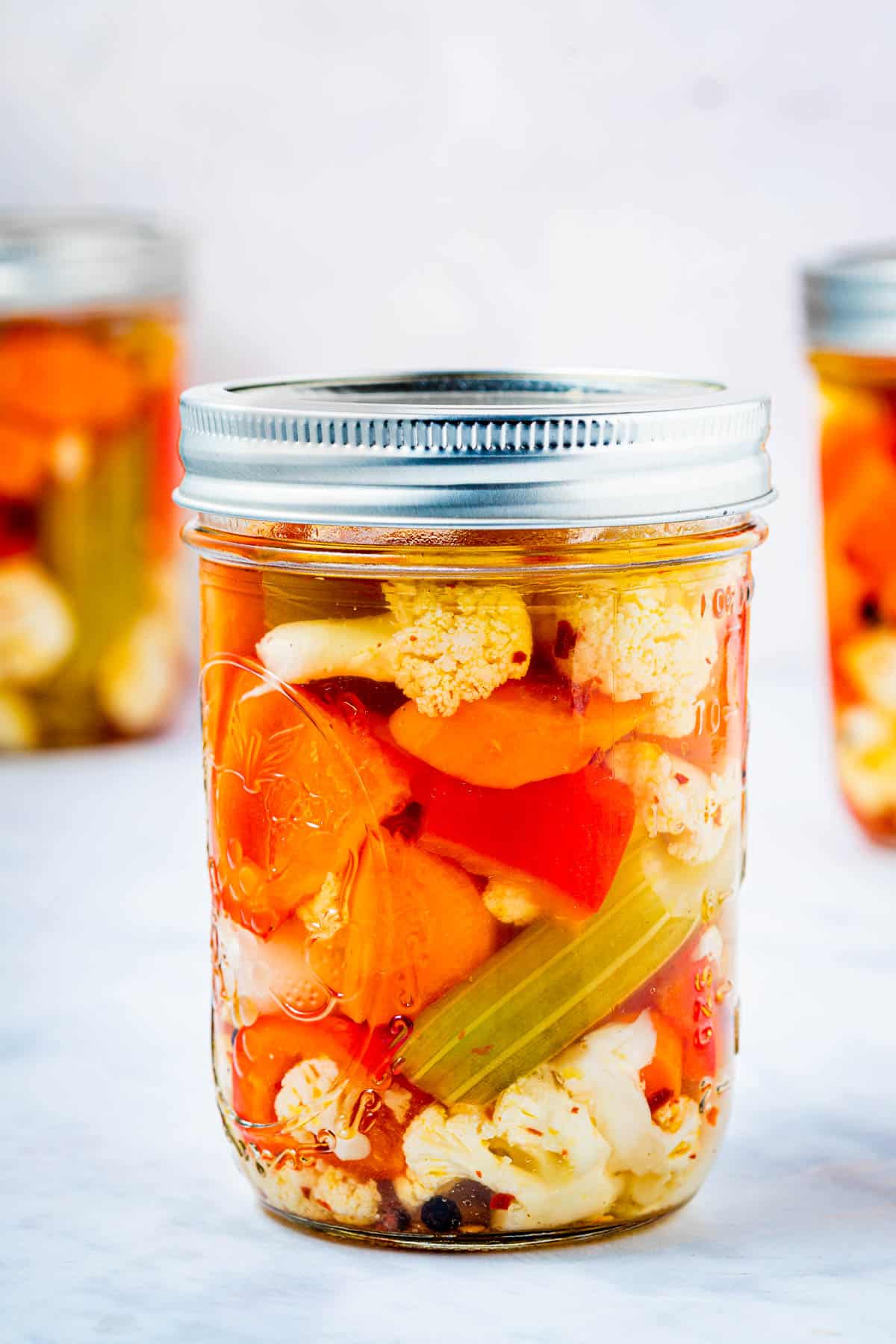
This traditional Italian giardiniera recipe turns cauliflower, carrots, celery, onions, and peppers into crisp, tangy refrigerator pickles.
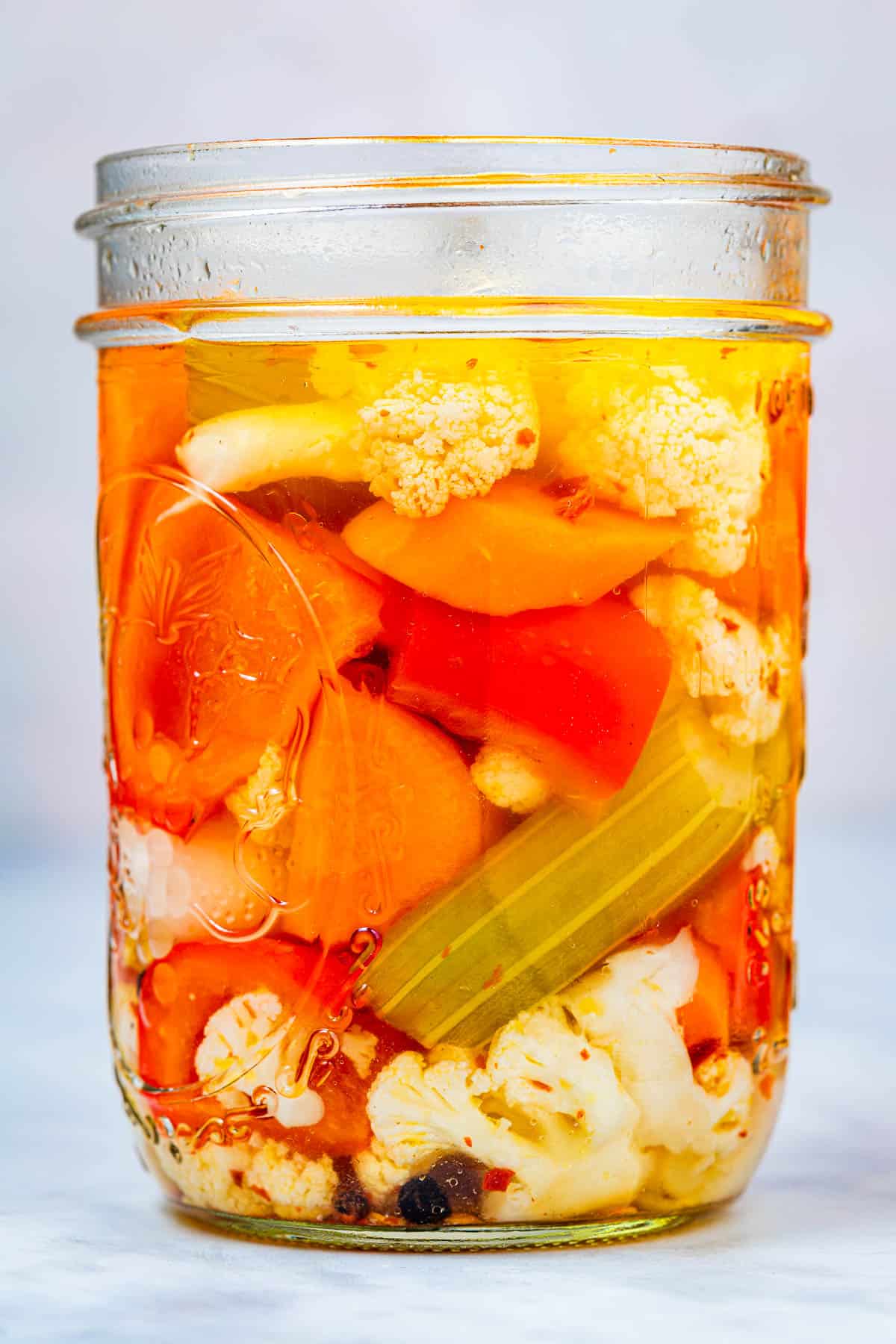
My Mom’s Traditional Italian Giardiniera
My mom made giardiniera every summer, and her version remains my favorite. It takes about 30 minutes of active work: The vegetables steep in the hot brine for just one minute, which preserves their satisfying crunch. After 24 hours at room temperature, the jars go into the refrigerator to cure, ideally for about one week.
Her mix of colorful vegetables and aromatic spices—including peppercorns, cloves, juniper berries, and bay leaf—produces giardiniera that is bracingly tangy, gently spicy, and just rich enough from a finishing layer of olive oil. I love it alongside roasted or grilled meat, chopped into tuna or egg salad, or set out with an antipasto platter.
I included this family recipe in my book, Preserving Italy, where I explore Italy’s rich kitchen-preserving traditions. This simplified refrigerator version gives you that same bright flavor and lively crunch without the need for shelf-stable canning.
What Is Giardiniera?
Giardiniera is an Italian pickle made with a colorful assortment of vegetables in a tangy vinegar brine. Its name comes from the Italian word giardino, meaning “garden”—a fitting name for a recipe traditionally made with carrots, cauliflower, celery, green beans, peppers, onions, and whatever else a productive vegetable garden offered.
Italians are avid gardeners, particularly when it comes to growing food. Why take up space with a lawn when you can grow your own produce instead? Giardiniera offered a practical and delicious way to preserve the late-season harvest for the colder months.
Italian immigrants brought their giardiniera traditions to the United States, where distinct regional versions developed. Today, the name may refer to two noticeably different preparations:
- Traditional Italian giardiniera: Typically features larger, crisp pieces of vegetables in a vinegar-forward brine. It is served as an antipasto, condiment, or bright side dish.
- Chicago-style giardiniera: Usually finely chopped, considerably hotter, and packed with more oil. It is best known as a topping for Chicago Italian beef sandwiches, sausages, and other hearty foods.
This giardiniera recipe follows the traditional Italian style. The vegetables stay in generous bite-sized pieces, and the brine is mostly sour, lightly sweet, and warmly aromatic rather than intensely hot.
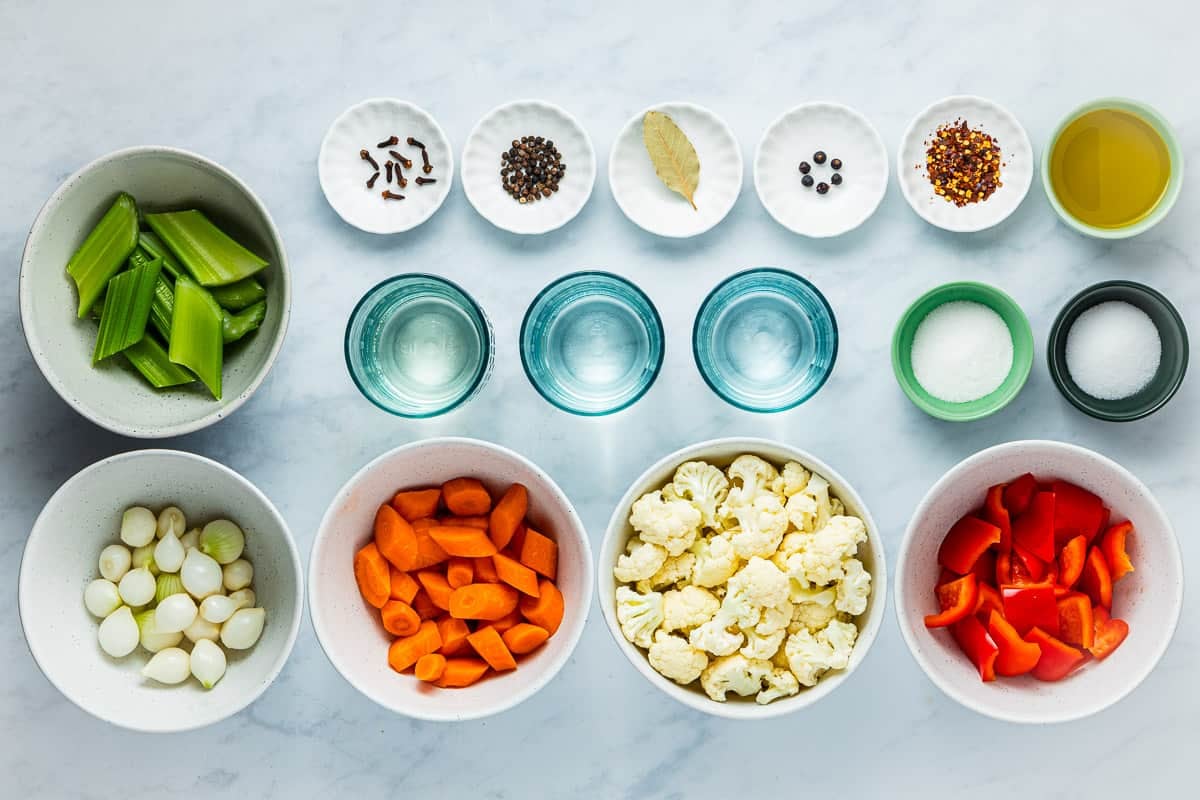
Giardiniera Ingredients
Great giardiniera balances colorful, crunchy vegetables with a tangy, aromatic brine. Here’s what you’ll need for this recipe.
The Vegetables
- Cauliflower: The florets soak up the brine while retaining plenty of crunch. Use one small head, about 12 ounces, or half of a larger head, cut into bite-sized florets.
- Carrots: Firm carrots contribute sweetness, bright color, and a crisp snap. Slice them on the bias into large bite-sized pieces.
- Celery: Two firm stalks add a juicy crunch. Cutting them on the bias creates attractive pieces that are easy to pack into the jars.
- Pearl or cipollini onions: These small, mildly sweet onions can be left whole once peeled. You’ll need about 1/4 pound.
- Red bell pepper: One pepper adds sweetness and bold color. Slice it into strips or 1-inch rectangles. You can also use half red and half yellow bell pepper for extra color.
The Brine and Spices
- White wine vinegar: Adds bright acidity with a subtle fruity undertone.
- Distilled white vinegar: Its clean, sharp flavor gives the brine its bracing quality without covering up the vegetables.
- Water: Spring water or filtered tap water softens the vinegar’s acidity while maintaining the tested balance of the brine.
- Kosher salt: Seasons the vegetables and rounds out the vinegar.
- Sugar: One tablespoon is enough to balance the acidity without making the giardiniera noticeably sweet.
- Whole spices: Black peppercorns, red pepper flakes, cloves, juniper berries, and bay leaf give the brine its warming, aromatic flavor. The juniper berries lend a subtle piney note that makes this version distinctive.
- Extra virgin olive oil: One tablespoon in each jar adds richness and mellows the vinegar’s sharp edge. Use a smooth, flavorful oil, such as Italian Nocellara extra virgin olive oil.
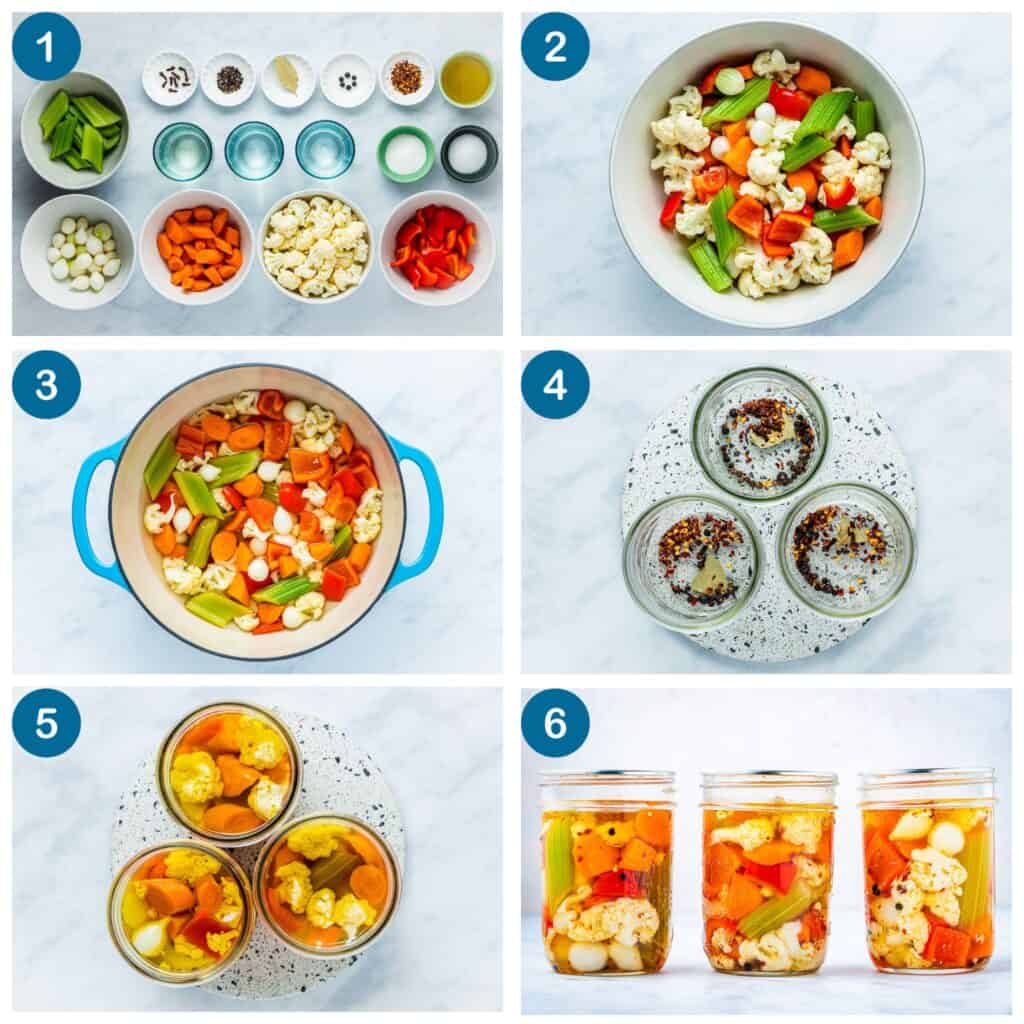
How to Make Giardiniera
Homemade giardiniera takes about 30 minutes of active work. The vegetables spend only one minute in the hot brine, so have your bowl, skimmer, and three clean pint-size jars ready before you begin.
- Prepare the vegetables. Wash and cut the cauliflower, carrots, celery, onions, and bell pepper as directed. Place everything together in a large mixing bowl near the stove.
- Make the brine. In a pot large enough to hold all the vegetables, combine 1 cup white wine vinegar, 1 cup distilled white vinegar, and 1 cup spring or filtered water. Stir in 1 tablespoon kosher salt and 1 tablespoon sugar. Set over medium heat and stir until the salt and sugar dissolve. Increase the heat to medium-high, bring to a boil, and boil for 3 full minutes.
- Briefly steep the vegetables. Turn off the heat and carefully add all the vegetables to the hot brine, making sure they are covered by the liquid. Cover the pot and steep for exactly 1 minute. Any longer and the vegetables will begin to lose their crunch.
- Remove the vegetables. Using a spider or skimmer, immediately transfer the vegetables back to the mixing bowl. Keep the brine in the pot; you will use it to fill the jars.
- Divide the spices. In a small bowl, combine 1/2 teaspoon black peppercorns, 1/2 teaspoon red pepper flakes, 1/4 teaspoon whole cloves, and 1/4 teaspoon juniper berries. Crumble in 1 dried bay leaf and mix. Divide the spices evenly among three clean pint-size jars.
- Fill the jars. Pack the vegetables into the jars, distributing the different vegetables evenly and packing them snugly. Pour in the reserved brine, leaving 1/2 to 3/4 inch of space at the top. The vegetables should be covered by the prepared brine.
- Add the olive oil. Spoon 1 tablespoon extra virgin olive oil into each jar and secure the lids. Gently turn each jar upside down and upright once or twice to distribute the spices and oil.
- Rest and refrigerate. Leave the sealed jars upright at room temperature for 24 hours, then transfer them to the refrigerator. For the best flavor, let the giardiniera cure for about one week before opening.
Tips for Crisp, Flavorful Giardiniera
- Start with very firm vegetables. Giardiniera is all about crunch. Avoid cauliflower with soft or discolored spots, flexible carrots, or limp celery.
- Keep the pieces generously sized. Large bite-sized pieces hold their texture better and give this traditional Italian giardiniera its colorful, garden-inspired appearance.
- Have everything ready before heating the brine. The vegetables steep for only one minute, so set out your mixing bowl, skimmer, spices, and three clean pint-size jars before you begin.
- Set a timer for the one-minute steep. It may seem brief, but the hot brine continues to work on the vegetables after you remove them. A longer steep can soften their crisp texture.
- Use the jar size specified in the recipe. Three pint-size jars provide the right amount of space for the vegetables and prepared brine.
- Keep the vegetables covered with brine. Pack them snugly and divide the vegetables and brine evenly among the three jars. Do not dilute the brine with additional water.
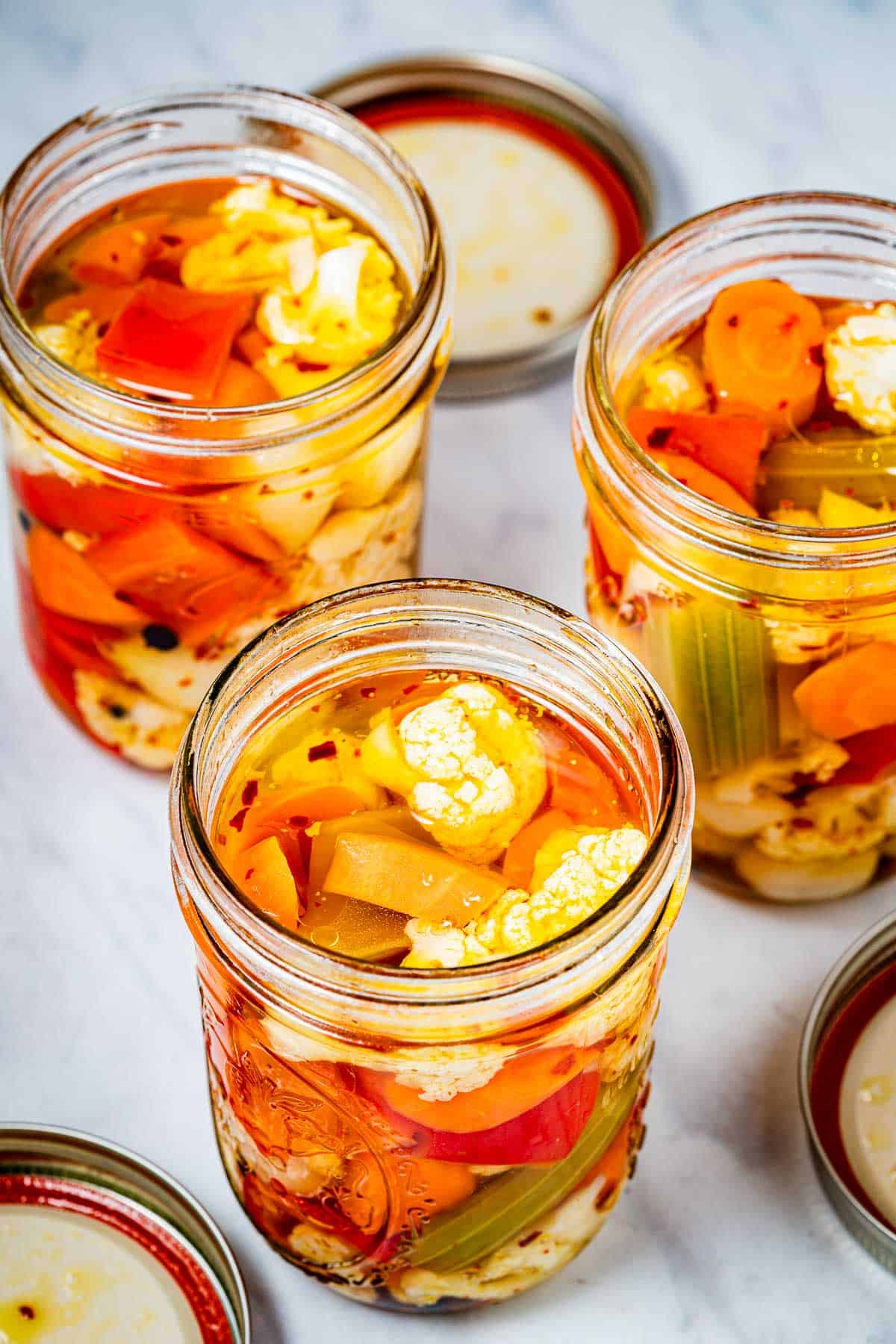
Giardiniera Variations
There are almost as many versions of giardiniera as there are Italian cooks. These are a few ways to vary how you serve or finish this recipe without altering its tested brine.
- Make it mild: Leave out the red pepper flakes.
- Add pepperoncini: Tuck a few whole or sliced pepperoncini into each jar for a sharper, spicier flavor.
- Add green olives: For a version inspired by the olive salad used on New Orleans muffuletta sandwiches, stir sliced green olives into the vegetables after their brief steep in the brine.
- Chop it for sandwiches: After steeping the vegetables, coarsely chop them before packing them into the jars. The smaller pieces are easier to spoon onto sandwiches, burgers, or sausages.
- Finish with more olive oil: For a richer flavor, spoon the finished giardiniera into a serving bowl and drizzle it with additional extra virgin olive oil just before serving. Do not add extra oil to the storage jars.
What to Serve with Giardiniera
Giardiniera brings acidity, color, and crunch to rich or savory foods. I often pull a jar from the refrigerator when I need a quick side dish or a bright addition to a casual spread.
- Build an antipasto spread: Spoon the giardiniera into a bowl and serve it with cured meats, cheeses, olives, and bread. Use my antipasto platter as a guide.
- Brighten sandwiches: Coarsely chopped giardiniera cuts through rich meats and cheeses and makes a lively topping for burgers and sausages.
- Jazz up creamy salads: Chop the vegetables and fold them into Mediterranean tuna salad, chicken salad, or Mediterranean egg salad.
- Serve it with meat: The crisp, vinegary vegetables are especially good alongside grilled sausages, roasts, or juicy pork chops with lemon and bay leaf.
- Add it to brunch or lunch: Serve giardiniera alongside a Mediterranean vegetable frittata for an easy contrast to the tender eggs.
How to Store Giardiniera
This is a refrigerator giardiniera recipe and must remain refrigerated. Once the jars have rested at room temperature for the specified 24 hours, transfer them to the refrigerator and keep them there for up to 3 months.
Always use a clean fork or spoon when removing vegetables from a jar, and close the lid tightly before returning it to the refrigerator. For the best flavor, wait about one week before opening the first jar.
For shelf-stable preservation, follow a complete, tested water-bath canning recipe rather than adapting these refrigerator instructions. Domenica provides detailed canning guidance in her book, Preserving Italy.
More Crunchy-Punchy Pickles
Dips and Condiments
Pickled Red Onions
Moroccan and Tunisian
Preserved Lemons
Dips and Condiments
Quick Pickled Cucumber Recipe
Sides and Small Plates
Middle Eastern Pickled Turnips Recipe

Equipment
- 3 clean pint-sized jars with screw-top lids
Ingredients
- 3/4 pound cauliflower (about 1 small or 1/2 medium head), separated into bite-sized florets
- 1/2 pound firm carrots (about 2 to 4), sliced on the bias into big bite-sized pieces
- 2 firm celery stalks, sliced on the bias into 2-inch pieces
- 1/4 pound pearl or small cipollini onions, peeled and left whole
- 1 red bell pepper, sliced into strips or 1-inch rectangles
- 1 cup white wine vinegar
- 1 cup distilled white vinegar
- 1 cup spring water or filtered tap water
- 1 tablespoon kosher salt
- 1 tablespoon sugar
- 1/2 teaspoon whole black peppercorns
- 1/2 teaspoon red pepper flakes
- 1/4 teaspoon whole cloves
- 1/4 teaspoon whole juniper berries
- 1 dried bay leaf
- 3 tablespoons extra-virgin olive oil
Instructions
- Get ready. Place the washed and prepared vegetables in a large mixing bowl.
- Make the pickling liquid. In a saucepan or pot large enough to hold all the vegetables, combine the white wine vinegar, distilled vinegar, and water. Stir in the salt and sugar and set the pot over medium heat. Once the salt and sugar have dissolved, raise the heat to medium-high and bring the brine to a boil. Let the liquid boil for 3 full minutes.
- Briefly hot-pickle the vegetables. Turn off the heat and carefully add the vegetables. Cover and let steep for 1 minute. Then use a large spider or skimmer to scoop the vegetables back into the mixing bowl. Reserve the brine.
- Ready your seasonings. In a small bowl, add the peppercorns, red pepper flakes, cloves, and juniper berries. Crumble in the bay leaf with your hands and toss to combine. Divide the spice mix among the three pint-sized jars.
- Add the vegetables. Pack the vegetables into the jars. Take care to add a mix of each vegetable to each jar and pack them in as tightly as you can. Pour the brine over the vegetables, leaving about 1/2-inch to 3/4-inch of space at the top. Spoon 1 tablespoon of olive oil into each jar and screw the lids on tightly. Gently turn the jars upside-down and upright again once or twice to encourage the ingredients to mingle. Let the jars sit upright at room temperature for 24 hours.
- Store: Place the jars in the refrigerator and enjoy for up to 3 months. For maximum flavor, let the giardiniera sit for a week before using.
Video
Notes
- This is a refrigerator giardiniera recipe. Keep the jars refrigerated after their specified 24-hour rest.
- Always use a clean utensil, close the jar tightly, and return it promptly to the refrigerator.
- For mild giardiniera, omit the red pepper flakes.
- You can add pepperoncini or sliced green olives as described in the article above.
- Do not dilute the prepared brine with additional water.
- For shelf-stable preservation, follow a complete, tested canning recipe rather than adapting these refrigerator instructions.
- Shop this recipe: Visit The Mediterranean Dish Shop for Italian extra virgin olive oil and quality Mediterranean spices.
Nutrition
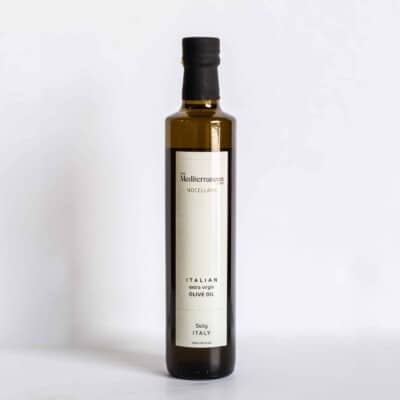
Make Authentic Giardiniera with Italian EVOO
Extra Virgin Olive Oil from hand-picked, cold-extracted Nocellara olives.

I put my jars in the fridge and then olive oil is congealed on top. Do I scrape it all out when it’s ready to eat?
I just finished the first batch. I used turnip root, carrots, cucumber, cauliflower, and red bell pepper. It looks great, but I did have to make another batch of brine because I cut up way too many vegetables. I ended up with 4 pint jars and one quart jar. Had a handful of veggies tossed in the brine leftover, and I ate them all. They were really good even without sitting in the jar for a few days. I’m going to start having it for breakfast. I had some giardianeri from the market for breakfast this morning and I really loved it.
To preserve longer, place the sealed jars in boiling water and boil for ten minutes. This way, they can be kept on the shelf for months without refrigeration. If unsure how to do it, just look up jarring.
Can you use apple cider vinegar instead?
Hi, Min. Sure, you can try apple cider vinegar here. It will likely give the pickled vegetables a slightly sweeter and fruitier flavor. If you give it a go, please come back and let us know your thoughts!
When adding the vegetables to the brine to seep, does the brine need to cover the vegetables?
Hi, Dave. Yes, you’ll want to cover the vegetables with the pickling liquid.
what if I didn’t have enough brine, is it ok to just leave it like that or does the giardiniera have to be totally submerged?
Hello! You do want to totally submerge the veggies here. If there’s not enough brine to cover your giardiniera vegetables, you can add more water to top up the brine.
Hey, thanks for the recipe – was nice and easy to make. My brine has not covered the vegetables, I have added the noted amount of olive oil but not entirely covering all the veg, should I top up with oil to completely cover?
Huge thanks, L
Hi, Lisa! I’m Summer and I work here at The Mediterranean Dish. I checked with Domenica, the writer who created this recipe and this is what she had to say,”This is a good question, as I have never had an issue with the amount of brine before. Yes, she can just top off the jars with more olive oil. If she were going to process the jars in a water bath, I would advise against this, as olive oil can compromise the seal. But since this is a refrigerator giardiniera, that is not a problem. In fact, the olive oil does a really nice job of cutting the acidity of the pickled vegetables.”
I hope this helps. Enjoy! This is a favorite recipe of mine as well!
Wonderful recipe. Turned out perfectly, lasted for 3 months. My friends and family loved eating it. Thank you .
Wonderful! Thanks, Marie!
I didn’t have any particular expectations other than thinking it would probably be a small step up from the store version. Omg – zero comparison. This recipe is leaps and bounds above that. My pickle loving family took one bite and raved! I didn’t have cloves or juniper berries so I added some rosemary. I’m off to the store tomorrow to get cloves and juniper berries and tons of vegetables. Thanks!!!
LOVE this! Thanks so much for the great review!!
Hi! Can’t wait to try! Should we pour the brine hot into the jars or wait until it’s cool?
Thanks & Merry Christmas
Hi, Anna. You can pour it on right away. No need to let it cool.
Bongiorno Y’all mom made this every late summer and fall. Im 80 so that was a long time ago. been pickling peppers this season several quarts. I grow 12 kinds from all over the world , I remember Eggplant strips in small jars in da fridge looked like they were in a clear liquid maybe just salted water. do you have Idea on that. Chow
Bongiorno, Joseph! You sound like quite a gardener :). I think the eggplant strips your referring to are simply pickled eggplant. We don’t have a recipe for that one quite yet on the website, but we have some other good pickling recipes like Quick Pickled Cucumbers and Pickled Turnips and Pickled Red Onions. Hope you check them out!
Si , Thank you so very much for answering mt post , most folks don’t bother , love my garden fishing a nd Prayer Power . this spring growing 21 varieties of peppers from diff parts of the world and 6 of tomato , 5 kind carrots , 4 kind chard ,oriental greens ,beans 6 kinds Italian squash and much more. things you can’t buy unless you live in those countries , if y’all have a garden , Bakers Creek seed, growly for tomato plants, chili plants.com for peppers check them out , PeaceBeWithYou “
Hi, Joseph! I’m Summer and I work here at The Mediterranean Dish. I’m a gardener too! I LOVE Bakers Creek Seed Company. You can get so many interesting plants. Glad you’re finding a way to put them all too good use!
I have tried to make this several other times, and it did not turn out well at all. This recipe is amazing. I have already eaten half of it. I don’t think it’s gonna make it the week it says to let it sit.
So glad to hear our version worked well for you, Joy!
Hey, it says to only “cook” the vegetables for 1 minute before removing from the hot pan.
Is that correct or should it be longer?
Thanks
Hi, Andy. 1 minute is correct. Any longer than that, and they’ll loose their crunch.
I haven’t made this yet, but would thawed frozen pearl onions work in this? I don’t have access to fresh pearl onion where I am at.
Thank you!
-Dan
Hi, Dan! I’m Summer and I work here at The Mediterranean Dish. You can certainly use thawed pearl onions. They may not be as crisp as fresh would be but they will still work. Good luck and please report back on how it goes!
Ok. Made this today. Dumb question from someone who digs fermentation (pantry always has some kind of smell), why do we leave it out a day? This doesn’t use lactobacillus so?
Just wondering what sorcery the 24hrs on the counter does.
Thanks!
Hi, Dan! I reached out to Domenica, the person who wrote the recipe, and she said it’s just something she always does to let the flavors marry, but she’s not sure if it makes any difference one way or the other. It’s a leftover habit from when she learned how to preserve food.