Dandelion Greens


This post may contain affiliate links. Please read our disclosure policy.
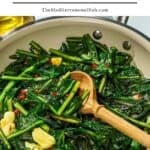
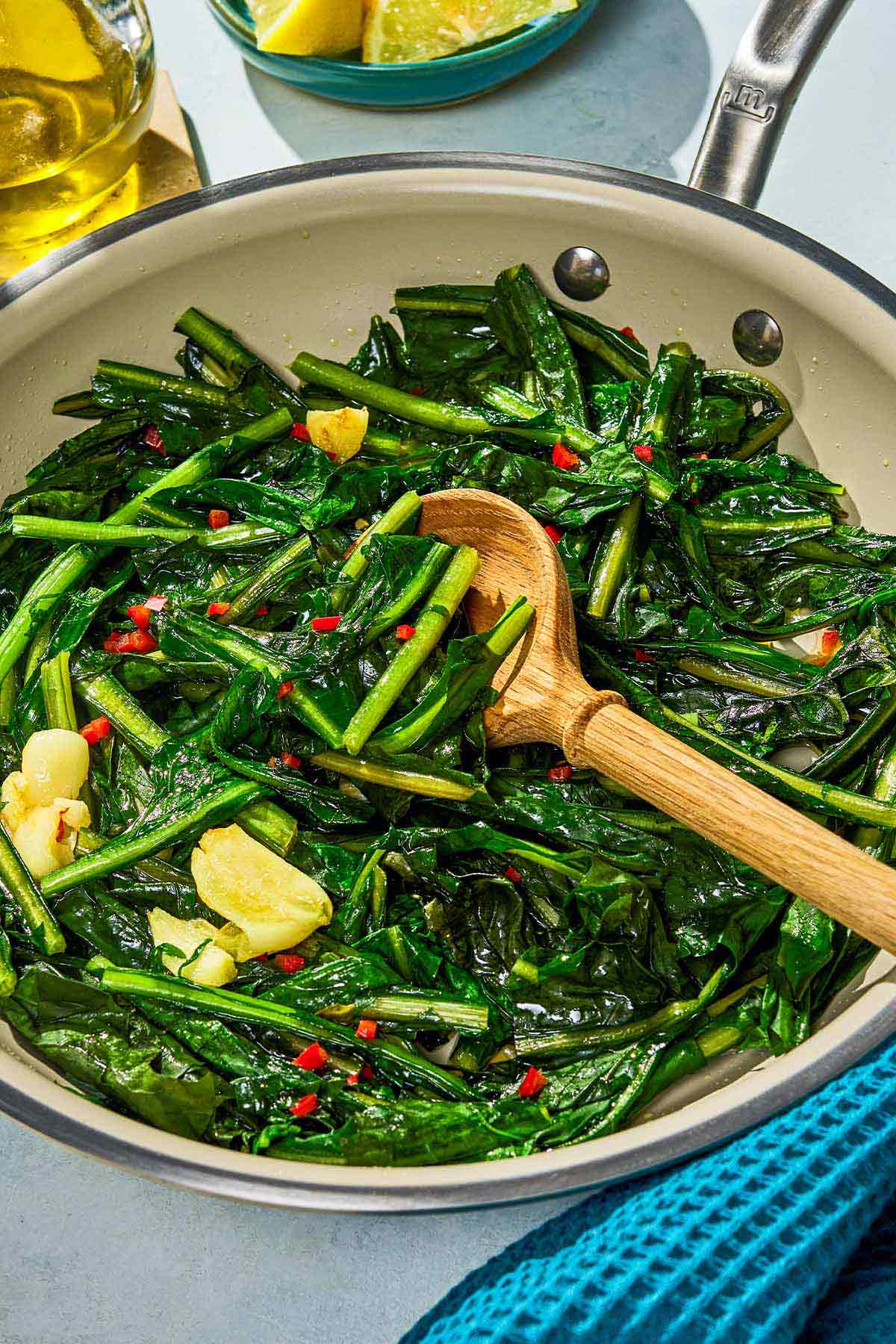
Dandelion greens recipes are a pleasantly bitter spring staple in southern Italy, Greece, and many other Mediterranean countries. In my Italian version, I quickly blanch and then sautée the dandelion greens with garlic and red pepper flakes for tasty, healthful side dish.
The Familiar Flower With Leaves You Can Eat
As a young girl, I was drawn to the soft, bright yellow spikes of the dandelion flowers in our front yard. But it wasn’t until I was an adult that I had my first taste of dandelion greens. I immediately fell in love with their light, appealing bitterness.
It made sense; now, as an Italian chef, I adore bitter vegetables like radicchio, endive, and broccoli rabe. Dandelion greens were one more welcome addition. Plus, they come with a host of health benefits. The greens contain cancer-fighting antioxidants, are high in potassium, and may help lower blood pressure and inflammation. They are also high in calcium, folate, iron, and vitamins A and C.
You can enjoy dandelion greens raw. The mild bitter bite of young leaves is great in salads. But the greens get more bitter as they mature. My favorite way to enjoy these nutrition-rich greens is to plunge them briefly in boiling water, then sauté them in a pan with olive oil, garlic, and a pinch of hot pepper. So easy, and the result is a dish packed with flavor.
Key Ingredients
- Dandelion greens: I like any variety of dandelion greens, but my favorite is Italico Rosso, which is actually in the chicory family. I buy a bunch whenever I see it. It has long, dark, red-ribbed spiky leaves and a delicious, bitter, and peppery flavor. Like most greens, dandelion greens cook down a lot. Start with a big bunch. One pound will serve about 4 people as a side dish.
- Extra virgin olive oil: The rich, mellow, slightly bitter flavor of olive oil goes beautifully with dandelion greens.
- Garlic: A little garlic goes a long way. One or two cloves at most are all you need to punch up the flavor of sautéed dandelion greens.
- Chili pepper: I love a pinch of hot pepper in dandelion greens. Use one half of a small fresh chili or a generous pinch of hot pepper flakes.
- Lemon juice: This is optional, but a squeeze of fresh lemon juice adds extra zing to the cooked greens.
How to Cook Dandelion Greens
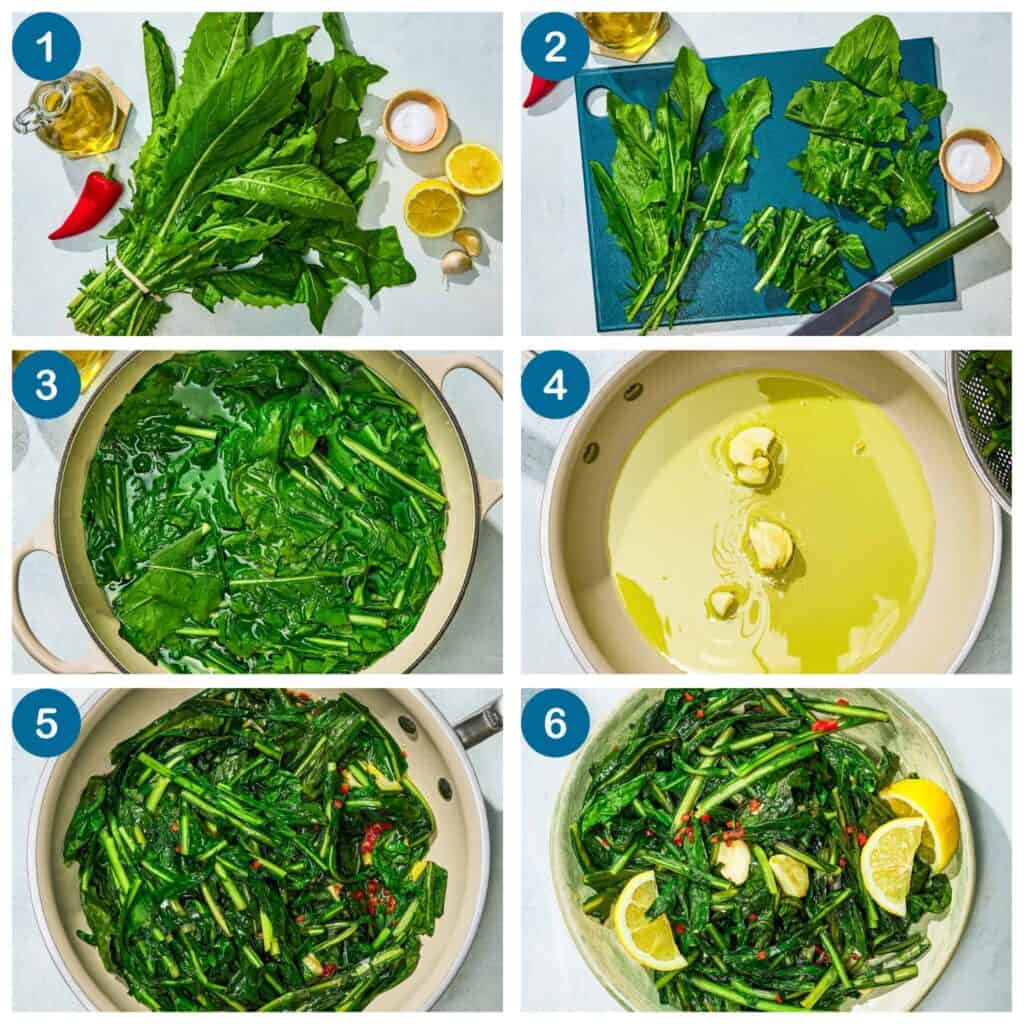
This nutritious side dish is packed with earthy, vegetal flavor. This dandelion greens recipe employs an easy cooking process known as “ripassare,” in Italian, which roughly translates to “cooked twice.” The greens are first blanched, then quickly sautéed. Here’s how to do it:
- Prep the greens. Wash the 1 pound dandelion greens thoroughly, making sure all dirt and grit has been removed. Once cleaned, cut the leaves crosswise into 3-inch lengths.
- Blanch the greens. Bring a large pot of water to a boil and season with salt. This will help enhance the greens’ flavor. When the water is boiling, add the greens by the handful, stirring them around to submerge them completely. Once the water returns to a boil, cook the greens for about 5 minutes, until they are wilted and their stems are just tender. Using tongs or a large skimmer, transfer the greens to a bowl.
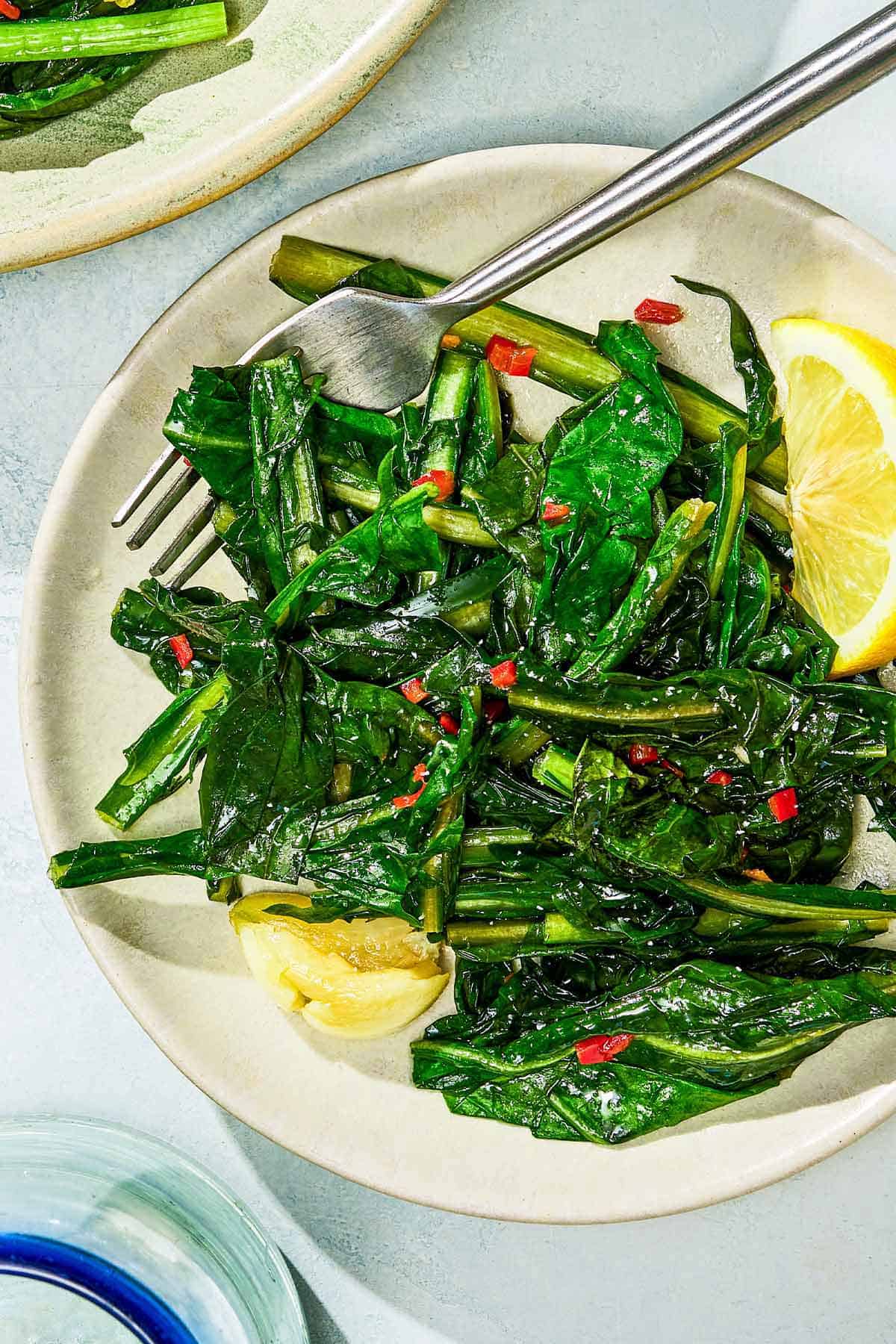
- Sauté the garlic. Add 4 tablespoons extra-virgin olive oil to a wide, shallow sauté pan or skillet and drop in 1 to 2 crushed garlic cloves; 1 for mild garlic flavor, 2 for more robust. Set the pan on medium-low heat and add the 1/2 of a fresh chili pepper, minced, or a pinch of crushed red pepper flakes. Cook, pressing down on the garlic cloves to release their flavor, until the garlic is softened but not browned, about 5 minutes.
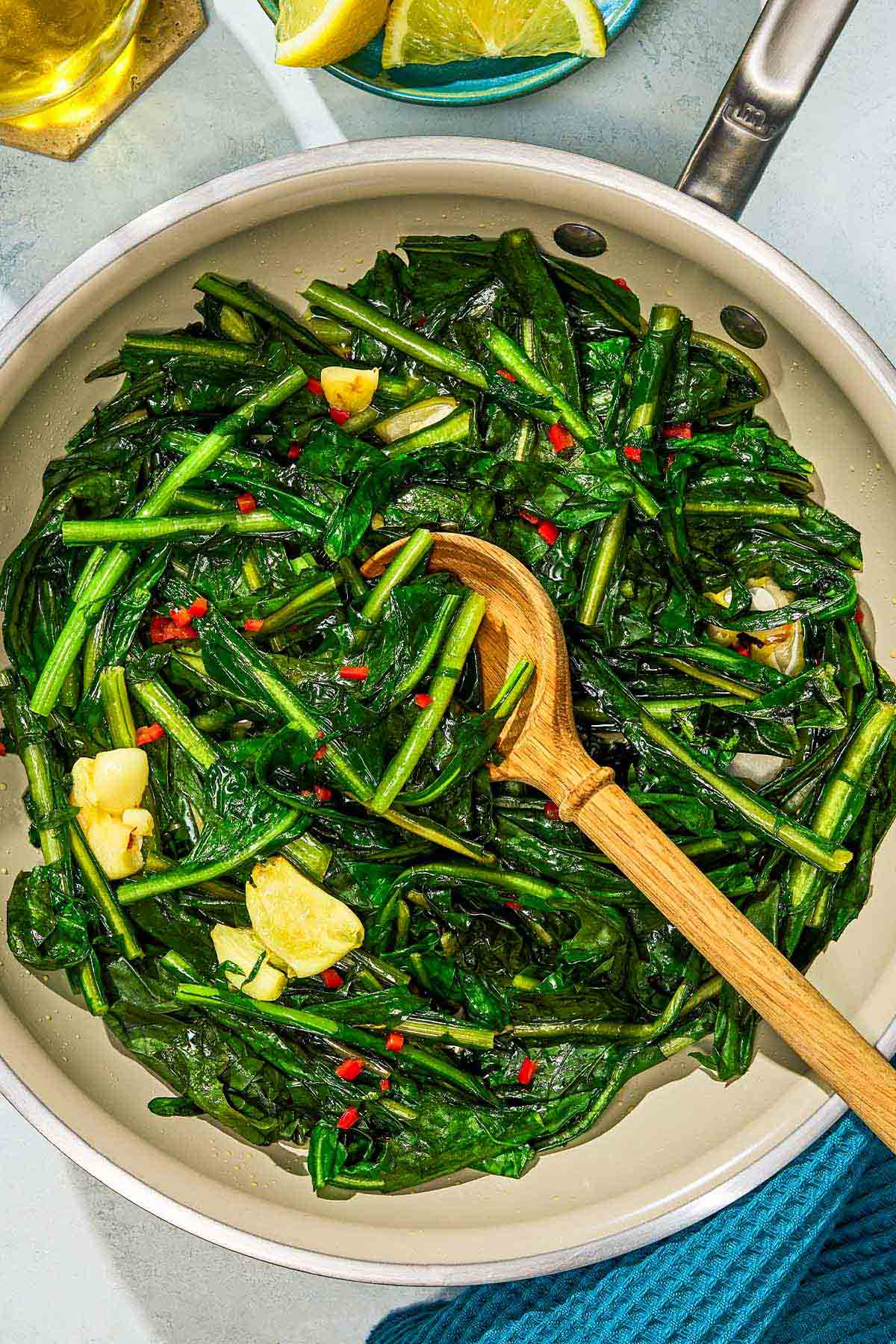
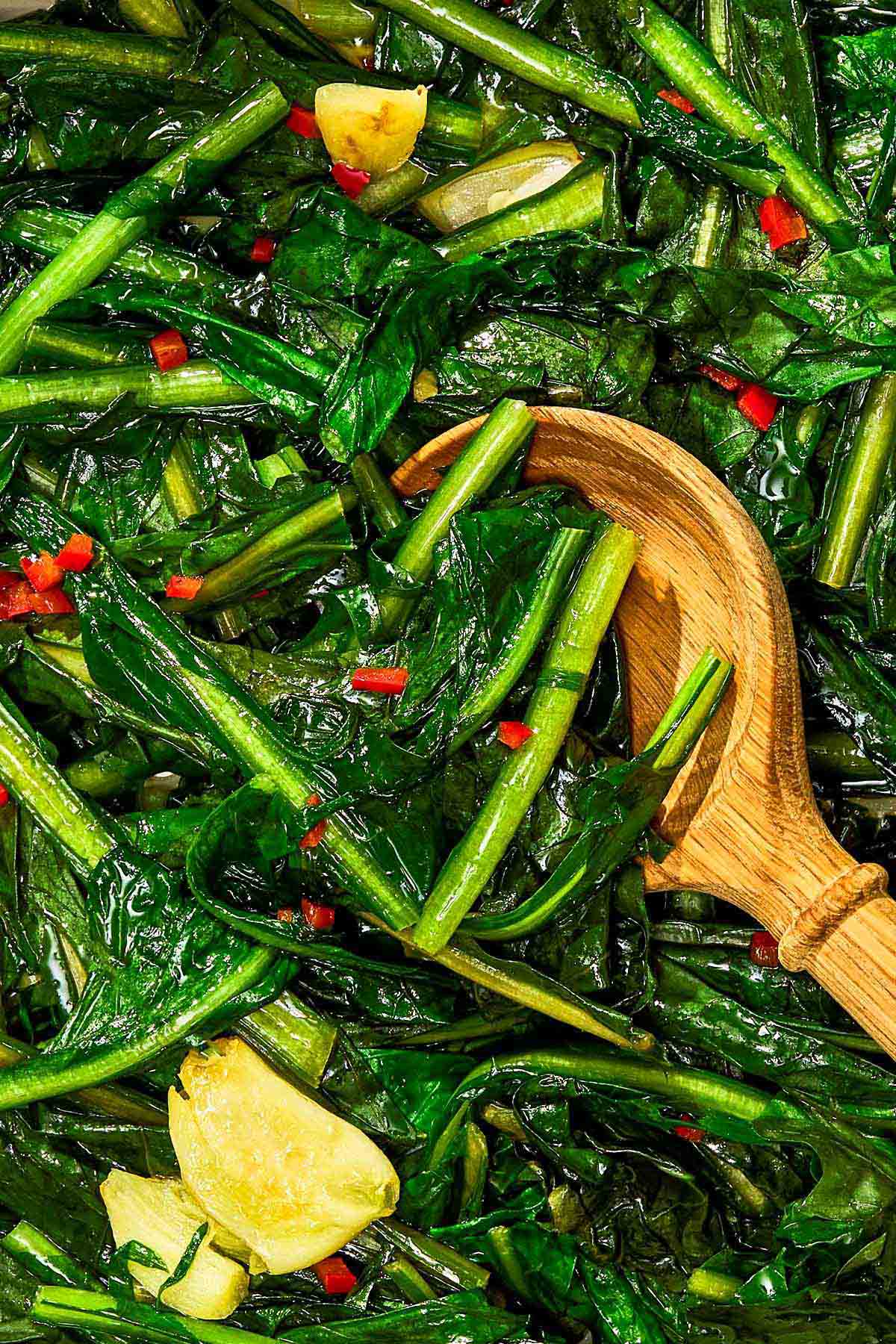
- Sauté the greens. Add the blanched greens to the pan and stir to coat them with oil. Cook on medium, allowing the greens to sizzle lightly, until they are silky and tender, but not overcooked. Season to taste with salt.
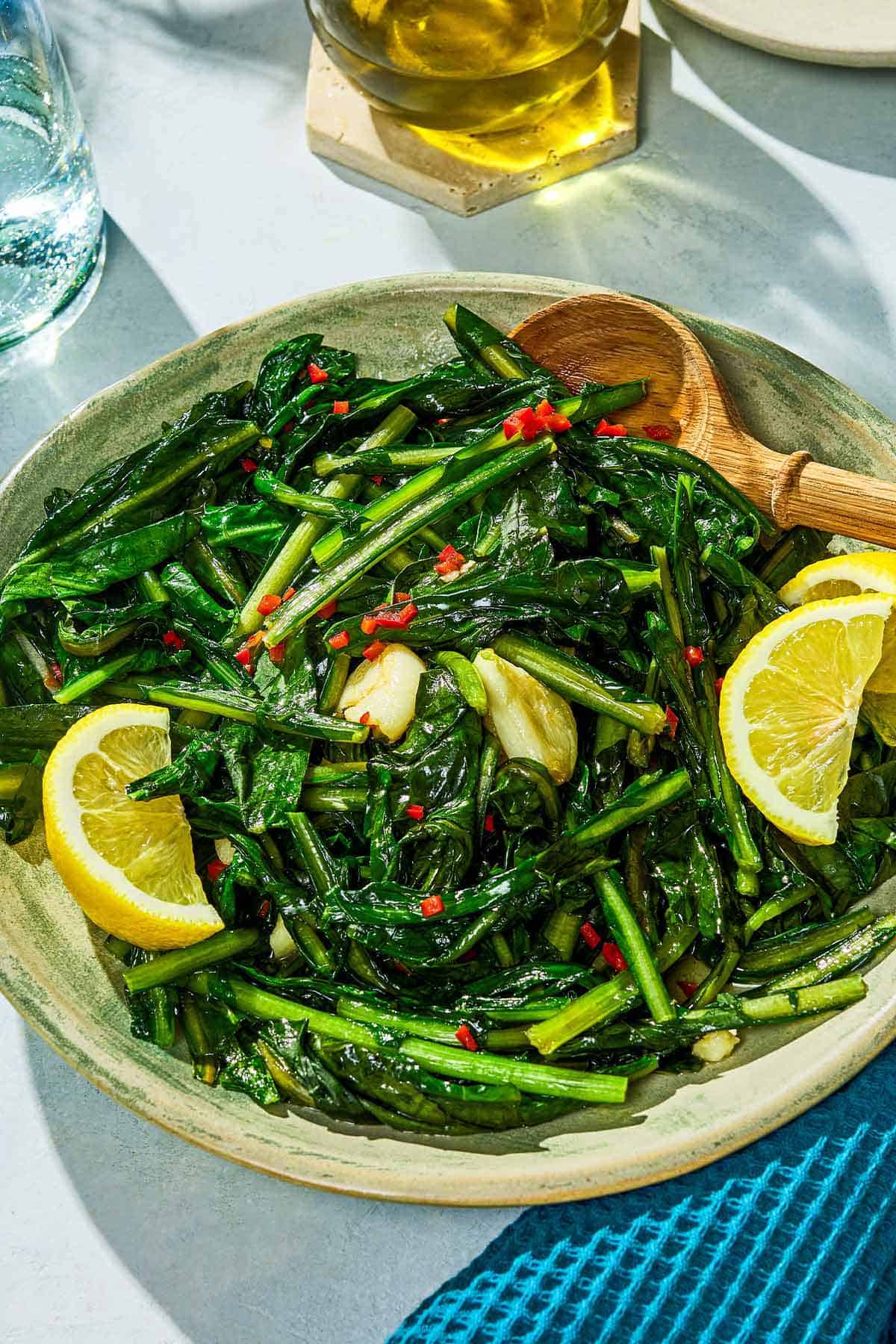
- Finish and serve. Transfer the greens to a bowl. Squeeze a little fresh lemon juice on top, if you like, and drizzle with a thread of good olive oil. Serve hot, warm, or at room temperature.
Are Dandelion Greens Safe to Eat?
We wouldn’t share a dandelion greens recipe if they weren’t safe to eat, but I understand people’s concern with eating a vegetable known mostly as a weed.
Like chicory, the dandelion is a member of the aster family. There are numerous varieties, including the weeds in your yard. The long, jagged-leafed greens marketed as dandelion greens at farmers’ markets and grocery stores are more often a type of chicory. But the two are closely related, and you can treat them the same in the kitchen. Dandelion greens are safe to eat, but medical professionals recommend caution on two fronts:
- If you are foraging for the greens, in your yard or in the wild, be sure that the area where you’re picking has not been treated with herbicides or pesticides.
- If you have hay fever or allergies to ragweed, marigolds, or daisies, you may be more susceptible to an allergic reaction, especially if you consume the greens in large quantities. Pregnant women and nursing mothers are cautioned to avoid consuming large amounts of the greens. Personally, I do have hay fever and am allergic to dandelions, but I have never had any issue eating dandelion greens.
How to Forage and Prepare Dandelion Greens
I buy my greens at a local organic market. But if you are a forager and are tempted to harvest dandelion greens, go for it! Here are some tips for harvesting and preparing them.
- Spring is the best season to pick wild dandelion greens, before the plants have formed their flower heads. At this stage, the leaves of young dandelions are tender and less bitter.
- Be sure that the plants are free from herbicides and pesticides before picking them.
- To remove the plants from the ground, cut the crown where the leaves meet the root, about an inch below the surface of the soil.
- Wash the leaves thoroughly in cold water. Put them in a large bowl, fill it with water, and swirl the greens around. Do this several times until no dirt or grit remains.
- To prep the greens, leave them whole if they are small. If they are large, like the bunches you find at the supermarket, cut them crosswise into 3-inch lengths.
- Pat the greens dry, wrap them in paper towels, and store them in a bag in the fridge for up to 3 days.
How to Serve Sautéed Dandelion Greens
Serve this dandelion greens recipe as a light accompaniment to fish, chicken, sausages, and more. But there are so many other delicious ways to employ these simple cooked greens. Try some of my favorites:
- Add them to rice: Finely chop the cooked greens and stir them into rice (or risotto) just as the rice is nearing doneness. Sprinkle with freshly grated Parmesan cheese.
- Make a Frittata: Stir the greens into beaten eggs and turn them into a savory green frittata.
- Add them to a Sandwich: I love dandelion greens stuffed into a panino (Italian sandwich) along with fresh mozzarella and leftover chicken cutlets or meatballs, or cold frittata.
- Use them on Pizza: Sautéed dandelion greens make an excellent pizza topping. My favorite combination is dandelion greens, smoked mozzarella, and pepperoni or crumbled sausages.
What to Serve with Sautéed Dandelion Greens
One of the perks of these mild, pleasantly bitter greens is that they go with almost anything and are the perfect foil to counter rich foods.
I absolutely love them with Chicken Milanese, pan-seared pork chops, and meatballs in tomato sauce. They are also perfect alongside almost any seafood dish. Try them with our zesty shrimp piccata or lemon dill salmon.
More Recipes for Cooking Greens
- Horta (Greek Braised Greens with Lemon and Garlic)
- Authentic Molokhia (Egyptian Jute Mallow Soup)
- Tuscan-style Beans and Greens
- Utica Greens
- Blitva (Croatian Potato and Swiss Chard)
- Turkish Swiss Chard with Onion, Tomato, and Rice (Zeytinyagli Pazi)

A Note from Suzy
“I already loved bitter greens, but Chef Domenica’s technique of blanching them before sautéeing makes them even more delicious!”
Sautéed Dandelion Greens

Ingredients
- 1 pound dandelion greens
- Salt
- 4 tablespoons extra virgin olive oil, plus more for serving
- 1 to 2 cloves garlic, lightly crushed
- 1/2 fresh chili pepper, minced; or a pinch of crushed red pepper
- Freshly squeezed lemon juice, for serving (optional)
Instructions
- Prep the greens. Wash the dandelion greens thoroughly, making sure all dirt and grit has been removed. Once cleaned, cut the leaves crosswise into 3-inch lengths.
- Blanch the greens. Bring a large pot of water to a boil and season with salt. This will help enhance the greens’ flavor. When the water is boiling, add the greens by the handful, stirring them around to submerge them completely. Once the water returns to a boil, cook the greens for about 5 minutes, until they are wilted and their stems just tender. Using tongs or a large skimmer, transfer the greens to a bowl.
- Sauté the garlic. Add 4 tablespoons extra-virgin olive oil to a wide, shallow sauté pan or skillet and drop in the crushed garlic cloves; add one for mild garlic flavor, two for more robust. Set the pan on medium-low heat and add the chili pepper. Cook, pressing down on the garlic cloves to release their flavor, until the garlic is softened but not browned, about 5 minutes.
- Sauté the greens. Add the blanched greens to the pan and stir to coat them with oil. Cook on medium, allowing the greens to sizzle lightly, until they are silky and tender, but not over cooked. Season to taste with salt.
- Finish and serve. Transfer the greens to a bowl. Squeeze a little fresh lemon juice on top, if you like, and drizzle with a thread of good olive oil. Serve hot, warm, or at room temperature.
Recipe Notes
- Visit our shop to browse quality Mediterranean ingredients, including olive oils, honey, jams, and spices.
- Safety Note: Dandelion greens are safe to eat, but medical professionals recommend caution on two fronts:
- If you are foraging for the greens, in your yard or in the wild, be sure that the area where you’re picking has not been treated with herbicides or pesticides.
- If you have hay fever or allergies to ragweed, marigolds, or daisies, you may be more susceptible to an allergic reaction, especially if you consume the greens in large quantities. Pregnant women and nursing mothers are cautioned to avoid consuming large amounts of the greens. Personally, I do have hay fever and am allergic to dandelions, but have never had any issue eating dandelion greens.
Nutrition
Nutrition information is automatically calculated, so should only be used as an approximation.
Shop Suzy’s curated selection of Mediterranean olive oils, spices, and more.
Bundle and Save!
Four of our best-selling signature olive oils, perfect for everyday use.

Frequently Asked Questions
Yes, dandelion greens are absolutely safe to eat and have been enjoyed for centuries across southern Italy, Greece, and the broader Mediterranean world. That said, there are a couple of things worth keeping in mind. If you are foraging for the greens in your yard or in the wild, make sure the area has not been treated with herbicides or pesticides. And if you have hay fever or allergies to ragweed, marigolds, or daisies, you may want to be cautious about eating them in large quantities. Pregnant and nursing mothers are also advised to avoid eating large amounts. I will tell you, though — I myself have hay fever and am actually allergic to dandelions, and I have never once had any trouble eating the greens. So don’t let that scare you off!
Young, tender dandelion green leaves have a mild, pleasantly bitter bite similar to radicchio or endive. As the leaves mature, however, that bitterness intensifies. This is exactly why my favorite way to prepare them is the classic southern Italian method.
Look for dandelion greens at springtime farmers’ markets, grocery stores with an Italian focus or those that focus on organic foods.












This simple dish is absolutely delicious. I’m growing dandelion greens for the first time and we used this recipe to try them for the first time. So glad we did. I sauted them probably a little longer than I should’ve, but they had bits of crispy bites that just made it so much better. Also, the lemon should not be optional!
Hi, Rhonda! Thanks so much for the glowing review! We are so glad you enjoyed the recipe!