
Looking for a healthy, satisfying, and super delicious way to eat? Take a hint from the latest U.S. News and World Report— Go Mediterranean! The Mediterranean diet is the world’s healthiest diet (and easiest to follow too!) If you’re not familiar, you’ll want to check out this quick overview of the Mediterranean diet plus my list of the best Mediterranean diet snacks. Trust me, this healthy way of eating feels anything but a diet! And you’ll love all the tasty options.
What is the Mediterranean Diet?
Having evaluated more than 40 diets out there, the U.S. News and World Report has ranked the Mediterranean Diet #1 overall healthy diet since 2019.
I’d love to scratch the word “diet” though, because this is not a fad diet nor a quick fix for losing weight. It’s a lifestyle, and I much prefer calling it, “the Mediterranean way of eating!” Growing up along the shores of the Mediterranean Sea in Port Said, Egypt, I have firsthand knowledge of what eating a Mediterranean Diet is really like. From balanced, colorful meals to easy, healthy snacks that today we call Mediterranean Diet snacks was just food to me.
It wasn’t uncommon to grab a freshly roasted sweet potato from a street vendor and eat it out of hand while walking down the beach. Snacking on fruits, vegetables, and nuts is our way of life. Most snacks are grab-and-go, no recipes required, and they are satisfying without being heavy. It’s the way I eat every day, and I’m happy to share some of those secrets, tips, and tricks with you.
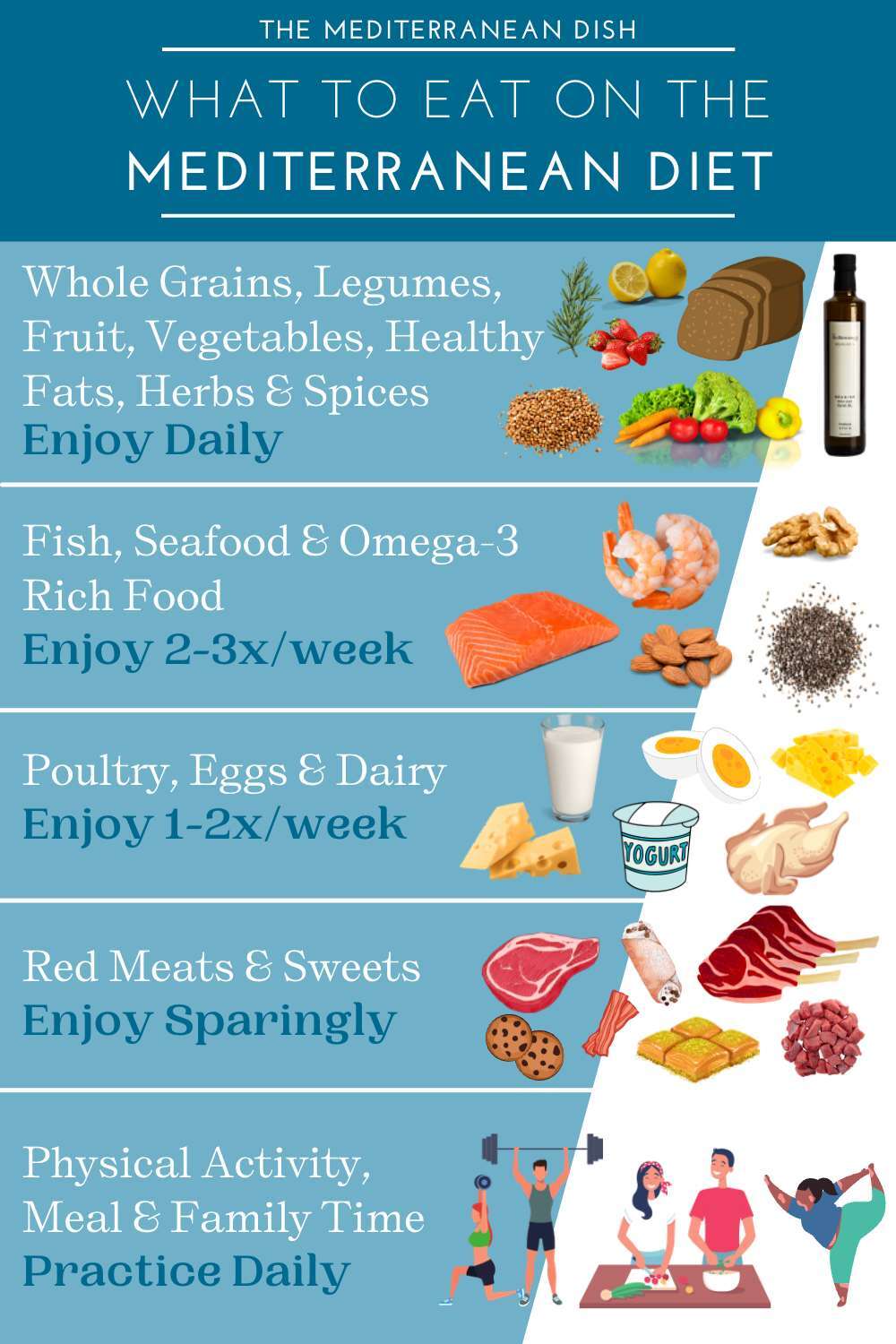
In a nutshell, eating the Mediterranean way involves eating more from the wider base of the Mediterranean diet pyramid (below). That means whole grains, fruits, vegetables, legumes, herbs, spices, nuts, and healthy fats like olive oils. Oldways calls them “core foods.” Then, fish and seafood about twice weekly. Moderate portions of dairy, eggs, and occasional poultry. Finally, infrequent servings of red meat and sweets.
To learn more, check out 7 ways to follow the Mediterranean Diet!
What Snacks Can You Eat on the Mediterranean Diet?
To address the question of the day: what kind of snacks can you eat on the Mediterranean diet?
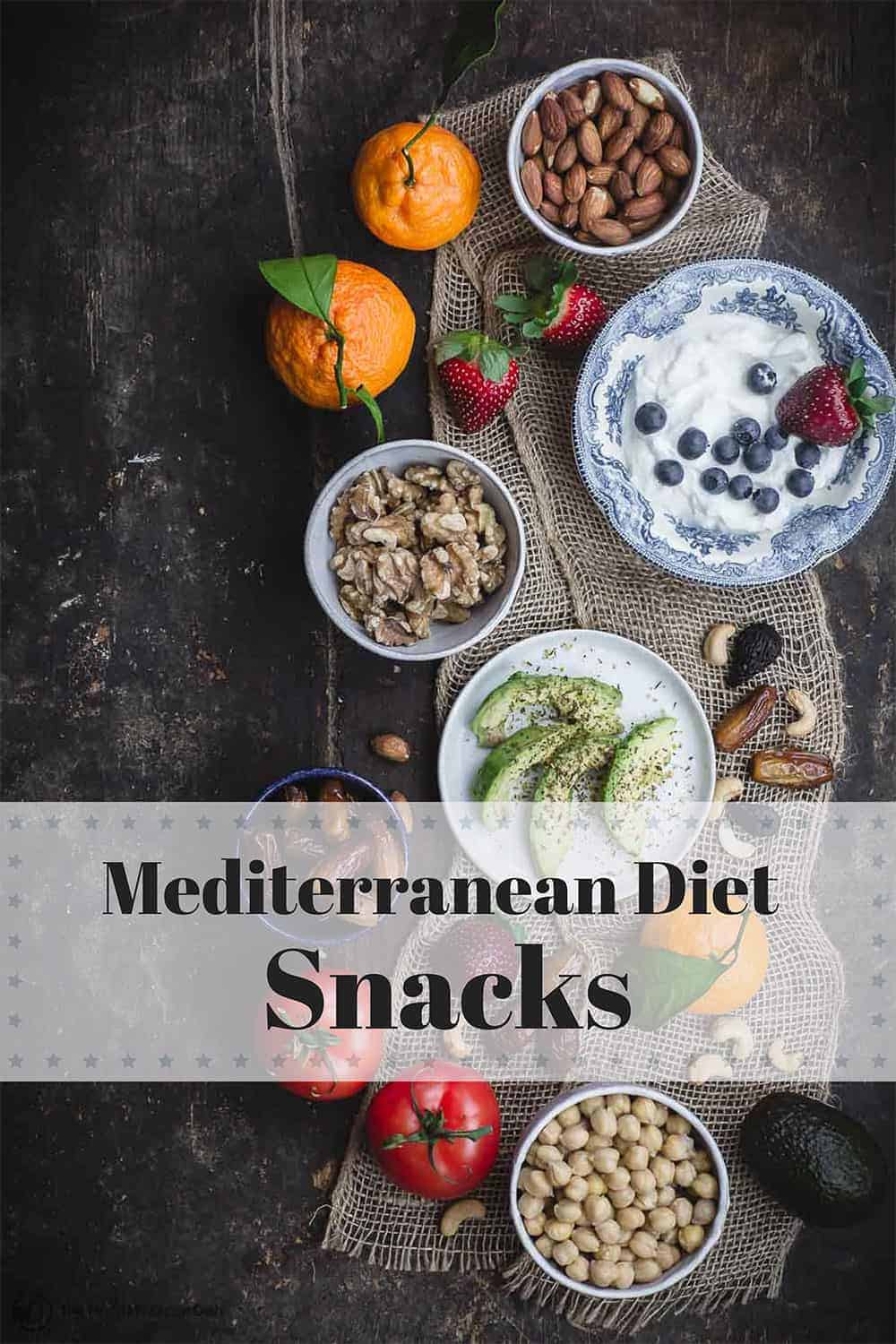
The key to answering this question is again in the Mediterranean diet pyramid. Most of these things are likely already in your pantry. I always keep my pantry stocked with a variety of nuts, dried fruit, quality olive oil, and lots of spices to keep things interesting. You know I love a flavor party! Look for snacks that fit the Mediterranean way of eating—mainly from the base of the pyramid.
- Nuts
- Fruits and vegetables
- Occasionally, dairy in the form of fat-free yogurt or other healthy dairy options
- Healthy fats like olive oil and even avocado
- For something on the sweet side, opt for a small portion of dried fruits like dates, figs, or dried apricots.
These are all great options and can be jazzed up to make healthy, tasty snacks. I have a few simple ideas for you.
Mediterranean Diet Snacks Ideas
Nuts and Dried Fruits
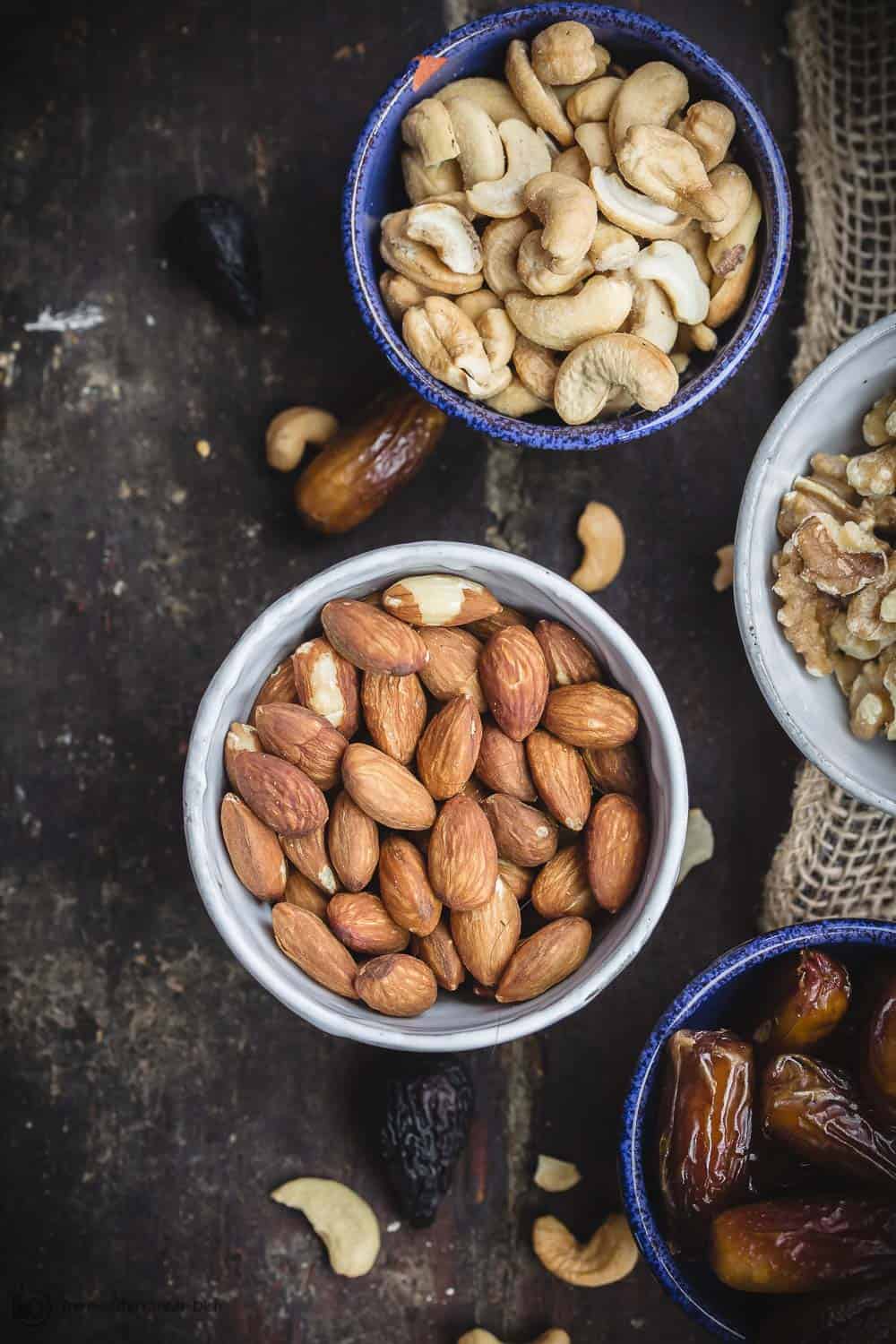
Nutrition-rich nuts are filled with fiber, antioxidants, protein, unsaturated fat, and omega-3 fatty acids. Just a small handful of unsalted nuts (about 2 tablespoons) makes for a satisfying snack. And on occasion, if you’re needing a little something sweet, mix in a couple of figs or dates, or a small handful of raisins, for added energy and nutrition.
Fruits and Vegetables
Fruits and veggies have long been a part of healthy diets. With their many nutritional benefits—including vitamins, minerals, fiber, and antioxidants—and fresh taste, fruits and veggies are very much textbook Mediterranean diet snacks.
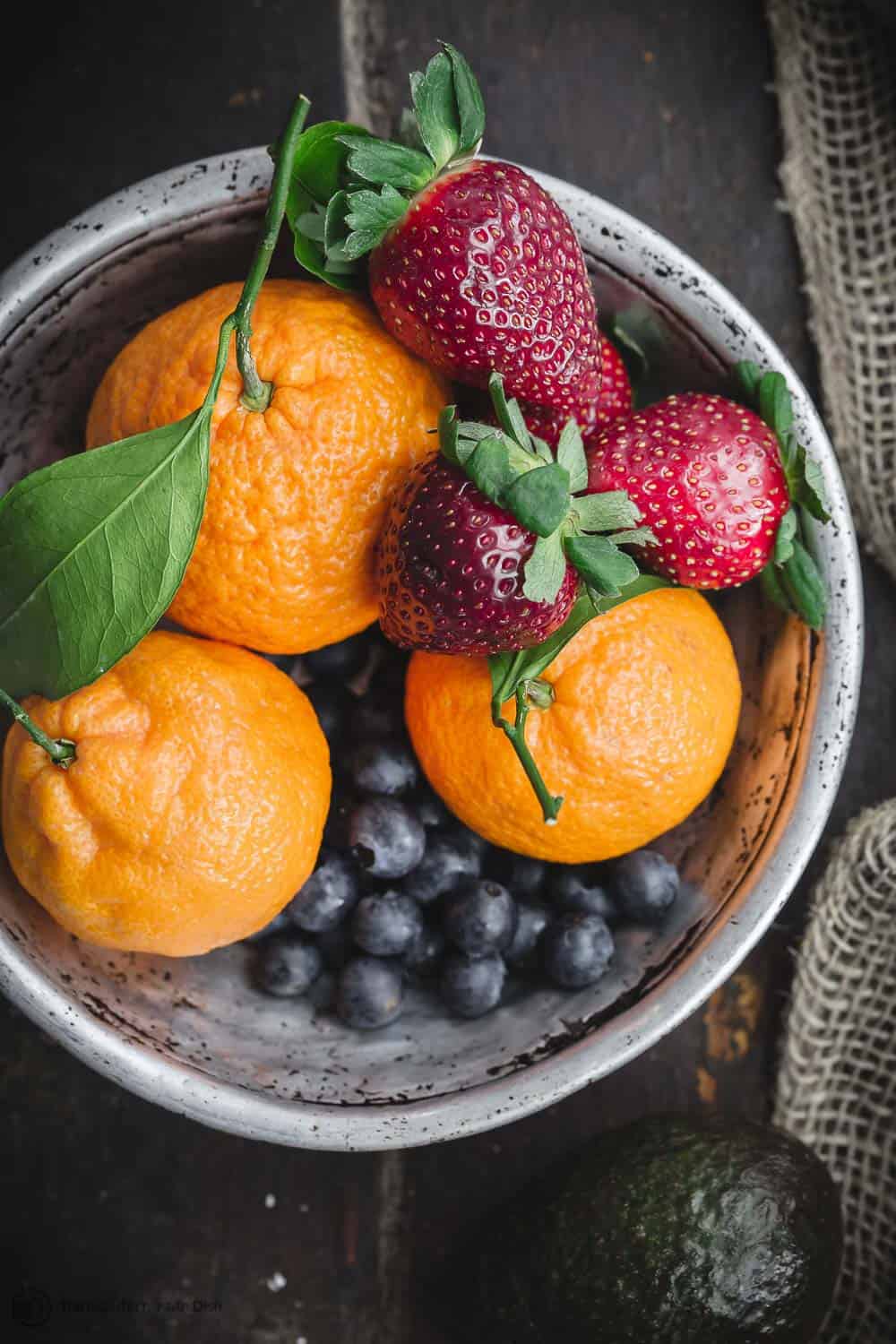
A little banana is a popular snack. But I love a little citrus fruit or a handful of berries for a bright, mood-boosting option. When I’m feeding a crowd, I put together a snack board or mezze, as we call it in Egypt.
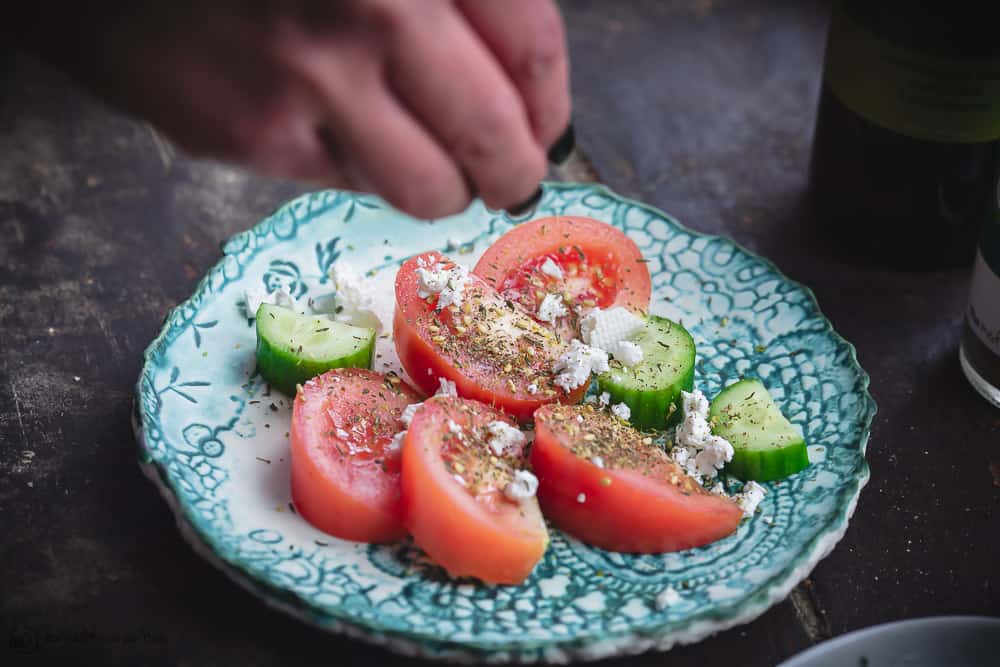
Tomatoes and avocados are my go-tos when I’m looking for something on the savory side. If you haven’t tried this before, I highly recommend sliced tomatoes and cucumbers or sliced avocados with a sprinkle of Aleppo pepper, a mild spice from Syria or za’atar—a spice mixture of Mediterranean wild thyme and toasted sesame seeds—and a drizzle of Early Harvest extra virgin olive oil. A tiny sprinkle of feta, if you need to. You can do the same with bell peppers, summer squash, or other veggies of choice.
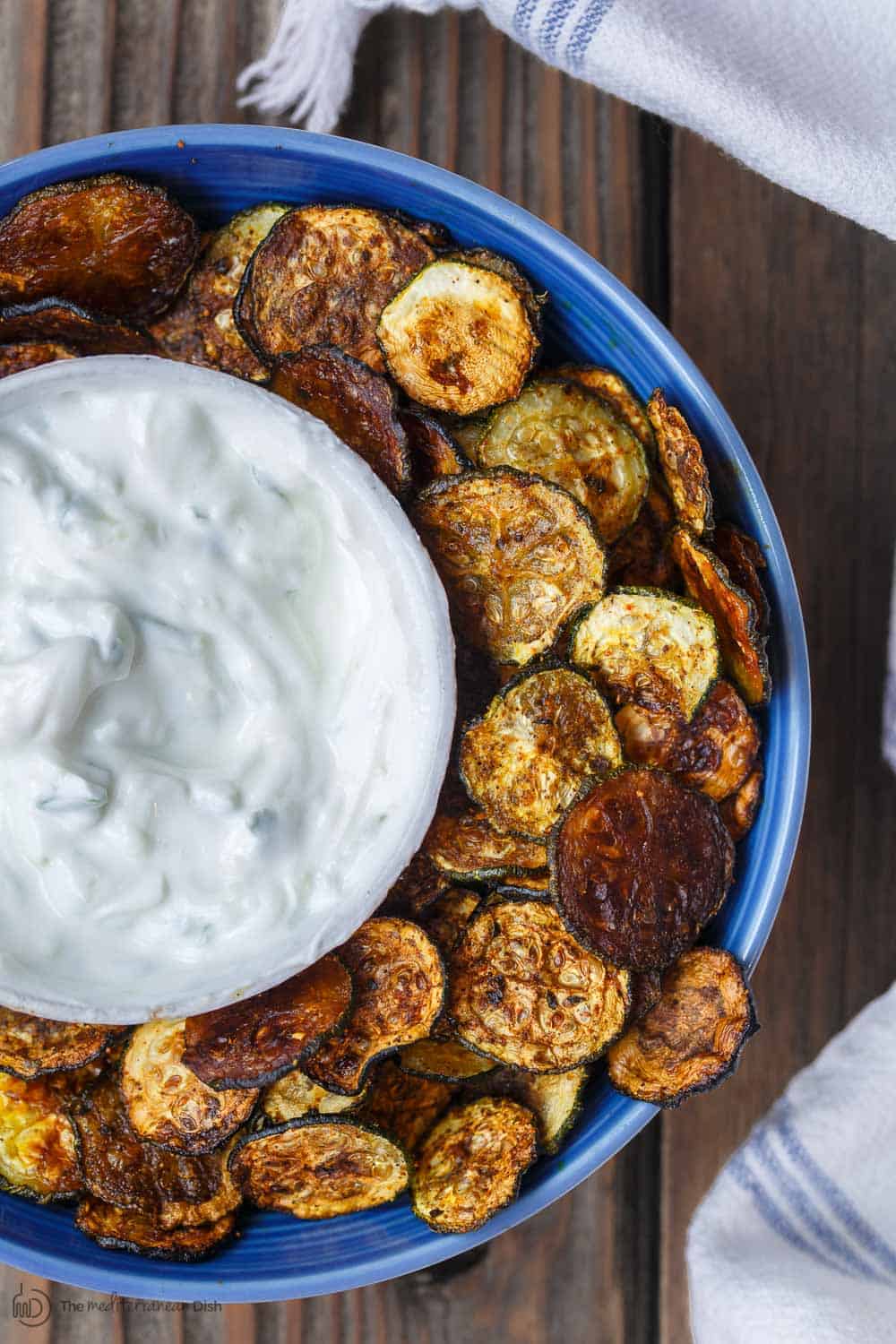
One fun snack that my children love is baked zucchini chips or “eggplant fries“. You can make these ahead and keep them on hand!
Legumes Like Beans and Chickpeas (Yes, Hummus!)
Legumes and pulses are rich in plant-based protein and fiber and low in fat, so they can help you feel fuller longer.
And if you’re eating the Mediterranean way, you’re likely incorporating legumes and pulses in many of your meals. But they also make a great snack if you are particularly hungry.
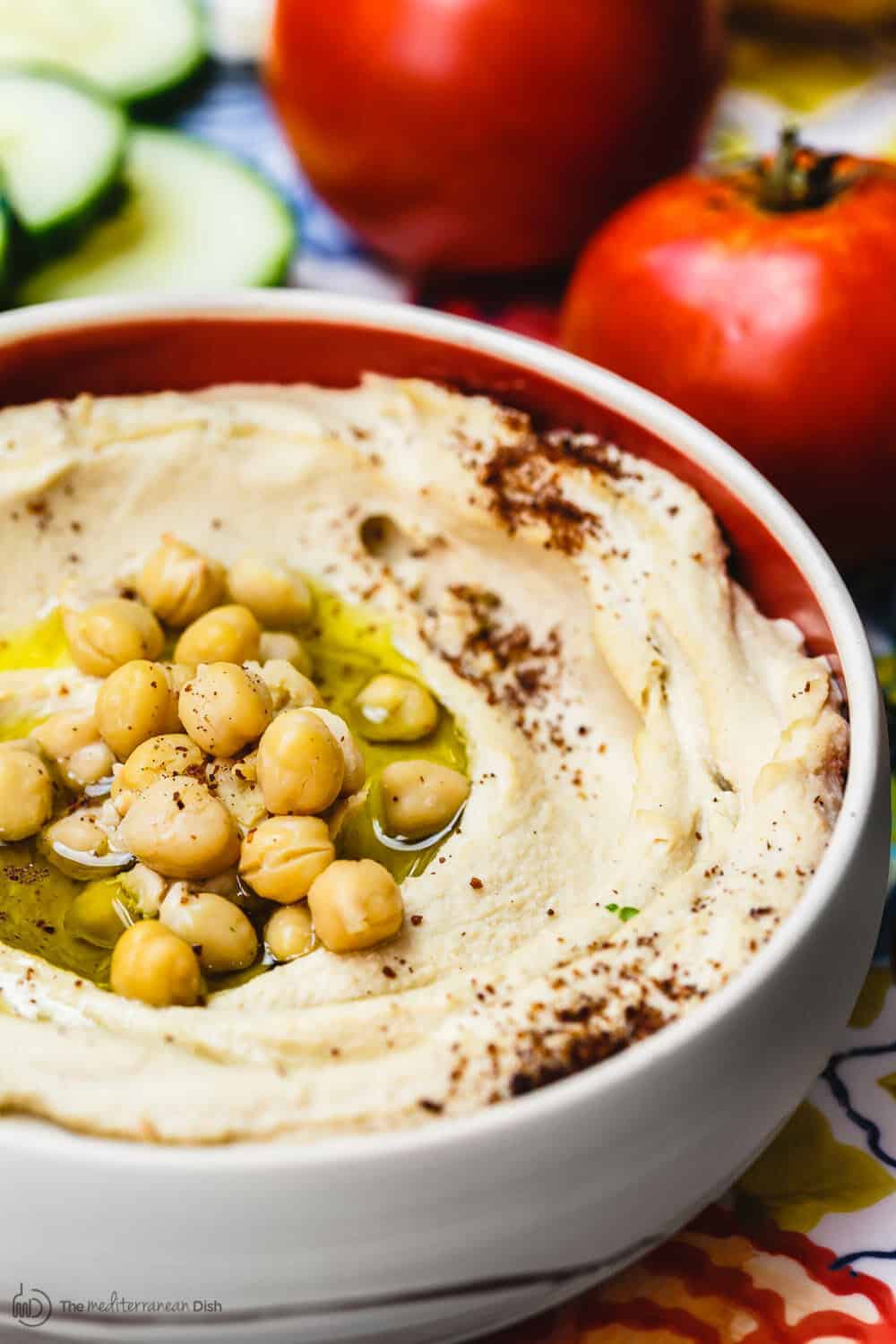
Hummus is probably the most well-known bean dip from the Mediterranean with lots of variations. Serve it with veggies or a small piece of whole-grain toast, but we have more bean dips and veggie-forward options.
Here are 4 healthy dip ideas:
- Extra Creamy Avocado Hummus!)
- White bean dip (so good!)
- Spinach Vegetable Dip with Pistachios and Zhoug
- Bissara (Egyptian Fava Bean Dip)
If you have leftovers from bean salad recipes like chickpea egg salad or balela salad, make a good snack too. A little portion will go a long way in satisfying that mid-afternoon hunger.
By the way, a handful of crunchy roasted chickpeas, jazzed up with harissa or za’atar, is an awesome snack. Recipe coming soon!
Greek Yogurt
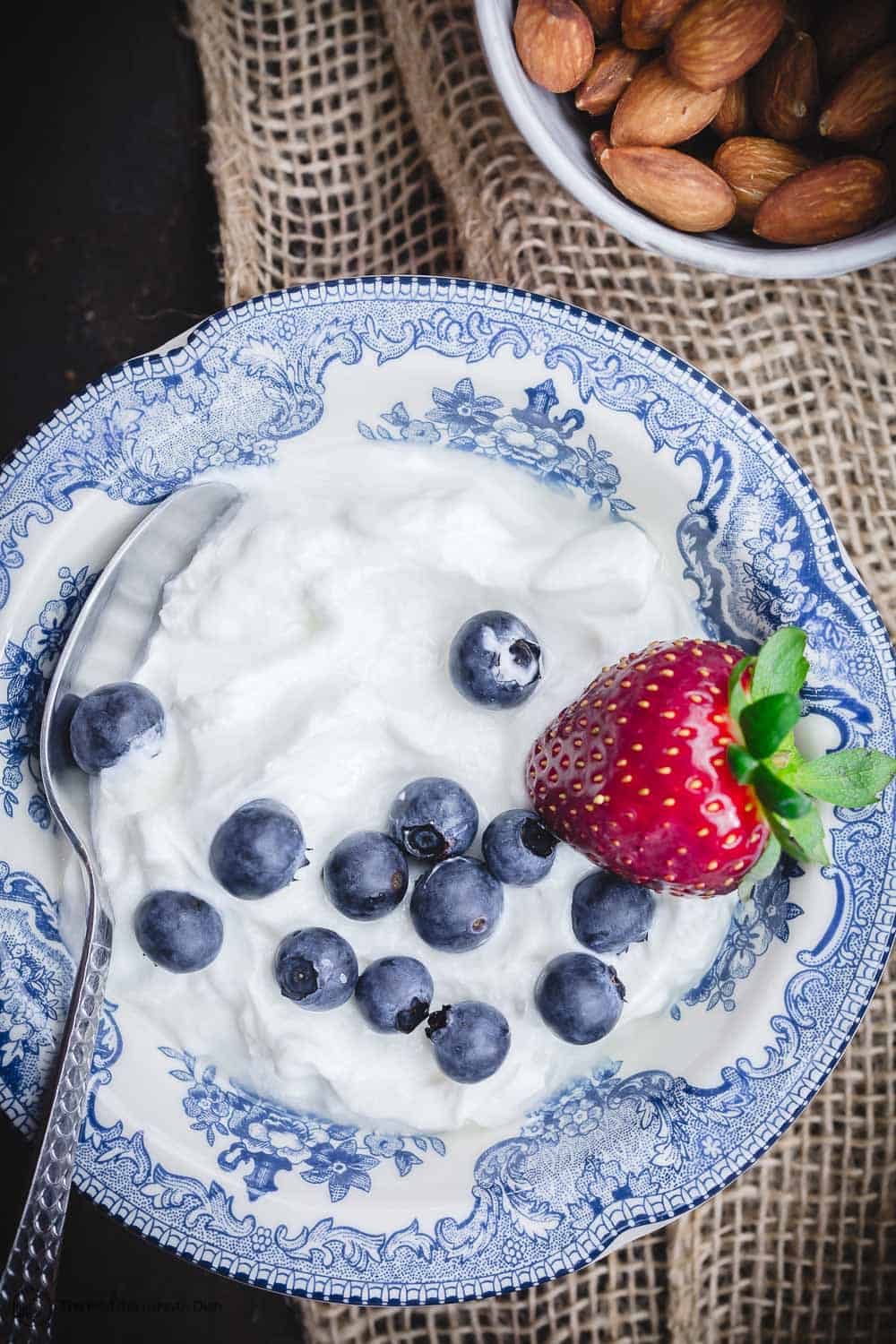
Greek yogurt is low in sugar, rich in calcium, and vitamin B-12. Whether homemade or store-bought, it also contains live cultures and probiotics. These can have several health benefits, including regulating digestion and boosting your immune system. And because it’s rich in protein, it will keep you full longer.
A small portion (like 5 ounces or less) of plain Greek yogurt with a little fresh fruit is a good snack option, once in a while. Or, for a savory option, try this Greek yogurt bowl with chickpeas and fresh veggies.
Try to find organic Greek yogurt (plain, of course) that has been properly strained. Some manufacturers add a thickening agent to yogurt, which does not provide the same benefits.
Early Harvest EVOO and Za’atar Snack
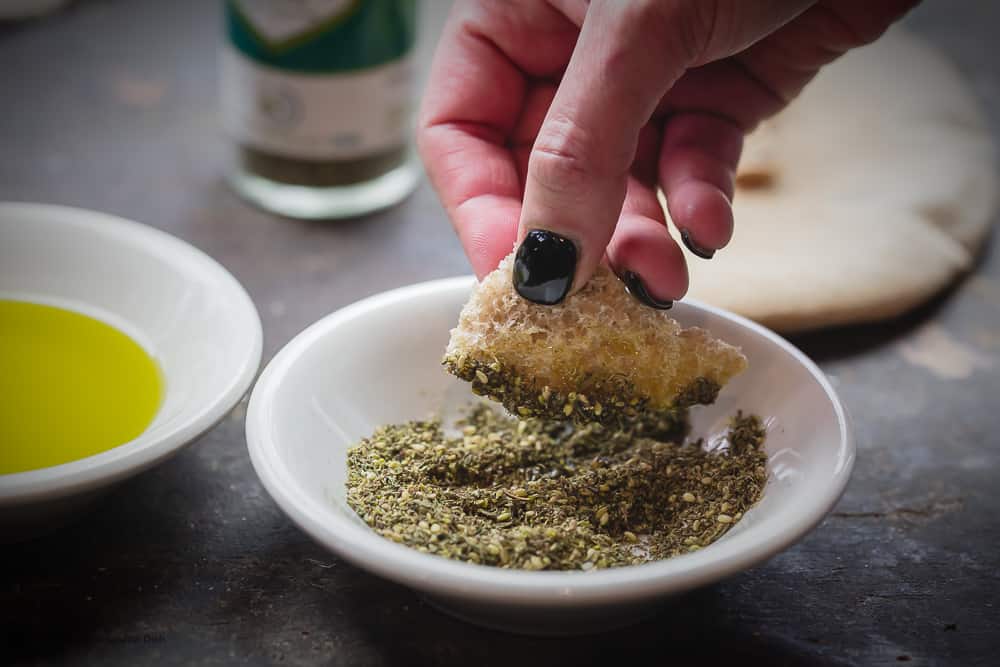
This is a bit of an outside-the-box Eastern Mediterranean snack. It involves excellent extra virgin olive oil, Za’atar—a spice mixture of Mediterranean wild thyme and toasted sesame seeds—whole wheat pita or your favorite whole grain crusty bread.
The idea is not so foreign, really. You’ve dipped a piece of bread in olive oil before, haven’t you? What you do here is simple. Take a small bite-sized piece of bread, dip it in the EVOO, then dip lightly in za’atar. Enjoy! This is a favorite of mine.
Now, a bit of a shameless plug, but it’s really my sincerest advice to you. If you’re going to do this EVOO and Za’atar snack, you’ll want quality ingredients. I highly recommend Early Harvest Greek extra virgin olive oil (from organically grown and processed Koroneiki olives) and our all-natural za’atar spice.
Early Harvest extra virgin olive oil is a prized agoureleo from the Kotsovolos Family Estate in Christianoupolis, Greece. It is the real deal; exquisite in both taste and quality. I have personally visited the family estate and walked through the olive groves myself.
Two Important Notes
Two last things to add here.
- Drink plenty of water throughout the day. It is said that most of us are eating when we should be drinking. We confuse mild dehydration for hunger.
- People of the Mediterranean generally don’t snack too much during the day. Remember that frequency and portion control are still important even if you’re snacking on healthy options. I can’t advise you on how many snacks or how much you need; this is something you will know better with the help of an expert or your doctor.
More Resources:
- Mediterranean Diet Shopping List
- Ultimate Mediterranean Diet Breakfast
- Best Mediterranean Recipes of 2018
- 7 Ways to Follow The Mediterranean Diet
- 5 Basics of the Mediterranean Lifestyle
- Shop The Mediterranean Dish
- 12 Easy Mediterranean Diet Dinners
- 9 Mediterranean Diet Lunch Ideas
*Disclaimer: Before you begin any new diet plan or a new way of eating, please consult a professional or your doctor to receive expert advice specific to your needs. This article is written from personal experience and the result of personal research.

I made an almond brittle type snack from a recent Mediterranean magazine. It was in the front of the magazine and some of the ingredients included cumin, brown sugar, egg white, sliced almonds, and other spices. Everyone raved about it but, unfortunately, I misplaced the magazine!! Can you help me find this recipe? I would greatly appreciate it!! Thank you so much!!
That sounds delicious, Susan, but I’m so sorry… that recipe is not ours :(.
Great list of snack ideas! I love how these options focus on simple, wholesome ingredients that make healthy eating both satisfying and sustainable.
So glad you found this article helpful, Kelly!
Thank you for your time in sharing your recipes with us. I find your web site very helpful. I have ordered one of your cookbooks and hopeful it will arrive today. I have your pantry check list and am so excited to get started. We have already made two of your recipes and we love them. Looking forward to learning more from you. Also ordered three of your spices. Can’t wait to get started.
Wonderful, Wanda! Thank you so much for your support!
I love this site thank you so much for all the information about not only diet but food choices and recipes. I can’t wait to get started.
So glad you are finding everything helpful, Karen!
Thank you for all the delicious recipes and helping me be more heart healthy!!
I just received your cookbook…Simply Dinner and it is wonderful!!
Thank YOU for your support and sweet message!
How about diabetic choices? Very interested thank you
Hi, Rae! The Mediterranean Diet is generally considered safe and beneficial for people with diabetes. However, when considering following a new way of eating, we always highly recommend consulting with a doctor or registered dietitian first… someone familiar with your medical history. We are not medical professionals here, so they would better be able to advise you on which specific food/recipe choices within the Mediterranean Diet are safe for you to eat.
Thank you very much for the insights you share!
I learned about the Mediterranean “diet” by researching my personal health issues (i.e., NAFLD, GERD, high cholesterol, high BP, and more!). 100% of my doctors are happy I’ve taken to this lifestyle change. But b/c of all my health issues, they urged me to tweak the diet a little in a stricter way. That means even less sodium than the DV suggests (no need to add salt since it’s in sooo many things!), 3 to 4 tbsp EVOO a day, and absolutely no sugar (natural sugars, like ones in produce are ok.) When I 1st started the Mediterranean diet, I was very sad; the days of fast food and junk food (what I used to call “real food”!) were gone! Truthfully though, after just 2 months my health has noticeably improved in many ways! And, ironically, I learned that healthy foods really can taste good, making them indeed “real food!” Well, look at that, I prattled on, barely mentioning your awesome site and all the many wonderful ways you’ve opened my mind…and palate to! My sincere gratitude, Suzy!
You’re very welcome, David! We’re thrilled to hear that the Mediterranean diet has had such a positive impact in your life. Your kind words mean a lot, and we’re glad we could help in opening up new culinary horizons for you :). To your joy and your health!
Looking forward to following the Mediterranean life style
Hi, Desher! I’m Summer and I work here at The Mediterranean Dish! So glad you’ve joined us! I see you’ve found the snack recipes. Did you see our list of top 50 Mediterranean Diet Recipes? It’s a great place to get started.
Thank you so much
After reading this article and the simple way the Mediterranean diet was explained I am convinced this is the way to have a healthy eating !
Thank you from the UK
We agree 100%! Thanks, Maria!
Love your recipes..
Doctor told me to do this diet