Black Eyed Peas Recipe (One-Pot Greek Style)

This post may contain affiliate links. Please read our disclosure policy.

Turn a couple of cans of black-eyed peas into a hearty Greek-style dinner with tender vegetables, warm spices, and a bright finish of citrus and parsley—all in one pot.

My Greek-Style Take on a Pantry Dinner
I use canned black-eyed peas and tomatoes to get this hearty Greek-style stew started without soaking or cooking dried beans first. Everything simmers in one pot with vegetables and warm spices, then I finish it with citrus, fresh parsley, and a generous drizzle of olive oil. Even the meat lovers in my life come back for more!
I love the Greek approach to cooking vegetables with plenty of good olive oil. Known as lathera, this family of dishes includes favorites like Greek green beans, where olive oil is an essential part of the flavor. In my opinion, there is hardly anything better.
Here, the oil gives richness to the tomato broth, while cumin, oregano, and paprika bring warmth. Don’t skip the squeeze of lemon or lime at the end—it brightens the beans and vegetables beautifully.
Add warm pita bread for dipping, or spoon the stew over rice. A couple of cans of beans go a long way toward a satisfying dinner.
What are Black-Eyed Peas?
Despite their name, black-eyed peas are beans! You may also see them called black-eyed beans, named for the distinctive dark spot on their pale skin. Their mild, slightly nutty flavor works beautifully with the tomatoes, herbs, and warm spices in this stew.
Have dried black-eyed peas on hand? See the preparation instructions below for cooking them before adding them to the stew.

Ingredients for Greek-Style Black-Eyed Peas
Start with canned beans and tomatoes, a few fresh vegetables, and pantry spices. Here’s what to look for and how each ingredient contributes to the stew.
- Black-eyed peas: Use two 15-ounce cans, drained and rinsed. They’re already cooked, so they can go straight into the tomato broth without soaking or a separate pot of boiling water.
- Extra virgin olive oil: You’ll use it to sauté the vegetables and drizzle over the finished stew. I use Early Harvest Greek extra virgin olive oil. That final drizzle adds richness you can taste, so choose an oil whose flavor you enjoy.
- Yellow onion and garlic: These go into the pot first to build the savory base. Let the onion turn translucent and the garlic become fragrant before adding the other vegetables.
- Green bell pepper and carrots: I like to chop the vegetables nice and small so they soften and soak up the flavors of the stew. You want a little of everything in each spoonful.
- Canned diced tomatoes: Use one 15-ounce can, including the juices. The tomatoes and 2 cups of water form the broth, so don’t drain the can.
- Bay leaf, cumin, oregano, and paprika: A dried bay leaf and oregano bring herbal flavor, while ground cumin adds earthy warmth. I use sweet paprika, with optional red pepper flakes for those who like a little heat.
- Kosher salt and black pepper: Season the broth to taste.
- Lemon or lime: Either works here. Stir in the juice at the end to balance the rich broth and brighten the vegetables and beans.
- Fresh parsley: A full cup of chopped parsley brings fresh, herbal flavor throughout the stew. Stir it in with the citrus rather than treating it as just a garnish.

How to Make Greek-Style Black-Eyed Peas
You’ll need a large pot or Dutch oven. Have your vegetables chopped before you begin, then give the stew time to simmer so the carrots soften and the flavors come together.
- Prepare the vegetables and beans. Chop 1 large yellow onion, 4 garlic cloves, and 1 green bell pepper. Peel and chop 2 to 3 carrots, keeping the pieces small. Drain and rinse two 15-ounce cans of black-eyed peas.
- Sauté the onion and garlic. Heat extra virgin olive oil in your pot over medium heat until shimmering but not smoking. Add the onion and garlic and sauté briefly, until the onion is translucent and the garlic is fragrant.
- Add the remaining vegetables. Stir in the bell pepper and carrots. Cook for 5 minutes, tossing regularly.
- Build the broth. Add one 15-ounce can of diced tomatoes with their juices, 2 cups of water, 1 dried bay leaf, 1½ teaspoons ground cumin, 1 teaspoon dried oregano, and ½ teaspoon paprika. Season with kosher salt and black pepper. For a little heat, add ½ teaspoon red pepper flakes.
- Boil, then simmer. Raise the heat and bring the broth to a boil. Add the drained black-eyed peas and boil for 5 minutes. Lower the heat, partially cover the pot, and simmer for 25 to 30 minutes, until the vegetables are tender and the flavors have come together. Stir occasionally, adding a little water if the stew looks too dry.
- Finish and serve. Stir in the juice of 1 lemon or lime and 1 cup chopped fresh parsley. Ladle into bowls and finish each serving with a generous drizzle of extra virgin olive oil. Serve with warm pita bread or spoon over cooked orzo, rice, or your favorite grain.
Tips for a Rich, Flavorful Black-Eyed Pea Stew
- Keep the vegetables small. I like to chop the carrots and bell pepper into small pieces so they soften and soak up the flavors in the pot. Large chunks of carrot can still be firm when the beans are ready, so give the vegetables a little attention before you start.
- Watch the broth as it simmers. Leave the lid partially open and stir occasionally. You want enough liquid to surround the beans and vegetables without letting the pot cook dry. If the stew needs more liquid, add a little water at a time.
- Give the canned beans time in the pot. They’re already cooked, but the simmer lets their flavor come together with the tomatoes, aromatics, and spices. Check that the carrots are tender before finishing with the citrus and parsley.
- Save the fresh finish for the end. Lemon or lime juice balances the rich broth, and the parsley brings freshness to every spoonful. Then drizzle olive oil into each bowl before serving. That extra bit of richness makes such a difference!
Using Dried Black-Eyed Peas
Canned beans are my shortcut here, but you can also start with dried black-eyed peas. You’ll need a little more than 1 cup of dried beans to replace the two cans. Allow extra time for soaking and cooking before you begin the stew.
- Soak the beans. Place the dried black-eyed peas in a large bowl and cover generously with water. Cover the bowl and refrigerate for at least 6 hours or overnight.
- Cook until tender. Drain and rinse the soaked beans, then transfer them to a large pot. Add enough fresh water to cover them by about 4 inches. Bring to a simmer, cover, and cook for about 1 hour, checking for tenderness after 45 minutes. Add more water if needed to keep the beans submerged.
- Drain and add to the stew. Use the cooked, drained beans in place of the canned black-eyed peas, following the same stovetop steps.

Slow-Cooker Black-Eyed Peas
For a longer, hands-off cooking option, you can make this Greek-style stew in the slow cooker. Keep the citrus and parsley aside until the end.
- Fill the slow cooker. Add the chopped onion, garlic, carrots, and bell pepper, followed by the olive oil, diced tomatoes with their juices, water, bay leaf, cumin, oregano, paprika, and drained and rinsed canned black-eyed peas. Season with kosher salt and black pepper, adding the optional red pepper flakes if you like.
- Cover and cook. Cook on low for about 8 hours or on high for about 4 hours, until the vegetables are tender.
- Finish and serve. Stir in the lemon or lime juice and chopped parsley. Spoon into bowls and finish with a drizzle of olive oil.
Starting with dried beans? For the slow-cooker version, rinse a little more than 1 cup of dried black-eyed peas and add them without soaking. Increase the water from 2 cups to 3 cups and cook on low for about 8 hours, until the beans are tender.
What to Serve with Black-Eyed Peas
Warm pita or crusty bread is all you need alongside a bowl of this hearty stew. Use it to scoop up the beans and catch the tomato broth and olive oil at the bottom of the bowl.
For a more substantial plate, spoon the black-eyed peas over cooked rice, orzo, or quinoa. Rice or quinoa keeps the meal gluten-free; regular pita and orzo do not.
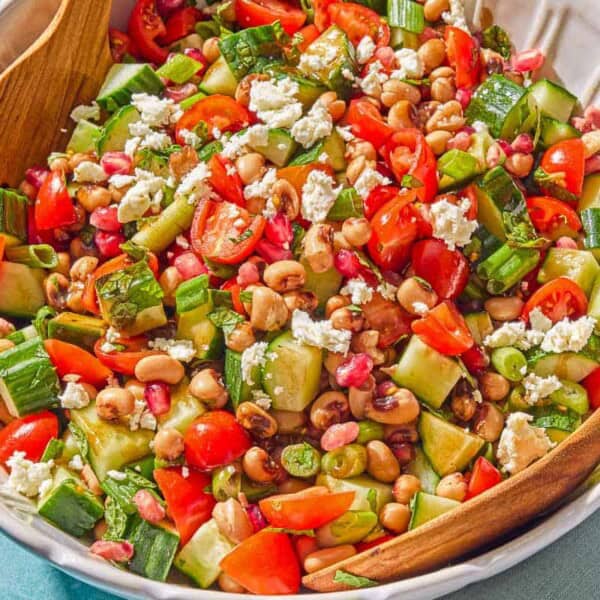
I also like to start with a traditional Greek salad. The crisp vegetables make a refreshing contrast to the warm stew. If you’re keeping the whole meal vegan, leave the feta off the salad.
How to Store and Reheat Black-Eyed Pea Stew
Refrigerate: Divide leftovers into shallow containers and refrigerate within 2 hours of cooking. Store covered in the refrigerator for up to 3 to 4 days.
Freeze: Once chilled, freeze the stew in freezer-safe containers. Portion it into individual servings if you’d like to thaw just enough for lunch or dinner.
Reheat: Thaw frozen stew overnight in the refrigerator. Reheat in a saucepan, stirring occasionally, until it reaches 165°F throughout.
Put Those Pantry Beans to Work




Greek-Style Black-Eyed Peas
Ingredients
- Extra virgin olive oil, for cooking and finishing
- 1 large yellow onion, chopped
- 4 garlic cloves, chopped
- 1 green bell pepper, chopped
- 2 to 3 carrots, peeled and chopped
- 1 (15-ounce) can diced tomatoes, with their juices
- 2 cups water
- 1 dried bay leaf
- 1 1/2 teaspoons ground cumin
- 1 teaspoon dry oregano
- 1/2 teaspoon paprika
- Kosher salt and black pepper
- 1/2 teaspoon red pepper flakes, optional
- 2 (15-ounce) cans black eyed peas, drained and rinsed
- 1 lime or lemon, juice of
- 1 cup chopped fresh parsley
Instructions
- Sauté the onion and garlic. In a large pot or Dutch oven, heat extra virgin olive oil over medium heat until shimmering but not smoking. Add the onion and garlic and sauté briefly, until the onion is translucent and the garlic is fragrant.
- Cook the vegetables. Add the bell pepper and carrots. Cook for 5 minutes, tossing regularly.
- Build the broth. Add the tomatoes with their juices, water, bay leaf, cumin, oregano, paprika, and optional red pepper flakes. Season with kosher salt and black pepper. Raise the heat and bring to a boil.
- Cook the black-eyed peas. Add the drained and rinsed black-eyed peas and boil for 5 minutes. Lower the heat and partially cover the pot. Simmer for 25 to 30 minutes, until the vegetables are tender and the flavors have come together. Stir occasionally, adding a little water if the stew looks too dry.
- Finish and serve. Stir in the lemon or lime juice and parsley. Transfer to bowls and finish each serving with a generous drizzle of extra virgin olive oil. Serve with warm pita bread or over cooked orzo, rice, or your favorite grain.
Recipe Notes
- Using dried black-eyed peas: Start with a little more than 1 cup of dried black-eyed peas. Cover generously with water and soak in the refrigerator for at least 6 hours or overnight. Drain and rinse, then transfer to a large pot and cover with fresh water by about 4 inches. Bring to a simmer, cover, and cook for about 1 hour, checking for tenderness after 45 minutes. Add water as needed to keep the beans submerged. Drain and use in place of the canned beans. Allow extra time for soaking and cooking.
- Slow-cooker option: Add the onion, garlic, bell pepper, carrots, olive oil, tomatoes with their juices, water, bay leaf, spices, optional red pepper flakes, and drained and rinsed canned black-eyed peas to the slow cooker. Season with salt and pepper. Cover and cook on low for about 8 hours or on high for about 4 hours, until the vegetables are tender. Stir in the citrus juice and parsley before serving, then finish each bowl with olive oil.
- Dried beans in the slow cooker: Rinse a little more than 1 cup of dried black-eyed peas and add them without soaking. Use 3 cups water instead of 2 cups. Cook on low for about 8 hours, until the beans are tender, then finish with the citrus, parsley, and olive oil.
- Storage: Divide leftovers into shallow containers and refrigerate within 2 hours of cooking. Store covered in the refrigerator for 3 to 4 days. Once chilled, you can also freeze the stew in freezer-safe containers. Thaw overnight in the refrigerator and reheat in a saucepan, stirring occasionally, until it reaches 165°F throughout.
- Serving: The stew itself is vegan and gluten-free. Serve with rice or quinoa to keep the meal gluten-free; regular pita and orzo contain gluten.
- Shop this recipe: Visit our shop for the Early Harvest Greek extra virgin olive oil, ground cumin, and sweet paprika that give this stew its rich, warm flavor.
Nutrition
Nutrition information is automatically calculated, so should only be used as an approximation.
Shop Suzy’s curated selection of Mediterranean olive oils, spices, and more.
Try Our Authentic Italian Olive Oil
Hand-picked and cold-extracted Extra Virgin Olive Oil from 100% Nocellara del Belice Sicilian olives.
*This post originally appeared on The Mediterranean Dish in January of 2020 and has been updated with new information and media for users’ benefit.










Made this today and my wife and I really enjoyed it.
But could we please have metric measurements, too?
I searched the internet to try and find out what is “a good heaping up”. In the end I just had to guess.
Hi, Nigel! Devin here from The Mediterranean Dish team. We are a small (but mighty!) crew right now, but we hope to have metric measurements in the future. And thank you for catching that typo! It is meant to say “a good heaping cup” – but any solid scoop or two of beans will work well. I glad to hear it turned out!
How much olive oil do you add to the slow cooker?
Hi, Mary. You can add a little drizzle to the slow cooker if you’d like, but it’s not necessary since you’re not sautéing the veggies with this method.
how many cups of food does this yield?
Hi, Megan. Once made, this particular recipe can be divided 6 to get the approximate “serving size”. The exact serving size measurement (by grams, cups, etc) is another layer that’s harder for us to precisely calculate at the moment, but we’re working on it!
Made this today and it was delicious. I used the slow-cooker method and added chopped Canadian bacon and vegetable broth. It was so savory and I will be making it again. Nummy.
This is SO DELICIOUS!!! It’s so simple, with simple ingredients, but it tastes like heaven. Thank you so much for your wonderful recipes!!
Wow! Thanks so much, Pam!
This recipe did not work out for me. We love Mediterranean flavors and black eyed peas, and are adventurous eaters. Mine turned out just like the photo, but the flavors just weren’t complimentary and it seemed over-tomatoey.
The simplicity of these dishes are fantastic and the flavours are truly amazing. I love these veggie dinners.
Keep them coming,please. 😀
So yummy! I added some saffron and subbed shallots for garlic, and it came out great! Will definitely be making again.
Yum! Thanks for sharing, Diana!
I’m definitely going to make this! However, there’s no mention of salt even though the nutrition information shows 239.9mg of sodium. How much salt is recommended?
Hi, Bruce. That sodium number is coming from all of the various ingredients used in this recipe. The amount of kosher salt you would like to use really depends on your preference. I would just start with a few pinches and only add more if necessary.
I was surprised how flavorful this dish is and filling. This one is a keeper. Thank you!
This was so easy to make and super yummy! Can’t wait to try another recipe from this author!
I made this for new years day for a change from the usual southern black eyed pea recipes. I used dried peas and it couldn’t have been more simple. Really really good! It was even good cold and would be great in a lunch bowl. I froze the leftovers and can’t wait to have it again.
Such a great soup! Thank you for adding the nutritional stuff too. That is a big help for a diabetic carb counting.
Wonderful recipe. We served it over orzo.
This dish is simple but absolutely delicious. I used dried blackeye peas cooked in an instant pot. I followed the rest of the recipe as written. I added about 1/2 cup of water after 15 minutes of simmering. I served it with homemade bread and homemade Labneh. ( the link is listed under Mezze Recipes). A+
I love this recipe and many others on this website.
Can I ask how much olive oil you would use when doing the slow cooker method please?
Hi, Julie. When using the slow cooker, I typically just drizzle a tablespoon or 2.