
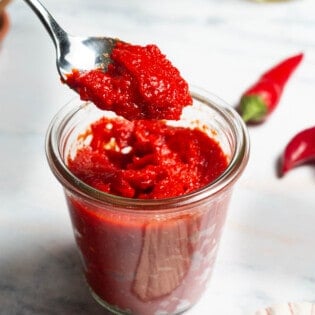
Harissa is a North African red chili paste or sauce with chilies, garlic, olive oil, citrus, and a few warm spices. This versatile harissa recipe is slightly sweet, smoky, tangy, and spicy but not too hot.
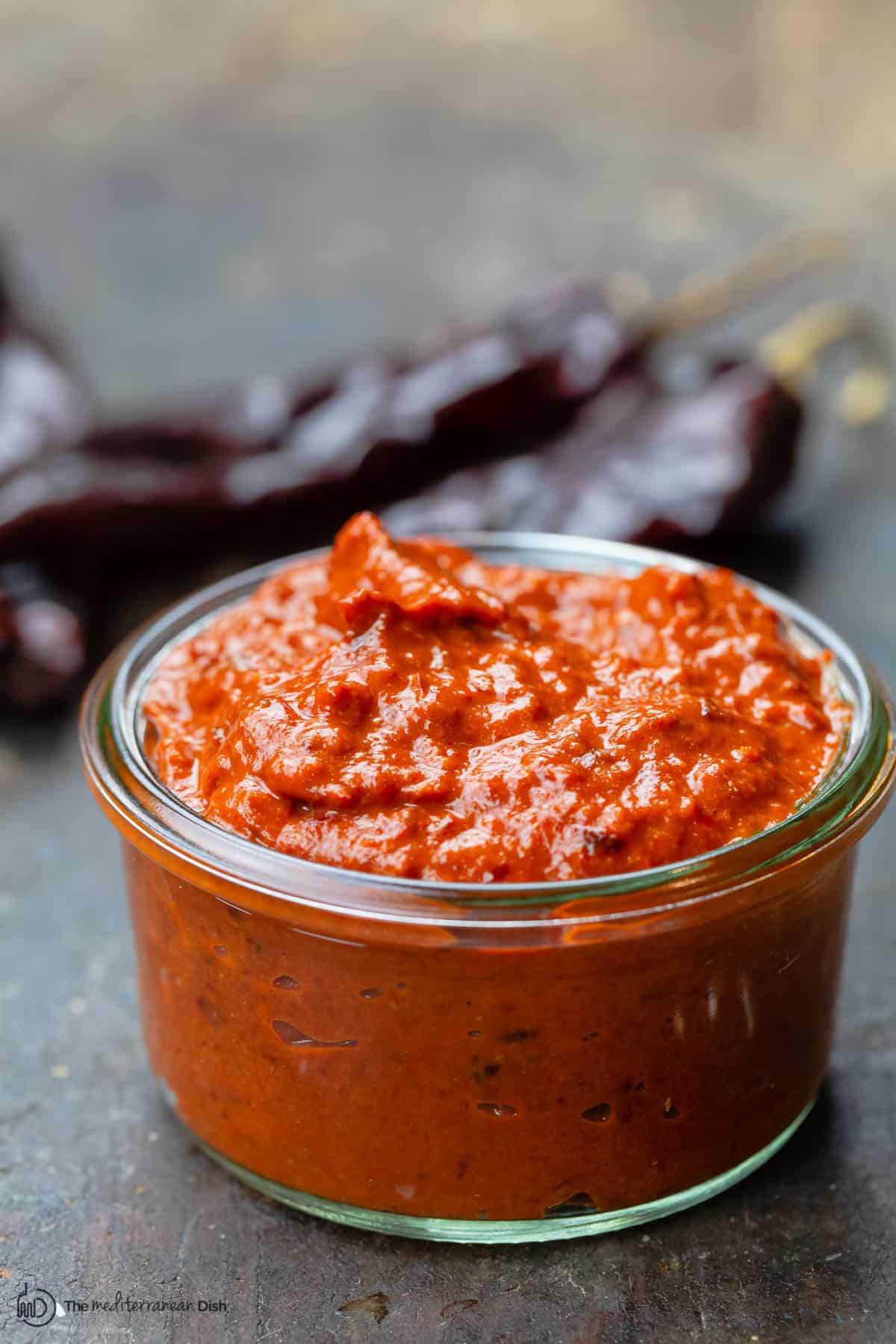
What is Harissa?
Today we’re going to chat about harissa sauce! This, along with my toum garlic sauce, belongs under versatile Mediterranean dips and condiments you’ll find yourself using over and over again!
I’ve heard people describe harissa as the ketchup or sriracha of North Africa and the Middle East.
It may be a red condiment that is as popular as ketchup because of the many ways it is used and enjoyed. But comparing the two does not do harissa justice. Harissa is much more complex in flavor and altogether addictive!
Originally from Tunisia, harissa is a chili sauce or paste typically made with dried red chilies, garlic, citrus, extra-virgin olive oil, and a few warm spices, including cumin, coriander, and caraway seeds.
What does it taste like? This harissa sauce recipe is mild with just enough kick, sweet, smoky, and a little bit tangy. Absolutely addictive!
And although you can find it at specialty grocery stores sold in jars or tins, homemade harissa is a completely different experience. Making harissa at home is easier than most people think; be sure to watch the video below.
The Best Chilies to Use When Making Harissa
Each batch of homemade harissa sauce may taste slightly different than the other, depending on the kind of chilies used. And as a result, some can be fairly hot, while others are mild. Think of it as a DIY chili paste where you control the spice level.
You can pretty much make harissa out of any dried red chile according to your own personal heat index.
Because I like to control the heat factor in my harissa paste, I like using:
- New Mexico chilies, which are milder but offer enough of a kick. (Cookbook author Paula Wolfert believes that Guajillo and New Mexico chiles are closest to the peppers of Nabeul and Gabès in Tunisia.)
- Use a combination of chili peppers rather than sticking with just one kind for a more complex flavor.
- Need more heat? Add a couple of de arbol peppers.
- If you like smokiness, add chipotle chilies.
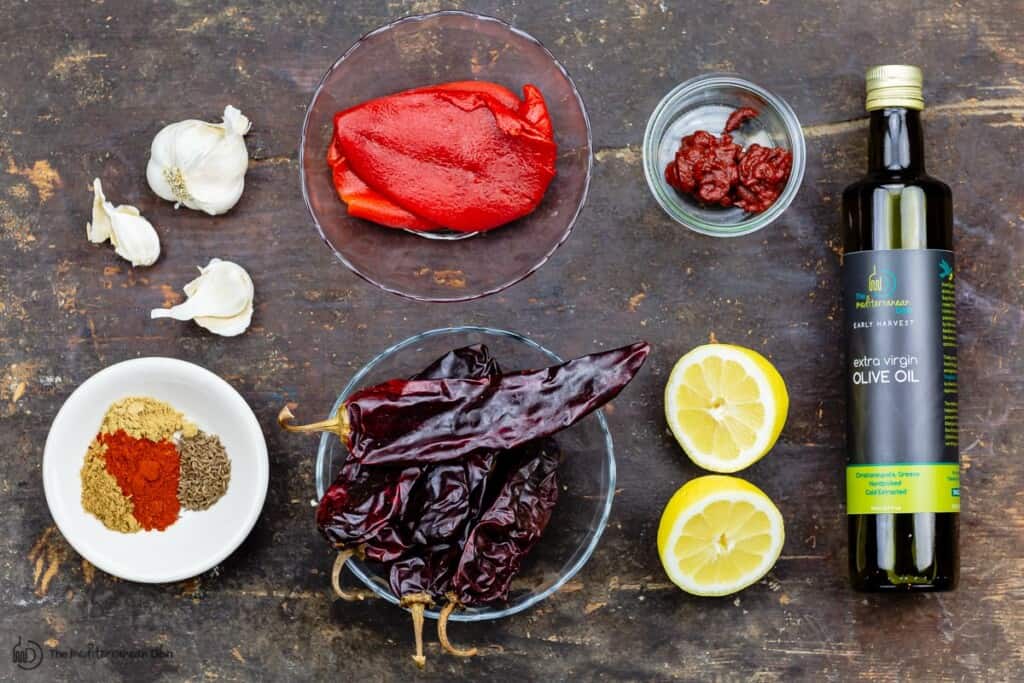
Homemade Harissa Ingredients
When I tested my harissa paste recipe, it was important for me to find the perfect balance of spicy, sweet, smoky, and tangy all in one red chili paste, and the following ingredients did just that:
- Dry red chilies (7 whole chilies). I prefer New Mexico chiles or Guajillo chiles, which are milder (this allows me to add more heat as needed).
- Roasted red peppers (6 ounces or 2 large roasted red peppers). Jarred peppers will work here, just drain them well. You can also roast your own peppers. These will add sweetness and also support the texture of the harissa paste.
- Tomato paste (2 tablespoons) for the umami factor.
- Fresh garlic cloves. I usually use 4 cloves, but if you enjoy more garlic, go for it!
- Spices. A combination of North African flavors from 2 teaspoons each of coriander and cumin; 1 teaspoon caraway seeds toasted and ground (use a mortar and pestle, grinder, or food processor); 1 teaspoon smoked paprika (this adds depth and smokiness without adding more spice). I also use a pinch of cayenne pepper; start with 1/2 teaspoon and go from there.
- Kosher salt enhances the other flavors.
- Citrus. Juice of 1 large lemon. (Do not skip this as it adds brightness and rounds out flavor.)
- Extra virgin olive oil. This is drizzled into the food processor as the rest of the ingredients are mixing. Use a quality EVOO that you enjoy; I used Early Harvest Greek EVOO.
How to Make Harissa
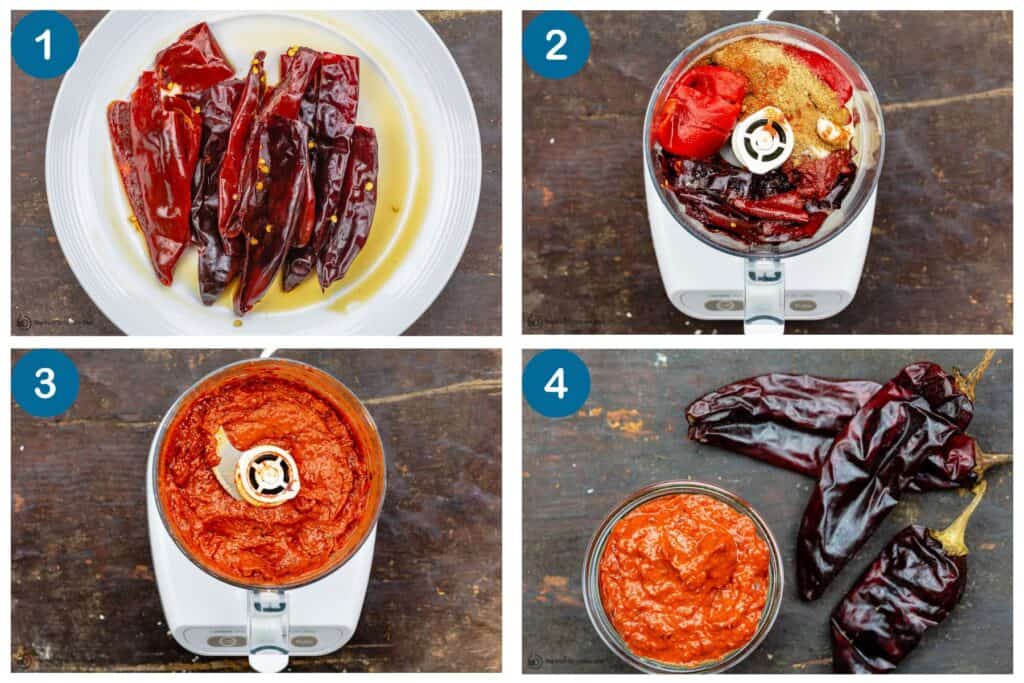
- First, you’ll soak the dry red chilies (whatever combination of chili peppers you selected) in hot water to rehydrate. If you don’t rehydrate them, you can’t easily turn them into paste.
- From there, seed the chiles and blend them in a food processor with the roasted red peppers, garlic, tomato paste, spices, and lemon juice.
- Drizzle the extra virgin olive oil as the ingredients are mixing until you arrive at a beautiful, slightly chunky paste. That’s it!
It’s Even Better the Next Day!
You can use harissa sauce as soon as you make it, but if you refrigerate it and use it the next day or two, the flavors will meld well and create a much deeper chili paste you’ll love!
How to Store Harissa
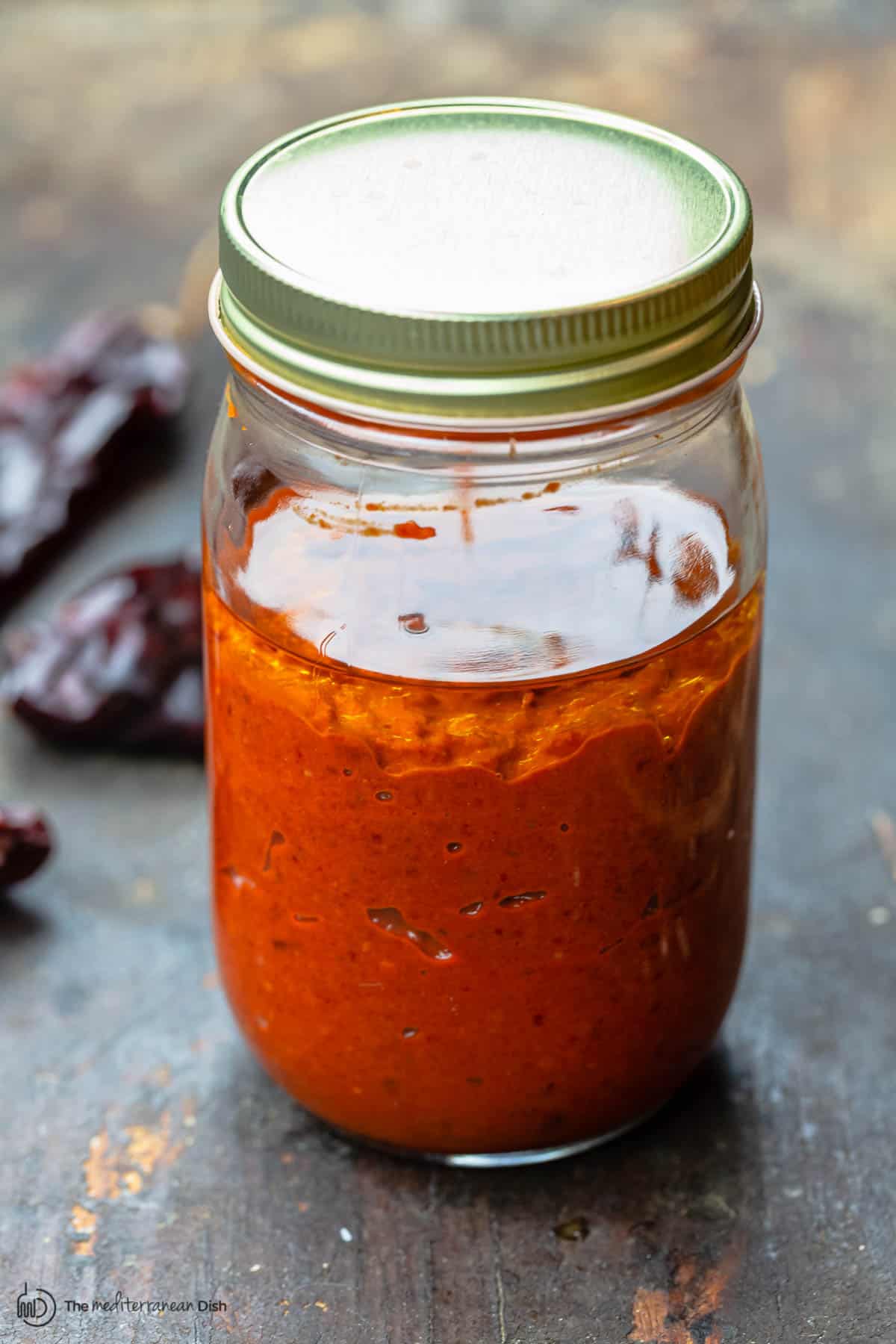
Store homemade harissa in the refrigerator for up to 3 weeks. Keep it in an airtight jar (like a ball jar) and cover the top of the harissa paste with a drizzle of extra virgin olive oil to help seal it and keep it fresh.
To freeze harissa, transfer it to a freezer-safe jar, and store it in the freezer for up to 1 month.
Ways to Use Harissa
Once you make harissa paste at home, you’ll find yourself using it in many different ways. Here are a few ideas:
- One of my favorite ways to use it is in this harissa chicken recipe. But it’s also great to season fish, fish kofta, or vegetables for grilling or baking. I also love the heat it brings to my Chicken Kofta Kebabs with Garlic-Mint Yogurt.
- Add a couple of tablespoons of homemade harissa to a soup like this red lentil soup or Moroccan vegetable stew or lamb stew. Or add some to your shakshuka for a little kick!
- Stir it into hummus or aioli to add a kick or as a topping to your chicken kofta or lamb burger in place of Tzatziki.
- Use on scrambled eggs just like hot sauce, or whisk it into your Tunisian-style frittata.
Try These Mediterranean Sauces Next!

Equipment
Ingredients
- 7 Dried New Mexico Chiles or Guajillo Chiles, or a combination of dried New Mexico Chiles and another kind of dried hot chiles such as de arbol or chipotle chiles
- 6 ounces jarred roasted red peppers, drained rinsed, and dried (2 large peppers)
- 2 tablespoons tomato paste
- 4 large garlic cloves, peeled
- 1 teaspoon caraway seeds, toasted and ground (use a mortar and pestle, grinder or food processor)
- 2 teaspoon ground coriander
- 2 teaspoon ground cumin
- 1 teaspoon smoked paprika
- 1/2 teaspoon cayenne pepper
- Kosher salt
- Juice of 1 large lemon, 2 tbsp fresh lemon juice
- 2 tablespoons quality extra virgin olive oil, more for later
Instructions
- Soak and prepare the dried chiles. Place the dried chiles in a heat-safe bowl and cover with hot water. Set aside for 30 minutes until the chiles are tender and re-hydrated. Drain the chiles and remove the stems and seeds.
- Combine chiles with the remaining ingredients. Transfer the chiles to the bowl of a large food processor fitted with a blade. Add the tomato paste, roasted red peppers, garlic, ground caraway seeds, coriander, cumin, smoked paprika, cayenne (if using), and a large pinch of kosher salt. Add fresh lemon juice.
- Make the harissa paste. Run the food processor, and while it’s running, drizzle the extra virgin olive oil from the top opening. Stop the processor to scrape down the sides and run again until you reach the desired paste-like texture. Taste and adjust seasonings to your liking (remember that harissa paste will deepen in flavor as it sits in the fridge over the next day or two).
- Store. Transfer the harissa paste to a clean mason jar. Cover with a very thin layer of extra virgin olive oil, then cover the jar with its lid tightly and refrigerate.
Video
Notes
- This recipe makes about 1 1/2 cups of harissa paste. A serving size is 2 tablespoons.
- Cook’s Tip: You can use this homemade harissa paste as soon as you make it, but for best flavor allow it at least 1 to 2 days in the fridge.
- Storage: Homemade harissa can last in the fridge for 2 to 3 weeks, properly stored in a covered mason jar and the top the harissa paste covered with a thin layer of extra virgin olive oil. You can use a little bit of the harissa paste at a time, but be sure to add a bit more extra virgin olive oil to cover the top before storing in the fridge again.
- Can you freeze it? Yes! You can freeze harissa paste for up to 1 month or so. Best to freeze individual smaller portions.
- Visit Our Shop to browse quality Mediterranean ingredients, including spices and extra virgin olive oil used in this recipe.
Nutrition
Get The Mediterranean Dish Cookbook
More than 120 recipes for bright and flavorful Mediterranean diet-inspired meals.


I think it would last in the freezer forever.
This is a very easy recipe that uses pantry staples. At least in my kitchen, LOL! It worked out perfectly for a recipe, when I thought I had a jar in the fridge and it was nearly empty! We like things spicy, so added more cayenne. Perfect! Thanks for sharing!
You are very welcome! So glad you loved it!
Best harissa ever. I use it for everything. Milder tone down the peppers, spicier ad a few hot varieties. Bright and delicious, this recipe is a must try
Thanks for such a simple and wonderful sauce.
This was my first time making harissa sauce and your recipe was very good. However, I was left with bits of rehydrated pepper skins that would not purée. Any suggestions on the best way to salvage my paste to remove the skins?
The flavor of the paste is very tasty.
Hi, Lynn. I would suggest pushing your harissa through a strainer to remove anything that didn’t puree well.
Mine came out bitter, did I toast the seeds too much ? They looked fine. Also there is like no spiciness so I will probably add like more cayenne. I just want to know how where I went wrong
Hi, Melissa. The bitterness could have be cause by a handful of things: using old or low-quality dried chilies, not removing enough seeds, or not soaking the peppers long enough before blending, for instance.
I have to admit, I’m kinda addicted to this stuff. If you make it using habaneros or similar, it has a completely different profile, but still works great. I use it (sparingly) in med style dishes to add some extra zing. It’s also great mixed into pizza sauce if you’re looking to make a pizza with personality! Really it is just so incredibly flexible and forgiving that you can really experiment with what you like without worrying about completely ruining it.
Thanks so much for sharing your thoughts, John!!
Absolutely delicious Harissa Sauce, and easy to make, I agree. I used this on eggplant along with more garlic, olive oil and salt, then baked in the oven.
I have a beautiful, freshly harvested crop of baklouti peppers that I grew in my garden from seeds. Can I use those instead of the New Mexico peppers? They are fresh, so I don’t think I need to soak them, but can you advise?
Hi, Monica. I’m sure you could probably use them, but it’s not something we’ve tried before, so it’s hard to advise here. If you do give it a go, please stop back and share your thoughts!
Super easy to make and adjust for smaller amount. Delicious!
Will freeze the excess to see if it works well the next dish.
Hi
I use so much harissa and want to make my own but I grow my own chilli’s and pepper, how would you adjust this recipe for fresh rather than dried chilli’s?
Thank You
Hi, Daphne. We’ve never tried this recipe with fresh chilies, so it’s hard to say what adaptations would have to be made. If you decide to give it a go, please stop back and share your thoughts!
I follow a low fodmap diet due to some GI issues. Substitute the garlic and olive oil with garlic infused olive oil. This sauce has made so many dishes come to life for me.
Thanks so much for sharing, David!
Can harissa be canned?
It tasted amazing!!! Thank you ☺️
I’ve worked with lots of dried chilies. Skins vary widely. Some, such as ancho are soft and puree without leaving those papery shards. Some simply won’t puree.
Just as the skins,, the flesh varies. Sometimes you can easily scrape the inside. Sometimes pushing your thumb into the flesh separates it from the skin.
Experiment. I find separating skin from flesh before blending preferable to sieving.
Is this recipe really hot? I’m sure you can use different peppers to achieve the heat degree you prefer, right? It sounds great.
Hi, Deidre. This particular version is on the milder end of the harissa spectrum. Yes, you can vary the type of peppers use to control the heat. Hope you give the recipe a try!
Greetings- Can I use New Mexico red chile powder in place of the red chiles? If so, how much would I use? I have both medium and hot Chimayo red. Thanks!
Hi, Ronnie. To make the paste, you do need to use the actual chiles here.