How to Make Baklava (My Family’s Baklava Recipe)

This post may contain affiliate links. Please read our disclosure policy.
I grew up on the Mediterranean, and I’ve tasted a lot of baklava. My family’s baklava recipe is the one I keep coming back to: layers of crisp, buttery phyllo, pistachios, walnuts, and hazelnuts, and honey syrup in every bite. It’s better than anything from a bakery and easier to make than you think.
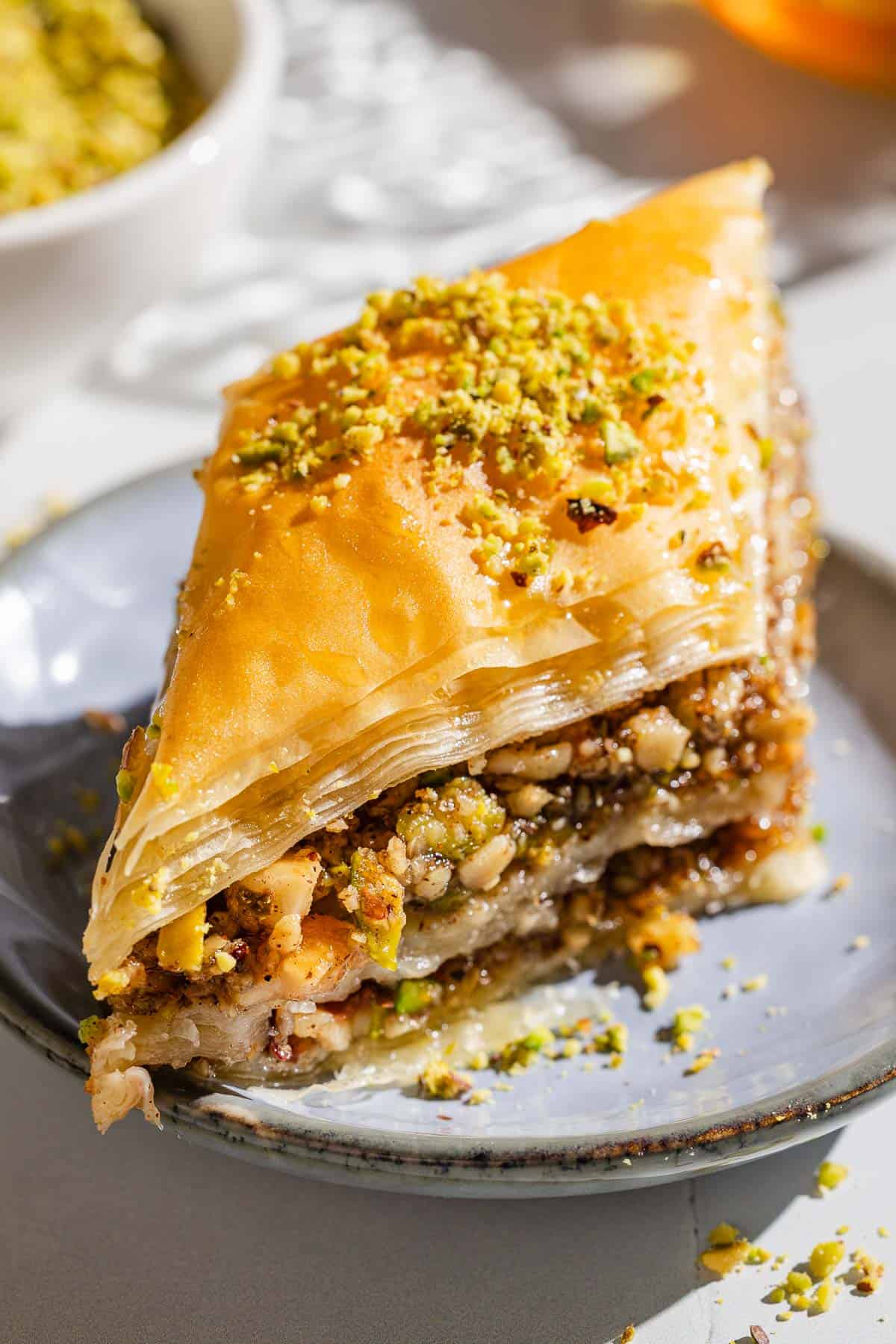
My Family’s Extra Nutty Honey Baklava
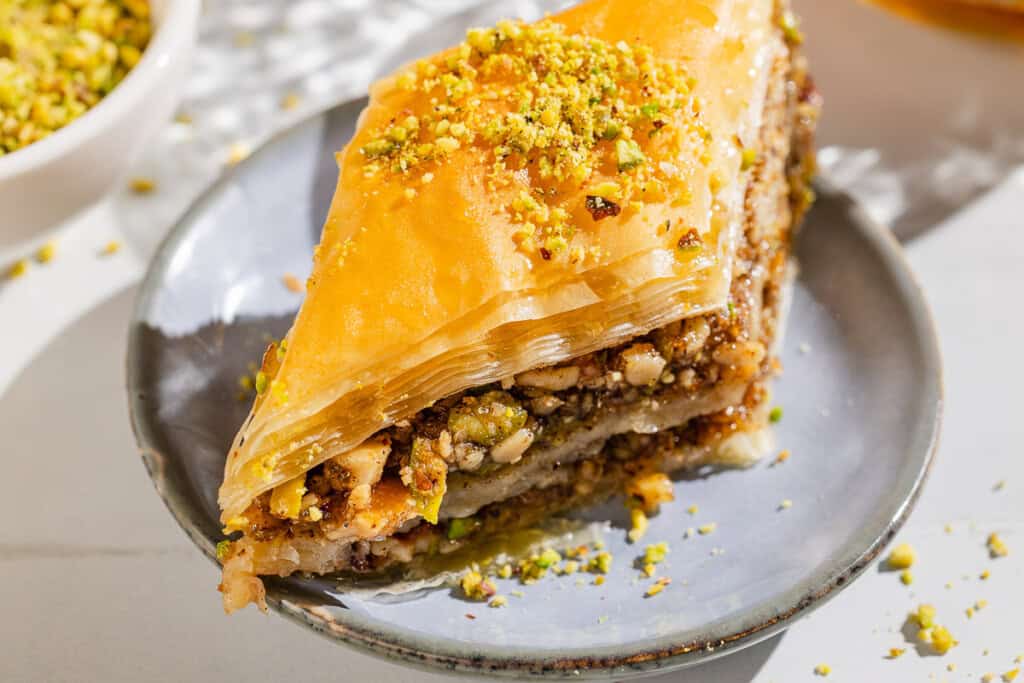
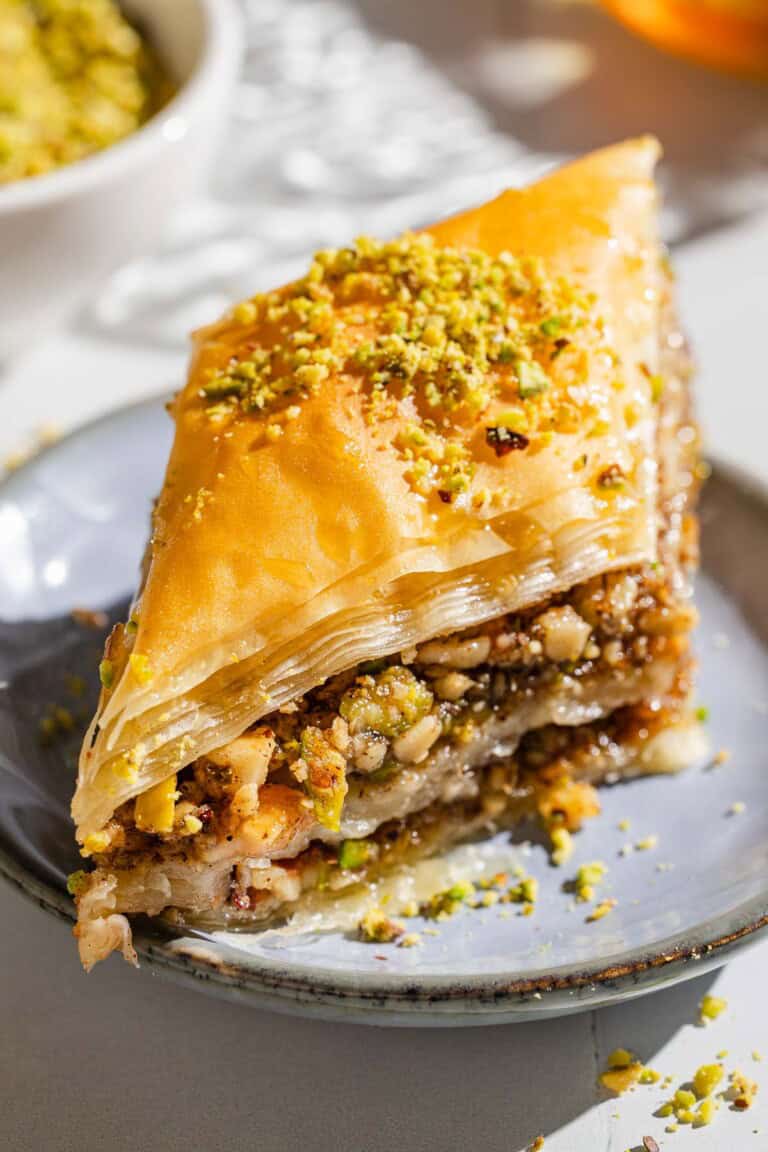
When you grow up on the Mediterranean, eating baklava at every gathering, you become a bit of a baklava snob—at least I did. To me, nothing rivals homemade baklava: crisp, flaky pastry, a crunchy nut filling, and honey syrup tucked into the layers.
I’ve written two New York Times bestselling cookbooks on Mediterranean cooking, and my family’s baklava is the recipe I come back to over and over. Turkish baklava is famous for pistachios, while Greek baklava usually leans on walnuts. But in my family, we us three nuts: pistachios, walnuts, and hazelnuts, for a filling that’s generous and full of texture.
The flavor of the syrup stays closer to Greek baklava, with cinnamon and honey syrup, and a little ground clove adds another layer of warm spice.
If you’ve never worked with phyllo—the paper-thin pastry sheets that give baklava its flaky layers—the assembly may look intimidating. You’ll brush the sheets with melted butter and build three sections of pastry with two layers of nuts between them. Take it one sheet at a time, and keep the remaining pastry covered while you work.
The recipe lists about 30 minutes of preparation and 40 minutes of baking, but allow extra time to thaw the phyllo beforehand and let the finished baklava rest. It needs at least an hour after you add the syrup, preferably several hours. I like to make it the night before serving so the layers have plenty of time to absorb the honey syrup.
What is Baklava?
Baklava is a sweet pastry made from thin layers of buttered phyllo dough filled with chopped nuts, baked until crisp, and soaked in honey or sugar syrup. The baklava we know today comes from Turkey, where it was perfected in Ottoman palace kitchens, and it’s now loved across the Mediterranean and Middle East.
You’ll find different versions across the Mediterranean and Middle East. Turkish pistachio baklava typically uses a sugar syrup made with water and lemon juice, while Greek versions often feature walnuts, cinnamon, and honey. Some Middle Eastern versions perfume the syrup with rosewater.
This honey baklava brings together three nuts rather than just one. I love that combination and the texture it gives the filling, but you can use walnuts or pistachios instead. Keep the total amount of nuts the same.
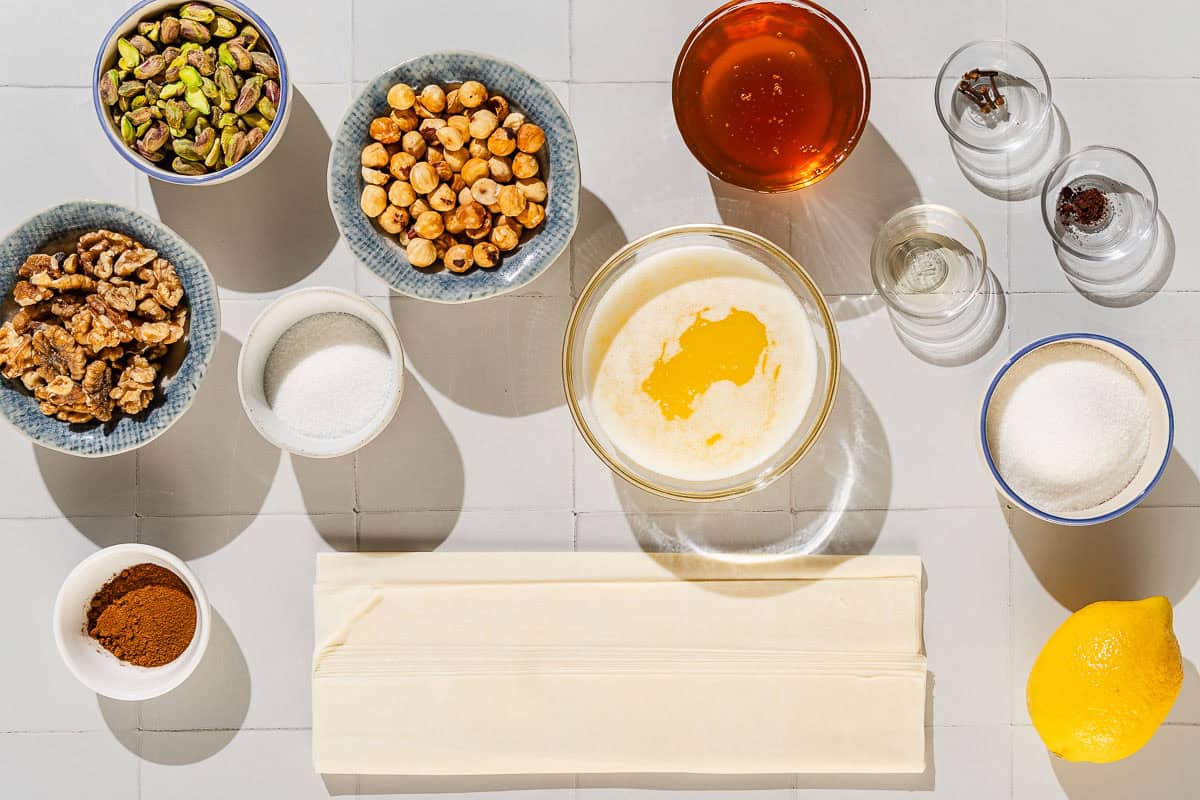
Baklava Ingredients
It helps to think of this recipe in three parts: the buttered phyllo layers, the spiced nut filling, and the honey syrup.
For the Pastry Layers
- Phyllo dough: You’ll need one 16-ounce package, thawed according to the package instructions. Look for it in the freezer section near the pie crusts. Keep the sheets covered between two clean kitchen towels during assembly so they don’t dry out and become brittle.
- Unsalted butter: Melted butter is brushed onto the pan and each sheet of phyllo. It gives the pastry its buttery flavor and helps build the crisp layers. Have it melted and ready before you uncover the dough.
For the Nut Filling
- Pistachios, walnuts, and hazelnuts: My mixture uses 6 ounces of each. Chop them small enough to distribute evenly, but stop before they become a powder or paste. You want to taste the nuts and enjoy their texture in every bite.
- Sugar: A little sugar sweetens the filling alongside the honey syrup.
- Ground cinnamon: This gives the nut mixture its warm, familiar flavor. The recipe allows 1 to 2 tablespoons; start with the smaller amount if you’re unsure how much you like.
- Ground cloves: A large pinch adds a deeper spice note alongside the cinnamon.
For the Honey Syrup
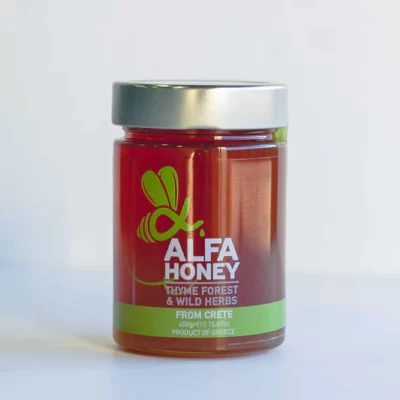
- Honey: Honey gives this syrup its distinctive flavor. You can browse the Mediterranean honeys in our shop.
- Sugar and water: These form the syrup’s base. Dissolve the sugar in the water before adding the honey and bringing the mixture to a boil.
- Lemon juice: Added after the syrup has cooled to lukewarm, lemon juice brings a citrus note to the honey mixture.
- Orange extract: This is optional, but it adds orange flavor to the syrup.
- Whole cloves: These perfume the syrup as it simmers and are removed afterward. If you like, you can omit them.
How to Make Baklava: Step-by-Step
Start by thawing your phyllo dough in its unopened package in the refrigerator overnight, following the package instructions. Take it out of the refrigerator 1 hour before you begin.
Have your nuts chopped and butter melted before you uncover the pastry. Once you start layering, keeping the unused phyllo covered will make it much easier to handle.
Make the Honey Syrup and Nut Filling
- Heat the oven. Preheat your oven to 350°F.
- Make the honey syrup. In a saucepan, combine ¾ cup sugar and 1 cup cold water. Heat, stirring occasionally, until the sugar dissolves. Add 1 cup honey, 1 tablespoon orange extract if using, and 5 whole cloves if using. Stir, bring to a boil, then lower the heat and simmer for about 25 minutes.
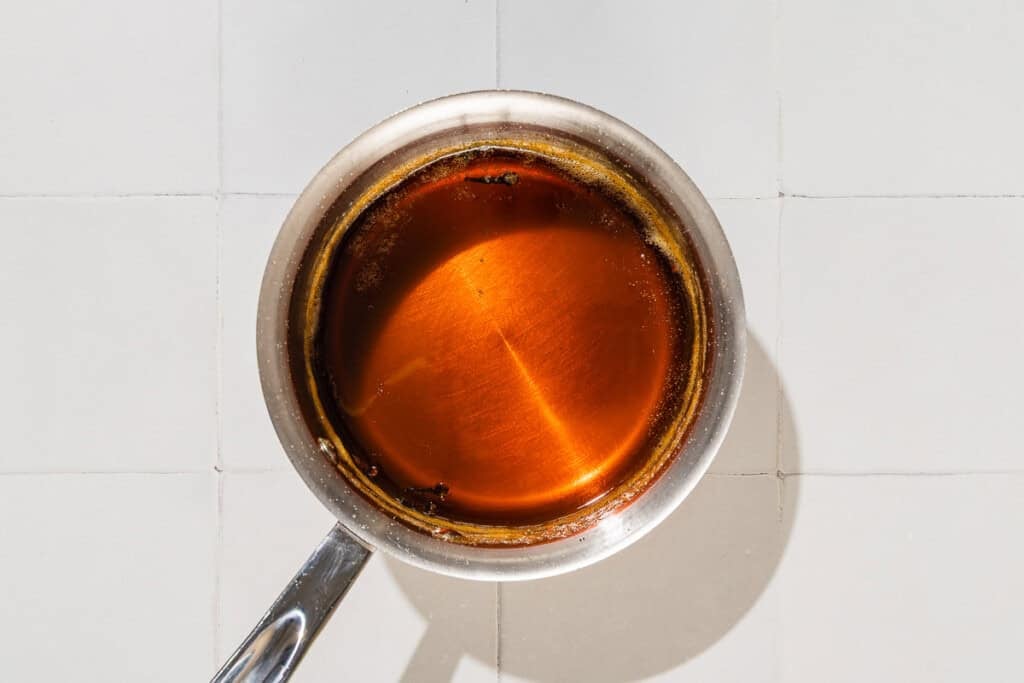
- Cool the syrup. Remove the saucepan from the heat and let the syrup cool to lukewarm. Add the juice of 1 lemon and remove the whole cloves. Set aside to cool completely while you assemble the baklava. The syrup should be cool when you pour it over the hot pastry.
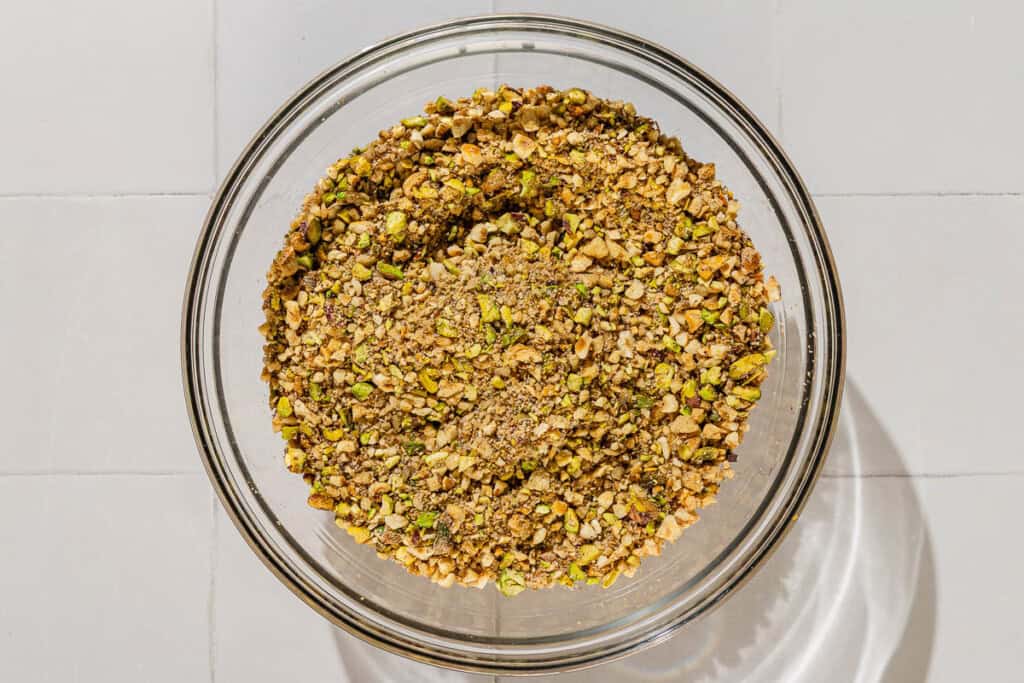
- Prepare the filling. Add 6 ounces each of shelled pistachios, walnuts, and hazelnuts to a food processor fitted with a blade. Pulse a few times until chopped, keeping some texture rather than grinding them into powder. Transfer to a mixing bowl and stir in ¼ cup sugar, 1 to 2 tablespoons ground cinnamon, and a large pinch of ground cloves.
Layer the Phyllo and Nuts
Brush the bottom and sides of a 9 x 13 x 2-inch baking pan with some of the melted butter. Carefully unroll the thawed phyllo and keep the sheets between two clean kitchen towels, uncovering only what you need as you work.
For this pan, I typically fold each phyllo sheet in half to fit. Depending on the size of your sheets, you can also trim them with kitchen shears.
You’ll use the full 16-ounce package in three sections, with half the nut filling between each section:
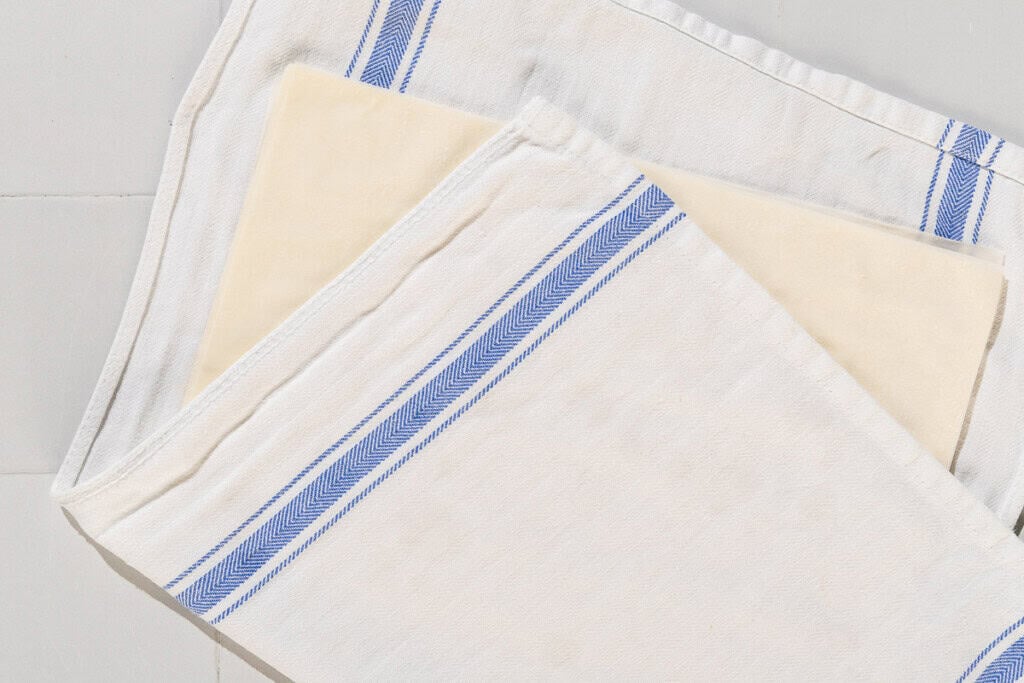
- Build the bottom pastry layer. Place one sheet of phyllo in the pan, folding or trimming it to fit. Brush the top with melted butter. Continue adding and buttering each sheet until you have used about one-third of the phyllo.
- Add the first nut layer. Distribute half the nut mixture evenly over the pastry.
- Build the middle pastry layer. Add another third of the phyllo, brushing each sheet with butter.
- Add the remaining nuts. Spread the other half of the nut mixture evenly over the pastry.
- Finish with phyllo. Add the remaining third of the pastry, buttering each sheet as before. Brush the very top sheet with butter.
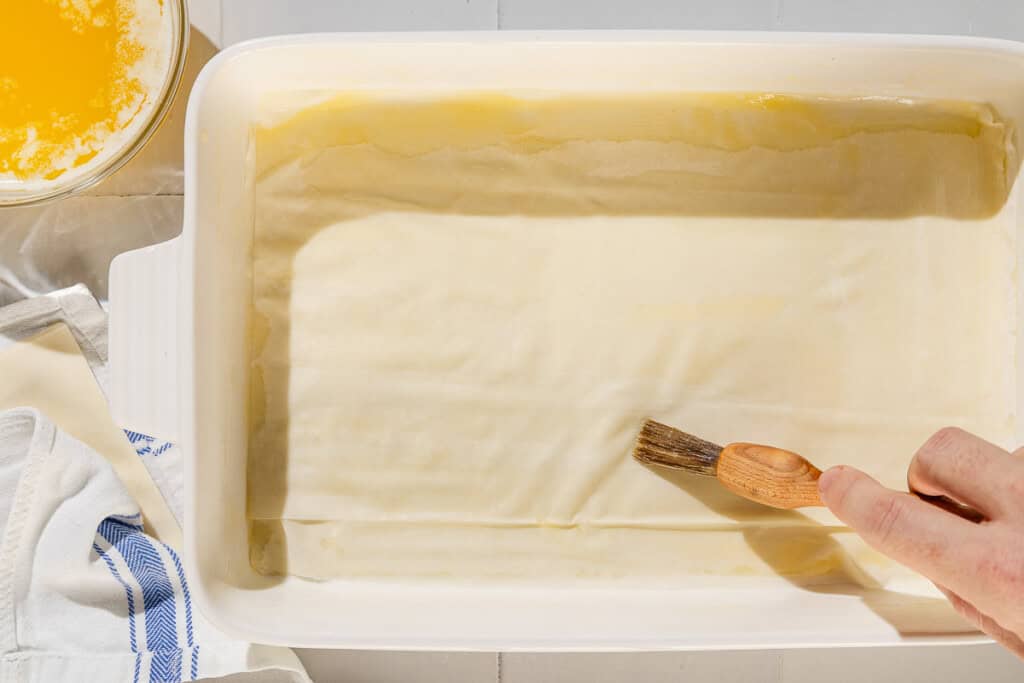
Phyllo sheet sizes and counts vary by brand, so divide your package into thirds rather than relying on a fixed number of sheets.
Cut and Bake
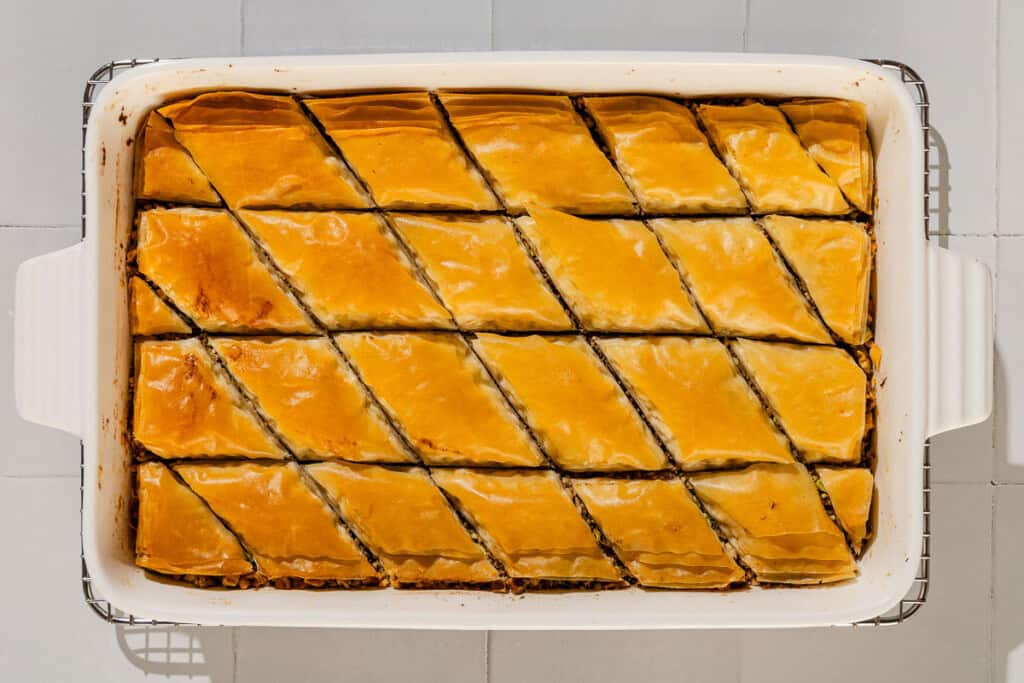
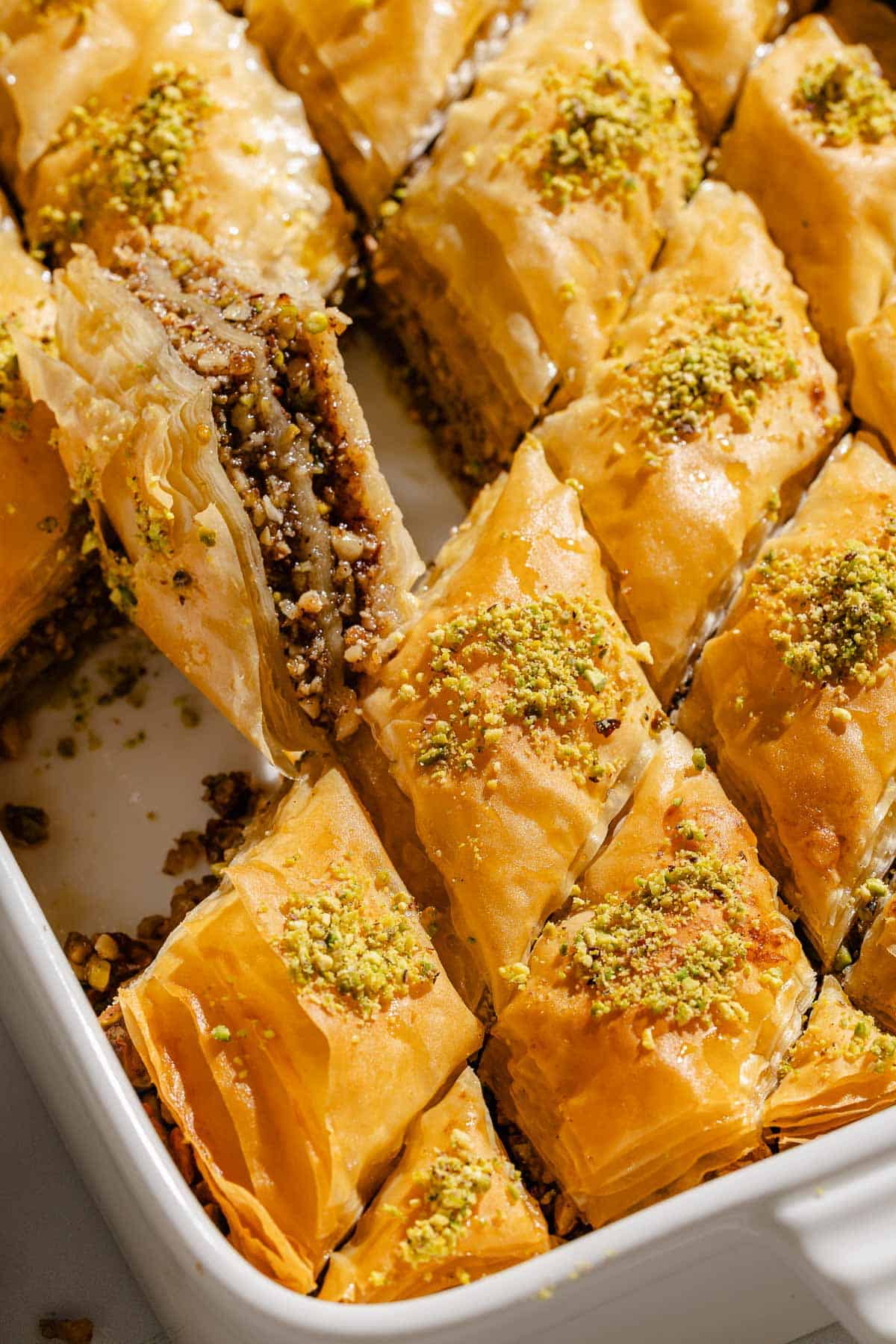
- Mark the pieces before baking. With a sharp knife, cut the assembled pastry into diamond-shaped pieces about ½ inch deep. Aim for 24 pieces, or up to 36 smaller pieces. Watch the video below for a closer look at how I cut mine.
- Bake until golden. Place the pan on the middle rack of your heated oven and bake for 35 to 45 minutes, until the top turns golden. Check halfway through baking, since ovens vary.
Add the Syrup and Let the Baklava Rest
- Pour cooled syrup over hot baklava. As soon as the pan comes out of the oven, pour the cooled honey syrup evenly over the pastry.
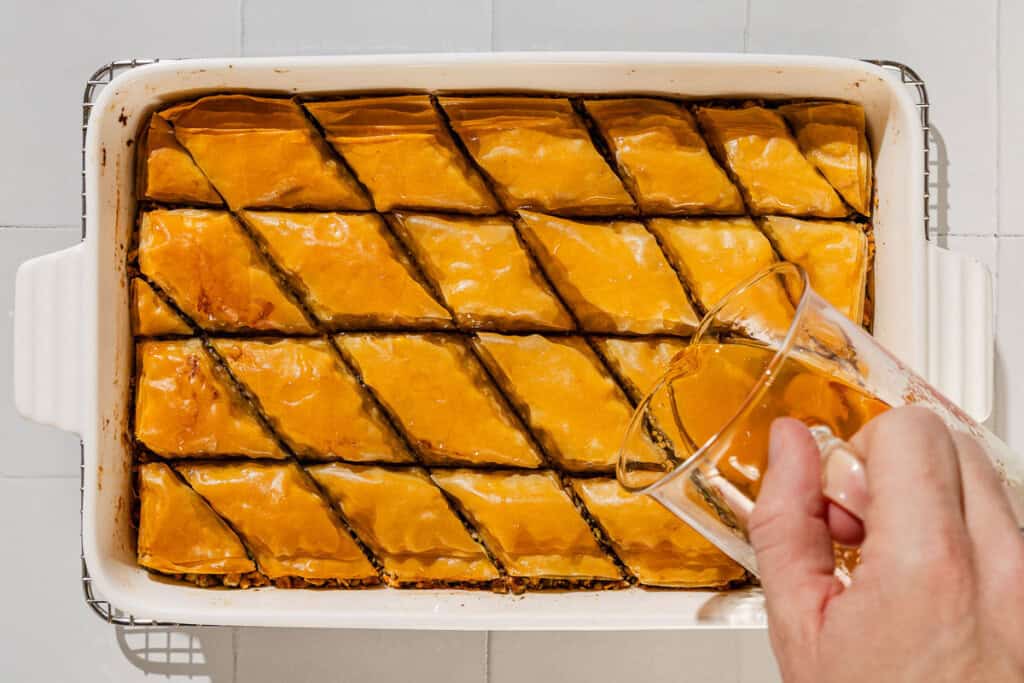
- Let it cool completely. Leave the baklava for several hours if possible, or at least 1 hour, so the phyllo layers can absorb the syrup. This is a good dessert to make the night before serving.
- Finish cutting and serve. Cut all the way through the pieces you marked before baking. Garnish with chopped pistachios, if you like.
Tips for Crispy, Flaky Baklava
- Thaw the phyllo in its package. Follow the package directions and allow an overnight thaw in the refrigerator. Too much moisture can make the sheets sticky and difficult to separate. The recipe also calls for taking the package out of the refrigerator 1 hour before assembly.
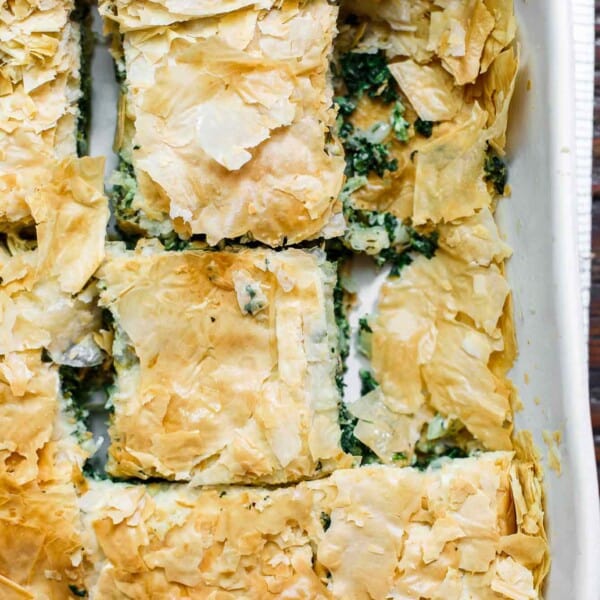
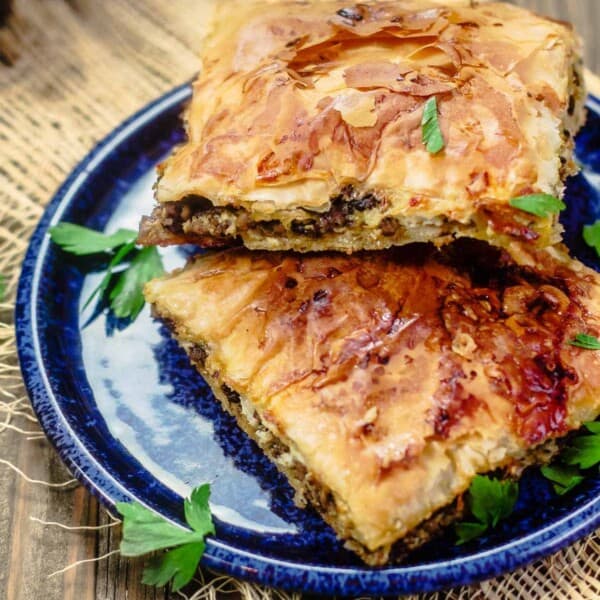
- Keep the unused sheets covered. Paper-thin phyllo becomes brittle as it dries out. Keep it between two clean kitchen towels and uncover it only to remove the next sheet. I use the same approach when making spanakopita, my Greek spinach pie.
- Keep some texture in the nut filling. I use pistachios, walnuts, and hazelnuts because I love a generous, nutty filling. Pulse them into small pieces that distribute evenly between the pastry layers, stopping before they become powder or paste. Large chunks make the baklava harder to bite through, but grinding too finely loses the crunch.
- Make the syrup first. It needs time to cool before the baklava comes out of the oven. To save time, you can begin assembling the pastry while the syrup simmers.
- Cut before baking, then finish cutting after resting. Marking the pieces while the pastry is still soft helps you avoid crushing the crisp top layers later. Once the baklava has absorbed its syrup and cooled, follow those cuts all the way through.
- Give it time to rest. Don’t rush to serve it straight from the oven. The layers need time to absorb the syrup, and the baklava is even better the next day. Cool it completely before covering.
How to Keep Baklava from Getting Soggy
For this recipe, pour cooled honey syrup over the baklava as soon as it comes out of the oven. That hot-pastry, cool-syrup combination helps the layers absorb the syrup while keeping their crisp texture.
Make the syrup before assembling the pastry so it has time to cool. Then distribute it evenly over the hot baklava and leave the pan to cool completely before covering or storing.
What to Serve with Baklava
Serve the baklava once it has cooled and the syrup has had time to settle into the layers. A sprinkle of chopped pistachios is all it needs.
For an afternoon treat or the end of a meal, pair it with Arabic tea with fresh mint. The warm tea and crisp, honey-soaked pastry make a lovely combination to share around the table.
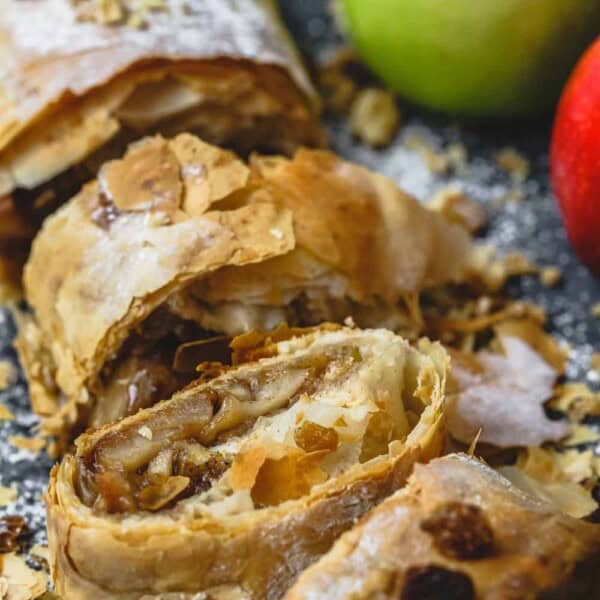
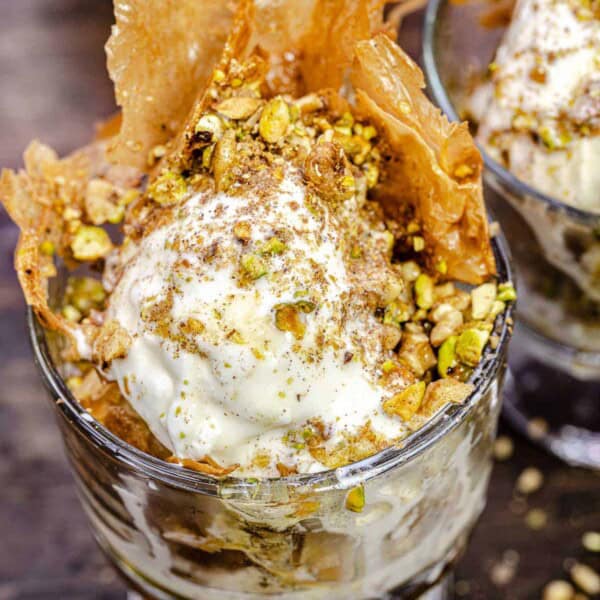
If you enjoy working with phyllo, try my apple strudel with phyllo dough for another pastry dessert. For the same honey-and-nut flavors in a different form, make a baklava ice cream sundae.
Make Ahead, Storage, and Freezing
Make ahead: Prepare the baklava the night before serving. It tastes even better the next day, once the pastry has had more time to absorb the honey syrup. Let it cool completely before covering.
Store: Keep cooled baklava in an airtight glass container at room temperature or in the refrigerator for up to 2 weeks. Room-temperature storage preserves the crisp texture better. Personally, I move any leftovers to the refrigerator after a few days.
Freeze: Freeze baked, completely cooled baklava for up to 4 months. Divide it into smaller batches so you can thaw only what you need.
Thaw: Thaw frozen baklava overnight in the refrigerator or for a few hours at room temperature before serving.
More Phyllo Recipes to Try
Baklava Recipe
Ingredients
For the Baklava and Nut Filling
- 6 ounces shelled pistachios, coarsely chopped
- 6 ounces walnuts, coarsely chopped
- 6 ounces hazelnuts, coarsely chopped
- 1/4 cup sugar
- 1 to 2 tablespoons ground cinnamon, start with less if you’re not sure
- Large pinch of ground cloves
- 1 (16-ounce) package phyllo dough, thawed
- 1 1/2 to 2 sticks of unsalted butter, (12 to 16 tablespoons), melted
For the Honey Syrup
- 3/4 cup sugar
- 1 cup cold water
- 1 cup honey
- 1 tablespoon orange extract, optional
- 5 whole cloves, optional
- 1 lemon, juiced
Instructions
- Preheat the oven. Heat the oven to 350°F.
- Make the honey syrup. Combine the sugar and water in a saucepan. Heat, stirring occasionally, until the sugar dissolves. Add the honey, orange extract if using, and whole cloves if using. Stir to combine, bring to a boil, then lower the heat and simmer for about 25 minutes. Remove from the heat and let cool to lukewarm. Add the lemon juice and remove the whole cloves. Set aside to cool completely while you assemble the baklava. The syrup should be cool when you pour it over the hot pastry.
- Prepare the nut filling. Place the pistachios, walnuts, and hazelnuts in a food processor fitted with a blade. Pulse a few times until chopped, without grinding them into a powder or paste. Transfer to a large mixing bowl and stir in the sugar, cinnamon, and ground cloves.
- Prepare the phyllo and pan. Carefully unroll the thawed phyllo and keep the sheets between two clean kitchen towels while you work. Brush the bottom and sides of a 9 x 13 x 2-inch baking pan with some of the melted butter.
- Build the bottom pastry layer. Place one sheet of phyllo in the pan, folding it in half or trimming it with kitchen shears as needed to fit. Brush the top with melted butter. Repeat, adding and buttering each sheet, until you have used about one-third of the phyllo.
- Add the first nut layer. Distribute half the nut filling evenly over the pastry.
- Build the middle layers. Add another third of the phyllo, one sheet at a time, brushing each sheet with melted butter. Spread the remaining half of the nut filling evenly over the pastry.
- Finish with phyllo. Add the remaining third of the phyllo, brushing each sheet with melted butter. Brush the very top sheet with butter.
- Cut before baking. Using a sharp knife, cut the pastry into 24 diamond-shaped pieces about ½ inch deep. You can cut up to 36 smaller pieces if you prefer.
- Bake until golden. Place the pan on the middle rack of the oven and bake for 35 to 45 minutes, until the top turns golden. Check halfway through baking, since ovens vary.
- Add the syrup. As soon as you remove the baklava from the oven, pour the cooled honey syrup evenly over the hot pastry.
- Cool and serve. Let the baklava cool completely and rest for several hours if possible, or at least 1 hour, to absorb the syrup. Cut all the way through the pieces you marked before baking. Garnish with chopped pistachios, if you like, and serve.
Recipe Notes
- Plan ahead: Thaw the unopened phyllo package overnight in the refrigerator, following the package instructions. Take it out of the refrigerator 1 hour before starting. The listed total time excludes thawing and the resting period after baking.
- Save time: Begin assembling the baklava while the syrup simmers. Keep unused phyllo covered between two clean kitchen towels as you work.
- Phyllo sheets: Use the full 16-ounce package, dividing it into three sections. Sheet sizes and counts vary by brand, so use thirds of the package rather than a fixed sheet count.
- Nut variations: You can use just walnuts or pistachios, or adjust the combination of nuts, keeping the total at 18 ounces. You can also omit cinnamon if you like.
- Make ahead: Baklava is even better the next day, after the layers have had time to absorb the syrup. Cool completely before covering.
- Storage: Store completely cooled baklava in an airtight glass container at room temperature or in the refrigerator for up to 2 weeks. Room-temperature storage preserves the crisp texture better; I usually refrigerate leftovers after a few days.
- Freezing: Freeze baked, completely cooled baklava for up to 4 months. Freeze in small batches so you can thaw only what you need. Thaw overnight in the refrigerator or for a few hours at room temperature.
- Shop this recipe: Visit The Mediterranean Dish shop for quality Mediterranean ingredients, including the honey used in this recipe.
Shop Suzy’s curated selection of Mediterranean olive oils, spices, and more.
Try Our Authentic Greek Honey!
This award-winning honey from the Fragiadakis family in Crete is sustainably harvested from the island’s bio-diverse mountains, where bees feast on wild aromatic herbs.
This post first appeared on The Mediterranean Dish in 2014 and has been recently updated with new media and information for readers’ benefit. Enjoy!










Hi ! have a lemon tree that has lemons that produce a crazy amount of juice- how much juice do you recommend using in the recipe exactly?
Hi, Heather. I just did a quick internet search, and it looks like the consensus is one average size lemon would yield approximately 2-3 tablespoons of juice, so I would start with that.
Hey Suzy,
Trying out this recipe, I just realized my pistachios are salted. Can I get away with using them? Suggestions are welcome.
Hi, Cat! Yes… I’ve done that before myself and still thought it turned out just fine. Enjoy!
Lovely recipe! I halved the quantity and used almonds as I had no other nuts. It was delicious, thanks for sharing Suzy!
So glad you enjoyed it, Grace.
Can’t Thank You Enough !
I have been craving Baklava for quite awhile now but where I live in upstate NY it’s not easy to find. I figured what the heck going to have to make it myself. Your recipe was clear, concise and a joy to follow. My friends can’t stop raving about it ! I used orange zest instead of orange extract because finding the extract has proven to be difficult. I finally just ordered some online so my next batch will be even better !
Oh, wonderful, Eileen! I’m so glad the recipe worked out for you!
This was excellent! I’ve always loved baklava, but for some reason have not tried making it. The recipe was very clear and straightforward. I would make some adjustments next time, but simply to accommodate my taste (I’d use about 12 oz. pistachios, and the rest walnuts, and I would increase the sugar syrup by about 25%). I cut the recipe in half, and it turned out perfectly.
Wonderful! Thanks, Amy!
Amazing!! You have explained very well and ibcluded everything you have written on the instructions in your video. As i was just about to say wheres the butter, what do i do with it, until i saw you spread it on the tray.
I will be making this this week and shall tag you on my instagram! Cant wait. I love Baklava. My sister in law made this years ago and inspired me. All this time i thought it was an indian dish
I can’t wait to see the results!!
Omg!!! Second time I made this. I bought the filo pastry. How do I show you an image. I deleted my Instagram:( looks amazing!
Hi, Kiran! You should be able to share on Facebook…. especially if you join The Mediterranean Dish Community!
Hey also. Is the baklava layers suppose to be quite flimsy? They look perfect but it looks like the layers falling apart when i pick it up x
I’m not sure I fully understand the question, but bakalava comes in very thin sheets, so yes, it could be flimsy.
Hi! I want to make this recipe plant-based. Can I substitute plant based butter or perhaps coconut butter? What do you suggest?
Hi, Heather! Personally, I have never tried this recipe with a plant based or coconut butter, so it’s hard for me to advise on that. Another reader has had success with substitutes like coconut oil, olive oil and vegan butter, though, so I definitely think you should give it a try. If you do, I’d love to hear your thoughts!
Super easy and tasted delicious!
Thank you, Tiffany!
How much lemon is recommended- a whole small lemon? I was reading a question about the amount. Thanks in advance!
Sure! That would work.
I am so disappointed in this recipe I can’t begin to tell you. The time time I put into it for our Christmas dinner, that we were celebrating a Greek Cuisine, has added to the disappointment as I am serving it to guests. Here is the big mistake the author of this recipe made. For the honey syrup list of amount of ingredients, she put “1 lemon, juice of”. So rather than, 1 Tablespoon, or 1 teaspoon, which is what I was expecting, it instructs, juice of one lemon. Well, do all lemons produce the same amount of juice? Well, it turns out it was at least a quarter of a cup. So you guessed it, the baklava tastes like citrus. Not honey. Please list an amount or none at all.
I’m sorry, Laurie. Thank you for sharing your thoughts here…. I always appreciate learning and hearing feedback!
Wowwww!! Huge hit with everyone who tried a piece! A little tedious as all that buttering and phyllo’ing takes a quick second to manage. Next time I would maybe cut the orange extract to 3/4tbsp, also i squeezed half a lemon for juice. Also next time would consider alternating nut layers instead of 2 thick ares of nuts.
But honestly, this baklava had everyone coming back for more!!!
Wonderful! Thanks, Adrianna!
This is the best baklava recipe hands down. I found it to reach perfection 3 days after preparing. So amazing
Hi, the shelled pistachios that you are using are they salted or unsalted?
Hello, Inna! Either one will work here.
Such a delicious recipe! I love baklava and this was definitely the best one I have ever had. I agree with some of the other comments left. Brushing the melted butter on each layer of phyllo dough was very time consuming. Maybe I am just slow but it took me about an hour to carefully handle the phyllo dough so it wouldn’t break and brush the butter on each layer.
Also, my 9 x 13 glass baking dish was not big enough to hold all of the layers of phyllo dough evenly. As the layers piled up the crust started to rise above the sides of the dish so I had to trim the phyllo dough a bit.
Nevertheless, this recipe is DELICIOUS and will sure to be a hit. I wish I could give it more than 5 stars. Seriously so good!
Thank you for sharing, Maya. Happy to hear you loved it!!
I was intimidated of Baklava but excited to try it for the first time. Thank you for the recipe and video! It was DELICIOUS and easy to follow your directions.
Wonderful! Thanks, Leah!
The recipe looks great. Are you suppose to cut ALL the way through the baklava before baking?
Yes… cut it all the way through 🙂
I am planning on making baklava for hotel goody bags for my cousin’s wedding. Planning to put each piece in the muffin cup, then in a clear bag, wrapped with ribbon. How far in advance can I make them? Thanks!
Baklava is a great make-ahead recipe. You can make it even 1 week ahead and keep in the fridge in a tight-lid container.
Hi. Am so in love with this dessert! Should I bake/roast the nuts first?
No need to bake or roast the nuts for this recipe 🙂