


This crustless lemon ricotta cheesecake has a light, airy texture and a five-ingredient batter, with no water bath required.
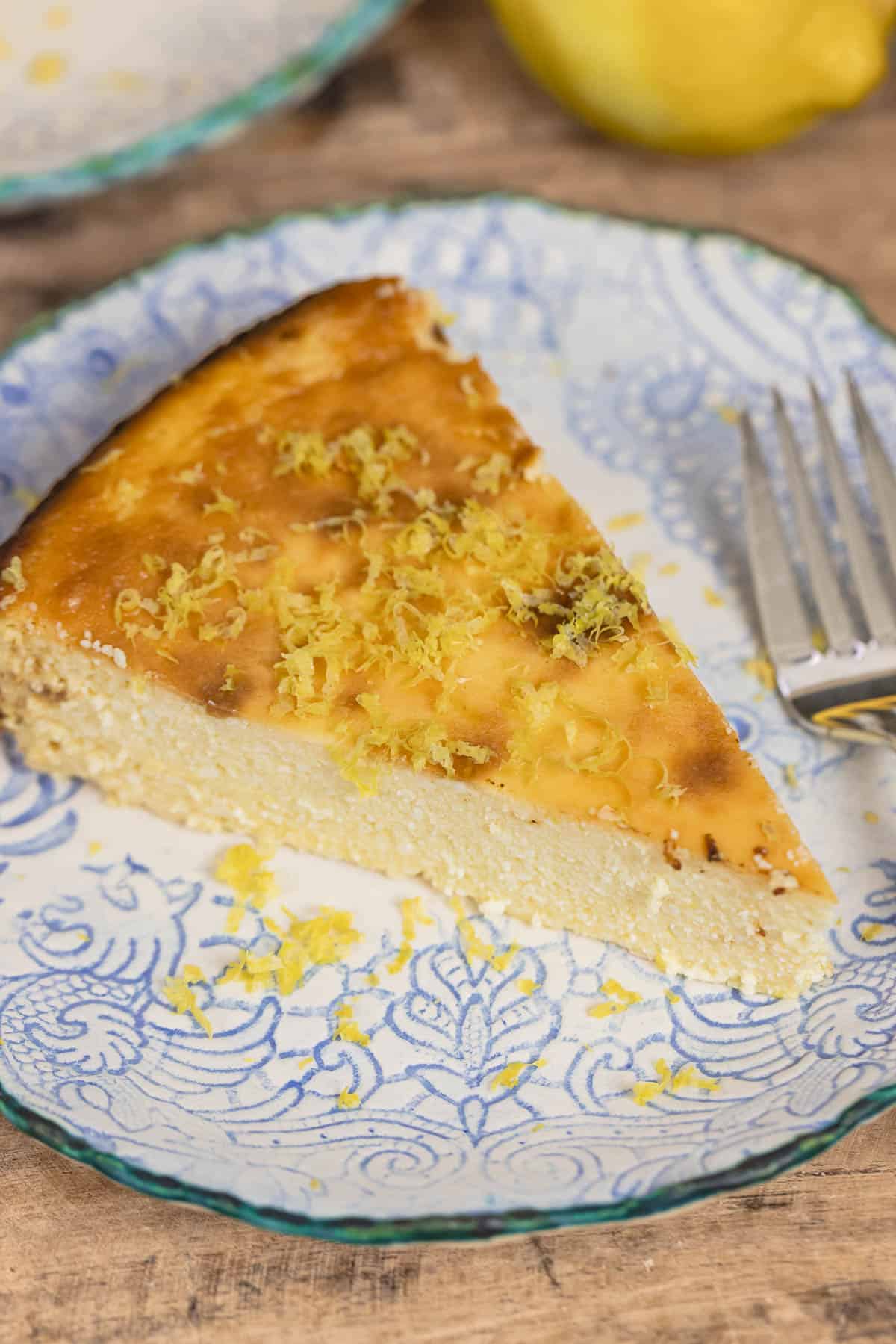
A Lighter, Airier Lemon Ricotta Cheesecake
If you prefer cheesecake on the lighter side, this Italian-style recipe is for you. I whip whole-milk ricotta with eggs, sugar, vanilla, and fresh lemon zest for a full 10 minutes, which gives the batter its airy texture without cream cheese or a crust. It is naturally gluten-free.
The hands-on prep takes just 15 minutes, but the cheesecake needs time to cool and chill completely. Make it the day before you plan to serve it, and all that is left to do is release the springform pan and slice.
Once chilled, it is gently sweet, bright with lemon, and rich without feeling dense. This five-ingredient filling also became the foundation of my Baklava Cheesecake, where crisp phyllo and orange zest give it a Mediterranean twist.
Ricotta Cheesecake vs. Regular Cheesecake
The biggest difference is the cheese. A New York-style cheesecake uses cream cheese, which gives it a dense, smooth texture and pronounced tang. Italian-style ricotta cheesecake uses ricotta for a lighter, airier result with a more delicate flavor.
This version contains no cream cheese, flour, cornstarch, or cookie crust. That keeps it naturally gluten-free and lets the ricotta, lemon zest, and vanilla shine. Thoroughly draining the ricotta and whipping the batter for a full 10 minutes are the two keys to its texture.
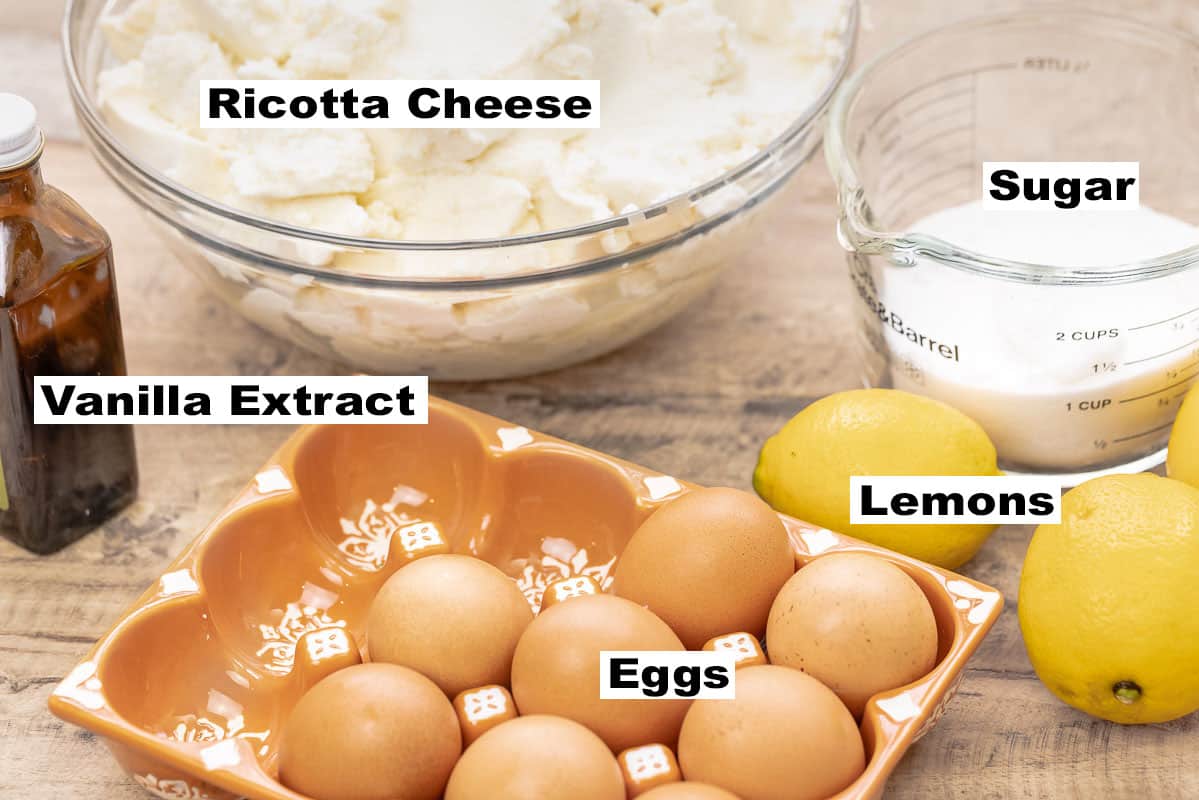
Ingredients for Lemon Ricotta Cheesecake
You need five ingredients for the cheesecake batter, plus a little extra virgin olive oil to grease the pan.
- Whole-milk ricotta cheese: Use 3 pounds of good-quality ricotta and drain it very well before mixing. Part-skim ricotta will work, but whole-milk ricotta gives the cheesecake a richer flavor and better texture. If you usually reach for ricotta in savory recipes like eggplant lasagna or vegetarian baked ziti, this cheesecake shows what it can do in dessert.
- Eggs: Eight large eggs give the cheesecake structure and help create a smooth batter. Bring them to room temperature so they blend evenly with the ricotta.
- Granulated sugar: You’ll need 1 1/4 cups—enough to sweeten the cheesecake without overpowering the delicate ricotta and lemon.
- Vanilla extract: Use 1 teaspoon of pure vanilla extract rather than imitation vanilla.
- Lemon zest: The zest of 3 lemons gives the cheesecake its bright lemon flavor. You only need the zest, not the juice.
- Extra virgin olive oil: Brush the bottom and sides of the springform pan thoroughly with extra virgin olive oil so the crustless cheesecake releases cleanly. Butter also works if you prefer.
How to Make Lemon Ricotta Cheesecake
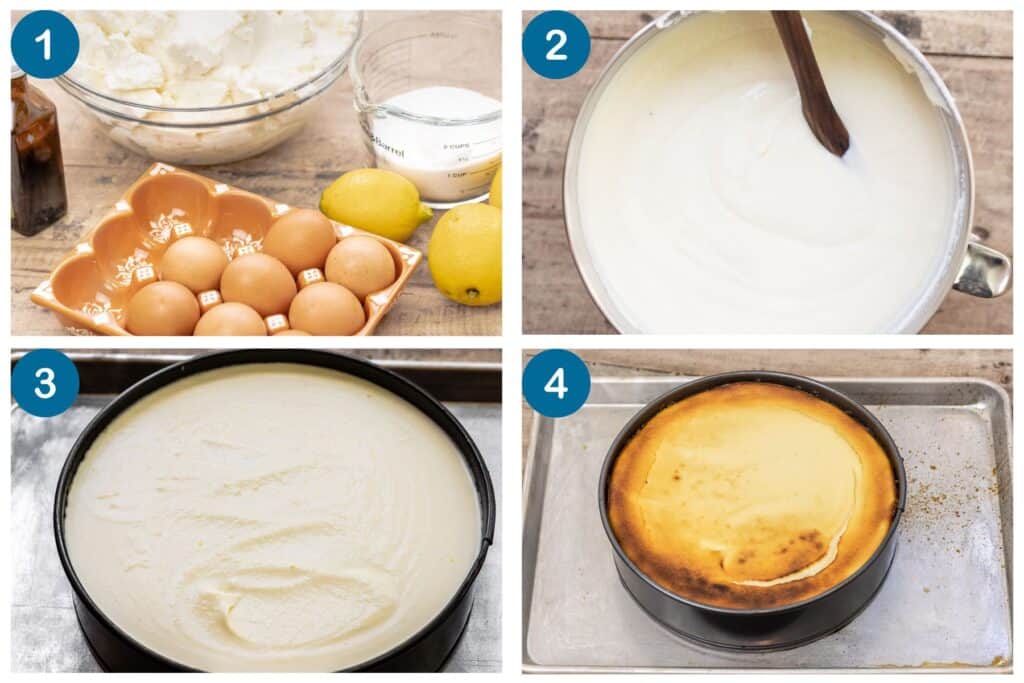
The active work is simple, but this cheesecake needs several hours to cool and set. For the best texture, plan to make it one day ahead.
- Get ready. Position a rack in the center of your oven and preheat it to 425°F. Bring the drained ricotta and eggs to room temperature.
- Drain the ricotta. Set a fine-mesh sieve over a bowl and line it with cheesecloth or two sturdy paper towels. Add 3 pounds of whole-milk ricotta and press firmly with the back of a wooden spoon to release as much liquid as possible. Discard the liquid. You can also cover and drain the ricotta overnight in the refrigerator.
- Make the batter. Add the drained ricotta, 8 large eggs, 1 1/4 cups sugar, 1 teaspoon vanilla extract, and the zest of 3 lemons to the bowl of a stand mixer fitted with the paddle attachment. Begin mixing on low, then increase to medium-low (speed 2 on a KitchenAid mixer) and mix continuously for 10 minutes. The batter should look light and fluffy. You can use a hand mixer on low or mix with a wooden spoon, but either method will take longer.
- Prepare the pan. Thoroughly brush the bottom and sides of a 9-inch springform pan with extra virgin olive oil. Set the pan on a large sheet pan for easier handling. Pour in the batter and gently shake the pan to settle it.
- Bake. Bake on the center rack for 30 minutes. Reduce the oven temperature to 375°F and continue baking for 40 to 45 minutes. The cheesecake is ready when the top is golden brown, and the batter is mostly firm with a slight jiggle in the center.
- Cool and chill. Remove the cheesecake from the oven and let it cool completely in the springform pan for 1 to 2 hours. Cover the pan and refrigerate for at least 6 hours. Overnight is even better.
- Slice and serve. About 15 minutes before serving, remove the cheesecake from the refrigerator and release the springform pan. Slice with a sharp, non-serrated knife, wiping the blade clean between cuts.
Tips for a Light, Airy Ricotta Cheesecake
- Drain the ricotta thoroughly. Excess liquid can make the batter watery and prevent the cheesecake from setting properly. If your ricotta is particularly wet, let it drain overnight in the refrigerator.
- Start with room-temperature ingredients. Set the drained ricotta and eggs on the counter for 30 minutes to 1 hour before mixing. They will combine more evenly and create a smoother batter; cold eggs can leave it lumpy.
- Mix for the full 10 minutes. Keep the mixer at medium-low speed rather than rushing the process at high speed. This steady mixing incorporates the air that gives the cheesecake its lighter texture.
- Grease every inch of the pan. This one comes from personal experience! Coat the bottom and sides thoroughly so the crustless cheesecake does not pull apart when you release the springform pan.
- Look for a gentle wobble. The top should be golden brown, and the cheesecake should look mostly firm. A slight jiggle in the center is fine, but the batter should not look liquid or slosh when you gently tap the side of the pan.
- Do not rush the cooling time. Let the cheesecake cool completely at room temperature before refrigerating it for at least 6 hours. This two-stage cooling gives it time to set so you can slice it cleanly.
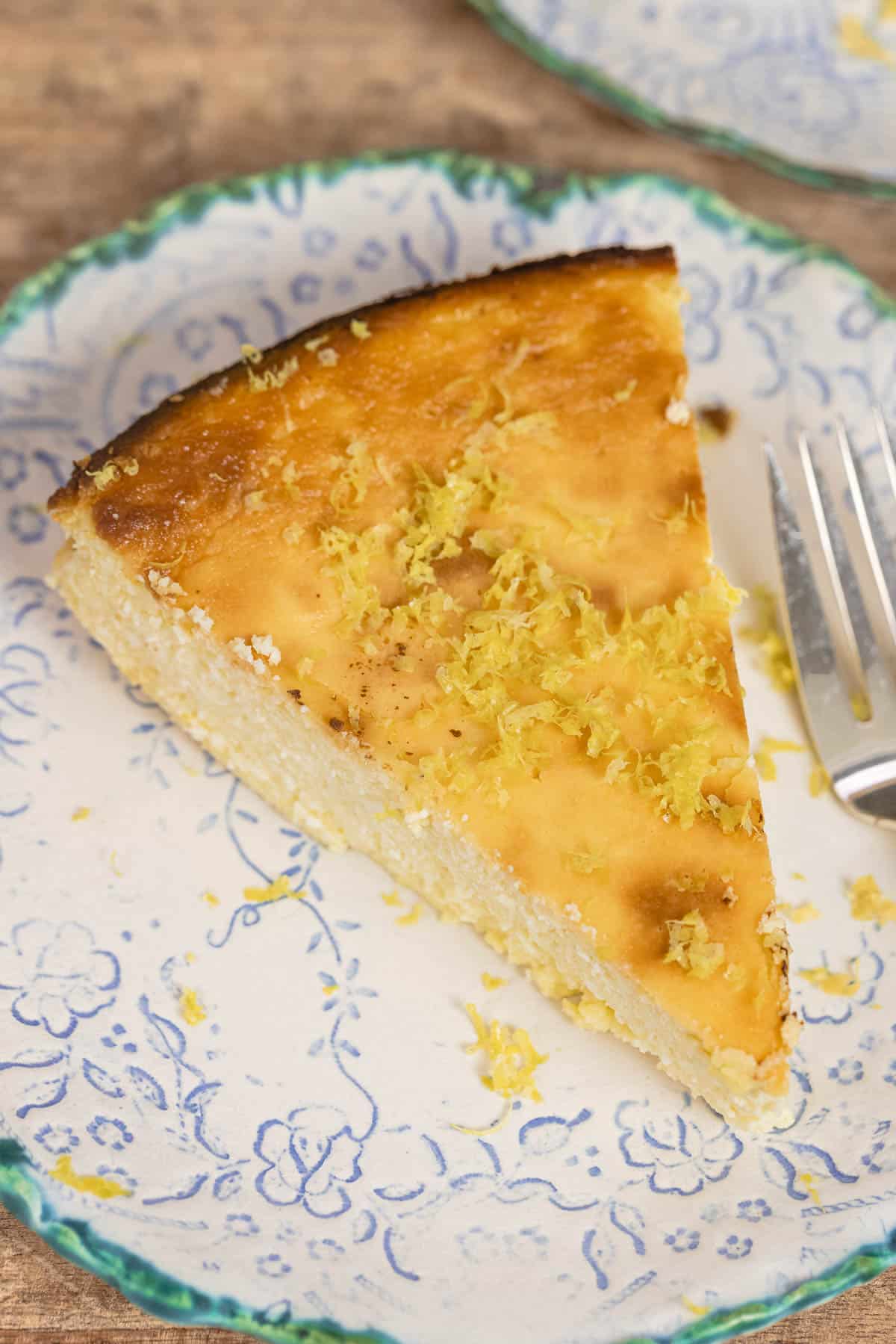
How to Serve Ricotta Cheesecake
This cheesecake needs very little dressing up. Serve it plain or finish each slice with a little fresh lemon or orange zest to bring out its citrusy aroma.
For a pop of color, add fresh berries or spoon over a sweet-tart berry compote. A dollop of lightly sweetened whipped cream is also lovely, though I would keep the topping simple so the delicate ricotta flavor still comes through.
Serve it with espresso after dinner or pair it with a frothy Freddo Espresso on a warm afternoon.
Make Ahead and Storage
This lemon ricotta cheesecake is an ideal make-ahead dessert. It needs at least 6 hours to chill and set, but an overnight rest gives you the best texture and makes serving easier.
- Make ahead: Bake and cool the cheesecake completely, then cover the springform pan and refrigerate it overnight. Release the pan shortly before serving.
- Refrigerate: Store leftover cheesecake in a tightly covered container in the refrigerator for up to 5 days.
- Freeze: Once completely chilled, wrap the whole cheesecake or individual slices tightly in plastic wrap followed by a layer of foil. Freeze for up to 2 months.
- Thaw: Thaw the cheesecake overnight in the refrigerator. Individually wrapped slices may only need a few hours to thaw.
More Mediterranean Desserts Made for Sharing


Ingredients
- 3 pounds whole milk ricotta cheese, drained well and at room temperature
- 8 large eggs, at room temperature
- 1 ¼ cups granulated sugar
- 1 teaspoon pure vanilla extract
- Zest of 3 lemons
- Extra virgin olive oil, for coating the pan
Instructions
- Get ready. Position a rack in the center of the oven and preheat to 425°F.
- Drain the ricotta. Set a fine-mesh sieve over a bowl and line it with cheesecloth or two sturdy paper towels. Add the ricotta and press firmly with the back of a wooden spoon to release as much liquid as possible. Discard the liquid.
- Make the batter. Add the drained ricotta, eggs, sugar, vanilla extract, and lemon zest to the bowl of a stand mixer fitted with the paddle attachment. Begin mixing on low, then increase to medium-low (speed 2 on a KitchenAid mixer) and mix for 10 minutes. The batter should look light and fluffy. If using a hand mixer, keep the speed low. If mixing with a wooden spoon, mix continuously until fluffy.
- Prepare the pan. Thoroughly coat the bottom and sides of a 9-inch springform pan with olive oil. Set the springform pan on a large sheet pan for easier handling.
- Fill the pan. Pour the batter into the prepared springform pan and gently shake the pan to settle it.
- Bake. Bake for 30 minutes at 425°F. Reduce the oven temperature to 375°F and bake for another 40 to 45 minutes. The cheesecake is ready when the top is golden brown and the batter is mostly firm with a slight jiggle in the center.
- Cool and chill. Let the cheesecake cool completely in the springform pan for 1 to 2 hours. Cover and refrigerate for at least 6 hours, or preferably overnight.
- Serve. About 15 minutes before serving, remove the cheesecake from the refrigerator and release the springform pan. Slice with a sharp, non-serrated knife, wiping the blade clean between cuts.
Notes
- Drain the ricotta well: Excess moisture can prevent the cheesecake from setting properly. If your ricotta is particularly wet, drain it overnight in the refrigerator.
- Use room-temperature ingredients: Let the drained ricotta and eggs sit at room temperature for 30 minutes to 1 hour so they blend evenly.
- Mix for the full 10 minutes: Keep the mixer at medium-low speed to create the cheesecake’s light, airy texture.
- Grease the pan thoroughly: Coat both the bottom and sides so the crustless cheesecake releases cleanly.
- Check for doneness: The top should be golden brown, and the cheesecake should be mostly firm with a slight jiggle in the center. It should not look liquid or slosh when you gently tap the pan.
- Chill completely: Refrigerate for at least 6 hours before serving. For the best texture and cleanest slices, chill it overnight.
- Storage: Refrigerate in a tightly covered container for up to 5 days. To freeze, wrap the chilled cheesecake or individual slices tightly in plastic wrap followed by foil and freeze for up to 2 months. Thaw in the refrigerator.
- Shop this recipe: Visit our shop to browse quality Mediterranean ingredients, including the extra virgin olive oil used to coat the pan.
Nutrition
Bundle and Save!
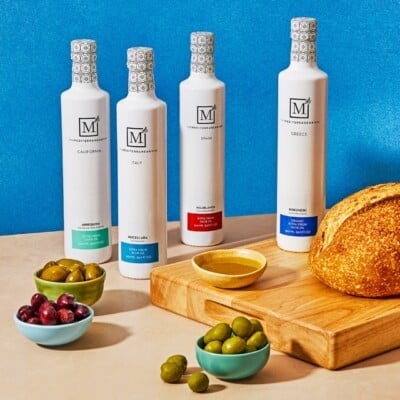
Four of our best-selling signature olive oils, perfect for everyday use.

It would be great if recipes were published in metric measurements as well. There are after all only a few countries that still use imperial measurements 🙂
Hi, Jaci. We completely hear you, and this is something that comes up often enough that we know it’s a real frustration for so many of our international readers! Adding metric measurements is definitely on our radar, and we’re actively working toward making that happen. We have added it where we can as we’ve made recipe updates, but there are some recipes we just haven’t found the best conversion tool for quite yet.