How to Make Baklava (My Family’s Baklava Recipe)

This post may contain affiliate links. Please read our disclosure policy.
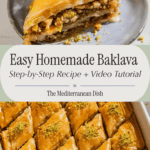
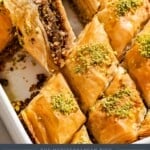
I grew up on the Mediterranean, and I’ve tasted a lot of baklava. My family’s baklava recipe is the one I keep coming back to: layers of crisp, buttery phyllo, pistachios, walnuts, and hazelnuts, and honey syrup in every bite. It’s better than anything from a bakery and easier to make than you think.
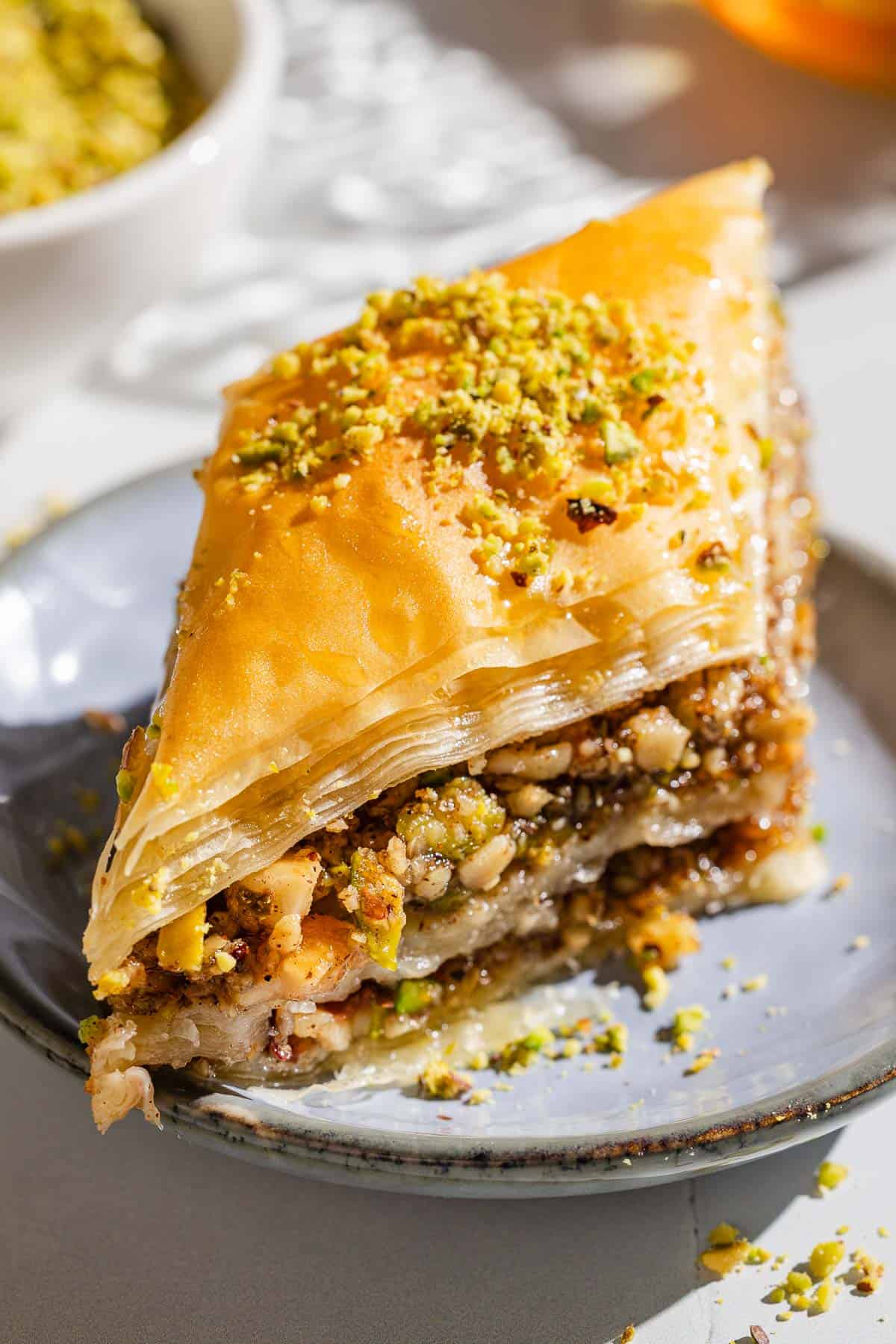
My Family’s Extra Nutty Honey Baklava
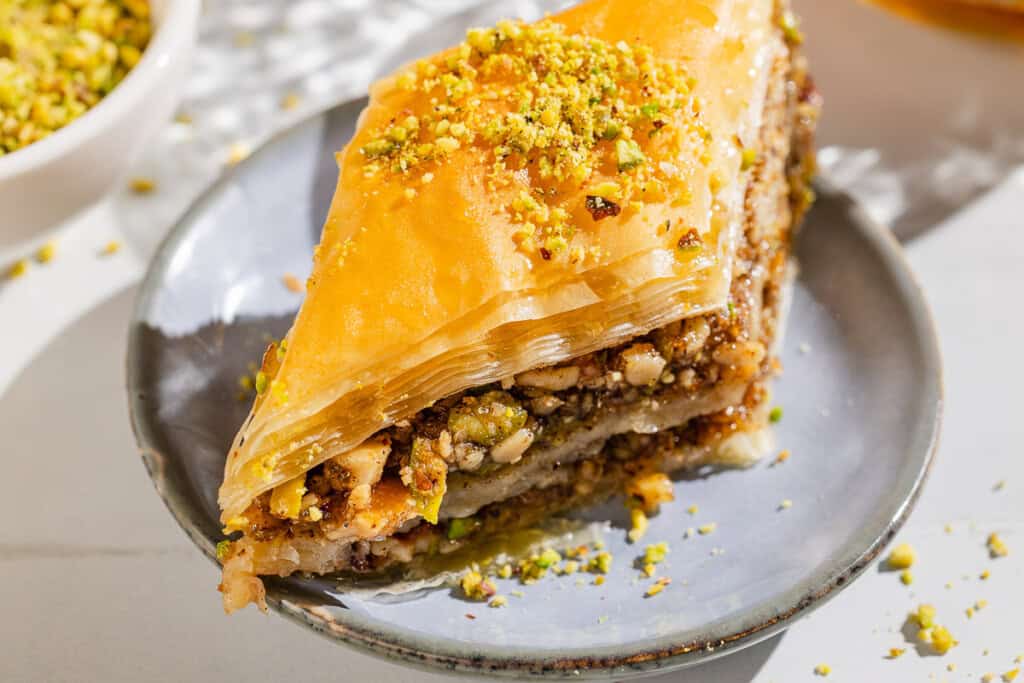
When you grow up on the Mediterranean, eating baklava at every gathering, you become a bit of a baklava snob—at least I did. To me, nothing rivals homemade baklava: crisp, flaky pastry, a crunchy nut filling, and honey syrup tucked into the layers.
I’ve written two New York Times bestselling cookbooks on Mediterranean cooking, and my family’s baklava is the recipe I come back to over and over. Turkish baklava is famous for pistachios, while Greek baklava usually leans on walnuts. But in my family, we us three nuts: pistachios, walnuts, and hazelnuts, for a filling that’s generous and full of texture.
The flavor of the syrup stays closer to Greek baklava, with cinnamon and honey syrup, and a little ground clove adds another layer of warm spice.
If you’ve never worked with phyllo—the paper-thin pastry sheets that give baklava its flaky layers—the assembly may look intimidating. You’ll brush the sheets with melted butter and build three sections of pastry with two layers of nuts between them. Take it one sheet at a time, and keep the remaining pastry covered while you work.
The recipe lists about 30 minutes of preparation and 40 minutes of baking, but allow extra time to thaw the phyllo beforehand and let the finished baklava rest. It needs at least an hour after you add the syrup, preferably several hours. I like to make it the night before serving so the layers have plenty of time to absorb the honey syrup.
What is Baklava?
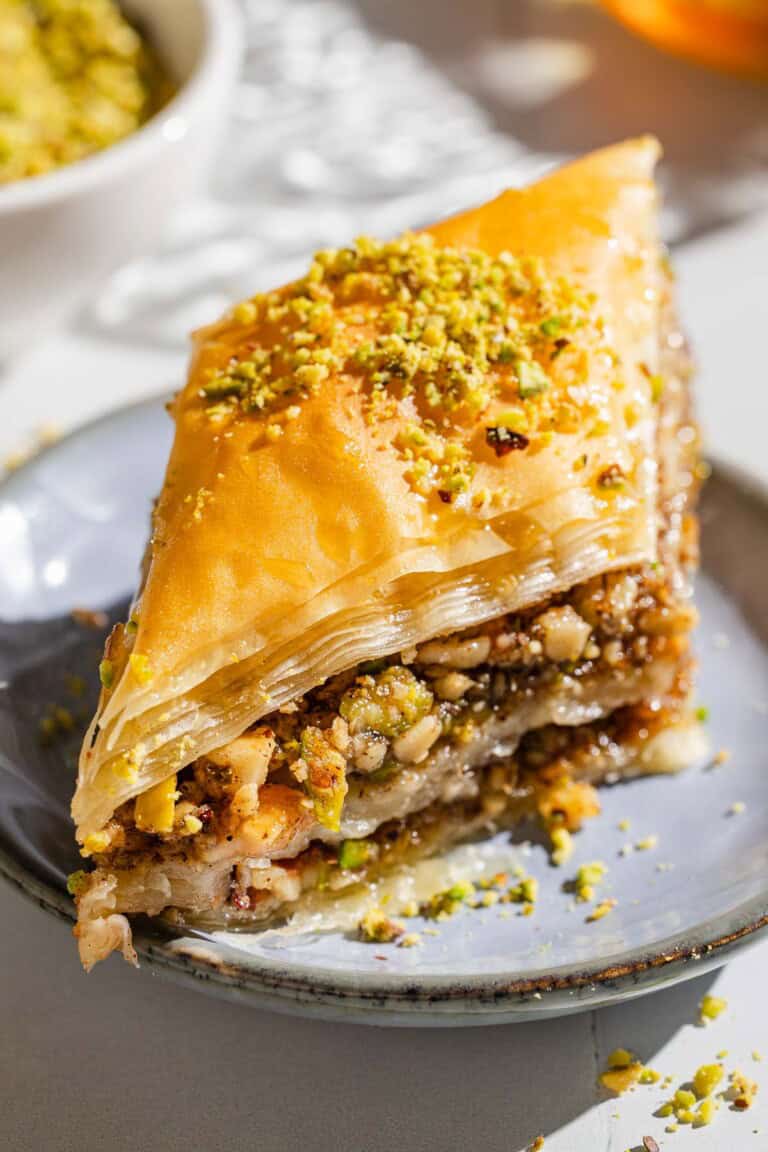
Baklava is a sweet pastry made from thin layers of buttered phyllo dough filled with chopped nuts, baked until crisp, and soaked in honey or sugar syrup. The baklava we know today comes from Turkey, where it was perfected in Ottoman palace kitchens, and it’s now loved across the Mediterranean and Middle East.
You’ll find different versions across the Mediterranean and Middle East. Turkish pistachio baklava typically uses a sugar syrup made with water and lemon juice, while Greek versions often feature walnuts, cinnamon, and honey. Some Middle Eastern versions perfume the syrup with rosewater.
This honey baklava brings together three nuts rather than just one. I love that combination and the texture it gives the filling, but you can use walnuts or pistachios instead. Keep the total amount of nuts the same.
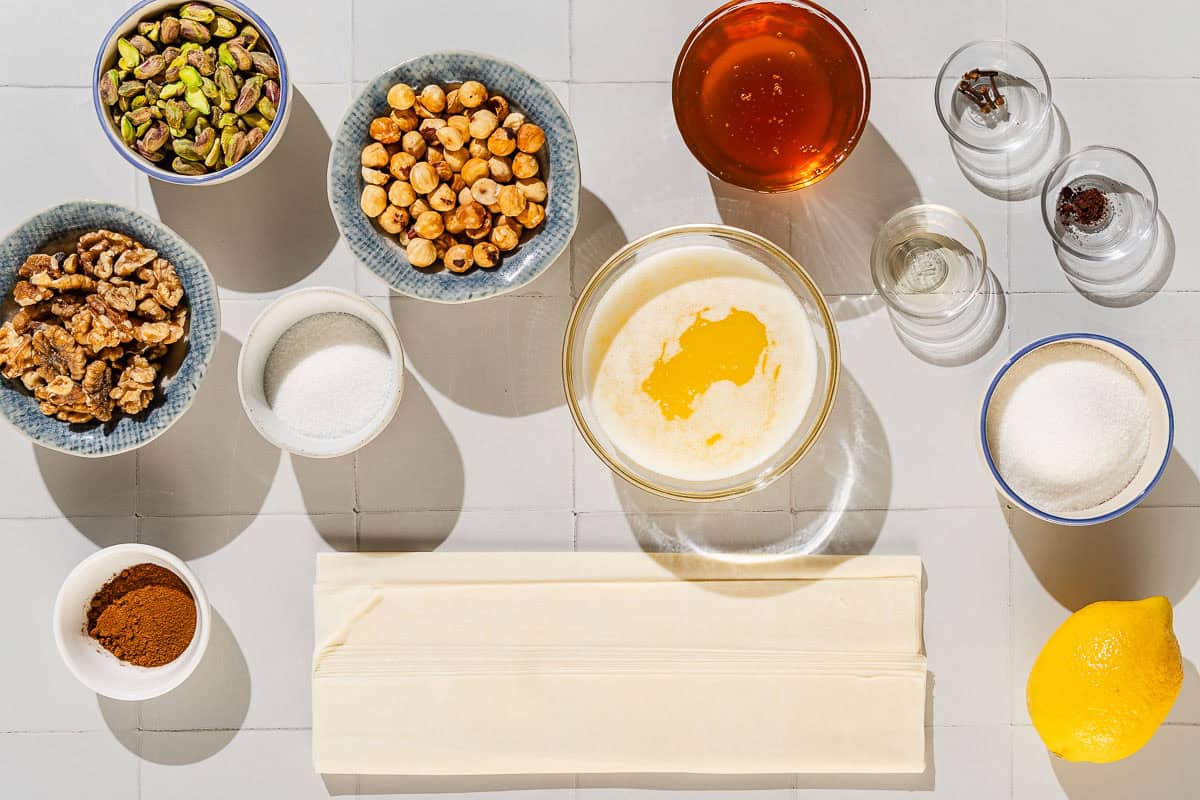
Baklava Ingredients
It helps to think of this recipe in three parts: the buttered phyllo layers, the spiced nut filling, and the honey syrup.
For the Pastry Layers
- Phyllo dough: You’ll need one 16-ounce package, thawed according to the package instructions. Look for it in the freezer section near the pie crusts. Keep the sheets covered between two clean kitchen towels during assembly so they don’t dry out and become brittle.
- Unsalted butter: Melted butter is brushed onto the pan and each sheet of phyllo. It gives the pastry its buttery flavor and helps build the crisp layers. Have it melted and ready before you uncover the dough.
For the Nut Filling
- Pistachios, walnuts, and hazelnuts: My mixture uses 6 ounces of each. Chop them small enough to distribute evenly, but stop before they become a powder or paste. You want to taste the nuts and enjoy their texture in every bite.
- Sugar: A little sugar sweetens the filling alongside the honey syrup.
- Ground cinnamon: This gives the nut mixture its warm, familiar flavor. The recipe allows 1 to 2 tablespoons; start with the smaller amount if you’re unsure how much you like.
- Ground cloves: A large pinch adds a deeper spice note alongside the cinnamon.
For the Honey Syrup
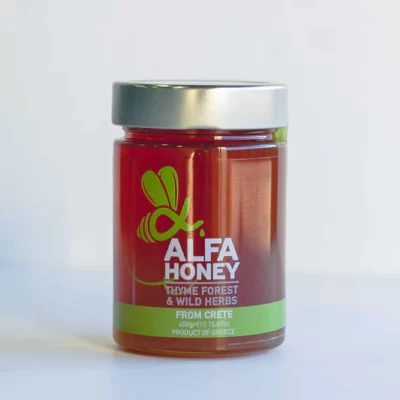
- Honey: Honey gives this syrup its distinctive flavor. You can browse the Mediterranean honeys in our shop.
- Sugar and water: These form the syrup’s base. Dissolve the sugar in the water before adding the honey and bringing the mixture to a boil.
- Lemon juice: Added after the syrup has cooled to lukewarm, lemon juice brings a citrus note to the honey mixture.
- Orange extract: This is optional, but it adds orange flavor to the syrup.
- Whole cloves: These perfume the syrup as it simmers and are removed afterward. If you like, you can omit them.
How to Make Baklava: Step-by-Step
Start by thawing your phyllo dough in its unopened package in the refrigerator overnight, following the package instructions. Take it out of the refrigerator 1 hour before you begin.
Have your nuts chopped and butter melted before you uncover the pastry. Once you start layering, keeping the unused phyllo covered will make it much easier to handle.
Make the Honey Syrup and Nut Filling
- Heat the oven. Preheat your oven to 350°F.
- Make the honey syrup. In a saucepan, combine ¾ cup sugar and 1 cup cold water. Heat, stirring occasionally, until the sugar dissolves. Add 1 cup honey, 1 tablespoon orange extract if using, and 5 whole cloves if using. Stir, bring to a boil, then lower the heat and simmer for about 25 minutes.
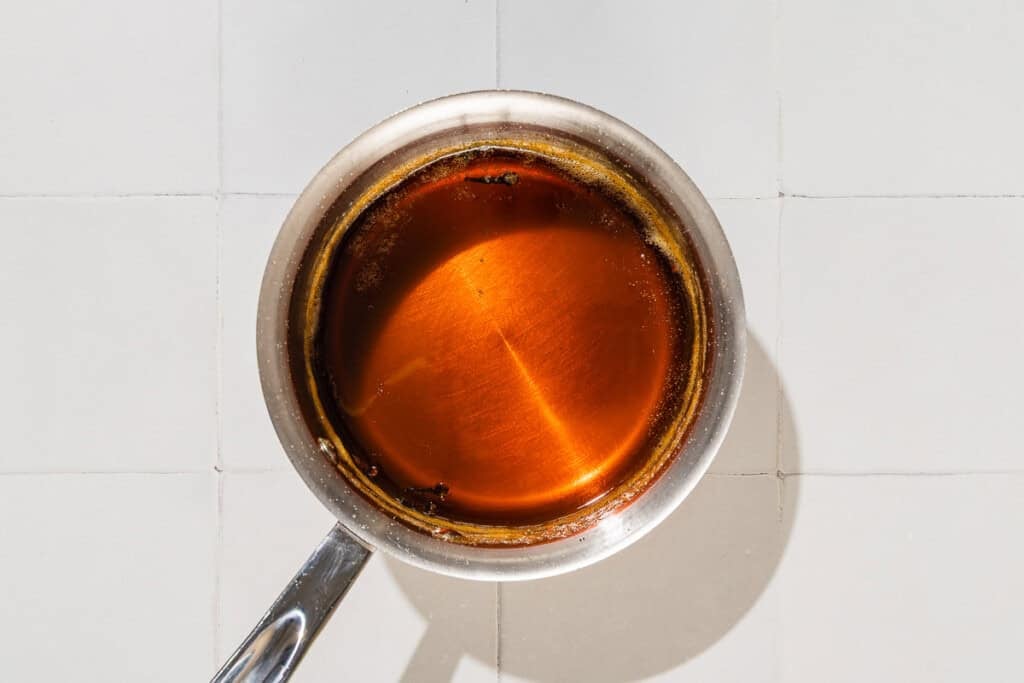
- Cool the syrup. Remove the saucepan from the heat and let the syrup cool to lukewarm. Add the juice of 1 lemon and remove the whole cloves. Set aside to cool completely while you assemble the baklava. The syrup should be cool when you pour it over the hot pastry.
- Prepare the filling. Add 6 ounces each of shelled pistachios, walnuts, and hazelnuts to a food processor fitted with a blade. Pulse a few times until chopped, keeping some texture rather than grinding them into powder. Transfer to a mixing bowl and stir in ¼ cup sugar, 1 to 2 tablespoons ground cinnamon, and a large pinch of ground cloves.
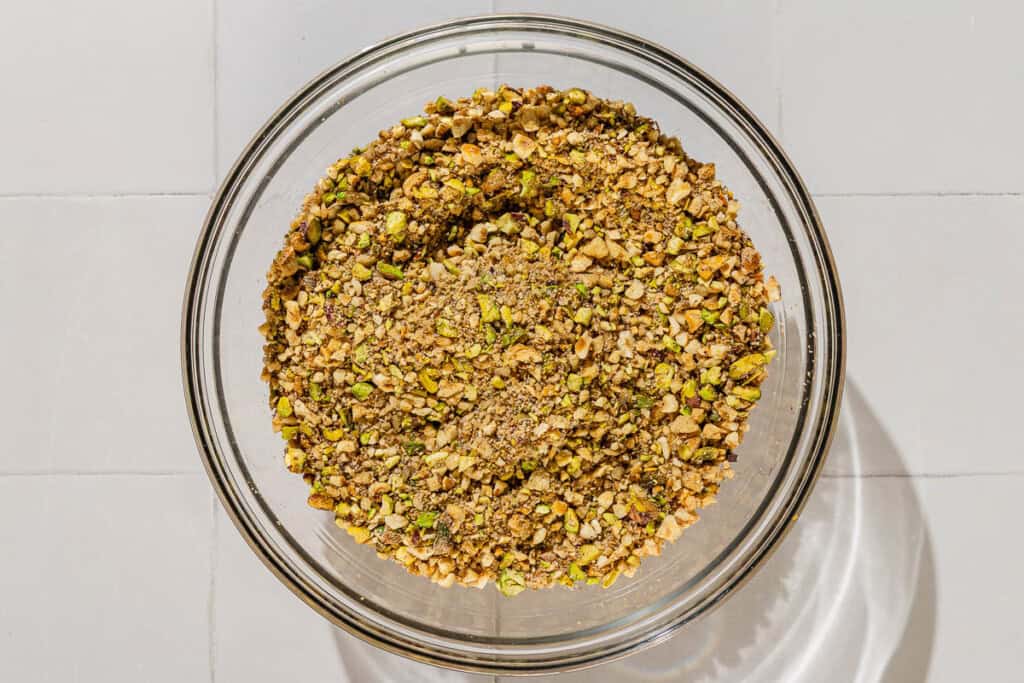
Layer the Phyllo and Nuts
Brush the bottom and sides of a 9 x 13 x 2-inch baking pan with some of the melted butter. Carefully unroll the thawed phyllo and keep the sheets between two clean kitchen towels, uncovering only what you need as you work.
For this pan, I typically fold each phyllo sheet in half to fit. Depending on the size of your sheets, you can also trim them with kitchen shears.
You’ll use the full 16-ounce package in three sections, with half the nut filling between each section:
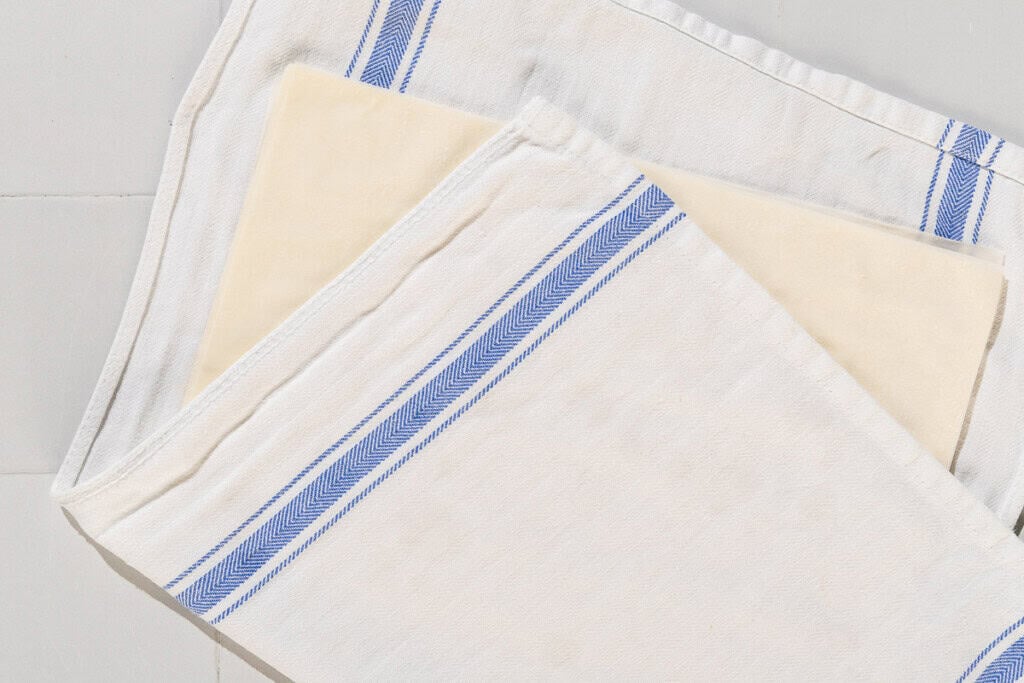
- Build the bottom pastry layer. Place one sheet of phyllo in the pan, folding or trimming it to fit. Brush the top with melted butter. Continue adding and buttering each sheet until you have used about one-third of the phyllo.
- Add the first nut layer. Distribute half the nut mixture evenly over the pastry.
- Build the middle pastry layer. Add another third of the phyllo, brushing each sheet with butter.
- Add the remaining nuts. Spread the other half of the nut mixture evenly over the pastry.
- Finish with phyllo. Add the remaining third of the pastry, buttering each sheet as before. Brush the very top sheet with butter.
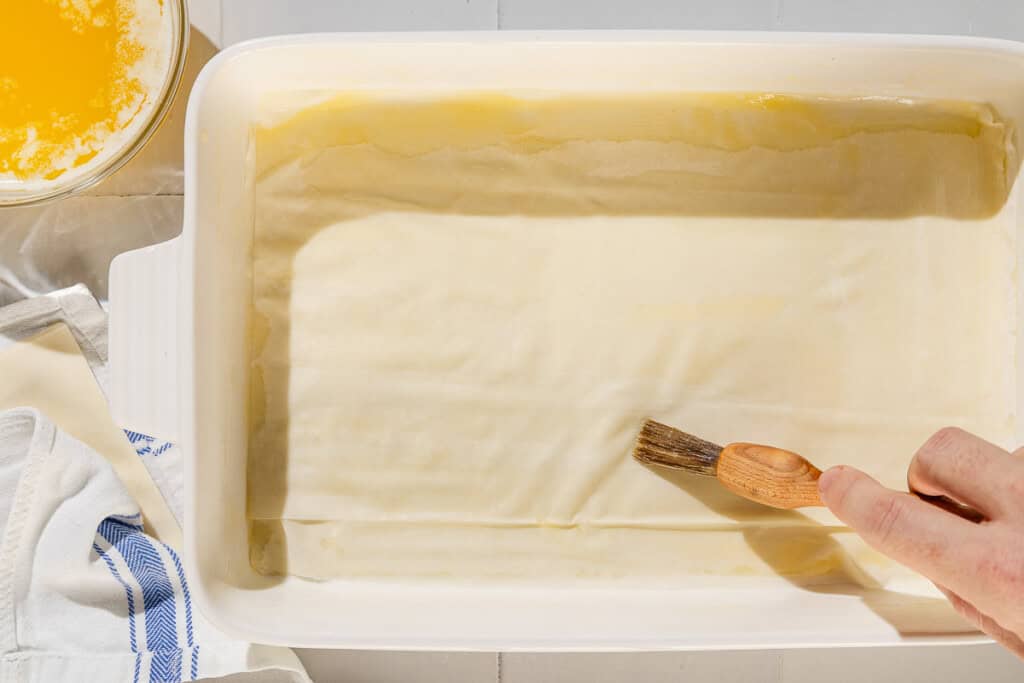
Phyllo sheet sizes and counts vary by brand, so divide your package into thirds rather than relying on a fixed number of sheets.
Cut and Bake
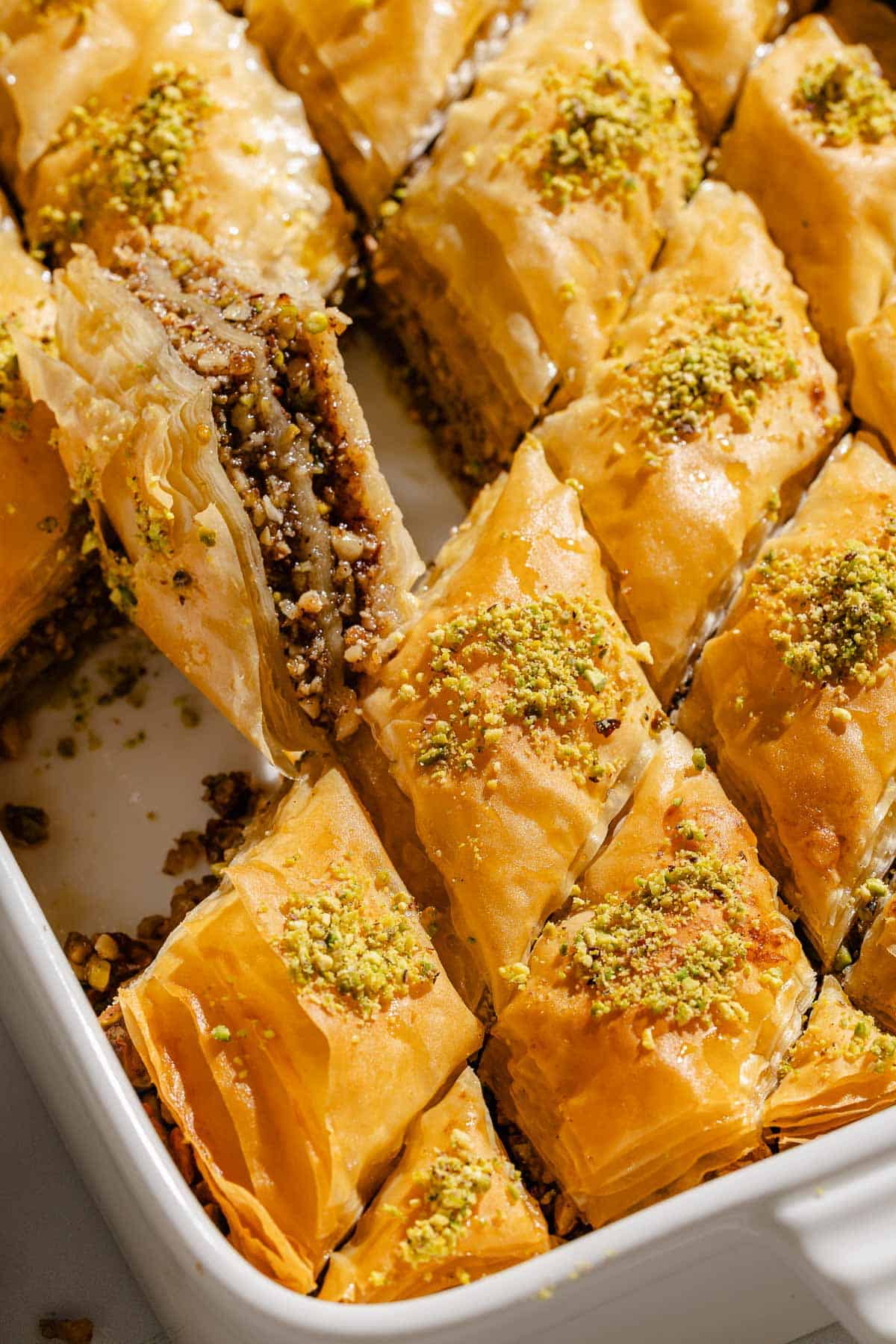
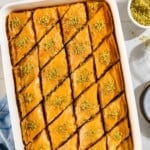
- Mark the pieces before baking. With a sharp knife, cut the assembled pastry into diamond-shaped pieces about ½ inch deep. Aim for 24 pieces, or up to 36 smaller pieces. Watch the video below for a closer look at how I cut mine.
- Bake until golden. Place the pan on the middle rack of your heated oven and bake for 35 to 45 minutes, until the top turns golden. Check halfway through baking, since ovens vary.
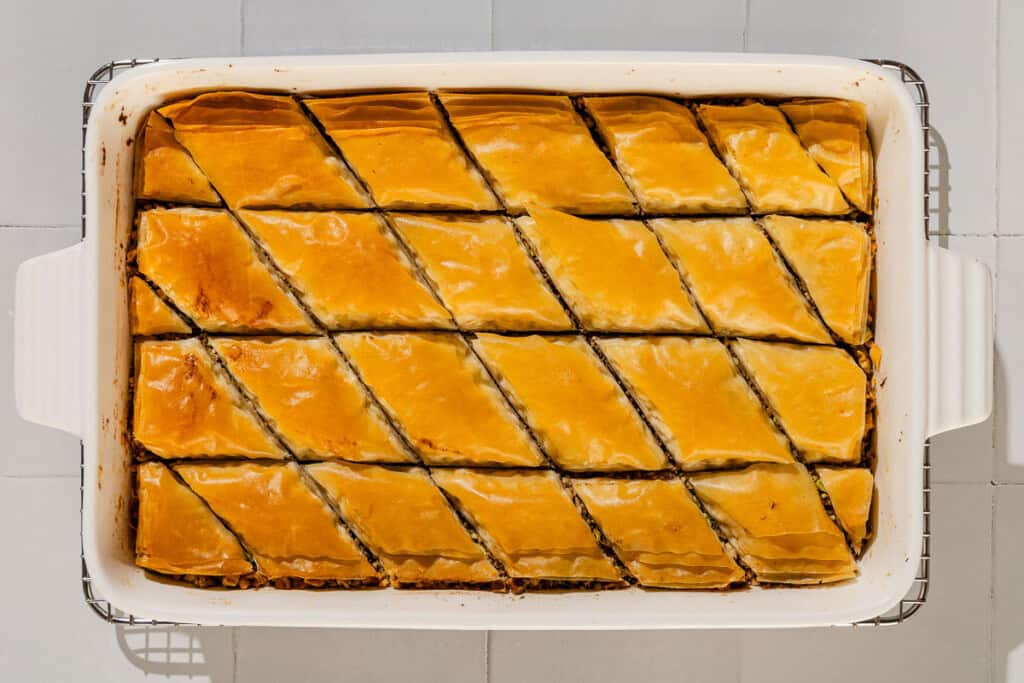
Add the Syrup and Let the Baklava Rest
- Pour cooled syrup over hot baklava. As soon as the pan comes out of the oven, pour the cooled honey syrup evenly over the pastry.
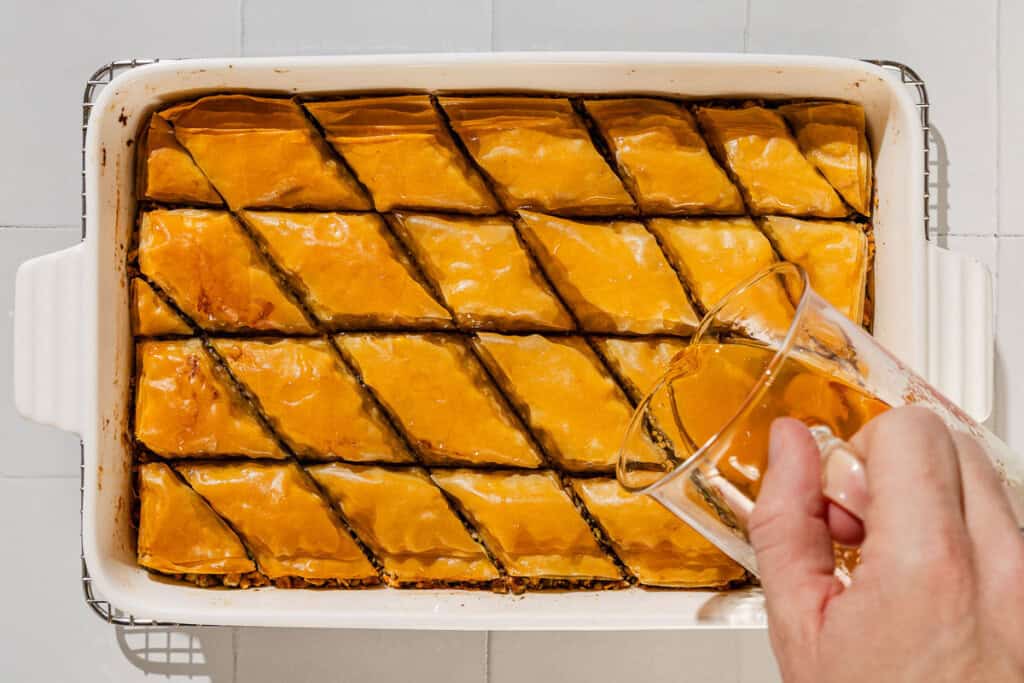
- Let it cool completely. Leave the baklava for several hours if possible, or at least 1 hour, so the phyllo layers can absorb the syrup. This is a good dessert to make the night before serving.
- Finish cutting and serve. Cut all the way through the pieces you marked before baking. Garnish with chopped pistachios, if you like.
Tips for Crispy, Flaky Baklava
- Thaw the phyllo in its package. Follow the package directions and allow an overnight thaw in the refrigerator. Too much moisture can make the sheets sticky and difficult to separate. The recipe also calls for taking the package out of the refrigerator 1 hour before assembly.
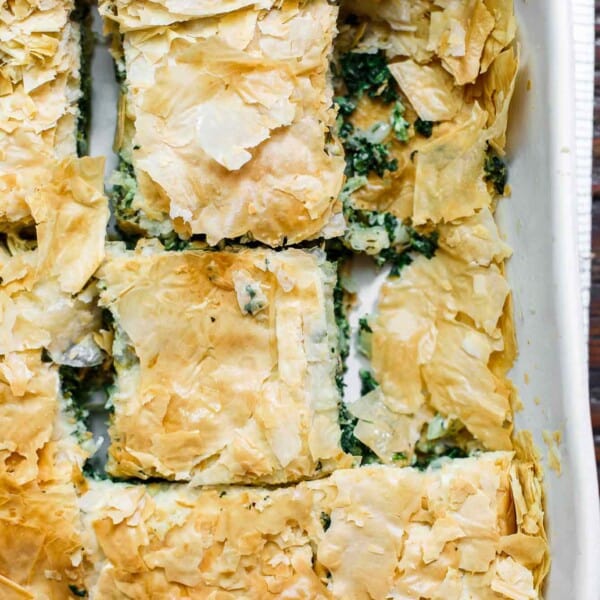
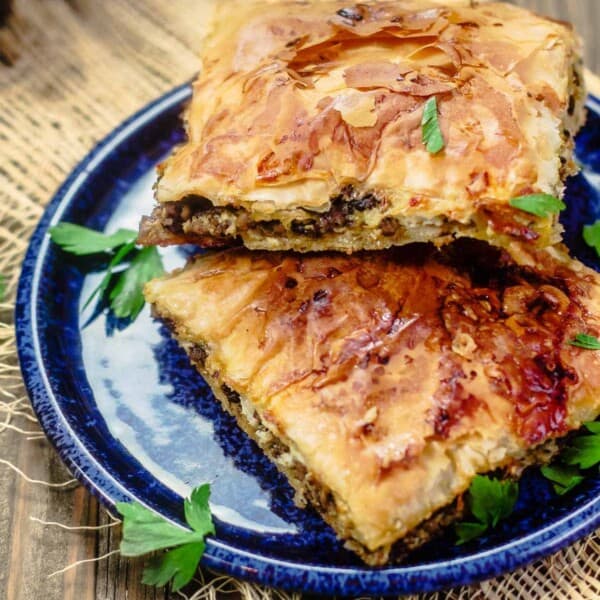
- Keep the unused sheets covered. Paper-thin phyllo becomes brittle as it dries out. Keep it between two clean kitchen towels and uncover it only to remove the next sheet. I use the same approach when making spanakopita, my Greek spinach pie.
- Keep some texture in the nut filling. I use pistachios, walnuts, and hazelnuts because I love a generous, nutty filling. Pulse them into small pieces that distribute evenly between the pastry layers, stopping before they become powder or paste. Large chunks make the baklava harder to bite through, but grinding too finely loses the crunch.
- Make the syrup first. It needs time to cool before the baklava comes out of the oven. To save time, you can begin assembling the pastry while the syrup simmers.
- Cut before baking, then finish cutting after resting. Marking the pieces while the pastry is still soft helps you avoid crushing the crisp top layers later. Once the baklava has absorbed its syrup and cooled, follow those cuts all the way through.
- Give it time to rest. Don’t rush to serve it straight from the oven. The layers need time to absorb the syrup, and the baklava is even better the next day. Cool it completely before covering.
How to Keep Baklava from Getting Soggy
For this recipe, pour cooled honey syrup over the baklava as soon as it comes out of the oven. That hot-pastry, cool-syrup combination helps the layers absorb the syrup while keeping their crisp texture.
Make the syrup before assembling the pastry so it has time to cool. Then distribute it evenly over the hot baklava and leave the pan to cool completely before covering or storing.
What to Serve with Baklava
Serve the baklava once it has cooled and the syrup has had time to settle into the layers. A sprinkle of chopped pistachios is all it needs.
For an afternoon treat or the end of a meal, pair it with Arabic tea with fresh mint. The warm tea and crisp, honey-soaked pastry make a lovely combination to share around the table.
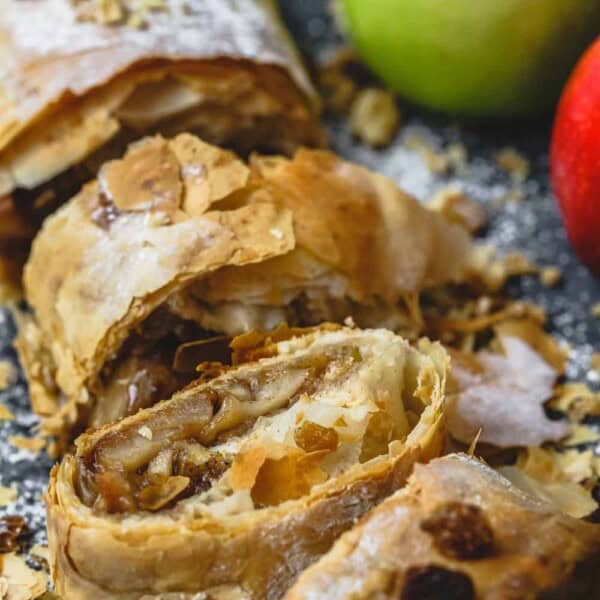
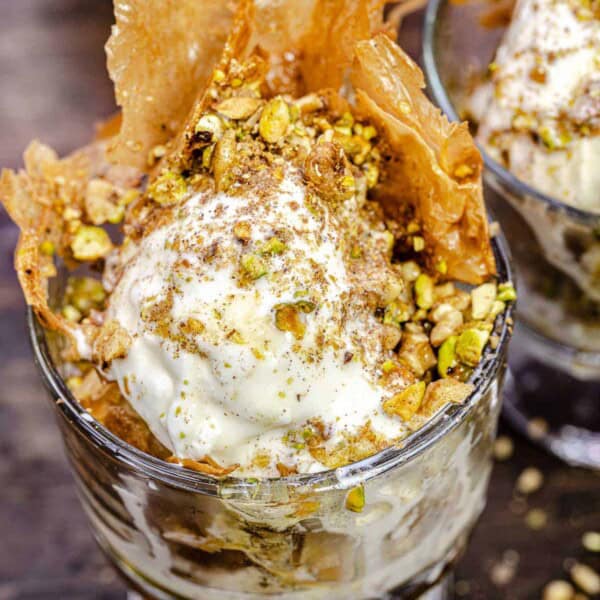
If you enjoy working with phyllo, try my apple strudel with phyllo dough for another pastry dessert. For the same honey-and-nut flavors in a different form, make a baklava ice cream sundae.
Make Ahead, Storage, and Freezing
Make ahead: Prepare the baklava the night before serving. It tastes even better the next day, once the pastry has had more time to absorb the honey syrup. Let it cool completely before covering.
Store: Keep cooled baklava in an airtight glass container at room temperature or in the refrigerator for up to 2 weeks. Room-temperature storage preserves the crisp texture better. Personally, I move any leftovers to the refrigerator after a few days.
Freeze: Freeze baked, completely cooled baklava for up to 4 months. Divide it into smaller batches so you can thaw only what you need.
Thaw: Thaw frozen baklava overnight in the refrigerator or for a few hours at room temperature before serving.
More Phyllo Recipes to Try
Baklava Recipe
Ingredients
For the Baklava and Nut Filling
- 6 ounces shelled pistachios, coarsely chopped
- 6 ounces walnuts, coarsely chopped
- 6 ounces hazelnuts, coarsely chopped
- 1/4 cup sugar
- 1 to 2 tablespoons ground cinnamon, start with less if you’re not sure
- Large pinch of ground cloves
- 1 (16-ounce) package phyllo dough, thawed
- 1 1/2 to 2 sticks of unsalted butter, (12 to 16 tablespoons), melted
For the Honey Syrup
- 3/4 cup sugar
- 1 cup cold water
- 1 cup honey
- 1 tablespoon orange extract, optional
- 5 whole cloves, optional
- 1 lemon, juiced
Instructions
- Preheat the oven. Heat the oven to 350°F.
- Make the honey syrup. Combine the sugar and water in a saucepan. Heat, stirring occasionally, until the sugar dissolves. Add the honey, orange extract if using, and whole cloves if using. Stir to combine, bring to a boil, then lower the heat and simmer for about 25 minutes. Remove from the heat and let cool to lukewarm. Add the lemon juice and remove the whole cloves. Set aside to cool completely while you assemble the baklava. The syrup should be cool when you pour it over the hot pastry.
- Prepare the nut filling. Place the pistachios, walnuts, and hazelnuts in a food processor fitted with a blade. Pulse a few times until chopped, without grinding them into a powder or paste. Transfer to a large mixing bowl and stir in the sugar, cinnamon, and ground cloves.
- Prepare the phyllo and pan. Carefully unroll the thawed phyllo and keep the sheets between two clean kitchen towels while you work. Brush the bottom and sides of a 9 x 13 x 2-inch baking pan with some of the melted butter.
- Build the bottom pastry layer. Place one sheet of phyllo in the pan, folding it in half or trimming it with kitchen shears as needed to fit. Brush the top with melted butter. Repeat, adding and buttering each sheet, until you have used about one-third of the phyllo.
- Add the first nut layer. Distribute half the nut filling evenly over the pastry.
- Build the middle layers. Add another third of the phyllo, one sheet at a time, brushing each sheet with melted butter. Spread the remaining half of the nut filling evenly over the pastry.
- Finish with phyllo. Add the remaining third of the phyllo, brushing each sheet with melted butter. Brush the very top sheet with butter.
- Cut before baking. Using a sharp knife, cut the pastry into 24 diamond-shaped pieces about ½ inch deep. You can cut up to 36 smaller pieces if you prefer.
- Bake until golden. Place the pan on the middle rack of the oven and bake for 35 to 45 minutes, until the top turns golden. Check halfway through baking, since ovens vary.
- Add the syrup. As soon as you remove the baklava from the oven, pour the cooled honey syrup evenly over the hot pastry.
- Cool and serve. Let the baklava cool completely and rest for several hours if possible, or at least 1 hour, to absorb the syrup. Cut all the way through the pieces you marked before baking. Garnish with chopped pistachios, if you like, and serve.
Recipe Notes
- Plan ahead: Thaw the unopened phyllo package overnight in the refrigerator, following the package instructions. Take it out of the refrigerator 1 hour before starting. The listed total time excludes thawing and the resting period after baking.
- Save time: Begin assembling the baklava while the syrup simmers. Keep unused phyllo covered between two clean kitchen towels as you work.
- Phyllo sheets: Use the full 16-ounce package, dividing it into three sections. Sheet sizes and counts vary by brand, so use thirds of the package rather than a fixed sheet count.
- Nut variations: You can use just walnuts or pistachios, or adjust the combination of nuts, keeping the total at 18 ounces. You can also omit cinnamon if you like.
- Make ahead: Baklava is even better the next day, after the layers have had time to absorb the syrup. Cool completely before covering.
- Storage: Store completely cooled baklava in an airtight glass container at room temperature or in the refrigerator for up to 2 weeks. Room-temperature storage preserves the crisp texture better; I usually refrigerate leftovers after a few days.
- Freezing: Freeze baked, completely cooled baklava for up to 4 months. Freeze in small batches so you can thaw only what you need. Thaw overnight in the refrigerator or for a few hours at room temperature.
- Shop this recipe: Visit The Mediterranean Dish shop for quality Mediterranean ingredients, including the honey used in this recipe.
Shop Suzy’s curated selection of Mediterranean olive oils, spices, and more.
Try Our Authentic Greek Honey!
This award-winning honey from the Fragiadakis family in Crete is sustainably harvested from the island’s bio-diverse mountains, where bees feast on wild aromatic herbs.
This post first appeared on The Mediterranean Dish in 2014 and has been recently updated with new media and information for readers’ benefit. Enjoy!










I have made many baklava from many cookbooks. This one is smart, easy to follow and yummy to eat.
clever
Yay! Thanks, Ted!
YUM! Do you have a suggested phyllo dough recipe from scratch? Thanks!
We don’t at the moment, I’m so sorry. Perhaps it’s something we need to add to the list!!
I made this yesterday (my first attempt to make baklava, ever) and it is delicious! I followed the recipe exactly. The amazing smell alone, while baking, filled my house!! Definitely will make again.
Awesome! Thanks, Nancy!
The syrup made using this recipe is literally inedible if you cool it down. It forms into a hard black crust and ruins your pan. 0/10
sounds like you did it wrong, friend
Not the creator’s fault, you know?
There are so many variations… there’s no one right or wrong recipe.. here’s how I prepare my syrup… this also works for Tulumba recipe as well
For this particular batch I add 2 cups granulated white sugar … 2 cups water… and whole cloves… about 1/4 cup
You can also add fresh lemon Juice … totally optional
Simmer on low for about 10 -12 minutes until the sugar has dissolved
Hope this helps
First time making this recipe. I love getting this at restaurants. I’m doing this special for thanksgiving- I love nuts!
I’ve never used phyllo before- I was cheating and did not separate each thin slice, it just came out of the oven so we shall see on my success
Hope it turned out well for you!
I abhor when folks leave comments on recipes they haven’t made yet. But I wanted to tell you that my family always used only walnuts to make baklava, but now that I’ve seen your recipe, I can’t wait to try it. I’ve bought the pistachios, but the hazlenuts had to be ordered from Amazon. I’ll be making this for Thanksgiving. I’ve always got walnuts in the freezer,
This recipe was great! I always buy baklavas when we order Mediterranean so this was a great discovery.
Two small tips:
1. I bought unsalted roasted pistachios and would recommend adding a pinch of salt to the nut mixture. If I had purchased salted pistachios, this probably wouldn’t be necessary.
2. Don’t butter the layers touching the nut layers. After baking the layers will be quite slippery. Probably could have figured this out just by thinking about it, but now I know for next time!
Thanks so much for sharing your tips, Roz!
I’ve made this using your exact recipe a few times now and it is absolutely amazing! Just a quick question – would I be able to halve it, and if so would the cooking time differ? Thank you 🙂
Hi, Leah. You can definitely halve the recipe. I don’t think the cooking time would differ, but it’s not something we’ve tested. If you give it a try, please stop back and share any feedback!
Can iI leave this in the counter overnight after baking or do I need to wait until It’s cooled down and cover?
Hi, Crissie! It’s important that it be completely cooled before you cover it. Enjoy!
5 stars +. I made this baklava recipe and it was tha BOMB ! As long as I follow every step it can’t go wrong.
I’m working my way through the recipes one at a time because I want it all, HA.
Suzy you make me an artist in the kitchen, thank you.
You are very welcome, Mike! So glad you enjoyed the Baklava!
I absolutely LOVE this recipe. I have made it five times in the last couple months. My 4.5 year old is now a pro at spreading butter on phyllo pastry! Thank you for this wonderful recipe!
I did not have any orange extract, so I tossed in ribbons of orange zest to cook in the honey syrup. When the honey syrup is finished, I removed the then candied zest and add it to the food processor to be chopped with the nuts. It adds an amazing flavor with very little extra effort!
Awesome!
Making for a crowd. Can I use mini phyllo cups?
Hi, Alexis. That may work, but it isn’t something I’ve personally tried before.
Do you recommend raw or roasted nuts? Thank you for your recipes–I love them!
Hi, Lisa. I use raw nuts here. Hope you enjoy the recipe!
Hi, Lisa! I use raw nuts here.
I am interested in the 9 x 13” pan you used for this recipe, can you tell me the brand and where it was purchased? Thanks
Hi, Ginette. This is the Bayou Classic Cast Iron Rectangular Cake Pan. I use it all the time!
Hey, I will be trying this recipe but I have a question about ‘the butter’. Butter or how much butter is not mentioned in the ingredients and yet spoke of in the method as “use the butter”. From reading the recipe I can see that butter is used singularly, melted and brushed on to each layer of filo, but it doesn’t mention how much butter we should melt and use? If you could add this, that would be fab. Thank you.
Hi, Kat. The amount is listed on the recipe card at the bottom of the post: 1 ½ to 2 sticks of unsalted butter (up to 16 tbsp), melted. Hope you enjoy the baklava!
Question about serving size – the recipe lists 24 pieces but the nutrients says 36. What is the portion size for the calories indicated? Thank you.
Hi, Dolores. Thank you so much for catching that. We made the correction. The nutritional info posted is based on the 24 pieces.