Candied Orange Peel


This post may contain affiliate links. Please read our disclosure policy.

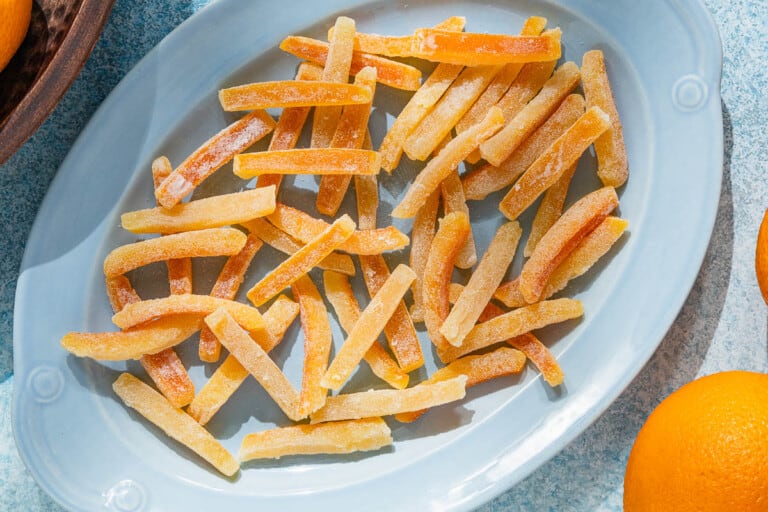
Candied orange peel turns fresh orange rind into tender, chewy sweets with a fine sugar coating, ready for gifting, garnishing desserts, or dipping in chocolate.

Homemade Candied Orange Peel, Inspired by Barcelona’s Markets
At Barcelona’s La Boqueria market, the stand just to the right of the main entrance always caught my eye: glossy candied citrus peels, slices, and even whole oranges. Making orange peel candy at home takes a little patience, including 12 to 24 hours to dry, but the ingredients are simple.
The vendors sold everything from red and green candied cherries to whole candied oranges. Strips of orange peel are a more approachable place to start at home: you need a saucepan, sugar, water, and time for the peels to simmer and dry.
I leave the pith—the white layer beneath the orange skin—attached and boil the peels before simmering them in sugar syrup. This first boil reduces bitterness; the syrup then softens and sweetens the peel until the pith begins to turn translucent. A coating of superfine sugar gives the chewy strips a delicate crunch.
They make a lovely addition to a holiday cookie tray, but there’s no need to save them for December. Use a few strips to garnish an orange olive oil cake with cardamom, add one to a cocktail, or enjoy them on their own. Save the syrup, too—it takes on the oranges’ fragrance and is useful for sweetening drinks or drizzling over breakfast.

Candied Orange Peel Ingredients
You’ll need fresh oranges, two types of sugar, and water. Granulated sugar makes the syrup, while superfine sugar gives the finished peels their coating.
- Oranges: Use 3 large oranges of any variety. You’ll candy the colored rind and the white pith beneath it, so keep both intact when peeling. Wash the oranges thoroughly under running water before cutting, whether you choose organic or conventional fruit. Save the flesh for snacking, juicing, or adding to a salad.
- Granulated sugar: Use 2 cups (400 grams) for the syrup. White granulated sugar has a neutral flavor that lets the orange come through.
- Superfine sugar: Use 1 cup for coating. Also called caster or baker’s sugar, it has smaller crystals than regular granulated sugar but isn’t powdered sugar. If you can’t find it, briefly pulse granulated sugar in a food processor until the crystals resemble fine table salt. Stop before it becomes powdery.
- Water: You’ll need enough to cover the peels for blanching, plus 2 cups of fresh water for the sugar syrup. Drain the blanching water before making the syrup.

How to Make Candied Orange Peel
Allow 15 minutes for the first blanch and about 45 minutes for candying, plus the time needed to prepare the oranges and bring the water and syrup to a boil. Additional blanching takes longer. After coating, the peels need at least 12 hours to dry, so start the day before you plan to serve or package them.
- Prepare the oranges. Wash and dry 3 large oranges. With a sharp knife, cut off the top and bottom of each orange. Make 4 vertical cuts through the peel and white pith, taking care not to cut into the flesh.

- Remove and slice the peel. Use your fingers to separate each quarter of peel from the fruit, keeping the pith attached. Cut the peel lengthwise into ¼-inch-wide strips. Aim for an even width so the pieces cook consistently.
- Blanch the peels. Place the strips in a medium saucepan and add enough cold water to cover them by 1 inch. Bring to a boil over high heat, then reduce the heat and simmer for 15 minutes. Drain and discard the water. This blanching step helps reduce bitterness before the peels go into the sugar syrup.
- Repeat if needed. For less bitterness, repeat the blanching step once or twice, starting with fresh cold water each time. With oranges, I blanch once or twice; for more bitter citrus, such as lemons, limes, or grapefruit, I recommend three rounds in total.
- Make the syrup. Clean out the saucepan. Add 2 cups granulated sugar and 2 cups water, then set over medium heat. Let the sugar dissolve and bring the syrup to a boil.
- Candy the peels. Carefully add the drained orange peels and reduce the heat to low. Maintain a gentle simmer for about 45 minutes, adjusting the heat as needed, until the peels are soft and the white pith begins to turn translucent. The syrup will thicken, with thick, glass-like bubbles. If using a candy thermometer, look for a syrup temperature of 235–245°F.
- Drain and save the syrup. Remove the pan from the heat and wait for the bubbling to stop. Carefully strain the peels over a heatproof bowl or measuring cup, reserving the syrup. I had about 1 cup left to use in drinks and desserts.
- Coat in sugar. Pour 1 cup superfine sugar into a rimmed sheet pan or wide, shallow bowl. Add the drained peels and use small tongs or two forks to toss them in the sugar. Separate any strips that stick together so each gets coated.
- Dry, then serve. Arrange the peels in a single layer on a parchment-lined sheet pan or nonstick wire rack. Leave uncovered at room temperature for at least 12 hours; drying may take 24 hours. Check that the peels no longer feel tacky or stick to one another before serving or packing. Serve as a sweet snack or use to garnish desserts and drinks. Wait until they’re fully dry before packing them into an airtight container.


Tips for Tender, Chewy Candied Orange Peel
A little care during blanching, simmering, and drying makes each stage easier to judge.
- Keep the pith attached. The pith is the white layer beneath the orange skin. Leave it on when cutting the strips, then use blanching to reduce its bitterness. As the peels simmer in syrup, watch that white layer: it should soften and begin to turn translucent.
- Reduce bitterness before adding sugar. If you prefer a milder peel, repeat the 15-minute blanch once or twice before candying. Drain and replace the water each time. Repeated blanching adds time, but it lets you reduce bitterness without cutting away the pith.
- Keep the syrup at a gentle simmer. After adding the peels, adjust the heat as needed rather than leaving the burner at one setting. Look for soft peels, increasingly translucent pith, and thick, glass-like bubbles in the syrup. The cooking time and these cues work together; a candy thermometer gives you another check.
- Separate the strips while coating. Use small tongs or two forks to loosen any peels that cling together as you toss them in superfine sugar. Spread them in a single layer for drying rather than leaving them in little piles.
- Check the texture before packing. Overnight is a starting point. If the peels still feel tacky or stick together, leave them uncovered longer. They should be chewy inside, with a dry sugar coating, before going into a jar or gift box.

Can You Candy Other Citrus Peels?
You can also candy lemon, lime, or grapefruit peel. These fruits can be more bitter than oranges, so I recommend blanching their peels three times in fresh water before simmering them in syrup.
Mandarins and tangerines offer other ways to vary the citrus flavor. Whatever fruit you choose, use the texture cues as well as the clock: the peel should be soft and the pith should begin to turn translucent before you drain it.
How to Use Candied Orange Peel
Candied orange peel is sweet and chewy enough to enjoy on its own, with a citrus aroma that comes through the sugar coating. Keep the strips whole for garnishing, or chop them into smaller pieces to scatter over desserts.
- Decorate a cake. Arrange a few strips over orange olive oil cake with cardamom. The candied peel adds a chewy contrast to the tender cake.
- Dip in chocolate. Dip half of each dried strip in melted dark chocolate, then place on parchment paper until the chocolate sets. The dark chocolate balances the sweet coating and orange flavor.
- Garnish a drink. Add a strip to a Negroni or another cocktail or mocktail with citrus flavors.
- Add to breakfast. Dice the peels and toss them into a finished batch of olive oil granola.
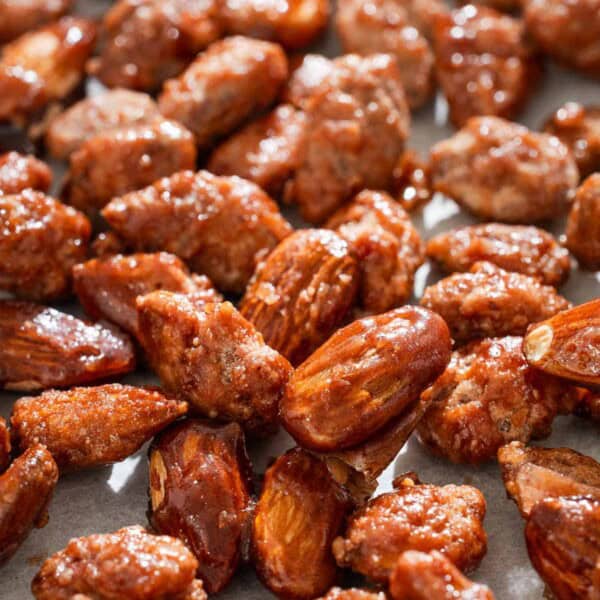
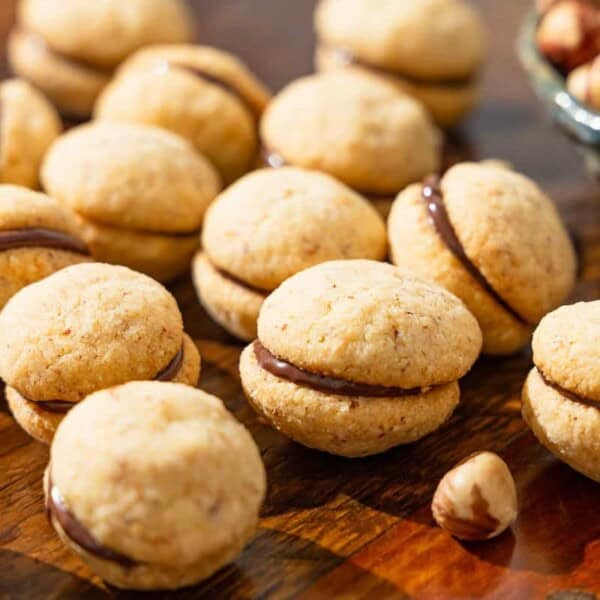
- Fill out a dessert tray. Serve alongside candied almonds and baci di dama, Italian hazelnut cookies sandwiched with chocolate.
- Give as a homemade gift. Once completely dry, pack the peels in an airtight container. Their bright orange color needs little decoration.
Save the Orange Syrup and Fruit
Candying leaves you with more than a tray of orange peel. The remaining syrup is fragrant with citrus, and the peeled oranges are ready for snacking, salads, or juicing.
Use the Leftover Orange Syrup
Save the syrup when you drain the peels. I had about 1 cup, and it was more concentrated than a typical simple syrup—the mixture of sugar and water used to sweeten drinks.
Use a little at a time in cocktails, mocktails, lemonade, or iced tea. It also makes a citrusy alternative to honey or maple syrup over pancakes or challah French toast. Start with less than you would usually pour, then add more to taste.
To thin the leftover syrup, combine it with ¼ cup water in a small saucepan and bring to a simmer. Let cool, then strain through a sieve into a bottle or airtight container. Refrigerate for up to 2 weeks.
Use the Peeled Oranges
I snack on the oranges while the peels simmer, but they’re also useful in orange salad with pomegranate and mint or fennel and orange salad.
You can also squeeze the fruit for juice and freeze it for another day. If you plan to use the oranges in a cake, check whether you’ll need fresh zest as well—the peel from this batch is already spoken for.
How to Store Candied Orange Peel
Candied orange peel is a useful make-ahead sweet for a party or gift box. Allow at least a day before you need it so the peels have time to dry fully.
- At room temperature: Once the peels are dry and no longer tacky, store in an airtight container for up to 1 month.
- In the freezer: Store the dried peels in an airtight, freezer-safe container for up to 3 months.
Keep the leftover orange syrup separate and refrigerate it for up to 2 weeks.
More Homemade Sweets for Gifting
Candied Orange Peel

Ingredients
- 3 large oranges, thoroughly washed
- 2 cups (400 grams) granulated sugar
- 1 cup superfine (caster) sugar, for coating
Instructions
- Prepare the peel. Cut off the top and bottom of each orange with a sharp knife. Make 4 vertical cuts through the peel and white pith of each orange without cutting into the flesh. Use your fingers to separate each quarter of peel from the fruit, keeping the pith attached. Slice the peel lengthwise into ¼-inch-wide strips. Reserve the orange flesh for another use.
- Blanch the peel. Place the strips in a medium saucepan and add enough cold water to cover by 1 inch. Bring to a boil over high heat, then reduce the heat and simmer for 15 minutes. Drain and discard the water. To reduce bitterness further, repeat once or twice, starting with fresh water each time.
- Make the sugar syrup. Clean out the saucepan. Add the 2 cups granulated sugar and 2 cups fresh water. Set over medium heat and bring to a boil, allowing the sugar to dissolve.
- Candy the peels. Carefully add the drained peels to the boiling syrup and reduce the heat to low. Maintain a gentle simmer, adjusting the heat as needed, for about 45 minutes, until the peels are soft and the white pith begins to turn translucent. The syrup will have thickened, with thick, glass-like bubbles. If using a candy thermometer, the syrup should register 235–245°F.
- Drain. Remove the pan from the heat. Once the syrup stops bubbling, carefully strain the peels over a heatproof bowl or measuring cup. Reserve the syrup for another use (see notes).
- Coat in sugar. Pour the superfine sugar into a rimmed sheet pan or wide, shallow bowl. Add the drained peels and use small tongs or two forks to toss them in the sugar, separating any strips that stick together.
- Dry and serve. Spread the peels in a single layer on a parchment-lined sheet pan or nonstick wire rack. Leave uncovered at room temperature for at least 12 hours; they may need 24 hours to dry. They’re ready when they no longer feel tacky or stick to one another. Enjoy on their own or use to garnish desserts and drinks.
Recipe Notes
- Timing: The cook time includes one 15-minute blanch and 45 minutes of candying. Allow additional time for bringing the water and syrup to a boil. Each extra blanch adds another 15 minutes of simmering, plus the time needed to heat the fresh water. Drying can take 12 to 24 hours; check that the peels are no longer tacky before storing.
- Reducing bitterness: Blanch orange peels once or twice, or up to three times for less bitterness. For more bitter citrus, such as lemons, limes, or grapefruit, blanch three times in total, draining and replacing the water between rounds.
- Superfine sugar: If unavailable, pulse an equal amount of granulated sugar in a food processor until the crystals resemble fine table salt. Stop before the sugar becomes powdery.
- Storage: Once fully dried, store the peels in an airtight container at room temperature for up to 1 month or in the freezer for up to 3 months.
- Save the syrup: Use the leftover orange syrup to sweeten cocktails, mocktails, lemonade, or iced tea, or drizzle it over pancakes, French toast, or fruit salad. It is more concentrated than typical simple syrup, so start with a small amount. To thin it, combine the leftover syrup with ¼ cup water in a small saucepan and bring to a simmer. Cool, strain into a bottle or airtight container, and refrigerate for up to 2 weeks.
- Shop Mediterranean pantry favorites: Pair your candied orange peel with a homemade olive oil cake. Visit our shop for extra virgin olive oils and baking spices to make a dessert platter to share.
Nutrition
Nutrition information is automatically calculated, so should only be used as an approximation.
Shop Suzy’s curated selection of Mediterranean olive oils, spices, and more.
Get The Mediterranean Dish Cookbook
More than 120 recipes for bright and flavorful Mediterranean diet-inspired meals.












How long does it keep?
Hi, Mary. Once dried, store candied orange peels in an airtight container at room temperature for up to 1 month, or up to 3 months in the freezer.
4 stars only because the serving size was not listed al8ng with nutritional information. Otherwise I would say five stars and call it both extremely tasty and freshening as well as useful in so many ways. LEFTOVER SUGAR AND SYRUP CAN BE USED IN A MANY WAYS AS WELL.
A bit laborious but end result is quite worth it! I added a smidge of cinnamon to the water, * think rosewater would also be good. Having no tongs handy, I shook the peels in a bag with sugar to coat. So delicious!
Yay! Thanks so much!
Hi, can I use sugar substitute for the orange peel?
Hi, Yaffa. There may be a suitable sugar substitute that would work for this, but it’s just something we’ve tested before. If you decide to give it a try, please stop back and let us know how it went!
I made these last night. The texture is amazing. I just wish they had more orange flavor to them. I’m going to try squeezing some juice in the sugar syrup next time and see what that does! Great jumping off point for sure
So amazingly wonderful!
I made these for the first time and they are absolutely wonderful ! It beats any store bought versions I ever tasted. Thanks for the wonderful recipe and walk through.
My little twist: some will be used to stuff beautiful and delicious dates. Yum!
Hi Valerie, Devin here from the Mediterranean Dish team. We have a stuffed dates go-to that’s more on the savory side with goat cheese, walnuts, Aleppo pepper and honey. This sweet version sounds FANTASTIC and so, so pretty! Thank you for the tip!