



A staple of North African cooking, especially Moroccan tagines, preserved lemons soften in salt and lemon juice, adding concentrated citrus flavor to everything from slow-simmered stews to everyday sandwiches.
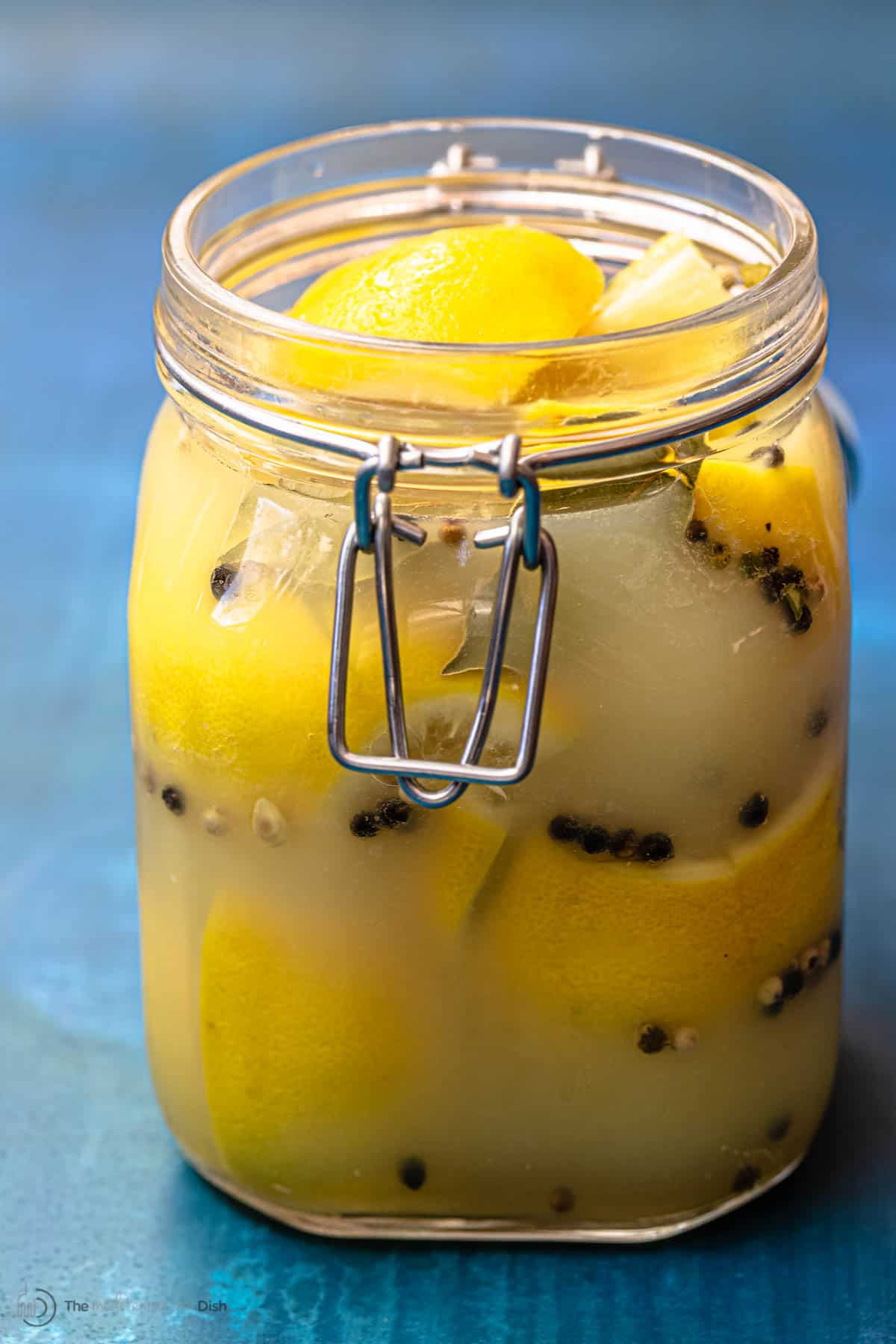
Homemade Preserved Lemons, from My Egyptian Table
Growing up in Egypt, all sorts of pickles showed up on our dinner table. They were no less important than Dad’s lazy tomato and cucumber salad or the tahini sauce we drizzled over falafel and kofta. Pickled cucumbers and lemons were my favorites.
That generous use of pickles, sauces, and little accompaniments is part of the Mediterranean cooking I grew up with and share in my cookbooks. A small amount of preserved lemon brings a salty, citrusy contrast to a rich stew or a simple sandwich.
You may know preserved lemons best from Moroccan cooking, particularly dishes like chicken tagine. Their place on our Egyptian table reflects how widely these flavors are enjoyed across North Africa and the Middle East. Here, I pack the lemons with kosher salt and a little sugar, then add peppercorns, bay leaves, and fresh lemon juice.
Making them takes about 20 minutes of hands-on work, an overnight rest, and another 3 weeks to 1 month in the refrigerator. As they sit, the peel and flesh soften and their sharp tartness mellows. The flavor stays concentrated, so a little goes a long way. The hard part is waiting!
What Are Preserved Lemons?
Preserved lemons are lemons packed with salt and covered in lemon juice, which gradually softens both the peel and flesh. They’re also called salt-preserved lemons or pickled lemons.
There’s no vinegar here: the lemons sit in salt and their own juice, with additional fresh lemon juice poured over them. Both the peel and flesh are edible once softened.
Ingredients for Preserved Lemons
You’ll need a handful of ingredients and enough fresh lemon juice to cover the lemons in their jar. Remember to buy extra lemons for juicing!
- Lemons: Start with 8 large lemons for preserving. I recommend organic Eureka lemons, the familiar yellow lemons found in many grocery stores. Choose fruit that feels heavy for its size, with a thin, fine-textured peel and a deep yellow color. Meyer lemons are another option; their thinner skins are less bitter. Since you’ll be eating the peel, scrub the lemons well under running water.
- Kosher salt: You’ll use ½ cup to coat the lemons and fill the cuts between their quarters. Work it inside each lemon rather than leaving it all on the outside.
- Sugar: Combine 2 tablespoons with the salt before filling and coating the lemons.
- Whole peppercorns: Add 2 tablespoons to the jar for peppery flavor. Keep them whole rather than using ground pepper.
- Dried bay leaves: Four to five leaves add an herbal aroma as the lemons sit in their juice.
- Fresh lemon juice: Plan on about 2½ cups, from an additional 7 to 8 lemons. Juice yield varies, so check the liquid level when you pack the jar: the lemons need to be completely submerged.
How to Make Preserved Lemons
The preparation happens over two days, followed by several weeks in the refrigerator. Have a large mixing bowl and a sterilized jar with a tight-fitting lid ready. Choose a jar that accommodates the lemons and enough juice to cover them, or divide everything among smaller jars.
- Scrub and trim. Scrub 8 large lemons thoroughly under running water. Trim about ¼ inch from the top and bottom of each lemon.
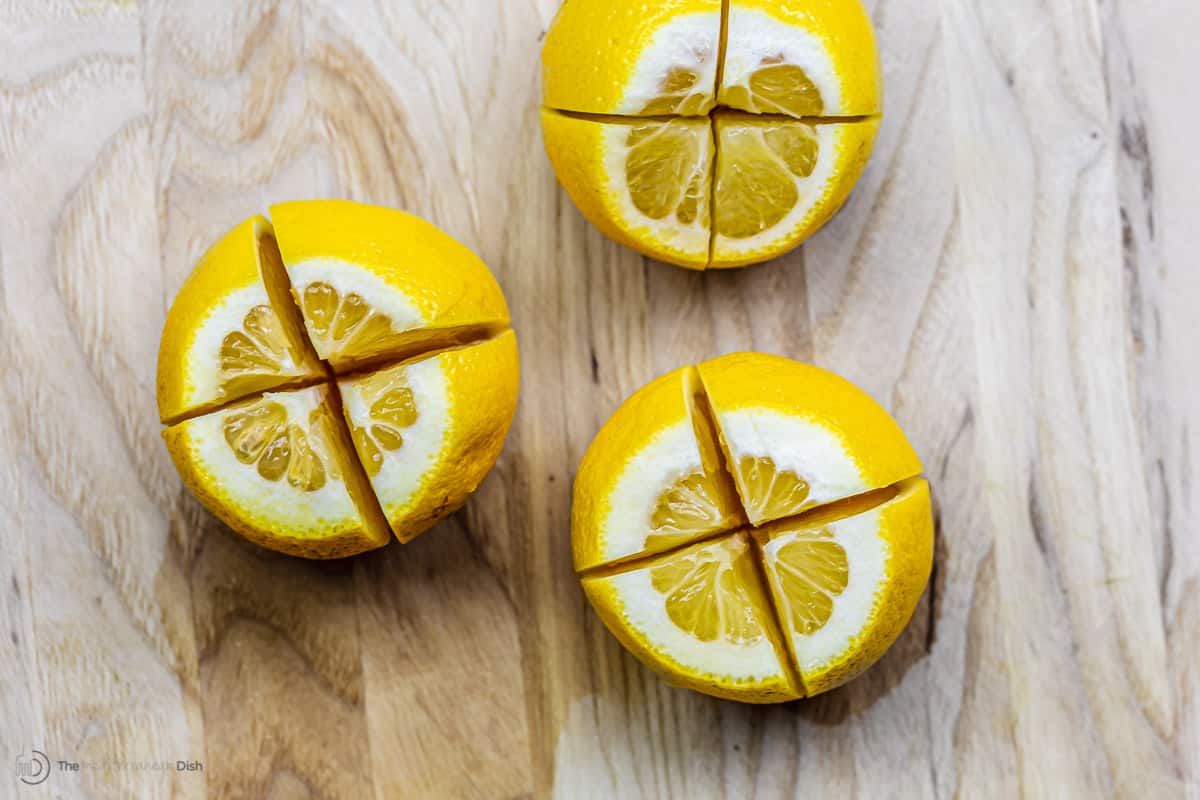
- Cut into attached quarters. Stand a lemon on one of its trimmed ends. Cut down through it lengthwise, stopping before you reach the bottom, then make a second cut across the first. You should have four quarters still joined at the base. Repeat with the remaining lemons.
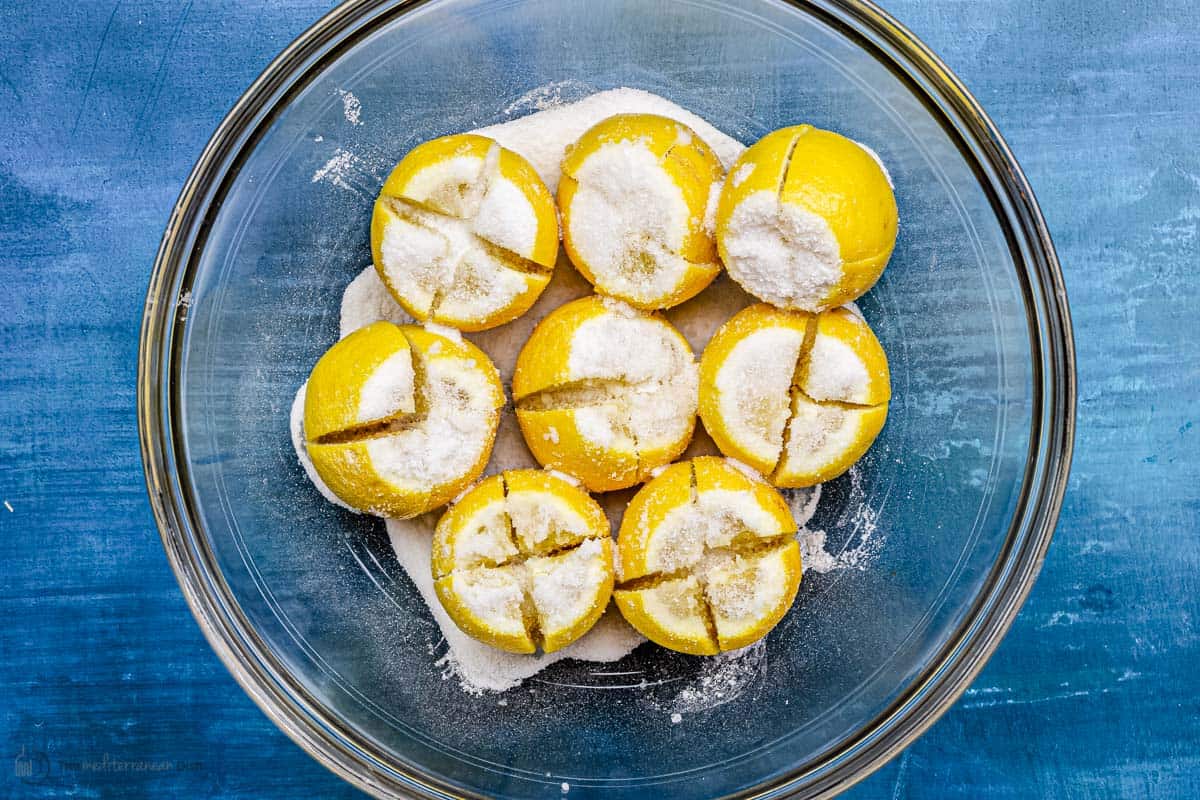
- Fill with salt and sugar. Combine ½ cup kosher salt and 2 tablespoons sugar. Place the lemons in a large bowl, gently open the quarters, and work the mixture into the cuts. Turn the lemons in any mixture remaining in the bowl to coat the outsides, too.
- Refrigerate overnight. Cover the bowl with plastic wrap and refrigerate overnight, up to 24 hours. The lemons will release some of their juice; keep that liquid for the next step.
- Pack the lemons. The next day, transfer the lemons, all their released juices, and any remaining salt-and-sugar mixture to a large sterilized jar. Press the lemons down firmly so they fit snugly, then add 2 tablespoons whole peppercorns and 4 to 5 dried bay leaves.
- Cover with lemon juice. Pour in about 2½ cups fresh lemon juice, checking that it covers the tops of the lemons. The amount needed will depend on the size of the lemons and how closely they’re packed. All the lemons should be submerged.
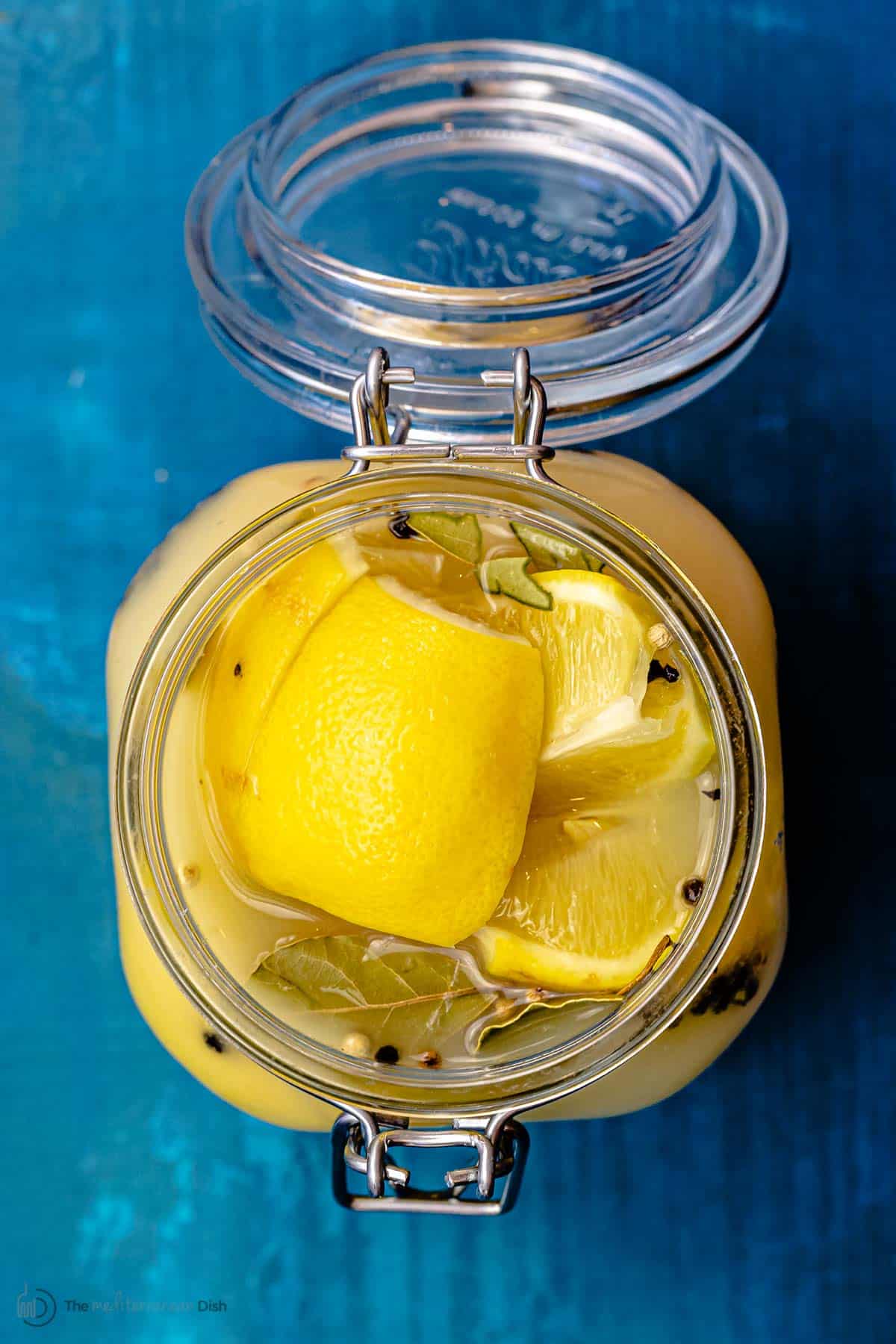
- Seal and refrigerate. Close the lid tightly and refrigerate for 3 weeks to 1 month before using. As the lemons sit, the peel and flesh will soften, and their sharp tartness will mellow. Keep the jar refrigerated throughout this time.
Tips for Making Preserved Lemons
A few details make the preparation easier, especially when it’s time to pack the jar.
- Don’t squeeze everything into a jar that’s too small. The lemons need to fit snugly, but there must also be room for lemon juice to cover them. If the uppermost lemon sits above the liquid, divide the batch between smaller sterilized jars, distributing the seasonings and juices between them.
- Use the juice measurement as a guide, then check the jar. About 2½ cups is the starting amount, but lemon size and the spaces between the fruit affect how much you need. Pour slowly, let the juice settle around the lemons, and check that their tops are covered before sealing.
- Count the overnight rest separately. The first night lets the lemons release some juice before packing. The 3-week-to-1-month preserving period begins after you pack the jar, so plan ahead if you want them for a particular meal.
How to Use Preserved Lemons
Start with a small amount of preserved lemon and taste before adding more. Finely chop it to distribute the salty, citrusy flavor through a stew, or cut thin slices for sandwiches. Taste the finished dish before adding extra salt.
Both the peel and flesh are edible. If you prefer to use just the rind, separate it from the flesh and rinse it under running water to remove excess salt before slicing. Remove any seeds as you prepare the lemons.
Here are a few ways to put your jar to work:
- Add to tagines and stews. Use some in place of the lemon slices in my chicken tagine, or add finely chopped pieces in small amounts to Moroccan lamb stew or vegetable tagine. Their brightness is especially welcome alongside warm spices and rich sauces.
- Stir into lentils. A little chopped preserved lemon brings a tangy contrast to a pot of lentil stew. Taste before adding more salt, since the lemons contribute their own.
- Toss with roasted vegetables. Thinly slice or chop the lemons and toss a little with roasted vegetables. Small pieces are easier to distribute than large wedges.
- Tuck into sandwiches. Add a few thin slices as you would other pickled vegetables. You don’t need much to bring a salty, tangy bite to your lunch.
How to Store Preserved Lemons
Keep preserved lemons in a tightly closed jar in the refrigerator, with the lemons submerged in lemon juice. Properly stored, they keep for up to 6 months.
Refrigerate them throughout the initial preserving period and after you begin using them. Packing the lemons into a canning jar does not make them shelf-stable.
More Homemade Pickles to Try
Sides and Small Plates
Middle Eastern Pickled Turnips Recipe
Dips and Condiments
Quick Pickled Cucumber Recipe
Dips and Condiments
Pickled Red Onions


Ingredients
- 8 large lemons
- ½ cup kosher salt
- 2 tablespoons sugar
- 2 tablespoons whole peppercorns
- 4 to 5 dry bay leaves
- 2 1/2 cups fresh lemon juice, from an additional 7 to 8 lemons, enough to cover the lemons in the jar
Instructions
- Prepare the lemons. Scrub the lemons well under running water. Trim about ¼ inch from the top and bottom of each lemon. Cut each lemon lengthwise into quarters, stopping before you reach the bottom so the quarters remain attached.
- Salt and refrigerate overnight. Combine the salt and sugar. Place the lemons in a large bowl, gently open the quarters, and fill the cuts with the salt-and-sugar mixture. Toss the lemons in any remaining mixture to coat the outsides. Cover the bowl with plastic wrap and refrigerate overnight, up to 24 hours. The lemons will release some juice.
- Pack the jar. Transfer the lemons, their juices, and any remaining salt-and-sugar mixture to a large sterilized jar. Press the lemons down firmly so they fit snugly. Add the peppercorns and bay leaves, then pour in the fresh lemon juice until the lemons are completely submerged.
- Seal and refrigerate. Close the jar tightly and refrigerate for 3 weeks to 1 month before using. The peel and flesh will soften and the sharp tartness will mellow. Keep the lemons refrigerated.
Video
Notes
- Choosing a jar: Use a sterilized jar with a tight-fitting lid that holds the lemons snugly with enough lemon juice to cover them. Lemon sizes vary, so you can also divide the lemons, seasonings, and juice among smaller sterilized jars.
- Lemon varieties: Eureka lemons work well. Choose lemons that feel heavy for their size, with thin, fine-textured peel. Meyer lemons are another option.
- Using preserved lemons: Both the softened peel and flesh are edible. Remove any seeds and chop or thinly slice the lemon, starting with a small amount because the flavor is concentrated and salty. If you prefer to use only the rind, separate it from the flesh and rinse away excess salt before slicing.
- Storage: Properly stored in a tightly closed jar, with the lemons submerged in lemon juice, preserved lemons keep in the refrigerator for up to 6 months. Keep refrigerated throughout preservation and storage.
- Shop this recipe: Visit The Mediterranean Dish Shop to browse Mediterranean pantry ingredients, spices, and extra virgin olive oils.
Nutrition
Get The Mediterranean Dish Cookbook
More than 120 recipes for bright and flavorful Mediterranean diet-inspired meals.


After watching the video I noticed in the preserved lemon jar that had rested for the month that the lemon juice had gone down and didn’t cover the lemons completely is this normal and acceptable.
Should I be keeping an eye on the jars and add lemon juice as needed to keep the lemons completely covered?
Thank you
Susie
Hi, Susie. Yes, to be on the safe side, I’d make sure they are completely covered.
I am planning to use bush lemons. Should I try and get the seeds out cos I think they have a lot of them?
Hi, Amanda. While you can certainly try this with bush lemons, we really recommend lemons with a bit of a thinner skin like eureka or meyer lemons for this particular recipe. If you feel the lemons you chose have an excessive amount of seeds, you can try to remove some, if you prefer.
I have 5 quite large lemons (oversized) and I have absolutely no idea what to do with them. I have had them for a while and need to do something (easy) with them can you help me with some kind of recipe for a novice?????
Hi, Brenda. This preserved lemons recipe would be one idea. Some others are Fried Lemon Rings, Mediterranean Mint Lemonade, Greek Lemon Rice, Lemon Chicken and Rose Lemonade… just to name a few :). Enjoy!
I have preserved lemons that I have in my root cellar, they are over 8 years old, I just opened one up for my easter leg of lamb. It was apsolutely amasing!!! If properly stored, they will last a very long time. They are getting better and better with age.
8 years! Wow!
I made this recipe a little over a month ago and used an old mason jar with a clamp that is typically used for canning. When I took it out after a month of sitting in the refrigerator I noticed the liquid is dark and cloudy with some lighter colored chunks floating around. It doesn’t look like your picture. I tried a small piece and it tastes alright but I’ve never actually had preserved lemons so I’m not sure what they’re supposed to taste like. Is there any way to tell if they’ve gone bad? I thought I used a tight enough lid but maybe not.
Hi, Suzanne. It isn’t uncommon for the liquid to darken and become a little cloudy. As long as all of the lemons were fully submerged and taste okay, they are likely fine. The presence of mold would definitely be a sign that they may have done bad, so if you’re seeing that, then I would discard them.
Can I use bottled lemon juice to cover the 8 lemons?
Hi, Sue. We really recommend sticking with fresh lemon juice here for the best results.
I tried this recipe and is been sitting in the fridge for a month. They are completely covered in lemon juice but I see a cloudy film at the bottom
Is this normal?
Hi, Patty. Yes, that is normal. As long as they have been stored properly, they should be just fine.
Thank you for your fabulously easy to use cooking site. I have made so many of your recipes and everyone turned out perfect. And delicious too!!
Yay! Glad to hear it!
Excellent way to preserve lemons. Thank you.
Hi, I thought it has to be at room temperature for a month before going in the fridge. I like the idea of it being in the fridge to be honest. Can you elaborate? Also, how long does it last?
Hi, Will. This is just the process that has worked well for us :). If properly stored in the fridge, they will keep for up to 6 months.
Whenever I read about preserved lemons, it says when using them to discard the fruit part and just use the peel. You don’t mention this so I’m wondering do you use the entire lemon?
I really enjoy your recipes!
Hi, Cathy. Yep! I use the entire thing :).
Aloha! I want to make these preserved lemons! I have plenty of mason jars with the screw tops. Is it ok to use those jars instead of the ones with the clamp and rubber gasket? Thank you!
Sure, Sherrie. That will work!
Great recipe. I did leave out the sugar because my husband is diabetic and we love savory tastes. I put a few of these in a glass and then muddle them (smoosh them) and then add a little ice and club soda. Tastes like a cocktail without the alcohol. Also a refreshing drink when you are out by the pool.
I love that idea! Thanks for sharing, Debra!
I made this recipe and finally sampled them yesterday. They are very salty. Do you rinse them? Do you chop them up when you use them or slice
or leave whole?
Thank you for all your recipes.
Hi, Anna. I do not need to rinse them, but I have seen it recommended before, so it may be worth a try. I typically slice them up to add them to recipes.
Suzy i made a batch of lemons and the liquid has been mostly absorbed. If they are ready to use, should I add more lemon juice? Do I also have to also add more salt ?
I have made a different recipe before without sugar but will try this one. Why do you leave lemon segments connected? I have different size homegrown lemons from very large to small. Is it okay to just chop them up into similar size prices?
Hi, Mimi! Leaving the segments connected makes it easy to stuff each lemon with a good bit of the kosher salt for preserving.