Spaghetti alla Nerano (Zucchini Pasta)


This post may contain affiliate links. Please read our disclosure policy.
Thanks to Stanley Tucci, the internet is going wild for zucchini pasta—a simple, delicious spaghetti alla Nerano, studded with zucchini and basil. My version leans on a few key techniques to make a lighter dish that’s just as creamy.
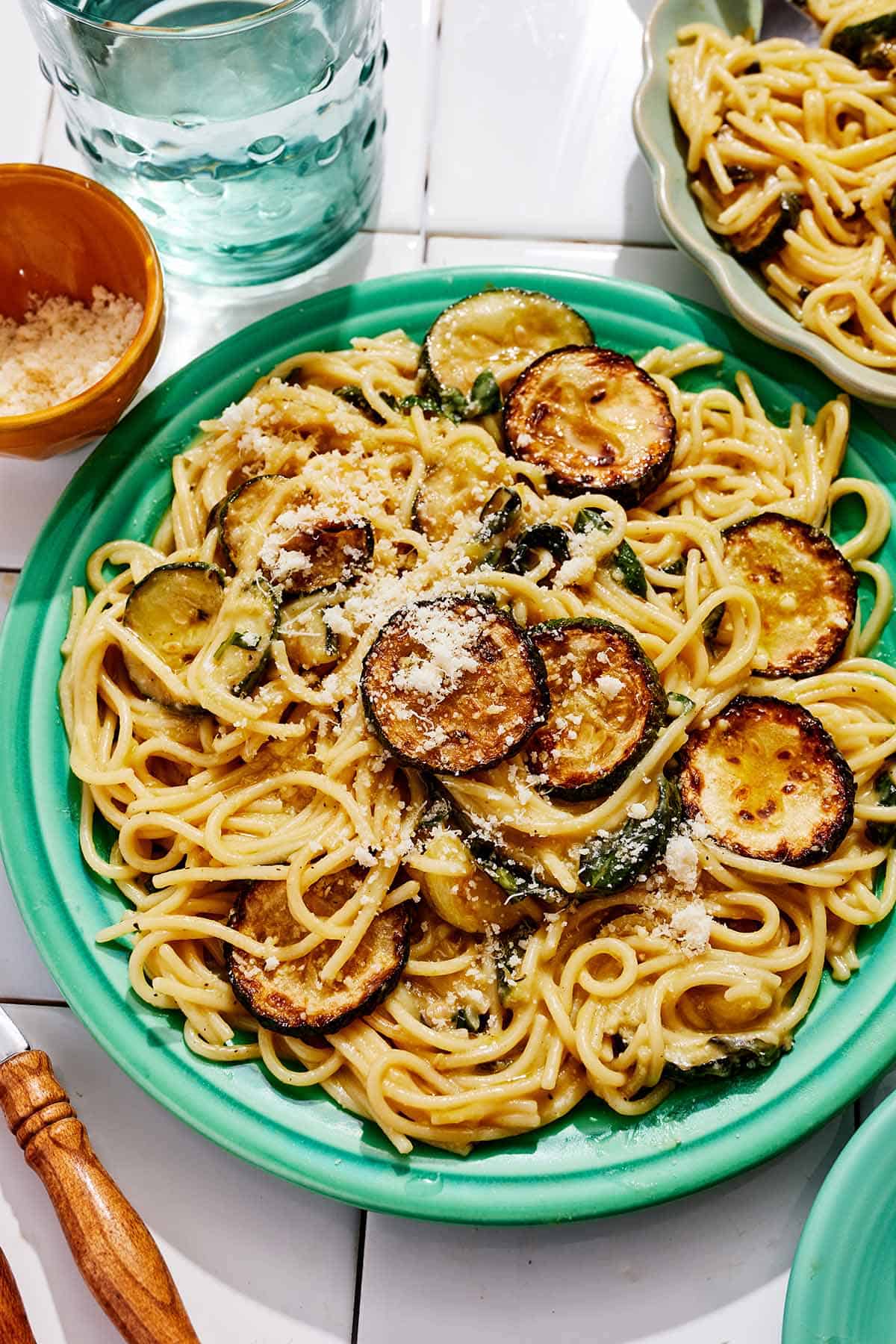
My Favorite Zucchini Pasta Recipe
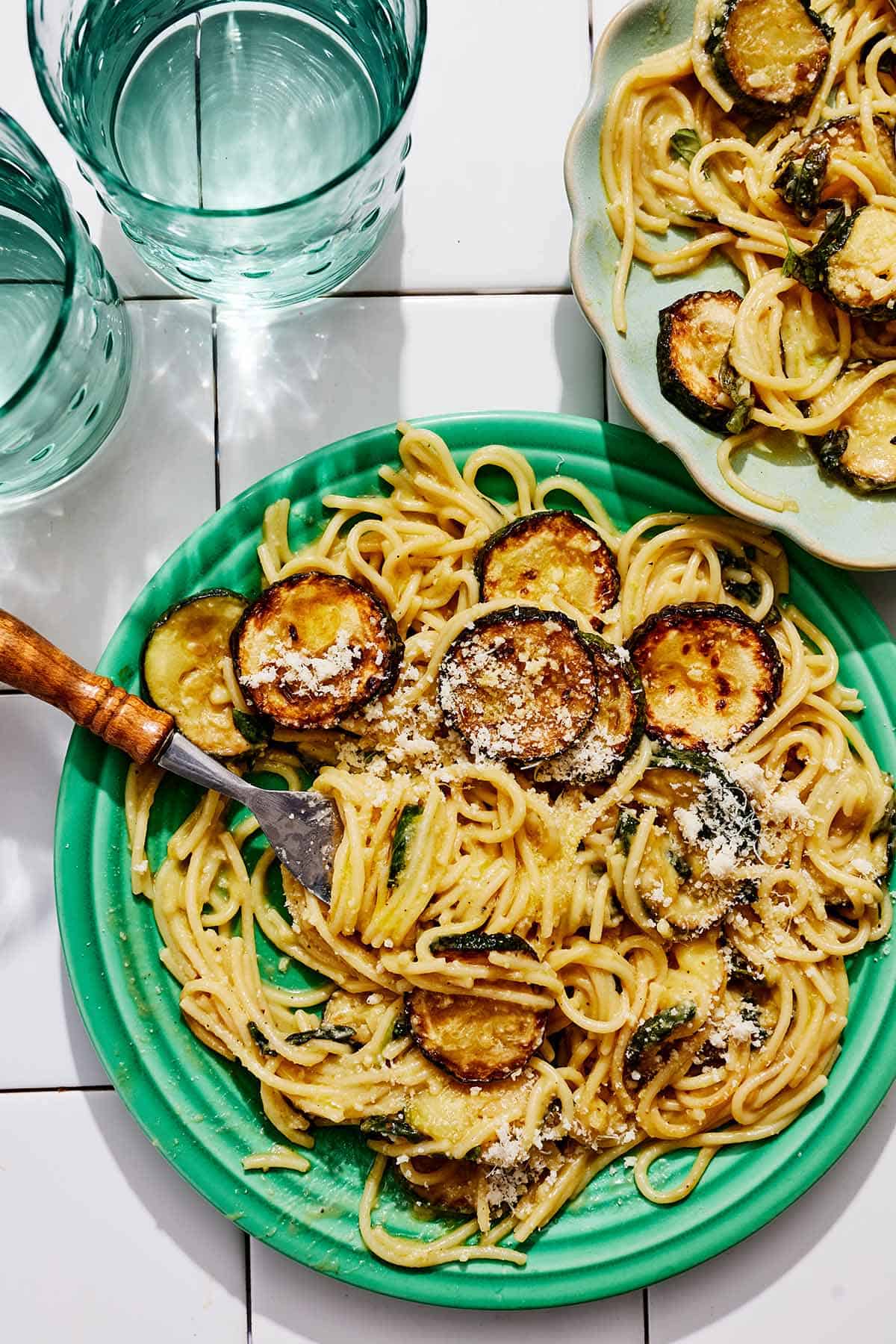
Rich, creamy and a little salty—these are the hallmarks of spaghetti alla Nerano. A friend introduced me to this Neapolitan specialty after a trip to Sorrento. She described enjoying a tangle of pasta with tender pieces of zucchini and fragrant basil on a sun-bathed terrace overlooking the sea.
Spaghetti alla Nerano is intoxicating; luscious, yet fresh and light. It’s nothing like the heavy red sauce that I grew up eating in my Sicilian-American family. While the traditional recipe is flavorful, I made a few changes, which I detail in the section below, to make it healthier and easier to prepare without sacrificing flavor.
Although this recipe is popular with people around the globe, it can be traced back to one place and one person: Maria Grazia at Trattoria da Maria Grazia on the Sorrento Peninsula. She created it in 1952, and it remains on the menu to this day. More recently, Stanley Tucci, the Italian American actor, has brought this dish to the forefront.
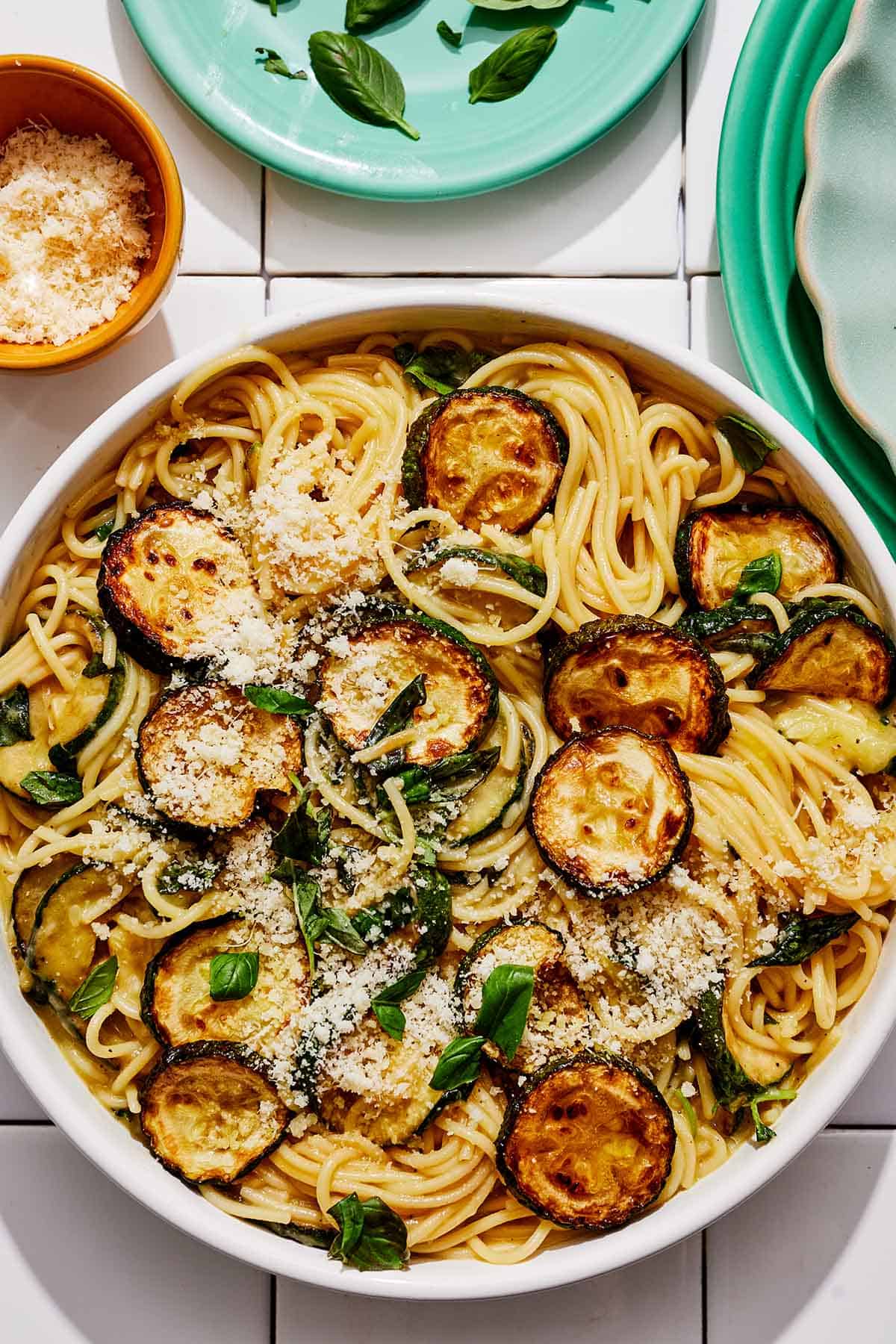
Although Grazia’s exact recipe is closely guarded, I have created a similar recipe using only 7 ingredients with the same amazing flavor as the original. The only thing missing are the spectacular views of the Gulf of Naples, but I hope the first bite will transport you there.
How I Developed this Recipe
While the traditional recipe is incredibly flavorful, I made a handful of changes that make it healthier and easier to prepare without sacrificing flavor.
- I swapped the butter and canola oil for olive oil. First, I wanted the sauce to feel decadent, but without the butter many recipes call for. I started by examining the oils used to fry the zucchini. Common suggestions call for a combination of canola oil and olive oil, but I didn’t love the flavor the canola oil imparted, since zucchini absorbs oil so easily. Using extra virgin olive oil by itself produced the best results.
- I used less oil than other recipes. My next hurdle was determining the amount to use. Many recipes call for 2 or more cups of oil for frying. Through testing, I determined that a half cup of olive oil was plenty, resulting in zucchini that was golden brown yet tender, and I wasn’t left with any extra oil to discard.
- Salt the pasta at the end. One food science discovery was to salt the pasta after the spaghetti has been cooked. Most pasta recipes tell you to add salt to the boiling water to help flavor the pasta. However, doing so limits how much starch the pasta releases. Because the starches help emulsify the sauce, I found starchy pasta water created the most velvety sauce. For this reason, wait to add salt until after the spaghetti is cooked.
Key Ingredients
- Zucchini: Since it is the main ingredient, try to find small to medium fresh zucchini, which will be more tender and have fewer seeds. You’ll need about 6 small zucchini.
- Extra virgin olive oil: You do not need to use expensive olive oil, but choose a buttery, rich one like an Italian extra virgin olive oil. It can be used for frying at 350°F and gives the squash a light fruitiness that I love.
- Fresh basil brings an herbal sweetness. Using fresh basil is mandatory for this recipe.
- Spaghetti: If possible, use bronze cut semolina pasta, which has a rough and porous outer edge. This allows the sauce to adhere to the pasta more effectively. It also yields more starch, which helps thicken the sauce.
- Parmigiano Reggiano: The traditional cheese used to make spaghetti alla Nerano is Provolone del Monaco, a firm, aged provolone made from cow’s milk. However, it’s difficult to find outside of Italy, so I call for Parmigiano Reggiano, which shares a similar nutty, salty, and tangy profile. Using freshly grated cheese will help it melt evenly.
How to Make Spaghetti alla Nerano
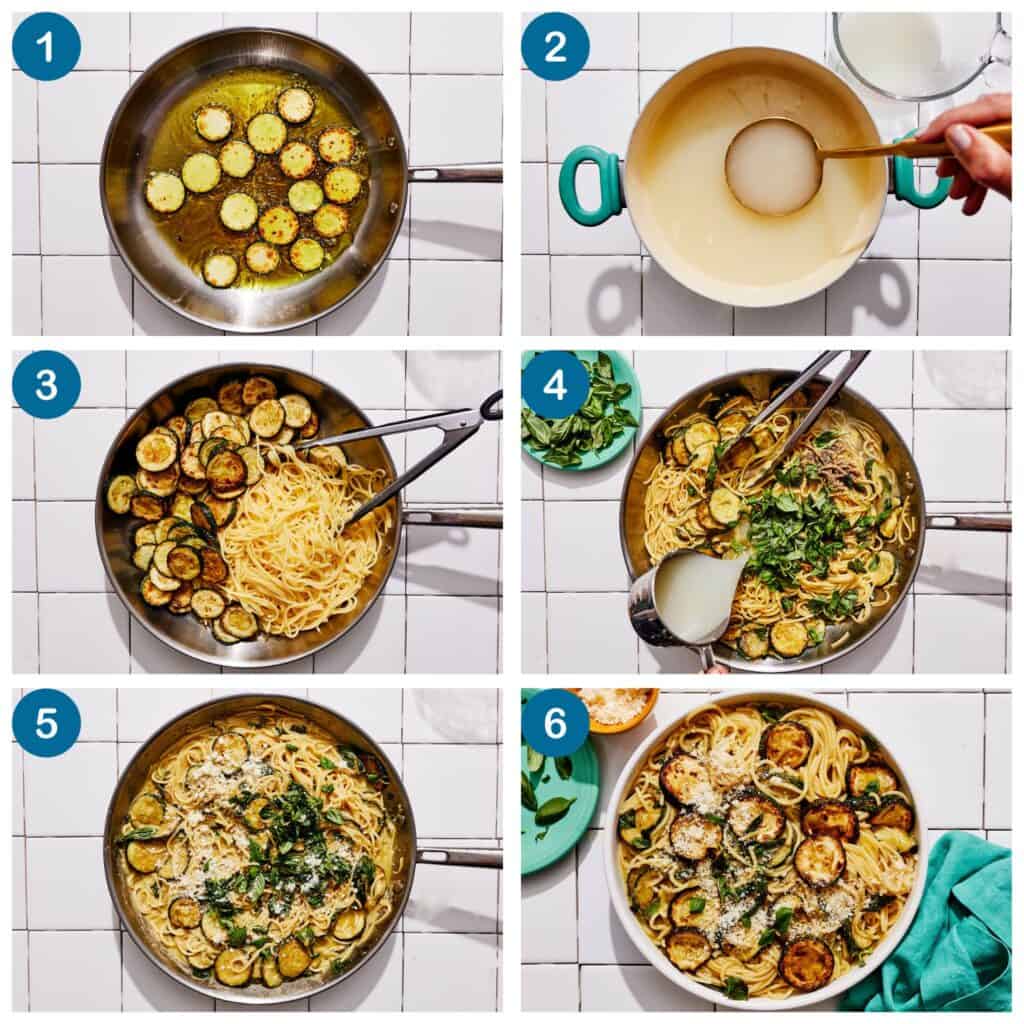
- Get ready: Slice 2 1/2 pounds zucchini (about 5 to 6 medium) into 1/8-inch thick rounds. In a 12-inch skillet or sauté pan with high sides, heat 1/2 cup extra virgin olive oil over medium-high until it reaches 350°F. If you don’t have a thermometer, test to see if the oil is hot enough by carefully placing a slice of zucchini into the oil. If it immediately starts to sizzle, it is ready. Line a plate with a paper towel and set it aside.
- Cook the zucchini: When the oil is ready, add zucchini slices into the pan in a single layer. Do this in batches and do not overcrowd the pan, or the zucchini will not cook evenly. Cook until the zucchini slices are golden on one side, about 5 minutes, and then flip and cook an additional 3 to 4 minutes until both sides are evenly golden-brown. If the zucchini starts to brown too quickly, lower the heat to medium. Use a slotted spoon to transfer the zucchini to the prepared plate. Repeat the process until all of the zucchini has been cooked. Turn off the heat and set the pan aside, but don’t wash it. Sprinkle 1/2 teaspoon fine sea salt over the cooked zucchini and toss gently to evenly distribute the salt.
- Cook the spaghetti and reserve the water: In a large pot set over high heat, bring 4 quarts water to a boil. Add 1 pound dry spaghetti and cook according to the package instructions until just al dente. Reserve 2 cups of the pasta cooking water. Drain the spaghetti.
- Make the sauce: Return the zucchini to the skillet and warm over medium heat for 2 minutes, gently mashing to break down the larger pieces. Add the spaghetti and 1 cup of the cooking water. Using the tongs, stir quickly to combine and evenly coat the noodles. Turn off the heat. Keep stirring to allow the pasta to cool for a couple of minutes, then gradually sprinkle in 1/2 cup finely grated Parmigiano Reggiano cheese and stir again. Roughly tear 1/2 cup fresh basil leaves and add to the pan with the remaining 1/2 teaspoon fine sea salt, 3/4 teaspoon ground black pepper, and remaining 1 cup of pasta cooking water. Use the tongs to stir the mixture to combine the ingredients into a shiny and silky sauce. Add the remaining 1/2 cup grated cheese and vigorously stir until the sauce comes together, is creamy, and coats the spaghetti.
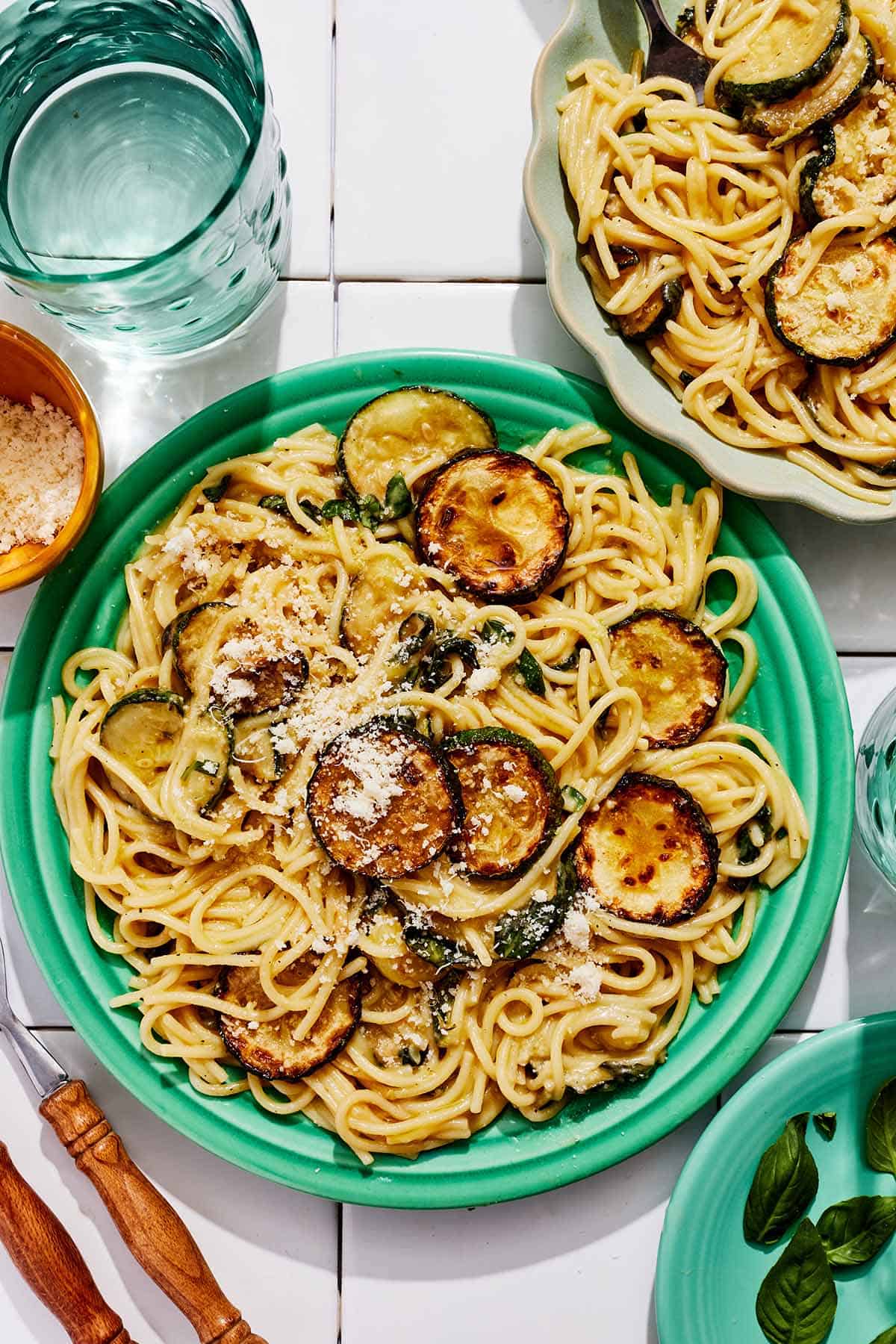
- Finish and serve: Roughly tear the remaining 1/2 cup basil leaves, add to the pan and stir to mix. Garnish with more cheese and basil if desired and serve immediately.
Make it Your Own
- Try another summer squash. You can substitute yellow squash, which is slightly sweeter, or zephyr squash, which is a bit more subtle and nuttier. Do not use patty pan or round zucchini. They have different shapes, sizes, and textures that will not cook up to the desired consistency.
- Swap the spaghetti. If you want to make it a little more nutritious, try whole wheat spaghetti.
- Change the cheese. You can substitute with Grana Padano, which is quite similar. American Parmesan is another alternative, although it is generally not aged as long as Parmigiano Reggiano, so the flavor isn’t as intense.
Spaghetti alla Nerano Tips
- Cut the zucchini evenly. For even cooking, slice the zucchini into uniform pieces. Using a mandoline will make the process quicker than slicing with a knife.
- Grate the cheese yourself. Use a microplane grater or the small holes on a box grater to grate the cheese so you have fine shreds that easily integrate into the sauce.
- Save the pasta water! The pasta cooking water is an important part of the sauce, so make sure you don’t toss it all out.
- Lower the heat. To help prevent the cheese from clumping when you add it to the pan, turn off the heat first. If the sauce is too hot, the proteins in the cheese tighten, expelling their fat and clumping together instead of melting smoothly.
- Tear the basil. Tearing the basil instead of slicing with a knife allows the essential oils to come out without browning. For the freshest basil aroma, add it toward the end of cooking so more of the essential oils remain.
- Prep the zucchini ahead, if you like. Many spaghetti alla Nerano recipes insist on refrigerating the zucchini after frying it, to ensure a creamy result. In my tests, I didn’t find the overnight chill made much of a difference. If, however, you prefer to prepare the zucchini ahead of time and then refrigerate it, feel free to do so. Be sure to bring the zucchini back to room temperature before putting it all together.
What to Serve With Spaghetti alla Nerano
A crisp Italian salad will round out the meal nicely and add some nice crunch. Serve some ciabatta garlic bread or homemade focaccia bread alongside the pasta. Use it to soak up any of the succulent sauce left behind.
A cold, lemony sgroppino is a refreshing finish for this savory dish.
Zucchini Recipes to Try Next
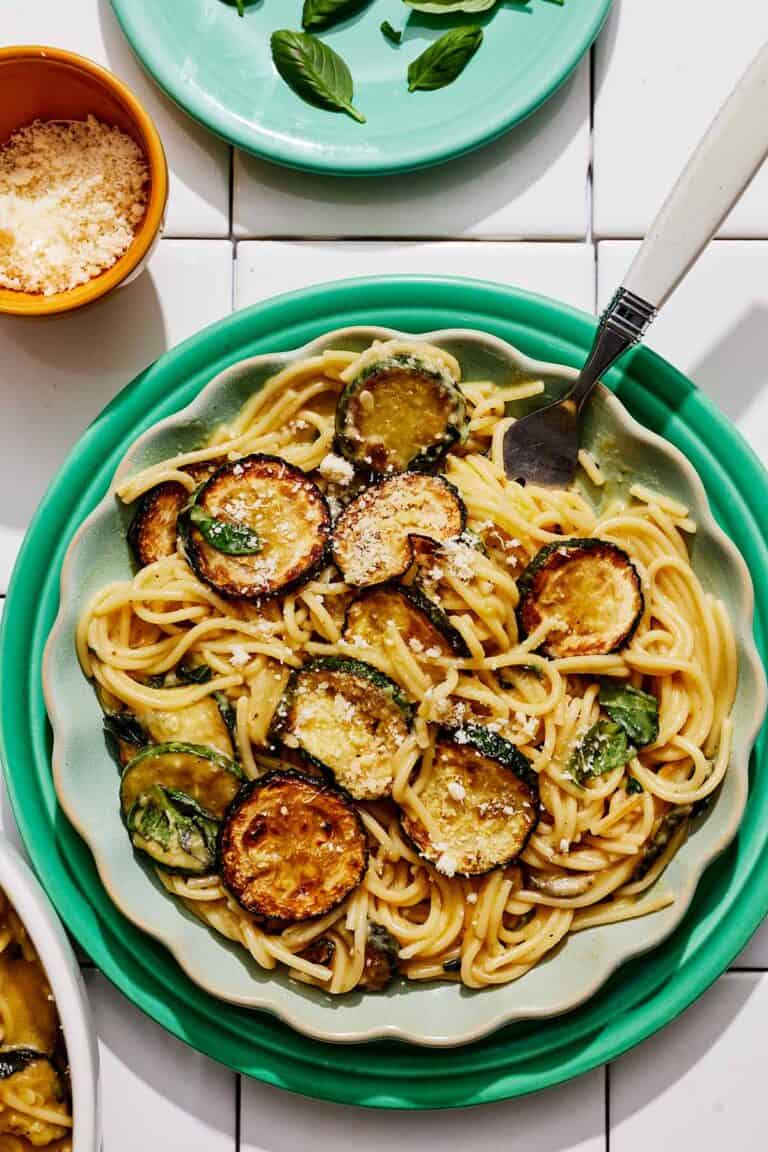
Spaghetti alla Nerano

Ingredients
- 1/2 cup extra virgin olive oil
- 2 1/2 pounds zucchini about 5-6 medium, thinly sliced into 1/8-thick rounds
- 1 pound spaghetti
- 1 teaspoon fine sea salt, divided
- 1 cup lightly packed fresh basil leaves, plus more to serve
- 1 cup finely grated Parmigiano Reggiano cheese, plus more to serve
- 3/4 teaspoon ground black pepper
Instructions
- Get ready. In a large pot, bring 4 quarts water to a boil, but don’t salt it. Line a plate with a paper towel.
- Heat the oil. In a 12-inch high-sided sauté pan or skillet, heat olive oil over medium high until it reaches 350°F. If you don’t have a thermometer, test to see if the oil is hot enough by carefully placing a slice of zucchini into the oil. If it immediately starts to sizzle, it is ready.
- Fry the zucchini. Carefully add the zucchini slices to the pan in a single layer. You will need to cook them in batches, so as not to overcrowd the pan. Cook until the zucchini is golden on one side, about 5 minutes, then flip and cook an additional 3 to 4 minutes until both sides are evenly browned. If the zucchini starts to brown too quickly, lower the heat to medium. Use a slotted spoon to transfer the zucchini to the paper towel-lined plate. Repeat the process until all of the zucchini has been cooked. Turn off the heat and set the pan aside while you cook the spaghetti. Sprinkle 1/2 teaspoon fine sea salt over the cooked zucchini and toss to evenly distribute the salt.
- Cook the spaghetti. Once the water is boiling, add the spaghetti and cook until al dente, about 8 minutes or according to the package instructions. Reserve 2 cups of the pasta cooking water, then drain the spaghetti through a colander.
- Make the sauce. Return the zucchini to the pan you fried it in, and add the spaghetti. Warm over medium heat for 2 minutes, gently stirring. Drizzle in 1 cup of the pasta cooking water. Use tongs to toss and stir to evenly coat the noodles. The sauce will start to thicken slightly at this point from the first addition of the pasta water. Turn off the heat.
- Finish the sauce off the heat. Keep stirring and gradually sprinkle in half of the grated cheese. Roughly tear in half of the basil leaves and add to the pan with the remaining 1/2 teaspoon fine sea salt, black pepper, and remaining 1 cup of pasta cooking water. Use the tongs to stir the mixture to combine the ingredients into a shiny, silky sauce. Add the remaining cheese and vigorously stir until the sauce comes together, is creamy, and coats the spaghetti.
- Finish and serve. Roughly tear the remaining 1/2 cup basil leaves, add to the pan, and stir to mix in. Garnish with more cheese and basil if desired and serve immediately.
Nutrition
Nutrition information is automatically calculated, so should only be used as an approximation.
Shop Suzy’s curated selection of Mediterranean olive oils, spices, and more.
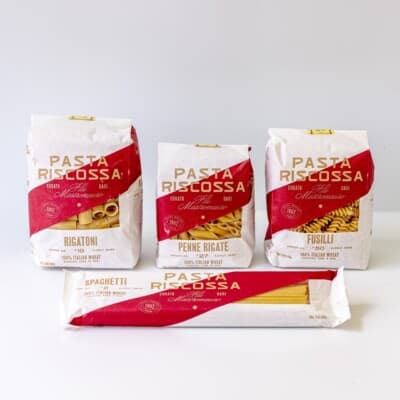
Premium Italian Pasta Bundle
Featuring four classic pasta shapes—Rigatoni, Penne Rigate, Fusilli, and Spaghetti—crafted with 100% Italian durum wheat semolina for the perfect bite every time.









Loved this so much that I made enough for two… and scoffed the lot!
It’s a faster, easier version of a dish of my own invention (though I’m sure it’s not original) for a summer glut of courgette/zucchini, where I slice them on a mandoline like this and pop them into a heavy cast-iron pan with plenty of good olive oil, a hot red chilli split in half, and one or two sprigs of rosemary (from the bush outside my kitchen). I give it ten minutes at a high heat to caramelise the edges, then turn it down as low as it will go (using a heat diffuser on the hob) and let it simmer for at least an hour, until it’s disintegrating. Season well, fish out the chilli, add some more fresh herbs (I use oregano, but basil would be nice too), and microplane some lemon zest into it and you have a lovely pasta sauce – or, alternatively, a topping for sourdough toast to which you could add some feta for a home-made bruschetta.
Thanks for sharing your version, Tim! Glad you enjoyed ours :).
Made this lovely dish for dinner tonight and it was unbelievably good – with so few ingredients too! I did add some Argentine shrimp for protein – and it just boosted the flavour up another notch – I would very happily make this dish for company! Thank you for sharing it.
Love the idea of adding shrimp to this! Thanks for sharing, Bonnie!
Absolutely delicious. I used the Barilla protein + spaghetti and was perfect.
How long can the zucchini be prepared ahead of time and held at room temperature before completing the recipe?
This is a truly outstanding dish. I found frying 2.5 lbs of zucchini was going to take a very long time so I switched to using my Wok and fried the Zucchini in it. It worked out great. The simple flavor of savory Basil makes this dish so unique. I also used Gluten Free whole wheat pasta. I will definitely make this again.
Excellent dish! Roasting the zucchini like that really gave it a lot of flavor! This one’s a keeper.
Hi, Meg! Summer here with The Mediterranean Dish. So glad you liked the recipe. Thank you for letting us know!
Agree. Roasting or grilling the zucchini is much simpler and you finish up with the same excellent sauce.
I’ve made this dish several times over the past couple of years. I will try some of your adjustments. One thing I do in the summer when I have several zucchini in the garden. I slice and cook them and then put the zucchini in the freezer. So in the winter when I want to make this dish I thaw the zucchini and then make the sauce as the recipe describes. Works perfectly and saves time.
That is such a great idea, Marcia! Thanks for sharing!
I was excited to see that the recipe didn’t include deep frying the zucchini. But it’s lots of oil (even if less) and potential splatter and having to dry the cooked slices on paper towel. Doesn’t look easier at all. Looks delicious, but daunting.
Just one piece of feedback
You are from the Mediterranean and so am I. Thousands of your followers will be the same. So please please please add the metric equivelant for each ingredient
What is a quart. What is a wet cup and what is a dry cup? How many grams in an ounce? Others do it. Why don’t you.? It’s infuriating it really is.
Agree 👍
While I understand your frustration, when I find a recipe that doesn’t have the conversions I simply look it up on the internet. Certainly not something to be infuriated about…
Right? And once you make a few recipes, you learn the equivalences pretty quickly.
Most conversions are pretty simple to ‘do in your head’ particularly if you use recipes from all over the world regularly. The tricky one for me – not a problem here – is ºF to ºC.
Making those conversions is the main reason I have Alexa in my kitchen.
I made this recipe about a week ago it really was delicious! I’m working my way through your lovely recipes… 😋 never seen so many tasty meals on one website. So tasty and most are quick to prepare….
Hi Gail,
Quick question- when you were finished cooking the zucchini , and you set the pan aside, did you discard all of the oil? Or is the oil used to make the sauce? Thank you!
Hi, Marianne. The goal of this recipe is not to have any oil leftover. The zucchini should soak it up. If you do end up with some, we recommend discarding it.
You’re so sweet, Gail! Thank you!
I made this over the weekend, and it was one of the best pastas I have ever made or tasted! Using the same oil that the zucchini were fried in the sauce made for a very nice smoky flavor, that was freshened up by the basil. I am so glad I went out of my way to find fresh basil as the recipe insisted and I am even more glad I found this simple yet delicious recipe. 10 stars. All the stars!
Wow!! What an amazing review. Thanks so much, Vik!
What a great recipe!! So delicious and your clear steps make it so easy to prepare. Thanks for making it healthier too.
Our pleasure, Peggy! Happy to hear you loved this one!