


Follow these pro tips for how to pick a sweet, juicy watermelon every time.
Pro Tips for Picking a Sweet, Juicy Watermelon Every Time!
Learning how to pick a watermelon is a bit like trying to find a good partner on a blind date—you don’t know until you know!
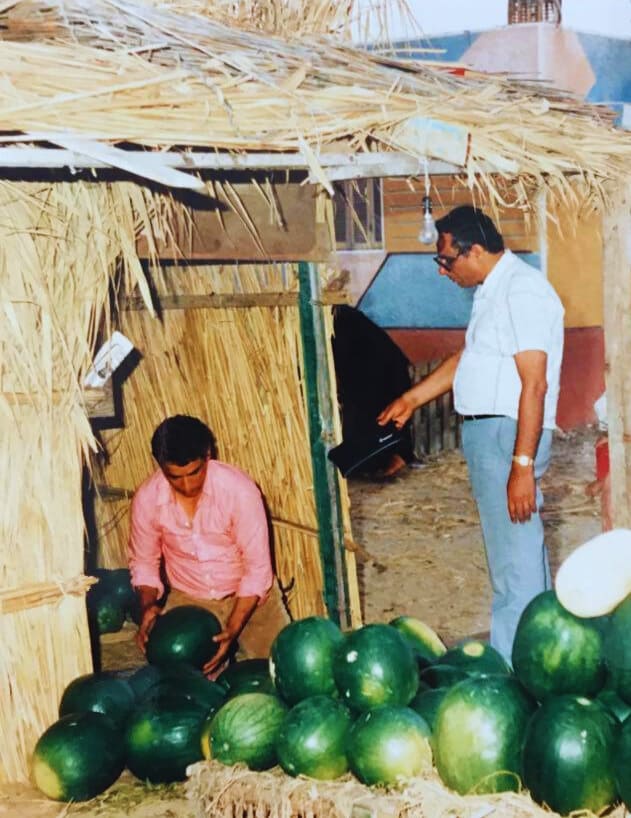
Luckily, I had a lot of experience walking the sunny souq (market) streets in Port Said, Egypt, with my late father, who taught me many things, from how to store fresh herbs to choosing the sweetest watermelon.
I shared my father’s tips for picking the perfect melon in my debut cookbook, and since it’s watermelon season, I decided to share them in more detail here. Once you try these tips, you’ll be a lot more confident when selecting your next melon to bring home.
Tips for How to Pick a Good Watermelon
In a nutshell, a few things determine the sweetness of a watermelon—including the heat, conditions in which it was grown, and pollination. However, quizzing a farmer directly isn’t always an option. In that case, follow this quick reference guide.
- Examine the shape. Find a watermelon that is symmetrical in shape; it can be oval or round, but it should not have an odd shape or irregular bumps.
- Heavy for its size. A melon that feels heavier than it looks has more water content so it is juicy and ready. Avoid melons that are too large but don’t feel as heavy as they look.
- Take a look at the color of the skin. A ripe melon should have dark and dull skin. If the skin looks pale or shiny, it is not ripe.
- Check the pattern of the webbing or sugar spots (the dark zigzagged stripes). Larger webbing is a sign that the watermelon has been well pollinated and is oozing with sweetness.
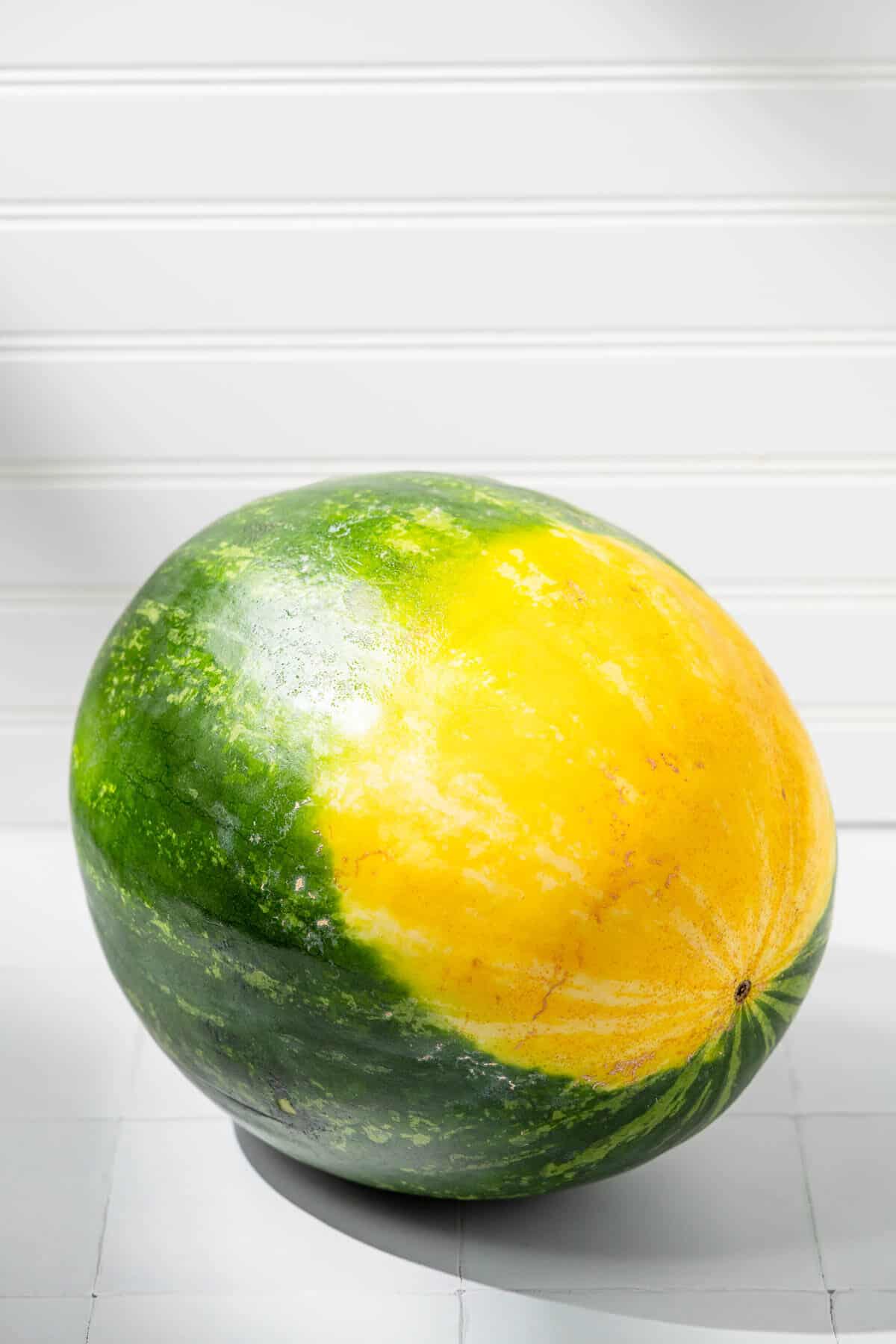
- Find the field spot (the spot where the watermelon rested on the ground). Roll it around and look for a dark yellowish spot. If you see a nice, large yellow spot (I call it the bald spot), it means the melon had a chance to ripen on the vine, so it is full of flavor. For me, the field spot is the dead giveaway. I always try to find a melon with a good field spot that is creamy or dark yellow. A whiter field spot means that the melon still needs time to ripen.
- Tap on it! Pick up the watermelon, hold it close to your ear, and knock it in a few spots. A ripe, juicy watermelon should give a deeper sound resonating like a tenor. While a hollow sound indicates a dryer, less ripened watermelon.
My dad was a master at listening to a watermelon. He never bought a melon without giving it a few taps while holding it up. As a kid, I always thought that the watermelon whispered a secret in his ear—like, “Take me home!
In truth, picking a good watermelon by tapping is a bit challenging. And it does take practice for one’s ear to discern the difference between the sounds that come from a watermelon’s belly. So do this, yes, and have fun, but look for other indicators as well.


Actually going to buy a watermelon today! 🙂
I so enjoy your site – recipies but family stories! Thank you!
I love Mediterranean food. I want to try this Watermelon, cucumber, & feta cheese
I have found that all the thumping and yellow spots to not be a good way to pick a sweet watermelon. I actually look at the stripes. If the stripes are broken up like the one in the first picture of this article, it will be sweet. Solid lines are not ripe and tend to be tart watermelons. The picture of the one with the big yellow spot, will not be a good watermelon. I am 99% accurate using this method.
Very interesting! Thanks so much for sharing, Solar!
Thank you, but disappointing Watermelon is not only about sweetness, it’s also about crispness…I don’t know about others, but there is nothing enticing about a soggy, overripe watermelon, and that is what I most usually encounter, not lack of sweetness…more lack of proper hydration or freshness.
That’s where pressing the watermelon a little comes in. If it gives, it’s probably mushy inside. You want it to be firm when you press it.
Now I can look forward to buying a watermelon!! It’s always been a crapshoot.
Thanks Suzy.
So glad you found the post helpful, Consuelo!
Thanks for sharing!
These tips are incredibly helpful, especially the bit about the field spot and the color and patterns on the rind. Thank you so much!!
Thanks for all of the delicious recipes and goo tips on cooking and choosing the best fruits and veggies. 💕💕
It’s our pleasure, Ida! Thanks for supporting us!