How to Cook Bulgur Wheat Perfectly

This post may contain affiliate links. Please read our disclosure policy.

This guide shows you how to cook bulgur wheat for a fluffy, pleasantly chewy result, with the right method for fine, medium, or coarse grains.
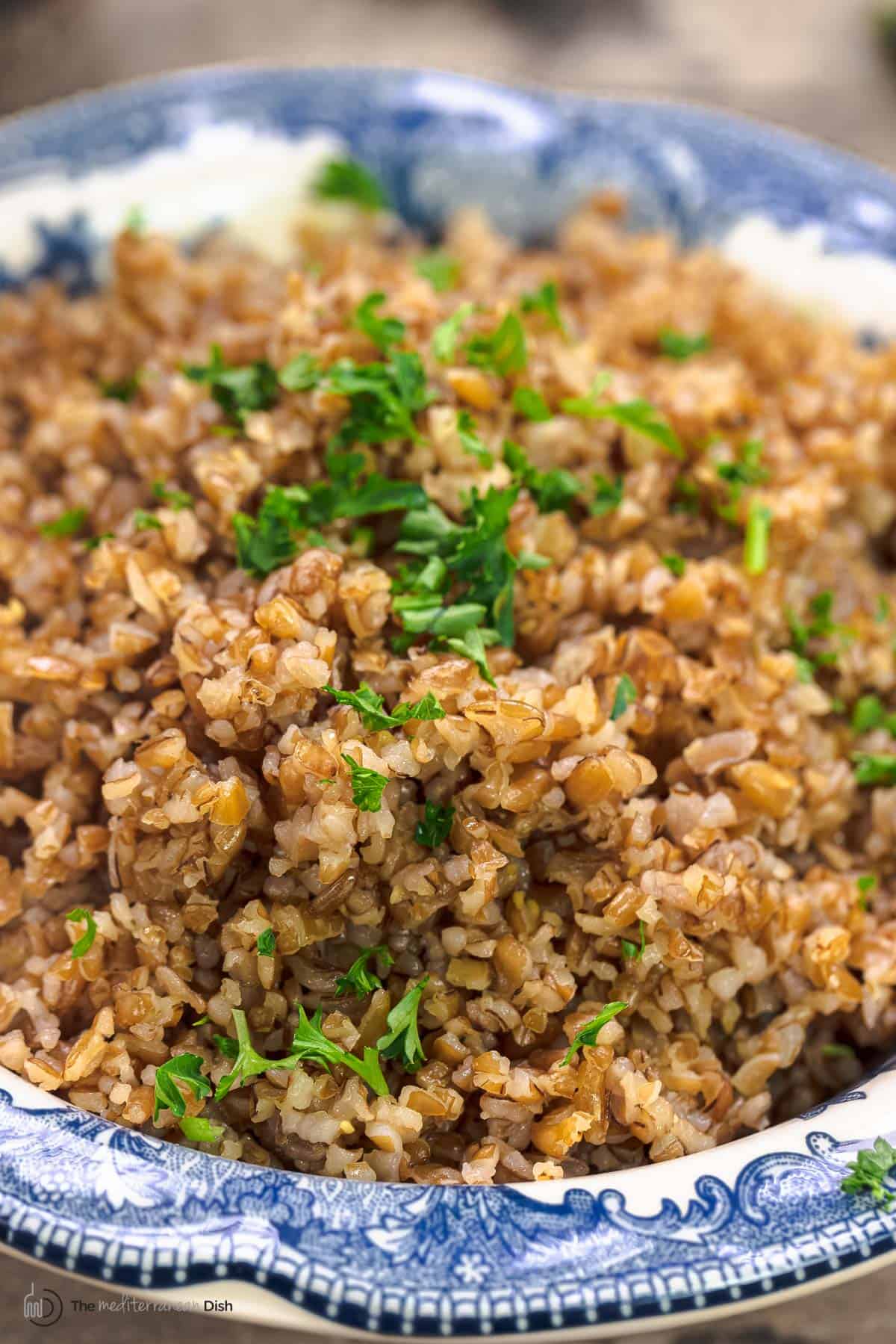
Bulgur Wheat: A Fast-Cooking Mediterranean Staple
Bulgur is one of the grains I reach for often in my Mediterranean kitchen. Because the wheat is partially cooked before it is dried and cracked, it is wonderfully quick to prepare: Fine bulgur softens after a 10-to-12-minute soak, while medium or coarse bulgur simmers for about 12 minutes and then rests, covered, for 10.
With its nutty, earthy flavor and pleasantly chewy texture, bulgur makes a satisfying alternative to rice. I serve it simply alongside chicken, salmon, or lamb, or use it to add substance to soups, stews, salads, and stuffed vegetables.
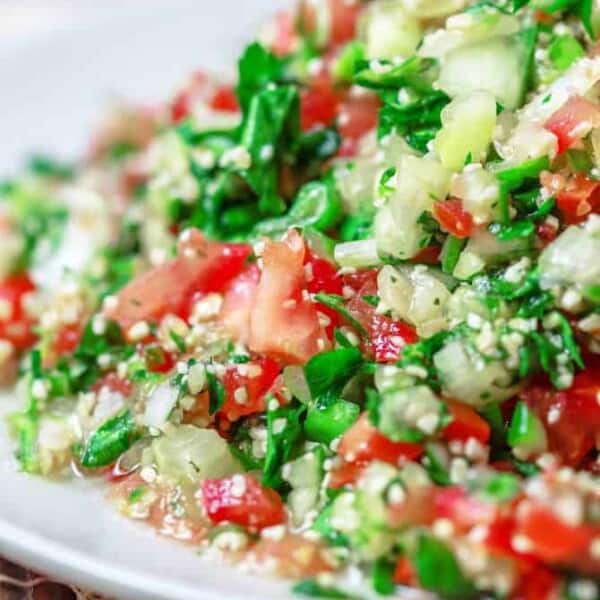
If you’ve made my tabouli salad, you’re likely already familiar with fine bulgur. But that is only one way to use this versatile Mediterranean staple. Once you know which type you have and the correct ratio of bulgur to water, preparing it is wonderfully straightforward.
What You’ll Need
The ingredients are simple, but the type of bulgur and the amount of liquid are important.
- Bulgur wheat: Use fine bulgur for the soaking method or medium or coarse bulgur for the stovetop method.
- Water or broth: Water gives you a neutral grain that pairs with almost anything. Low-sodium chicken or vegetable broth adds savory flavor.
- Extra virgin olive oil: This is optional, but one tablespoon gives medium or coarse bulgur a little richness. You can find quality extra virgin olive oils in our shop.
- Kosher salt: Add a generous pinch to season the bulgur as it cooks.
- Parsley: An optional finishing touch that adds fresh flavor and color.
Bulgur-to-Water Ratio and Cooking Time
The correct ratio depends on the size of your bulgur. Fine bulgur needs more hot liquid for soaking, while medium and coarse bulgur cook with less liquid on the stovetop.
| Type of bulgur | Bulgur-to-liquid ratio | Method | Time |
|---|---|---|---|
| Fine bulgur | 1 cup bulgur to 2 cups hot water | Soak in a heat-safe bowl | 10 to 12 minutes |
| Medium or coarse bulgur | 1 cup bulgur to 1 ½ cups water or broth | Simmer covered, then rest | Simmer about 12 minutes; rest 10 minutes |
For medium or coarse bulgur, you can use water, low-sodium chicken broth, or vegetable broth. Broth adds more savory flavor, while water keeps the grain neutral and ready to pair with almost anything.
One cup of dry bulgur yields approximately 3 cups of cooked bulgur.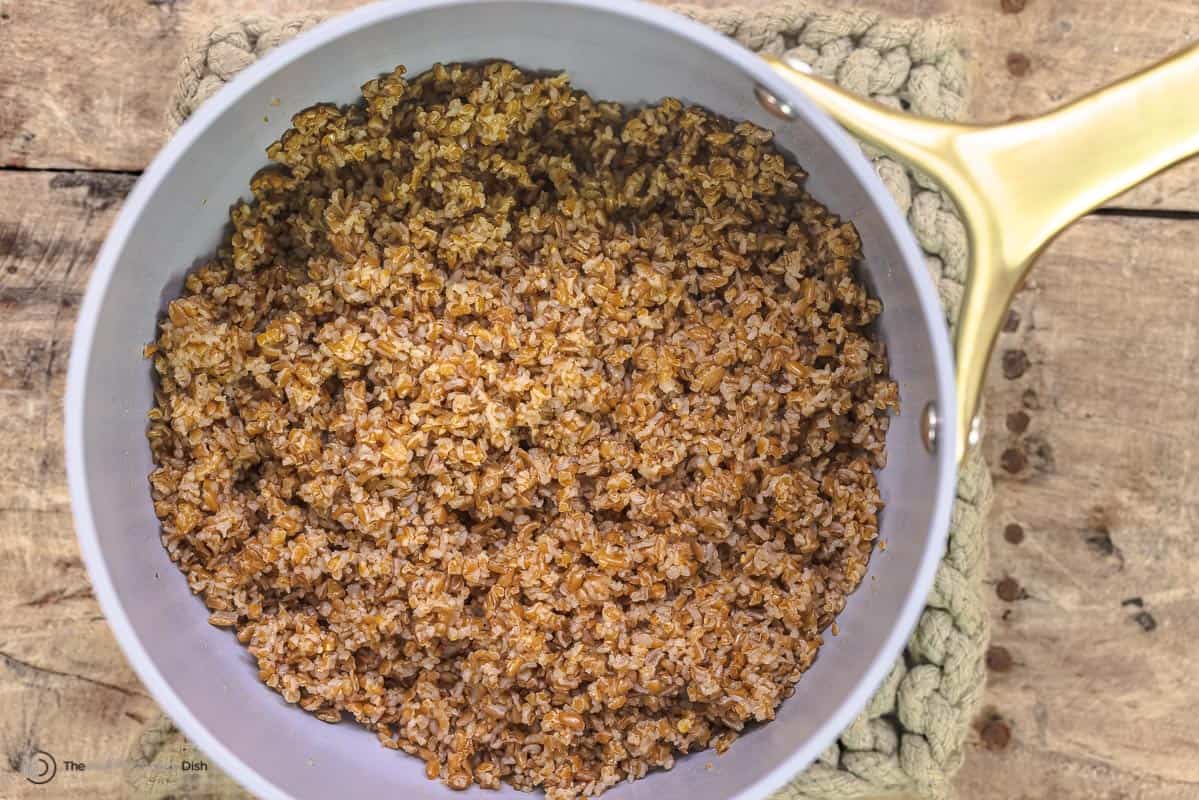
How to Cook Medium or Coarse Bulgur Wheat
Medium and coarse bulgur cook much like rice, but they are ready much faster. Keep the pan covered during both cooking and resting so the steam stays trapped inside.
- Rinse the bulgur. Rinse 1 cup of medium or coarse bulgur and drain it well.
- Bring the liquid to a boil. Add 1 1/2 cups of low-sodium broth or water to a medium saucepan and bring to a boil.
- Add the bulgur. Stir in the drained bulgur and 1 tablespoon of olive oil, if using. Season with a generous pinch of kosher salt.
- Simmer. Allow the liquid to return to a boil, then lower the heat and cover the pan. Simmer for about 12 minutes, until the bulgur is tender and has absorbed all the liquid.
- Let it rest. Remove the pan from the heat and leave it covered for 10 minutes. Do not lift the lid—the trapped steam finishes softening the grain.
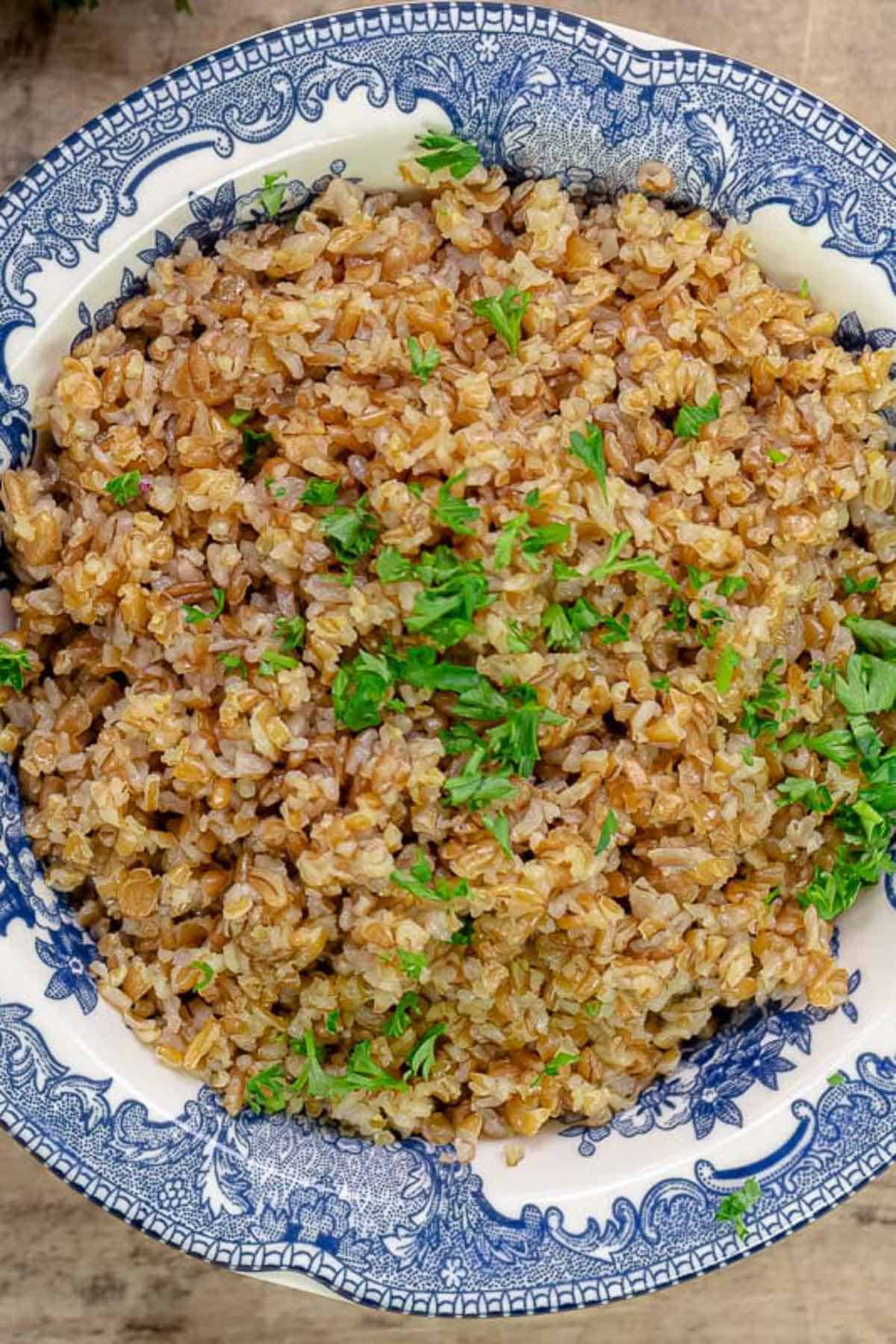
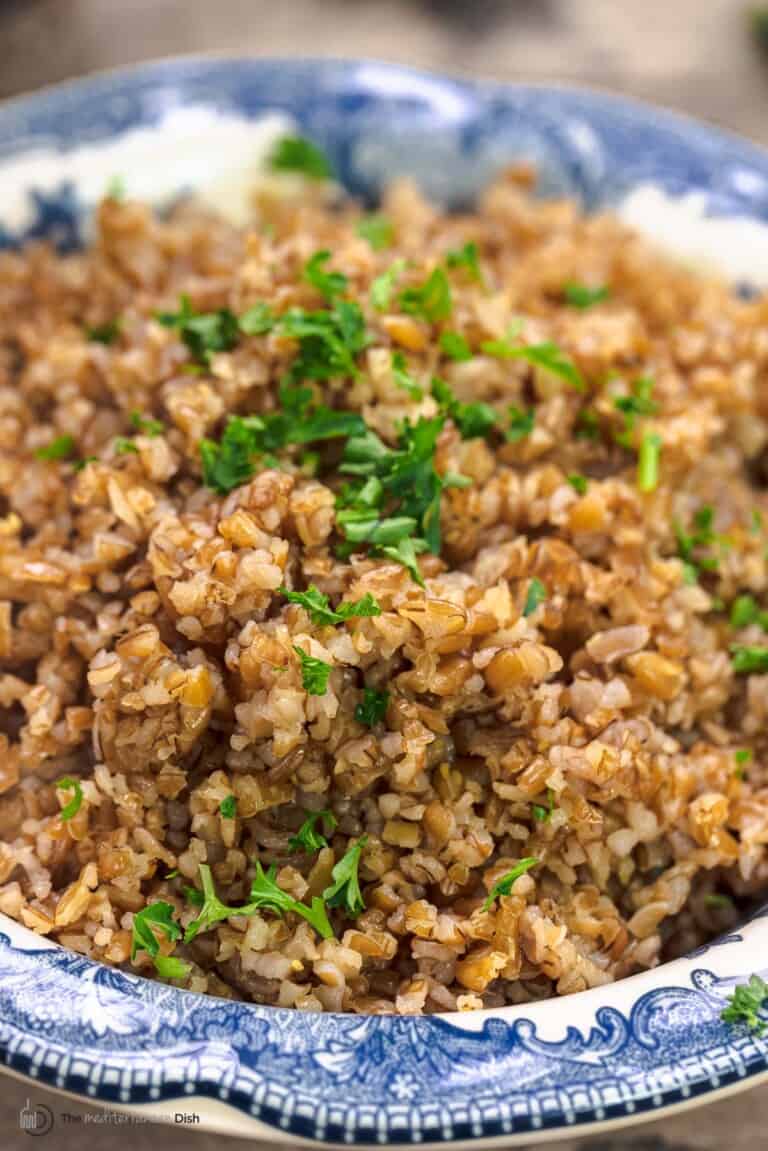
- Fluff and serve. Fluff the bulgur with a fork and garnish with parsley, if you like.
How to Prepare Fine Bulgur
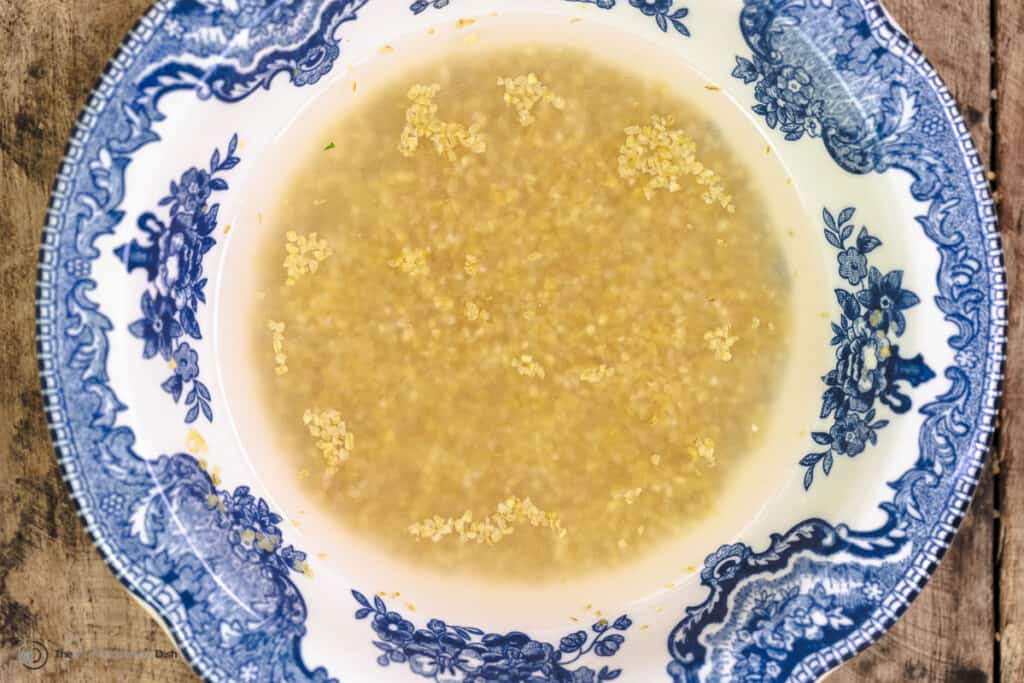
Fine bulgur does not need to simmer on the stove. A short soak in hot water is enough to soften the small grains.
- Add the bulgur to a bowl. Place 1 cup of dry fine bulgur in a large heat-safe bowl.
- Add hot water. Pour 2 cups of hot water or other hot liquid over the bulgur.
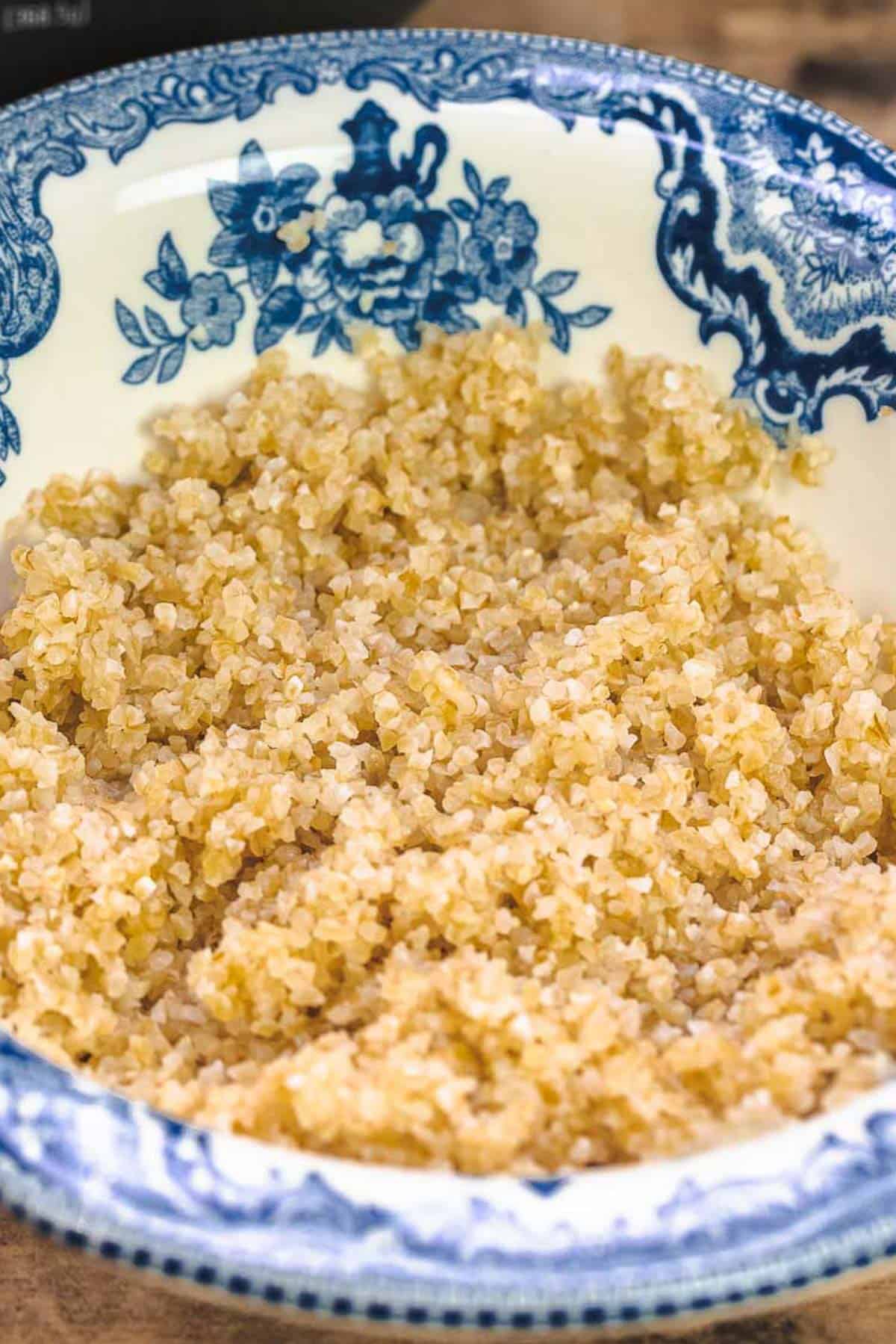
- Let it soak. Set the bowl aside for 10 to 12 minutes, until the bulgur has absorbed the liquid and become tender.
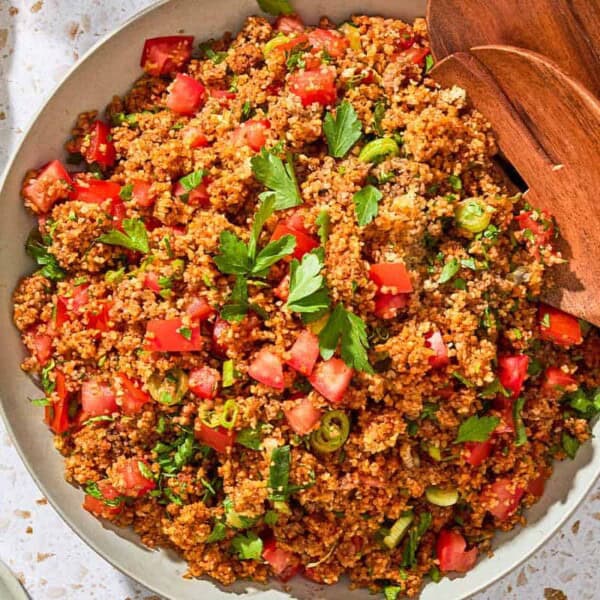
- Fluff the bulgur. Use a fork to separate the grains. Serve it as you like, or use it to make tabouli, kisir, or kibbeh.
What Is Bulgur Wheat?
Bulgur is a whole grain made from wheat kernels that are partially cooked, dried, and cracked into different sizes. Since the wheat is already partially cooked, bulgur takes less time to prepare than many other whole grains.
It is an essential ingredient in dishes like tabouli, Turkish kisir, and kibbeh. Coarser bulgur can also be cooked and served much like rice or added to pilafs, soups, stews, and stuffing mixtures.
Fine, Medium, Coarse, and Extra-Coarse Bulgur
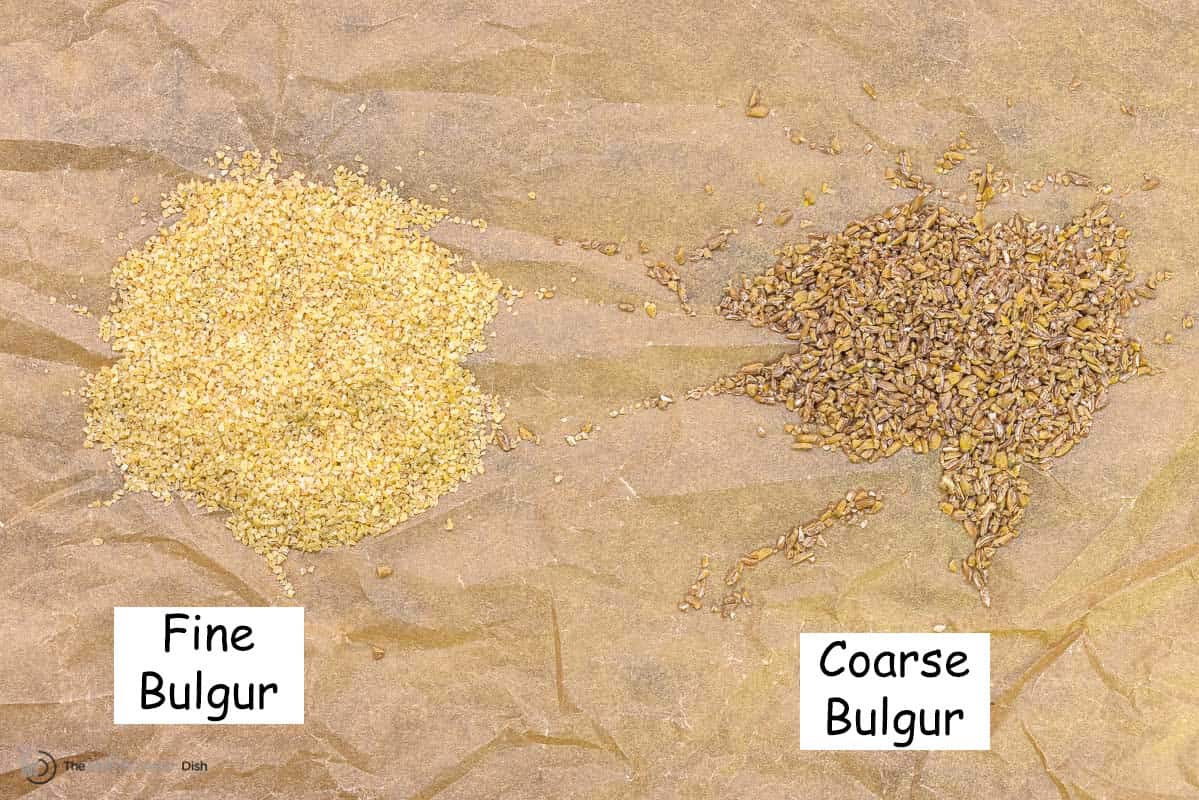
Bulgur comes in four main grades. The size of the grain determines how you prepare it and where it works best.
- Fine bulgur: Similar in texture to couscous, fine bulgur is tender enough to soften in hot water without boiling. It is the type typically used for tabouli, kisir, and kibbeh.
- Medium bulgur: Medium bulgur falls between fine and coarse. Use the stovetop method for medium or coarse bulgur.
- Coarse bulgur: Larger and chewier, coarse bulgur is my choice for a simple side dish, pilaf, soup, stew, or a hearty recipe like chicken stuffed peppers.
- Extra-coarse bulgur: This is the largest of the four grades. The tested methods in this guide are written for fine, medium, and coarse bulgur, so follow the package directions for extra-coarse bulgur.
Is Bulgur the Same as Cracked Wheat?
No. Although the two look similar, bulgur has been partially cooked before it is dried and cracked. Cracked wheat is raw, so it generally needs more liquid and a longer cooking time.
Do not substitute cracked wheat in this recipe and expect it to become tender in the same amount of time.
Is Bulgur Wheat Gluten-Free?
No. Bulgur is made from wheat and is not gluten-free. It should be avoided by anyone who needs to follow a gluten-free diet.
For a gluten-free side dish with a somewhat similar texture, try brown rice or quinoa, following the cooking instructions for that specific grain.
Tips for Perfectly Cooked Bulgur
- Check the grind before you begin. Fine bulgur uses a different ratio and method than medium or coarse bulgur. The package should identify its size.
- Drain rinsed bulgur thoroughly. Water clinging to medium or coarse bulgur can affect the tested liquid ratio.
- Use low-sodium broth. This gives you better control over the final seasoning.
- Keep the lid closed. Medium or coarse bulgur needs the trapped steam during both simmering and resting. Lifting the lid releases that steam.
- Let coarse bulgur rest before fluffing. Those undisturbed 10 minutes help the grain finish absorbing moisture and become evenly tender.
- Look for tenderness, not complete softness. Properly cooked bulgur should be tender with a pleasant chew rather than mushy.
- Season the cooking liquid. You can add your favorite seasonings or aromatics along with the salt. Once the bulgur is cooked, taste and adjust the seasoning to your liking.
Where to Buy Bulgur Wheat
You can find both fine and coarse bulgur in The Mediterranean Dish Shop. Many grocery stores also carry it near the rice and other grains or in the international foods aisle. Health food stores and Middle Eastern markets are also good places to look.
Check the package carefully before buying. Fine and coarse bulgur require different amounts of liquid and different preparation methods.
Ways to Use Bulgur Wheat
Bulgur’s mild, nutty flavor makes it easy to use in everything from fresh salads to warming soups and stews.
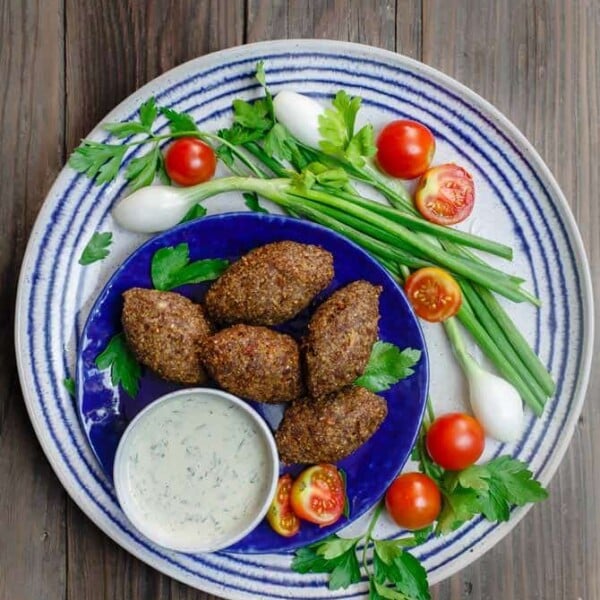
- Make Turkish lentil balls. Fine bulgur gives mercimek köftesi its tender but sturdy texture.
- Serve coarse bulgur as a side dish. Spoon it alongside baharat baked chicken thighs, spicy salmon, or braised lamb shanks.
- Make a hearty pilaf or grain bowl. Coarse bulgur has enough texture to hold up under roasted vegetables, meat, seafood, and sauces.
- Add it to soups and stews. Bulgur adds body and a satisfying chew without requiring a long cooking time.
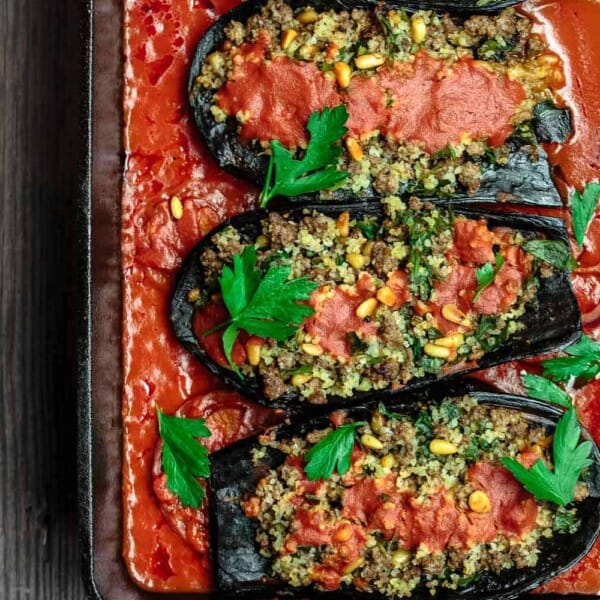
- Use it in stuffed vegetables. It pairs beautifully with ground meat, tomatoes, herbs, and warm spices, as in my stuffed eggplant with bulgur and pine nuts.
- Turn fine bulgur into a fresh salad. Its delicate texture works especially well with chopped herbs, tomatoes, cucumber, lemon, and olive oil.
How to Store and Reheat Bulgur
Store dry bulgur in an airtight container in a cool, dry place away from heat, sunlight, and moisture. When stored properly, it will keep for about 2 years. Check the date and storage instructions on the package as well.
Transfer cooked bulgur to an airtight container and refrigerate it promptly. It will keep in the refrigerator for up to 4 days or in the freezer for up to 3 months.
Thaw frozen bulgur overnight in the refrigerator. To reheat it, place it in a saucepan with a small splash of water and warm it over medium heat until heated through.
More Questions About Bulgur
Bulgur is a whole grain that provides fiber and plant-based protein. It can be a nutritious addition to salads, soups, grain bowls, and meals with vegetables and protein. Because bulgur is made from wheat, it is not suitable for a gluten-free diet.
It depends on the grind. Fine bulgur is prepared by soaking it in hot water for 10 to 12 minutes. Medium and coarse bulgur do not need to be soaked before cooking; rinse them, drain well, and use the stovetop method above.
Bulgur should be tender with a pleasant chew. Medium or coarse bulgur is ready to rest when it has absorbed all the liquid. After resting covered for 10 minutes, the grains should separate easily when fluffed with a fork.
For this medium or coarse bulgur recipe, rinse the grain and drain it thoroughly before adding it to the saucepan. Fine bulgur goes directly into the bowl before you add the hot water.
Make These Bulgur Favorites Next
How to Cook Bulgur Wheat

Ingredients
For medium or coarse bulgur
- 1 cup bulgur wheat, medium-coarse or coarse
- 1 ½ cups broth or water
- 1 tablespoon olive oil, optional
- Kosher salt
- Parsley, for garnish
For fine bulgur
- 1 cup fine bulgur wheat
- 2 cups hot water or liquid
- Kosher salt
Instructions
To Cook Medium or Coarse Bulgur
- Rinse the bulgur. Rinse 1 cup of bulgur and drain well.
- Bring the liquid to a boil. In a medium saucepan, bring 1 1/2 cups of low-sodium broth or water to a boil.
- Add the bulgur. Stir in the drained bulgur and olive oil, if using. Season with a generous pinch of kosher salt.
- Simmer. Allow the liquid to return to a boil, then lower the heat and cover. Simmer for about 12 minutes, or until the bulgur is tender and has fully absorbed the liquid.
- Rest. Remove the saucepan from the heat and let the bulgur stand, covered and undisturbed, for 10 minutes.
- Finish and serve. Fluff with a fork and garnish with parsley, if using.
To Prepare Fine Bulgur
- Combine. Place 1 cup of dry fine bulgur in a large heat-safe bowl. Pour 2 cups of hot water or liquid over the bulgur.
- Soak. Set aside for 10 to 12 minutes, until the bulgur has absorbed the liquid and become tender.
- Fluff and serve. Fluff with a fork and serve as desired, or use in tabouli, kisir, kibbeh, or another recipe.
Recipe Notes
- Yield: One cup of dry bulgur yields approximately 3 cups of cooked bulgur.
- Seasoning: Add your favorite seasonings or aromatics to the cooking liquid. Once the bulgur is cooked, taste and adjust the seasoning as needed.
- Dry storage: Store uncooked bulgur in an airtight container away from heat, light, and moisture. Properly stored dry bulgur will keep for about 2 years. Check the package date and storage instructions as well.
- Cooked storage: Refrigerate cooked bulgur in an airtight container for up to 4 days or freeze it for up to 3 months.
- To reheat: Thaw frozen bulgur overnight in the refrigerator. Place it in a saucepan with a small splash of water and warm over medium heat until heated through.
- Shop this recipe: Visit our shop for fine bulgur wheat, coarse bulgur wheat, and quality extra virgin olive oils.
Nutrition
Nutrition information is automatically calculated, so should only be used as an approximation.
Shop Suzy’s curated selection of Mediterranean olive oils, spices, and more.
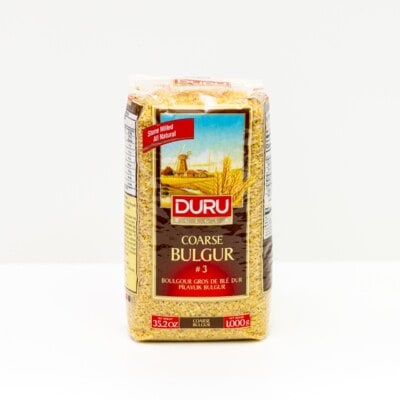
Try Turkish Bulgur
Authentic all-natural extra fine bulgur made from hard red winter wheat berries.










I just ordered the fine bulgur to be able to make tabouli. Does the fine bulgur cook the same as the course bulgur (i.e. Do I use the same instructions to cook both the fine and course bulgur)? Other than consistancy, is there a difference between the two in regards to flavor recipe options, etc?
Hi, Lynn! Fine bulgur isn’t cooked like coarse bulgur. Simply soaking it in hot water for about 10–15 minutes is usually enough. In terms of flavor, both are quite similar, but fine bulgur has a more delicate texture, which makes it perfect for dishes like tabouli. Coarse bulgur is better suited for pilafs or hearty salads.
Made (and tasted) bulgur for the first time ever and my mom and I loved it! Served it with lemon chicken and baked cabbage steaks for meal prep. The olive oil gave it a wonderfully smooth texture. I will be making it again. THANK YOU!!! <3
Yay! This Kisir is another amazing bulgur recipe I highly recommend!
Thanks so much for this! My husband was recently diagnosed with type 2 diabetes and we’re looking for new recipes and food options for him, so I’m really glad to find your site and this info. I was wondering – could you prepare bulgur in a rice cooker?
Hi, Juli. I believe you can, but it’s not something we’ve tried before here.
Hello Suzy,
A while back maybe the mid 70’s we used to make it by first roasting it at least that is what we called it by putting the oil in the skillet on medium low heat until it shimmered then adding the bulgar till you smelled it roast then add the liquid and cover but we also added sauteed aromatics like garlic and or onion also mushroom and sometimes red/yellow/orange bell pepper, Have you ever had it that way?
Very interesting! We’ve never tried it that way over here. Thanks for a bit of inspiration!
Now that is taking it up another level….I tried that today and the flavour went up another notch…Merci Beaucoup
Helpful clear directions. Thanks
I loved it! It was my first time cooking and eating bulgur. It was simple enough to make and absolutely delicious. It’s a bit like brown rice, but heartier and a deeper flavor. I made it a long with baked chicken, broccoli and beets. I know it doesn’t sound very exciting but when put together it was very satisfying and tasty. I have some left over bulgur that I plan on tossing into a pot of soup tomorrow. I hope that works out well 😉
Welcome to the world of bulgur, Amanda!! I highly recommend using it in our tabouli salad recipe… such a classic!
Came out really very wonderful! Thank you 🙏🏾!
I love your site! i noticed that you said to add 2 cups of hot water to one cup of fine bulgur, but I’ve always used a 1-1 ½ ratio. Is this a typo? the instructions are under How To Cook Fine Bulgur, and reads: “ Place 1 cup of dry fine bulgur grains in a large bowl. Pour 2 cups of hot water on top.” Also, I cannot edit comments by Re selecting text and adding/deleting; I can only go backwards and delete…something for your web person.
Hi, CJ! This is the ratio that worked for us during testing using our own fine bulgar wheat. If you have been successful with 1:1.5 cup ratio, though, then you can totally go ahead and stick with that.
I’m new to this website but looking forward to preparing many of these delicious looking meals. Many of the ingredients are some of my favorites!
What is bulgur from rice?
Hi, Teknik. Bulgur is just a different type of grain.
I’ve been to morocco and discovered to bully there. This recipe is perfect! Thank you!
Thanks for the great recipe. I’m an old man native to the U.S., but for cooking I use a digital scale and metric measurments, the former because it’s easier to just add the ingredients with a bowl on the scale, and the latter because they’re more sensible and easier to use. For this reason, I’d find it very convenient if you’d provide those measurements in addition to the imperial ones you already provide. Surely, I’m not the only one.
Hi, Allen. Thanks for the feedback! It is something we are trying to add more and more, starting with our baking recipes. It’s just quite a process, and we are a small team :). We’ll keep working on it, though.
Sorry I am confused!
You wrote ‘To cook 1 cup of dry coarse bulgur wheat, you’ll need 1 ½ cups of liquid.”….Do you mean 1and half cups of liquid or Half cup of liquid to 1 cup?
Best wishes from Thailand!🎄💖
Hi, Hash. You will need 1 cup of bulgar and 1.5 cups of water or broth for this recipe. Enjoy!
Despite having no Mediterranean roots, I’ve eaten bulghur since childhood and enjoy it however it’s cooked. My mother learned of it, perhaps from an Armenian women, in the early 1950’s in Seattle, and her method started with sauteeing onions in oil, then adding the dry bulghur and stirring it for a couple of minutes in the oil to coat and slightly toast it, then adding broth or water and put it in the over to bake until the liquid was absorbed. Does this metghod come from a particular area of group?
Sounds good….I will do this… Thank you!… Good day from Thailand!
This is a super helpful article! I’ve always wanted to try bulgur, and my first attempt at preparing it was a success :).
Awesome! Thanks, Lauren!
My first time cooking bulgur! It was so easy!
So glad to hear it! Thanks, Ania!