My Mom’s Spinach Ricotta Ravioli


This post may contain affiliate links. Please read our disclosure policy.

Homemade spinach ricotta cheese ravioli is a classic pasta dish beloved by Italians. They’re light, savory, and packed with flavor. They’re also easier to make than you might think!
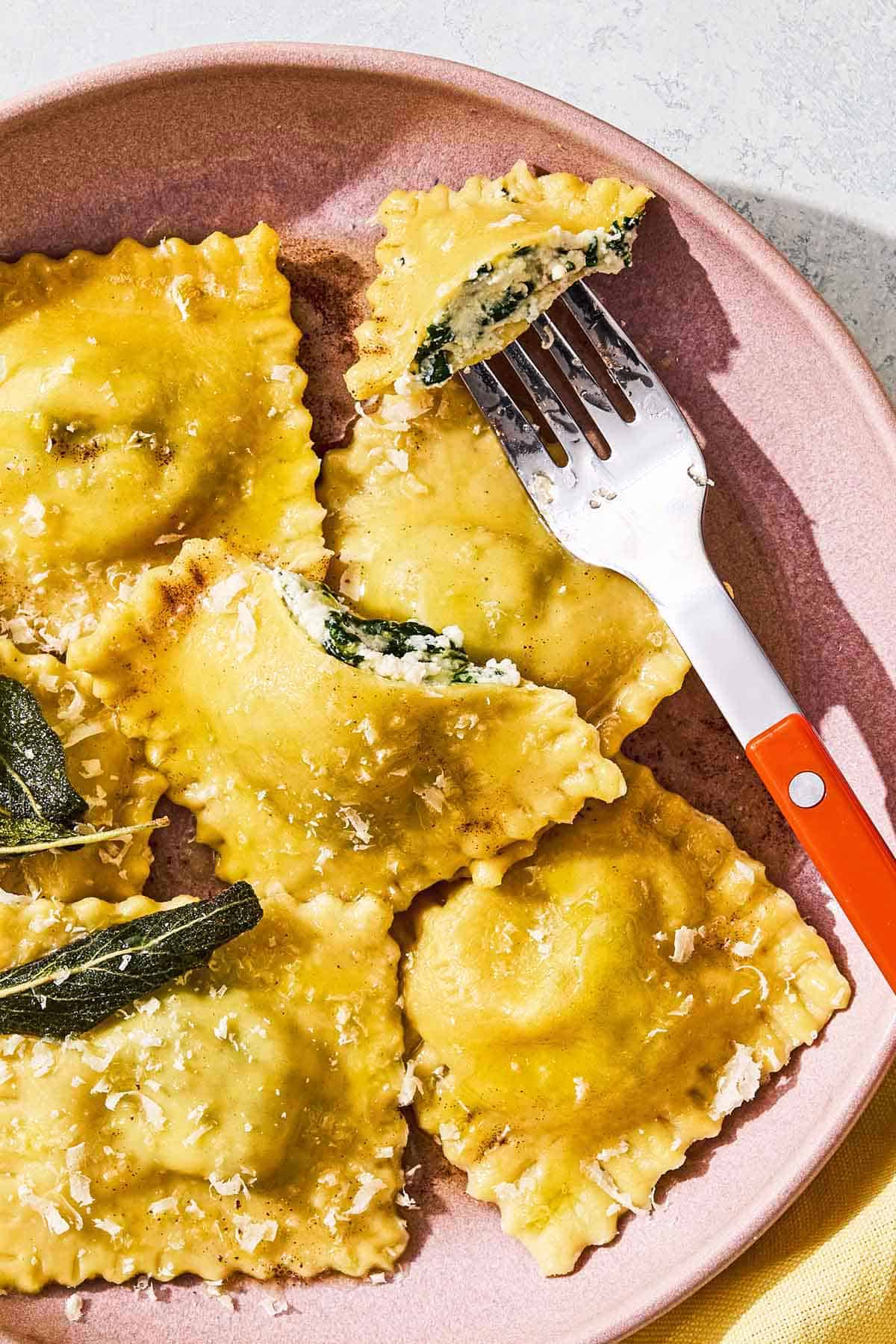
The Spinach Cheese Ravioli I Grew Up Making
Before I wrote an entire cookbook called The Glorious Pasta of Italy, spinach and cheese ravioli was one of the first pastas I learned to make. As a young girl, I would stand across the kitchen counter from my mom, Gabriella, as she rolled out silky ribbons of egg pasta, dolloped them with mounds of a savory green- and white-flecked filling, and cut them. My job was to “seal” the ravioli by pressing the tines of a fork around the edges.
I was always proud of my handiwork. Even today, I get a feeling of accomplishment when I look at a tray filled with fresh, hand-cut ravioli.
You don’t need any fancy ingredients or equipment beyond a pasta machine to make ravioli. Just set aside a little time, roll up your sleeves, and get started. Whether you’re making ravioli on your own or with extra sets of hands in the kitchen, you’ll soon be reaping the rewards of a delicious dinner.
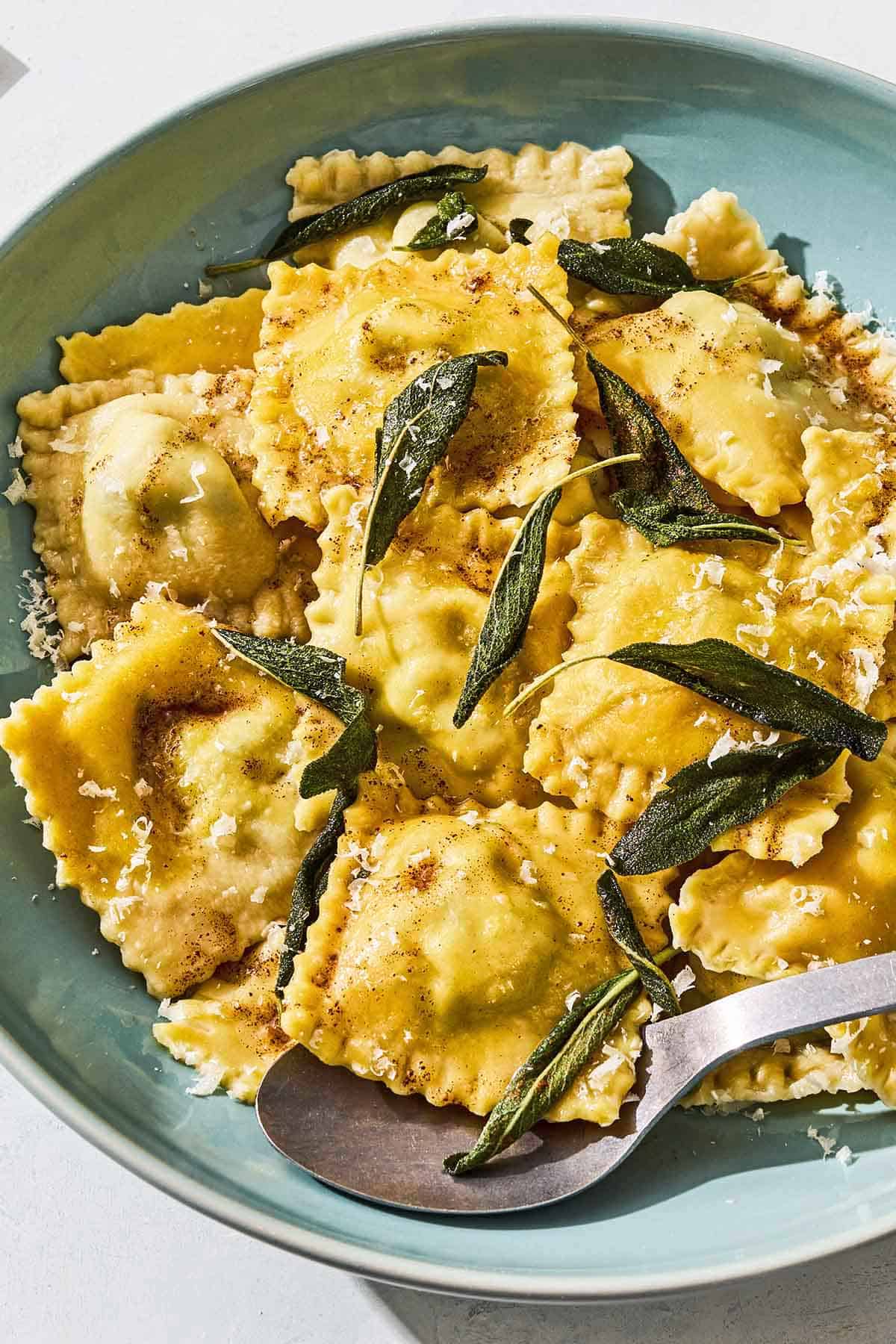
Key Ingredients
There are no fancy or hard-to-find ingredients in this recipe. That’s part of what makes it so special. The magic is in the combination of flavors. Here’s what you need.
For the Pasta:
- Flour: Pasta can be made with a wide variety of flours. For egg-based pasta, I suggest Italian “00” soft wheat flour, which is very finely milled and produces silky, stretchy pasta sheets. However, I have made ravioli using unbleached all-purpose flour many, many times and it works great, so feel free to use the AP flour in your cupboard.
- Eggs provide the necessary liquid to turn flour into pasta dough. The whites contribute elasticity, and the yolks add richness. Make sure they’re at room temperature before you start.
For the Spinach-Cheese Filling:
- Spinach: I use fresh baby spinach leaves, rather than frozen blanched spinach. Baby spinach wilts quickly in a saucepan and has a gentle vegetal flavor that suits these simple ravioli.
- Ricotta cheese: In Italy, I rely on fresh sheep’s milk ricotta to make these ravioli. However, it’s not readily available in the U.S. or elsewhere so I often substitute fresh cow’s milk ricotta. Be sure to drain the ricotta thoroughly before measuring it. Watery ricotta will yield a watery filling that’s difficult to work with.
- Egg (optional) helps to bind the filling, but I consider it an optional addition. More than a few times, I’ve forgotten to add the egg to my spinach and ricotta filling and the results have been delicious. Add the egg if you prefer a slightly more compact and solid filling.
- Parmesan cheese: A generous grating of Parmigiano-Reggiano cheese gives the filling a satisfying savory, umami flavor.
- Nutmeg and salt: For me, these two ingredients are essential. The salt rounds out the flavor and the nutmeg adds a touch of spice and sweetness.
For the Sage Sauce:
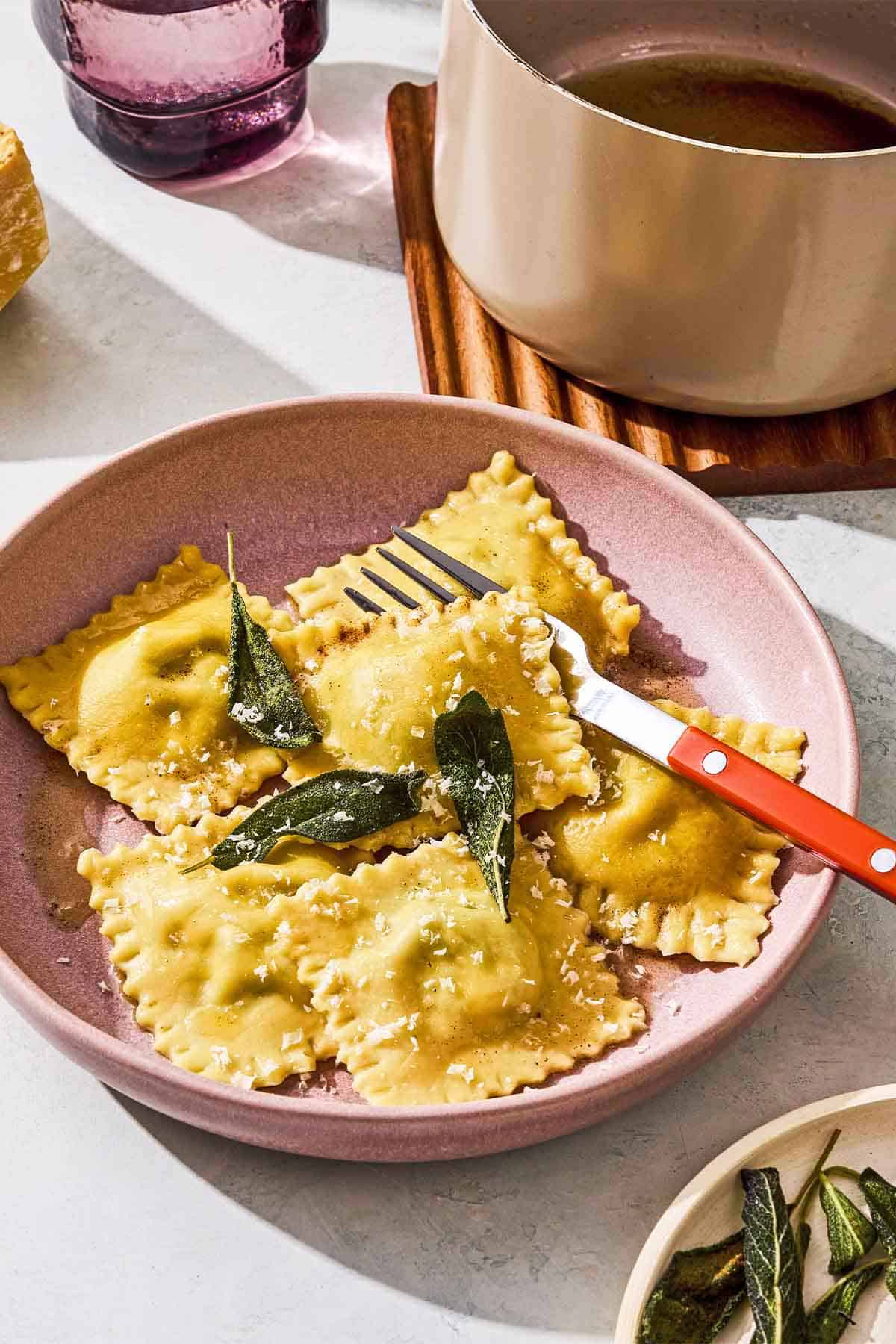
- Butter: I use salted butter for this sauce. It seasons the sauce, so you don’t need to add salt at the end. Cooked until it turns golden and smells nutty, it gives the ravioli a rich, toasty flavor without overshadowing the delicate filling.
- Extra virgin olive oil: A little olive oil keeps the butter from scorching as it browns and makes the sauce lighter.
- Fresh sage leaves, sizzled in the browned butter and olive oil, turn crisp and infuse the sauce with their distinctive aroma. Save a few to scatter on top for garnish.
How to Make Spinach Ravioli
Yes, it’s true that making homemade ravioli takes a little work. But it’s easy once you break it down into steps: pasta, filling, sauce, and assembly. Also, it’s enjoyable work that makes for a great weekend project. Here’s how to do it.
Make the Pasta
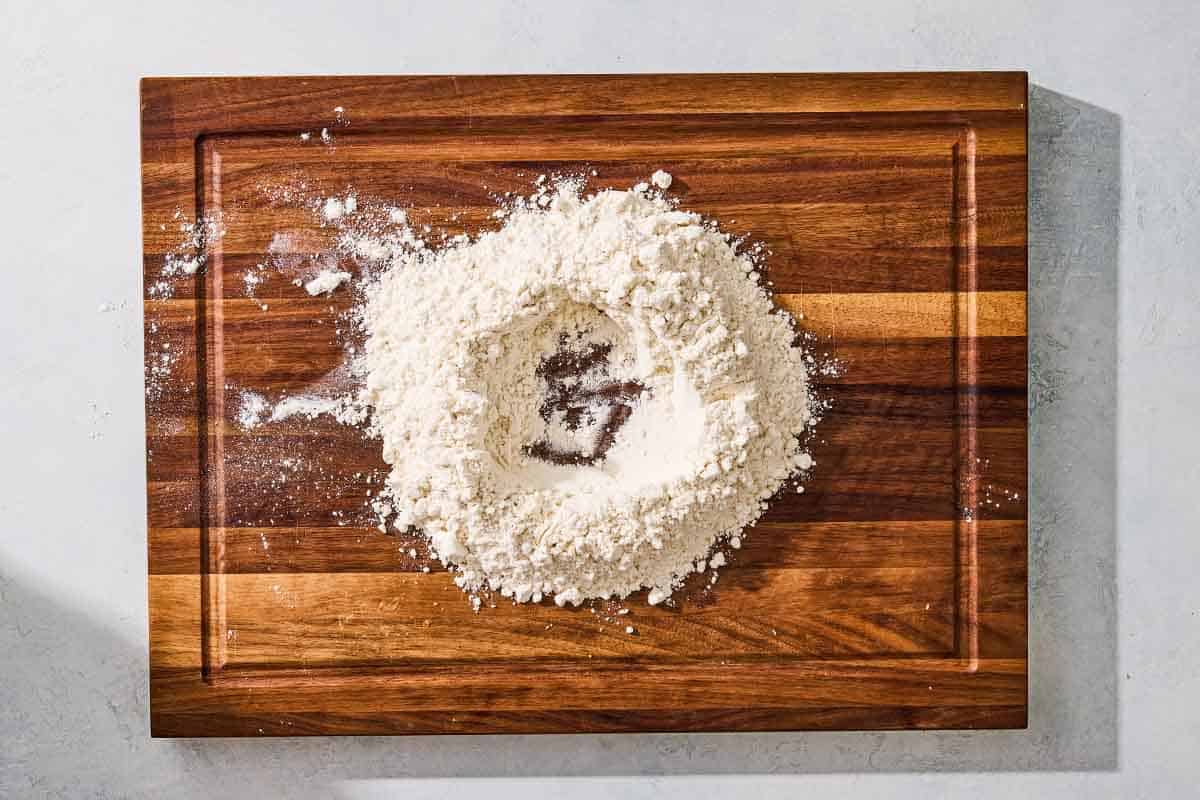
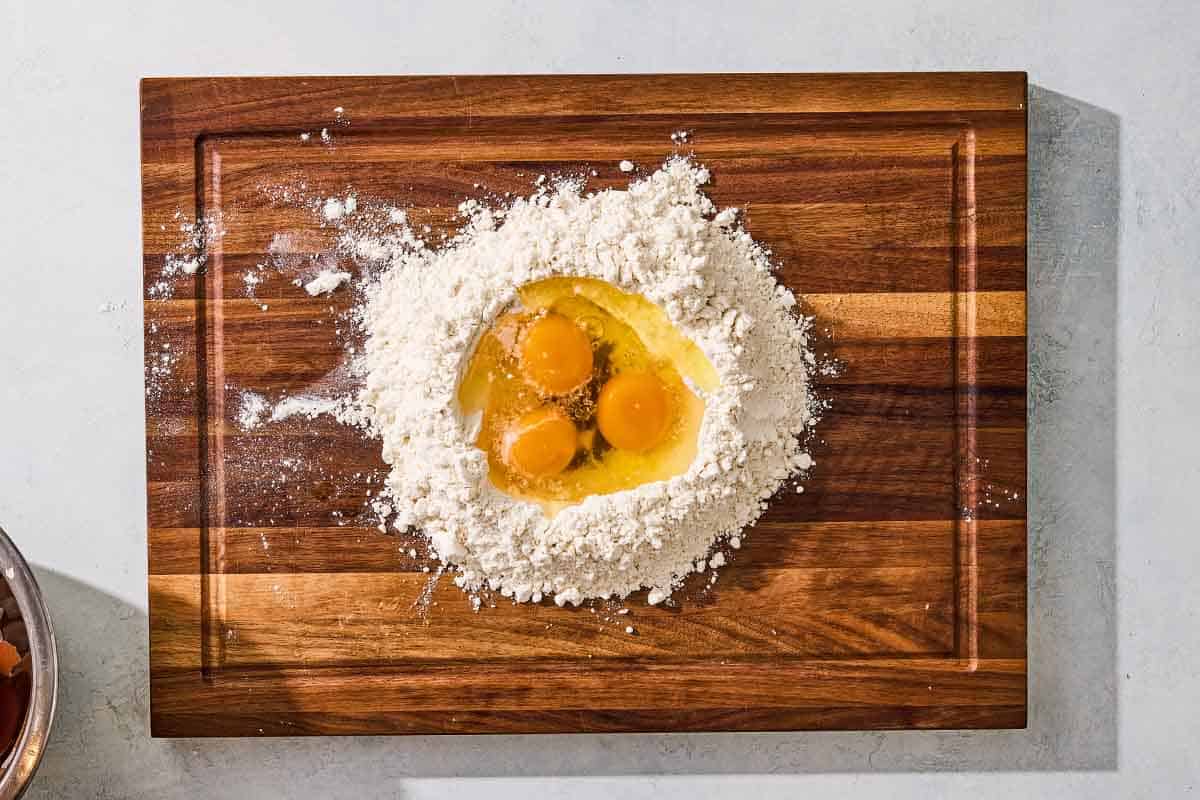
- Make a well. Mound 300 grams “00” soft wheat pasta flour or unbleached all-purpose flour onto a clean work surface. If measuring by volume, you’ll need 2 1/4 to 2 1/2 cups. Use the back of your hand or the bottom of a bowl to create a wide, shallow well in the mound. The “walls” of the mound should be just high enough to keep the eggs in the well.

- Add the eggs. Break 3 room temperature, extra large eggs into the flour well and beat lightly, but thoroughly with a fork. If using large eggs, rather than extra large, beat in 3 tablespoons of water, too.
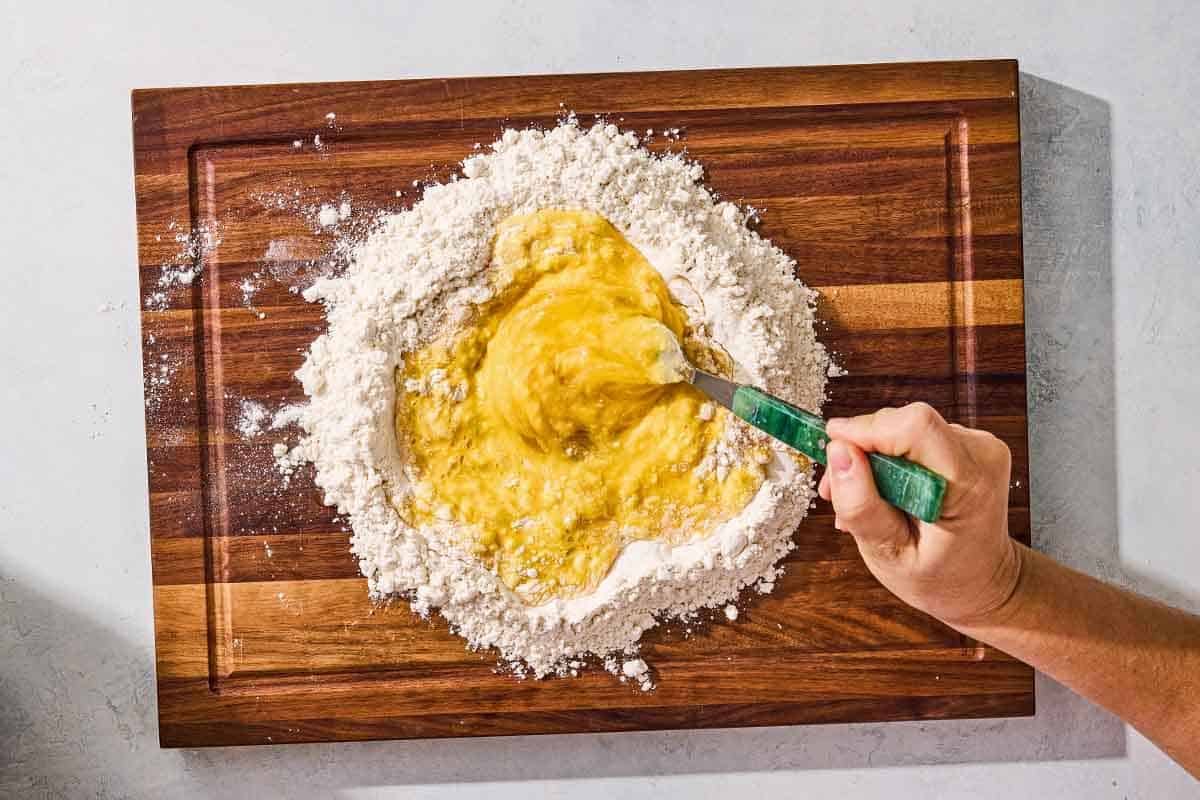
- Mix the pasta dough. Use a fork to mix the eggs in a circular motion, slowly incorporating the flour from the inner wall of the well as you mix. When the mixture has thickened to a pasty consistency, begin using your fingers and a bench scraper to incorporate more flour. Continue to mix until a rough, sticky dough has formed.
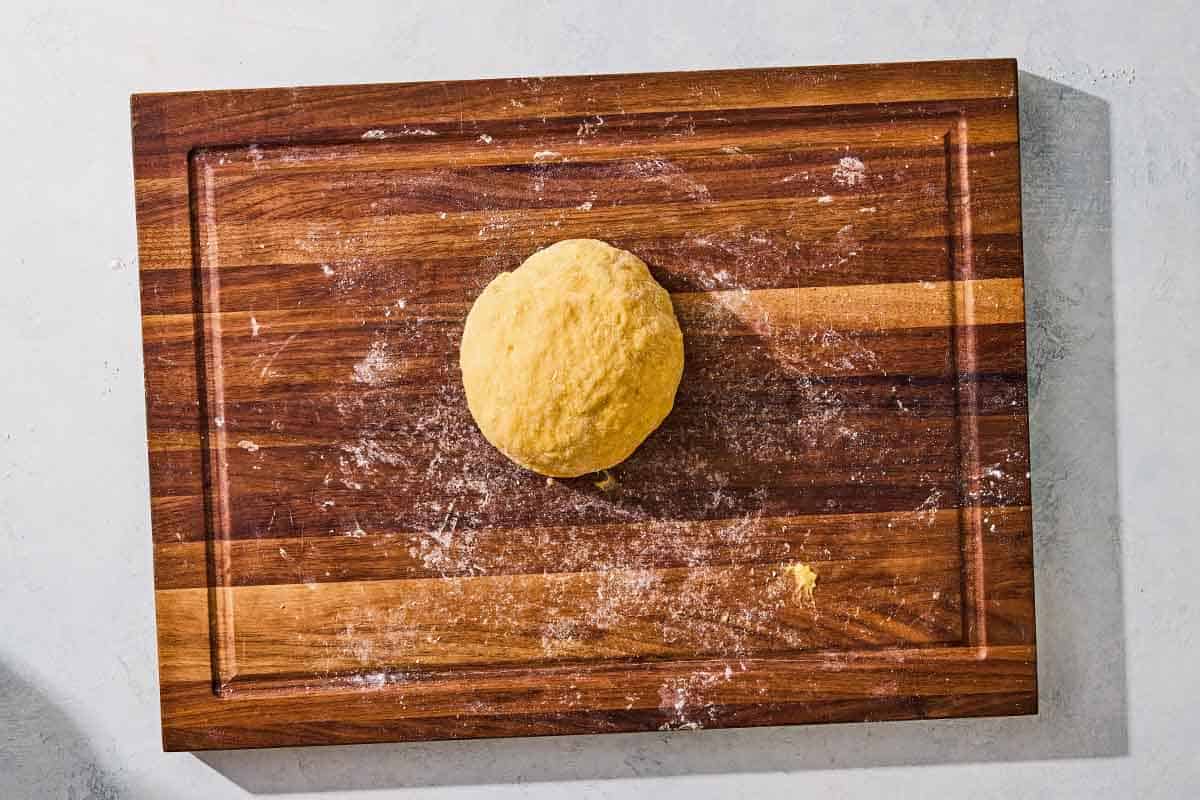
- Knead the pasta dough. Knead the mixture by hand until you have incorporated most, or all of the flour and the dough has a nice, firm, bouncy consistency. Adjust the texture by incorporating more flour or a spritz of water, as needed. Continue to knead for 5 to 10 minutes, until the dough is smooth, firm, and supple. Wrap the dough in plastic wrap and let it rest at room temperature for 45 to 60 minutes.
Make the Spinach-Ricotta Filling
- Steam the spinach. Wash 12 ounces fresh baby spinach and place it in a large skillet or saucepan with the water still clinging to the leaves. Cover and cook over medium-low, turning occasionally, until the spinach is completely wilted and tender, but still a bright, dark green, about 5 to 8 minutes.
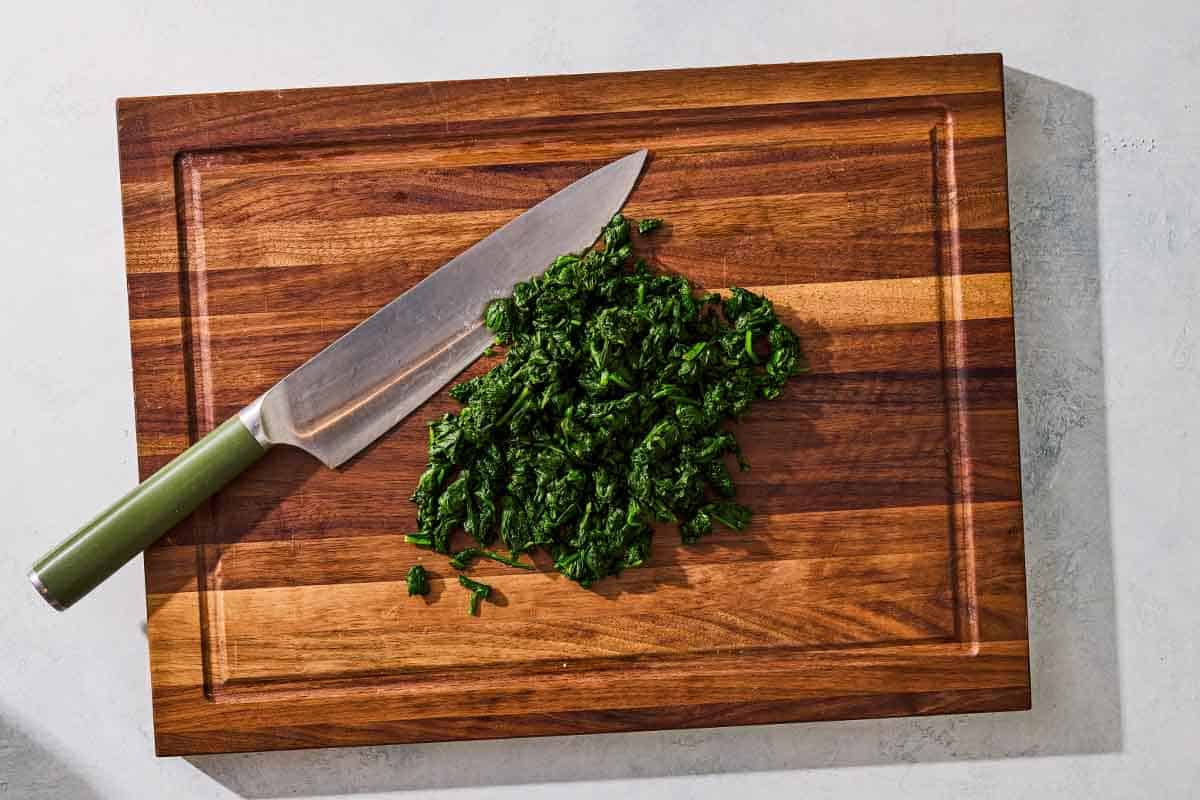
- Chop the spinach. Transfer the spinach to a colander set in the sink and let sit until cooled enough to handle, then squeeze out as much liquid as possible. Transfer it—now a dense blob of green—to a chopping board and chop finely.
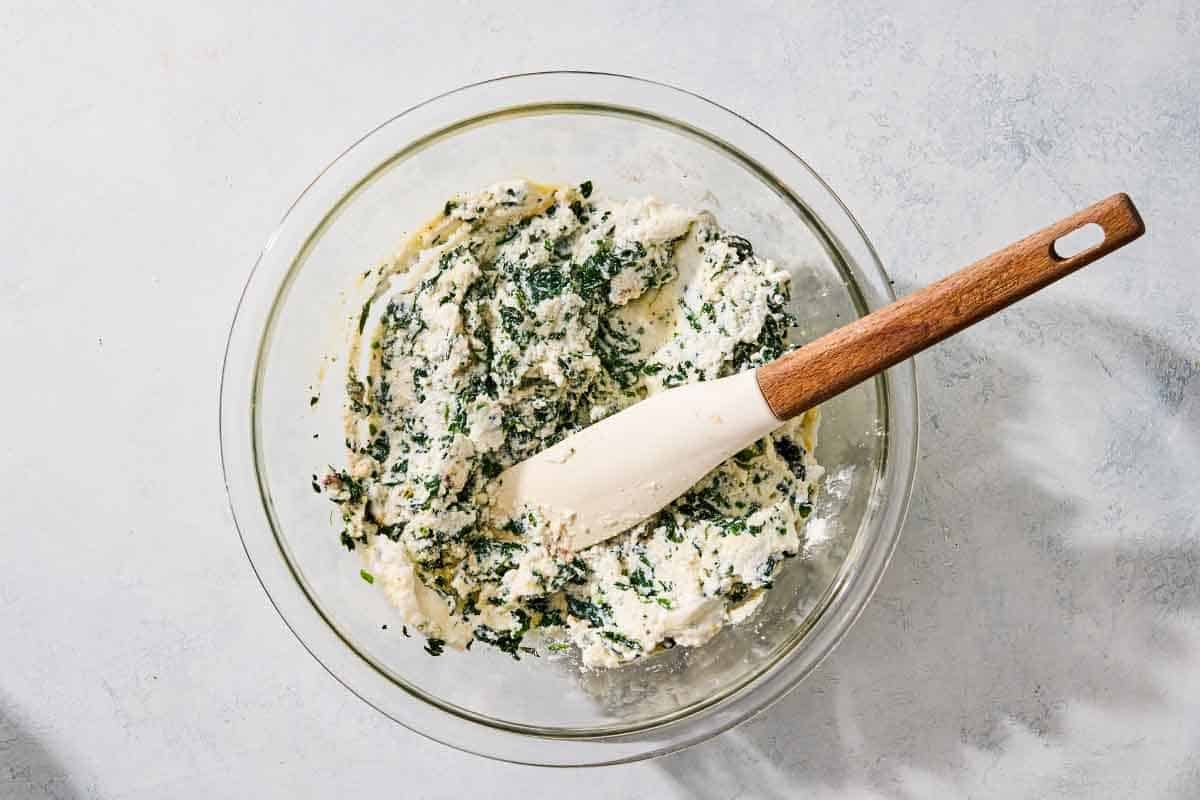
- Make the filling. Place the spinach and 2 cups (about 1 pound) well-drained ricotta cheese in a large bowl. Add 1/3 cup freshly grated Parmigiano cheese, 1 beaten egg, 1/2 teaspoon salt, and a pinch of freshly grated nutmeg. Mix everything together thoroughly. Cover and refrigerate.
Form the Ravioli
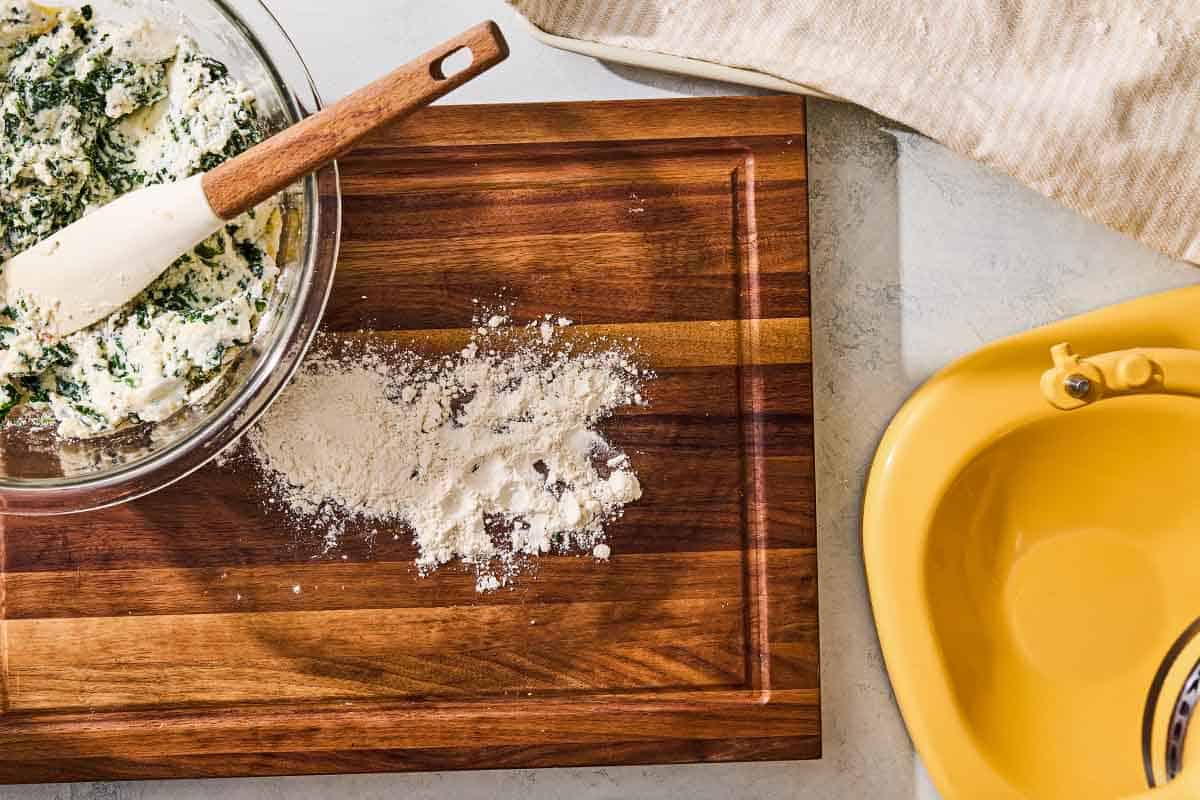
- Get ready to form the ravioli. Remove the filling from the refrigerator and set up your pasta machine or stand mixer with the pasta roller attachment, making sure the pasta roller is at its widest setting (#1 on my hand-crank machine). Sprinkle a little flour on a cleared area around the machine or mixer. Line two rimmed baking sheets with clean kitchen towels and sprinkle them with flour. This is where you will put your ravioli once you’ve formed them.
- Divide the pasta dough. Cut the ball of dough into 4 quarters and rewrap three. Knead the remaining piece briefly on the work surface. With a rolling pin or the heel of your hand, flatten it into a thick oval 3- to 4-inches long.
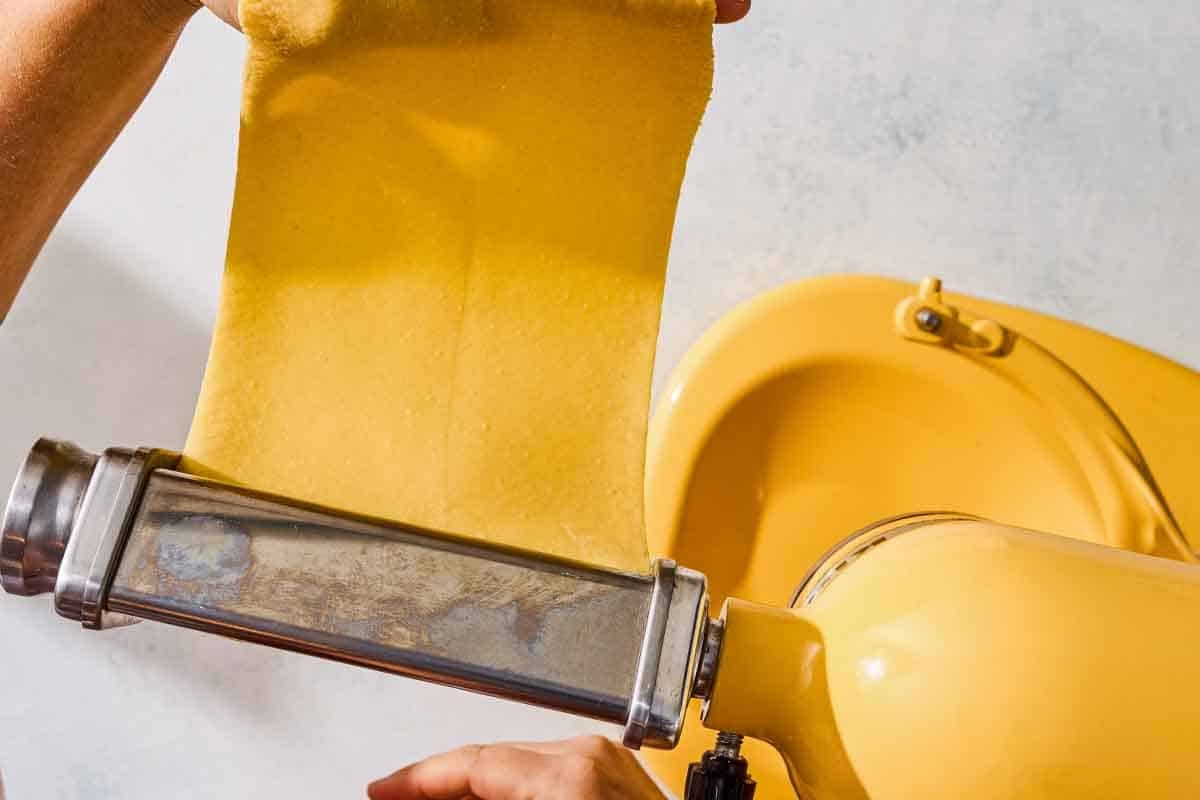
- Roll a dough rectangle. Feed the dough through the pasta machine and then lay it on the work surface. Fold the dough into thirds, as though you were folding a business letter. Sprinkle lightly with flour and pass it through the rollers again. Repeat the folding and rolling process one or two more times to help set the rectangular shape of the dough.
- Sheet the pasta. Move the roller setting to the next narrower notch and feed the strip of dough through the setting twice, sprinkling it with a little flour if needed to keep it from sticking. Continue to pass the dough through the rollers twice on each setting until it is about 1/16-inch thick—#5 on my machine. The sheet should just be thin enough to see the shadow of your hand through it.
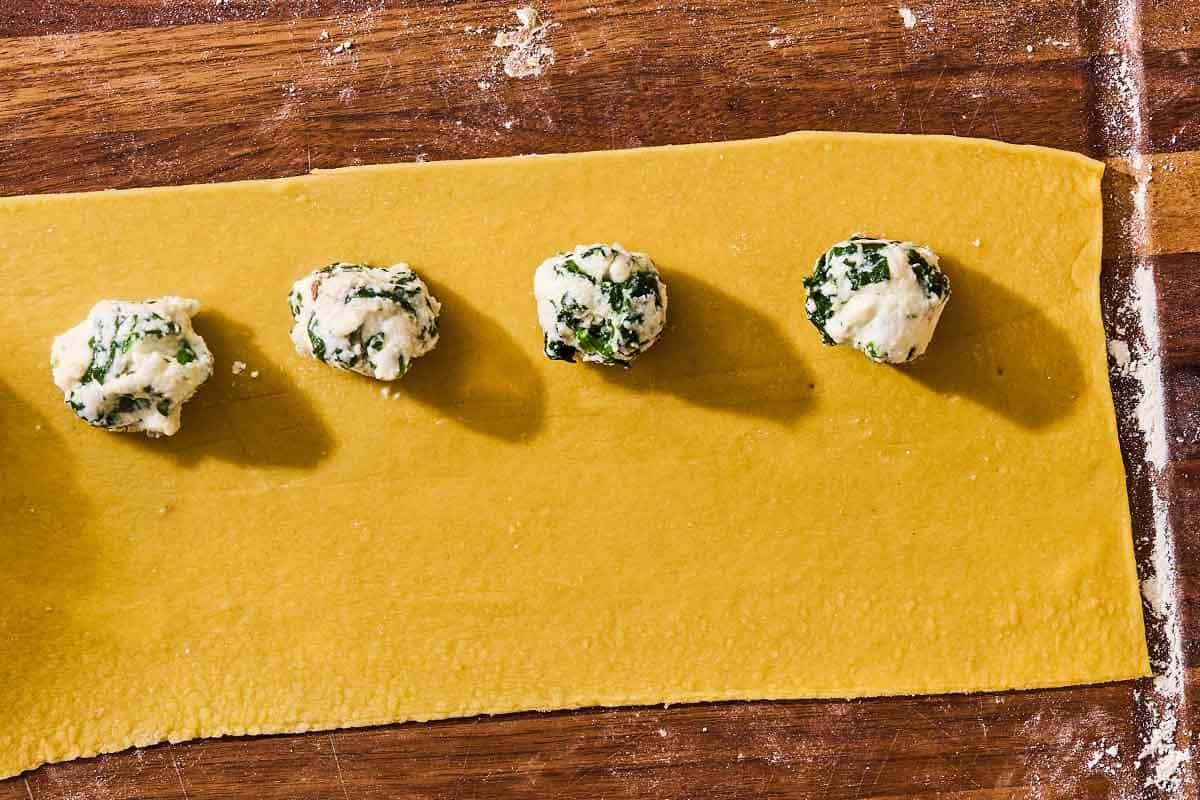
- Add the ravioli filling. Position the strip of pasta on a lightly floured work surface. Mound 1 to 2 teaspoons of filling at 1 1/2-inch intervals along the length of the strip, slightly below center.
- Seal the ravioli. Dip a finger in water and moisten along the bottom edge of the strip and around each mound of filling. Carefully fold the top of the strip, lengthwise, over the filling so that the top edge meets the bottom edge. Press all around the mounds of filling to squeeze out any air and to seal them.
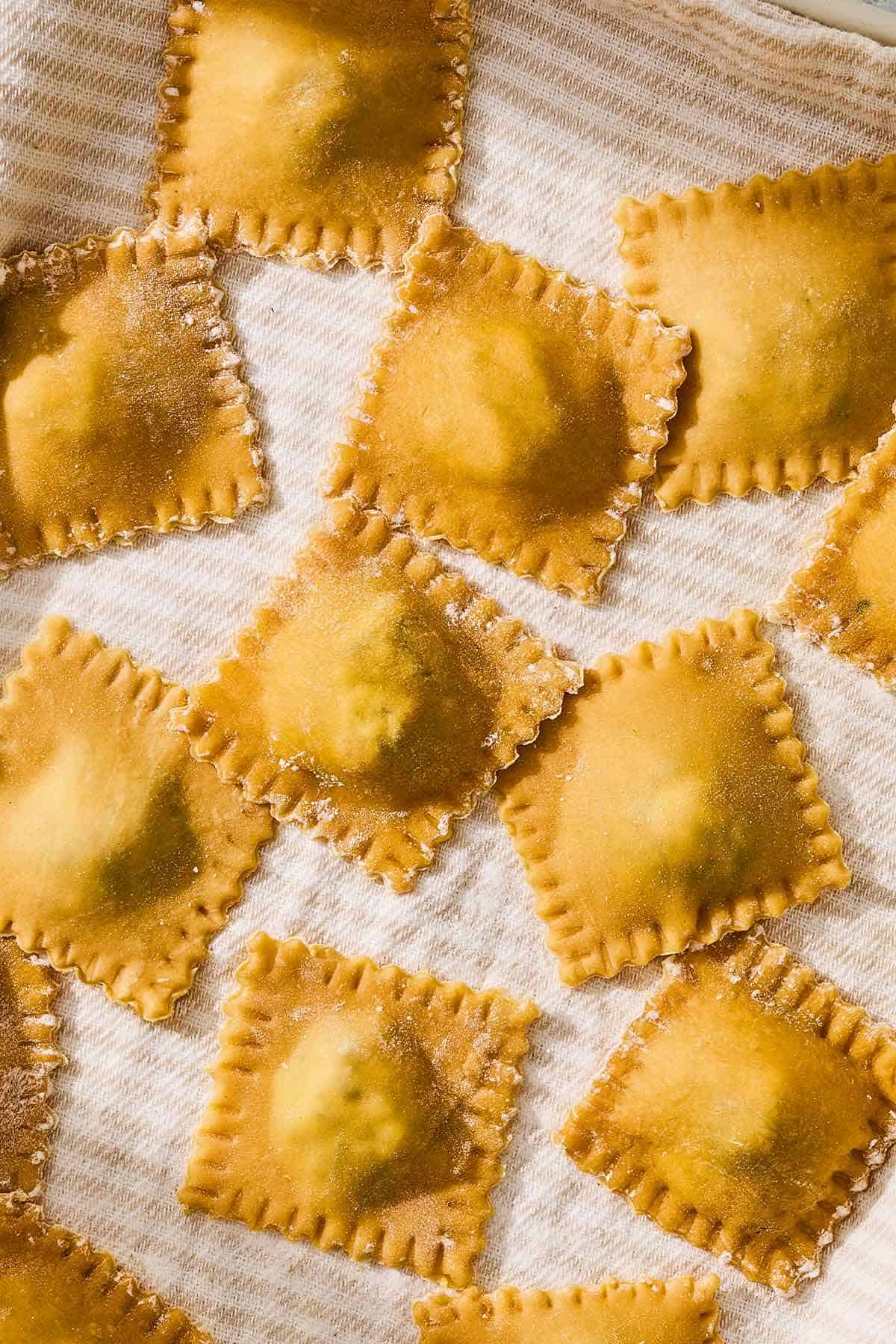
- Cut the ravioli. Use a fluted pasta cutter to cut around each mound to create half-moon or square ravioli. Use a fork to seal them, and set them on one of the towel-lined baking sheets. Make sure the ravioli are not touching, as they might stick together.
- Repeat and rest. Repeat this process with the remaining pasta dough. You should end up with 40 to 50 ravioli. Let the ravioli air dry slightly, for about 30 minutes, while you prepare to cook them.
Cook the Ravioli
- Get ready. Fill a wide high-sided saucepan 1/2 to 3/4 full of water and bring it to a boil over high heat. Warm a serving dish or individual bowls.
- Make the sage sauce (optional). While the water heats, melt 3 tablespoons salted butter and 3 tablespoons extra virgin olive oil together in a small saucepan over medium heat. Add leaves from a small bunch of fresh sage. Cook, swirling the pan, until the butter browns and smells nutty and the sage is lightly browned and crisp, 3 to 5 minutes. Remove from heat. Alternatively, warm 2 to 3 cups marinara or your favorite pasta sauce to serving temperature.
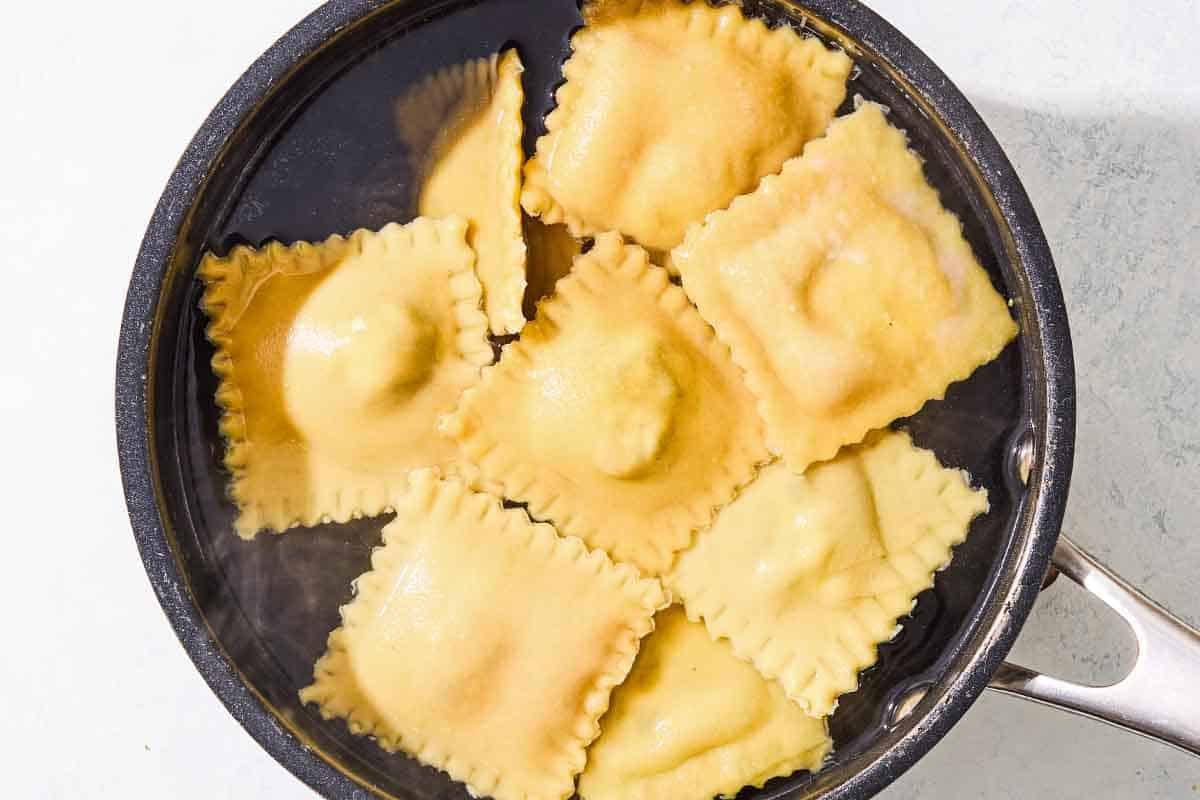
- Cook the ravioli. Once the water boils, add 1 tablespoon salt and reduce heat to medium-high. The water should not be at a rolling boil, or the ravioli may get tossed around, causing them to tear. Carefully drop ravioli into the pot, cooking them in batches to avoid crowding the pot. Cook until they are just tender and they float to the surface, for about 5 minutes. Scoop them up, a few at a time, with a large skimmer, taking care to let excess water drain off.
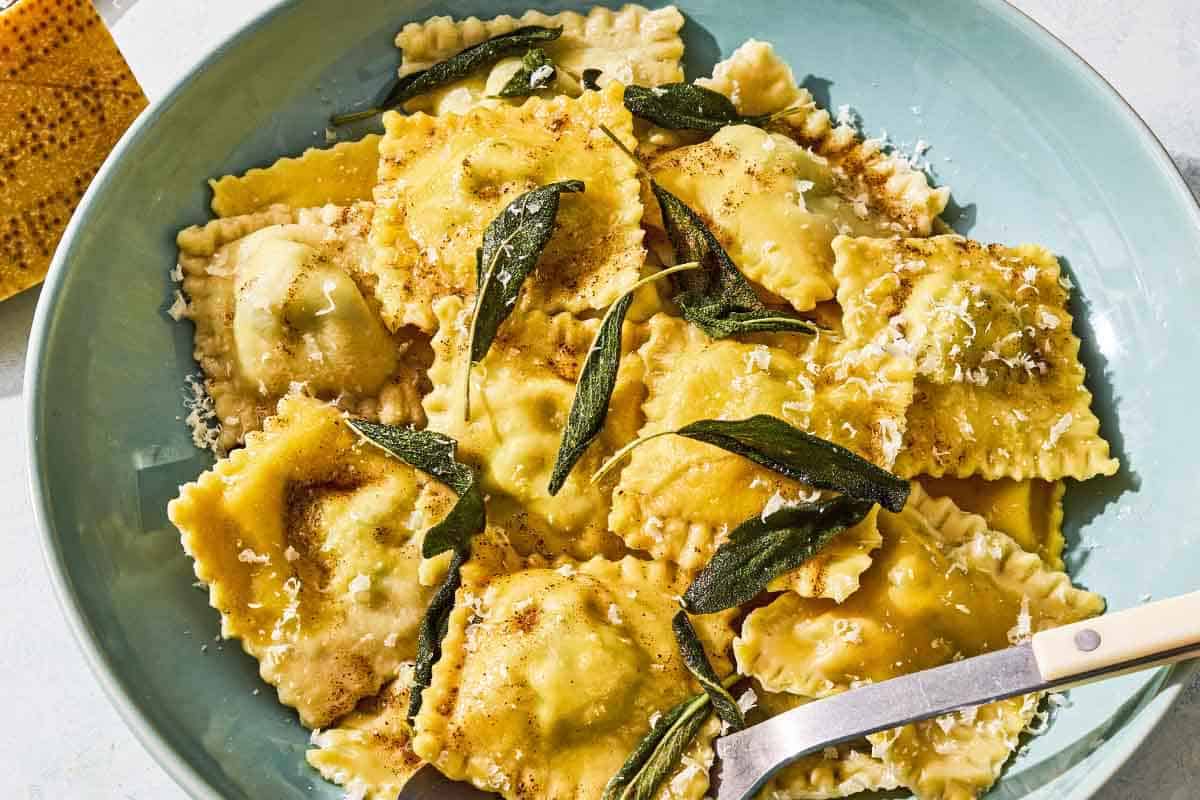
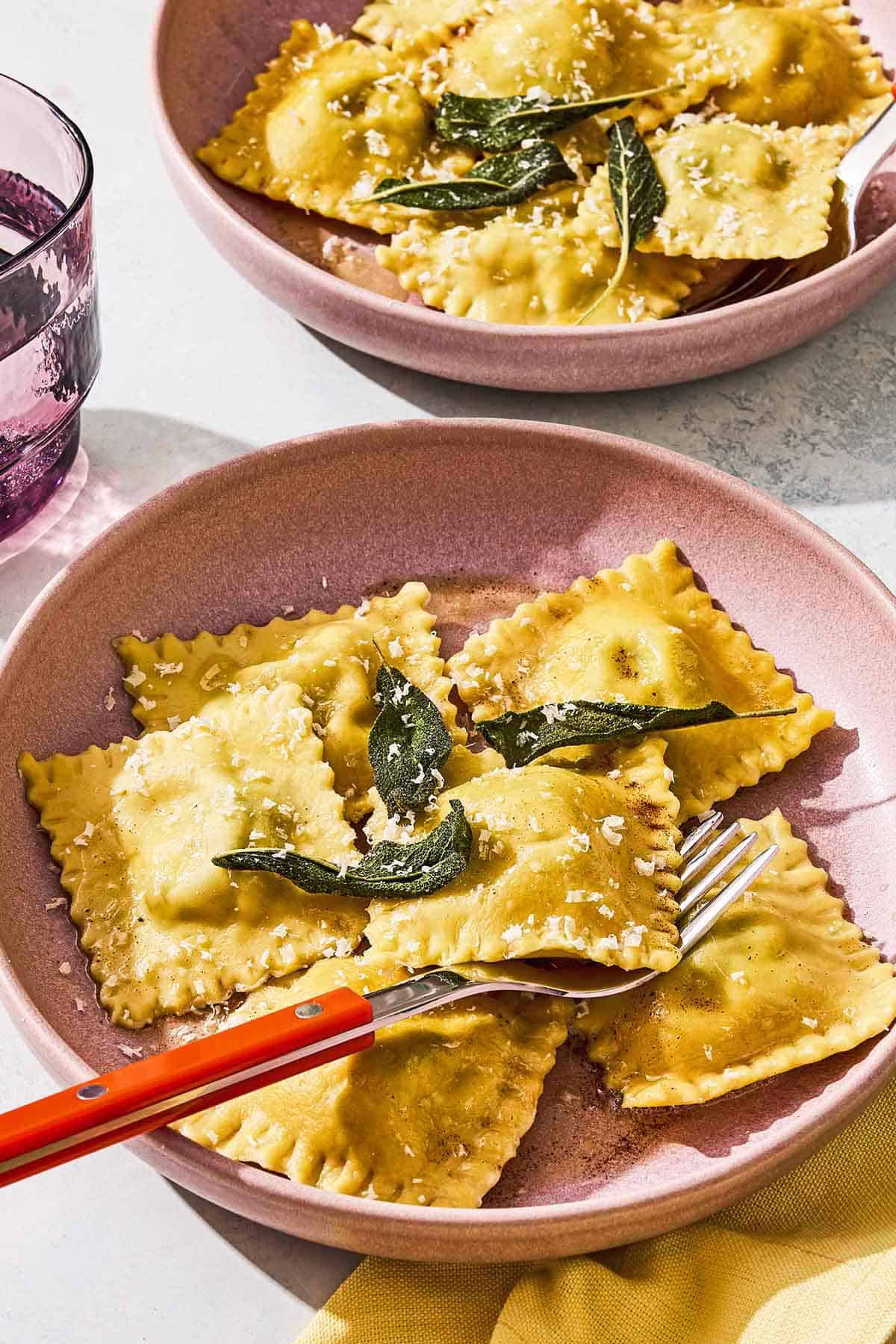
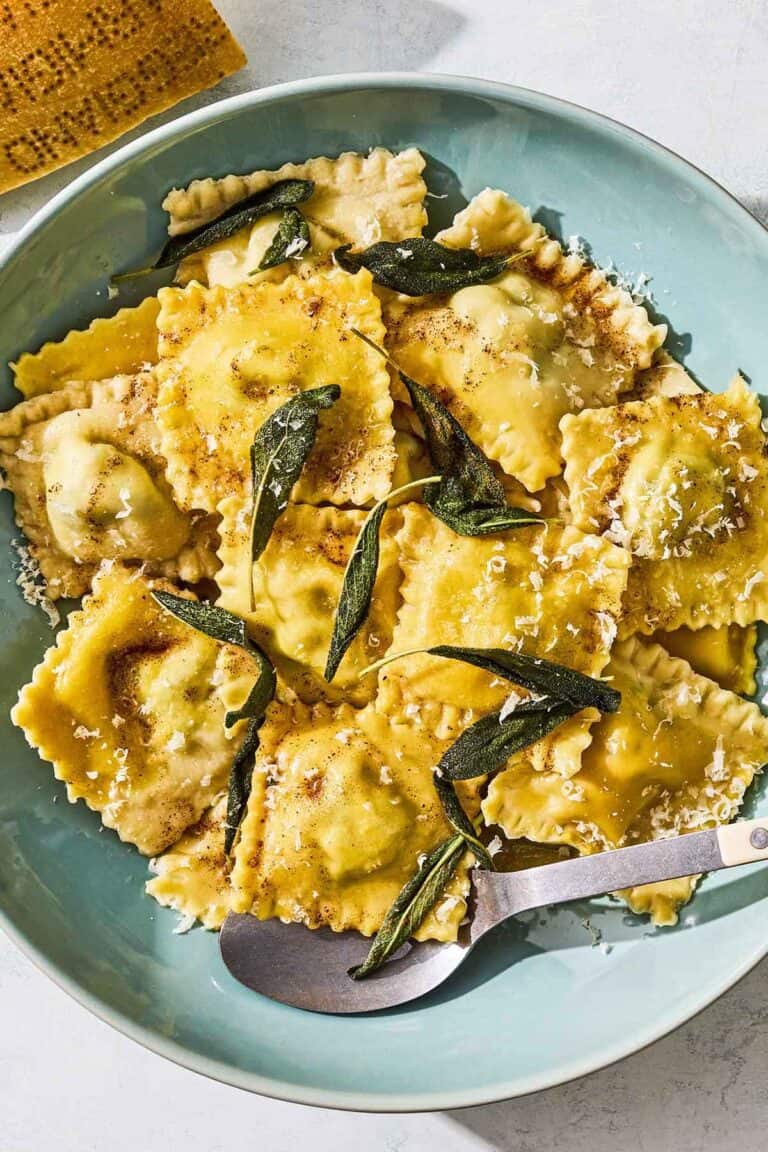
- Finish and serve. Place the ravioli in either the warmed serving bowl or in individual bowls and spoon sauce over them. Sprinkle Parmigiano cheese on top, finish with a few crispy sage leaves, and serve.

What Are Ravioli?
The word ‘ravioli’ refers to a wide variety of Italian stuffed pastas. They come in many shapes, most commonly squares, circles, or small half-moons. But you can also make ravioli using special ravioli stamps or molds, or even cookie cutters. My favorite way to make them is by hand, using a fluted pasta cutter to create decorative seams.
They can range from bite-sized to oversized. The largest ravioli I ever had was at a cheese dairy in Abruzzo. It was filled with fresh sheep’s milk ricotta and was as large as the plate it was served on!
Ravioli by Region in Italy
When it comes to ravioli fillings, there are too many to count!
- In my family’s region of Abruzzo, ravioli are generously sized half-moons or rectangles, traditionally filled with cheese or a mix of spinach and cheese and bathed in savory marinara sauce, the way my mom served them. They’re equally tasty with a simple sage butter.
- Tuscany is known for meat-stuffed ravioli, called tordelli.
- In Torino, the typical Piemontese ravioli are agnolotti del plin, tiny pockets filled with braised beef and cheese that require a “pinch” maneuver to create their distinctive envelope shape.
- Emilia-Romagna’s most famous ravioli are tortelli di zucca—half-moon ravioli stuffed with a beguiling mixture of puréed winter squash and crumbled amaretti cookies.
Spinach Ravioli Tips
- Weigh the flour. I strongly recommend measuring the flour for ravioli by weight (300 grams) for the most precise results. To measure by volume, lightly spoon the flour into measuring cups and sweep off the excess.
- Check your eggs. The general flour-to-egg ratio is one egg per every 100 grams of flour, but it’s not a precise measurement. Eggs come in different sizes. Some have large yolks, some have more whites. This recipe is based on extra-large eggs. When using standard eggs labeled ‘large,’ I often add 3 tablespoons of water to my pasta dough to achieve the right consistency.
- Drain the ricotta. If the ricotta is loose or watery, wrap it in a piece of cheesecloth or several layers of paper towel and squeeze out the excess whey. Once drained, measure out 2 cups—about 1 pound for this recipe.
- Adjust the texture. If the pasta dough feels sticky, knead in more flour until it is firm and only slightly tacky. If it feels dry, moisten your hands with a little bit of water or spritz the dough with a spray bottle and knead it into the dough.
- Choose a wide pan. Use a wide, high-sided saucepan rather than a deep pasta pot to cook your ravioli. Ravioli are delicate and tumbling around in a deep pot of boiling water could cause them to tear.
Make It Your Own
I like to take classic recipes such as this one and play around with them from time to time. Here are some ways to change up this recipe.
- Substitute chard for spinach. While the two are similar, chard has a slightly more pronounced, earthy flavor with a slightly bitter edge to it. Tamed by the ricotta, it makes a great filling for ravioli.
- Change the sauce. I present this recipe to you here with a simple sage butter sauce, but my mother always served these spinach ricotta ravioli with marinara or pomodoro sauce. It’s delicious both ways, or with any other pasta sauce you like.
- Try a different shape. Use a cookie cutter instead of a fluted pasta cutter to make flower- or heart-shaped ravioli, or any number of other shapes.
What to Serve with Spinach Ravioli
- Add a main: These tempting ravioli can easily be the main attraction, but they also make a delicious first course for a celebratory Sunday meal. Try them as a first course followed by classic Beef Braciole (stuffed beef rolls) or Restaurant-Style Chicken Milanese.
- Serve with a salad: In summer, spinach ravioli make a fine entrée followed by a fresh Caprese Salad. Another colorful side that goes great with these ravioli is Peperonata (Italian stewed peppers).
Make It Ahead
It can be tricky to make ravioli ahead of time. Ideally, it would be great to freeze them and then just pull them from the freezer when you want to cook them. Over the years, I have done this many times, with mixed results.
The surfaces of the ravioli are prone to cracking as they freeze, especially with a moist filling like spinach and ricotta. Those cracked surfaces can tear while the ravioli are cooking, causing the filling to leak out. These days, if I want to get a head start, I make what I can in advance, and save the ravioli making for the day I want to serve them. Here are my preferred ways to get a jump on ravioli-making.
- Prep the filling: The spinach-ricotta filling can be made up to two days in advance and kept, tightly covered, in the refrigerator.
- Prep your sauce: This sage sauce takes only a moment, but if serving these with marinara or another sauce, you can make it ahead of time and simply warm it to serving temperature while you heat your water to cook the fresh ravioli.
- Make them early: Once formed, ravioli can be stored at room temperature, covered with a clean cloth, for up to an hour or so. To keep them for longer, refrigerate them on a baking sheet lined with a flour-dusted kitchen towel, for up to several hours. Check them from time to time to make sure they are not sticking.
More Filled Pasta Recipes
Spinach Ricotta Ravioli

Ingredients
For the Pasta:
- 2 1/4 to 2 1/2 cups (300g) “00” soft wheat pasta flour or unbleached all-purpose flour, plus more for dusting the work surface
- 3 extra large eggs or 3 large eggs + 3 tablespoons water, all at room temperature
For the Spinach Ricotta Filling:
- 12 ounces fresh baby spinach leaves
- 2 cups ricotta cheese, well-drained
- 1/3 cup freshly grated Parmigiano cheese, plus more for serving
- 1 large egg (optional), lightly beaten
- 1/2 teaspoon fine salt
- Freshly grated nutmeg
For the Sage Sauce (optional):
- 3 tablespoons salted butter
- 3 tablespoons extra virgin olive oil
- 1 small bunch fresh sage
Instructions
Make the Pasta
- Make a well. Mound the flour onto a clean work surface. Use the back of your hand or the bottom of a bowl to create a wide, shallow well in the mound. The “walls” of the mound should be just high enough to keep the eggs in the well.
- Add the eggs. Break the eggs into the flour well and beat lightly, but thoroughly with a fork. Beat in 3 tablespoons of water if you used large, rather than extra large, eggs.
- Mix the pasta dough. Use a fork to mix the eggs in a circular motion, slowly incorporating the flour from the inner wall of the well as you mix. When the mixture has thickened to a pasty consistency, begin using your fingers and a bench scraper to incorporate more flour. Continue to mix until a rough, sticky dough has formed.
- Knead the pasta dough. Knead the mixture by hand until you have incorporated most, or all of the flour and the dough has a nice, firm, bouncy consistency. Adjust the texture by incorporating more flour or a spritz of water, as needed. Continue to knead for 5 to 10 minutes, until the dough is smooth, firm, and supple. Wrap the dough in plastic wrap and let it rest at room temperature for 45 to 60 minutes.
Make the Spinach-Ricotta Filling
- Steam the spinach. Wash the spinach and place it in a large skillet or saucepan with the water still clinging to the leaves. Cover and cook over medium-low, turning occasionally, until the spinach is completely wilted and tender, but still a bright, dark green, about 5 to 8 minutes.
- Chop the spinach. Transfer the spinach to a colander set in the sink and let sit until cooled enough to handle, then squeeze out as much liquid as possible. Transfer it—now a dense blob of green—to a chopping board and chop finely.
- Make the filling. Place the spinach and drained ricotta in a large bowl. Add 1/3 cup freshly grated Parmigiano cheese, the beaten egg, salt, and nutmeg. Mix everything together thoroughly. Cover and refrigerate.
Form the Ravioli
- Get ready. Remove the filling from the refrigerator and set up your pasta machine or mixer with the pasta attachment, making sure the pasta roller is at its widest setting (#1 on my hand-crank machine). Sprinkle a little flour on a cleared area around the machine or mixer. Line two rimmed baking sheets with clean kitchen towels and sprinkle them with flour. This is where you will put your ravioli once you’ve formed them.
- Divide the pasta dough. Cut the ball of dough into 4 quarters and rewrap three. Knead the remaining piece briefly on the work surface. With a rolling pin or the heel of your hand, flatten it into a thick oval 3- to 4-inches long.
- Roll a dough rectangle. Feed the dough through the pasta machine and then lay it on the work surface. Fold the dough into thirds, as though you were folding a business letter. Sprinkle lightly with flour and pass it through the rollers again. Repeat the folding and rolling process one or two more times to help set the rectangular shape of the dough.
- Sheet the pasta. Move the roller setting to the next narrower notch and feed the strip of dough through the setting twice, sprinkling it with a little flour if needed to keep it from sticking. Continue to pass the dough through the rollers twice on each setting until it is about 1/16-inch thick—#5 on my machine. The sheet should just be thin enough to see the shadow of your hand through it.
- Add the ravioli filling. Position the strip of pasta on a lightly floured work surface. Mound 1 to 2 teaspoons of filling at 1 1/2-inch intervals along the length of the strip, slightly below center.
- Seal the ravioli. Dip a finger in water and moisten along the bottom edge of the strip and around each mound of filling. Carefully fold the top of the strip, lengthwise, over the filling so that the top edge meets the bottom edge. Press all around the mounds of filling to squeeze out any air and to seal them.
- Cut the ravioli. Use a fluted pasta cutter to cut around each mound to create half-moon or square ravioli. Use a fork to seal them, and set them on one of the towel-lined baking sheets. Make sure the ravioli are not touching, as they might stick together.
- Repeat and rest. Repeat this process with the remaining pasta dough. You should end up with 40 to 50 ravioli. Let the ravioli air dry slightly, for about 30 minutes, while you prepare to cook them.
Cook the Ravioli
- Get ready. Fill a wide high-sided saucepan 1/2 to 3/4 full of water and bring it to a boil over high heat. Warm a serving dish or individual bowls.
- Make the Sage Sauce (optional). While the water heats, melt butter and olive oil together in a small saucepan over medium heat. Add sage leaves. Cook, swirling the pan, until the butter browns and smells nutty and sage is lightly browned and crisp, 3 to 5 minutes. Remove from heat. Alternatively, warm 2 to 3 cups marinara or your favorite pasta sauce to serving temperature.
- Cook the ravioli. Once the water boils, add 1 tablespoon salt and reduce heat to medium-high. The water should not be at a rolling boil, or the ravioli may get tossed around, causing them to tear. Carefully drop ravioli into the pot, cooking them in batches to avoid crowding the pot. Cook until they are just tender and they float to the surface, for about 5 minutes. Scoop them up, a few at a time, with a large skimmer, taking care to let excess water drain off.
- Finish and serve. Place the ravioli in either the warmed serving bowl or in individual bowls and spoon sauce over them. Sprinkle Parmigiano cheese on top, finish with a few crispy sage leaves, and serve.
Recipe Notes
- Shop this recipe: Visit our shop to browse quality Mediterranean ingredients, including the olive oil used in this recipe.
-
Spinach Ravioli Tips:
- Weigh the flour. I strongly recommend measuring the flour for ravioli by weight (300 grams) for the most precise results. To measure by volume, lightly spoon the flour into measuring cups and sweep off the excess.
- Check your eggs. The general flour-to-egg ratio is one egg per every 100 grams of flour, but it’s not a precise measurement. Eggs come in different sizes. Some have large yolks, some have more whites. This recipe is based on extra-large eggs. When using standard eggs labeled ‘large,’ I often add a small amount of water to my pasta dough to achieve the right consistency.
- Add egg to the filling, or skip it. Egg helps to bind the filling, but I consider it an optional addition. More than a few times, I’ve forgotten to add the egg to my spinach and ricotta filling and the results have been delicious. Add the egg if you prefer a slightly more compact and solid filling.
- Drain the ricotta. If the ricotta is loose or watery, wrap it in a piece of cheesecloth or several layers of paper towel and squeeze out the excess whey. Once drained, measure out 2 cups—about 1 pound for this recipe.
- Adjust the dough texture. If the pasta dough feels sticky, knead in more flour until it is firm and only slightly tacky. If it feels dry, moisten your hands with a little bit of water or spritz the dough with a spray bottle and knead it into the dough.
- Choose a wide pan. Use a wide, high-sided saucepan rather than a deep pasta pot to cook your ravioli. Ravioli are delicate and tumbling around in a deep pot of boiling water could cause them to tear.
Shop Suzy’s curated selection of Mediterranean olive oils, spices, and more.
Bundle and Save!
Four of our best-selling signature olive oils, perfect for everyday use.