
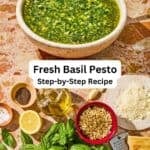
It’s easy to learn how to make pesto at home; all you need is 10 minutes, fresh basil, pine nuts, garlic, Parmesan, quality olive oil, a bit of salt, and a squeeze of lemon.
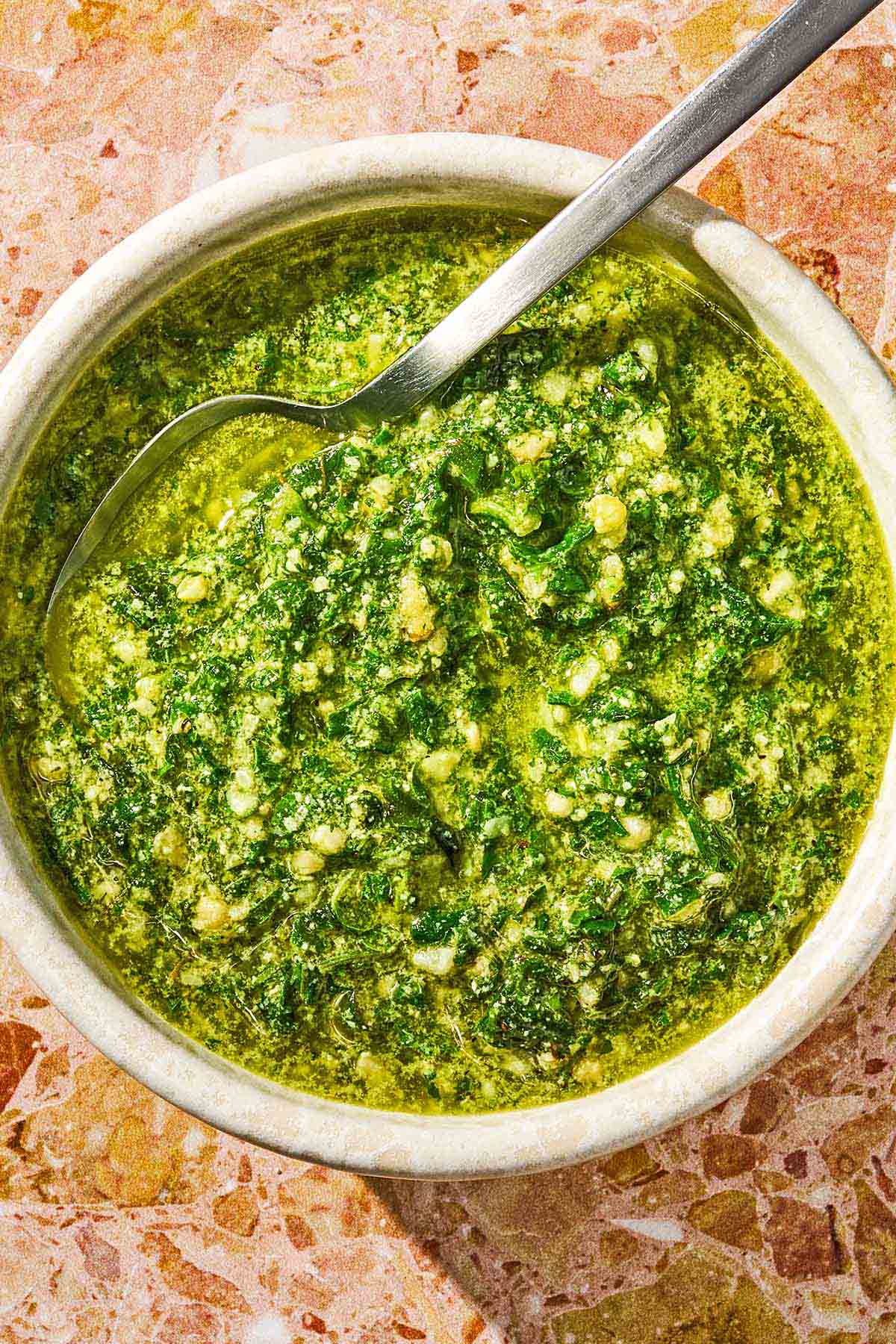
Herbal Gold: Why My Pesto Recipe Keeps Its Color!
Basil pesto is traditionally made with fresh basil pounded with pine nuts, aged cheese, and olive oil in a mortar and pestle. It gets its name from “pestare,” the Italian word for “to pound” or “to crush.”
I adapted the classic recipe with a few modern tricks to keep the pesto’s vibrant green color and fresh, aromatic flavor for longer.
- A quick blanch in boiling water. The heat deactivates (denatures) the enzymes in the cut leaves that cause browning.
- A squeeze of lemon juice is a backup to the blanching. The acid in the lemon juice reduces oxidation, which prevents the basil from turning a dingy green.
- Swapping the mortar and pestle for a food processor makes quick work of blending the ingredients together.
Though this is a decidedly easy basil pesto recipe, and it’s not exactly traditional, it creates a bright green sauce that keeps its color for up to two weeks, and certainly while at the dinner table, drizzled over garden fresh tomatoes, spread on eggplant parmesan sandwiches, or to make pesto pasta salad. It has the same richness that’s made pesto one of the most iconic Italian sauces of all time.
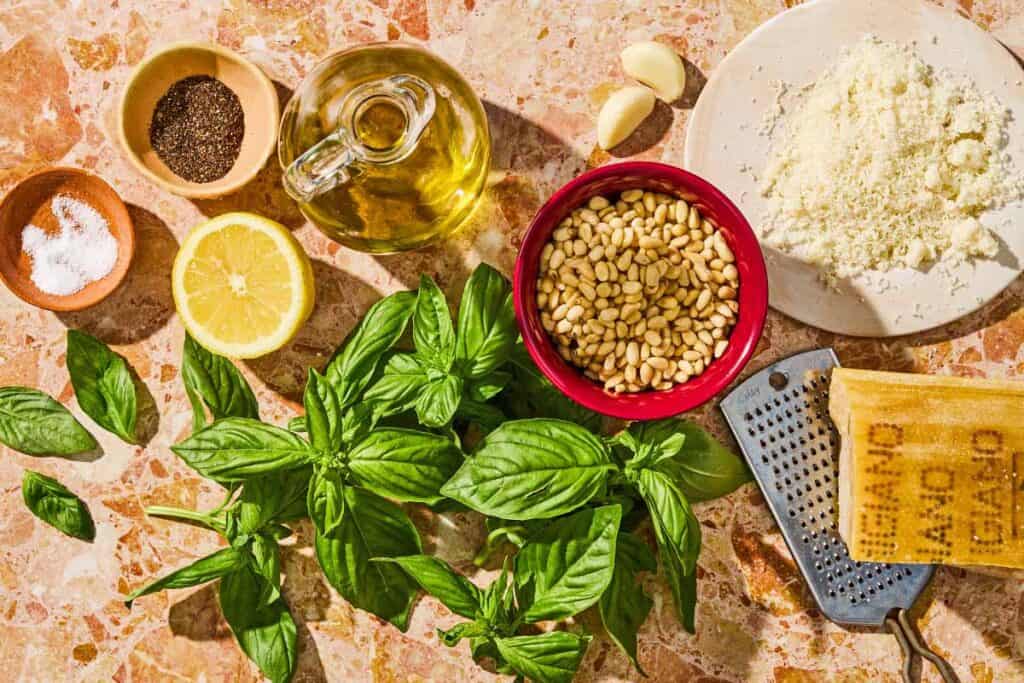
Pesto Ingredients
This easy basil pesto recipe uses just a handful of ingredients to make a simple sauce with so much depth and richness. Like with any recipe that uses just a few ingredients, you’ll want each one to be fresh and flavorful. Fresh basil and high-quality olive oil are the two biggest differences between homemade and store-bought pesto.
- Basil: Grab the freshest basil you can find with no signs of limpness or browning. And, try to pack the two cups with the smaller, more tender leaves for the best flavor. If you’re not making pesto on the same day you go shopping, check out my tips for how to store fresh basil so it lasts.
- Garlic: Increase the garlic to your heart’s desire, but 1-2 cloves typically bring enough punchiness without overpowering the delicate qualities of the basil.
- Pine Nuts: Buttery, creamy pine nuts are traditional. Typically, the nuts are untoasted, but sometimes I like to toast them just to add depth. You do what works for you.
- Lemon: Lemon juice adds brightness and helps prevent the basil from browning.
- Olive oil: Olive oil is a primary ingredient, and its quality can greatly impact the flavor of your pesto. Use a smooth but full-flavor high-quality olive oil. I love buttery but bold Italian Nocellara. For a full understanding of olive oil flavors, check out our guide: How to Taste Olive Oil.
- Parmesan: Parmesan cheese adds a deep umami quality that makes pesto irresistible. Grab the whole blocks (rather than pre-grated parm) as they tend to be much higher quality and fuller flavor.
- Seasoning: Pesto uses only kosher salt. Add just a small pinch of salt and adjust from there, as the Parmesan naturally adds saltiness.
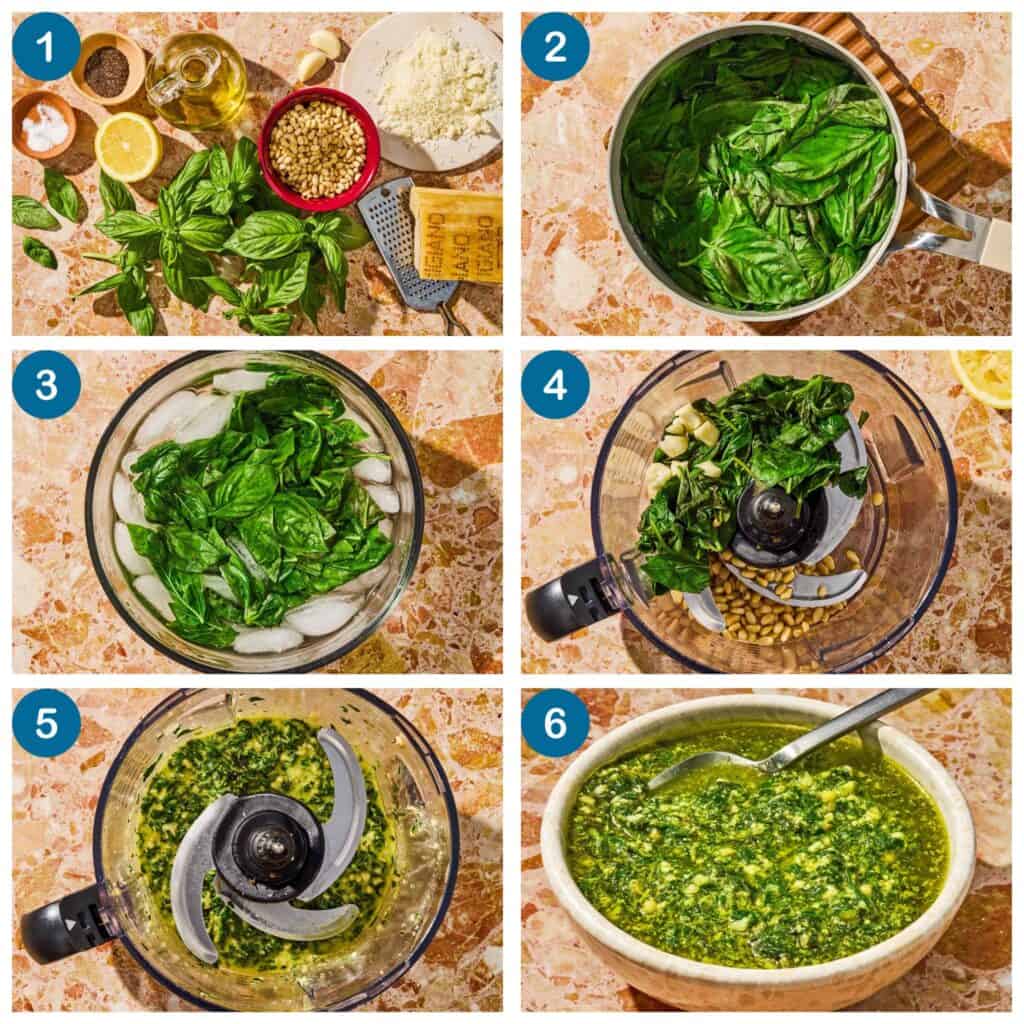
How to Make Pesto
This basil pesto recipe is made in a food processor or blender, so it comes together in just 10 minutes. A quick blanch and a squeeze of lemon is all you need to keep the basil’s vibrant green color. To make basil pesto:
- Get ready: Fill a small saucepan halfway with water and bring to a boil. Prepare a bowl of ice water and set it near your stove. Set up a food processor with the blade attachment (or get your blender all plugged in and ready).
- Briefly blanch the basil. Drop 2 packed cups of basil leaves in the boiling water. Blanch just until the leaves wilt, 5 to 10 seconds. Use tongs to transfer the basil leaves to the prepared ice water. This stops them from continuing to cook.
- Dry the basil very well. Wrap the basil in paper towels. Squeeze to wring out all the water and transfer to the food processor. Add 1-2 chopped cloves of garlic, 1/3 cup of toasted pine nuts, and the juice of 1/2 lemon.
- Blend. Pulse until everything has broken down into small pieces. With the processor running on low speed, slowly pour in 1/2 cup of extra virgin olive oil. Do not run the processor too long; you want to have a little bit of texture.
- Stir in the parmesan. Transfer the basil mixture to a small bowl. Add 1/2 cup of finely grated Parmesan cheese and stir to incorporate. Taste and season with salt and pepper to your liking. If your pesto is looking a little thicker or less smooth than you like it, add a little bit more extra virgin olive oil.
- Serve or store. Use immediately or store for later (see tips for how to use and store basil pesto below).
How to Use Basil Pesto
Basil pesto is a true workhorse in the kitchen. It’s easy to make, keeps well, and just a spoonful instantly adds herbal, creamy, umami-rich flavor. Keep pesto on hand for quick and delicious meals all week long!
Make yourself a 5-minute snack with toast, sliced tomatoes, a drizzle of extra virgin olive oil, and a spoonful of pesto. Or, use as a dip for crusty bread. Rosemary Focaccia with Roasted Garlic, still warm from the oven and dipped in homemade pesto, is a simple luxury that reminds me why I love Mediterranean food.
I make eggs in pesto for a healthy, savory breakfast. For lunch, spread onto sandwiches. For dinner, pesto pasta, baked pesto sea bass or pesto salmon is often on the menu
- Serve with fish. Spoon a dollop over grilled salmon, sea bass, or fish en papillote to give a weeknight dinner a cheffy flair.
- Toss with pasta. A box of pasta and some pesto is all you need, but you can easily dress it up with tomatoes and mozzarella, ravioli and peas, or broccoli and lemon.
- Serve with chicken. Pesto chicken and vegetables are on your table in 20 minutes with this one-pan weeknight recipe.
- Use as a sandwich spread. Make a Mediterranean-style grilled cheese on pita bread with mozzarella, feta, spinach, sun-dried tomatoes, and basil pesto. Or, make use of all that summer produce with a roasted vegetable sandwich.
- To liven up a vegetarian dinner. Braise chickpeas in a creamy pesto sauce for an extra comforting, quick, and filling vegetarian meal. Or make the light yet filling vegetarian stuffed peppers with basil vinaigrette.
- Start your morning right. Fry your eggs in basil pesto and enjoy with crusty bread.
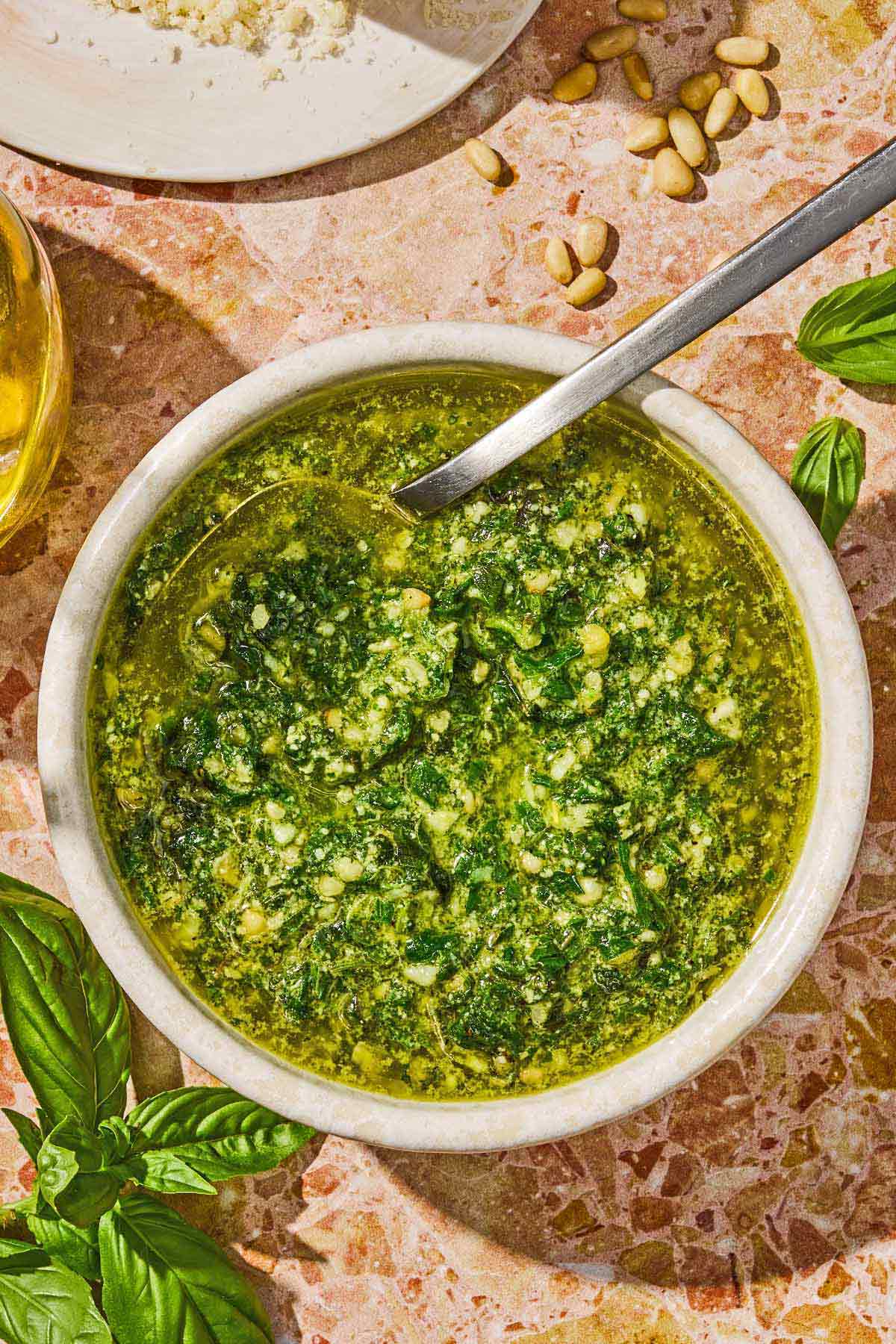
How to Store Basil Pesto
To store pesto, transfer it to a mason jar and cover with a layer of olive oil. This will “seal it” and further prevent it from browning from exposure to air. Seal tightly and store in your fridge for up to two weeks.
To use, simply scoop off the oil or stir it in and let the basil sauce come to room temperature. Be sure to replenish that top layer of extra virgin olive oil to keep it nicely sealed. Always use a clean spoon and return it to the fridge.
Can you Freeze Basil Pesto?
Yes! You can freeze pesto for up to 6 months and thaw it in your fridge the night before you plan to use it. With a thawed jar in your fridge, weeknight dinners like Chicken caprese can be yours in 20 minutes or less! Here are two ways to freeze pesto:
- In a freezer-safe jar. Cover with a layer of extra virgin olive oil and freeze. I do this when I plan to use the entire amount in a pasta dish. Leave a 1-inch headspace for expansion.
- In ice cube trays. If you want to be able to use a little bit of pesto at a time, pour it into ice cube trays and freeze for 1 hour or until hard, then transfer the cubes to freezer bags. It will keep for up to six months.
More Pesto Recipes to Love

Ingredients
- 2 cups packed basil leaves
- 1 to 2 clove garlic, chopped
- 1/3 cup pine nuts
- juice of 1/2 lemon
- 1/2 cup extra virgin olive oil
- 1/2 cup finely grated Parmesan cheese
- kosher salt
- black pepper
Instructions
- Get ready: Fill a small saucepan halfway with water and bring to a boil. Prepare a bowl of ice water and set it near your stove. Set up a food processor with the blade attachment (or get your blender all plugged in and ready).
- Briefly blanch the basil: Drop the basil leaves in the boiling water and blanch just until they’re wilted, 5 to 10 seconds. Use tongs to transfer the basil leaves to the prepared ice water. This stops them from continuing to cook.
- Dry the basil very well: Wrap the basil in paper towels. Squeeze to wring out all the water and transfer to the food processor, along with the garlic, pine nuts, and lemon juice.
- Blend: Pulse until everything has broken down into small chunks. With the processor running on low speed, slowly pour in the extra virgin olive oil. Do not run the processor too long, you want to have a little bit of texture to your basil pesto.
- Stir in the parmesan: Transfer the basil mixture to a small bowl. Add the cheese and season with salt and pepper to taste. Mix to combine. If your pesto is looking a little thicker or less smooth than you like it, add a little bit more extra virgin olive oil.
- Serve or store: Use immediately or store for later (see “Notes” below for storage tips).
Video
Notes
- This recipe yields 1 cup or 16 (1 tablespoon servings).
- Toast nuts (optional) in the oven at 325°F until they’re golden brown. Keep a close eye as nuts burn easily!
- Storage: Transfer the pesto to a mason jar. Cover with a thin layer of extra virgin olive oil (this creates a seal and prevents air from getting to it). Cover tightly and refrigerate for up to two weeks. As you use some of the pesto over time, be sure to replenish the thin layer of extra virgin olive oil on top.
- To Freeze: Freeze in a tightly-closed freezer-safe jar with a thin layer of olive oil on top for up to 6 months. Or, if you want to freeze it in smaller amounts, pour the pesto into ice cube trays and freeze until hard. Once frozen, transfer the pesto cubes to a freezer-safe bag.
- Visit our shop to browse quality Mediterranean ingredients, including olive oils, honey, jams, and spices.
Nutrition
Bundle and Save!
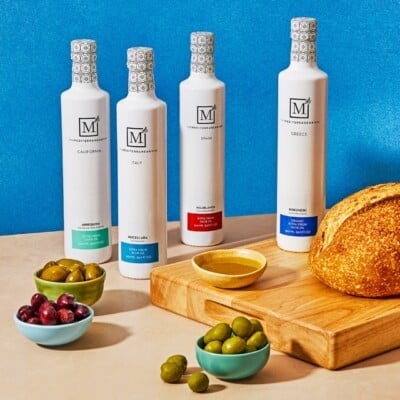
Four of our best-selling signature olive oils, perfect for everyday use.
Frequently Asked Questions
Yes! Pine nuts can be expensive, so feel free to swap in walnuts, almonds, or pistachios. Each kind of nut will create a different flavor, and it won’t be traditional, but it will still be delicious. As a matter of fact, in Sicily, they make an almond pesto.
Traditional pesto genovese is made with basil, pine nuts, garlic, parmesan, and olive oil. The ingredients are pounded together in a mortar and pestle. My version uses lemon juice to help preserve the green color and a food processor to make it quick and easy.
Pesto will last for up to two weeks in the refrigerator when “sealed” in a little olive oil to help prevent oxidation and sealed tightly in a jar. You can freeze it for up to six months.

I have made it several times and my family loves it because you feel the fresh flavor. It does not compare to the onew sod already prepared
I have made your basil several times. The last few times I have blanched the basil and put it in an ice bath quickly. The leaves turned brown. Can you tell me what I’m doing wrong?
I was asking about the basil pesto and my question wasn’t answered. Please let me know. Thanks
The water wasn’t hot enough.
Way better than I imagined. Thanks for the recipe!
Great Pesto Recipe! I’m glad you said to blanch the Basil and do an ice bath. This step absolutely helped my pesto keep the bright green color.
Yay! So glad you found that tip helpful, Chris!
Glad you found that tip helpful, Chris!
I note some pesto recipes suggest if you are going to freeze the pesto not to add the parm before freezing as it does not freeze well. They recommend thawing then adding the cheese. Would be interested in your comments.
Hi, Terry. We don’t find that’s necessary with our recipe. It freezes just fine, even with the parmesan cheese.
Just make a batch with prolific garden basil. Freezing in ice cube trays. I had almost enough for the year. Put in soup, sauce, salad dressing etc. I’ve started earlier this year so hopeful to get all the way til next August. Knowing me, though, if I have more I will use it more liberally 😊
there is zero need to complicate pesto by blanching the basil. otherwise a nice pesto though i would use less lemon juice next time
Absolutely delicious! I will never buy store bought pesto again! Thank you for a wonderful recipe!
Yay! Thank, Beth!
I followed all the instructions. This is the absolutely the best pesto that I have ever tasted!
Yay! Thanks so much, Eileen!
Great recipe. Absolutely no reason to blanch the basil leaves. Just put them in the food processor as they are. Blanching is just an unnecessary extra step.
I don’t think I’ve ever commented on a recipe but WOW! My first time every making pesto and it was a delicious!
*I didn’t have enough olive oil so I subbed avocado oil
Thanks so much for the great review!
Made your recipe today. Had Thai basil and added spinach, didn’t have walnuts so used pecans.. it is very good.
Thanks for sharing your adaptations here, Mary! Yum!
Easy and yummy!
This pesto recipe was so easy, yet is most delicious. I appreciated its use of healthy ingredients and will definitely make it again. I also appreciated the tips on how to keep it fresh. Thank you!
Hi. I am familiar with this product and it has a farily good basil taste, but it adds a very slight sweetness and an even more slight “processed” taste, compared to fresh basil.
While looking (online) for fresh basil in my nearby grocery, I found the following: Gourmet Garden Basil Stir-In Paste.
Does anyone have any idea how that would work in this recipe. I have a wasteful habit of buying too much perishable items, including basil. This product could be very helpful
Lawrence
Hi, Lawrence. We’re not familiar with that product here, so maybe someone else can chime in. If you want to try this with fresh basil pesto, though, leftovers of this freeze beautifully, which will help you to reduce waste: Freeze in a tightly-closed freezer-safe jar with a thin layer of olive oil on top for up to 6 months. Or, if you want to freeze it in smaller amounts, pour the pesto into ice cube trays and freeze until hard. Once frozen, transfer the pesto cubes to a freezer-safe bag.
i have purchased basil paste in winter, i would not suggest for this recipe
Delicious pesto and I loved all your tips, Suzy! Thank you!